×

Philippines🇵🇭 | citiesManilaIntramuros walls, jeepney routes, colonial churches, street markets | things to do and best time to go

Explore Cotabato CityExplore Clark

Backpacking in Manila
🏆 Top pickcity ranked #1
By Johan Kruseman 🇳🇱 | Updated July 30, 2026

Picture this: You’ve landed in Manila, jet-lagged and hungry, and you’re staring down your first big choice—do you brave the chaotic, wallet-friendly jeepneys for a taste of local life, or do you pay triple for an air-conditioned Grab car and skip the sweat? This is Manila in a nutshell: every move is a trade-off between time, money, and comfort, and the city rewards those who play the game with eyes wide open. Manila sits on the western edge of Luzon, the Philippines’ largest island, and it’s the country’s pulsing, unpredictable capital. For backpackers, Manila is a paradox—cheap street eats and legendary nightlife in Malate, Spanish colonial bones in Intramuros, and museums that actually punch above their weight, but also traffic that can turn a two-mile journey into an hour-long saga. It’s easier to meet other travelers in hostels here than in most Filipino cities, but the urban sprawl can feel overwhelming compared to laid-back Cebu or the beach towns. Safety is mostly about street smarts; scams and pickpockets exist, but outright danger is rare if you stick to well-trodden areas. Manila is gritty, noisy, and alive—never polished, but always interesting.

Discover everything you want to know in the 📖 Philippines Travel Guide.
Loading the map 🌍
CLICK TO FILTER
cities
towns
landmarks
national parks
hikes
beaches
attractions
festivals
regions
SHOW COUNTRY’S BESTSHOW ALL

✨ Why go?
Ranked #1 city in Philippines
What sets this place apart

Manila often gets a bad rap, but savvy backpackers know it’s a strategic hub, not just a chaotic city to endure. The real draw is its role as a launchpad. You’ll find a solid mix of budget-friendly hostels that offer more than just a bed—they’re social hubs where you can swap tips and plan your next move. The city’s walkability in key districts means you can explore without burning time or cash on transport, which is a rare luxury in Southeast Asia’s capitals. Manila’s food scene is a practical delight—street eats and local markets deliver authentic flavors without the tourist markup, keeping your wallet happy while fueling your adventures. Nightlife here isn’t about glitzy clubs but lively bars and music spots where you can unwind and connect with fellow travelers. The real kicker is Manila’s … read more 👉
Manila often gets a bad rap, but savvy backpackers know it’s a strategic hub, not just a chaotic city to endure. The real draw is its role as a launchpad. You’ll find a solid mix of budget-friendly hostels that offer more than just a bed—they’re social hubs where you can swap tips and plan your next move. The city’s walkability in key districts means you can explore without burning time or cash on transport, which is a rare luxury in Southeast Asia’s capitals. Manila’s food scene is a practical delight—street eats and local markets deliver authentic flavors without the tourist markup, keeping your wallet happy while fueling your adventures. Nightlife here isn’t about glitzy clubs but lively bars and music spots where you can unwind and connect with fellow travelers. The real kicker is Manila’s connectivity: flights, buses, and ferries radiate out to the Philippines’ best islands and inland escapes, making it a logical basecamp for day trips and onward travel. If you’re after a city that’s more than a pit stop but less than a week-long immersion, Manila fits that sweet spot—efficient, lively, and loaded with practical perks that keep your trip moving forward without sacrificing comfort or experience.
Want to include Manila in your Philippines route?
Create a personalized Philippines itinerary that includes Manila and the places that fit your trip — based on your travel style, budget, and available time. Get your route in seconds.

Generate my trip

💡 HighlightsKey sights and experiences for travelers

Intramuros
Manila’s walled city is the city’s memory palace—Spanish colonial ramparts, cobbled streets, and churches that have survived wars and earthquakes. Walking here is a direct line to the Philippines’ tangled colonial past. The trade-off: you’ll need to budget at least 2-3 hours to do it justice, especially if you want to see Fort Santiago and San Agustin Church. Entry fees are minimal (₱75-₱200 for main sites), but the real cost is the midday heat and crowds. Go early morning or late afternoon for shade and quieter lanes. Comfort is basic: bring water, wear shoes you don’t mind getting dusty, and expect uneven ground.

National Museum Complex
Three museums (Fine Arts, Anthropology, Natural History) in one walkable cluster. This is Manila’s best answer to “what is Filipino identity?”—from … read more 👉
Intramuros
Manila’s walled city is the city’s memory palace—Spanish colonial ramparts, cobbled streets, and churches that have survived wars and earthquakes. Walking here is a direct line to the Philippines’ tangled colonial past. The trade-off: you’ll need to budget at least 2-3 hours to do it justice, especially if you want to see Fort Santiago and San Agustin Church. Entry fees are minimal (₱75-₱200 for main sites), but the real cost is the midday heat and crowds. Go early morning or late afternoon for shade and quieter lanes. Comfort is basic: bring water, wear shoes you don’t mind getting dusty, and expect uneven ground.

National Museum Complex
Three museums (Fine Arts, Anthropology, Natural History) in one walkable cluster. This is Manila’s best answer to “what is Filipino identity?”—from Juan Luna’s Spoliarium to pre-colonial gold. Admission is free, but you’ll pay in time and mental bandwidth. Each building deserves at least an hour; you could easily spend half a day if you’re a completionist. Air-conditioning is a welcome bonus, but lines can be long on weekends. Go on a weekday morning for the smoothest experience.

Quiapo Church & Market
Quiapo is Manila’s beating heart—chaotic, deeply Catholic, and full of contradictions. The church is home to the Black Nazarene, a magnet for miracles and crowds. Outside, the market is a sensory overload: herbalists, fortune tellers, street food, and knockoff everything. It’s free to enter, but you’ll spend on snacks and maybe a lucky charm (₱50-₱200). Give yourself 1-2 hours. Comfort is low: expect noise, pickpockets, and tight spaces. But if you want to see Manila unfiltered, this is the place.

Escolta Street
Escolta is Manila’s old financial district, now a living museum of Art Deco and neoclassical facades, indie galleries, and weekend markets. It’s a time capsule with a creative twist—think faded grandeur meets hipster energy. Free to wander, but you’ll want cash for coffee or vintage finds (₱100-₱500). One hour is enough for a stroll, but linger if you catch a pop-up event. Best on Saturdays when the street comes alive.

Cultural Center of the Philippines (CCP) Complex
The CCP is Manila’s temple to the arts—brutalist architecture, avant-garde performances, and sunset views over Manila Bay. Even if you skip a show, the grounds and galleries are worth a visit. Tickets for performances range from free to ₱1,500, but you can explore the public spaces for free. Allow 1-2 hours. Go late afternoon to catch the bay breeze and golden hour.

Binondo (Chinatown) Food Walk
The world’s oldest Chinatown is a labyrinth of dumpling shops, bakeries, and centuries-old temples. This is Manila’s flavor laboratory—sample hopia, lumpia, and hand-pulled noodles. You’ll spend ₱300-₱800 depending on your appetite. Two hours is ideal, but you could graze all day. Go mid-morning or late afternoon to dodge the lunch rush. Comfort is moderate: crowded, but the food is worth every step.

Paco Park
A circular cemetery-turned-park, Paco is a pocket of calm in the city’s chaos. It’s historic (Jose Rizal was briefly interred here), leafy, and perfect for a reflective pause. Entry is ₱10-₱30. Thirty minutes to an hour is enough. Go on a weekday for peace; weekends can bring wedding shoots and music events.

For day trips, Manila is the launchpad for Corregidor Island’s WWII ruins, Tagaytay’s cool volcanic vistas, and Las Piñas’ bamboo organ. Corregidor is my personal favorite—history, sea breezes, and a sense of scale you just can’t get in the city.
Spotted a mistake or missing something? Contact us.

Things to do in Manila

Ratings based on Tripadvisor reviews. When you book through this link, you support our work at no extra cost to you.

🏘️ NeighborhoodsUnderstanding the local layout

Manila is a sprawling city where each neighborhood offers a distinct flavor and trade-off between time, money, and comfort. Knowing where to base yourself can turn chaotic transit into a strategic advantage.

Intramuros is the historic core, perfect if you want to soak in Manila’s colonial past without venturing far. It’s compact and walkable, with plenty of budget-friendly hostels and quiet streets. Nightlife is minimal here, so it suits those who prefer calm evenings. Transport options are limited, so expect to rely on taxis or Grab rides, which adds to your daily costs but saves time navigating the city’s notorious traffic.

Makati is the financial district and the city’s upscale hub. It’s pricier but offers excellent public transport links, including the MRT, making it a smart choice if … read more 👉
Manila is a sprawling city where each neighborhood offers a distinct flavor and trade-off between time, money, and comfort. Knowing where to base yourself can turn chaotic transit into a strategic advantage.

Intramuros is the historic core, perfect if you want to soak in Manila’s colonial past without venturing far. It’s compact and walkable, with plenty of budget-friendly hostels and quiet streets. Nightlife is minimal here, so it suits those who prefer calm evenings. Transport options are limited, so expect to rely on taxis or Grab rides, which adds to your daily costs but saves time navigating the city’s notorious traffic.

Makati is the financial district and the city’s upscale hub. It’s pricier but offers excellent public transport links, including the MRT, making it a smart choice if you want to maximize comfort and minimize travel time. The vibe is modern and businesslike by day but livens up with bars and clubs at night. This area suits longer stays where you want reliable amenities and a polished environment, but it’s less authentic and more expensive than other parts.

Poblacion is the gritty, artsy neighborhood just south of Makati. It’s a backpacker favorite for its affordable guesthouses, buzzing nightlife, and walkable streets filled with quirky cafes and bars. Transport is decent, but traffic can slow you down. This area strikes a balance between cost and comfort, ideal for those who want to dive into local culture without breaking the bank.

Binondo is Manila’s Chinatown and a food lover’s paradise. It’s chaotic, crowded, and less polished, but the street food and markets are unbeatable value. Walkability is good if you’re up for navigating busy streets, but public transport options are limited. Best for short stays focused on culinary exploration and cultural immersion rather than comfort or nightlife.

Each neighborhood demands a trade-off: Intramuros for history and quiet, Makati for comfort and speed, Poblacion for nightlife and local flavor, Binondo for food and immersion. Pick your base with your priorities in mind, and you’ll turn Manila’s sprawling chaos into a winning game.

⌛️ 1 daySeeing the highlights in 24 hours

Manila is a city of contrasts, where colonial history rubs shoulders with modern chaos, and street food stalls thrive alongside high-rise malls. It’s not about ticking off a checklist but about feeling the pulse of a place that’s alive in its contradictions. If you only have one day, focus on the heart of the city—Intramuros and nearby neighborhoods—to avoid wasting time in traffic and to soak in the layers of Manila’s story.

Start your morning in Intramuros, the walled city that’s a living museum of Spanish colonial architecture. Walk the cobblestone streets, visit Fort Santiago to get a sense of the city’s turbulent past, and don’t miss San Agustin Church, a UNESCO World Heritage site. The morning light here is soft, perfect for photos and for absorbing history without the crush of crowds. … read more 👉
Manila is a city of contrasts, where colonial history rubs shoulders with modern chaos, and street food stalls thrive alongside high-rise malls. It’s not about ticking off a checklist but about feeling the pulse of a place that’s alive in its contradictions. If you only have one day, focus on the heart of the city—Intramuros and nearby neighborhoods—to avoid wasting time in traffic and to soak in the layers of Manila’s story.

Start your morning in Intramuros, the walled city that’s a living museum of Spanish colonial architecture. Walk the cobblestone streets, visit Fort Santiago to get a sense of the city’s turbulent past, and don’t miss San Agustin Church, a UNESCO World Heritage site. The morning light here is soft, perfect for photos and for absorbing history without the crush of crowds. Grab a quick breakfast at a local café—try a traditional pandesal with coffee to fuel your day.

By midday, cross over to Binondo, the world’s oldest Chinatown, just a short jeepney or taxi ride away. This neighborhood is a sensory overload in the best way: narrow streets packed with vendors, the smell of garlic and soy sauce in the air, and endless food options. Skip the touristy spots and head to a hole-in-the-wall eatery for authentic dim sum or noodles. Walking here is slow but rewarding, as every corner offers a new flavor or sight.

As the afternoon fades, make your way to the less-visited but fascinating Paco district. It’s often overlooked but offers a glimpse of everyday Manila life away from the tourist trail. Visit Paco Park, a small, peaceful green space that contrasts sharply with the city’s bustle. It’s a perfect spot to rest and reflect before the evening.

When night falls, head to the nearby Baywalk along Manila Bay. The sunset here is a ritual, with locals and visitors gathering to watch the sky turn molten gold. Street vendors sell grilled corn and fresh fruit, and the breeze off the water cools the day’s heat. It’s a simple pleasure but one that captures Manila’s spirit—unpretentious, vibrant, and deeply human. This itinerary balances history, culture, and local flavor without rushing, turning your one-day visit into a layered experience you’ll want to unpack again.
Turn your Manila visit into an Philippines adventure
Build a complete Philippines route with Manila, hidden gems, must-see destinations, and realistic travel times included.

Generate my trip

🌤️ When to go?Seasonal considerations and timing


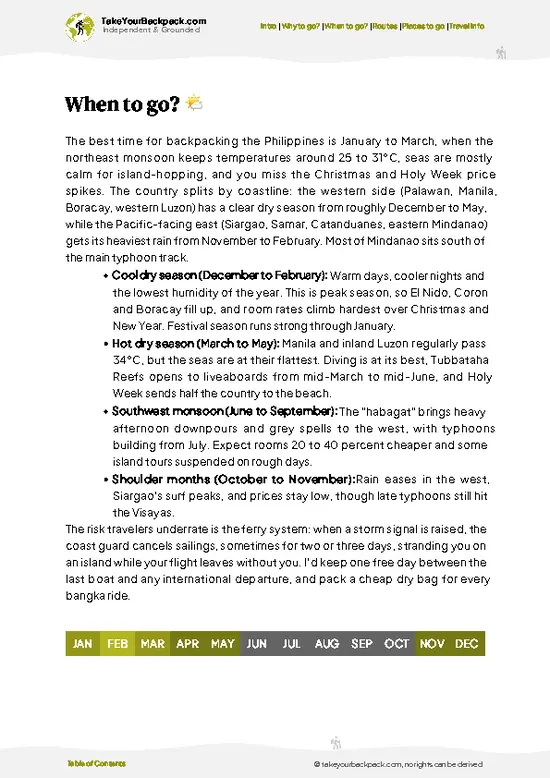
  • Topic: Weather – Manila’s climate swings between a hot, humid dry season from December to May and a wet monsoon season from June to November. The dry months offer less rain, making outdoor exploration easier, while the wet season brings heavy downpours and occasional typhoons, which can disrupt plans.

  • Topic: Temperature – Expect highs around 30-34°C (86-93°F) during the dry season, with nights cooling to about 22-25°C (72-77°F). The wet season is slightly cooler but stickier, with highs around 29-32°C (84-90°F) and humidity that can feel oppressive.

  • Topic: Daylight Hours – Manila enjoys roughly 11 to 12 hours of daylight year-round, with sunrise around 6 AM and sunset near 6 PM, giving you a consistent window for sightseeing regardless of when you visit.

  • Topic: Crowds – Peak tourist
read more 👉

  • Topic: Weather – Manila’s climate swings between a hot, humid dry season from December to May and a wet monsoon season from June to November. The dry months offer less rain, making outdoor exploration easier, while the wet season brings heavy downpours and occasional typhoons, which can disrupt plans.

  • Topic: Temperature – Expect highs around 30-34°C (86-93°F) during the dry season, with nights cooling to about 22-25°C (72-77°F). The wet season is slightly cooler but stickier, with highs around 29-32°C (84-90°F) and humidity that can feel oppressive.

  • Topic: Daylight Hours – Manila enjoys roughly 11 to 12 hours of daylight year-round, with sunrise around 6 AM and sunset near 6 PM, giving you a consistent window for sightseeing regardless of when you visit.

  • Topic: Crowds – Peak tourist flow hits from December to February, coinciding with the dry season and holiday breaks. This means busier streets, higher prices, and more competition for budget accommodations.

  • Topic: Seasonal Activities – December shines with festive Christmas and New Year celebrations, while February’s Chinese New Year brings vibrant parades. The dry months also host outdoor events and street festivals, which vanish during the rainy season.

  • Topic: Price Fluctuations – Accommodation and flights spike during the dry season, especially December and January. The wet season offers better deals but at the cost of unpredictable weather and limited outdoor options.


Pro-tip: Aim for late February to early April—weather’s still dry, crowds thin out after the holidays, and prices start to dip, giving you the best bang for your buck without sacrificing comfort.


source: climatestotravel.comJANJanuary: good for travelingFEBFebruary: highly recommended for travelingMARMarch: excellent for travelingAPRApril: excellent for travelingMAYMay: highly recommended for travelingJUNJune: fair for travelingJULJuly: fair for travelingAUGAugust: fair for travelingSEPSeptember: below average for travelingOCTOctober: below average for travelingNOVNovember: fair for travelingDECDecember: good for traveling
when-to-go

✈️ The backpacker research shortcutPhilippines Travel Guide

An offline-friendly backpacking guide with optimized travel routes, ranked highlights, transport advice, and the best areas to stay.
example page 0 from our offline Travel Guide for Philippines
example page 1 from our offline Travel Guide for Philippines
example page 2 from our offline Travel Guide for Philippines
example page 3 from our offline Travel Guide for Philippines
example page 4 from our offline Travel Guide for Philippines
example page 5 from our offline Travel Guide for Philippines
example page 6 from our offline Travel Guide for Philippines
example page 7 from our offline Travel Guide for Philippines
The digital guide (503 pages) contains:
144 highlights, ranked by travel appeal
Optimized 7, 14 & 21-day travel routes
Cities, national parks, landmarks, beaches
How to get around
Offline-friendly for travel without Wi-Fi
👉 Click to see all 30+ guide features

📅 Plan smarter in minutes, not weeks
Month by month travel advice
Festivals & national holidays
Budget expectations

🗺️ Go to the right places, skip the overrated ones
Honest pros & cons of destinations
Top hikes, parks & viewpoints
Lesser-known places most travelers miss
Clear “worth it vs skip it” guidance

🛏️ Travel smoothly without rookie mistakes
Best areas to stay
Transport systems explained simply
Common scams & safety advice
SIM cards, money & practical tips

🌍 Understand the country, not just visit it
Culture & traditions
52 Essential phrases & customs
Festivals worth planning around
Traveler-friendly historical context
Insights that make places more meaningful

📱 Built for real travel conditions
Fully downloadable PDF
Works completely offline
Optimized for phone use
Useful in remote areas & buses
Everything in one place
Save weeks of stressful planning
Get instant access to your full guide. 30‑day money-back guarantee.


By proceeding you agree to our terms.
Sent to your inbox immediately after payment • 100% Secure Checkout
Best Backpacking Travel Advisor 2025 tourism awardBest Backpacking
Travel Advisor
2025
What others say about Take Your Backpack Guides:
⭐⭐⭐⭐⭐
Fantastic, amazing amount of information!
⭐⭐⭐⭐⭐
My goodness this is amazing, it's what I've been looking for hats off too you!
⭐⭐⭐⭐⭐
I think this is absolutely BRILLIANT
⭐⭐⭐⭐
Very complete and informative. It's still missing places, but I gotta to commend you
⭐⭐⭐⭐⭐
This is truly amazing, thank you, can't wait to explore it with my kids!
⭐⭐⭐⭐⭐
Awesome resource, thank you!
⭐⭐⭐⭐⭐
This is amazing! Can't wait to explore the ones I haven't seen
⭐⭐⭐⭐
I love this! Well done, great idea.
⭐⭐⭐⭐⭐
Thanks for taking the time to make this gem!
⭐⭐⭐⭐⭐
This might be the best website I've ever seen.
⭐⭐⭐⭐⭐
Congratulations, and thank you so much for your work; it's incredibly valuable.
⭐⭐⭐⭐
In all seriousness I think you did a great job pointing out the important spots
⭐⭐⭐⭐⭐
10/10 very good
⭐⭐⭐⭐⭐
As someone who's only just starting to visit regularly this is awesome, thank you.
⭐⭐⭐⭐
Thank you very much! I'm going to visit my dad, it's going to be very useful!
⭐⭐⭐⭐⭐
This is really cool! We'll be travelling for the first time and this definitely come in handy.
⭐⭐⭐⭐⭐
You are now our minister of culture, congratulations 👨‍💼
⭐⭐⭐⭐⭐
Just wanted to tell you that this is a pearl! Going to follow your recommendations.
⭐⭐⭐⭐⭐
This is so cool. I'll definitely be using the resource for my travels soon.
⭐⭐⭐⭐⭐
This is very impressive! Good work.
⭐⭐⭐⭐⭐
This is an amazing and informative site. Very well done!

🛏️ Where to stay?Best areas to stay in Philippines

Manila’s backpacker scene orbits mainly around two neighborhoods: Ermita and Malate. Both areas strike a balance between safety, social buzz, and budget options, but they each play a slightly different game in the trade-off between time, money, and comfort.

Ermita is the classic backpacker hub. It’s packed with hostels that cater to solo travelers and budget seekers, offering dorms and shared spaces that make meeting others effortless. The vibe here is lively but not overwhelming—think street food stalls, casual bars, and easy access to museums and parks. Staying here means you’re close to the … read more 👉
Manila’s backpacker scene orbits mainly around two neighborhoods: Ermita and Malate. Both areas strike a balance between safety, social buzz, and budget options, but they each play a slightly different game in the trade-off between time, money, and comfort.

Ermita is the classic backpacker hub. It’s packed with hostels that cater to solo travelers and budget seekers, offering dorms and shared spaces that make meeting others effortless. The vibe here is lively but not overwhelming—think street food stalls, casual bars, and easy access to museums and parks. Staying here means you’re close to the pulse of Manila’s tourist circuit without the chaos of the financial district. The trade-off? Ermita can feel a bit gritty after dark, so comfort dips slightly if you’re picky about noise or street crowds.

Malate, just a stone’s throw from Ermita, leans more into the social and nightlife scene. It’s a bit more polished, with a wider range of hostels that blend affordability with a touch more comfort. If you want to trade a few pesos for a quieter sleep and a more relaxed atmosphere, Malate edges out Ermita. The neighborhood’s proximity to Manila Bay adds a breezy, open feel that’s rare in the city’s dense sprawl.

Compared to other Manila districts—like Makati or Bonifacio Global City—Ermita and Malate win for budget travelers because they offer a concentrated mix of social opportunities and essential amenities without the premium price tag or the sterile, corporate vibe. You’re sacrificing some modern comforts and pristine streets for authenticity and connection, but that’s the trade-off that makes Manila’s backpacker experience genuinely rewarding.

🚌 Getting aroundTransportation options and practical tips

Manila doesn’t run on a clock so much as a pulse—an unpredictable rhythm where schedules are more like suggestions and the city’s energy surges in waves. You’ll find yourself navigating a mix of calculated chaos and local intuition, where the fastest route might be the one you discover on the fly, not the one on a map. Time, money, and comfort are constantly in flux here, and understanding the trade-offs is your secret weapon to mastering Manila’s transit maze without losing your mind or your budget.


  • Jeepneys: The iconic, colorful minibuses that are Manila’s backbone for budget travel. They run roughly from 5:00 AM to midnight, cost around 10–20 PHP per ride, and cover most city routes. They’re slow and packed but unbeatable for price and local flavor—comfort is minimal, but the experience
read more 👉
Manila doesn’t run on a clock so much as a pulse—an unpredictable rhythm where schedules are more like suggestions and the city’s energy surges in waves. You’ll find yourself navigating a mix of calculated chaos and local intuition, where the fastest route might be the one you discover on the fly, not the one on a map. Time, money, and comfort are constantly in flux here, and understanding the trade-offs is your secret weapon to mastering Manila’s transit maze without losing your mind or your budget.


  • Jeepneys: The iconic, colorful minibuses that are Manila’s backbone for budget travel. They run roughly from 5:00 AM to midnight, cost around 10–20 PHP per ride, and cover most city routes. They’re slow and packed but unbeatable for price and local flavor—comfort is minimal, but the experience is pure Manila.


  • Light Rail Transit (LRT/MRT): Manila’s metro lines operate from about 4:30 AM to 10:00 PM, with fares between 15 and 30 PHP depending on distance. They’re faster than jeepneys and avoid street traffic, but rush hours can turn them into sardine cans. If you value speed and a fixed schedule over personal space, this is your go-to.


  • UV Express Vans: These shared vans fill the gap between jeepneys and taxis. They run from early morning until late evening, costing about 40–60 PHP per trip. They’re quicker than jeepneys and more comfortable, with air conditioning, but routes are less flexible and stops are limited. Good for medium-distance trips where you want a bit more comfort without breaking the bank.


  • Tricycles: For short hops in neighborhoods where bigger vehicles can’t go, tricycles are a must. They’re cheap (around 10–30 PHP), slow, and bumpy but offer door-to-door convenience. They’re perfect when you’re tight on time but need to squeeze into tight spaces or avoid walking under Manila’s relentless sun.


  • Walking: Often overlooked but surprisingly effective in dense districts like Intramuros or Binondo. Walking costs nothing, gives you full control over your pace, and lets you soak in street-level details that no vehicle can offer. It’s slower and physically demanding in Manila’s heat, but sometimes it’s the fastest way to get from point A to B when traffic is gridlocked.


Understanding these options means you’re not just reacting to Manila’s transit chaos—you’re playing the system. You decide when to sacrifice comfort for speed, or when to save money by embracing the city’s unpredictable flow. This is how you turn a logistical headache into a strategic advantage, making your Manila trip not just bearable but genuinely rewarding.

👛 Costs (as of 30 July 2026)Money, prices, and spending tips

Backpacking in Manila offers a range of budget options that can keep daily expenses quite manageable. Here's a breakdown of typical costs:
  • Dorm accommodation: In high season, expect to pay around USD8 to 15 per night; off-season prices can drop to USD5 to 10.
  • Meals: Street food and local eateries cost about USD2 to 5 per meal, while budget restaurants range from USD5 to 8.
  • Local transport: Jeepneys and tricycles are very affordable, usually USD0.20 to 0.50 per ride.
  • City transport pass: A daily MRT/LRT pass or combined transport card can cost around USD1.50 to 3, useful if you plan multiple trips.
  • Basic activities/entry fees: Museums and cultural sites typically charge USD1 to 5 for entry.
  • Miscellaneous expenses: Budget around USD2 to 5 for water, snacks, and small incidentals.
Overall, a realistic … read more 👉
Backpacking in Manila offers a range of budget options that can keep daily expenses quite manageable. Here's a breakdown of typical costs:
  • Dorm accommodation: In high season, expect to pay around USD8 to 15 per night; off-season prices can drop to USD5 to 10.
  • Meals: Street food and local eateries cost about USD2 to 5 per meal, while budget restaurants range from USD5 to 8.
  • Local transport: Jeepneys and tricycles are very affordable, usually USD0.20 to 0.50 per ride.
  • City transport pass: A daily MRT/LRT pass or combined transport card can cost around USD1.50 to 3, useful if you plan multiple trips.
  • Basic activities/entry fees: Museums and cultural sites typically charge USD1 to 5 for entry.
  • Miscellaneous expenses: Budget around USD2 to 5 for water, snacks, and small incidentals.
Overall, a realistic daily budget for backpackers in Manila ranges from USD20 to 40, balancing comfort and local experiences without overspending.


source: numbeo.com
⚠️ Prices can change and everyone travels differently, so take this as a rough guide. Hope it helps you plan your adventure!

🚌 Day tripsExploring the surroundings

Manila is a strategic launchpad for day trips that let you escape the city’s chaos without burning your budget or your time. It’s about picking your battles: a few hours on the road, a modest fare, and you’re somewhere that feels like a world apart.

Taal Volcano
This one’s a classic for a reason. Taal Volcano isn’t just a volcano; it’s a volcano within a lake, within a bigger lake. The trip from Manila takes about two to three hours by bus or van, which is a solid chunk of your day but well worth it. You can hike up the volcano’s rim or take a boat across Taal Lake to the crater island. Budget travelers can expect to spend around 500–700 PHP total, including transport and boat fees. The best time is the dry season, from November to April, to avoid muddy trails and slippery climbs. A rookie … read more 👉
Manila is a strategic launchpad for day trips that let you escape the city’s chaos without burning your budget or your time. It’s about picking your battles: a few hours on the road, a modest fare, and you’re somewhere that feels like a world apart.

Taal Volcano
This one’s a classic for a reason. Taal Volcano isn’t just a volcano; it’s a volcano within a lake, within a bigger lake. The trip from Manila takes about two to three hours by bus or van, which is a solid chunk of your day but well worth it. You can hike up the volcano’s rim or take a boat across Taal Lake to the crater island. Budget travelers can expect to spend around 500–700 PHP total, including transport and boat fees. The best time is the dry season, from November to April, to avoid muddy trails and slippery climbs. A rookie mistake is underestimating the sun—bring sunscreen and water.
👉 Explore Taal Volcano

Pagsanjan Falls
If you want to swap city noise for the roar of waterfalls, Pagsanjan Falls delivers. It’s about a three-hour trip each way, mostly by jeepney or bus, plus a boat ride upstream through a narrow gorge. The boat ride is the highlight, but it’s not cheap—expect to pay around 800–1000 PHP for transport and the boat. The falls themselves are refreshing and photogenic, especially in the morning when the light hits just right. Avoid weekends when the place gets crowded with locals and tourists alike.


Corregidor Island
A day trip to Corregidor is a dive into WWII history, with well-preserved ruins and guided tours that bring the past alive. The ferry ride from Manila’s port takes about an hour each way, and the total cost hovers around 1000–1200 PHP, including ferry and entrance fees. It’s best to go on a weekday to dodge the weekend rush. The island’s open terrain means you’ll want a hat and good shoes. First-timers often skip the guided tour, but it’s essential to grasp the full story.


Tagaytay
For a quick breath of fresh air and a cooler climate, Tagaytay is your go-to. Just under two hours from Manila, it’s a breeze by bus or van. The city overlooks Taal Lake and offers plenty of affordable eateries with views that don’t cost a peso. It’s perfect for a relaxed day of strolling and eating, with total expenses easily kept under 500 PHP. The trade-off is less adventure and more chill, but that’s exactly why it works. Avoid the rainy season when fog can obscure the views.
👉 Explore Tagaytay

Each of these trips demands a bit of time and a modest cash outlay, but they pay back in experiences that feel like a reset button. Manila’s traffic and urban sprawl can be a grind, but these day trips turn that into a manageable trade-off for a taste of the Philippines beyond the city limits.
Want to know what more Philippines offers?
The Philippines Travel Guide describes 144 highlights, from cities to national parks, from beaches to hikes

Get the Travel Guide -

🍲 FoodLocal Cuisine & Drinks

Manila’s food scene is a playground for your taste buds, where every bite tells a story of the Philippines’ rich history and vibrant street culture. You can’t skip trying adobo, the unofficial national dish—a tangy, garlicky stew of pork or chicken that’s comfort food at its finest. Then there’s sisig, a sizzling plate of chopped pig’s head and liver, seasoned with calamansi and chili, perfect for pairing with a cold beer after a long day of exploring.

Backpackers will find themselves drawn to the chaotic charm of markets and street stalls, where the air is thick with the scent of grilled meats and sweet banana fritters. These spots are where locals gather, making them the best places to soak up the city’s pulse while eating on the cheap. Casual eateries, often family-run, serve up hearty … read more 👉
Manila’s food scene is a playground for your taste buds, where every bite tells a story of the Philippines’ rich history and vibrant street culture. You can’t skip trying adobo, the unofficial national dish—a tangy, garlicky stew of pork or chicken that’s comfort food at its finest. Then there’s sisig, a sizzling plate of chopped pig’s head and liver, seasoned with calamansi and chili, perfect for pairing with a cold beer after a long day of exploring.

Backpackers will find themselves drawn to the chaotic charm of markets and street stalls, where the air is thick with the scent of grilled meats and sweet banana fritters. These spots are where locals gather, making them the best places to soak up the city’s pulse while eating on the cheap. Casual eateries, often family-run, serve up hearty portions of pancit (stir-fried noodles) and halo-halo, a colorful shaved-ice dessert that’s a refreshing antidote to Manila’s heat.

Drinking culture here is social and unpretentious. Sharing a bottle of San Miguel beer or a glass of tuba (fermented coconut sap) is common, often accompanied by lively conversation and laughter. Expect a relaxed vibe, but do follow local customs: it’s polite to wait for the eldest or host to start the first toast. Manila’s food and drink scene isn’t just about sustenance—it’s a gateway to connection, culture, and the city’s unmistakable energy.

🛡️ SafetyStaying Safe: What Travelers Should Know

Manila’s rhythm can feel overwhelming at first, but safety here is mostly about situational awareness rather than paranoia. Crowded spots like Divisoria market or the jeepney terminals demand your attention—pickpockets work best in chaos, so keep bags zipped and close. Solo travelers, especially at night, should stick to well-lit, busy streets; areas like Makati and Bonifacio Global City offer a more polished vibe and safer nighttime options compared to the older districts.

Scams aren’t elaborate here; expect the usual—overpriced taxi fares if you don’t insist on the meter, or street vendors pushing souvenirs aggressively. The best defense is a firm, polite “no, thank you” and knowing your route ahead. Don’t flash expensive gear or large amounts of cash; Manila’s charm is in its bustling … read more 👉
Manila’s rhythm can feel overwhelming at first, but safety here is mostly about situational awareness rather than paranoia. Crowded spots like Divisoria market or the jeepney terminals demand your attention—pickpockets work best in chaos, so keep bags zipped and close. Solo travelers, especially at night, should stick to well-lit, busy streets; areas like Makati and Bonifacio Global City offer a more polished vibe and safer nighttime options compared to the older districts.

Scams aren’t elaborate here; expect the usual—overpriced taxi fares if you don’t insist on the meter, or street vendors pushing souvenirs aggressively. The best defense is a firm, polite “no, thank you” and knowing your route ahead. Don’t flash expensive gear or large amounts of cash; Manila’s charm is in its bustling street life, not in showcasing wealth. Keep your wits about you, move confidently, and you’ll find the city’s pulse more inviting than intimidating.

Other Filipino cities near Manila

Explore more nearby:

  • San Juan—surf town, beach resorts, laid-back bars| 6 km away
  • Angeles City—Clark airfield, nightlife strip, food alleys| 74 km away
  • Clark—former air base, duty-free shops, wide highways| 82 km away

💡 Not sure where to go next?
Create a personalized itinerary for Philippines including Manila and the places that fit your trip.

Generate my itinerary

👉 Discover all cities

Or checkout all Philippines has to offer (think cities, towns, villages, national parks, hikes, beaches, festivals)
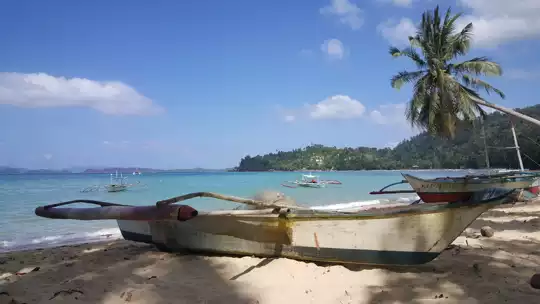
Country photo of Philippines

We 💚 feedbackFinal thoughts on visiting Manila

Manila grabs you with its chaotic energy and deep history—there’s a raw, unfiltered pulse here that’s hard to find elsewhere in Southeast Asia. But don’t expect smooth sailing; traffic jams can eat up hours, turning a short trip into a test of patience. If you’re ready to trade some comfort and time for a city that’s alive with stories and surprises, Manila rewards you with moments that stick long after you leave.

✈️ When did I visit Philippines?
Philippines being one of my favorites, due to the people and their mentality. I visited it first in 2010 and came back in January 2016 as part of my 1.5 year world trip.

✍️ Help improve this page!
The information on this page is based on my own backpacking experience in Philippines, supplemented with up-to-date research and feedback from other travelers. Travel details can change, so if you notice anything outdated or incomplete, feel free to let me know.


🙋‍♂️ Give feedback

👋 Meet the founderWho’s Behind Take Your Backpack?

Johan, backpacker and founder of TakeYourBackpackHi, I’m Johan (Netherlands 🇳🇱), the creator of TakeYourBackpack. Over the past decade, I’ve backpacked through 80+ countries across six continents, gaining extensive experience with independent travel, long-term trips, and overland routes.

This site is built on a combination of firsthand travel experience and carefully curated insights from other backpackers. Many guides are based on places I’ve personally visited, while others bring together tips, observations, and practical advice shared by trusted travelers I’ve met along the way.

The goal is to provide realistic, experience-driven guidance — not generic itineraries — so you can explore destinations with better context, clearer expectations, and more confidence.

Get full country guide •
Instant download • 144 highlights • Full Offline guide