×

Philippines🇵🇭 | citiesNaga Citypilgrimage site, river park, spicy cuisine | things to do and best time to go

Explore LucenaExplore Sorsogon City

Backpacking in Naga City
👍 Recommendedcity ranked #13
By Johan Kruseman 🇳🇱 | Updated June 4, 2026

A lot of travelers assume Naga City is just a transit stop between Manila and the beaches of Caramoan; that’s lazy intel. Naga sits in Camarines Sur, in the Bicol Region of southern Luzon, and it’s one of those mid-sized Philippine cities where real daily life is on full display. For backpackers, it’s cheap, walkable, and easy to navigate, with jeepneys and tricycles covering almost everywhere you care about. The vibe is student-town meets pilgrimage hub: Plaza Quince Martires, the old Naga Metropolitan Cathedral, and the busy Centro streets give it character, but nightlife is modest and the backpacker scene is thin, so you’ll meet more locals than travelers. Compared with Legazpi, Naga has less dramatic scenery but better food, friendlier prices, and a safer, more relaxed feel, especially at night around the main plazas.

Discover everything you want to know in the 📖 Philippines Travel Guide.
Loading the map 🌍
CLICK TO FILTER
cities
towns
landmarks
national parks
hikes
beaches
attractions
festivals
regions
SHOW COUNTRY’S BESTSHOW ALL

✨ Why go?
Ranked #13 city in Philippines
Reasons people choose to visit here

Naga City is a strategic basecamp for backpackers, balancing affordability and accessibility. The hostels here are budget-friendly, often buzzing with fellow travelers, making it easy to swap stories and tips. The walkability of the city means you can explore local markets and street food stalls without breaking a sweat. When night falls, the nightlife offers a mix of chill bars and lively spots, perfect for unwinding after a day of adventure. Plus, Naga serves as a launchpad for day trips to nearby natural wonders, maximizing your experience without the hassle of constant travel. If you’re looking for a place that combines value and convenience, Naga City fits the bill perfectly.
Want to include Naga City in your Philippines route?
Create a personalized Philippines itinerary that includes Naga City and the places that fit your trip — based on your travel style, budget, and available time. Get your route in seconds.

Generate my trip

💡 HighlightsMust-see experiences and standout moments

  1. Basilica Minore of Our Lady of Peñafrancia — The spiritual heart of Naga: a working basilica, constant stream of pilgrims, and the centerpiece of the huge Peñafrancia festival. Even outside festival season the church and its quiet grounds give you a real sense of local devotion and history.
  2. Naga Metropolitan Cathedral (Cathedral of Saint John the Evangelist) — Old stone cathedral sitting in the historic downtown. Great for architecture fans and for seeing where civic life and faith have met in Naga for generations.
  3. Plaza Quince Martires — A shaded civic square that honors 15 Bicolano patriots. It’s a compact, walkable place to feel local history, watch everyday life, and spot old monuments and government buildings around it.
  4. Gaston Park — Small, leafy park beside the cathedral with period
read more 👉
  1. Basilica Minore of Our Lady of Peñafrancia — The spiritual heart of Naga: a working basilica, constant stream of pilgrims, and the centerpiece of the huge Peñafrancia festival. Even outside festival season the church and its quiet grounds give you a real sense of local devotion and history.
  2. Naga Metropolitan Cathedral (Cathedral of Saint John the Evangelist) — Old stone cathedral sitting in the historic downtown. Great for architecture fans and for seeing where civic life and faith have met in Naga for generations.
  3. Plaza Quince Martires — A shaded civic square that honors 15 Bicolano patriots. It’s a compact, walkable place to feel local history, watch everyday life, and spot old monuments and government buildings around it.
  4. Gaston Park — Small, leafy park beside the cathedral with period lamps, old trees and a relaxed vibe. Perfect for people-watching, grabbing a coconut, or starting a walking tour of the historic core.
  5. Museo de Nueva Caceres (Naga City Museum) — Local artifacts, old photographs and exhibits about the city’s Spanish-colonial and Bicolano past. You’ll get context here that makes the rest of the city’s heritage spots mean more.
  6. Naga Riverfront / Riverwalk — A pleasant riverside stretch for evening strolls: vendors, small eateries, lights over the water and a chance to see Naga’s everyday rhythm away from the churches and plazas.
  7. Naga Public Market (Central Market) — No-nonsense, bustling market where you can sample Bicol flavors — laing, pili nuts, sili products — and watch how locals shop. Essential for foodies and anyone who likes honest, lively markets.
  8. Peñafrancia Escalinata and Pilgrim Trail — The stone steps and footpaths used by pilgrims (and adventurous walkers) connecting parts of the Penafrancia complex. Physically visiting these gives you a tactile sense of the pilgrimage tradition.
  9. Ateneo de Naga University campus — A compact, well-kept campus with historic buildings, a bell tower and a thoughtful, scholarly atmosphere. Campus walks here are pleasant and give insight into the city’s educational and cultural life.
  10. Heritage Streets of Downtown Naga (Nueva Caceres area) — Walkable lanes with old houses, civic buildings and small museums that together form Naga’s heritage district. You don’t need a formal tour to appreciate the layered history visible in the facades and alleys.
If you’ve got extra time, good day trips nearby include Mount Isarog Natural Park (my personal favorite for a quick nature escape), the CamSur Watersports Complex in Pili for wakeboarding or kitesurfing, and Bagasbas Beach for an easy surf-and-sun day.
Spotted a mistake or missing something? Contact us.

Things to do near Naga City

Ratings based on Tripadvisor reviews. When you book through this link, you support our work at no extra cost to you.

🏘️ NeighborhoodsHow different areas shape the experience

Naga City offers a blend of culture, affordability, and accessibility, making it a solid stop for backpackers.

Centro Naga: This is the heart of the city, buzzing with energy. You’ll find local eateries and shops. It’s walkable, with easy access to public transport. Perfect for short stays, but the nightlife can get lively, so expect some noise.

Concepcion Pequeña: A quieter neighborhood, ideal for those seeking a more laid-back vibe. It’s still close to the action but offers a peaceful retreat. Affordable guesthouses abound, making it suitable for longer stays. Walkability is decent, but you might need a trike for longer distances.

Bagumbayan Sur: This area is a hidden treasure for budget-conscious travelers. It’s less touristy, with local markets and street food. While nightlife is minimal, … read more 👉
Naga City offers a blend of culture, affordability, and accessibility, making it a solid stop for backpackers.

Centro Naga: This is the heart of the city, buzzing with energy. You’ll find local eateries and shops. It’s walkable, with easy access to public transport. Perfect for short stays, but the nightlife can get lively, so expect some noise.

Concepcion Pequeña: A quieter neighborhood, ideal for those seeking a more laid-back vibe. It’s still close to the action but offers a peaceful retreat. Affordable guesthouses abound, making it suitable for longer stays. Walkability is decent, but you might need a trike for longer distances.

Bagumbayan Sur: This area is a hidden treasure for budget-conscious travelers. It’s less touristy, with local markets and street food. While nightlife is minimal, it’s a great spot for immersing yourself in local life. Transport options are available, but you’ll want to plan your routes.

Pacol: A bit further out, this area offers stunning views and nature trails. It’s perfect for those who want to escape the city buzz. Accommodations are cheaper, but you’ll need to rely on transport. Ideal for longer stays if you love the outdoors.

⌛️ 1 dayWhat you can realistically do in a day

Naga City, a vibrant hub in the Bicol region, is a delightful blend of rich history, local culture, and culinary treasures. Start your day in the bustling downtown area, where the iconic Naga Cathedral stands tall. Its intricate architecture is a testament to the city’s Spanish colonial past. After soaking in the sights, grab breakfast at a nearby local eatery. Try the “bicol express” — a spicy coconut dish that will wake up your taste buds.

In the afternoon, head to the nearby Plaza Rizal. This green oasis is perfect for a leisurely stroll. You’ll find locals enjoying the shade, and it’s a great spot to people-watch. For something off the beaten path, visit the nearby “Kawa-Kawa Hill.” It’s a short hike, but the panoramic views of the city and surrounding landscapes are worth every step. … read more 👉
Naga City, a vibrant hub in the Bicol region, is a delightful blend of rich history, local culture, and culinary treasures. Start your day in the bustling downtown area, where the iconic Naga Cathedral stands tall. Its intricate architecture is a testament to the city’s Spanish colonial past. After soaking in the sights, grab breakfast at a nearby local eatery. Try the “bicol express” — a spicy coconut dish that will wake up your taste buds.

In the afternoon, head to the nearby Plaza Rizal. This green oasis is perfect for a leisurely stroll. You’ll find locals enjoying the shade, and it’s a great spot to people-watch. For something off the beaten path, visit the nearby “Kawa-Kawa Hill.” It’s a short hike, but the panoramic views of the city and surrounding landscapes are worth every step. Plus, you’ll encounter fewer tourists here, giving you a more authentic experience.

As evening falls, make your way to the bustling food stalls along Magsaysay Avenue. Dive into local street food like “laing” and “sili ice cream.” The atmosphere is electric, filled with laughter and the aroma of grilled delights. Naga City may be small, but it’s packed with experiences that linger long after you leave.
Turn your Naga City visit into an Philippines adventure
Build a complete Philippines route with Naga City, hidden gems, must-see destinations, and realistic travel times included.

Generate my trip

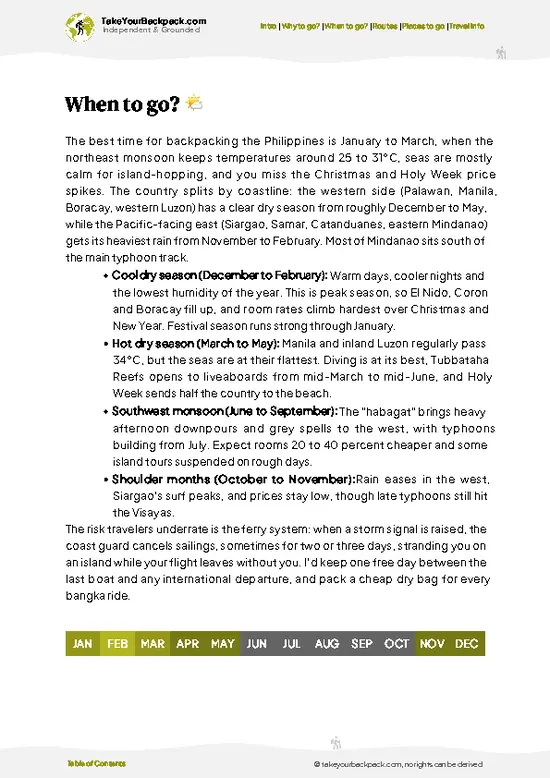
🌤️ When to go?Best time to visit Naga City


  • Topic: Weather – The dry season from December to May is your best bet. Expect mostly sunny days and minimal rain, perfect for trekking and city strolls. June to November brings heavy monsoon rains, which can turn trails into mudslides and flood streets.

  • Topic: Temperature – Temperatures hover between 24°C to 32°C (75°F to 90°F) year-round. The dry months feel warmer but less humid, making outdoor activities more comfortable. The rainy season spikes humidity, which can sap your energy fast.

  • Topic: Daylight Hours – Roughly 11 to 12 hours of daylight year-round. Sunrise is around 6 AM, sunset near 6 PM, giving you a solid window for exploring without rushing.

  • Topic: Crowds – Peak tourist influx aligns with the dry season, especially around Holy Week and local festivals. Expect busier
read more 👉

  • Topic: Weather – The dry season from December to May is your best bet. Expect mostly sunny days and minimal rain, perfect for trekking and city strolls. June to November brings heavy monsoon rains, which can turn trails into mudslides and flood streets.

  • Topic: Temperature – Temperatures hover between 24°C to 32°C (75°F to 90°F) year-round. The dry months feel warmer but less humid, making outdoor activities more comfortable. The rainy season spikes humidity, which can sap your energy fast.

  • Topic: Daylight Hours – Roughly 11 to 12 hours of daylight year-round. Sunrise is around 6 AM, sunset near 6 PM, giving you a solid window for exploring without rushing.

  • Topic: Crowds – Peak tourist influx aligns with the dry season, especially around Holy Week and local festivals. Expect busier accommodations and attractions then. Off-peak months offer quieter streets but come with the risk of rain interruptions.

  • Topic: Seasonal Activities – Festivals like the Penafrancia Fiesta in September draw crowds but offer rich cultural immersion. Dry months favor outdoor adventures like hiking Mt. Isarog or island hopping.

  • Topic: Price Fluctuations – Accommodation and transport costs spike during peak dry months and festival times. Booking early can save you a chunk. The rainy season sees lower prices but fewer options and less predictable conditions.


Pro-tip: Aim for late February to April—dry, warm, and just before the festival rush. You get the best weather and decent prices without the crowds swallowing your vibe.


source: climatestotravel.comJANJanuary: highly recommended for travelingFEBFebruary: excellent for travelingMARMarch: excellent for travelingAPRApril: excellent for travelingMAYMay: highly recommended for travelingJUNJune: fair for travelingJULJuly: fair for travelingAUGAugust: fair for travelingSEPSeptember: good for travelingOCTOctober: fair for travelingNOVNovember: fair for travelingDECDecember: highly recommended for traveling
when-to-go

✈️ The backpacker research shortcutPhilippines Travel Guide

An offline-friendly backpacking guide with optimized travel routes, ranked highlights, transport advice, and the best areas to stay.
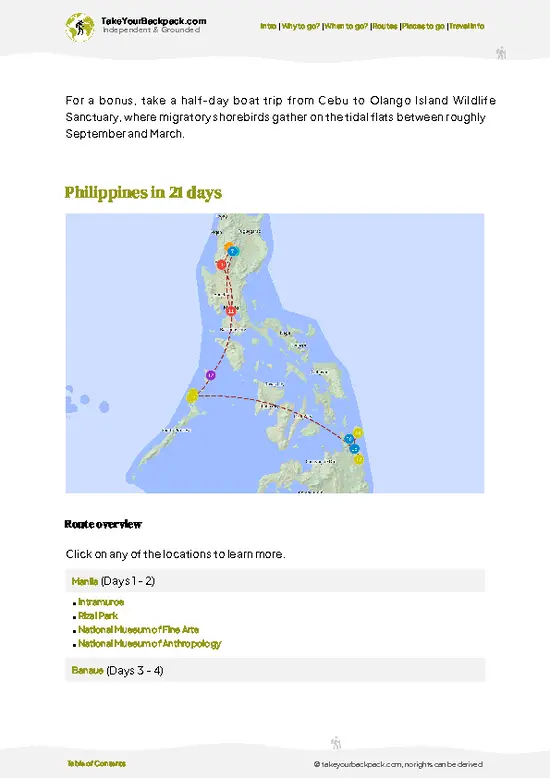
example page 0 from our offline Travel Guide for Philippines
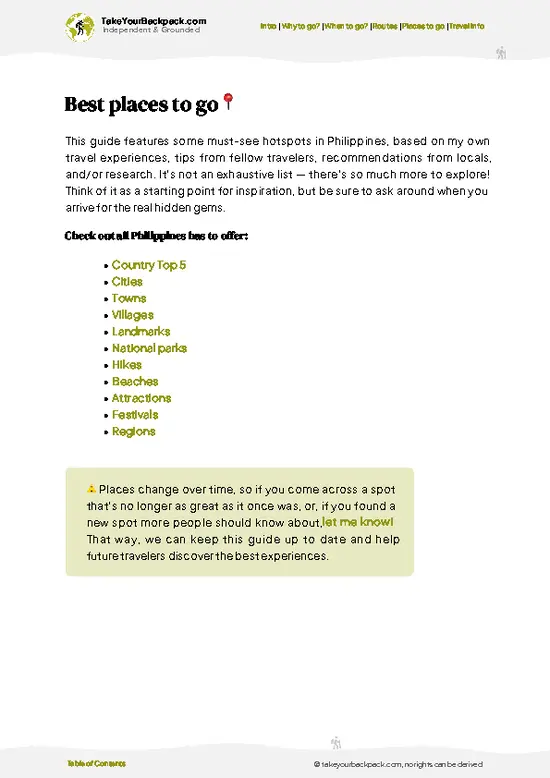
example page 1 from our offline Travel Guide for Philippines
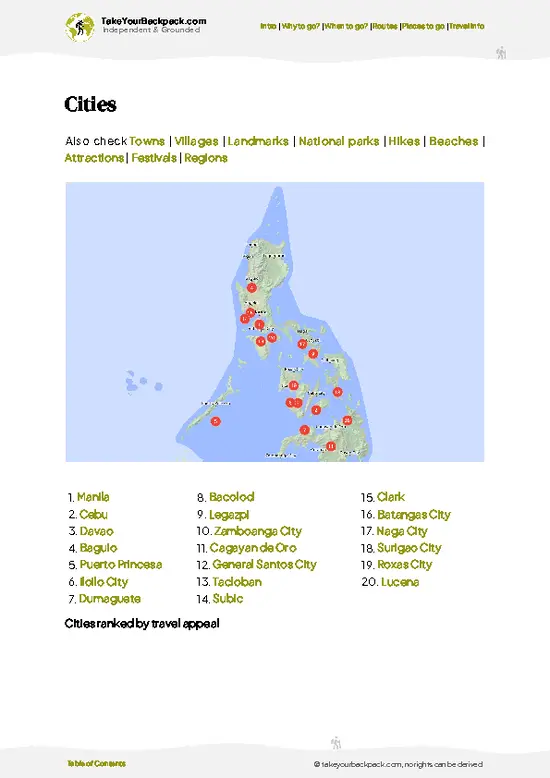
example page 2 from our offline Travel Guide for Philippines
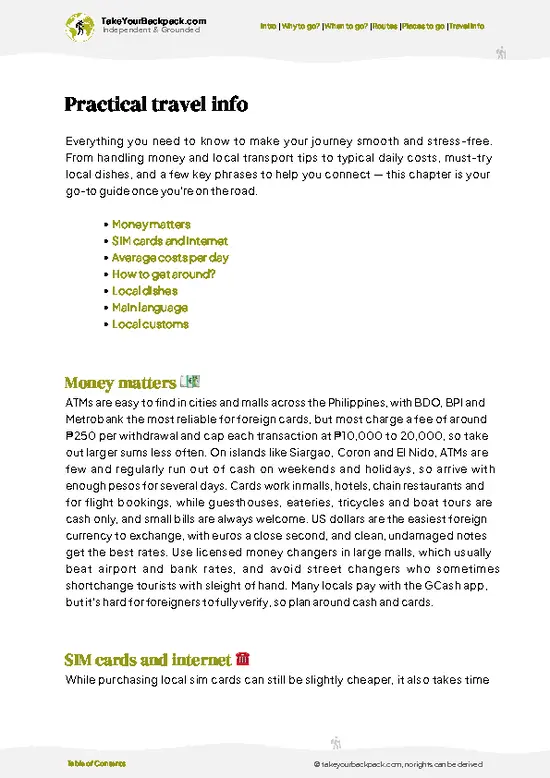
example page 3 from our offline Travel Guide for Philippines
example page 4 from our offline Travel Guide for Philippines
example page 5 from our offline Travel Guide for Philippines
example page 6 from our offline Travel Guide for Philippines
example page 7 from our offline Travel Guide for Philippines
The digital guide (505 pages) contains:
144 highlights, ranked by travel appeal
Optimized 7, 14 & 21-day travel routes
Cities, national parks, landmarks, beaches
How to get around
Offline-friendly for travel without Wi-Fi
👉 Click to see all 30+ guide features

📅 Plan smarter in minutes, not weeks
Month by month travel advice
Festivals & national holidays
Budget expectations

🗺️ Go to the right places, skip the overrated ones
Honest pros & cons of destinations
Top hikes, parks & viewpoints
Lesser-known places most travelers miss
Clear “worth it vs skip it” guidance

🛏️ Travel smoothly without rookie mistakes
Best areas to stay
Transport systems explained simply
Common scams & safety advice
SIM cards, money & practical tips

🌍 Understand the country, not just visit it
Culture & traditions
52 Essential phrases & customs
Festivals worth planning around
Traveler-friendly historical context
Insights that make places more meaningful

📱 Built for real travel conditions
Fully downloadable PDF
Works completely offline
Optimized for phone use
Useful in remote areas & buses
Everything in one place
Save weeks of stressful planning
Get instant access to your full guide. 30‑day money-back guarantee.


By proceeding you agree to our terms.
Sent to your inbox immediately after payment • 100% Secure Checkout
Best Backpacking Travel Advisor 2025 tourism awardBest Backpacking
Travel Advisor
2025
What others say about Take Your Backpack Guides:
⭐⭐⭐⭐⭐
Fantastic, amazing amount of information!
⭐⭐⭐⭐⭐
My goodness this is amazing, it's what I've been looking for hats off too you!
⭐⭐⭐⭐⭐
I think this is absolutely BRILLIANT
⭐⭐⭐⭐
Very complete and informative. It's still missing places, but I gotta to commend you
⭐⭐⭐⭐⭐
This is truly amazing, thank you, can't wait to explore it with my kids!
⭐⭐⭐⭐⭐
Awesome resource, thank you!
⭐⭐⭐⭐⭐
This is amazing! Can't wait to explore the ones I haven't seen
⭐⭐⭐⭐
I love this! Well done, great idea.
⭐⭐⭐⭐⭐
Thanks for taking the time to make this gem!
⭐⭐⭐⭐⭐
This might be the best website I've ever seen.
⭐⭐⭐⭐⭐
Congratulations, and thank you so much for your work; it's incredibly valuable.
⭐⭐⭐⭐
In all seriousness I think you did a great job pointing out the important spots
⭐⭐⭐⭐⭐
10/10 very good
⭐⭐⭐⭐⭐
As someone who's only just starting to visit regularly this is awesome, thank you.
⭐⭐⭐⭐
Thank you very much! I'm going to visit my dad, it's going to be very useful!
⭐⭐⭐⭐⭐
This is really cool! We'll be travelling for the first time and this definitely come in handy.
⭐⭐⭐⭐⭐
You are now our minister of culture, congratulations 👨‍💼
⭐⭐⭐⭐⭐
Just wanted to tell you that this is a pearl! Going to follow your recommendations.
⭐⭐⭐⭐⭐
This is so cool. I'll definitely be using the resource for my travels soon.
⭐⭐⭐⭐⭐
This is very impressive! Good work.
⭐⭐⭐⭐⭐
This is an amazing and informative site. Very well done!

🛏️ Where to stay?Where staying makes the most sense

Downtown Naga City is the backpacker’s sweet spot. It’s where you’ll find the pulse of the city—safe streets, plenty of budget hostels, and a social vibe that’s hard to beat. This area balances convenience and comfort without bleeding your wallet dry. You’re close to markets, eateries, and transport hubs, so you save time and energy, which is gold when you’re on the move. Compared to quieter residential zones, downtown offers more chances to meet fellow travelers and locals, turning solo trips into shared stories.

If you veer too far into the suburbs, you’ll trade comfort for isolation—cheaper … read more 👉
Downtown Naga City is the backpacker’s sweet spot. It’s where you’ll find the pulse of the city—safe streets, plenty of budget hostels, and a social vibe that’s hard to beat. This area balances convenience and comfort without bleeding your wallet dry. You’re close to markets, eateries, and transport hubs, so you save time and energy, which is gold when you’re on the move. Compared to quieter residential zones, downtown offers more chances to meet fellow travelers and locals, turning solo trips into shared stories.

If you veer too far into the suburbs, you’ll trade comfort for isolation—cheaper stays but fewer social opportunities and longer commutes. Meanwhile, the tourist-heavy spots near major landmarks can jack up prices and feel less authentic. Downtown Naga nails the sweet spot: enough buzz to keep you engaged, enough calm to recharge, and hostels that cater to the budget-conscious without sacrificing safety or vibe.

🚌 Getting aroundHow to get from A to B

Naga City moves with a rhythm that’s part old-school discipline, part laid-back local charm. You’ll find the streets pulsing with a steady flow of jeepneys and tricycles, each following routes that feel both mapped out and flexible, like a jazz solo riffing off a classic tune. Time here isn’t a strict master but a loose guide—expect some waiting, some bargaining, and a lot of watching the ebb and flow of people and vehicles to catch your moment. This city’s transit is a dance between budget constraints and the need to get somewhere, and knowing the moves means you’re not just surviving the system—you’re playing it like a pro.


  • Walking: The ultimate budget option. Naga’s compact downtown means you can cover key spots on foot in 15-30 minutes. Zero cost, full control, and the best way to
read more 👉
Naga City moves with a rhythm that’s part old-school discipline, part laid-back local charm. You’ll find the streets pulsing with a steady flow of jeepneys and tricycles, each following routes that feel both mapped out and flexible, like a jazz solo riffing off a classic tune. Time here isn’t a strict master but a loose guide—expect some waiting, some bargaining, and a lot of watching the ebb and flow of people and vehicles to catch your moment. This city’s transit is a dance between budget constraints and the need to get somewhere, and knowing the moves means you’re not just surviving the system—you’re playing it like a pro.


  • Walking: The ultimate budget option. Naga’s compact downtown means you can cover key spots on foot in 15-30 minutes. Zero cost, full control, and the best way to soak in street life, but it demands decent weather and stamina.


  • Jeepneys: The backbone of local transit. Runs roughly from 5:00 AM to 9:00 PM, fares hover around 8-12 PHP depending on distance. They’re slow, often packed, but dirt-cheap and a cultural experience. Comfort is minimal—think open windows, loud chatter, and the occasional bump.


  • Tricycles: Your go-to for short hops or off-route destinations. Available almost 24/7, fares start at about 10 PHP for short trips. Faster and more flexible than jeepneys, but prices can spike if you’re traveling late or off the beaten path. Comfort is basic but shielded from the elements.


  • Motorcycle Taxis: A step up in speed and agility, perfect for solo travelers in a hurry. Prices vary widely, usually 20-50 PHP depending on distance. No shelter from weather, but unbeatable for weaving through traffic and cutting travel time in half.

👛 Costs (as of 28 June 2026)How expensive it really is

Backpacking in Naga City, Philippines, offers a clear trade-off between time, money, and comfort, and knowing the daily costs lets you play that trade-off like a pro.
  • Dorm Accommodation (High Season): Expect to pay around $8 to $12 per night. High season means more tourists, so prices tick up, but you’re still in budget territory with basic but clean dorms.
  • Dorm Accommodation (Off-Season): Prices drop to about $5 to $8 per night. Fewer travelers mean better deals, sometimes with added perks like free Wi-Fi or breakfast.
  • Meals: Street food and local eateries dominate here. Budget $2 to $5 per meal. You can eat well on $6 to $12 a day if you stick to local dishes like Bicol Express or fresh seafood.
  • Local Transport: Jeepneys and tricycles are the go-to. A typical ride costs $0.20 to $0.50.
read more 👉
Backpacking in Naga City, Philippines, offers a clear trade-off between time, money, and comfort, and knowing the daily costs lets you play that trade-off like a pro.
  • Dorm Accommodation (High Season): Expect to pay around $8 to $12 per night. High season means more tourists, so prices tick up, but you’re still in budget territory with basic but clean dorms.
  • Dorm Accommodation (Off-Season): Prices drop to about $5 to $8 per night. Fewer travelers mean better deals, sometimes with added perks like free Wi-Fi or breakfast.
  • Meals: Street food and local eateries dominate here. Budget $2 to $5 per meal. You can eat well on $6 to $12 a day if you stick to local dishes like Bicol Express or fresh seafood.
  • Local Transport: Jeepneys and tricycles are the go-to. A typical ride costs $0.20 to $0.50. Budget around $1.50 to $3 daily if you’re hopping around the city frequently.
  • City Transport Pass: Not common in Naga City. Most travelers rely on individual fares, so no need to factor in a pass cost.
  • Basic Activities/Entry Fees: Most cultural sites and parks charge minimal fees, usually $1 to $3. Budget $3 to $6 daily if you plan to explore museums, churches, or natural spots.
  • Miscellaneous Expenses: This covers bottled water, snacks, occasional coffee, or small souvenirs. Around $2 to $5 daily is a safe bet.

Total daily budget ranges from roughly $15 on a shoestring off-season trip to about $30 if you lean into a bit more comfort and activity. Naga City rewards those who balance frugality with local flavor—spend smart, and you’ll get a rich experience without breaking the bank.
⚠️ Prices can change and everyone travels differently, so take this as a rough guide. Hope it helps you plan your adventure!

🚌 Day tripsWhere to go beyond the main area

Naga City is a fantastic launchpad for day trips that pack a punch without draining your wallet or time. Here are some top picks that will elevate your backpacking experience.

**Cagsawa Ruins**
Just a two-hour bus ride from Naga, the Cagsawa Ruins offer a glimpse into history with the iconic Mayon Volcano looming in the background. The entrance fee is minimal, and you can easily grab a local meal for under $5. The best time to visit is early morning to avoid the crowds and catch that golden light. A common mistake? Many travelers rush through without taking the time to explore the surrounding area, which is rich in local culture and stunning views.


**Lake Buhi**
About an hour from Naga, Lake Buhi is a serene escape where you can rent a kayak for around $3. The lake is famous for its … read more 👉
Naga City is a fantastic launchpad for day trips that pack a punch without draining your wallet or time. Here are some top picks that will elevate your backpacking experience.

**Cagsawa Ruins**
Just a two-hour bus ride from Naga, the Cagsawa Ruins offer a glimpse into history with the iconic Mayon Volcano looming in the background. The entrance fee is minimal, and you can easily grab a local meal for under $5. The best time to visit is early morning to avoid the crowds and catch that golden light. A common mistake? Many travelers rush through without taking the time to explore the surrounding area, which is rich in local culture and stunning views.


**Lake Buhi**
About an hour from Naga, Lake Buhi is a serene escape where you can rent a kayak for around $3. The lake is famous for its “sinarapan,” the world’s smallest fish, and the lush scenery is perfect for a picnic. Aim for a weekday visit to dodge the weekend crowds. Don’t forget to bring your own snacks; local options can be limited.


**Colasi Waterfalls**
A short 30-minute ride will take you to Colasi Waterfalls, where you can cool off in the refreshing waters after a short hike. The entrance fee is negligible, and you can spend the day swimming and relaxing. The rainy season (June to November) brings more water flow, but be cautious of slippery trails. First-timers often underestimate the hike; wear sturdy shoes!


**Mount Isarog**
For the adventurous, a day hike up Mount Isarog is a must. It’s about an hour’s drive from Naga, and while the trek can be challenging, the panoramic views are worth every drop of sweat. Budget around $10 for transportation and snacks. The dry season (December to May) is ideal for clearer skies. Many hikers overlook the importance of hiring a local guide, which can enhance your experience and keep you safe.


These trips not only enrich your journey but also allow you to experience the local culture and natural beauty that the Philippines has to offer.
Want to know what more Philippines offers?
The Philippines Travel Guide describes 144 highlights, from cities to national parks, from beaches to hikes

Get the Travel Guide -

🍲 FoodEating & Drinking in Naga City

Naga City is a **food lover’s paradise**, bursting with flavors that tell stories. Dive into **Bicol Express**, a spicy pork dish swimming in coconut milk, or savor the **laing**, made from dried taro leaves cooked in coconut cream. Both are staples that showcase the region’s love for heat and richness.

Street food is where the magic happens. Vendors line the streets, serving up **sizzling sisig** and **fish balls** on skewers, perfect for a quick bite between adventures. The local markets buzz with energy, offering fresh produce and snacks that invite you to taste as you wander.

When it comes to drinks, don’t miss the **Bicolano coffee**—rich and robust, it’s a perfect pick-me-up. Embrace the local custom of sharing food; it’s a way to connect with fellow travelers and locals alike. Enjoying … read more 👉
Naga City is a **food lover’s paradise**, bursting with flavors that tell stories. Dive into **Bicol Express**, a spicy pork dish swimming in coconut milk, or savor the **laing**, made from dried taro leaves cooked in coconut cream. Both are staples that showcase the region’s love for heat and richness.

Street food is where the magic happens. Vendors line the streets, serving up **sizzling sisig** and **fish balls** on skewers, perfect for a quick bite between adventures. The local markets buzz with energy, offering fresh produce and snacks that invite you to taste as you wander.

When it comes to drinks, don’t miss the **Bicolano coffee**—rich and robust, it’s a perfect pick-me-up. Embrace the local custom of sharing food; it’s a way to connect with fellow travelers and locals alike. Enjoying a meal here is not just about the food; it’s about the experience.

🛡️ SafetyStaying Safe: What Travelers Should Know

Naga City is generally safe, but like any urban area, staying aware is key. Stick to well-lit streets at night, especially if you’re solo. The city has a vibrant nightlife, but avoid wandering too far off the beaten path after dark.

Watch for common scams, like overly friendly locals offering unsolicited help that leads to inflated prices. Always agree on fares before hopping into a tricycle or jeepney. Everyday annoyances include persistent vendors; a polite but firm “no, thank you” usually does the trick. Carry yourself confidently, and you’ll navigate the city like a pro.

Other Filipino cities near Naga City

Explore more nearby:

  • Legazpi—Mayon Volcano, black sand coast, chili markets| 80 km away
  • Sorsogon City—whale shark tours, hot springs, mangrove forests| 106 km away
  • Masbate City—rodeo festival, gold mining, island ferries| 151 km away

💡 Not sure where to go next?
Create a personalized itinerary for Philippines including Naga City and the places that fit your trip.

Generate my itinerary

👉 Discover all cities

Or checkout all Philippines has to offer (think cities, towns, villages, national parks, hikes, beaches, festivals)
Country photo of Philippines

We 💚 feedbackFinal thoughts on visiting Naga City

Naga City is a treasure trove of local culture, especially during the Peñafrancia Festival. The energy is electric, and you’ll feel the heart of the community. But be ready for the humidity—it can be stifling. Embrace it, and you’ll find the warmth of the people makes it all worthwhile.

✈️ When did I visit Philippines?
Philippines being one of my favorites, due to the people and their mentality. I visited it first in 2010 and came back in January 2016 as part of my 1.5 year world trip.

✍️ Help improve this page!
The information on this page is based on my own backpacking experience in Philippines, supplemented with up-to-date research and feedback from other travelers. Travel details can change, so if you notice anything outdated or incomplete, feel free to let me know.


🙋‍♂️ Give feedback

👋 Meet the founderWho’s Behind Take Your Backpack?

Johan, backpacker and founder of TakeYourBackpackHi, I’m Johan (Netherlands 🇳🇱), the creator of TakeYourBackpack. Over the past decade, I’ve backpacked through 80+ countries across six continents, gaining extensive experience with independent travel, long-term trips, and overland routes.

This site is built on a combination of firsthand travel experience and carefully curated insights from other backpackers. Many guides are based on places I’ve personally visited, while others bring together tips, observations, and practical advice shared by trusted travelers I’ve met along the way.

The goal is to provide realistic, experience-driven guidance — not generic itineraries — so you can explore destinations with better context, clearer expectations, and more confidence.

Get full country guide •
Instant download • 144 highlights • Full Offline guide