×

Philippines🇵🇭 | attractionsNational Museum of Natural Historybiodiversity exhibits, tree of life atrium, endemic species | things to do and best time to go

Explore National Museum of AnthropologyExplore Ayala Museum

Backpacking in National Museum of Natural History
🌟 Highlightattraction ranked #8
By Johan Kruseman 🇳🇱 | Updated May 10, 2026

Everyone’s seen the Instagram shots of the giant tree replica in the atrium—yes, it’s cool, but if you’re coming to Manila’s National Museum of Natural History just for that, you’re missing the real story. The real magic is in the way this place stitches together the Philippines’ wild, unruly biodiversity and the tangled history of its islands, all under one roof in Rizal Park, smack in the heart of Manila. For backpackers, it’s a rare chance to get a crash course in what makes this country tick, from ancient fossils to the mind-bending variety of local wildlife. It’s free, which is a minor miracle in a city where most things aren’t. Expect crowds, especially on weekends, and don’t expect peace and quiet—this is Manila, after all. But if you want to understand the Philippines beyond the beaches, this is where you start.

Discover everything you want to know in the 📖 Philippines Travel Guide.
Loading the map 🌍
CLICK TO FILTER
cities
towns
landmarks
national parks
hikes
beaches
attractions
festivals
regions
SHOW COUNTRY’S BESTSHOW ALL

✨ Why go?
Ranked #8 attraction in Philippines
What sets this place apart

The National Museum of Natural History in the Philippines isn’t just another stop on the tourist checklist—it’s a cornerstone for anyone serious about understanding the country’s soul. Sure, it draws crowds, especially on weekends, and yes, it’s free, which means you’ll share space with school groups and families. But here’s the kicker: this place packs a punch with its deep dive into the archipelago’s biodiversity and cultural roots. You’re not just looking at fossils or plants; you’re tracing the story of a nation shaped by nature and history. The building itself, a neoclassical beauty, stands as a reminder of the Philippines’ colonial past and its journey to identity. For backpackers, it’s a major milestone—an educational pit stop that balances the adrenaline of island hopping with a grounding … read more 👉
The National Museum of Natural History in the Philippines isn’t just another stop on the tourist checklist—it’s a cornerstone for anyone serious about understanding the country’s soul. Sure, it draws crowds, especially on weekends, and yes, it’s free, which means you’ll share space with school groups and families. But here’s the kicker: this place packs a punch with its deep dive into the archipelago’s biodiversity and cultural roots. You’re not just looking at fossils or plants; you’re tracing the story of a nation shaped by nature and history. The building itself, a neoclassical beauty, stands as a reminder of the Philippines’ colonial past and its journey to identity. For backpackers, it’s a major milestone—an educational pit stop that balances the adrenaline of island hopping with a grounding dose of perspective. Skip it, and you miss the context that turns beaches and mountains into a living, breathing story.
Want to include National Museum of Natural History in your Philippines route?
Create a personalized Philippines itinerary that includes National Museum of Natural History and the places that fit your trip — based on your travel style, budget, and available time. Get your route in seconds.

Generate my trip

💡 HighlightsKey sights and experiences for travelers

The Tree of Life Atrium
Let’s get real: you’ll see this in every selfie, but it’s not just a pretty dome. The Tree of Life is a six-story glass-and-steel marvel that looks like a spaceship landed in the heart of Manila. It’s the museum’s architectural flex, but it’s also a living symbol—housing a DNA double helix at its core. The light here is wild at midday, and the sense of scale makes you feel like you’ve shrunk to ant size. It’s the rare Instagram-famous spot that actually delivers in person.


Lolong: The World’s Largest Crocodile in Captivity
You want spectacle? Here’s spectacle. Lolong, the taxidermied saltwater crocodile, is a local legend—over 20 feet of prehistoric muscle and teeth. The display doesn’t sugarcoat the story: Lolong was captured after terrorizing a village, and his sheer … read more 👉
The Tree of Life Atrium
Let’s get real: you’ll see this in every selfie, but it’s not just a pretty dome. The Tree of Life is a six-story glass-and-steel marvel that looks like a spaceship landed in the heart of Manila. It’s the museum’s architectural flex, but it’s also a living symbol—housing a DNA double helix at its core. The light here is wild at midday, and the sense of scale makes you feel like you’ve shrunk to ant size. It’s the rare Instagram-famous spot that actually delivers in person.


Lolong: The World’s Largest Crocodile in Captivity
You want spectacle? Here’s spectacle. Lolong, the taxidermied saltwater crocodile, is a local legend—over 20 feet of prehistoric muscle and teeth. The display doesn’t sugarcoat the story: Lolong was captured after terrorizing a village, and his sheer size is a gut-punch reminder of the wildness lurking in the Philippine swamps. Kids stare, adults get quiet. It’s not just a photo op; it’s a confrontation with nature’s raw power.


Philippine Biodiversity Exhibit
Forget generic dioramas. This wing is a crash course in the country’s freakishly diverse wildlife—think cloud rats, tarsiers, and birds you won’t see outside Luzon or Mindanao. The displays are dense, sometimes chaotic, but that’s the point: the Philippines is a biodiversity hotspot, and this is the only place you’ll see the full cast of characters in one sweep. If you’re a nature nerd, this is the jackpot.


Minerals and Energy Resources Hall
Rocks sound boring until you’re face-to-face with a wall of minerals that look like they belong in a sci-fi movie. The Philippines’ volcanic backbone means the mineral collection is stacked with wild colors and shapes—plus a sobering look at how mining has shaped (and scarred) the islands. It’s geology with teeth.


Gallery of the Marine Realm
My personal favorite. The Philippines is the heart of the Coral Triangle, and this gallery is the closest you’ll get to diving Apo Reef without getting wet. Giant clam shells, preserved sea turtles, and a walk-through of the country’s underwater megafauna. It’s immersive, a little eerie, and a reminder that the real action is happening just off the coast.


Interactive Discovery Room
If you’ve got kids—or just a short attention span—this is where the museum stops being a lecture and starts being a playground. Touch fossils, play with microscopes, and get hands-on with science. It’s noisy, chaotic, and exactly what a natural history museum should feel like: alive.
Spotted a mistake or missing something? Contact us.

Things to do around National Museum of Natural History

Ratings based on Tripadvisor reviews. When you book through this link, you support our work at no extra cost to you.

🌤️ When to go?When to go for the best experience


  • Topic: Weather – The Philippines is tropical, so expect heat and humidity year-round. The dry season from November to April is your best bet for clear skies and less rain, especially December through February when it’s cooler and more comfortable.

  • Topic: Temperature – Temperatures hover between 24-32°C (75-90°F) during the dry months. The wet season (June to October) can feel hotter and stickier, with frequent downpours that might disrupt your museum plans.

  • Topic: Daylight Hours – Daylight stays fairly consistent, around 11-12 hours daily. Arriving early means beating the afternoon crowd and having more time to soak in exhibits without rushing.

  • Topic: Crowds – Peak tourist season aligns with the dry months, especially December and March-April, so expect bigger crowds and longer lines. Weekdays
read more 👉

  • Topic: Weather – The Philippines is tropical, so expect heat and humidity year-round. The dry season from November to April is your best bet for clear skies and less rain, especially December through February when it’s cooler and more comfortable.

  • Topic: Temperature – Temperatures hover between 24-32°C (75-90°F) during the dry months. The wet season (June to October) can feel hotter and stickier, with frequent downpours that might disrupt your museum plans.

  • Topic: Daylight Hours – Daylight stays fairly consistent, around 11-12 hours daily. Arriving early means beating the afternoon crowd and having more time to soak in exhibits without rushing.

  • Topic: Crowds – Peak tourist season aligns with the dry months, especially December and March-April, so expect bigger crowds and longer lines. Weekdays and early mornings are your secret weapon for a quieter visit.

  • Topic: Seasonal Activities – The museum occasionally hosts special exhibits or educational programs during school breaks (March and December), which can be a double-edged sword: more buzz but also more visitors.

  • Topic: Price Fluctuations – Entry fees remain stable year-round, but accommodation and transport costs spike during holidays and festivals, so plan accordingly if you’re budgeting tightly.


Pro-tip: Visit in the shoulder months of November or May—weather’s decent, crowds thin, and you’ll dodge the tourist stampede while still catching the museum’s full vibe.


source: climatestotravel.comJANJanuary: excellent for travelingFEBFebruary: excellent for travelingMARMarch: highly recommended for travelingAPRApril: highly recommended for travelingMAYMay: highly recommended for travelingJUNJune: fair for travelingJULJuly: fair for travelingAUGAugust: fair for travelingSEPSeptember: fair for travelingOCTOctober: fair for travelingNOVNovember: highly recommended for travelingDECDecember: excellent for traveling
when-to-go

✈️ The backpacker research shortcutPhilippines Travel Guide

An offline-friendly backpacking guide with optimized travel routes, ranked highlights, transport advice, and the best areas to stay.
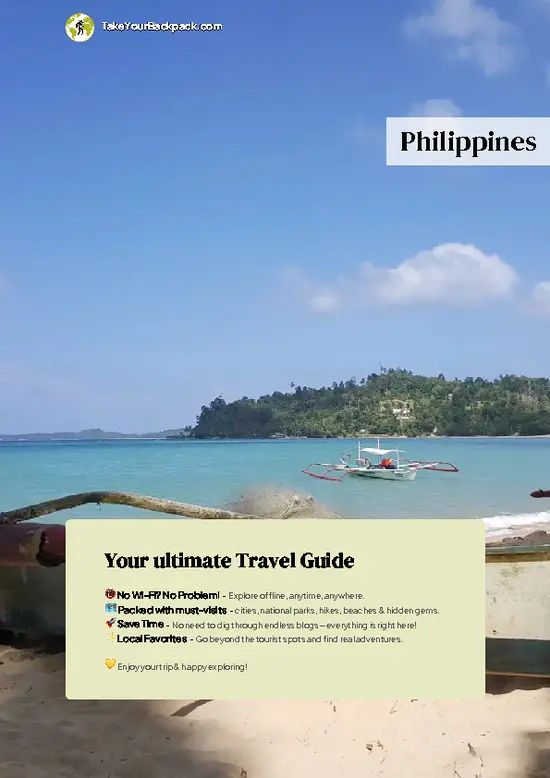
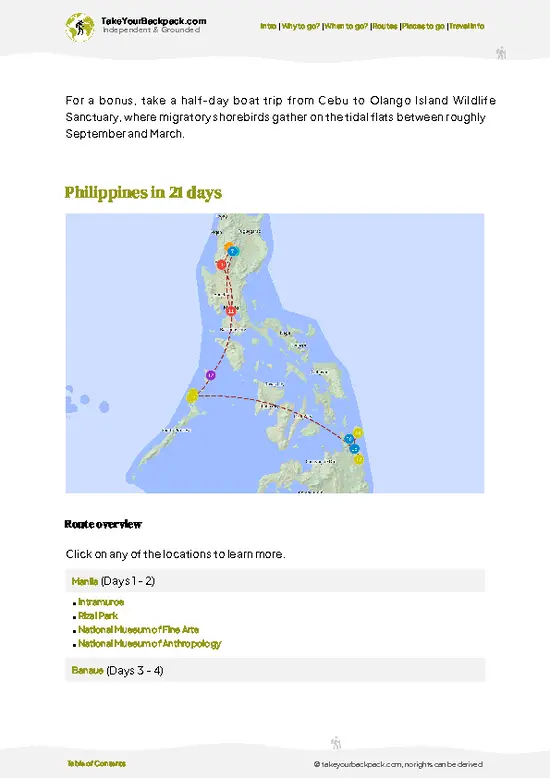
example page 0 from our offline Travel Guide for Philippines
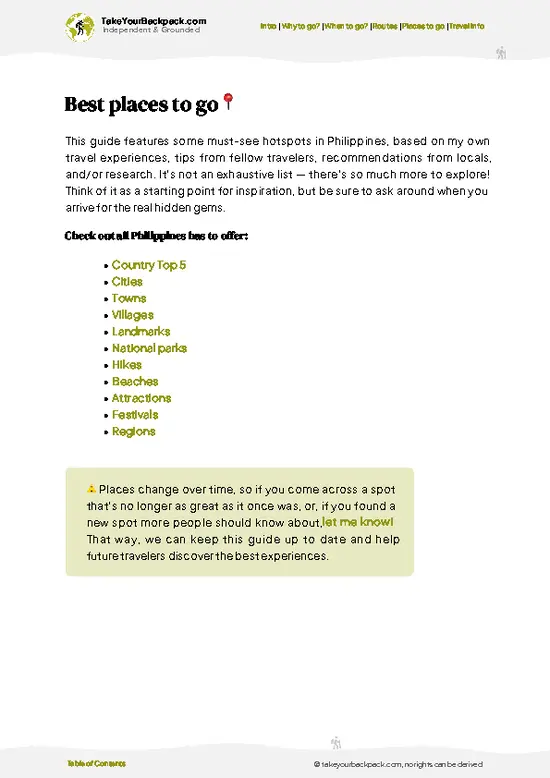
example page 1 from our offline Travel Guide for Philippines
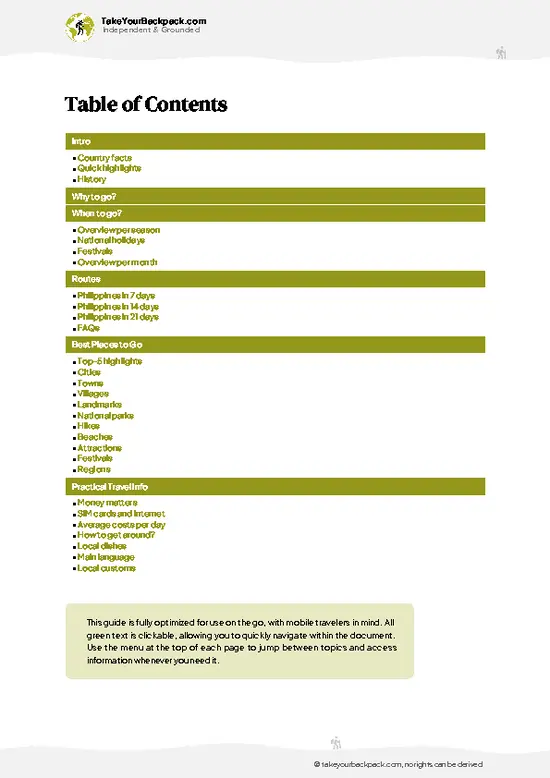
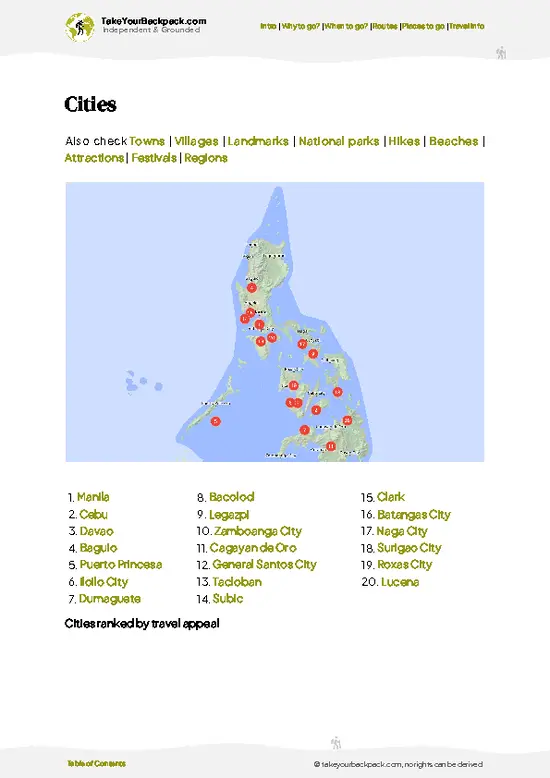
example page 2 from our offline Travel Guide for Philippines
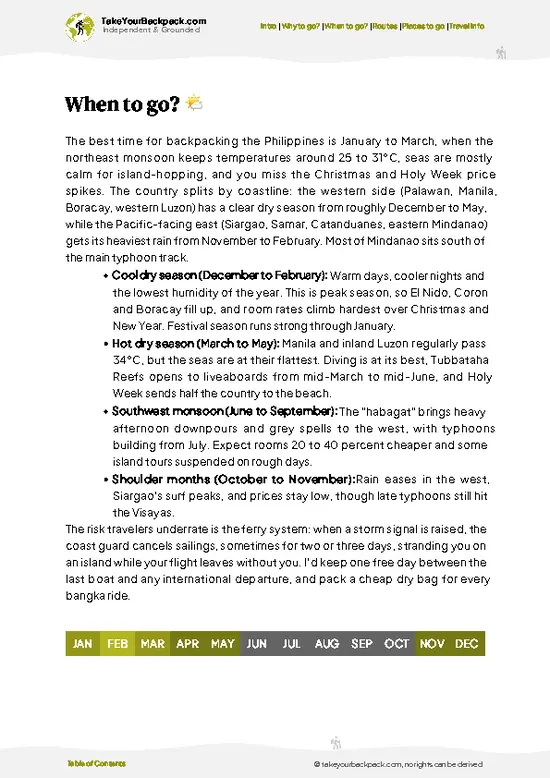
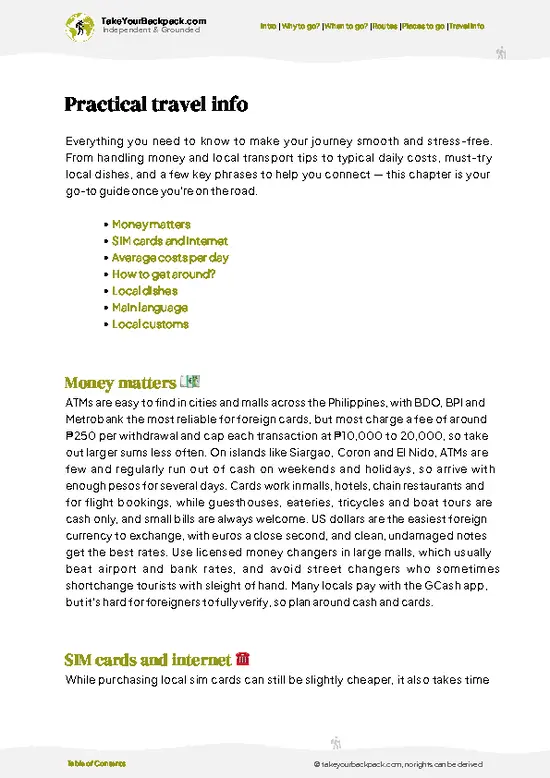
example page 3 from our offline Travel Guide for Philippines
example page 4 from our offline Travel Guide for Philippines
example page 5 from our offline Travel Guide for Philippines
example page 6 from our offline Travel Guide for Philippines
example page 7 from our offline Travel Guide for Philippines
The digital guide (505 pages) contains:
144 highlights, ranked by travel appeal
Optimized 7, 14 & 21-day travel routes
Cities, national parks, landmarks, beaches
How to get around
Offline-friendly for travel without Wi-Fi
👉 Click to see all 30+ guide features

📅 Plan smarter in minutes, not weeks
Month by month travel advice
Festivals & national holidays
Budget expectations

🗺️ Go to the right places, skip the overrated ones
Honest pros & cons of destinations
Top hikes, parks & viewpoints
Lesser-known places most travelers miss
Clear “worth it vs skip it” guidance

🛏️ Travel smoothly without rookie mistakes
Best areas to stay
Transport systems explained simply
Common scams & safety advice
SIM cards, money & practical tips

🌍 Understand the country, not just visit it
Culture & traditions
52 Essential phrases & customs
Festivals worth planning around
Traveler-friendly historical context
Insights that make places more meaningful

📱 Built for real travel conditions
Fully downloadable PDF
Works completely offline
Optimized for phone use
Useful in remote areas & buses
Everything in one place
Save weeks of stressful planning
Get instant access to your full guide. 30‑day money-back guarantee.


By proceeding you agree to our terms.
Sent to your inbox immediately after payment • 100% Secure Checkout
Best Backpacking Travel Advisor 2025 tourism awardBest Backpacking
Travel Advisor
2025
What others say about Take Your Backpack Guides:
⭐⭐⭐⭐⭐
Fantastic, amazing amount of information!
⭐⭐⭐⭐⭐
My goodness this is amazing, it's what I've been looking for hats off too you!
⭐⭐⭐⭐⭐
I think this is absolutely BRILLIANT
⭐⭐⭐⭐
Very complete and informative. It's still missing places, but I gotta to commend you
⭐⭐⭐⭐⭐
This is truly amazing, thank you, can't wait to explore it with my kids!
⭐⭐⭐⭐⭐
Awesome resource, thank you!
⭐⭐⭐⭐⭐
This is amazing! Can't wait to explore the ones I haven't seen
⭐⭐⭐⭐
I love this! Well done, great idea.
⭐⭐⭐⭐⭐
Thanks for taking the time to make this gem!
⭐⭐⭐⭐⭐
This might be the best website I've ever seen.
⭐⭐⭐⭐⭐
Congratulations, and thank you so much for your work; it's incredibly valuable.
⭐⭐⭐⭐
In all seriousness I think you did a great job pointing out the important spots
⭐⭐⭐⭐⭐
10/10 very good
⭐⭐⭐⭐⭐
As someone who's only just starting to visit regularly this is awesome, thank you.
⭐⭐⭐⭐
Thank you very much! I'm going to visit my dad, it's going to be very useful!
⭐⭐⭐⭐⭐
This is really cool! We'll be travelling for the first time and this definitely come in handy.
⭐⭐⭐⭐⭐
You are now our minister of culture, congratulations 👨‍💼
⭐⭐⭐⭐⭐
Just wanted to tell you that this is a pearl! Going to follow your recommendations.
⭐⭐⭐⭐⭐
This is so cool. I'll definitely be using the resource for my travels soon.
⭐⭐⭐⭐⭐
This is very impressive! Good work.
⭐⭐⭐⭐⭐
This is an amazing and informative site. Very well done!

🛏️ Where to stay?Best areas to stay in Philippines

The National Museum of Natural History in Manila sits smack in the middle of the city’s cultural core, which means the surrounding neighborhoods are a mixed bag. If you’re chasing that classic backpacker vibe—safe streets, easy social spots, and a crowd that’s more about swapping stories than just crashing—look no further than Ermita and Malate. These areas are backpacker magnets for a reason: they’re packed with budget guesthouses, dive bars, and street food stalls that won’t bleed your wallet dry. Sure, it’s not a quiet retreat; it’s Manila, so expect noise and a steady pulse of city life. But … read more 👉
The National Museum of Natural History in Manila sits smack in the middle of the city’s cultural core, which means the surrounding neighborhoods are a mixed bag. If you’re chasing that classic backpacker vibe—safe streets, easy social spots, and a crowd that’s more about swapping stories than just crashing—look no further than Ermita and Malate. These areas are backpacker magnets for a reason: they’re packed with budget guesthouses, dive bars, and street food stalls that won’t bleed your wallet dry. Sure, it’s not a quiet retreat; it’s Manila, so expect noise and a steady pulse of city life. But that’s part of the charm. You’re steps away from the museum, plus you get to soak in the chaotic energy that makes Manila feel alive.

Avoid the tourist traps that cluster around Intramuros—nice for a day visit but pricey and sterile at night. Ermita and Malate have the grit and the grind that make your stay feel authentic, not sanitized. Plus, you’ll find plenty of fellow travelers to swap tips with, which is gold when you’re solo.

👛 Costs (as of 3 June 2026)Money, prices, and spending tips

Admission to the National Museum of Natural History in Manila is free for all visitors. No tickets or reservations are required for individuals and families. For groups of 20 or more, advance reservations are recommended. Additional costs may include transportation to the museum and any personal expenses during the visit.

source: nationalmuseum.gov.ph
⚠️ Prices can change and everyone travels differently, so take this as a rough guide. Hope it helps you plan your adventure!

Other Filipino attractions near National Museum of Natural History

Explore more nearby:


💡 Not sure where to go next?
Create a personalized itinerary for Philippines including National Museum of Natural History and the places that fit your trip.

Generate my itinerary

👉 Discover all attractions

Or checkout all Philippines has to offer (think cities, towns, villages, national parks, hikes, beaches, festivals)
Country photo of Philippines

We 💚 feedbackKey takeaways before you go

The National Museum of Natural History in the Philippines isn’t just another stop on the tourist checklist—it’s a deep dive into the country’s raw, living story, from ancient fossils to vibrant ecosystems. But heads up: it can get packed, especially on weekends, which means you might jostle for space around the best exhibits. Still, if you want to understand the Philippines beyond beaches and bars, this place delivers.

✈️ When did I visit Philippines?
Philippines being one of my favorites, due to the people and their mentality. I visited it first in 2010 and came back in January 2016 as part of my 1.5 year world trip.

✍️ Help improve this page!
The information on this page is based on my own backpacking experience in Philippines, supplemented with up-to-date research and feedback from other travelers. Travel details can change, so if you notice anything outdated or incomplete, feel free to let me know.


🙋‍♂️ Give feedback

👋 Meet the founderWho’s Behind Take Your Backpack?

Johan, backpacker and founder of TakeYourBackpackHi, I’m Johan (Netherlands 🇳🇱), the creator of TakeYourBackpack. Over the past decade, I’ve backpacked through 80+ countries across six continents, gaining extensive experience with independent travel, long-term trips, and overland routes.

This site is built on a combination of firsthand travel experience and carefully curated insights from other backpackers. Many guides are based on places I’ve personally visited, while others bring together tips, observations, and practical advice shared by trusted travelers I’ve met along the way.

The goal is to provide realistic, experience-driven guidance — not generic itineraries — so you can explore destinations with better context, clearer expectations, and more confidence.

Get full country guide •
Instant download • 144 highlights • Full Offline guide