×

Philippines🇵🇭 | festivalsParaw Regatta Festivalsailboat race, Iloilo Strait, painted sails | things to do and best time to go

Explore Kadayawan FestivalExplore Tabak Festival

Backpacking in Paraw Regatta
👌 Worth visitingfestival ranked #16
By Johan Kruseman 🇳🇱 | Updated May 10, 2026

Most summaries sell Paraw Regatta as a pure “boat race,” but on the ground the sailing is often the least accessible part; backpackers actually spend more time chasing side events than watching paraws cut the water. The festival fires up along the shores of Iloilo City in the central Philippines, usually stretching over several days of coastal chaos. Expect drum-heavy street beats, beauty pageants, food stalls, and families outnumbering hardcore partiers. It’s colorful, crowded, occasionally corny, but worth a day if you like movement, sea wind, and local pride over polished spectacle.

Discover everything you want to know in the 📖 Philippines Travel Guide.
Loading the map 🌍
CLICK TO FILTER
cities
towns
landmarks
national parks
hikes
beaches
attractions
festivals
regions
SHOW COUNTRY’S BESTSHOW ALL

✨ Why go?
Ranked #16 festival in Philippines
What sets this place apart

Backpackers flock to the Paraw Regatta Festival in the Philippines for its electric social energy and vibrant temporary community. This isn’t just a festival; it’s a chance to dive into cultural immersion as you witness colorful sailboats racing across the azure waters. The atmosphere buzzes with laughter, music, and the scent of local delicacies, making it a feast for the senses. Plus, it’s surprisingly affordable compared to similar events worldwide, allowing you to splurge on experiences rather than just entry fees. Planning your route around this festival means weaving it seamlessly into your longer travel plans, ensuring that every moment is packed with adventure and connection. Don’t miss out—this is where the journey truly comes alive!
Get the complete Travel Guide for Philippines
Everything organized for offline planning — routes, highlights, costs & tips

See what’s inside 👉

Get the Travel Guide -

💡 HighlightsMust-see experiences and standout moments

  • The Paraw Races — The heart of the festival: sleek double-outrigger sailboats (paraws) skimming over open water in tight, fast heats. It’s raw, noisy, and thrilling to watch up close — sailors use wind and skill rather than engines, so you really feel the craft and competition. Perfect for people who like action without a stadium’s price tag.
  • Iconic Colorful Sails and Sunset Views — Hundreds of hand-painted sails, bright against the sea and often set spectacularly as the sun dips. Photographers and Instagrammers flock here, but even if you’re not framing shots, the visual contrast of traditional boats and tropical light is something you’ll remember. It’s one of those scenes that looks better in person than in any brochure.
  • On-the-Water Experiences (Paraw Rides & Island Hopping) — You can
read more 👉
  • The Paraw Races — The heart of the festival: sleek double-outrigger sailboats (paraws) skimming over open water in tight, fast heats. It’s raw, noisy, and thrilling to watch up close — sailors use wind and skill rather than engines, so you really feel the craft and competition. Perfect for people who like action without a stadium’s price tag.
  • Iconic Colorful Sails and Sunset Views — Hundreds of hand-painted sails, bright against the sea and often set spectacularly as the sun dips. Photographers and Instagrammers flock here, but even if you’re not framing shots, the visual contrast of traditional boats and tropical light is something you’ll remember. It’s one of those scenes that looks better in person than in any brochure.
  • On-the-Water Experiences (Paraw Rides & Island Hopping) — You can hop aboard a paraw outside the race and feel the hulls hum as you glide past reefs and sandbars. Short rides are cheap and unforgettable; local skippers will often take you to nearby islets for a swim or a quiet sunset. This hands-on time on the water is my personal favorite — nothing beats wind in your face and the boat creaking under you.
  • Regatta Village: Food, Live Music, and Street Life — Expect a lively stretch of stalls selling grilled seafood, cheap beer, and local snacks, plus live bands and DJs after dark. It’s festival energy without major fuss: informal seating, friendly vendors, and lots of local flavors to try on a backpacker budget. Great place to soak in the crowd and swap travel stories with locals and other travelers.
  • Traditional Boatcraft, Sail Art, and Cultural Shows — Beyond the races, there’s a strong focus on heritage: watch craftsmen repair or build outriggers, admire sail-painting traditions, and catch folk dances or cultural presentations on small stages. These elements anchor the festival in local history, so it’s not just a sporting spectacle but a living cultural celebration. It’s a good reminder that the paraw is both a tool and a cultural symbol.
Spotted a mistake or missing something? Contact us.

🌤️ When to go?When is the celebration of Paraw Regatta Festival?


  • Topic: Weather – The festival runs in February, when the Philippines enjoys dry, sunny days. Temperatures hover around 26-30°C (79-86°F), perfect for outdoor fun without the oppressive heat or sudden downpours that come later in the year.

  • Topic: Daylight Hours – February offers about 11-12 hours of daylight, giving you ample time to soak in the races and island vibes without rushing.

  • Topic: Crowds – Expect a lively crowd, but it’s not overwhelming. The festival draws locals and tourists alike, so you get authentic energy without the claustrophobia of peak-season crushes.

  • Topic: Seasonal Activities – February’s calm seas and steady winds make for prime sailing conditions, ensuring the paraw races are thrilling and smooth. Other island activities like snorkeling and beach trekking also shine
read more 👉

  • Topic: Weather – The festival runs in February, when the Philippines enjoys dry, sunny days. Temperatures hover around 26-30°C (79-86°F), perfect for outdoor fun without the oppressive heat or sudden downpours that come later in the year.

  • Topic: Daylight Hours – February offers about 11-12 hours of daylight, giving you ample time to soak in the races and island vibes without rushing.

  • Topic: Crowds – Expect a lively crowd, but it’s not overwhelming. The festival draws locals and tourists alike, so you get authentic energy without the claustrophobia of peak-season crushes.

  • Topic: Seasonal Activities – February’s calm seas and steady winds make for prime sailing conditions, ensuring the paraw races are thrilling and smooth. Other island activities like snorkeling and beach trekking also shine in this window.

  • Topic: Price Fluctuations – Prices spike slightly during the festival but stay manageable compared to peak summer months. Booking early locks in better deals on accommodation and transport.


Pro-tip: Lock in your trip for mid-February to catch the festival’s full energy, then linger a few days after to explore quieter beaches and recover your energy before heading out.


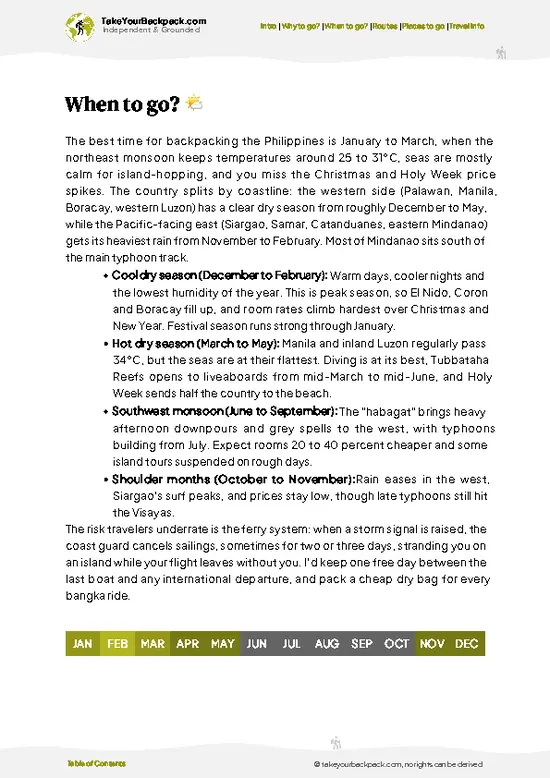
source: climatestotravel.comJANJanuary: not recommended for travelingFEBFebruary: excellent for travelingMARMarch: not recommended for travelingAPRApril: not recommended for travelingMAYMay: not recommended for travelingJUNJune: not recommended for travelingJULJuly: not recommended for travelingAUGAugust: not recommended for travelingSEPSeptember: not recommended for travelingOCTOctober: not recommended for travelingNOVNovember: not recommended for travelingDECDecember: not recommended for traveling

✈️ The backpacker research shortcutPhilippines Travel Guide

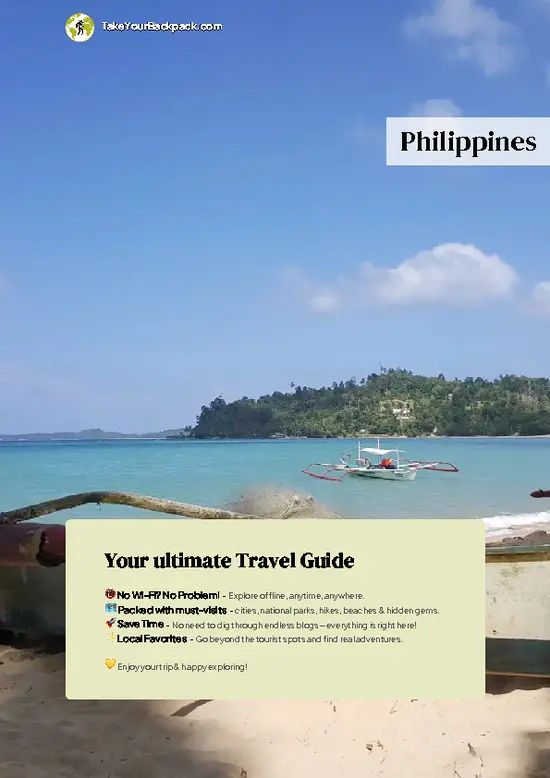
An offline-friendly backpacking guide with optimized travel routes, ranked highlights, transport advice, and the best areas to stay.
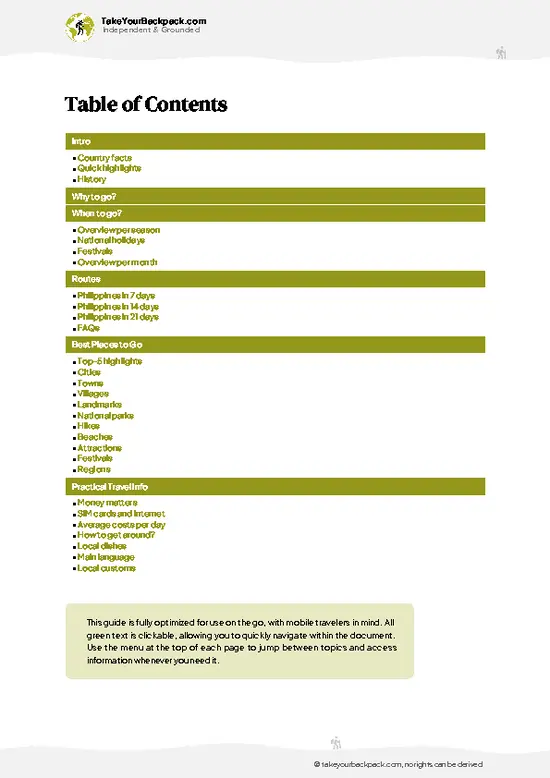
example page 0 from our offline Travel Guide for Philippinesexample page 1 from our offline Travel Guide for Philippinesexample page 2 from our offline Travel Guide for Philippinesexample page 3 from our offline Travel Guide for Philippinesexample page 4 from our offline Travel Guide for Philippinesexample page 5 from our offline Travel Guide for Philippinesexample page 6 from our offline Travel Guide for Philippinesexample page 7 from our offline Travel Guide for Philippines
The digital guide (505 pages) contains:
144 highlights, ranked by travel appeal
Optimized 7, 14 & 21-day travel routes
Cities, national parks, beaches, historical sites, ...
How to get around
Offline-friendly for travel without Wi-Fi
👉 Click to see all 30+ guide features

📅 Plan smarter in minutes, not weeks
Month by month travel advice
Festivals & national holidays
Budget expectations

🗺️ Go to the right places, skip the overrated ones
Honest pros & cons of destinations
Top hikes, parks & viewpoints
Lesser-known places most travelers miss
Clear “worth it vs skip it” guidance

🛏️ Travel smoothly without rookie mistakes
Best areas to stay
Transport systems explained simply
Common scams & safety advice
SIM cards, money & practical tips

🌍 Understand the country, not just visit it
Culture & traditions
52 Essential phrases & customs
Festivals worth planning around
Traveler-friendly historical context
Insights that make places more meaningful

📱 Built for real travel conditions
Fully downloadable PDF
Works completely offline
Optimized for phone use
Useful in remote areas & buses
Everything in one place
Save weeks of stressful planning
Get instant access to the full guide directly. 30-day money-back guarantee.


Sent to your inbox immediately after payment • 100% Secure Checkout
Best Backpacking Travel Advisor 2025 tourism awardBest Backpacking
Travel Advisor
2025
What others say about Take Your Backpack Guides:
⭐⭐⭐⭐⭐
Fantastic, amazing amount of information!
⭐⭐⭐⭐⭐
My goodness this is amazing, it's what I've been looking for hats off too you!
⭐⭐⭐⭐⭐
I think this is absolutely BRILLIANT
⭐⭐⭐⭐
Very complete and informative. It's still missing places, but I gotta to commend you
⭐⭐⭐⭐⭐
This is truly amazing, thank you, can't wait to explore it with my kids!
⭐⭐⭐⭐⭐
Awesome resource, thank you!
⭐⭐⭐⭐⭐
This is amazing! Can't wait to explore the ones I haven't seen
⭐⭐⭐⭐
I love this! Well done, great idea.
⭐⭐⭐⭐⭐
Thanks for taking the time to make this gem!
⭐⭐⭐⭐⭐
This might be the best website I've ever seen.
⭐⭐⭐⭐⭐
Congratulations, and thank you so much for your work; it's incredibly valuable.
⭐⭐⭐⭐
In all seriousness I think you did a great job pointing out the important spots
⭐⭐⭐⭐⭐
10/10 very good
⭐⭐⭐⭐⭐
As someone who's only just starting to visit regularly this is awesome, thank you.
⭐⭐⭐⭐
Thank you very much! I'm going to visit my dad, it's going to be very useful!
⭐⭐⭐⭐⭐
This is really cool! We'll be travelling for the first time and this definitely come in handy.
⭐⭐⭐⭐⭐
You are now our minister of culture, congratulations 👨‍💼
⭐⭐⭐⭐⭐
Just wanted to tell you that this is a pearl! Going to follow your recommendations.
⭐⭐⭐⭐⭐
This is so cool. I'll definitely be using the resource for my travels soon.
⭐⭐⭐⭐⭐
This is very impressive! Good work.
⭐⭐⭐⭐⭐
This is an amazing and informative site. Very well done!

🛏️ Where to stay?Best areas and accommodation options

For the Paraw Regatta Festival, head to the lively shores of Boracay’s White Beach. This area buzzes with backpackers, offering a mix of budget-friendly accommodations and a vibrant social scene. You’ll find plenty of fellow travelers eager to share stories and tips.

Another solid choice is the area around Diniwid Beach. It’s a bit quieter but still close enough to the action. Here, you can unwind after a day of festivities, soaking in the sunset with new friends.

Don’t overlook the local guesthouses in the nearby village of Manoc-Manoc. They provide a more authentic experience, often at lower … read more 👉
For the Paraw Regatta Festival, head to the lively shores of Boracay’s White Beach. This area buzzes with backpackers, offering a mix of budget-friendly accommodations and a vibrant social scene. You’ll find plenty of fellow travelers eager to share stories and tips.

Another solid choice is the area around Diniwid Beach. It’s a bit quieter but still close enough to the action. Here, you can unwind after a day of festivities, soaking in the sunset with new friends.

Don’t overlook the local guesthouses in the nearby village of Manoc-Manoc. They provide a more authentic experience, often at lower prices. Plus, you’ll get a taste of local life, which is a win-win for your budget and your spirit. Stay smart, stay social, and keep your energy for the festival!

👛 Costs (as of 3 October 2025)Travel costs and budget guide for Paraw Regatta

The Paraw Regatta Festival in the Philippines is a vibrant celebration of local culture and sailing, but navigating the costs can be tricky. Here’s a breakdown to keep your budget in check while maximizing your experience.
  • Festival Tickets: Entry to the festival is generally free, but you might want to budget around $5 to $10 (€4 to €9) for special events or activities. Some workshops or competitions may have a small fee, so keep an eye out for those.
  • Accommodation: Options vary widely. Hostels start at about $10 (€9) per night, while mid-range hotels can range from $30 to $70 (€27 to €63). If you’re feeling adventurous, consider local homestays, which can be around $20 (€18) per night.
  • Local Transport: Getting around can be affordable. Jeepneys or tricycles cost about $0.50 to $2 (€0.45 to €1.
read more 👉
The Paraw Regatta Festival in the Philippines is a vibrant celebration of local culture and sailing, but navigating the costs can be tricky. Here’s a breakdown to keep your budget in check while maximizing your experience.
  • Festival Tickets: Entry to the festival is generally free, but you might want to budget around $5 to $10 (€4 to €9) for special events or activities. Some workshops or competitions may have a small fee, so keep an eye out for those.
  • Accommodation: Options vary widely. Hostels start at about $10 (€9) per night, while mid-range hotels can range from $30 to $70 (€27 to €63). If you’re feeling adventurous, consider local homestays, which can be around $20 (€18) per night.
  • Local Transport: Getting around can be affordable. Jeepneys or tricycles cost about $0.50 to $2 (€0.45 to €1.80) per ride. If you’re planning to explore nearby areas, budget around $10 to $20 (€9 to €18) for a day of transport.
  • Food & Drinks: Street food is a must-try and costs about $1 to $3 (€0.90 to €2.70) per meal. If you prefer dining at local restaurants, expect to spend around $5 to $15 (€4.50 to €13.50) per meal. Don’t forget to try the local drinks, which can be around $1 (€0.90) each.
  • Miscellaneous Expenses: Always good to have a buffer. Budget around $10 to $30 (€9 to €27) for souvenirs, tips, or unexpected costs. This will help you enjoy the festival without worrying about running out of cash.

Planning ahead will save you from surprises and keep your energy focused on enjoying the festival.
⚠️ Prices can change and everyone travels differently, so take this as a rough guide. Hope it helps you plan your adventure!

🍲 FoodLocal Flavors for Backpackers

At the **Paraw Regatta Festival**, the air buzzes with the aroma of **local specialties**. Dive into **kinilaw**, a zesty ceviche that dances on your palate, or savor **lechon**, crispy-skinned roasted pork that’s a must-try. Street stalls overflow with **barbecue skewers**, grilled to perfection, and **pancit**, a noodle dish that’s both hearty and comforting.

For drinks, don’t miss out on **buko juice**, fresh coconut water that’s a refreshing antidote to the tropical heat. You’ll find **local beers** too, perfect for toasting the vibrant atmosphere.

Be ready for some quirks: sharing is common, so don’t hesitate to swap bites with fellow festival-goers. Lines can be long, so patience is key. Bring cash; some stalls might not accept cards. Serving sizes are generous, so pace yourself and enjoy every bite!

Other Filipino festivals near Paraw Regatta

Explore more nearby:


👉 Discover all festivals

Or checkout all Philippines has to offer (think cities, towns, villages, national parks, hikes, beaches, festivals)
Country photo of Philippines

We 💚 feedbackWhat to keep in mind

The Paraw Regatta Festival is a riot of color and energy, with those vibrant sailboats dancing on the water like they’re in a race against the wind. But brace yourself for the crowds; they can be overwhelming. Embrace the chaos, though—it’s part of the experience. Just plan your downtime wisely to recharge for the next adventure.

✈️ When did I visit Philippines?
Philippines being one of my favorites, due to the people and their mentality. I visited it first in 2010 and came back in January 2016 as part of my 1.5 year world trip.

✍️ Help improve this page!
The information on this page is based on my own backpacking experience in Philippines, supplemented with up-to-date research and feedback from other travelers. Travel details can change, so if you notice anything outdated or incomplete, feel free to let me know.


🙋‍♂️ Give feedback

👋 Meet the founderWho’s Behind Take Your Backpack?

Johan, backpacker and founder of TakeYourBackpackHi, I’m Johan (Netherlands 🇳🇱), the creator of TakeYourBackpack. Over the past decade, I’ve backpacked through 80+ countries across six continents, gaining extensive experience with independent travel, long-term trips, and overland routes.

This site is built on a combination of firsthand travel experience and carefully curated insights from other backpackers. Many guides are based on places I’ve personally visited, while others bring together tips, observations, and practical advice shared by trusted travelers I’ve met along the way.

The goal is to provide realistic, experience-driven guidance — not generic itineraries — so you can explore destinations with better context, clearer expectations, and more confidence.

Get full country guide •
Instant download • 144 highlights • Full Offline guide