×

Portugal🇵🇹 | regionsAlgarve Coastsea cliffs, fishing villages, Atlantic beaches | things to do and best time to go

Explore Paul do Boquilobo Nature ReserveExplore Madeira

Backpacking in Algarve Coast
🏆 Top pickregion ranked #1
By Johan Kruseman 🇳🇱 | Updated September 4, 2026

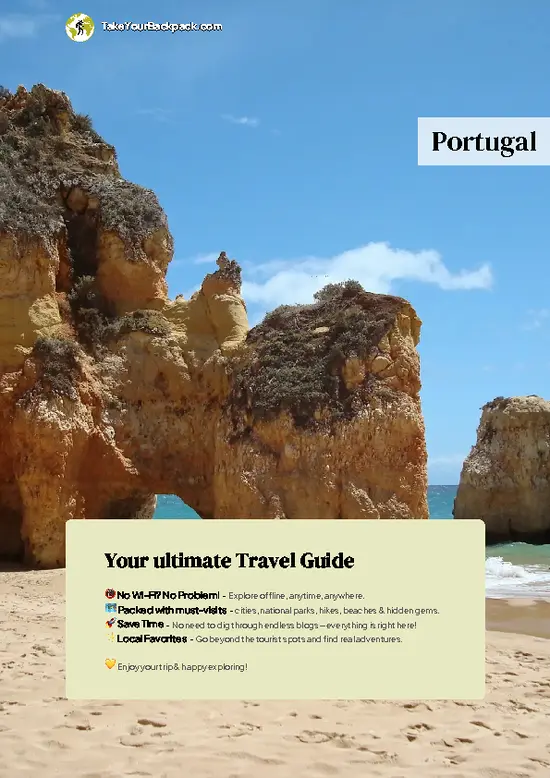
You know the thing nobody tells you about the Algarve until you’re already leaving? How insanely easy it is to day-trip between beaches, cliffs, and towns by cheap regional train or bus, so you could have based in one spot and hopscotched the coast instead of repacking every night. The Algarve is Portugal’s southernmost strip, running along the bottom of the country from roughly Lagos to the Spanish border, and it’s backpacker catnip with a few strings attached. You get wild golden cliffs, caves, surf beaches, party towns like Albufeira, slower fishing villages like Olhão and Tavira, and the more rugged west coast around Sagres that feels closer to a national park than a resort brochure. It’s pricier and more touristy than the Alentejo coast or inland Évora, and some towns feel built for Brits on package holidays, but if you chase shoulder season and stay slightly back from the waterfront, you still catch real Portugal under the sunscreen.

Discover everything you want to know in the 📖 Portugal Travel Guide.


Get your Portugal guide
88 ranked highlights, routes & tips, works offline (369 pages)
Loading the map 🌍
CLICK TO FILTER
cities
towns
villages
landmarks
national parks
hikes
beaches
attractions
festivals
regions
SHOW COUNTRY’S BESTSHOW ALL

✨ Why go?
Ranked #1 region in Portugal
Why visitors keep coming back

The Algarve Coast in Portugal is a backpacker’s dream for a reason. First off, the variety of landscapes is jaw-dropping. You’ve got golden beaches, rugged cliffs, and charming villages all within a stone’s throw. This means you can soak up sun on the beach one day and hike through stunning trails the next, all without the hassle of constant relocation.

Transport here is a breeze. Buses and trains connect major towns, so you can easily hop from Lagos to Faro without breaking a sweat. This flexibility lets you mix nature and culture seamlessly. Want to explore local markets? Check. Or maybe you’re in the mood for a sunset hike along the cliffs? You got it.

The beauty of slow travel shines here. You can linger in a quaint café, savoring a pastel de nata, or chat with locals about their favorite … read more 👉
The Algarve Coast in Portugal is a backpacker’s dream for a reason. First off, the variety of landscapes is jaw-dropping. You’ve got golden beaches, rugged cliffs, and charming villages all within a stone’s throw. This means you can soak up sun on the beach one day and hike through stunning trails the next, all without the hassle of constant relocation.

Transport here is a breeze. Buses and trains connect major towns, so you can easily hop from Lagos to Faro without breaking a sweat. This flexibility lets you mix nature and culture seamlessly. Want to explore local markets? Check. Or maybe you’re in the mood for a sunset hike along the cliffs? You got it.

The beauty of slow travel shines here. You can linger in a quaint café, savoring a pastel de nata, or chat with locals about their favorite surf spots. Each moment is an opportunity to dive deeper into the culture. So, if you’re looking for high-value experiences that blend adventure and relaxation, the Algarve Coast is where it’s at. Embrace the trade-offs, and you’ll leave with stories that last a lifetime.
Want to include Algarve Coast in your Portugal route?
Create a personalized Portugal itinerary that includes Algarve Coast and the places that fit your trip — based on your travel style, budget, and available time. Get your route in seconds.

Generate my trip

💡 HighlightsMust-see experiences and standout moments

  • Ponta da Piedade (Lagos) — Golden limestone cliffs cut into sea stacks, sea arches and stairways that drop you to tiny coves. Walk the cliff-top paths for effortless views, then rent a kayak or take a small boat to thread through the grottoes. Sunset light here is unreal; go early or late to avoid the midday crowds.
  • Benagil Sea Cave (Algar de Benagil) — A cavern with a natural skylight right on a sandy ”beach” inside — one of those geological highlights you actually can stand inside. Best visited by kayak or SUP from Benagil or Carvoeiro (boats get you there too). Don’t try to swim out from the beach unless you’re strong and watching conditions; currents can be nasty.
  • Praia da Marinha (Lagoa) — The textbook Algarve beach: sculpted cliffs, clean turquoise water and underwater caves for
read more 👉
  • Ponta da Piedade (Lagos) — Golden limestone cliffs cut into sea stacks, sea arches and stairways that drop you to tiny coves. Walk the cliff-top paths for effortless views, then rent a kayak or take a small boat to thread through the grottoes. Sunset light here is unreal; go early or late to avoid the midday crowds.
  • Benagil Sea Cave (Algar de Benagil) — A cavern with a natural skylight right on a sandy ”beach” inside — one of those geological highlights you actually can stand inside. Best visited by kayak or SUP from Benagil or Carvoeiro (boats get you there too). Don’t try to swim out from the beach unless you’re strong and watching conditions; currents can be nasty.
  • Praia da Marinha (Lagoa) — The textbook Algarve beach: sculpted cliffs, clean turquoise water and underwater caves for snorkeling. There are short cliff trails and viewpoints that make for easy, dramatic photos; the rock formations here are distinct and fragile, so stick to marked paths.
  • Ria Formosa Natural Park & Ilha Deserta (Barreta) — A mosaic of tidal channels, salt pans and barrier islands where migratory birds, traditional oyster beds and tiny fishing communities still persist. Take the ferry from Faro to Ilha Deserta for a wild, nearly empty beach, or join a guided boat to learn about the lagoon’s ecology and artisanal shellfish farms.
  • Cabo de São Vicente & Fortaleza de Sagres — The southwestern edge of Europe: towering Atlantic cliffs, a working lighthouse and a small fortress that whispers maritime history. The wind is constant, the views are raw, and the place has a real “edge of the world” vibe that you won’t find on the calm southern beaches.
  • Olhão Fish Market & Waterfront — Early-morning fish auctions, packed stalls of the day’s catch and a gritty, authentic waterfront where local fishermen still land boats. Combine the market with a short ferry to the islands (Armona, Culatra) for fresh seafood on a sandbar — proper local life, not tourist gloss.
  • Cacela Velha (hidden gem) — A tiny whitewashed village perched above a tidal lagoon with a postcard view that few make the effort to see. Walk down to the long, quiet beach via a track or take a boat across the estuary; the slow pace, an 18th-century church and the estuary panorama make it feel like a secret preserved by locals.
  • Praia do Carvalho (hidden gem) — A small crescent tucked between cliffs with a short tunnel and narrow access that keeps most day-trippers away. It’s great for snorkeling, photographing the rock formations up close and enjoying a quieter beach afternoon without the big crowds of nearby hotspots.
  • Ferragudo village (hidden gem) — A working fishing town on the Arade river with narrow lanes, pastel houses and riverside restaurants serving charcoal-grilled fish. It’s an easy contrast to the busier resorts across the river; linger at a café, climb to the castle viewpoint and watch local life unfold.
  • Tavira Island & Praia do Barril (anchor cemetery) — Tavira Island is a long, sandy barrier island reached by ferry with calm waters and beach bars; perfect for a relaxed day. Nearby, Praia do Barril has an eerie, beautiful “anchor cemetery” — dozens of old anchors left from the tuna industry lined up on sand — a local slice of fishing history you won’t see in guidebooks.
Spotted a mistake or missing something? Contact us.

Things to do around Algarve Coast

Ratings based on Tripadvisor reviews. When you book through this link, you support our work at no extra cost to you.

⌛️ 5 daysSeeing the highlights in 5 days

Day 1: Lagos
Lagos is your gateway to the Algarve, and it’s where the adventure kicks off. The train from Faro to Lagos is quick and scenic, taking about 2 hours. Once you arrive, the town’s cobblestone streets and lively atmosphere pull you in. Spend the afternoon exploring the local markets and grabbing a pastel de nata at a café. The beaches here, like Praia Dona Ana, are stunning, but don’t miss the sunset at Ponta da Piedade. It’s a perfect introduction to the region’s dramatic coastline.

Day 2: Sagres
A short bus ride from Lagos takes you to Sagres, a place steeped in maritime history. The bus runs frequently, so you won’t waste time waiting. Visit the Sagres Fortress for breathtaking views and a sense of the area’s rugged charm. The vibe here is laid-back, perfect for soaking in … read more 👉
Day 1: Lagos
Lagos is your gateway to the Algarve, and it’s where the adventure kicks off. The train from Faro to Lagos is quick and scenic, taking about 2 hours. Once you arrive, the town’s cobblestone streets and lively atmosphere pull you in. Spend the afternoon exploring the local markets and grabbing a pastel de nata at a café. The beaches here, like Praia Dona Ana, are stunning, but don’t miss the sunset at Ponta da Piedade. It’s a perfect introduction to the region’s dramatic coastline.

Day 2: Sagres
A short bus ride from Lagos takes you to Sagres, a place steeped in maritime history. The bus runs frequently, so you won’t waste time waiting. Visit the Sagres Fortress for breathtaking views and a sense of the area’s rugged charm. The vibe here is laid-back, perfect for soaking in the coastal scenery. Grab a fresh seafood meal at a local eatery; it’s a splurge worth every euro.

Day 3: Albufeira
Head back to Lagos and catch a train to Albufeira. This town is known for its nightlife, but there’s more to it than that. Spend the day lounging on the beach or exploring the old town. The transport links are solid, making it easy to hop around. In the evening, dive into the vibrant nightlife or enjoy a quiet dinner overlooking the sea.

Day 4: Off-Path Reward - Monchique
Take a bus to Monchique, a charming mountain town. This detour offers a refreshing contrast to the coastal vibe. Hike to Foia, the highest point in the Algarve, for panoramic views. The local cuisine here is hearty and authentic, a delightful change from the beach fare.

Day 5: Faro
Wrap up your trip in Faro, the capital of the Algarve. The train ride from Albufeira is about 30 minutes. Explore the old town and visit the bone chapel at Igreja do Carmo. This day is a perfect blend of culture and relaxation, allowing you to reflect on your journey.

The must-do day? Day 2 in Sagres. The combination of history, stunning landscapes, and fresh seafood makes it the highlight of your Algarve adventure.
Turn your Algarve Coast visit into an Portugal adventure
Build a complete Portugal route with Algarve Coast, hidden gems, must-see destinations, and realistic travel times included.

Generate my trip

🌤️ When to go?When to go for the best experience


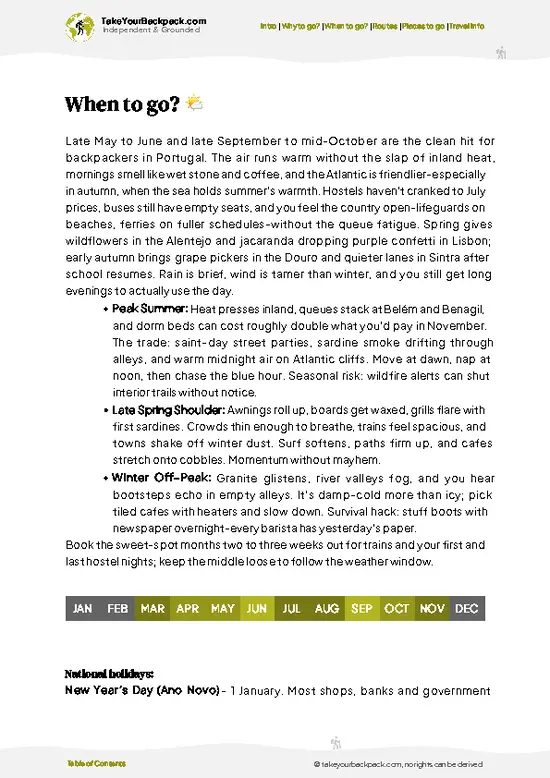
  • Weather: The Algarve Coast basks in Mediterranean sunshine most of the year, but the sweet spot is late spring (May to June) and early autumn (September to October). You dodge the scorching July-August heat that often hits 30-35°C (86-95°F), making hiking or beach lounging less pleasant.

  • Temperature: Spring and autumn offer mild days around 20-25°C (68-77°F), perfect for exploring without sweating buckets. Winters are mild but can be rainy and cooler, around 12-16°C (54-61°F), not ideal for swimming but fine for quieter trails.

  • Daylight Hours: In peak summer, you get up to 15 hours of daylight—great for squeezing in extra beach time or late sunsets. Shoulder seasons still offer a solid 10-12 hours, enough to pack your day with activities without rushing.

  • Crowds: Summer is tourist
read more 👉

  • Weather: The Algarve Coast basks in Mediterranean sunshine most of the year, but the sweet spot is late spring (May to June) and early autumn (September to October). You dodge the scorching July-August heat that often hits 30-35°C (86-95°F), making hiking or beach lounging less pleasant.

  • Temperature: Spring and autumn offer mild days around 20-25°C (68-77°F), perfect for exploring without sweating buckets. Winters are mild but can be rainy and cooler, around 12-16°C (54-61°F), not ideal for swimming but fine for quieter trails.

  • Daylight Hours: In peak summer, you get up to 15 hours of daylight—great for squeezing in extra beach time or late sunsets. Shoulder seasons still offer a solid 10-12 hours, enough to pack your day with activities without rushing.

  • Crowds: Summer is tourist central—think packed beaches and busy towns. Shoulder seasons are your secret weapon: fewer crowds, more local vibes, and a chance to snag that perfect coastal trail all to yourself.

  • Seasonal Activities: Summer means festivals and nightlife in full swing, but spring and autumn bring quieter cultural events and better conditions for kayaking, hiking, and exploring caves without the crush.

  • Price Fluctuations: Accommodation and flights spike in July and August. Booking in shoulder seasons can save you 30-50%, letting you upgrade your stay or splurge on local seafood without guilt.


Pro-tip: Arrive just before the high season kicks in—late May or early September—and you’ll enjoy near-perfect weather, manageable crowds, and prices that won’t make your wallet cry.


source: climatestotravel.comJANJanuary: fair for travelingFEBFebruary: fair for travelingMARMarch: good for travelingAPRApril: highly recommended for travelingMAYMay: excellent for travelingJUNJune: excellent for travelingJULJuly: good for travelingAUGAugust: good for travelingSEPSeptember: excellent for travelingOCTOctober: excellent for travelingNOVNovember: good for travelingDECDecember: fair for traveling
portugal-region-algarve-coast
© Google | Alex Marks

✈️ The backpacker research shortcutPortugal Travel Guide

An offline-friendly backpacking guide with optimized travel routes, ranked highlights, transport advice, and the best areas to stay.
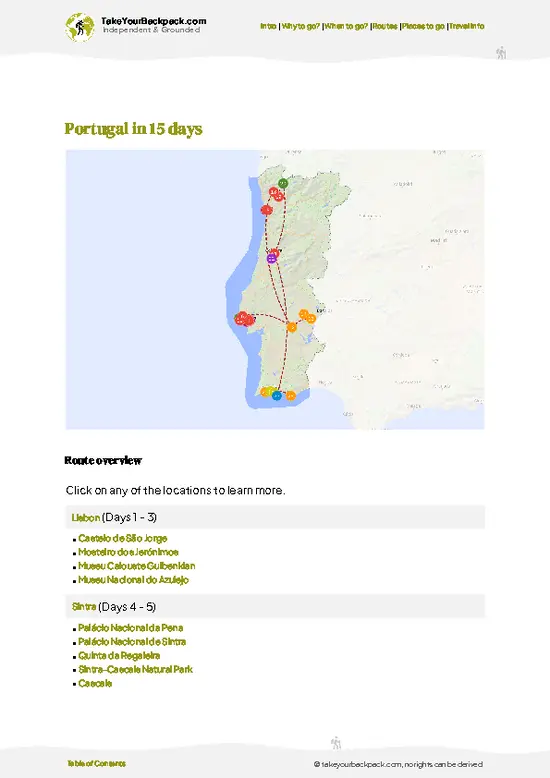
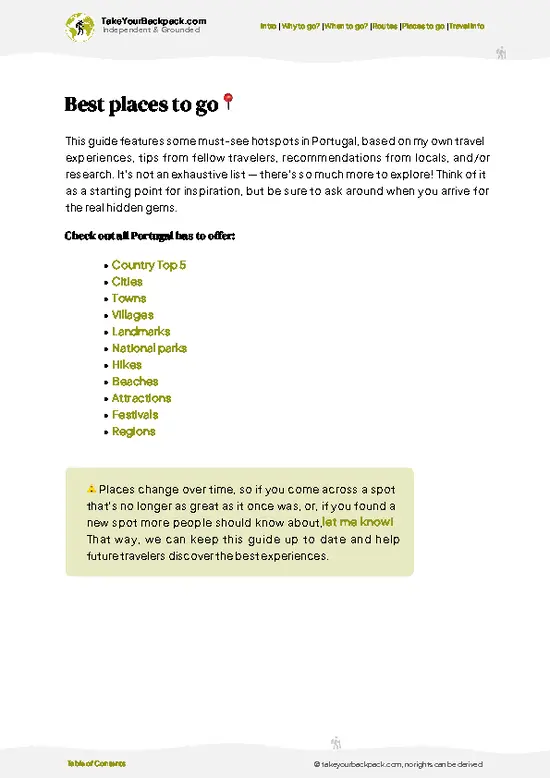
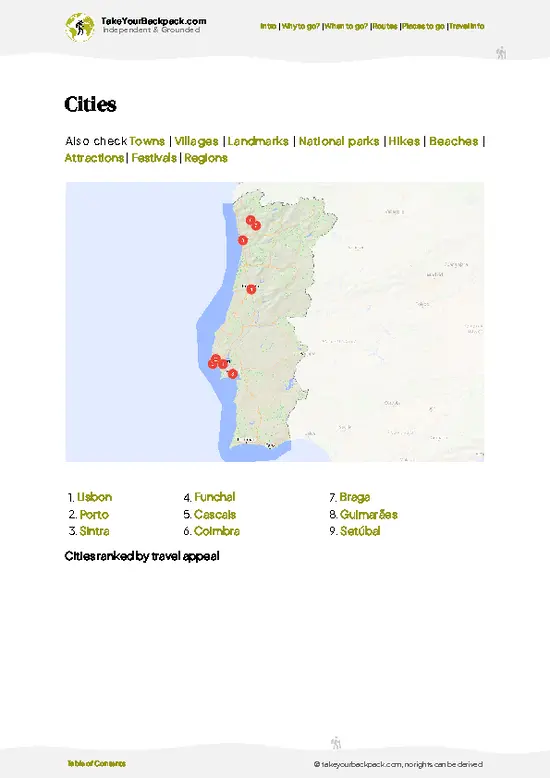
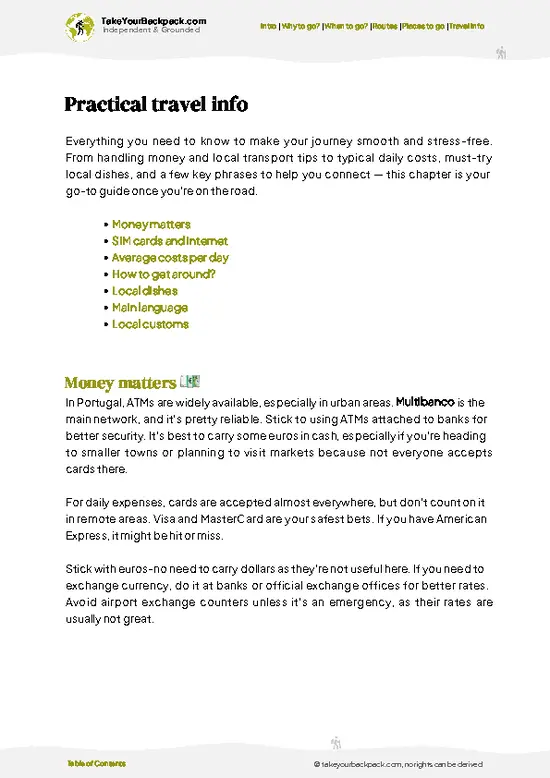
example page 0 from our offline Travel Guide for Portugal
example page 1 from our offline Travel Guide for Portugal
example page 2 from our offline Travel Guide for Portugal
example page 3 from our offline Travel Guide for Portugal
example page 4 from our offline Travel Guide for Portugal
example page 5 from our offline Travel Guide for Portugal
example page 6 from our offline Travel Guide for Portugal
example page 7 from our offline Travel Guide for Portugal
The digital guide (369 pages) contains:
88 highlights, ranked by travel appeal
Optimized 5, 10 & 15-day travel routes
Cities, national parks, landmarks, beaches
How to get around
Offline-friendly for travel without Wi-Fi
👉 Click to see all 30+ guide features

📅 Plan smarter in minutes, not weeks
Month by month travel advice
Festivals & national holidays
Budget expectations

🗺️ Go to the right places, skip the overrated ones
Honest pros & cons of destinations
Top hikes, parks & viewpoints
Lesser-known places most travelers miss
Clear “worth it vs skip it” guidance

🛏️ Travel smoothly without rookie mistakes
Best areas to stay
Transport systems explained simply
Common scams & safety advice
SIM cards, money & practical tips

🌍 Understand the country, not just visit it
Culture & traditions
52 Essential phrases & customs
Festivals worth planning around
Traveler-friendly historical context
Insights that make places more meaningful

📱 Built for real travel conditions
Fully downloadable PDF
Works completely offline
Optimized for phone use
Useful in remote areas & buses
Everything in one place
Save weeks of stressful planning
Get instant access to your full guide. 30‑day money-back guarantee.
+ Add another guide for just US$7.80

By proceeding you agree to our terms.
Sent to your inbox immediately after payment • 100% Secure Checkout
Best Backpacking Travel Advisor 2025 tourism awardBest Backpacking
Travel Advisor
2025
What others say about Take Your Backpack Guides:
⭐⭐⭐⭐⭐
Fantastic, amazing amount of information!
⭐⭐⭐⭐⭐
My goodness this is amazing, it's what I've been looking for hats off too you!
⭐⭐⭐⭐⭐
I think this is absolutely BRILLIANT
⭐⭐⭐⭐
Very complete and informative. It's still missing places, but I gotta to commend you
⭐⭐⭐⭐⭐
This is truly amazing, thank you, can't wait to explore it with my kids!
⭐⭐⭐⭐⭐
Awesome resource, thank you!
⭐⭐⭐⭐⭐
This is amazing! Can't wait to explore the ones I haven't seen
⭐⭐⭐⭐
I love this! Well done, great idea.
⭐⭐⭐⭐⭐
Thanks for taking the time to make this gem!
⭐⭐⭐⭐⭐
This might be the best website I've ever seen.
⭐⭐⭐⭐⭐
Congratulations, and thank you so much for your work; it's incredibly valuable.
⭐⭐⭐⭐
In all seriousness I think you did a great job pointing out the important spots
⭐⭐⭐⭐⭐
10/10 very good
⭐⭐⭐⭐⭐
As someone who's only just starting to visit regularly this is awesome, thank you.
⭐⭐⭐⭐
Thank you very much! I'm going to visit my dad, it's going to be very useful!
⭐⭐⭐⭐⭐
This is really cool! We'll be travelling for the first time and this definitely come in handy.
⭐⭐⭐⭐⭐
You are now our minister of culture, congratulations 👨‍💼
⭐⭐⭐⭐⭐
Just wanted to tell you that this is a pearl! Going to follow your recommendations.
⭐⭐⭐⭐⭐
This is so cool. I'll definitely be using the resource for my travels soon.
⭐⭐⭐⭐⭐
This is very impressive! Good work.
⭐⭐⭐⭐⭐
This is an amazing and informative site. Very well done!

🛏️ Where to stay?Best areas and accommodation options

The Algarve Coast is a backpacker’s playground, and knowing where to stay can make all the difference.

Start with Lagos. This town is a magnet for solo travelers and groups alike. The vibe is electric, with plenty of bars and beach parties. You’ll find a mix of history and nightlife, plus stunning cliffs and beaches. The social scene is vibrant, making it easy to meet fellow adventurers.

Next up is Albufeira. It’s a bit more touristy, but don’t let that scare you off. The old town has charm, and the beaches are gorgeous. The nightlife is buzzing, perfect for those looking to unwind after a … read more 👉
The Algarve Coast is a backpacker’s playground, and knowing where to stay can make all the difference.

Start with Lagos. This town is a magnet for solo travelers and groups alike. The vibe is electric, with plenty of bars and beach parties. You’ll find a mix of history and nightlife, plus stunning cliffs and beaches. The social scene is vibrant, making it easy to meet fellow adventurers.

Next up is Albufeira. It’s a bit more touristy, but don’t let that scare you off. The old town has charm, and the beaches are gorgeous. The nightlife is buzzing, perfect for those looking to unwind after a day of exploring. Plus, you can find budget-friendly eateries that serve up local flavors without breaking the bank.

Then there’s Tavira, a quieter option. This town offers a more authentic Portuguese experience. It’s safe, picturesque, and has a laid-back atmosphere. You’ll find fewer crowds, which means more chances to connect with locals and soak in the culture.

Finally, consider Sagres. It’s a surfer’s haven with a rugged coastline. The community here is tight-knit, and you’ll often find fellow backpackers sharing stories over a bonfire.

Each of these spots offers a unique slice of the Algarve, balancing comfort, social opportunities, and budget-friendly options. Choose wisely, and you’ll create memories that last a lifetime.

🚌 Getting aroundHow to get around Algarve Coast

The Algarve Coast is a dance of sun-soaked spontaneity and laid-back charm. Here, rigid schedules take a backseat to the rhythm of the waves and the laughter of locals. You’ll find that getting around is less about sticking to a timetable and more about embracing the moment. Whether you’re hopping from beach to beach or exploring quaint towns, the vibe is relaxed, and the options are plentiful. But don’t let that fool you; knowing the ins and outs of transport can elevate your experience from good to unforgettable.


  • Bus: The EVA bus service is your best friend for budget travel. Buses run frequently between major towns like Faro, Lagos, and Albufeira, with prices around €3-€6 per trip. First buses typically leave around 6 AM, with the last ones around 10 PM. Expect a comfortable ride, but
read more 👉
The Algarve Coast is a dance of sun-soaked spontaneity and laid-back charm. Here, rigid schedules take a backseat to the rhythm of the waves and the laughter of locals. You’ll find that getting around is less about sticking to a timetable and more about embracing the moment. Whether you’re hopping from beach to beach or exploring quaint towns, the vibe is relaxed, and the options are plentiful. But don’t let that fool you; knowing the ins and outs of transport can elevate your experience from good to unforgettable.


  • Bus: The EVA bus service is your best friend for budget travel. Buses run frequently between major towns like Faro, Lagos, and Albufeira, with prices around €3-€6 per trip. First buses typically leave around 6 AM, with the last ones around 10 PM. Expect a comfortable ride, but be ready for a few stops along the way.


  • Train: The Comboios de Portugal trains offer a scenic route along the coast. Tickets range from €5-€10, depending on your destination. Trains run about every hour, starting at 6:30 AM and wrapping up around 9 PM. They’re faster than buses and provide a lovely view of the coastline, but don’t expect luxury—just solid comfort.


  • Car Rentals: If you crave flexibility, renting a car is the way to go. Prices start around €25 per day, and you can pick up a vehicle at Faro Airport or in major towns. This option gives you the freedom to explore hidden beaches and charming villages at your own pace. Just keep in mind that parking can be tricky in busier areas.


  • Bicycle Rentals: For the adventurous spirit, renting a bike is a fantastic way to soak in the scenery. Daily rentals cost about €10-€15. You can pedal along the coast or through the countryside, but be prepared for some hills. It’s a great way to feel the local vibe and get some exercise.


  • Taxi and Rideshare: Taxis are available but can be pricey, with fares starting at €5. Rideshare apps like Uber are also in the mix, offering a convenient option for late-night returns or when you’re in a hurry. Just be mindful of surge pricing during peak hours.


For a tactical tip: download the local transport apps for buses and trains. They’ll save you time and help you navigate schedules like a pro, ensuring you spend less time waiting and more time enjoying the Algarve’s stunning coastline.

🍲 FoodLocal Cuisine & Drinks

The Algarve Coast is a feast for the senses, where the ocean meets the table. Dive into cataplana, a seafood stew cooked in a copper pot, bursting with clams, shrimp, and chorizo. Pair it with piri-piri chicken, grilled to perfection and dripping with spicy sauce. Don’t skip the sardinhas assadas—grilled sardines that taste like summer on a plate, especially when enjoyed at a beachside café.

For drinks, seek out vinho verde, a refreshing, slightly fizzy wine that’s perfect for hot days. And if you’re feeling adventurous, try a medronho, a potent local fruit brandy that packs a punch.

Markets are your best bet for authentic bites. Stroll through the Lagos market for fresh produce and local cheeses. Grab a bifana—a spicy pork sandwich—from a street vendor and enjoy it with locals. Cafés buzz … read more 👉
The Algarve Coast is a feast for the senses, where the ocean meets the table. Dive into cataplana, a seafood stew cooked in a copper pot, bursting with clams, shrimp, and chorizo. Pair it with piri-piri chicken, grilled to perfection and dripping with spicy sauce. Don’t skip the sardinhas assadas—grilled sardines that taste like summer on a plate, especially when enjoyed at a beachside café.

For drinks, seek out vinho verde, a refreshing, slightly fizzy wine that’s perfect for hot days. And if you’re feeling adventurous, try a medronho, a potent local fruit brandy that packs a punch.

Markets are your best bet for authentic bites. Stroll through the Lagos market for fresh produce and local cheeses. Grab a bifana—a spicy pork sandwich—from a street vendor and enjoy it with locals. Cafés buzz with chatter, and you’ll find pastries like pastéis de nata that are a must-try, flaky and creamy, best enjoyed with a coffee.

Dining here is relaxed. Don’t rush; linger over your meal. It’s common to share dishes, so embrace the communal vibe. And remember, tipping is appreciated but not obligatory. Enjoy the flavors, and let the Algarve’s culinary scene wrap around you like a warm embrace.

FAQTraveler FAQ

5 to 7 days are ideal to explore the Algarve Coast thoroughly, covering key towns like Lagos, Albufeira, and Faro, plus beaches and natural parks. This allows time for hiking, beach visits, and cultural experiences without rushing.
You can get around the Algarve Coast without a car using regional buses and trains, which connect major towns and popular beaches. Local buses cost around 3 to 10 euros per trip, and the train line runs from Lagos to Vila Real de Santo António along the coast.
The Algarve Coast is known for its stunning cliffs, golden beaches, and clear Atlantic waters. It is also famous for its limestone caves, especially the Benagil Cave, and excellent seafood cuisine.
⚠️ Things can change over time, so always validate details locally before you go.

Other Portuguese regions near Algarve Coast

Explore more nearby:

  • Madeira—volcanic peaks, laurel forests, levada trails| 917 km away
  • Azores—volcanic lakes, geothermal springs, Atlantic cliffs| 1531 km away

💡 Not sure where to go next?
Create a personalized itinerary for Portugal including Algarve Coast and the places that fit your trip.

Generate my itinerary

👉 Discover all regions

Or checkout all Portugal has to offer (think cities, towns, villages, national parks, hikes, beaches, festivals)
Country photo of Portugal

We 💚 feedbackKey takeaways before you go

The Algarve Coast is a slice of paradise with its dramatic cliffs and azure waters that make you feel like you’ve stepped into a postcard. But here’s the kicker: summer crowds can be intense, especially in popular spots like Lagos. If you can swing it, visit in late spring or early fall for fewer tourists and milder weather. Trust me, that’s when the coast reveals its true charm without the hustle.

✈️ When did I visit Portugal?
Portugal is a lovely country in Europe. Have been multiple times in the south as well as Lissabon and Porto.

✍️ Help improve this page!
The information on this page is based on my own backpacking experience in Portugal, supplemented with up-to-date research and feedback from other travelers. Travel details can change, so if you notice anything outdated or incomplete, feel free to let me know.


🙋‍♂️ Give feedback

👋 Meet the founderWho’s Behind Take Your Backpack?

Johan, backpacker and founder of TakeYourBackpackHi, I’m Johan (Netherlands 🇳🇱), the creator of TakeYourBackpack. Over the past decade, I’ve backpacked through 80+ countries across six continents, gaining extensive experience with independent travel, long-term trips, and overland routes.

This site is built on a combination of firsthand travel experience and carefully curated insights from other backpackers. Many guides are based on places I’ve personally visited, while others bring together tips, observations, and practical advice shared by trusted travelers I’ve met along the way.

The goal is to provide realistic, experience-driven guidance — not generic itineraries — so you can explore destinations with better context, clearer expectations, and more confidence.

Get full Portugal guide •
Instant download • 88 highlights • Full Offline guide