v2.webp)
- Charola (the Round Church) — The original Templar rotunda at the heart of the complex, with an octagonal plan inspired by the Church of the Holy Sepulchre. Stepping inside gives a real sense of the medieval ritual space that made Tomar a spiritual and military hub.
- The Manueline Window (the Chapter House window) — A show-stopping piece of late Gothic/Manueline stone carving: ropes, botanical motifs, armillary spheres and the Order of Christ’s cross all woven into a lace-like frame. It’s one of the most photographed details in Portugal for good reason.
- Layered Cloisters — Walk through a timeline: Romanesque solidity, Gothic height, flamboyant Manueline ornament and later Renaissance touches, often in the same passage. It’s architecture you can read as history while you wander.
- Castle fortifications
- Charola (the Round Church) — The original Templar rotunda at the heart of the complex, with an octagonal plan inspired by the Church of the Holy Sepulchre. Stepping inside gives a real sense of the medieval ritual space that made Tomar a spiritual and military hub.
- The Manueline Window (the Chapter House window) — A show-stopping piece of late Gothic/Manueline stone carving: ropes, botanical motifs, armillary spheres and the Order of Christ’s cross all woven into a lace-like frame. It’s one of the most photographed details in Portugal for good reason.
- Layered Cloisters — Walk through a timeline: Romanesque solidity, Gothic height, flamboyant Manueline ornament and later Renaissance touches, often in the same passage. It’s architecture you can read as history while you wander.
- Castle fortifications and keep — The fortress above the convent is a reminder this site wasn’t just holy but strategic. Climb the ramparts and towers for a clear sense of the medieval defenses and wide views over Tomar and the Nabão valley.
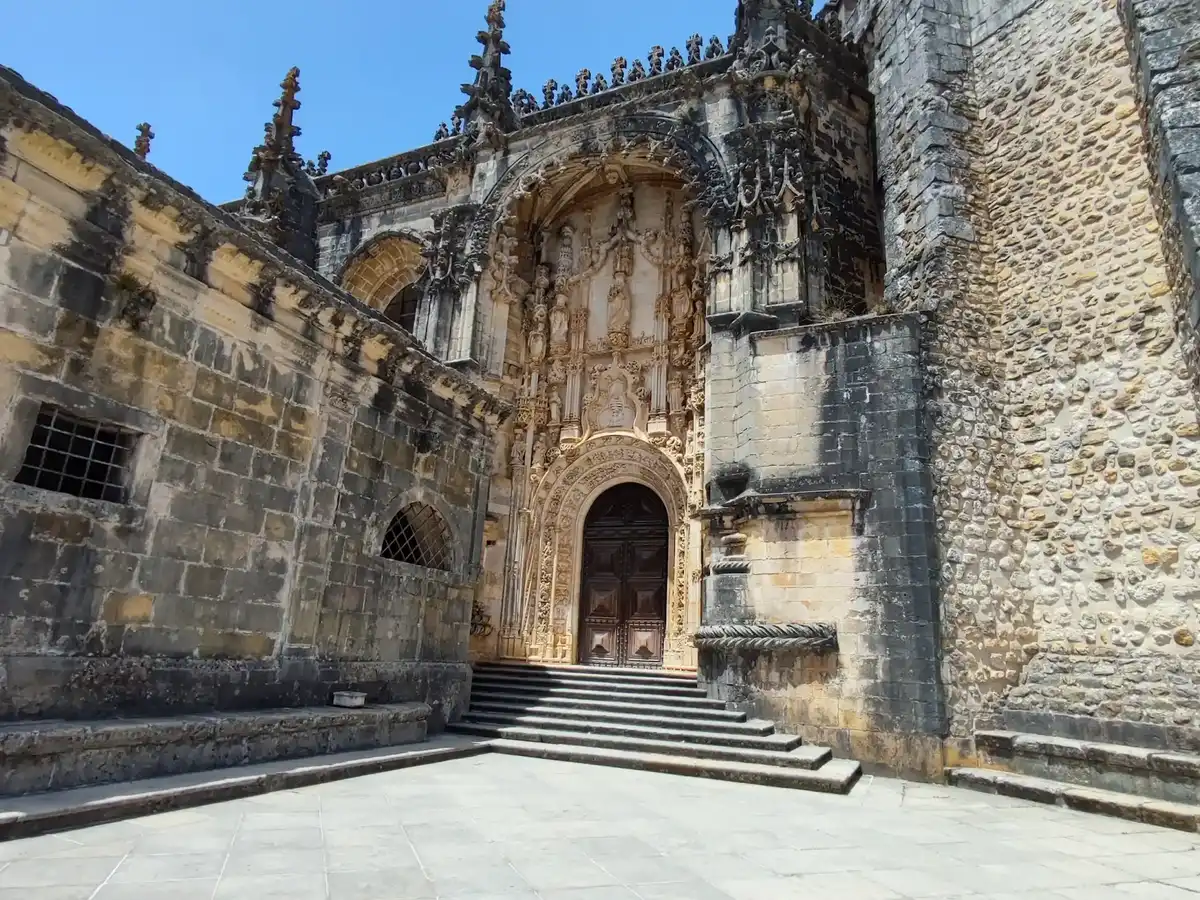
- Decorative chapels and carved portals — Scattered around the complex are finely carved doorways, intimate chapels and richly worked interiors where sculptors and masons showed off. These smaller details reward slow wandering and close-up photos.
- Renaissance additions (Cloister of João III and later works) — The 16th-century expansions introduce classical proportions and sculptural decoration that contrast with the earlier medieval parts. It’s a great place to see how Portuguese taste shifted after the Age of Discoveries.
- Museum, sacristy and liturgical treasures — Small but worthwhile displays of religious art, metalwork and objects tied to the Knights Templar and the Order of Christ. Helpful context if you want the stories behind the stones.
- Hilltop viewpoints and gardens — The convent sits on a rocky spur, so there are several terraces and quiet garden spots perfect for a picnic, sunset photos, or just a breather after stairs and cloisters.
Spotted a mistake or missing something? Contact us.

Convent of Christ Tour "Portugal in the Map" - Visit Tomar with a local guide!

Time travel at the Convent of Christ Tomar

Tomar and the Templars Convent of Christ Tour: A Historical Tale

Walking Tomar: Templar Secrets & Convent of Christ Included

UNESCO Tomar, Batalha & Alcobaça World Heritage | Private Tour

Pilgrims and Pioneers: A Self-Guided Tour Audio of Tomar

 Best Backpacking
.jpg) Hi, I’m Johan (Netherlands 🇳🇱), the creator of TakeYourBackpack. Over the past decade, I’ve backpacked through 80+ countries across six continents, gaining extensive experience with independent travel, long-term trips, and overland routes.
Hi, I’m Johan (Netherlands 🇳🇱), the creator of TakeYourBackpack. Over the past decade, I’ve backpacked through 80+ countries across six continents, gaining extensive experience with independent travel, long-term trips, and overland routes.