×

Puerto Rico🇵🇷 | attractionsArecibo C3 Science and Visitor CenterEmpty dish overlook, 2020 collapse story, 1974 message to M13, karst bowl | things to do and best time to go

Explore Casa Bacardí Rum DistilleryExplore Parque de las Cavernas del Río Camuy

Backpacking in Arecibo C3 Science and Visitor Center
🏆 Top pickattraction ranked #3
By Johan Kruseman 🇳🇱 | Updated October 23, 2026

Reserve a ticket online a day ahead and you’ll likely have the exhibit rooms and the overlook almost to yourself, which suits a place this quiet. Arecibo C3 Science and Visitor Center sits in the karst hills of northern Puerto Rico, south of Arecibo town, down a winding road through green limestone knobs. The giant dish collapsed in 2020, so you are paying for exhibits, a viewpoint and a remarkable story, not a telescope. All three are worth your time, and the story hits harder because you are standing at the edge of the empty site. Skip it if you want adrenaline or a full day out. A car makes access easy, and crowds stay modest. Bring a hat, because shade is thin. The detail that stays with you is the bowl in the hillside where 305 meters of reflector once hung.

Discover everything you want to know in the 📖 Puerto Rico Travel Guide.


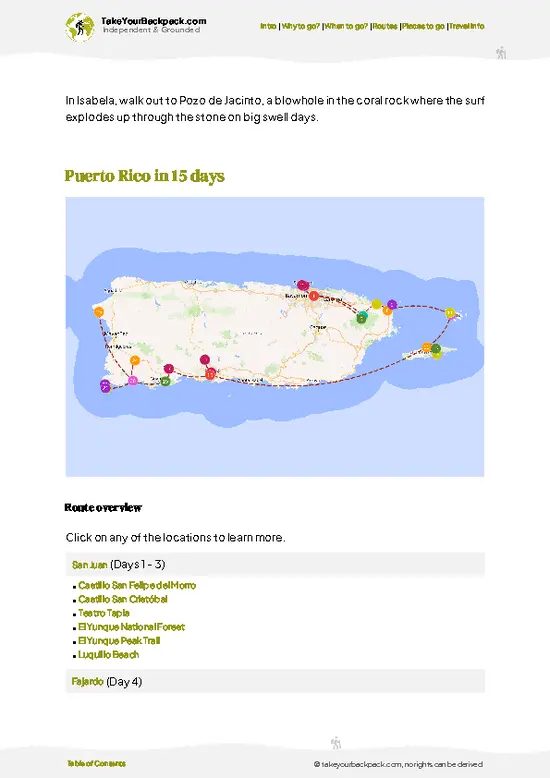
example page 0 from our offline Travel Guide for Puerto Rico
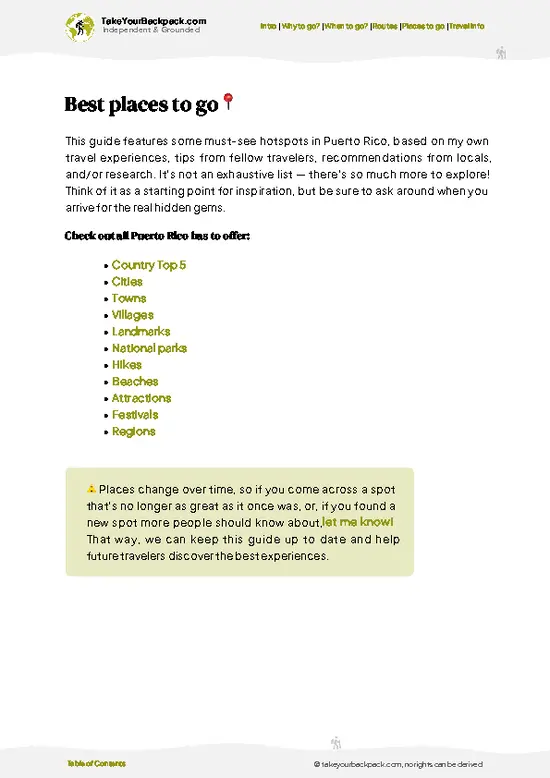
example page 1 from our offline Travel Guide for Puerto Rico
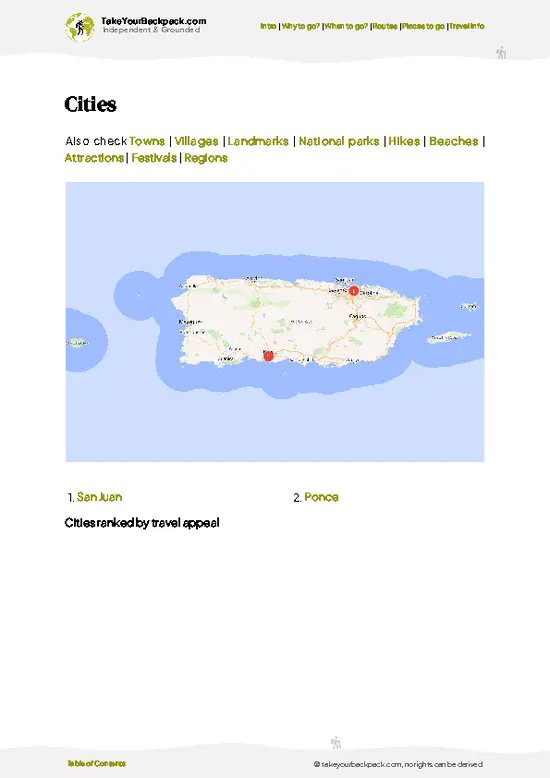
example page 2 from our offline Travel Guide for Puerto Rico
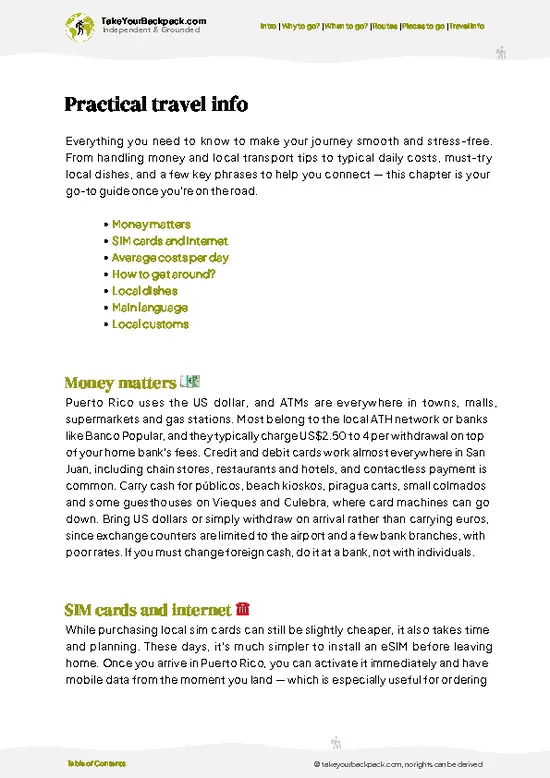
example page 3 from our offline Travel Guide for Puerto Rico
example page 4 from our offline Travel Guide for Puerto Rico
example page 5 from our offline Travel Guide for Puerto Rico
example page 6 from our offline Travel Guide for Puerto Rico
example page 7 from our offline Travel Guide for Puerto Rico
Loading the map 🌍
CLICK TO FILTER
cities
towns
villages
landmarks
national parks
hikes
beaches
attractions
festivals
regions
SHOW COUNTRY’S BESTSHOW ALL

✨ Why go?
Ranked #3 attraction in Puerto Rico
The unique appeal for travelers

Arecibo C3 Science and Visitor Center is the place to understand why this dish mattered to the whole planet, and it gives the telescope’s ending the weight it deserves. For decades the 305-meter dish was the largest single-aperture radio telescope on Earth, and the science done here runs from planetary radar to pulsars to the first planets found outside our solar system in 1992. Standing at the overlook, you see how a natural sinkhole was turned into an instrument, and you see what remains after the December 2020 collapse.

There is also a pop-culture hook. The dish shows up in GoldenEye and Contact, so even travelers who care nothing about astronomy recognize it. The 1974 Arecibo message, a burst of 1,679 bits aimed at a star cluster, gives the exhibits a human, almost whimsical edge.

On … read more 👉
Arecibo C3 Science and Visitor Center is the place to understand why this dish mattered to the whole planet, and it gives the telescope’s ending the weight it deserves. For decades the 305-meter dish was the largest single-aperture radio telescope on Earth, and the science done here runs from planetary radar to pulsars to the first planets found outside our solar system in 1992. Standing at the overlook, you see how a natural sinkhole was turned into an instrument, and you see what remains after the December 2020 collapse.

There is also a pop-culture hook. The dish shows up in GoldenEye and Contact, so even travelers who care nothing about astronomy recognize it. The 1974 Arecibo message, a burst of 1,679 bits aimed at a star cluster, gives the exhibits a human, almost whimsical edge.

On a route through the island, it makes a thoughtful counterweight to beaches and rum distilleries. It asks little of you in effort, and it rewards curiosity far beyond the time spent.

💡 HighlightsPlaces and moments you shouldn't skip

  1. Overlook of the former dish site. This is the sight everyone searches for. You look across the karst bowl where the 305-meter reflector sat, with the remaining tower stumps and the steep green hillsides still framing it.
  2. The collapse story. Exhibits and displays explain how cables failed in 2020 and how the 900-ton instrument platform fell into the dish. It is sobering and clearly told.
  3. The Arecibo message. The 1974 transmission of 1,679 bits was beamed toward the globular cluster M13. The display shows its pictograms of DNA, humans and our solar system, and decoding them is a small, satisfying puzzle.
  4. Interactive science exhibits. Hands-on displays cover radio astronomy and the upper atmosphere, both fields the observatory worked in. They are well suited to kids and to adults who have forgotten
… read more 👉
  1. Overlook of the former dish site. This is the sight everyone searches for. You look across the karst bowl where the 305-meter reflector sat, with the remaining tower stumps and the steep green hillsides still framing it.
  2. The collapse story. Exhibits and displays explain how cables failed in 2020 and how the 900-ton instrument platform fell into the dish. It is sobering and clearly told.
  3. The Arecibo message. The 1974 transmission of 1,679 bits was beamed toward the globular cluster M13. The display shows its pictograms of DNA, humans and our solar system, and decoding them is a small, satisfying puzzle.
  4. Interactive science exhibits. Hands-on displays cover radio astronomy and the upper atmosphere, both fields the observatory worked in. They are well suited to kids and to adults who have forgotten how a radio wave behaves.
  5. Pulsar and exoplanet discoveries. Learn how Arecibo found the first planets orbiting a pulsar in 1992, and how the binary pulsar work earned a Nobel Prize in Physics in 1993. This is the science that made the dish famous.
  6. Planetary radar and asteroid tracking. Arecibo bounced radar off Mercury, Venus and near-Earth asteroids. Panels show how that work revealed Mercury’s true rotation rate in the 1960s.
  7. Film connections. The dish was the setting for the finale of GoldenEye and for scenes in Contact. Seeing the real site next to the movie memory is surprisingly fun.
  8. The surrounding karst landscape. The sinkhole-dotted hills explain why engineers chose this spot, since the natural bowl cut the work of shaping a dish. Take a slow look at the rolling greenery from the grounds.
At Arecibo C3 Science and Visitor Center, the overlook and the film-connections display pair well in one morning, because the view gives context to the movie scenes and both fit easily into a single visit.
Spotted a mistake or missing something? Contact us.

🌤️ When to go?When to go for the best experience

  • Dry Season (December to April): The most reliable window for clear skies over the karst hills, with highs of 27 to 30°C (81 to 86°F) and cooler nights near 20 to 22°C (68 to 72°F). Days run about 11 to 12 hours. Winter holidays and Easter week bring the busiest weekends and the highest lodging rates.
  • Early Summer (May to July): Hotter, 29 to 32°C (84 to 90°F), with afternoon downpours that usually clear by evening. Daylight stretches to roughly 13 hours. Crowds thin out and prices soften.
  • Hurricane Season Peak (August to October): Humid, 30 to 33°C (86 to 91°F), with the heaviest rain and the real chance of storm closures. Rates are lowest, but plans can shift quickly.
  • Weekdays vs. Weekends: School groups fill weekday mornings, while Puerto Rican families come on weekends and holidays.
Reserve … read more 👉
  • Dry Season (December to April): The most reliable window for clear skies over the karst hills, with highs of 27 to 30°C (81 to 86°F) and cooler nights near 20 to 22°C (68 to 72°F). Days run about 11 to 12 hours. Winter holidays and Easter week bring the busiest weekends and the highest lodging rates.
  • Early Summer (May to July): Hotter, 29 to 32°C (84 to 90°F), with afternoon downpours that usually clear by evening. Daylight stretches to roughly 13 hours. Crowds thin out and prices soften.
  • Hurricane Season Peak (August to October): Humid, 30 to 33°C (86 to 91°F), with the heaviest rain and the real chance of storm closures. Rates are lowest, but plans can shift quickly.
  • Weekdays vs. Weekends: School groups fill weekday mornings, while Puerto Rican families come on weekends and holidays.
Reserve online at least 24 hours ahead, since tickets are not sold on site and public hours are limited to a few days a week.


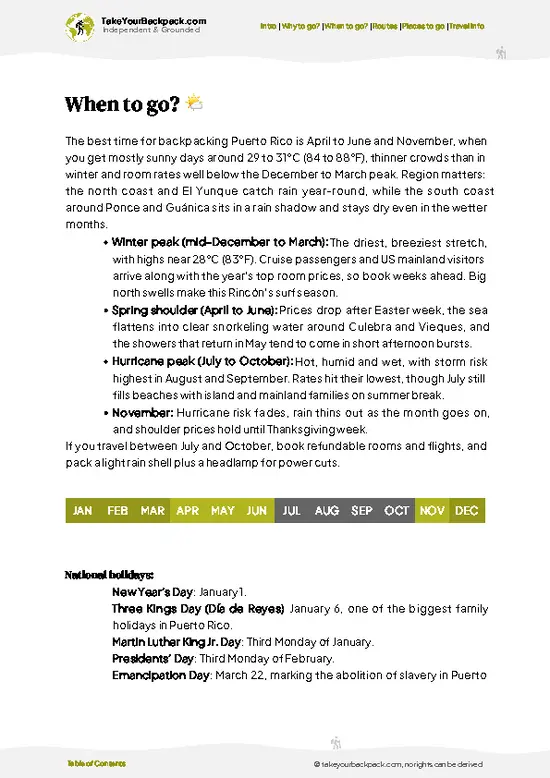
source: climatestotravel.comJANJanuary: excellent for travelingFEBFebruary: excellent for travelingMARMarch: highly recommended for travelingAPRApril: good for travelingMAYMay: fair for travelingJUNJune: fair for travelingJULJuly: fair for travelingAUGAugust: fair for travelingSEPSeptember: fair for travelingOCTOctober: good for travelingNOVNovember: highly recommended for travelingDECDecember: excellent for traveling
when-to-go

✈️ The backpacker research shortcutPuerto Rico Travel Guide

An offline-friendly backpacking guide with optimized travel routes, ranked highlights, transport advice, and the best areas to stay.
example page 0 from our offline Travel Guide for Puerto Rico
example page 1 from our offline Travel Guide for Puerto Rico
example page 2 from our offline Travel Guide for Puerto Rico
example page 3 from our offline Travel Guide for Puerto Rico
example page 4 from our offline Travel Guide for Puerto Rico
example page 5 from our offline Travel Guide for Puerto Rico
example page 6 from our offline Travel Guide for Puerto Rico
example page 7 from our offline Travel Guide for Puerto Rico
The digital guide (310 pages) contains:
✅ 81 highlights, ranked by travel appeal
✅ Optimized 5, 10 & 15-day travel routes
✅ Cities, national parks, landmarks, beaches
✅ How to get around
✅ Offline-friendly for travel without Wi-Fi
👉 Click to see all 30+ guide features

📅 Plan smarter in minutes, not weeks
✅ Month by month travel advice
✅ Festivals & national holidays
✅ Budget expectations

🗺️ Go to the right places, skip the overrated ones
✅ Honest pros & cons of destinations
✅ Top hikes, parks & viewpoints
✅ Lesser-known places most travelers miss
✅ Clear “worth it vs skip it” guidance

🛏️ Travel smoothly without rookie mistakes
✅ Best areas to stay
✅ Transport systems explained simply
✅ Common scams & safety advice
✅ SIM cards, money & practical tips

🌍 Understand the country, not just visit it
✅ Culture & traditions
✅ 52 Essential phrases & customs
✅ Festivals worth planning around
✅ Traveler-friendly historical context
✅ Insights that make places more meaningful

📱 Built for real travel conditions
✅ Fully downloadable PDF
✅ Works completely offline
✅ Optimized for phone use
✅ Useful in remote areas & buses
✅ Everything in one place
Stop searching, start planning
Get instant access to your full guide. 30‑day money-back guarantee.
+ Add another guide for just

By proceeding you agree to our terms.
Sent to your inbox immediately after payment • 100% Secure Checkout
Best Backpacking Travel Advisor 2025 tourism awardBest Backpacking
Travel Advisor
2025
What others say about Take Your Backpack Guides:
⭐⭐⭐⭐⭐
Fantastic, amazing amount of information!
⭐⭐⭐⭐⭐
My goodness this is amazing, it's what I've been looking for hats off too you!
⭐⭐⭐⭐⭐
I think this is absolutely BRILLIANT
⭐⭐⭐⭐
Very complete and informative. It's still missing places, but I gotta to commend you
⭐⭐⭐⭐⭐
This is truly amazing, thank you, can't wait to explore it with my kids!
⭐⭐⭐⭐⭐
Awesome resource, thank you!
⭐⭐⭐⭐⭐
This is amazing! Can't wait to explore the ones I haven't seen
⭐⭐⭐⭐
I love this! Well done, great idea.
⭐⭐⭐⭐⭐
Thanks for taking the time to make this gem!
⭐⭐⭐⭐⭐
This might be the best website I've ever seen.
⭐⭐⭐⭐⭐
Congratulations, and thank you so much for your work; it's incredibly valuable.
⭐⭐⭐⭐
In all seriousness I think you did a great job pointing out the important spots
⭐⭐⭐⭐⭐
10/10 very good
⭐⭐⭐⭐⭐
As someone who's only just starting to visit regularly this is awesome, thank you.
⭐⭐⭐⭐
Thank you very much! I'm going to visit my dad, it's going to be very useful!
⭐⭐⭐⭐⭐
This is really cool! We'll be travelling for the first time and this definitely come in handy.
⭐⭐⭐⭐⭐
You are now our minister of culture, congratulations 👨‍💼
⭐⭐⭐⭐⭐
Just wanted to tell you that this is a pearl! Going to follow your recommendations.
⭐⭐⭐⭐⭐
This is so cool. I'll definitely be using the resource for my travels soon.
⭐⭐⭐⭐⭐
This is very impressive! Good work.
⭐⭐⭐⭐⭐
This is an amazing and informative site. Very well done!

🛏️ Where to stay?How to pick the right area

Arecibo town on the north coast is the most practical base for the Arecibo C3 Science and Visitor Center, roughly a 30 to 40 minute drive inland. Its old center and the Poza del Obispo seafront have guesthouses and small inns, local bakeries, and evening spots where solo travelers meet people easily. It also has the best bus and shared taxi links, so you can reach it from San Juan without a car.

Utuado, in the mountains about 25 to 35 minutes from the site, suits travelers who want green hills, quiet nights and a smaller, friendlier scene. Expect family-run guesthouses and a few farm stays, with … read more 👉
Arecibo town on the north coast is the most practical base for the Arecibo C3 Science and Visitor Center, roughly a 30 to 40 minute drive inland. Its old center and the Poza del Obispo seafront have guesthouses and small inns, local bakeries, and evening spots where solo travelers meet people easily. It also has the best bus and shared taxi links, so you can reach it from San Juan without a car.

Utuado, in the mountains about 25 to 35 minutes from the site, suits travelers who want green hills, quiet nights and a smaller, friendlier scene. Expect family-run guesthouses and a few farm stays, with a handful of casual restaurants around the plaza. Taxis are scarce, so a rental car or a pre-arranged lift matters here.

Isabela and Quebradillas, further west along the coast, attract surfers and beach-focused budget travelers. Hostels and shared rentals there are the most social option in the region, with surf lessons and cheap food trucks nearby. The drive to the visitor center is around 50 to 60 minutes, so it works best if you have wheels and plan to combine the observatory with the Camuy caves and beaches.

Safety is generally good in all three areas. Stick to well-lit central streets after dark.

👛 Costs (as of 23 October 2026)Money, prices, and spending tips

Arecibo C3 Science and Visitor Center costs roughly US$75 to 135 per person per day, including admission, transport, food and a bed in high season.
CategoryBudget RangeLocal Reality
AdmissionUS$3 to 5Adults pay US$5, children and seniors US$3. Book online at least 24 hours ahead.
TransportUS$25 to 45A shared rental car runs US$45 to 80 a day split between travelers. Without one, a público from San Juan to Arecibo costs about US$5 to 8, then a taxi or rideshare to the site costs US$25 to 40 each way.
FoodUS$12 to 20Fried snacks and bakery sandwiches cost US$3 to 7. A plate of rice, beans and meat at a local kitchen is US$8 to 12. Options at the site itself are limited, so eat in town first.
Accommodation (high season)US$35 to 65Hostel beds and basic guesthouse rooms in Arecibo, Utuado or Isabela.
… read more 👉
Arecibo C3 Science and Visitor Center costs roughly US$75 to 135 per person per day, including admission, transport, food and a bed in high season.
CategoryBudget RangeLocal Reality
AdmissionUS$3 to 5Adults pay US$5, children and seniors US$3. Book online at least 24 hours ahead.
TransportUS$25 to 45A shared rental car runs US$45 to 80 a day split between travelers. Without one, a público from San Juan to Arecibo costs about US$5 to 8, then a taxi or rideshare to the site costs US$25 to 40 each way.
FoodUS$12 to 20Fried snacks and bakery sandwiches cost US$3 to 7. A plate of rice, beans and meat at a local kitchen is US$8 to 12. Options at the site itself are limited, so eat in town first.
Accommodation (high season)US$35 to 65Hostel beds and basic guesthouse rooms in Arecibo, Utuado or Isabela. Off-peak rates can drop by US$10 to 20.
Total Daily BudgetUS$75 to 135Per person, per day, in high season.
⚠️ Prices can change and everyone travels differently, so take this as a rough guide. Hope it helps you plan your adventure!

FAQCommon questions from travelers

Plan on 1.5 to 3 hours at Arecibo C3 Science and Visitor Center, which is enough for the exhibits on the telescope’s history, the science displays and the viewpoint over the collapsed dish site. Add 30 to 60 minutes if a guided session or film is running. The drive from Arecibo town takes around 30 to 40 minutes each way, so a half day covers it comfortably.
For most travelers with any interest in science or space, Arecibo C3 Science and Visitor Center is worth the US$5 adult admission. The exhibits explain the 305-meter telescope, which collapsed in 2020, and the site’s role in radio astronomy and the Arecibo message. If you only want a photo of the empty platform area, you will find less value than a visitor who reads the displays.
Reaching Arecibo C3 Science and Visitor Center is easiest by car: from San Juan, take PR-22 west to Arecibo, then head inland on PR-129 and PR-625, a drive of about 1.5 to 2 hours. Without a car, take a público from San Juan’s Río Piedras terminal to Arecibo for about US$5 to 8, then a taxi or rideshare for roughly US$25 to 40 each way. Arrange the return ride in advance, because pickups near the site are rare.
⚠️ Things can change over time, so always validate details locally before you go.

Other Puerto Rican attractions near Arecibo C3 Science and Visitor Center

Explore more nearby:


💡 Not sure where to go next?
Create a personalized itinerary for Puerto Rico including Arecibo C3 Science and Visitor Center and the places that fit your trip.

Generate my itinerary

👉 Discover all attractions

Or checkout all Puerto Rico has to offer (think cities, towns, villages, national parks, hikes, beaches, festivals)
Country photo of Puerto Rico

We 💚 feedbackKey takeaways before you go

Arecibo C3 Science and Visitor Center trips go wrong when travelers arrive expecting to see a giant telescope. It is gone, and that disappointment spoils the visit. Arrive curious about the science and the collapse, and it becomes one of the most thoughtful stops on the island. I would go early, read the exhibits slowly, and carry water.

✍️ Help improve this page!
The information on this page is based on in-depth research, insights shared by experienced travelers, and feedback from the local travel community in Puerto Rico. While every effort is made to keep the information accurate and current, conditions can change — so if you spot anything incorrect or outdated, please get in touch.


🙋‍♂️ Give feedback

👋 Meet the founderWho’s Behind Take Your Backpack?

Johan, backpacker and founder of TakeYourBackpackHi, I’m Johan (Netherlands 🇳🇱), the creator of TakeYourBackpack. Over the past 3 decades, I’ve backpacked through 90+ countries across six continents, gaining extensive experience with independent travel, long-term trips, and overland routes.

This site is built on a combination of firsthand travel experience and carefully curated insights from other backpackers. Many guides are based on places I’ve personally visited, while others bring together tips, observations, and practical advice shared by trusted travelers I’ve met along the way.

The goal is to provide realistic, experience-driven guidance — not generic itineraries — so you can explore destinations with better context, clearer expectations, and more confidence.