
×

Puerto Rico🇵🇷 | national parksVieques National Wildlife RefugeBioluminescent bay, wild horses, turtle beaches, ex-military tracks | things to do and best time to go

Explore Río Abajo State ForestExplore Maricao State Forest

Backpacking in Vieques National Wildlife Refuge
🏆 Top picknational park ranked #2
By Johan Kruseman 🇳🇱 | Updated October 22, 2026

The sand at Playa La Chiva (Blue Beach) is warm under your sandals by 9 a.m., and the only sound is wind in the sea grape while a hawksbill turtle surfaces off the reef. Vieques National Wildlife Refuge covers about half of Vieques, an island off the east coast of Puerto Rico, and much of it is former Navy land. Beaches are wide, empty and ringed by dry forest. Hiking is mostly short, flat and sun-baked, so go early, because shade is rare and the mosquitoes get active at dusk. Some areas stay closed because of past munitions, which is why you stay on marked paths and never wander into fenced zones. Roads are rough and signs are few, so a rented jeep or a bike makes more sense than waiting for a ride. Compared with Culebra’s refuge, Vieques is bigger, quieter and more spread out, with fewer snorkel-ready coves.

Discover everything you want to know in the 📖 Puerto Rico Travel Guide.


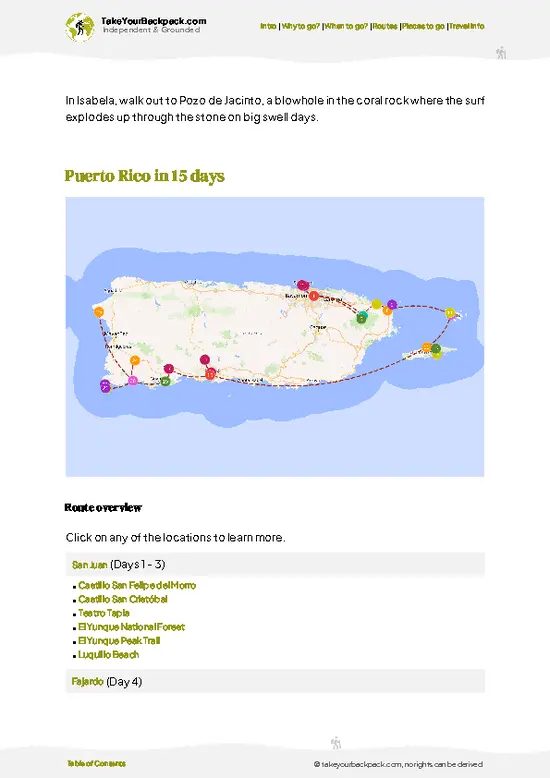
example page 0 from our offline Travel Guide for Puerto Rico
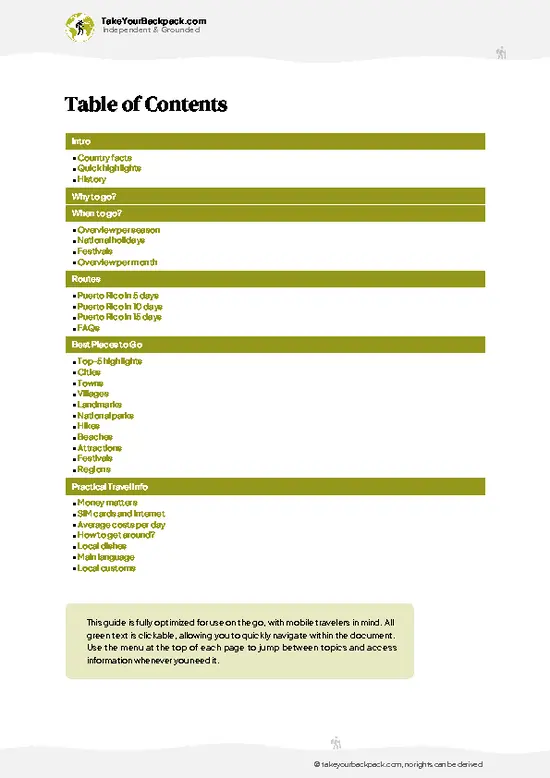
example page 1 from our offline Travel Guide for Puerto Rico
example page 2 from our offline Travel Guide for Puerto Rico
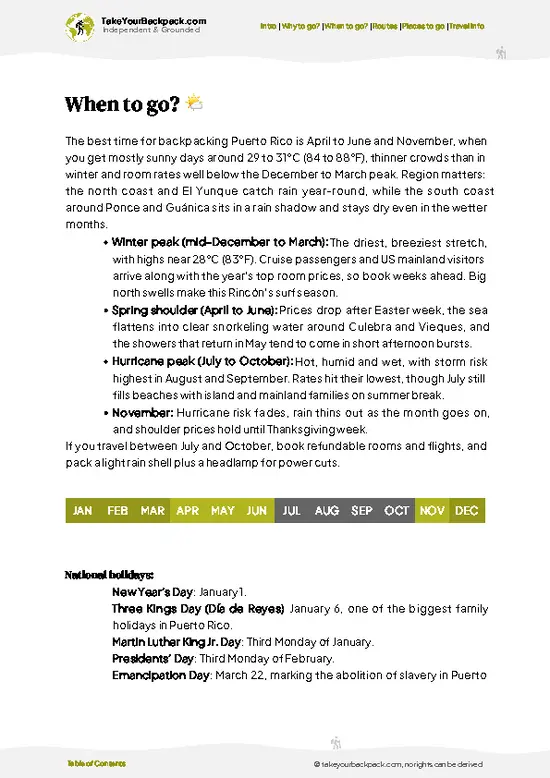
example page 3 from our offline Travel Guide for Puerto Rico
example page 4 from our offline Travel Guide for Puerto Rico
example page 5 from our offline Travel Guide for Puerto Rico
example page 6 from our offline Travel Guide for Puerto Rico
example page 7 from our offline Travel Guide for Puerto Rico
Loading the map 🌍
CLICK TO FILTER
cities
towns
villages
landmarks
national parks
hikes
beaches
attractions
festivals
regions
SHOW COUNTRY’S BESTSHOW ALL

✨ Why go?
Ranked #2 national park in Puerto Rico
Reasons people choose to explore here

Vieques National Wildlife Refuge suits people who like finding their own spot on the sand. The beaches sit along dirt tracks, and with no tour desks or fixed schedules, you decide where to stop. Local jeeps and a few small guesthouses in Esperanza and Isabel Segunda make it easy to string together days without a plan. Playa Caracas (Red Beach), Playa La Chiva (Blue Beach) and Playa Media Luna are each a short drive apart, and you can swim at one in the morning and walk a quiet trail to another by afternoon. That freedom is the draw. Independent travelers also get access to Mosquito Bay, where night kayaking on the bioluminescent water works best when you book a small group and pick a moonless night. The refuge rewards people who bring their own water, snacks and sun protection, because there … read more 👉
Vieques National Wildlife Refuge suits people who like finding their own spot on the sand. The beaches sit along dirt tracks, and with no tour desks or fixed schedules, you decide where to stop. Local jeeps and a few small guesthouses in Esperanza and Isabel Segunda make it easy to string together days without a plan. Playa Caracas (Red Beach), Playa La Chiva (Blue Beach) and Playa Media Luna are each a short drive apart, and you can swim at one in the morning and walk a quiet trail to another by afternoon. That freedom is the draw. Independent travelers also get access to Mosquito Bay, where night kayaking on the bioluminescent water works best when you book a small group and pick a moonless night. The refuge rewards people who bring their own water, snacks and sun protection, because there are almost no services inside the boundaries. If you want guided history of the old Navy years, tours exist, but self-guided exploring covers most of what matters here.

💡 HighlightsWhat this place is best known for

  1. Playa La Chiva (Blue Beach): The refuge’s best-known beach, with a long curve of pale sand, calm turquoise water and shade from sea grape trees. Its reef sits close to shore, so snorkeling is easy.
  2. Playa Caracas (Red Beach): A sheltered cove with clear shallows and a short drive in on a dirt road. It tends to be quieter on weekdays.
  3. Playa Media Luna: A small half-moon bay with water so calm it feels like a pool, popular with families and with anyone who wants an easy swim.
  4. Playa Navio: A wide, remote beach framed by cliffs and often nearly empty, with surf that can be stronger than at the others.
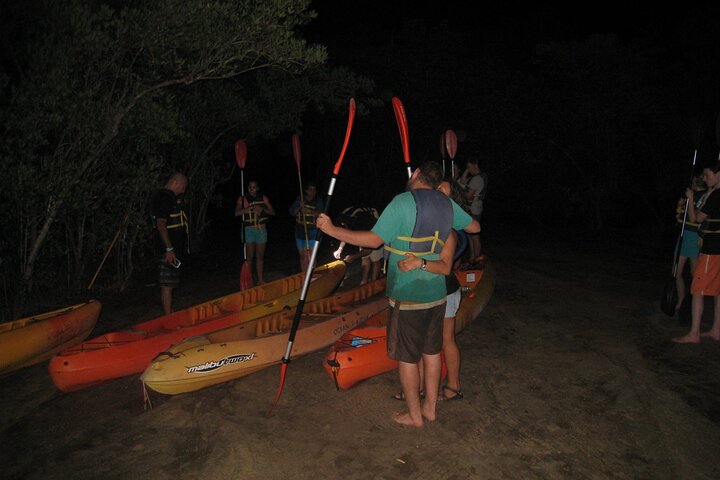
  5. Mosquito Bay: A bioluminescent bay in the refuge’s reserve area, where each paddle stroke lights up the water at night. Dark, moonless nights give the strongest glow.
  6. Wild horses: Free-roaming Paso Fino
… read more 👉
  1. Playa La Chiva (Blue Beach): The refuge’s best-known beach, with a long curve of pale sand, calm turquoise water and shade from sea grape trees. Its reef sits close to shore, so snorkeling is easy.
  2. Playa Caracas (Red Beach): A sheltered cove with clear shallows and a short drive in on a dirt road. It tends to be quieter on weekdays.
  3. Playa Media Luna: A small half-moon bay with water so calm it feels like a pool, popular with families and with anyone who wants an easy swim.
  4. Playa Navio: A wide, remote beach framed by cliffs and often nearly empty, with surf that can be stronger than at the others.
  5. Mosquito Bay: A bioluminescent bay in the refuge’s reserve area, where each paddle stroke lights up the water at night. Dark, moonless nights give the strongest glow.
  6. Wild horses: Free-roaming Paso Fino horses graze along roads and beaches across the refuge. Keep your distance and never feed them.
  7. Sea turtle nesting beaches: Hawksbill, green and leatherback turtles use the refuge’s quiet shores. In nesting season, stay behind marked areas and avoid lights after dark.
  8. Dry forest trails: Short paths through cactus, scrub and sea grape give a different view of the island, with lizards, hummingbirds and the occasional hawk.
Vieques National Wildlife Refuge keeps its beaches free to enter, so Playa La Chiva (Blue Beach) and the other sand stretches cost nothing beyond what you spend on a ride or snacks.
Spotted a mistake or missing something? Contact us.
Things to do near Vieques National Wildlife Refuge

Ratings based on Tripadvisor reviews. When you book through this link, you support our work at no extra cost to you.

🌤️ When to go?Best time to explore Vieques National Wildlife Refuge

  • Winter and Early Spring (December to April): Dry, breezy and the busiest stretch, with highs of 28 to 30°C (82 to 86°F) and nights of 21 to 23°C (70 to 73°F). Daylight runs about 11 hours. Beaches like Sun Bay and Playa Caracas are at their most crowded, and guesthouse rates climb 20 to 40 percent, with holiday weeks and Easter the priciest.
  • Late Spring (May to June): Hotter at 29 to 32°C (84 to 90°F), with lighter rain and thinner crowds. Daylight stretches to roughly 13 hours. Rates ease and snorkeling visibility stays good.
  • Summer and Fall (July to November): Humid, 30 to 33°C (86 to 91°F), with afternoon downpours and the peak of hurricane season from August to October. Some small businesses close in September and October. Prices are lowest, and the bioluminescent bay is darkest and most
… read more 👉
  • Winter and Early Spring (December to April): Dry, breezy and the busiest stretch, with highs of 28 to 30°C (82 to 86°F) and nights of 21 to 23°C (70 to 73°F). Daylight runs about 11 hours. Beaches like Sun Bay and Playa Caracas are at their most crowded, and guesthouse rates climb 20 to 40 percent, with holiday weeks and Easter the priciest.
  • Late Spring (May to June): Hotter at 29 to 32°C (84 to 90°F), with lighter rain and thinner crowds. Daylight stretches to roughly 13 hours. Rates ease and snorkeling visibility stays good.
  • Summer and Fall (July to November): Humid, 30 to 33°C (86 to 91°F), with afternoon downpours and the peak of hurricane season from August to October. Some small businesses close in September and October. Prices are lowest, and the bioluminescent bay is darkest and most vivid on moonless nights, which can be had in any season.
Book Vieques ferry and flight tickets early for winter and aim for May or early December for good weather with fewer people.


source: climatestotravel.comJANJanuary: excellent for travelingFEBFebruary: excellent for travelingMARMarch: excellent for travelingAPRApril: highly recommended for travelingMAYMay: fair for travelingJUNJune: fair for travelingJULJuly: fair for travelingAUGAugust: fair for travelingSEPSeptember: fair for travelingOCTOctober: fair for travelingNOVNovember: highly recommended for travelingDECDecember: excellent for traveling
puerto-rico-national-park-vieques-national-wildlife-refuge
© Google | William Cortes

✈️ The backpacker research shortcutPuerto Rico Travel Guide

An offline-friendly backpacking guide with optimized travel routes, ranked highlights, transport advice, and the best areas to stay.
example page 0 from our offline Travel Guide for Puerto Rico
example page 1 from our offline Travel Guide for Puerto Rico
example page 2 from our offline Travel Guide for Puerto Rico
example page 3 from our offline Travel Guide for Puerto Rico
example page 4 from our offline Travel Guide for Puerto Rico
example page 5 from our offline Travel Guide for Puerto Rico
example page 6 from our offline Travel Guide for Puerto Rico
example page 7 from our offline Travel Guide for Puerto Rico
The digital guide (310 pages) contains:
✅ 81 highlights, ranked by travel appeal
✅ Optimized 5, 10 & 15-day travel routes
✅ Cities, national parks, landmarks, beaches
✅ How to get around
✅ Offline-friendly for travel without Wi-Fi
👉 Click to see all 30+ guide features

📅 Plan smarter in minutes, not weeks
✅ Month by month travel advice
✅ Festivals & national holidays
✅ Budget expectations

🗺️ Go to the right places, skip the overrated ones
✅ Honest pros & cons of destinations
✅ Top hikes, parks & viewpoints
✅ Lesser-known places most travelers miss
✅ Clear “worth it vs skip it” guidance

🛏️ Travel smoothly without rookie mistakes
✅ Best areas to stay
✅ Transport systems explained simply
✅ Common scams & safety advice
✅ SIM cards, money & practical tips

🌍 Understand the country, not just visit it
✅ Culture & traditions
✅ 52 Essential phrases & customs
✅ Festivals worth planning around
✅ Traveler-friendly historical context
✅ Insights that make places more meaningful

📱 Built for real travel conditions
✅ Fully downloadable PDF
✅ Works completely offline
✅ Optimized for phone use
✅ Useful in remote areas & buses
✅ Everything in one place
Stop searching, start planning
Get instant access to your full guide. 30‑day money-back guarantee.
+ Add another guide for just

By proceeding you agree to our terms.
Sent to your inbox immediately after payment • 100% Secure Checkout
Best Backpacking Travel Advisor 2025 tourism awardBest Backpacking
Travel Advisor
2025
What others say about Take Your Backpack Guides:
⭐⭐⭐⭐⭐
Fantastic, amazing amount of information!
⭐⭐⭐⭐⭐
My goodness this is amazing, it's what I've been looking for hats off too you!
⭐⭐⭐⭐⭐
I think this is absolutely BRILLIANT
⭐⭐⭐⭐
Very complete and informative. It's still missing places, but I gotta to commend you
⭐⭐⭐⭐⭐
This is truly amazing, thank you, can't wait to explore it with my kids!
⭐⭐⭐⭐⭐
Awesome resource, thank you!
⭐⭐⭐⭐⭐
This is amazing! Can't wait to explore the ones I haven't seen
⭐⭐⭐⭐
I love this! Well done, great idea.
⭐⭐⭐⭐⭐
Thanks for taking the time to make this gem!
⭐⭐⭐⭐⭐
This might be the best website I've ever seen.
⭐⭐⭐⭐⭐
Congratulations, and thank you so much for your work; it's incredibly valuable.
⭐⭐⭐⭐
In all seriousness I think you did a great job pointing out the important spots
⭐⭐⭐⭐⭐
10/10 very good
⭐⭐⭐⭐⭐
As someone who's only just starting to visit regularly this is awesome, thank you.
⭐⭐⭐⭐
Thank you very much! I'm going to visit my dad, it's going to be very useful!
⭐⭐⭐⭐⭐
This is really cool! We'll be travelling for the first time and this definitely come in handy.
⭐⭐⭐⭐⭐
You are now our minister of culture, congratulations 👨‍💼
⭐⭐⭐⭐⭐
Just wanted to tell you that this is a pearl! Going to follow your recommendations.
⭐⭐⭐⭐⭐
This is so cool. I'll definitely be using the resource for my travels soon.
⭐⭐⭐⭐⭐
This is very impressive! Good work.
⭐⭐⭐⭐⭐
This is an amazing and informative site. Very well done!

🛏️ Where to stay?Where staying makes the most sense

Esperanza and Isabel Segunda are the best bases for the refuge, and there are no beds inside the refuge itself. Camping is allowed only at Sun Bay, a municipal campground at Sun Bay beach (Balneario Sun Bay), which sits next to the refuge’s western edge.

Esperanza, on the south shore, is where most backpackers land. Its malecón is lined with small guesthouses, a few hostel-style rooms, bars and restaurants, and it is a short drive or a 45 to 60 minute walk from Sun Bay and the refuge beaches. Rooms run roughly US$90 to 160 in high season, with a few simpler options near the low end.

Isabel Segunda, … read more 👉
Esperanza and Isabel Segunda are the best bases for the refuge, and there are no beds inside the refuge itself. Camping is allowed only at Sun Bay, a municipal campground at Sun Bay beach (Balneario Sun Bay), which sits next to the refuge’s western edge.

Esperanza, on the south shore, is where most backpackers land. Its malecón is lined with small guesthouses, a few hostel-style rooms, bars and restaurants, and it is a short drive or a 45 to 60 minute walk from Sun Bay and the refuge beaches. Rooms run roughly US$90 to 160 in high season, with a few simpler options near the low end.

Isabel Segunda, the ferry town on the north coast, has more local character, a grocery store, banks and the most affordable rooms, around US$70 to 120. It is a better pick if you arrive late on the ferry. The refuge beaches are a 20 to 30 minute drive away, so you will need a rental or taxi.

Sun Bay camping costs about US$15 to 20 a night and fills on weekends and holidays. Book rooms in high season well ahead, since Vieques has limited beds.

👛 Costs (as of 22 October 2026)Money, prices, and spending tips

Vieques National Wildlife Refuge costs most backpackers around US$110 to 135 a day, mainly because beds and transport to the island cost more than on the main island.
CategoryBudget RangeLocal Reality
Entrance feeUS$0The refuge beaches are free to enter and Sun Bay has no entry charge for pedestrians. Parking is generally free.
Accommodation (high season)US$70 to 90Simple guesthouse rooms in Isabel Segunda or Esperanza. Camping at Sun Bay is about US$15 to 20 but needs advance reservation.
Accommodation (low season)US$55 to 75Rates drop in summer and fall, and some places close in September and October.
Local transportUS$10 to 30Públicos (shared vans) cost a few dollars per ride. Taxis to refuge beaches run US$15 to 30 each way. A rental jeep is about US$70 to 120 a day.
Food and suppliesUS$25 to
… read more 👉
Vieques National Wildlife Refuge costs most backpackers around US$110 to 135 a day, mainly because beds and transport to the island cost more than on the main island.
CategoryBudget RangeLocal Reality
Entrance feeUS$0The refuge beaches are free to enter and Sun Bay has no entry charge for pedestrians. Parking is generally free.
Accommodation (high season)US$70 to 90Simple guesthouse rooms in Isabel Segunda or Esperanza. Camping at Sun Bay is about US$15 to 20 but needs advance reservation.
Accommodation (low season)US$55 to 75Rates drop in summer and fall, and some places close in September and October.
Local transportUS$10 to 30Públicos (shared vans) cost a few dollars per ride. Taxis to refuge beaches run US$15 to 30 each way. A rental jeep is about US$70 to 120 a day.
Food and suppliesUS$25 to 40Kiosks and local spots serve plates for US$10 to 16. Groceries are pricey because everything arrives by ferry or barge.
Ferry from CeibaAbout US$2 each wayThe public passenger ferry is cheap but crowded, and tickets are bought at the terminal. Flights are far costlier.
Total Daily BudgetUS$110 to 135Based on high-season accommodation, local transport, food and one ferry leg.


source: fws.gov
⚠️ Prices can change and everyone travels differently, so take this as a rough guide. Hope it helps you plan your adventure!

🥾 TrailsTrail guide for Vieques National Wildlife Refuge national park

Vieques National Wildlife Refuge is best explored on short, flat walks that link its beaches, with no long-distance trail system to speak of. Terrain is sandy track, hard-packed dirt and dry scrubby forest, so the main challenge is heat rather than elevation.
  • Beach-to-beach walks: Playa La Chiva (Blue Beach) and nearby coves connect by dirt tracks of roughly 1 to 3 kilometers, an easy 20 to 60 minutes on foot.
  • Playa Caracas to Playa Media Luna: A gentle road walk through scrub and sea grape, about 45 minutes one way, with sea views opening between the trees.
  • Dry forest paths: Short, mostly shadeless
… read more 👉
Vieques National Wildlife Refuge is best explored on short, flat walks that link its beaches, with no long-distance trail system to speak of. Terrain is sandy track, hard-packed dirt and dry scrubby forest, so the main challenge is heat rather than elevation.
  • Beach-to-beach walks: Playa La Chiva (Blue Beach) and nearby coves connect by dirt tracks of roughly 1 to 3 kilometers, an easy 20 to 60 minutes on foot.
  • Playa Caracas to Playa Media Luna: A gentle road walk through scrub and sea grape, about 45 minutes one way, with sea views opening between the trees.
  • Dry forest paths: Short, mostly shadeless tracks where you may see lizards, hummingbirds, hawks and sometimes wild horses. Difficulty is easy, but sun and thin shade make midday walks tiring.
  • Navio and the eastern shore: Longer, sandier stretches with fewer people, best for strong walkers who carry plenty of water.
  • Wildlife: Wild horses, sea turtles, shorebirds and iguanas are the usual sightings, and turtle nesting areas can close sections of beach.
Start early, because tree cover is thin and afternoon heat builds fast. Carry at least 2 liters of water per person, sunscreen and bug repellent, since there are no shops or fountains in the refuge. Stay on marked routes and out of fenced areas, as unexploded munitions remain in parts of the old Navy land.
Getting there means reaching the island first, by ferry from Ceiba or a small plane, and then driving or biking in. Taxis and público vans run on the main roads, but they rarely serve the beaches, so a rental jeep or bike gives the most freedom. The refuge itself has no entrance fee, though some access roads can be rough after heavy rain. Weekends and holidays bring more locals and day visitors, while weekday mornings are noticeably quieter.
⚠️ Hiking info can sometimes be outdated or inaccurate. Before you hit the trail, check the latest conditions with locals. If you do spot anything that's off, I'd love to hear from you, so I can update it for fellow travelers.

🛡️ SafetyTraveler Safety Guide

Vieques National Wildlife Refuge is straightforward for hikers, with the main caution being unexploded ordnance left from decades of Navy use. Stay on marked roads, trails and open beaches, never touch or move metal objects, and respect closed areas, which are fenced and signed for good reason.

Heat and sun cause far more trouble than anything else. Shade is thin on the beach roads, so carry at least 2 to 3 liters of water, wear a hat and use mineral sunscreen. Walk early or late, and avoid midday on the longer stretches toward Green Beach and Blue Beach.

Mosquitoes and sand flies are bad near the mangroves at dusk, so bring repellent. Manchineel trees, common behind beaches, have toxic fruit and sap. Do not eat the little apples or shelter under them in rain.

Sea turtles nest on some beaches … read more 👉
Vieques National Wildlife Refuge is straightforward for hikers, with the main caution being unexploded ordnance left from decades of Navy use. Stay on marked roads, trails and open beaches, never touch or move metal objects, and respect closed areas, which are fenced and signed for good reason.

Heat and sun cause far more trouble than anything else. Shade is thin on the beach roads, so carry at least 2 to 3 liters of water, wear a hat and use mineral sunscreen. Walk early or late, and avoid midday on the longer stretches toward Green Beach and Blue Beach.

Mosquitoes and sand flies are bad near the mangroves at dusk, so bring repellent. Manchineel trees, common behind beaches, have toxic fruit and sap. Do not eat the little apples or shelter under them in rain.

Sea turtles nest on some beaches from spring to fall. Keep distance, use no lights at night and leave nests alone. Currents can pick up on the exposed north side, so swim on calmer southern beaches. Cell coverage is patchy.

FAQFrequently asked questions about Vieques National Wildlife Refuge

Two to three days is enough for Vieques National Wildlife Refuge, which covers about half the island. One full day covers Sun Bay, Playa Caracas (Red Beach) and Playa La Chiva (Blue Beach), and a second lets you reach quieter spots like Green Beach and Playa Plata. Add an evening for the bioluminescent bay.
Getting around Vieques National Wildlife Refuge without a car is possible but limiting. Públicos run between Isabel Segunda and Esperanza for a few dollars, and taxis to the refuge beaches cost roughly US$15 to 30 each way, while Sun Bay is walkable from Esperanza in about 45 to 60 minutes. A rental car or jeep, around US$70 to 120 a day, makes the farther beaches much easier.
Entry to Vieques National Wildlife Refuge is free, and no permit is required for day use on its open beaches and roads. Camping is available only at the municipal Sun Bay campground, roughly US$15 to 20 a night with a reservation. Closed zones with unexploded ordnance risk are off limits, and the refuge is open daily from sunrise to sunset.
⚠️ Things can change over time, so always validate details locally before you go.

Other Puerto Rican national parks near Vieques National Wildlife Refuge

Explore more nearby:


💡 Not sure where to go next?
Create a personalized itinerary for Puerto Rico including Vieques National Wildlife Refuge and the places that fit your trip.

Generate my itinerary

👉 Discover all national parks

Or checkout all Puerto Rico has to offer (think cities, towns, villages, national parks, hikes, beaches, festivals)
Country photo of Puerto Rico

We 💚 feedbackWhat to keep in mind

Vieques National Wildlife Refuge pairs best with a few nights in Esperanza, where evenings are slow and the road to the beaches is short. I would spend mornings at Blue Beach or Red Beach, then book a Mosquito Bay paddle for a dark night. If your route continues, Culebra makes a good contrast, with smaller beaches and more reef.

✍️ Help improve this page!
The information on this page is based on in-depth research, insights shared by experienced travelers, and feedback from the local travel community in Puerto Rico. While every effort is made to keep the information accurate and current, conditions can change — so if you spot anything incorrect or outdated, please get in touch.


🙋‍♂️ Give feedback

👋 Meet the founderWho’s Behind Take Your Backpack?

Johan, backpacker and founder of TakeYourBackpackHi, I’m Johan (Netherlands 🇳🇱), the creator of TakeYourBackpack. Over the past 3 decades, I’ve backpacked through 90+ countries across six continents, gaining extensive experience with independent travel, long-term trips, and overland routes.

This site is built on a combination of firsthand travel experience and carefully curated insights from other backpackers. Many guides are based on places I’ve personally visited, while others bring together tips, observations, and practical advice shared by trusted travelers I’ve met along the way.

The goal is to provide realistic, experience-driven guidance — not generic itineraries — so you can explore destinations with better context, clearer expectations, and more confidence.