×

Congo🇨🇬 | townsBokoPool hills, Lari lanes, manioc market, charcoal grills | things to do and best time to go

Explore NgabéExplore Kimongo

Backpacking in Boko
👌 Worth visitingtown ranked #11
By Johan Kruseman 🇳🇱 | Updated October 22, 2026

Boko sits in a part of Pool where almost no backpackers stop, so you will probably be the only foreigner at the roadside stalls. It lies in the south of the Republic of the Congo, in the Pool region, among red-earth hills and cassava fields. Expect woodsmoke, the thump of pestles on manioc, and orange dust coating everything in the dry months. The rewards are quiet lanes, Lari-speaking neighbors who greet you, and grilled fish eaten on plastic stools. Don’t expect hostels, cafés or a sightseeing circuit; evenings are early and dark. It is easy to meet locals, hard to meet other travelers. Unlike nearby Kinkala, which has the regional administration and more services, Boko is smaller and plainly rural.

Discover everything you want to know in the 📖 Congo Travel Guide.
Safety warning

The current risk level for Congo is high. Check the advice before going.


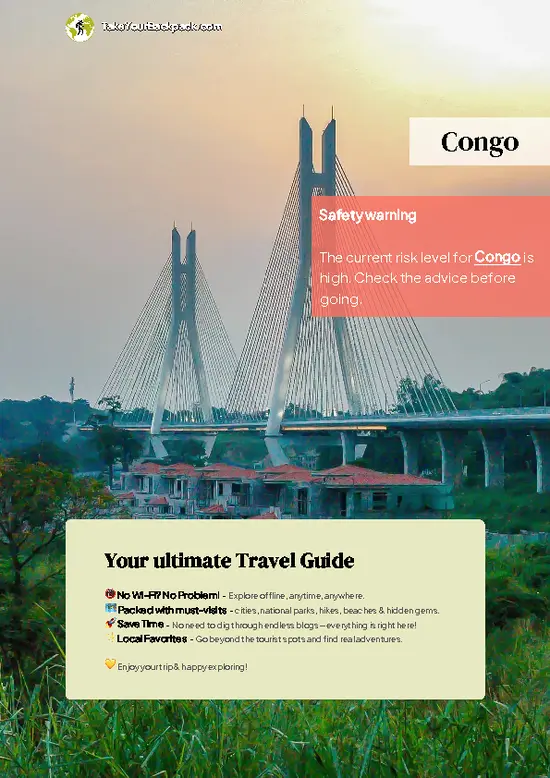
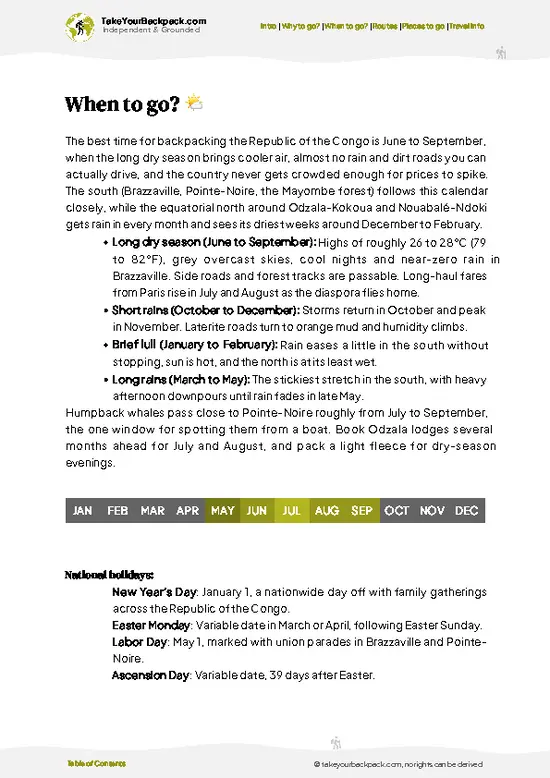
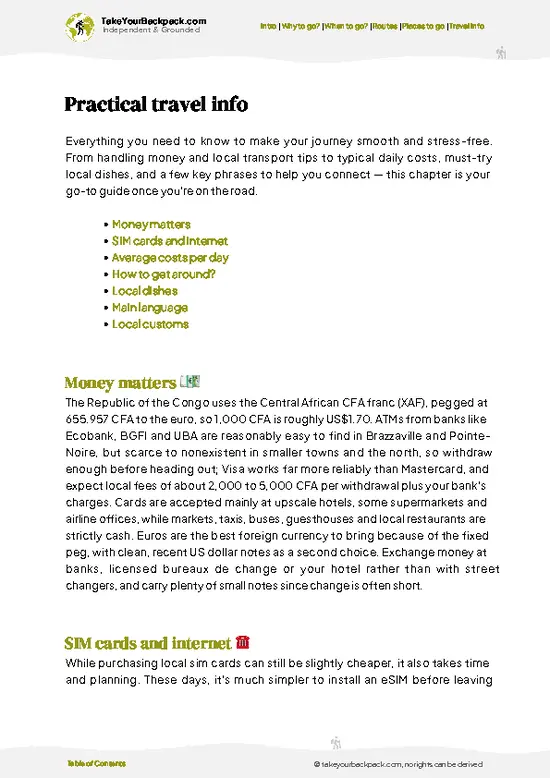
example page 0 from our offline Travel Guide for Republic of the Congo
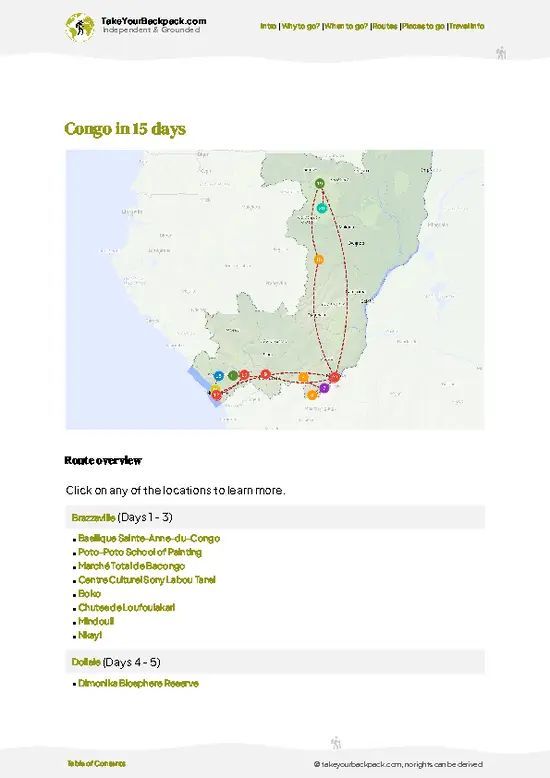
example page 1 from our offline Travel Guide for Republic of the Congo
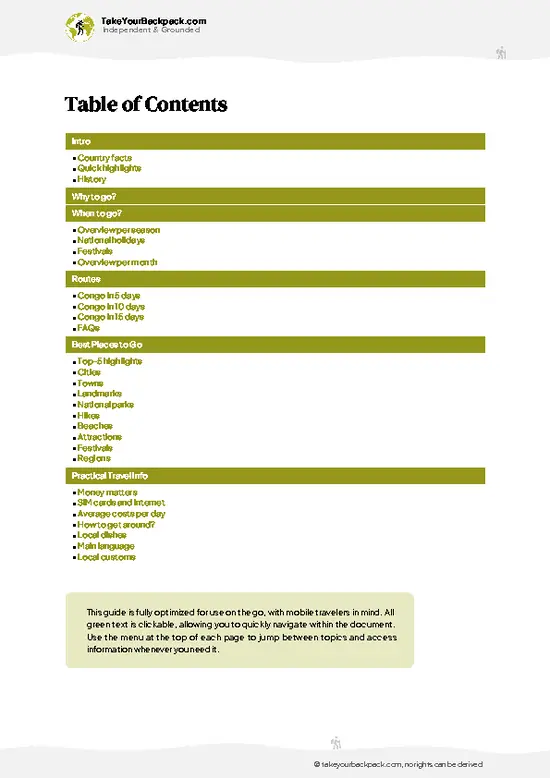
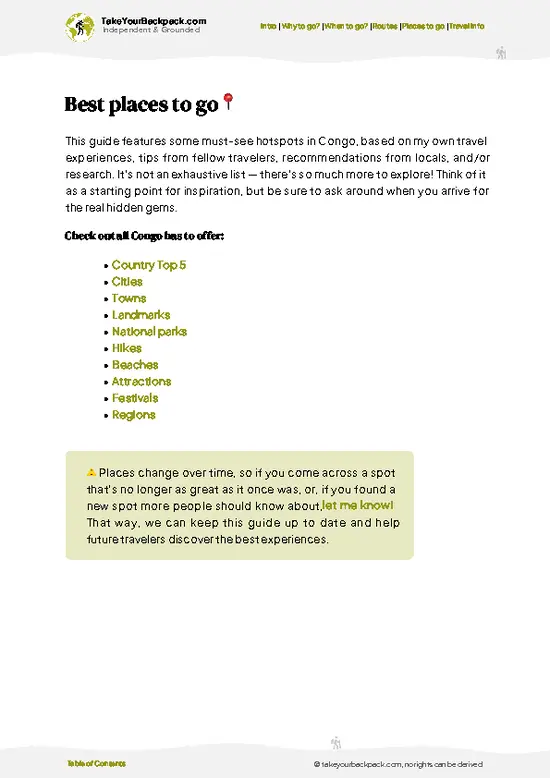
example page 2 from our offline Travel Guide for Republic of the Congo
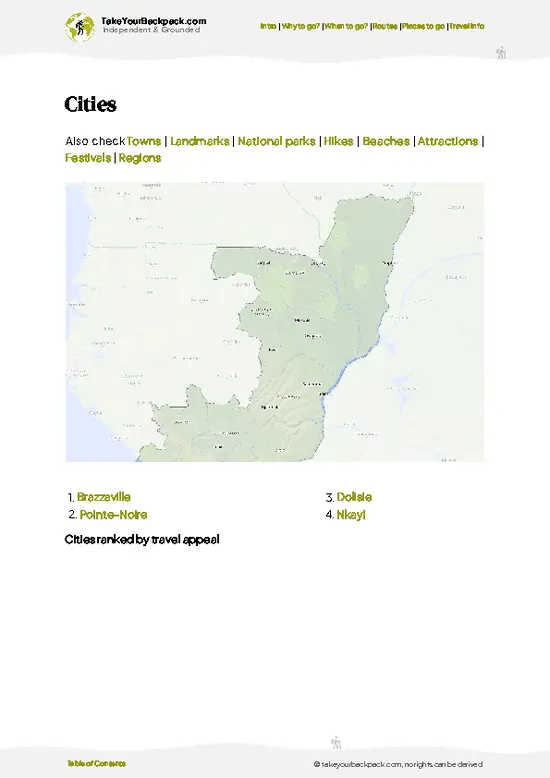
example page 3 from our offline Travel Guide for Republic of the Congo
example page 4 from our offline Travel Guide for Republic of the Congo
example page 5 from our offline Travel Guide for Republic of the Congo
example page 6 from our offline Travel Guide for Republic of the Congo
example page 7 from our offline Travel Guide for Republic of the Congo
Loading the map 🌍
CLICK TO FILTER
cities
towns
landmarks
national parks
hikes
beaches
attractions
festivals
regions
SHOW COUNTRY’S BESTSHOW ALL

✨ Why go?
Ranked #11 town in Congo
What sets this place apart

Boko suits the slow, curious traveler who wants rural Pool rather than a checklist. Its draw is the ordinary scale: a market where you can watch cassava leaves and manioc bread being sold, hills you can walk at dawn when the air is cool, and villages where a greeting in French or Lari opens conversations quickly. Most people pass through in a few hours, but a night or two lets you see how the place works. It is quiet, with no organized nightlife, so solo travelers who enjoy their own company do best. Small-group travelers with some French will get further. If you need ready-made tours, English signage or a social hostel scene, this is better as a brief stop.

💡 HighlightsWhat this place is best known for

  1. Boko market: The center of daily life, with piles of manioc, peanuts, dried fish and fruit. Go in the morning when stock is freshest and the heat is gentle. Entry is free, and an hour is plenty. Buy a snack and ask before photographing anyone.
  2. Walks over the Pool hills: Dirt tracks climb out of town through cassava plots and small stands of trees, giving wide views over the folded red landscape. Early morning or late afternoon is cooler and softer for photos. It costs nothing, and 1 to 2 hours is a comfortable outing.
  3. Roadside grills and local eateries: Evening is when charcoal fires glow along the main road and grilled fish or chicken is served with chikwangue (steamed manioc). Meals are cheap, usually under €3. Allow an hour and eat where the cook is busy.
  4. Village lanes of the Lari community:
… read more 👉
  1. Boko market: The center of daily life, with piles of manioc, peanuts, dried fish and fruit. Go in the morning when stock is freshest and the heat is gentle. Entry is free, and an hour is plenty. Buy a snack and ask before photographing anyone.
  2. Walks over the Pool hills: Dirt tracks climb out of town through cassava plots and small stands of trees, giving wide views over the folded red landscape. Early morning or late afternoon is cooler and softer for photos. It costs nothing, and 1 to 2 hours is a comfortable outing.
  3. Roadside grills and local eateries: Evening is when charcoal fires glow along the main road and grilled fish or chicken is served with chikwangue (steamed manioc). Meals are cheap, usually under €3. Allow an hour and eat where the cook is busy.
  4. Village lanes of the Lari community: Wander the quieter side streets to see mud-brick and cement houses, courtyards and everyday work. Mornings are best. It is free, takes about an hour, and a friendly greeting is expected before you take any pictures.
Boko can be covered in half a day, though the hill walks stretch it to a full one. Kinkala, the regional capital, and the countryside along the road toward Brazzville make the most practical day trips from Boko.
Spotted a mistake or missing something? Contact us.

🏘️ NeighborhoodsWhere things are and how it's laid out

Boko is a small administrative town in the Pool region, southwest of Brazzaville, and it is easy to cover on foot in an afternoon, though the heat and red dust make you slow down anyway.
  • Town center and main road: The paved stretch holds the sous-préfecture, a few shops and the market stalls, and it deserves your first hour. Expect motorbike horns, charcoal smoke, grilled fish and cassava sticks wrapped in leaves, and fine orange dust on everything by noon.
  • Market area: Busiest in the morning, when vendors pile manioc, peanuts, tomatoes and smoked fish on tarps. Go early, before the sun turns the tin roofs into griddles. It is the best place to eat cheaply and watch daily life.
  • Residential side streets: Sandy lanes of brick and tin-roofed houses, with chickens, laughing kids and radios drifting
… read more 👉
Boko is a small administrative town in the Pool region, southwest of Brazzaville, and it is easy to cover on foot in an afternoon, though the heat and red dust make you slow down anyway.
  • Town center and main road: The paved stretch holds the sous-préfecture, a few shops and the market stalls, and it deserves your first hour. Expect motorbike horns, charcoal smoke, grilled fish and cassava sticks wrapped in leaves, and fine orange dust on everything by noon.
  • Market area: Busiest in the morning, when vendors pile manioc, peanuts, tomatoes and smoked fish on tarps. Go early, before the sun turns the tin roofs into griddles. It is the best place to eat cheaply and watch daily life.
  • Residential side streets: Sandy lanes of brick and tin-roofed houses, with chickens, laughing kids and radios drifting from doorways. Pleasant for a slow wander, but there is nothing to tick off here, and nights are very quiet.
  • Outskirts and savanna: Rolling green hills and red tracks start where the houses stop. Walk out in the cooler early hours; skip it at midday.

⌛️ 1 dayHow to make the most of one day

7:00 AM, Boko market: Start here because the stalls are freshest and the air is still cool. Buy fruit and chikwangue for breakfast and watch traders unload sacks of manioc and dried fish.
9:00 AM, Hill track above town: Walk out along a dirt track through cassava fields to the first ridge. It is not on any standard itinerary, and the views across the red hills are worth the sweat. Carry water and greet everyone you pass.
11:30 AM, Village lanes: Drop back down and wander the quieter side streets. Ask permission before taking photos, and accept invitations to chat if offered; this is where the town feels most human.
1:00 PM, Lunch at a local eatery: Sit for grilled fish or chicken with manioc and a cold soft drink. Rest through the hottest hours.
4:00 PM, Main road at golden hour: Stroll the main … read more 👉
7:00 AM, Boko market: Start here because the stalls are freshest and the air is still cool. Buy fruit and chikwangue for breakfast and watch traders unload sacks of manioc and dried fish.
9:00 AM, Hill track above town: Walk out along a dirt track through cassava fields to the first ridge. It is not on any standard itinerary, and the views across the red hills are worth the sweat. Carry water and greet everyone you pass.
11:30 AM, Village lanes: Drop back down and wander the quieter side streets. Ask permission before taking photos, and accept invitations to chat if offered; this is where the town feels most human.
1:00 PM, Lunch at a local eatery: Sit for grilled fish or chicken with manioc and a cold soft drink. Rest through the hottest hours.
4:00 PM, Main road at golden hour: Stroll the main road as people return from the fields and trucks kick up dust. Pick up peanuts or fruit for later.
6:30 PM, Roadside grills: Finish with charcoal-grilled meat, a plastic stool and the sound of radios. Head back before it gets too dark.

🌤️ When to go?Weather, crowds, and seasonal trade-offs

The dry months from June to August are the easiest for travel around Boko, with sunny skies, little rain and manageable roads.
  • Dry Season (June to August): Days reach 27 to 31°C (81 to 88°F), nights drop to about 18 to 20°C (64 to 68°F), and red tracks stay firm. Prices barely move, since tourism here is minimal.
  • Short Wet Season (September to December): Heavy storms turn dirt roads to slick mud and transport slows. Temperatures sit at 24 to 30°C (75 to 86°F), and the hills turn bright green.
  • Short Dry Spell (January to February): Hot, 28 to 32°C (82 to 90°F), with patchy rain and decent road conditions.
  • Main Rains (March to May): Humid and stormy, with flooded ruts and delays.
Plan to arrive in the morning so you have daylight to sort out onward transport.

source: climatestotravel.comJANJanuary: fair for travelingFEBFebruary: fair for travelingMARMarch: fair for travelingAPRApril: fair for travelingMAYMay: fair for travelingJUNJune: excellent for travelingJULJuly: excellent for travelingAUGAugust: excellent for travelingSEPSeptember: excellent for travelingOCTOctober: fair for travelingNOVNovember: fair for travelingDECDecember: fair for traveling
when-to-go

✈️ The backpacker research shortcutCongo Travel Guide

An offline-friendly backpacking guide with optimized travel routes, ranked highlights, transport advice, and the best areas to stay.
example page 0 from our offline Travel Guide for Republic of the Congo
example page 1 from our offline Travel Guide for Republic of the Congo
example page 2 from our offline Travel Guide for Republic of the Congo
example page 3 from our offline Travel Guide for Republic of the Congo
example page 4 from our offline Travel Guide for Republic of the Congo
example page 5 from our offline Travel Guide for Republic of the Congo
example page 6 from our offline Travel Guide for Republic of the Congo
example page 7 from our offline Travel Guide for Republic of the Congo
The digital guide (205 pages) contains:
✅ 46 highlights, ranked by travel appeal
✅ Optimized 5, 10 & 15-day travel routes
✅ Cities, national parks, landmarks, beaches
✅ How to get around
✅ Offline-friendly for travel without Wi-Fi
👉 Click to see all 30+ guide features

📅 Plan smarter in minutes, not weeks
✅ Month by month travel advice
✅ Festivals & national holidays
✅ Budget expectations

🗺️ Go to the right places, skip the overrated ones
✅ Honest pros & cons of destinations
✅ Top hikes, parks & viewpoints
✅ Lesser-known places most travelers miss
✅ Clear “worth it vs skip it” guidance

🛏️ Travel smoothly without rookie mistakes
✅ Best areas to stay
✅ Transport systems explained simply
✅ Common scams & safety advice
✅ SIM cards, money & practical tips

🌍 Understand the country, not just visit it
✅ Culture & traditions
✅ 52 Essential phrases & customs
✅ Festivals worth planning around
✅ Traveler-friendly historical context
✅ Insights that make places more meaningful

📱 Built for real travel conditions
✅ Fully downloadable PDF
✅ Works completely offline
✅ Optimized for phone use
✅ Useful in remote areas & buses
✅ Everything in one place
Stop searching, start planning
Get instant access to your full guide. 30‑day money-back guarantee.
+ Add another guide for just

By proceeding you agree to our terms.
Sent to your inbox immediately after payment • 100% Secure Checkout
Best Backpacking Travel Advisor 2025 tourism awardBest Backpacking
Travel Advisor
2025
What others say about Take Your Backpack Guides:
⭐⭐⭐⭐⭐
Fantastic, amazing amount of information!
⭐⭐⭐⭐⭐
My goodness this is amazing, it's what I've been looking for hats off too you!
⭐⭐⭐⭐⭐
I think this is absolutely BRILLIANT
⭐⭐⭐⭐
Very complete and informative. It's still missing places, but I gotta to commend you
⭐⭐⭐⭐⭐
This is truly amazing, thank you, can't wait to explore it with my kids!
⭐⭐⭐⭐⭐
Awesome resource, thank you!
⭐⭐⭐⭐⭐
This is amazing! Can't wait to explore the ones I haven't seen
⭐⭐⭐⭐
I love this! Well done, great idea.
⭐⭐⭐⭐⭐
Thanks for taking the time to make this gem!
⭐⭐⭐⭐⭐
This might be the best website I've ever seen.
⭐⭐⭐⭐⭐
Congratulations, and thank you so much for your work; it's incredibly valuable.
⭐⭐⭐⭐
In all seriousness I think you did a great job pointing out the important spots
⭐⭐⭐⭐⭐
10/10 very good
⭐⭐⭐⭐⭐
As someone who's only just starting to visit regularly this is awesome, thank you.
⭐⭐⭐⭐
Thank you very much! I'm going to visit my dad, it's going to be very useful!
⭐⭐⭐⭐⭐
This is really cool! We'll be travelling for the first time and this definitely come in handy.
⭐⭐⭐⭐⭐
You are now our minister of culture, congratulations 👨‍💼
⭐⭐⭐⭐⭐
Just wanted to tell you that this is a pearl! Going to follow your recommendations.
⭐⭐⭐⭐⭐
This is so cool. I'll definitely be using the resource for my travels soon.
⭐⭐⭐⭐⭐
This is very impressive! Good work.
⭐⭐⭐⭐⭐
This is an amazing and informative site. Very well done!

🛏️ Where to stay?Best areas to stay in Congo

Stay in the central area along the main road near the market, because that is where the few guesthouses and basic rooms in Boko are clustered. Beds here usually run about €8 to 20 a night, and there are no hostels with dorms, so expect a private room with a fan and a shared or simple bathroom. Electricity can cut out, so a headlamp is useful.
The center is the safest choice at night, since there are people about until late evening and you are close to food stalls and the places where shared taxis gather in the morning. Noise comes from roosters at dawn, motorbikes and music from bars, so bring … read more 👉
Stay in the central area along the main road near the market, because that is where the few guesthouses and basic rooms in Boko are clustered. Beds here usually run about €8 to 20 a night, and there are no hostels with dorms, so expect a private room with a fan and a shared or simple bathroom. Electricity can cut out, so a headlamp is useful.
The center is the safest choice at night, since there are people about until late evening and you are close to food stalls and the places where shared taxis gather in the morning. Noise comes from roosters at dawn, motorbikes and music from bars, so bring earplugs. The quieter residential edge of town offers calmer sleep but means walking along unlit sandy lanes after dark, which is less comfortable on your own. Book ahead by phone through a local contact if you can, since there are few rooms and no online listings to rely on. Carry cash, as cards are not accepted.

🚌 Getting aroundGetting around like a local

Boko has no real bus or train station, so you step off a shared taxi or minibus at the roadside near the market, and the center is a five-minute walk along the main road. Most travelers walk everywhere, since the town is tiny, and traffic is mostly motorbikes kicking up dust. Public transport is informal: vehicles leave when full, not on a schedule.
  • Walking: Free, and the best choice. Cross town in 15 to 20 minutes, but start early, because midday sun on red earth is punishing and the shade is thin.
  • Moto-taxis: Rides within town cost about €0.50 to 1.50, and the engines buzz constantly along the main road. Agree the fare first and ask for a helmet, though you may not get one. Fewer run after dark.
  • Shared taxis and minibuses: These link Boko with Brazzaville and nearby towns, usually for about
… read more 👉
Boko has no real bus or train station, so you step off a shared taxi or minibus at the roadside near the market, and the center is a five-minute walk along the main road. Most travelers walk everywhere, since the town is tiny, and traffic is mostly motorbikes kicking up dust. Public transport is informal: vehicles leave when full, not on a schedule.
  • Walking: Free, and the best choice. Cross town in 15 to 20 minutes, but start early, because midday sun on red earth is punishing and the shade is thin.
  • Moto-taxis: Rides within town cost about €0.50 to 1.50, and the engines buzz constantly along the main road. Agree the fare first and ask for a helmet, though you may not get one. Fewer run after dark.
  • Shared taxis and minibuses: These link Boko with Brazzaville and nearby towns, usually for about €4 to 8 depending on distance, and the trip to Brazzaville takes roughly 3 to 5 hours depending on road and checkpoints. They fill up in the morning and become scarce by mid-afternoon, so leave early. Expect cramped seats, loud music and stops for goods.
  • Private car hire: A driver with a 4x4 costs roughly €60 to 100 a day, which is worth the money for the muddy tracks of the wet season or for reaching villages that minibuses skip.

👛 Costs (as of 22 October 2026)Typical daily expenses

Boko is cheap by regional standards, and a backpacker can get by on roughly €26 to 40 a day, though lodging choices are limited.
CategoryBudget RangeLocal Reality
Dorm accommodation€8 to 15No dorms exist, so a basic private room with a fan is the standard option.
Meals€5 to 10Grilled fish, cassava, rice and beans from market stalls and small canteens.
Local transport€2 to 6Moto-taxis for short hops; shared taxis cost more for longer trips.
Basic activities/entry fees€0 to 3Walks and markets are free; guides cost extra.
Miscellaneous expenses€3 to 6Water, phone credit, snacks and small tips.
Total Daily Budget€26 to 40About €34 on a typical day.
Buy food at the market rather than from guesthouse kitchens, which saves a few euros a day.

source: worldbank.org
⚠️ Prices can change and everyone travels differently, so take this as a rough guide. Hope it helps you plan your adventure!

🚌 Day tripsExploring the surroundings

Boko works as a base for short outings into the green hills of the Pool region, though there is little organized transport, so expect to hire a moto or car.
Savanna Hills Walk:
The rolling grassland and red tracks around town make a fine half-day walk of 3 to 4 hours, free apart from water and a snack, about €2. Go at dawn in the dry season, bring a hat, and don't set out at midday, which is the usual first-timer error.

Kindamba:
This larger Pool town lies along the regional road, roughly 1.5 to 2.5 hours away by shared vehicle for about €4 to 8 each way. Its markets are larger than Boko’s, and the trip suits the dry months. Leave early, because the last vehicles back can leave by mid-afternoon.

Brazzaville:
The capital is reachable in 3 to 5 hours by road, which makes a day return tiring. … read more 👉
Boko works as a base for short outings into the green hills of the Pool region, though there is little organized transport, so expect to hire a moto or car.
Savanna Hills Walk:
The rolling grassland and red tracks around town make a fine half-day walk of 3 to 4 hours, free apart from water and a snack, about €2. Go at dawn in the dry season, bring a hat, and don't set out at midday, which is the usual first-timer error.

Kindamba:
This larger Pool town lies along the regional road, roughly 1.5 to 2.5 hours away by shared vehicle for about €4 to 8 each way. Its markets are larger than Boko’s, and the trip suits the dry months. Leave early, because the last vehicles back can leave by mid-afternoon.

Brazzaville:
The capital is reachable in 3 to 5 hours by road, which makes a day return tiring. Budget €10 to 16 for transport. It works only if you leave at dawn and accept a long day; most people stay overnight instead.
👉 Explore Brazzaville

🛡️ SafetySafety Tips and Common Scams in Boko

Boko is a quiet, small town where the main problems are practical rather than criminal. Petty theft is uncommon, but keep your phone and cash out of sight in the market and carry only what you need. After dark the lanes are unlit, so walk with a headlamp or take a moto-taxi, and avoid heading out alone late. Police and military checkpoints on the roads are routine: keep your passport and a photocopy handy, stay polite, and expect occasional requests for small payments, which you can decline calmly. Photographing officials or government buildings can cause trouble, so ask first. Check the current situation in the wider Pool region with locals before traveling beyond town, and keep to main roads.

FAQTraveler FAQ

Boko suits travelers who want a quiet look at everyday life in the Pool region rather than sights. Its morning market and the surrounding savanna hills are the main draws, and you can see both in a day. Facilities are basic, with rooms around €8 to 20 a night, so it fits adventurous travelers best.
Boko needs one full day, or one night, to cover the market, the main road and a morning walk into the hills. Add a second day if you want to visit nearby towns such as Kindamba, which takes about 1.5 to 2.5 hours each way. Transport is infrequent, so a spare day is helpful.
Boko can be done as a long day from Brazzaville, but it is tiring. The road takes roughly 3 to 5 hours each way, and shared transport costs about €4 to 8 one way. Staying one night in Boko gives you more time and avoids returning in the dark.
⚠️ Things can change over time, so always validate details locally before you go.

Other Congolese towns near Boko

Explore more nearby:

  • Mindouli—Congo-Ocean station, copper mine ruins, Pool savanna, rail-town market| 63 km away
  • Nganga Lingolo—Hillside suburb, ridge roads, charcoal smoke, fufu stalls| 76 km away
  • Kimongo—Highway grills, Niari savanna, dusty lanes, hill viewpoints| 189 km away

💡 Not sure where to go next?
Create a personalized itinerary for Congo including Boko and the places that fit your trip.

Generate my itinerary

👉 Discover all towns

Or checkout all Congo has to offer (think cities, towns, villages, national parks, hikes, beaches, festivals)
Country photo of Congo

We 💚 feedbackIs it worth it?

Boko trips people who arrive at midday expecting services to be ready for them. Arrive early, bring cash in small bills, and greet people before asking anything. I would carry water and snacks, and leave plenty of daylight to move on or find a bed.

✍️ Help improve this page!
The information on this page is based on in-depth research, insights shared by experienced travelers, and feedback from the local travel community in Congo. While every effort is made to keep the information accurate and current, conditions can change — so if you spot anything incorrect or outdated, please get in touch.


🙋‍♂️ Give feedback

👋 Meet the founderWho’s Behind Take Your Backpack?

Johan, backpacker and founder of TakeYourBackpackHi, I’m Johan (Netherlands 🇳🇱), the creator of TakeYourBackpack. Over the past 3 decades, I’ve backpacked through 90+ countries across six continents, gaining extensive experience with independent travel, long-term trips, and overland routes.

This site is built on a combination of firsthand travel experience and carefully curated insights from other backpackers. Many guides are based on places I’ve personally visited, while others bring together tips, observations, and practical advice shared by trusted travelers I’ve met along the way.

The goal is to provide realistic, experience-driven guidance — not generic itineraries — so you can explore destinations with better context, clearer expectations, and more confidence.