×

Republic of the Congo🇨🇬 | best townsThe 10 Top towns in Congo

In Congo (the Republic of the Congo, also known as Congo-Brazzaville), towns pulse with distinct rhythms shaped by their geography and culture. Each locale offers a unique blend of charm, walkability, and local culture that can dramatically influence your backpacking experience. From the bustling streets of Brazzaville, where vibrant markets and lively street food beckon, to the serene riverside vibes of Pointe-Noire, the choice of town affects everything—vibe, season, budget, and safety. Understanding these nuances is crucial for independent travelers seeking authentic connections and immersive experiences. The right town can transform a simple visit into a rich tapestry of cultural immersion and adventure.

By Johan Kruseman 🇳🇱 | last update: 15 April, 2026
Explore the best villages in Congo

Why go?Why These town Stand Out

In Congo, towns pulse with a distinct rhythm shaped by their rich cultural tapestry and the natural environment. Each town offers a unique slice of life, where the pace is often slower, allowing travelers to soak in the local charm. The vibrant markets burst with the scent of spices and fresh produce, while the sounds of laughter and conversation fill the air, creating an inviting atmosphere.

Geographically, Congo’s towns are often clustered near rivers or forests, making them accessible yet sometimes challenging to reach. This clustering can influence itinerary planning; opting for a few towns allows for deeper exploration, but travel times can stretch due to limited infrastructure. Roads may be rough, and public transport can be unpredictable, so patience is essential.

Culturally, the … read more 👉
In Congo, towns pulse with a distinct rhythm shaped by their rich cultural tapestry and the natural environment. Each town offers a unique slice of life, where the pace is often slower, allowing travelers to soak in the local charm. The vibrant markets burst with the scent of spices and fresh produce, while the sounds of laughter and conversation fill the air, creating an inviting atmosphere.

Geographically, Congo’s towns are often clustered near rivers or forests, making them accessible yet sometimes challenging to reach. This clustering can influence itinerary planning; opting for a few towns allows for deeper exploration, but travel times can stretch due to limited infrastructure. Roads may be rough, and public transport can be unpredictable, so patience is essential.

Culturally, the towns reflect a blend of indigenous traditions and colonial history, offering culinary delights that range from local dishes to influences from afar. The climate varies, with humid conditions in some areas and drier spells in others, impacting both travel comfort and local activities.

While Congo is less commercialized than many other destinations, this authenticity comes with trade-offs. Travelers should be prepared for a more rugged experience, where the rewards—immersive interactions and breathtaking landscapes—are earned through effort and adaptability.
How the List Was Created
The list of best towns in Congo is created based on charm, local culture, atmosphere, hidden gems, and visitor appeal. If you feel a town is missing in this list, please let us know.

When to go?Optimal Periods for Travel

Seasonality plays a crucial role in the experience of towns across Congo. The country generally has a tropical climate, characterized by a wet season and a dry season. The wet season typically runs from late September to May, bringing heavy rains that can transform streets into muddy paths and make travel challenging. During this time, the vibrant life of towns is often subdued, as locals navigate the downpours and humidity. However, the lush greenery that emerges can be breathtaking, offering a different kind of beauty.

Optimal months for visiting are usually during the dry season, from June to September. This period sees less rain, making it easier to explore towns and engage with local life. The atmosphere is lively, with markets bustling and outdoor activities flourishing. The cooler … read more 👉
Seasonality plays a crucial role in the experience of towns across Congo. The country generally has a tropical climate, characterized by a wet season and a dry season. The wet season typically runs from late September to May, bringing heavy rains that can transform streets into muddy paths and make travel challenging. During this time, the vibrant life of towns is often subdued, as locals navigate the downpours and humidity. However, the lush greenery that emerges can be breathtaking, offering a different kind of beauty.

Optimal months for visiting are usually during the dry season, from June to September. This period sees less rain, making it easier to explore towns and engage with local life. The atmosphere is lively, with markets bustling and outdoor activities flourishing. The cooler temperatures also enhance the experience, allowing for comfortable strolls through town.

Shoulder seasons—the transition months of May and October—offer a mixed bag. While crowds are thinner, the weather can be unpredictable. Travelers may encounter lingering rains or the onset of dry conditions. Costs may also vary, with some accommodations offering lower rates to attract visitors during these quieter times.

Peak periods can coincide with local festivals or events, drawing larger crowds and higher prices. Planning around these times can lead to a richer cultural experience, but also requires navigating busier streets and accommodations. Understanding these seasonal dynamics is essential for making the most of a visit to Congo’s towns.

town hoppingOptimizing Your Multi-Stop Itinerary

Routing Logic
To explore the best towns in Congo, start by clustering regions. The south offers vibrant towns like Pointe-Noire and Dolisie, while the north showcases the charm of Ouesso and Impfondo. Begin in the south, where the coastal breeze and lively markets set the tone. Then, head northward, allowing the landscape to shift from urban to lush, dense forests.

Time Management
Allocate at least two days per town to soak in the local culture and scenery. This pacing allows for exploration without feeling rushed. For instance, spend a day wandering the bustling streets of Pointe-Noire, tasting street food and absorbing the rhythm of life, then take a leisurely journey to Dolisie, where the lush surroundings invite a slower pace.

Common Mistakes
Travelers often underestimate travel times … read more 👉
Routing Logic
To explore the best towns in Congo, start by clustering regions. The south offers vibrant towns like Pointe-Noire and Dolisie, while the north showcases the charm of Ouesso and Impfondo. Begin in the south, where the coastal breeze and lively markets set the tone. Then, head northward, allowing the landscape to shift from urban to lush, dense forests.

Time Management
Allocate at least two days per town to soak in the local culture and scenery. This pacing allows for exploration without feeling rushed. For instance, spend a day wandering the bustling streets of Pointe-Noire, tasting street food and absorbing the rhythm of life, then take a leisurely journey to Dolisie, where the lush surroundings invite a slower pace.

Common Mistakes
Travelers often underestimate travel times between towns. Roads can be unpredictable, so factor in delays. Avoid cramming too many stops into a short timeframe; it dilutes the experience. Instead, prioritize depth over speed.

Trade-offs and Constraints
Balancing budget and comfort is crucial. While some towns may offer basic accommodations, splurging on a cozy stay can enhance the experience. Embrace flexibility; the best moments often arise from unplanned detours. The effort invested in navigating these towns rewards with rich experiences and unforgettable encounters.

The ListTop towns of Congo

1 Owando

Sangha River, regional hospital, administrative buildings

Visit a northern town with a riverside setting, regional hospital, and government offices serving as a base for further exploration.

2 Impfondo

Oubangui River, border crossing, wildlife gateway

Cross into a riverside town serving as a launch point for wildlife reserves and river journeys along the Central African border.

3 Ewo

forest edge, local markets, administrative center

Experience a small administrative hub surrounded by dense forest, where markets supply essentials and forest trails begin just beyond town.

4 Sibiti

savanna landscape, transport hub, weekly market

Arrive at a crossroads town in open savanna, where travelers gather for weekly markets and onward connections to southern regions.

5 Kinkala

hilly terrain, regional capital, roadside stalls

Travel through a hilly regional capital where roadside vendors and administrative buildings line the main route south of Brazzaville.

6 Gamboma

railway stop, agricultural trade, open plains

Pause in a trading town on the railway, surrounded by open plains and known for its role in moving local produce.

7 Mossendjo

logging industry, forest roads, remote access

Venture into a logging town deep in the forest, where rough roads and timber trucks define the rhythm of daily life.

8 Madingou

rail junction, hillside views, small-town commerce

Stop at a hillside rail town where commerce clusters around the station and views stretch across the surrounding valleys.

9 Djambala

plateau location, administrative offices, local crafts

Explore a plateau town known for its crafts and as a center for local governance in the heart of the country.

10 Loudima

railway station, agricultural zone, roadside eateries

Break your journey at a railway town surrounded by farmland, with simple eateries and a steady flow of passing trains.

11 Makoua

river port, rainforest edge, local fishing

Arrive at a river port where fishing boats and rainforest trails offer a glimpse of life at the forest’s edge.

12 Mbinda

mining outpost, border proximity, rail terminus

Reach the end of the rail line at a mining outpost near the Gabonese border, where industry and isolation meet.

13 Zanaga

iron ore project, rolling hills, mining camp

Observe a town shaped by mining activity, with camps and hills marking the landscape and industry driving local routines.

14 Kindamba

remote plateau, subsistence farming, basic infrastructure

Travel to a plateau town where subsistence farming dominates and infrastructure remains limited, offering a slower pace of life.

15 Madingo-Kayes

riverbank setting, fishing community, cross-border trade

Experience a riverside town where fishing and informal trade shape daily life along the border with Cabinda.

16 Souanké

northern outpost, forested hills, cross-border routes

Reach a northern outpost surrounded by forested hills, serving as a waypoint for travelers heading toward Cameroon.

17 Sembé

forest interior, small airstrip, isolated villages

Fly or drive into a forest town with limited access, where an airstrip and scattered villages mark the landscape.

18 Bétou

river port, border crossing, trade hub

Cross into a river town where trade and transport converge at the border with the Central African Republic.

19 Etoumbi

forest fringe, hunting culture, remote villages

Reach a remote settlement where hunting traditions persist and forest tracks connect scattered villages on the edge of the wilderness.

20 Kelle

market town, crossroads, rural services

Pass through a rural crossroads where basic services and a central market support travelers heading deeper into the interior.

21 Enyellé

swampy terrain, pirogue access, isolated settlements

Travel by pirogue to a settlement surrounded by swamps, where isolation and water routes define the local experience.

22 Ngabé

river confluence, agricultural plots, ferry crossing

Board a ferry at a river junction town where agriculture and water transport support the local economy.

23 Boko

upland plateau, roadside market, farming community

Visit a plateau town where roadside markets and farming shape the daily rhythm in a cooler, elevated setting.

24 Kimongo

savanna borderland, cattle herding, rural crossroads

Pass through a borderland town where cattle herding and rural trade routes intersect in open savanna.

25 Mindouli

railway town, hilly landscape, local mining

Stop in a hilly rail town where mining and transport shape the local economy and the landscape rises around you.

26 Mossaka

river delta, fishing port, stilt houses

Arrive at a delta town where stilt houses and fishing boats cluster along the water’s edge in a maze of channels.

27 Bambama

forest clearing, small market, subsistence farming

Pause in a forest clearing where a small market and subsistence farms support a quiet, self-sufficient community.

Think you know Congo?

Prove you’re a true local — uncover 17 lesser-known towns in Congo that locals tend to keep to themselves.
Loading the map 🌍

Expert viewWhat You Should Know

Travel Rhythm
Congo is a land of contrasts, where the rhythm of life varies dramatically from town to town. You’ll want to visit at least three to five towns to grasp the essence of this vibrant country. Each town has its own pulse, shaped by local culture and geography. The bustling markets of one town might feel worlds apart from the serene riverside life of another. Plan your itinerary to allow for travel time between these spots; the roads can be rough, and public transport is often unpredictable. Expect to spend a few days in each town to soak in the atmosphere, engage with locals, and truly appreciate the unique character of each place.

Local Charm
The charm of Congo’s towns lies in their authenticity. You’ll encounter warm smiles and hearty greetings, often accompanied by the rich … read more 👉
Travel Rhythm
Congo is a land of contrasts, where the rhythm of life varies dramatically from town to town. You’ll want to visit at least three to five towns to grasp the essence of this vibrant country. Each town has its own pulse, shaped by local culture and geography. The bustling markets of one town might feel worlds apart from the serene riverside life of another. Plan your itinerary to allow for travel time between these spots; the roads can be rough, and public transport is often unpredictable. Expect to spend a few days in each town to soak in the atmosphere, engage with locals, and truly appreciate the unique character of each place.

Local Charm
The charm of Congo’s towns lies in their authenticity. You’ll encounter warm smiles and hearty greetings, often accompanied by the rich aroma of local dishes wafting through the air. Street vendors sell everything from grilled fish to cassava, and the sounds of laughter and music fill the streets. However, be prepared for the occasional language barrier; French is widely spoken, but local dialects dominate. Learning a few phrases can go a long way in building connections. The trade-off? While you may miss out on some tourist conveniences, the genuine interactions and cultural exchanges are worth the effort.

Infrastructure and Travel Constraints
Congo’s infrastructure can be a challenge. Roads are often unpaved, and travel times can stretch longer than anticipated. Expect to navigate through a mix of well-trodden paths and rugged trails. This means that your travel plans should be flexible. If you’re aiming for a more remote town, be ready for a bumpy ride—literally. The effort can be exhausting, but the payoff is often a breathtaking view or a moment of tranquility by a riverbank. Just remember to factor in extra time for travel; it’s not uncommon for a journey to take twice as long as you might expect.

Safety Considerations
Safety is paramount in Congo. While many towns are welcoming, it’s wise to stay informed about local conditions. Some areas may have travel advisories, so always check in with locals or guides. Stick to well-populated areas, especially at night, and keep your belongings secure. Engaging with local customs and showing respect for traditions can enhance your experience and help you blend in. The trade-off here is that while you may feel a bit more cautious, the rewards of experiencing the local culture and community are immense.

Cultural Nuances
Congo is rich in cultural diversity, with over 200 ethnic groups. Each town offers a glimpse into different traditions, music, and art forms. Engage with local artisans, attend community events, or simply sit in a café and observe the daily life unfold. The effort to connect with the culture will deepen your understanding and appreciation of the country. However, be mindful of local customs and dress codes, especially in more conservative areas. This respect will open doors and create a more enriching experience.

In summary, exploring Congo’s towns requires a spirit of adventure and a willingness to embrace the unexpected. The journey may be challenging, but the moments of connection, the flavors of local cuisine, and the stunning landscapes will make every effort worthwhile.

✈️ The ultimate backpacker shortcutCongo Travel Guide

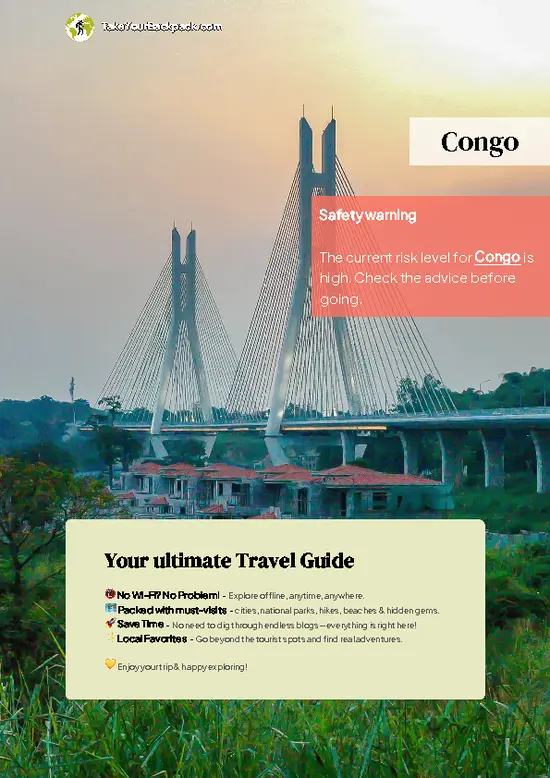
Skip weeks of research and hit the road with confidence. Get 214 pages of proven routes, transport advice, and real safety insights—built for your phone and 100% offline-ready.
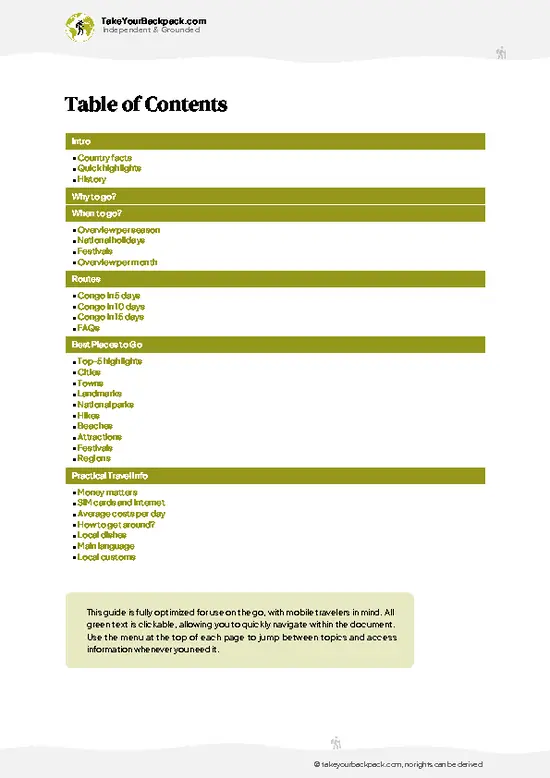
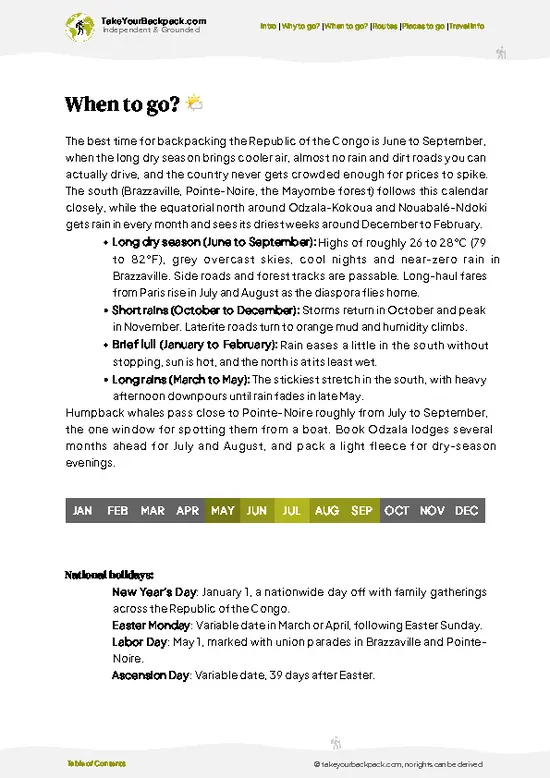
example page 0 from our offline Travel Guide for Republic of the Congoexample page 1 from our offline Travel Guide for Republic of the Congoexample page 2 from our offline Travel Guide for Republic of the Congoexample page 3 from our offline Travel Guide for Republic of the Congoexample page 4 from our offline Travel Guide for Republic of the Congo
🎒 Your 214-page offline travel companion
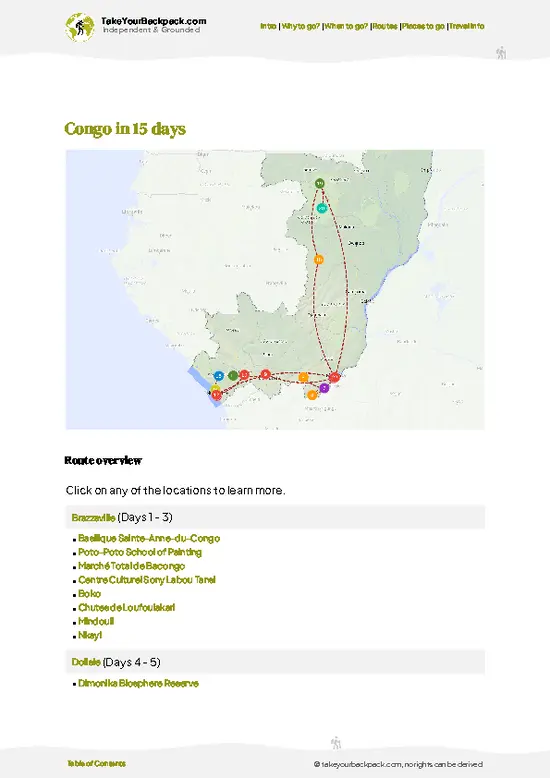
5, 10 & 15-day routes paced for real travel
57 ranked highlights with honest skip-it advice
Logistics solved: Best areas to stay & transport
Safety blueprints: Common local scams to avoid
No Wi-Fi? No problem: Phone-optimized offline PDF
👉 See all 30+ guide features

📅 Plan smarter in minutes, not weeks
Realistic travel times & pacing
Best months per region
Festivals & national holidays
Budget expectations

🗺️ Go to the right places, skip the overrated ones
57 ranked highlights across the country
Hidden gems beyond the tourist trail
Honest pros & cons of destinations
Top hikes, parks & viewpoints
Lesser-known places most travelers miss
Clear “worth it vs skip it” guidance

🛏️ Travel smoothly without rookie mistakes
Best areas to stay
Transport systems explained simply
Local transport tradeoffs
Common scams & safety advice
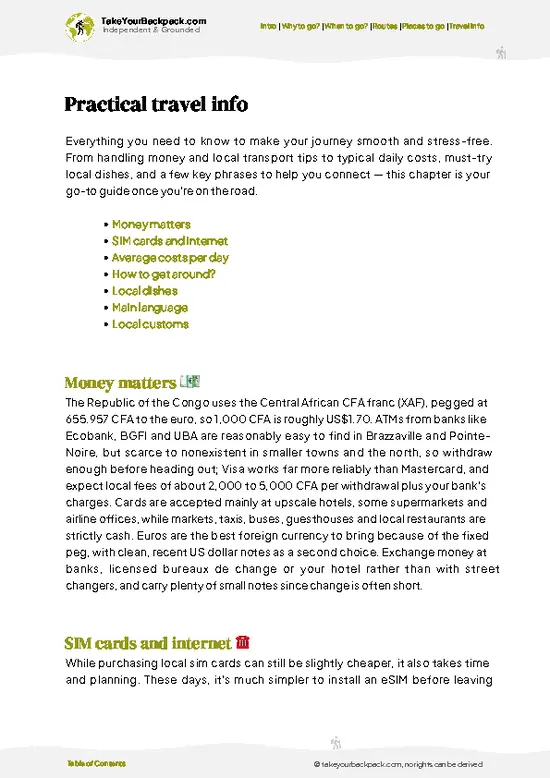
SIM cards, money & practical tips
What to expect before arrival

🌍 Understand the country, not just visit it
Culture & traditions
52 Essential phrases & customs
Festivals worth planning around
Traveler-friendly historical context
Insights that make places more meaningful

📱 Built for real travel conditions
Fully downloadable PDF
Works completely offline
Optimized for phone use
Useful in remote areas & buses
Everything in one place
Save weeks of stressful planning
Get instant access to the full guide directly. 30-day money-back guarantee.


Sent to your inbox immediately after payment • 100% Secure Checkout
Best Backpacking Travel Advisor 2025 tourism awardBest Backpacking
Travel Advisor
2025
What others say about Take Your Backpack Guides:
⭐⭐⭐⭐⭐
Fantastic, amazing amount of information!
⭐⭐⭐⭐⭐
My goodness this is amazing, it's what I've been looking for hats off too you!
⭐⭐⭐⭐⭐
I think this is absolutely BRILLIANT
⭐⭐⭐⭐
Very complete and informative. It's still missing places, but I gotta to commend you
⭐⭐⭐⭐⭐
This is truly amazing, thank you, can't wait to explore it with my kids!
⭐⭐⭐⭐⭐
Awesome resource, thank you!
⭐⭐⭐⭐⭐
This is amazing! Can't wait to explore the ones I haven't seen
⭐⭐⭐⭐
I love this! Well done, great idea.
⭐⭐⭐⭐⭐
Thanks for taking the time to make this gem!
⭐⭐⭐⭐⭐
This might be the best website I've ever seen.
⭐⭐⭐⭐⭐
Congratulations, and thank you so much for your work; it's incredibly valuable.
⭐⭐⭐⭐
In all seriousness I think you did a great job pointing out the important spots
⭐⭐⭐⭐⭐
10/10 very good
⭐⭐⭐⭐⭐
As someone who's only just starting to visit regularly this is awesome, thank you.
⭐⭐⭐⭐
Thank you very much! I'm going to visit my dad, it's going to be very useful!
⭐⭐⭐⭐⭐
This is really cool! We'll be travelling for the first time and this definitely come in handy.
⭐⭐⭐⭐⭐
You are now our minister of culture, congratulations 👨‍💼
⭐⭐⭐⭐⭐
Just wanted to tell you that this is a pearl! Going to follow your recommendations.
⭐⭐⭐⭐⭐
This is so cool. I'll definitely be using the resource for my travels soon.
⭐⭐⭐⭐⭐
This is very impressive! Good work.
⭐⭐⭐⭐⭐
This is an amazing and informative site. Very well done!

🛏️ Where to stay?Where to Stay in Congo

Yes — basic hostels and budget guesthouses exist in Congo, mainly in the two main cities of Brazzaville and Pointe‑Noire; options outside urban centres are sparse and national‑park access typically requires pricier lodges or arranged camps.
In Brazzaville the Plateau (central) and riverside Bacongo have the most choices — Plateau gives fastest access to markets, museums and nightlife but is busier and a bit costlier, while Bacongo is quieter and cheaper with fewer late‑night services and limited transport.
In Pointe‑Noire the city centre and beachfront neighbourhoods offer safer walking, better transport links and more guesthouse options, whereas outlying districts are cheaper but darker … read more 👉
Yes — basic hostels and budget guesthouses exist in Congo, mainly in the two main cities of Brazzaville and Pointe‑Noire; options outside urban centres are sparse and national‑park access typically requires pricier lodges or arranged camps.
In Brazzaville the Plateau (central) and riverside Bacongo have the most choices — Plateau gives fastest access to markets, museums and nightlife but is busier and a bit costlier, while Bacongo is quieter and cheaper with fewer late‑night services and limited transport.
In Pointe‑Noire the city centre and beachfront neighbourhoods offer safer walking, better transport links and more guesthouse options, whereas outlying districts are cheaper but darker after sundown, less tourist‑oriented and may lack reliable public transport; don’t expect a backpacker‑hostel network and plan for small hotels or guesthouses.

If you enjoy meeting fellow travelers, consider choosing hostels with high ratings for atmosphere. On the other hand, if you prefer having your own space, a hotel might be a better option.

CongoMore of Congo

👋 Meet the authorWho’s Behind Take Your Backpack?

Johan, backpacker and founder of TakeYourBackpackHi, I’m Johan (Netherlands 🇳🇱), the creator of TakeYourBackpack. Over the past decade, I’ve backpacked through 80+ countries across six continents, gaining extensive experience with independent travel, long-term trips, and overland routes.

This site is built on a combination of firsthand travel experience and carefully curated insights from other backpackers. Many guides are based on places I’ve personally visited, while others bring together tips, observations, and practical advice shared by trusted travelers I’ve met along the way.

The goal is to provide realistic, experience-driven guidance — not generic itineraries — so you can explore destinations with better context, clearer expectations, and more confidence.

Get Full Country Guide |
Instant download • 57 highlights • Full Offline guide