×

Congo🇨🇬 | townsImpfondoUbangi port, old colonial quarter, mango avenues, Likouala gateway | things to do and best time to go

Explore EwoExplore Madingo-Kayes

Backpacking in Impfondo
🏆 Top picktown ranked #1
By Johan Kruseman 🇳🇱 | Updated October 22, 2026

The big decision with Impfondo is whether to fly in or commit to the river or the road, and it tips toward the plane for nearly everyone, because the overland route is rough, slow and unpredictable in the rains. The town sits in the north of the Republic of the Congo, on the western bank of the Ubangi River, with the Democratic Republic of the Congo visible on the far side. Expect a quiet administrative capital, not a backpacker hub. Hostels don’t exist, so you sleep in basic guesthouses and meet other foreigners rarely, mostly aid workers and conservation staff. Treat it as a base for the swamp forests of the Likouala region, not a place to tick off sights. Hire a local guide for anything beyond town, since signage is nonexistent and French or Lingala is the working language. Carry small bills and expect to pay in cash. Evenings smell of woodsmoke and fried fish, and motorbike taxis whine past while pirogues knock softly against the muddy landing.

Discover everything you want to know in the 📖 Congo Travel Guide.
Safety warning

The current risk level for Congo is high. Check the advice before going.


example page 0 from our offline Travel Guide for Republic of the Congo
example page 1 from our offline Travel Guide for Republic of the Congo
example page 2 from our offline Travel Guide for Republic of the Congo
example page 3 from our offline Travel Guide for Republic of the Congo
example page 4 from our offline Travel Guide for Republic of the Congo
example page 5 from our offline Travel Guide for Republic of the Congo
example page 6 from our offline Travel Guide for Republic of the Congo
example page 7 from our offline Travel Guide for Republic of the Congo
Loading the map 🌍
CLICK TO FILTER
cities
towns
landmarks
national parks
hikes
beaches
attractions
festivals
regions
SHOW COUNTRY’S BESTSHOW ALL

✨ Why go?
Ranked #1 town in Congo
Why Impfondo should be on your travel list

Impfondo is the gateway to the least-visited corner of the country, where the Likouala swamp forest begins and the Ubangi is the main road. Come if you want to see how river life works away from any tourist circuit: dugout canoes loaded with cassava and smoked fish, women washing clothes on the bank, traders waiting for boats that leave when they leave. It suits patient solo travelers, birders and anyone building a trip toward Lac Télé, the remote lake that conservation groups and legend-chasers associate with the mokele-mbembe stories. Most people stay one or two nights to sort out transport, a guide and supplies. Linger longer if you can arrange visits to nearby forest communities, including Aka families, through someone local and respectful. The social scene is small. You will chat with … read more 👉
Impfondo is the gateway to the least-visited corner of the country, where the Likouala swamp forest begins and the Ubangi is the main road. Come if you want to see how river life works away from any tourist circuit: dugout canoes loaded with cassava and smoked fish, women washing clothes on the bank, traders waiting for boats that leave when they leave. It suits patient solo travelers, birders and anyone building a trip toward Lac Télé, the remote lake that conservation groups and legend-chasers associate with the mokele-mbembe stories. Most people stay one or two nights to sort out transport, a guide and supplies. Linger longer if you can arrange visits to nearby forest communities, including Aka families, through someone local and respectful. The social scene is small. You will chat with market sellers and guesthouse owners, not dorm-mates. Nights are early, bars are simple, and the pace suits readers and journal keepers. If you need nightlife, ATMs or ready-made tours, look elsewhere.

💡 HighlightsPlaces and moments you shouldn't skip

  1. Ubangi River waterfront and port: This is the town’s true center. Boats and pirogues land goods from upriver and across the border, and you can watch loading, haggling and fishing. Go in the early morning or late afternoon when it is cooler and busiest. Free, 1 to 2 hours. Ask before taking photos of people or officials.
  2. Impfondo central market: Smoked fish, cassava, forest produce, palm oil and cheap basics are sold here under tin roofs. It is the best place to see what the region eats and trades. Mornings are liveliest. Entry is free, snacks cost around €0.50 to 2, and an hour is enough.
  3. Pirogue ride on the Ubangi: A short paddle or motorized trip gives you a view of the town from the water, plus sandbars and river islands where fishermen work. Early morning is calmest. Expect to pay roughly
… read more 👉
  1. Ubangi River waterfront and port: This is the town’s true center. Boats and pirogues land goods from upriver and across the border, and you can watch loading, haggling and fishing. Go in the early morning or late afternoon when it is cooler and busiest. Free, 1 to 2 hours. Ask before taking photos of people or officials.
  2. Impfondo central market: Smoked fish, cassava, forest produce, palm oil and cheap basics are sold here under tin roofs. It is the best place to see what the region eats and trades. Mornings are liveliest. Entry is free, snacks cost around €0.50 to 2, and an hour is enough.
  3. Pirogue ride on the Ubangi: A short paddle or motorized trip gives you a view of the town from the water, plus sandbars and river islands where fishermen work. Early morning is calmest. Expect to pay roughly €5 to 20 depending on boat and duration, 1 to 3 hours. Wear a hat and bring water.
  4. Riverside walk through the old colonial quarter: The older streets near the administrative buildings hold a few worn French-era houses and shaded avenues of mango trees. Walk in the cooler part of the day. It costs nothing and takes about an hour. Government buildings should not be photographed.
  5. Evening on the riverbank terraces: Simple open-air spots near the water serve grilled fish, plantain and cold local beer as the light drops over the DRC shore. A meal runs about €3 to 7. Plan 1 to 2 hours, and arrive before dark.
Beyond town, the Lac Télé Community Reserve, the forest settlements around Epena and the river villages toward Dongou make logical excursions for those with a guide and time. Impfondo is where you arrange a pirogue in advance, ideally the evening before, since boatmen and fuel have to be found.
Spotted a mistake or missing something? Contact us.

🏘️ NeighborhoodsWhere things are and how it's laid out

Impfondo is small enough to cover on foot or by motorbike taxi in a day, and each area has its own texture. Heat is the reason to split your walks: go early and late, and spend midday in shade.
  • Riverfront and port: The Ubangi is the town’s main road. Dugout pirogues and larger cargo boats pull up to a muddy bank, and the air smells of woodsmoke, diesel and smoked fish. Mornings are loudest, when traders unload and bargain. Footing turns slick after rain, so wear sandals with grip, and ask before photographing people working here, since a smile and a greeting first saves arguments.
  • Central market and main road: Stalls sell cassava, plantain, river fish, bushmeat-free vegetables and phone credit. Sellers also grill fish and skewers in the evenings. It is the best place to eat cheaply and see daily
… read more 👉
Impfondo is small enough to cover on foot or by motorbike taxi in a day, and each area has its own texture. Heat is the reason to split your walks: go early and late, and spend midday in shade.
  • Riverfront and port: The Ubangi is the town’s main road. Dugout pirogues and larger cargo boats pull up to a muddy bank, and the air smells of woodsmoke, diesel and smoked fish. Mornings are loudest, when traders unload and bargain. Footing turns slick after rain, so wear sandals with grip, and ask before photographing people working here, since a smile and a greeting first saves arguments.
  • Central market and main road: Stalls sell cassava, plantain, river fish, bushmeat-free vegetables and phone credit. Sellers also grill fish and skewers in the evenings. It is the best place to eat cheaply and see daily life. Bring small notes, because vendors rarely have change for large ones.
  • Administrative and mission quarter: Wider, shadier streets with government buildings, churches and mango trees. It is quiet after dark and easy to walk, which makes it the place for a calm early stroll. Offices keep short hours, so handle permit or paperwork questions in the morning.
  • Airstrip side and outskirts: Red dirt, scattered houses and forest edge. Nightlife is a few open-air bars playing Congolese rumba, with generators humming behind them. Distances here are too far for walking in the heat, so take a motorbike taxi and agree the fare first.

⌛️ 1 daySeeing the highlights in 24 hours

The day works on foot with a long pause in the hottest hours, since the equatorial sun flattens the streets by midday and the riverbank is the best place to wait it out.
7:00 AM, Ubangi waterfront: Start where the day begins, as boats unload fish and cassava on the muddy landing. Walk along the bank, watch the pirogues come in and buy a coffee and bread from a roadside seller. Early light is soft and the air is still bearable.
9:00 AM, Central market: Walk inland a short way to the market. Wander the fish and produce stalls, sample smoked fish or fried dough and look for forest items like mushrooms and bush meat, which sellers display openly. Ask before photographing anyone.
11:00 AM, Colonial quarter: Stroll the older avenues past mango trees and worn administrative buildings. It is a quiet, … read more 👉
The day works on foot with a long pause in the hottest hours, since the equatorial sun flattens the streets by midday and the riverbank is the best place to wait it out.
7:00 AM, Ubangi waterfront: Start where the day begins, as boats unload fish and cassava on the muddy landing. Walk along the bank, watch the pirogues come in and buy a coffee and bread from a roadside seller. Early light is soft and the air is still bearable.
9:00 AM, Central market: Walk inland a short way to the market. Wander the fish and produce stalls, sample smoked fish or fried dough and look for forest items like mushrooms and bush meat, which sellers display openly. Ask before photographing anyone.
11:00 AM, Colonial quarter: Stroll the older avenues past mango trees and worn administrative buildings. It is a quiet, shaded stretch, good for seeing how the town was laid out around the river.
12:30 PM, Lunch and rest: Eat grilled fish with plantain or rice at a simple restaurant, then retreat to your guesthouse during the heaviest heat.
3:30 PM, Pirogue on the Ubangi: Hire a boatman for a short trip past sandbars and river islands where fishermen set nets. This is the part most passers-through skip, and it gives you the town’s whole profile from the water, with the DRC shore close by.
5:30 PM, Riverside terrace: Return to a terrace on the bank for cold beer and fish as bats and swallows cross the sky and the light drops on the far shore. Walk back before full dark, as street lighting is patchy.

🌤️ When to go?Choosing the right time of year

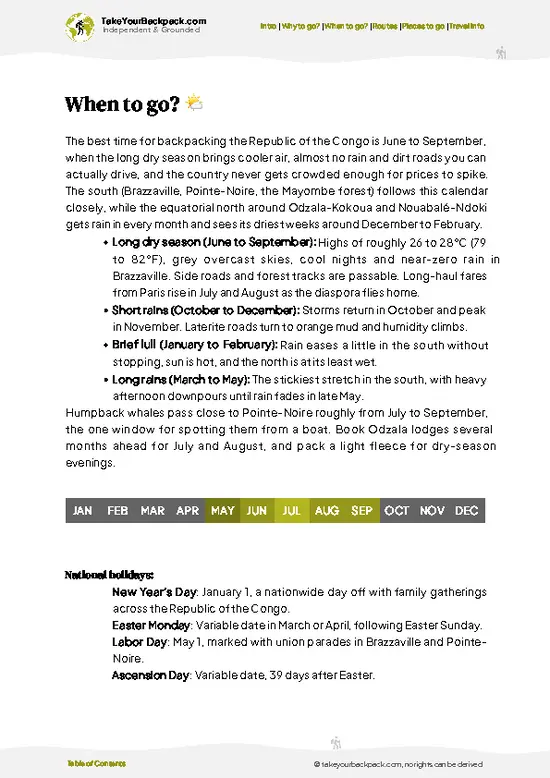
The drier months from December to February are the easiest for moving around Impfondo, though no month is truly dry in this equatorial climate.
  • Short dry season (December to February): Less rain, firmer dirt roads and clearer skies. Days reach about 30 to 32°C (86 to 90°F) with nights near 21°C (70°F). Daylight is close to twelve hours all year. This is also when transport and rooms are most in demand.
  • Main rains (March to May): Heavy afternoon downpours, muddy tracks toward Dongou and Epena, and humid air. Temperatures stay around 28 to 31°C (82 to 88°F).
  • Mid-year lull (June to August): Cloudier and a little cooler, with rain easing. River travel is workable and prices are steady.
  • Second rains (September to November): Wettest period. The Ubangi runs high, roads get worst, and flights are more
… read more 👉
The drier months from December to February are the easiest for moving around Impfondo, though no month is truly dry in this equatorial climate.
  • Short dry season (December to February): Less rain, firmer dirt roads and clearer skies. Days reach about 30 to 32°C (86 to 90°F) with nights near 21°C (70°F). Daylight is close to twelve hours all year. This is also when transport and rooms are most in demand.
  • Main rains (March to May): Heavy afternoon downpours, muddy tracks toward Dongou and Epena, and humid air. Temperatures stay around 28 to 31°C (82 to 88°F).
  • Mid-year lull (June to August): Cloudier and a little cooler, with rain easing. River travel is workable and prices are steady.
  • Second rains (September to November): Wettest period. The Ubangi runs high, roads get worst, and flights are more likely to be delayed.
Book flights and river passages a few days ahead, and keep one spare day for weather.


source: climatestotravel.comJANJanuary: excellent for travelingFEBFebruary: excellent for travelingMARMarch: highly recommended for travelingAPRApril: fair for travelingMAYMay: fair for travelingJUNJune: fair for travelingJULJuly: fair for travelingAUGAugust: fair for travelingSEPSeptember: fair for travelingOCTOctober: fair for travelingNOVNovember: highly recommended for travelingDECDecember: excellent for traveling
republic-of-the-congo-city-impfondo v1
© Google |

✈️ The backpacker research shortcutCongo Travel Guide

An offline-friendly backpacking guide with optimized travel routes, ranked highlights, transport advice, and the best areas to stay.
example page 0 from our offline Travel Guide for Republic of the Congo
example page 1 from our offline Travel Guide for Republic of the Congo
example page 2 from our offline Travel Guide for Republic of the Congo
example page 3 from our offline Travel Guide for Republic of the Congo
example page 4 from our offline Travel Guide for Republic of the Congo
example page 5 from our offline Travel Guide for Republic of the Congo
example page 6 from our offline Travel Guide for Republic of the Congo
example page 7 from our offline Travel Guide for Republic of the Congo
The digital guide (205 pages) contains:
✅ 46 highlights, ranked by travel appeal
✅ Optimized 5, 10 & 15-day travel routes
✅ Cities, national parks, landmarks, beaches
✅ How to get around
✅ Offline-friendly for travel without Wi-Fi
👉 Click to see all 30+ guide features

📅 Plan smarter in minutes, not weeks
✅ Month by month travel advice
✅ Festivals & national holidays
✅ Budget expectations

🗺️ Go to the right places, skip the overrated ones
✅ Honest pros & cons of destinations
✅ Top hikes, parks & viewpoints
✅ Lesser-known places most travelers miss
✅ Clear “worth it vs skip it” guidance

🛏️ Travel smoothly without rookie mistakes
✅ Best areas to stay
✅ Transport systems explained simply
✅ Common scams & safety advice
✅ SIM cards, money & practical tips

🌍 Understand the country, not just visit it
✅ Culture & traditions
✅ 52 Essential phrases & customs
✅ Festivals worth planning around
✅ Traveler-friendly historical context
✅ Insights that make places more meaningful

📱 Built for real travel conditions
✅ Fully downloadable PDF
✅ Works completely offline
✅ Optimized for phone use
✅ Useful in remote areas & buses
✅ Everything in one place
Stop searching, start planning
Get instant access to your full guide. 30‑day money-back guarantee.
+ Add another guide for just

By proceeding you agree to our terms.
Sent to your inbox immediately after payment • 100% Secure Checkout
Best Backpacking Travel Advisor 2025 tourism awardBest Backpacking
Travel Advisor
2025
What others say about Take Your Backpack Guides:
⭐⭐⭐⭐⭐
Fantastic, amazing amount of information!
⭐⭐⭐⭐⭐
My goodness this is amazing, it's what I've been looking for hats off too you!
⭐⭐⭐⭐⭐
I think this is absolutely BRILLIANT
⭐⭐⭐⭐
Very complete and informative. It's still missing places, but I gotta to commend you
⭐⭐⭐⭐⭐
This is truly amazing, thank you, can't wait to explore it with my kids!
⭐⭐⭐⭐⭐
Awesome resource, thank you!
⭐⭐⭐⭐⭐
This is amazing! Can't wait to explore the ones I haven't seen
⭐⭐⭐⭐
I love this! Well done, great idea.
⭐⭐⭐⭐⭐
Thanks for taking the time to make this gem!
⭐⭐⭐⭐⭐
This might be the best website I've ever seen.
⭐⭐⭐⭐⭐
Congratulations, and thank you so much for your work; it's incredibly valuable.
⭐⭐⭐⭐
In all seriousness I think you did a great job pointing out the important spots
⭐⭐⭐⭐⭐
10/10 very good
⭐⭐⭐⭐⭐
As someone who's only just starting to visit regularly this is awesome, thank you.
⭐⭐⭐⭐
Thank you very much! I'm going to visit my dad, it's going to be very useful!
⭐⭐⭐⭐⭐
This is really cool! We'll be travelling for the first time and this definitely come in handy.
⭐⭐⭐⭐⭐
You are now our minister of culture, congratulations 👨‍💼
⭐⭐⭐⭐⭐
Just wanted to tell you that this is a pearl! Going to follow your recommendations.
⭐⭐⭐⭐⭐
This is so cool. I'll definitely be using the resource for my travels soon.
⭐⭐⭐⭐⭐
This is very impressive! Good work.
⭐⭐⭐⭐⭐
This is an amazing and informative site. Very well done!

🛏️ Where to stay?Best areas to stay in Congo

Stay near the center, close to the market and main road, because that is where basic guesthouses are concentrated and where you can eat, change money and find motorbike taxis within a few minutes' walk. Impfondo has no hostel scene, so budget travelers sleep in simple guesthouses and small hotels, typically €18 to 30 a night for a private room with a fan, and sometimes air conditioning at the upper end. Electricity can be patchy and generators are common, so check that the room has power through the evening and that a fan works.
The second option is the quieter administrative and mission quarter, … read more 👉
Stay near the center, close to the market and main road, because that is where basic guesthouses are concentrated and where you can eat, change money and find motorbike taxis within a few minutes' walk. Impfondo has no hostel scene, so budget travelers sleep in simple guesthouses and small hotels, typically €18 to 30 a night for a private room with a fan, and sometimes air conditioning at the upper end. Electricity can be patchy and generators are common, so check that the room has power through the evening and that a fan works.
The second option is the quieter administrative and mission quarter, a short ride from the center. Streets are shaded, nights are calmer, and you avoid the noise of bars and generators that carry across the market district. The tradeoff is that you will need a motorbike taxi after dark to reach food, as options near the quarter are limited. If you arrive by boat, a place near the river landing saves hauling bags, but you will hear early-morning cargo noise from about dawn.
Book ahead by phone if you can, since rooms are few and fill with officials, NGO staff and project workers. Ask to see the room, check the mosquito net and water supply, and keep your valuables with you, not on a shared table or in an unlocked bag.

🚌 Getting aroundGetting around like a local

Impfondo has no train and no real bus station, so most arrivals come in by plane at the airstrip or by boat at the Ubangi landing, and a motorbike taxi covers the 5 to 15 minutes into the center for about €0.50 to 1. Everything in town sits within a few kilometers. Expect red dust in the dry months, mud in the wet ones, and almost no formal public transport, so you handle most journeys through informal drivers and boat captains.
  • Walking: Free and the best way through the center, market and riverfront. Start early, because by late morning the heat is heavy and the sun reflects off the bare earth. Carry water and avoid walking the dark outskirts at night, since there is almost no street lighting.
  • Motorbike taxis: The standard local transport, about €0.30 to 1.50 per ride depending on distance
… read more 👉
Impfondo has no train and no real bus station, so most arrivals come in by plane at the airstrip or by boat at the Ubangi landing, and a motorbike taxi covers the 5 to 15 minutes into the center for about €0.50 to 1. Everything in town sits within a few kilometers. Expect red dust in the dry months, mud in the wet ones, and almost no formal public transport, so you handle most journeys through informal drivers and boat captains.
  • Walking: Free and the best way through the center, market and riverfront. Start early, because by late morning the heat is heavy and the sun reflects off the bare earth. Carry water and avoid walking the dark outskirts at night, since there is almost no street lighting.
  • Motorbike taxis: The standard local transport, about €0.30 to 1.50 per ride depending on distance and luggage. There are no meters, so agree the price before climbing on, and keep small notes ready. Ask for a helmet. They are open-air, loud and fast, and the ride is bumpy after rain.
  • Shared taxis and trucks on the Dongou and Epena road: Vehicles leave when full, usually in the morning, and fares for the 2 to 6 hour runs are roughly €5 to 20, depending on road conditions. Rain can double the time, because the surface turns to deep ruts. Ask drivers the evening before, and carry food and water.
  • Boats on the Ubangi: Pirogues run to nearby villages for about €2 to 10 depending on distance, and larger boats go further along the river. Schedules are loose, so confirm departure with the captain and bring sun cover. Life jackets are rare, so a dry bag for your electronics is worth having.
  • Flights: Small airlines link Impfondo with Brazzaville, with fares often in the range of €100 to 200 one way. Flights are the quick option, since the overland trip is long and difficult. Schedules change, so reconfirm the day before and arrive early.

👛 Costs (as of 22 October 2026)What things cost and how to budget

Impfondo costs roughly €29 to 57 a day for a backpacker, driven mostly by the price of a guesthouse room and transport outside town. Prices are paid in local currency, and card payment is rare, so carry cash in small notes. Costs are higher than the size of the town suggests because goods arrive by river or air.
CategoryBudget RangeLocal Reality
Dorm accommodation€18 to 30No hostels, so a private guesthouse room with a fan is the cheapest bed. Rates rise slightly in the drier months.
Meals€4 to 8Grilled fish, cassava, plantain and rice at market stalls and small restaurants. Imported items cost more.
Local transport€1 to 3Motorbike taxis cover most rides in town, with prices negotiated before you set off.
Basic activities/entry fees€3 to 10Pirogue trips, village visits and guide fees. Longer excursions
… read more 👉
Impfondo costs roughly €29 to 57 a day for a backpacker, driven mostly by the price of a guesthouse room and transport outside town. Prices are paid in local currency, and card payment is rare, so carry cash in small notes. Costs are higher than the size of the town suggests because goods arrive by river or air.
CategoryBudget RangeLocal Reality
Dorm accommodation€18 to 30No hostels, so a private guesthouse room with a fan is the cheapest bed. Rates rise slightly in the drier months.
Meals€4 to 8Grilled fish, cassava, plantain and rice at market stalls and small restaurants. Imported items cost more.
Local transport€1 to 3Motorbike taxis cover most rides in town, with prices negotiated before you set off.
Basic activities/entry fees€3 to 10Pirogue trips, village visits and guide fees. Longer excursions cost more.
Miscellaneous expenses€3 to 6Bottled water, phone credit, mosquito repellent and small gifts for villages.
Total Daily Budget€29 to 57Per person, per day, in high season.
To save money, eat at the market stalls instead of restaurants and share pirogue or vehicle costs with other travelers.


source: worldbank.org
⚠️ Prices can change and everyone travels differently, so take this as a rough guide. Hope it helps you plan your adventure!

🚌 Day tripsShort trips worth adding

Impfondo works as a base for short river and forest outings, though distances are long and transport is informal, so plan each trip around one early start and a return before dark.
Ubangi River Villages by Pirogue:
Fishing hamlets along the Ubangi are the easiest outing, with dugout canoes, drying racks and kids swimming at the banks. A boat hire with a paddler or outboard costs roughly €10 to 25 for the day, shared with others, plus a small gift or fee to the village chief. Go in the drier months, when banks are firmer and storms are less frequent. A common mistake is leaving without agreeing the return time, which leaves you waiting at dusk.

Dongou:
Dongou is a river town to the north, reached by road or boat in a long day. Shared vehicles cost about €5 to 15 each way, and the trip takes … read more 👉
Impfondo works as a base for short river and forest outings, though distances are long and transport is informal, so plan each trip around one early start and a return before dark.
Ubangi River Villages by Pirogue:
Fishing hamlets along the Ubangi are the easiest outing, with dugout canoes, drying racks and kids swimming at the banks. A boat hire with a paddler or outboard costs roughly €10 to 25 for the day, shared with others, plus a small gift or fee to the village chief. Go in the drier months, when banks are firmer and storms are less frequent. A common mistake is leaving without agreeing the return time, which leaves you waiting at dusk.

Dongou:
Dongou is a river town to the north, reached by road or boat in a long day. Shared vehicles cost about €5 to 15 each way, and the trip takes several hours depending on mud. It is worth it for a view of a quieter community and the river traffic toward the border. Travel between December and February, because in heavy rain the road can turn impassable. First-timers often underestimate the return, and the last vehicles back leave early afternoon.

Forest Edge Communities Near Impfondo:
The forest around Impfondo is part of the Likouala swamp and lowland rainforest, and local guides can arrange a walk to nearby Aka and Bantu villages for about €10 to 30 including transport. Mornings are best, when birds and monkeys are most active and the air is coolest. Go with a guide who has the villagers’ consent, bring water and insect repellent, and ask before taking any photos. Visitors often wear shorts and sandals, but long trousers and closed shoes protect against thorns and bites.

🛡️ SafetySafety Tips and Common Scams in Impfondo

Impfondo is a quiet river town where problems are mostly small and practical, not violent. Daytime walking through the market, port and main road is comfortable, and people are generally curious and friendly. Because it is a remote, official-heavy region, the main annoyance is paperwork: carry your passport and a few photocopies, and expect occasional checks by police or soldiers at roadblocks. Stay polite, hand over copies, and do not hurry them. Some officials ask for small payments, so smile, stay calm and ask for an official receipt.
After dark the streets are poorly lit, so use a motorbike taxi instead of walking, and keep a headlamp. Solo travelers, including women, should dress modestly, avoid isolated riverbanks at night and arrange a trusted driver for longer trips. Keep phones and … read more 👉
Impfondo is a quiet river town where problems are mostly small and practical, not violent. Daytime walking through the market, port and main road is comfortable, and people are generally curious and friendly. Because it is a remote, official-heavy region, the main annoyance is paperwork: carry your passport and a few photocopies, and expect occasional checks by police or soldiers at roadblocks. Stay polite, hand over copies, and do not hurry them. Some officials ask for small payments, so smile, stay calm and ask for an official receipt.
After dark the streets are poorly lit, so use a motorbike taxi instead of walking, and keep a headlamp. Solo travelers, including women, should dress modestly, avoid isolated riverbanks at night and arrange a trusted driver for longer trips. Keep phones and cash out of sight in crowded market lanes. Take mosquito protection seriously, as malaria is the biggest everyday health risk. Do not photograph military or government buildings or the border area without permission.

FAQFrequently asked questions about Impfondo

Impfondo is worth visiting if you want a remote Ubangi River town and access to the northern rainforest, but it is not a place for a quick stop. The riverfront and market fill a day, and guided trips to forest villages or Dongou add depth. Reaching it takes a flight from Brazzaville or a very long overland and river journey, so it suits travelers with flexible time and a budget of roughly €29 to 57 a day.
Plan on two to four days in Impfondo. One day covers the riverfront, market and main road, while a second can go to a pirogue trip on the Ubangi or a forest village visit. Add one to two more days if you want to reach Dongou or use the town as a base toward Epena and the Lake Télé area, and keep a spare day for weather and delayed transport.
Impfondo is too remote to treat as a day trip from a nearby city, since the nearest large cities are far away and roads are rough. Brazzaville is a flight of roughly an hour and a half to two hours, and overland routes take multiple days, so a same-day return is not realistic. Choose a base in Impfondo itself for at least a couple of nights, then use it for shorter day trips by pirogue or road.
⚠️ Things can change over time, so always validate details locally before you go.

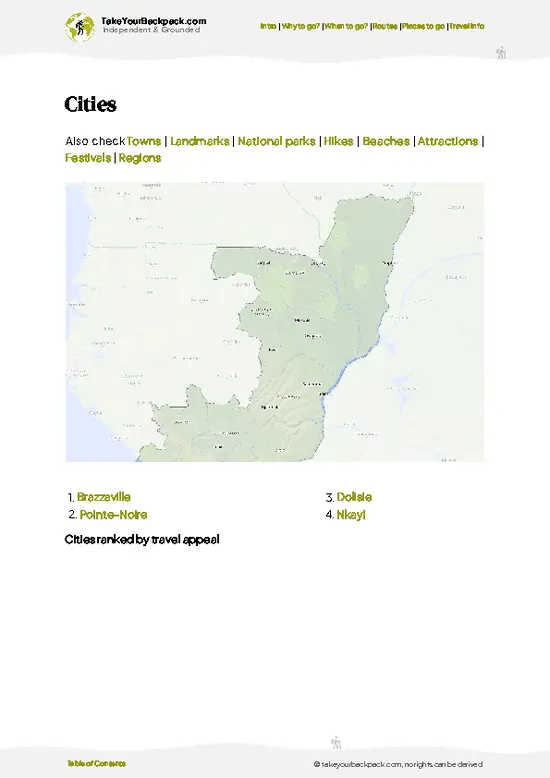
Other Congolese towns near Impfondo

Explore more nearby:

  • Epena—Likouala-aux-Herbes landing, flooded forest, riverside beer, forest paths| 74 km away
  • Enyellé—swampy terrain, pirogue access, isolated settlements| 133 km away
  • Bétou—Ubangi landing, pirogue crossings, laterite streets, mission church| 168 km away

💡 Not sure where to go next?
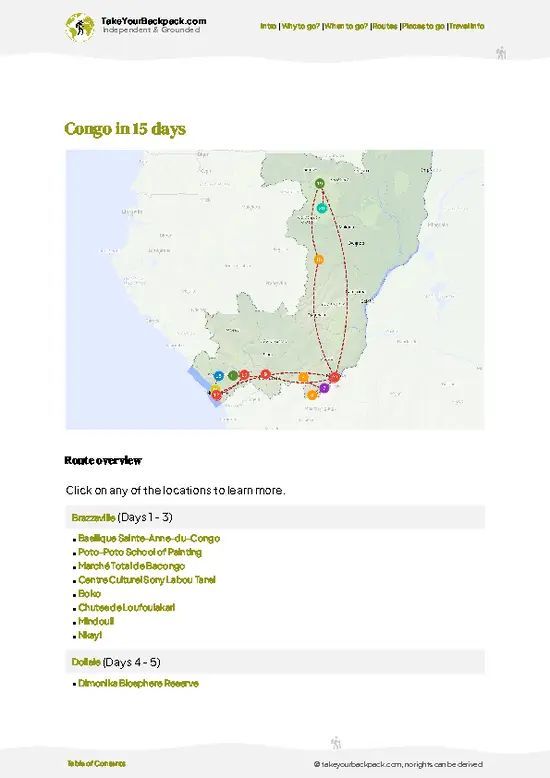
Create a personalized itinerary for Congo including Impfondo and the places that fit your trip.

Generate my itinerary

👉 Discover all towns

Or checkout all Congo has to offer (think cities, towns, villages, national parks, hikes, beaches, festivals)
Country photo of Congo

We 💚 feedbackKey takeaways before you go

Impfondo is at its best in the cool early morning and again at dusk, when the Ubangi fills with canoes and the market noise settles into woodsmoke and music. I would come in the drier months, when pirogue plans fall into place more easily. Skip any rigid schedule, bring plenty of cash in small bills, and keep a day spare for boats that run late.

✍️ Help improve this page!
The information on this page is based on in-depth research, insights shared by experienced travelers, and feedback from the local travel community in Congo. While every effort is made to keep the information accurate and current, conditions can change — so if you spot anything incorrect or outdated, please get in touch.


🙋‍♂️ Give feedback

👋 Meet the founderWho’s Behind Take Your Backpack?

Johan, backpacker and founder of TakeYourBackpackHi, I’m Johan (Netherlands 🇳🇱), the creator of TakeYourBackpack. Over the past 3 decades, I’ve backpacked through 90+ countries across six continents, gaining extensive experience with independent travel, long-term trips, and overland routes.

This site is built on a combination of firsthand travel experience and carefully curated insights from other backpackers. Many guides are based on places I’ve personally visited, while others bring together tips, observations, and practical advice shared by trusted travelers I’ve met along the way.

The goal is to provide realistic, experience-driven guidance — not generic itineraries — so you can explore destinations with better context, clearer expectations, and more confidence.