×

Rwanda🇷🇼 | attractionsCampaign Against Genocide MuseumShell-scarred Parliament, RPF campaign maps, guided tour, Kimihurura | things to do and best time to go

Explore Kigali Genocide MemorialExplore Kandt House Museum of Natural History

Backpacking in Campaign Against Genocide Museum
👀 For curious travelersattraction ranked #12
By Johan Kruseman 🇳🇱 | Updated October 22, 2026

Entry is free, and the building sits a few minutes from central Kigali, so it fits easily into a day of city sightseeing. The Campaign Against Genocide Museum is in Kigali, Rwanda’s capital, inside the Parliament building at Kimihurura. It records the military campaign of the Rwandan Patriotic Front, which ended the 1994 genocide against the Tutsi. Crowds are thin compared with the Kigali Genocide Memorial, so the rooms stay quiet. The exhibits are modest and text-heavy, but they cover a side of the story most visitors never see, and the setting itself is part of the history. Bring your passport, because security screening at the gate is thorough and bookings are usually arranged ahead.

Discover everything you want to know in the 📖 Rwanda Travel Guide.


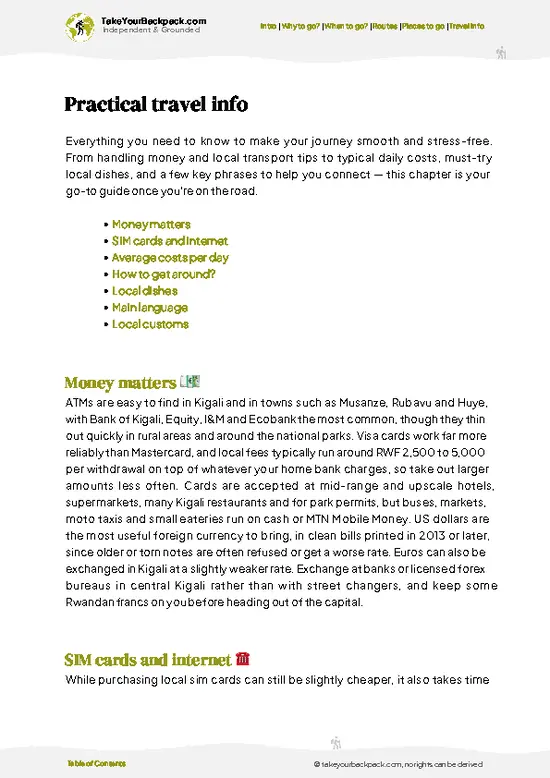
example page 0 from our offline Travel Guide for Rwanda
example page 1 from our offline Travel Guide for Rwanda
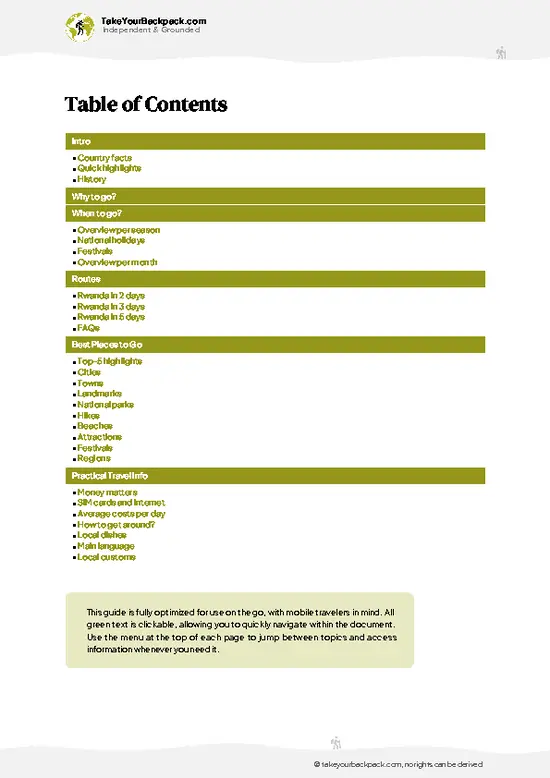
example page 2 from our offline Travel Guide for Rwanda
example page 3 from our offline Travel Guide for Rwanda
example page 4 from our offline Travel Guide for Rwanda
example page 5 from our offline Travel Guide for Rwanda
example page 6 from our offline Travel Guide for Rwanda
example page 7 from our offline Travel Guide for Rwanda
Loading the map 🌍
CLICK TO FILTER
cities
towns
landmarks
national parks
hikes
beaches
attractions
festivals
regions
SHOW COUNTRY’S BESTSHOW ALL

✨ Why go?
Ranked #12 attraction in Rwanda
Why Campaign Against Genocide Museum should be on your travel list

Campaign Against Genocide Museum answers a question the big memorials leave open: how did the killing stop? The exhibits follow the RPF military campaign of 1994 and explain the strategy and the sacrifices behind it, which gives the story a fuller shape than most visitors arrive with.

The location adds weight. The museum occupies part of the Parliament building, where a small RPF battalion was stationed during the Arusha peace process, and the building was shelled during the fighting. Walking the grounds, you see real damage, not a reconstruction.

It also suits a tight schedule. A visit takes one to two hours, and you can pair it with the Kigali Genocide Memorial for a balanced view of 1994. Few backpackers include it, so you get a guide's full attention and room to ask questions.

💡 HighlightsDon't-miss highlights and experiences

  1. The Parliament building facade: Bullet and shell damage is still visible on the walls, a rare unrestored scar in a very tidy capital.
  2. The 600 soldiers' story: Exhibits explain how an RPF battalion was housed here under the 1993 Arusha Accords, and how it left to fight when the killing began.
  3. The campaign maps: Large maps trace the advance from the north and east toward Kigali, making the military timeline easy to follow.
  4. Weapons and equipment displays: Rifles, uniforms and radios show how modestly equipped the force was against the odds it faced.
  5. Photographs and personal accounts: Images of soldiers and survivors give faces to the campaign, and the captions carry plain, sober detail.
  6. The guided tour: Guides add context that panels leave out, and they answer questions directly, so the visit becomes
… read more 👉
  1. The Parliament building facade: Bullet and shell damage is still visible on the walls, a rare unrestored scar in a very tidy capital.
  2. The 600 soldiers' story: Exhibits explain how an RPF battalion was housed here under the 1993 Arusha Accords, and how it left to fight when the killing began.
  3. The campaign maps: Large maps trace the advance from the north and east toward Kigali, making the military timeline easy to follow.
  4. Weapons and equipment displays: Rifles, uniforms and radios show how modestly equipped the force was against the odds it faced.
  5. Photographs and personal accounts: Images of soldiers and survivors give faces to the campaign, and the captions carry plain, sober detail.
  6. The guided tour: Guides add context that panels leave out, and they answer questions directly, so the visit becomes a conversation as much as a walk.
  7. The grounds of the Parliament compound: A calm, green setting for reflecting after the exhibits, with views across the Kimihurura hillside.
For a first visit, the guided tour matters most, because the guides connect the maps, objects and building into one clear account of 1994 that Campaign Against Genocide Museum cannot convey through panels alone.
Spotted a mistake or missing something? Contact us.

Things to do around Campaign Against Genocide Museum

Ratings based on Tripadvisor reviews. When you book through this link, you support our work at no extra cost to you.

🌤️ When to go?Choosing the right time of year

  • Long Dry Season (June to September): Clear mornings of 12 to 16°C (54 to 61°F) and afternoons of 25 to 28°C (77 to 82°F) make the walk around Kimihurura easy, and this is when guest rooms cost the most.
  • Short Dry Season (December to February): Similar warmth with a little more haze, and a moderate rise in prices around the holidays.
  • Rains (March to May, October to November): Afternoon downpours are common, and April is the wettest month. Crowds thin out and rooms drop in price.
  • Commemoration Week (from April 7): Rwanda marks the genocide against the Tutsi with national events. The museum stays open, but expect a more somber atmosphere and some businesses closing for parts of the week.
Go on a weekday morning to have the exhibits mostly to yourself.

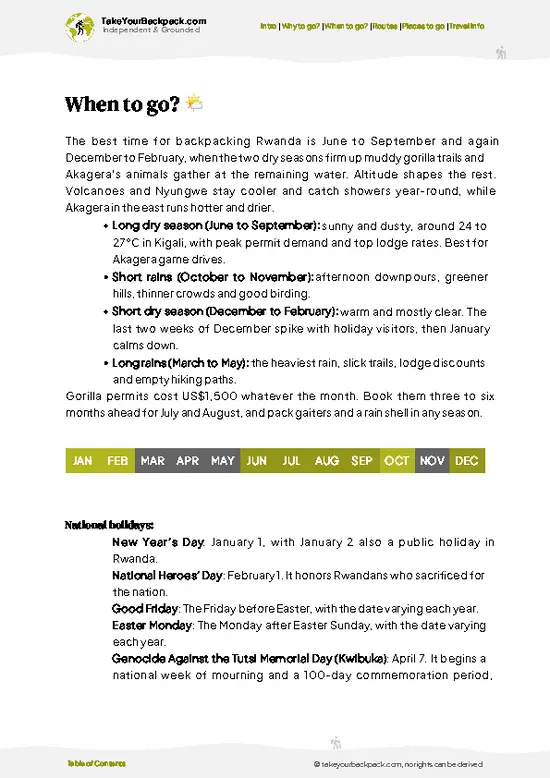
source: climatestotravel.comJANJanuary: highly recommended for travelingFEBFebruary: highly recommended for travelingMARMarch: fair for travelingAPRApril: good for travelingMAYMay: fair for travelingJUNJune: excellent for travelingJULJuly: good for travelingAUGAugust: good for travelingSEPSeptember: excellent for travelingOCTOctober: fair for travelingNOVNovember: good for travelingDECDecember: highly recommended for traveling
when-to-go

✈️ The backpacker research shortcutRwanda Travel Guide

An offline-friendly backpacking guide with optimized travel routes, ranked highlights, transport advice, and the best areas to stay.
example page 0 from our offline Travel Guide for Rwanda
example page 1 from our offline Travel Guide for Rwanda
example page 2 from our offline Travel Guide for Rwanda
example page 3 from our offline Travel Guide for Rwanda
example page 4 from our offline Travel Guide for Rwanda
example page 5 from our offline Travel Guide for Rwanda
example page 6 from our offline Travel Guide for Rwanda
example page 7 from our offline Travel Guide for Rwanda
The digital guide (233 pages) contains:
✅ 57 highlights, ranked by travel appeal
✅ Optimized 2, 3 & 5-day travel routes
✅ Cities, national parks, landmarks, beaches
✅ How to get around
✅ Offline-friendly for travel without Wi-Fi
👉 Click to see all 30+ guide features

📅 Plan smarter in minutes, not weeks
✅ Month by month travel advice
✅ Festivals & national holidays
✅ Budget expectations

🗺️ Go to the right places, skip the overrated ones
✅ Honest pros & cons of destinations
✅ Top hikes, parks & viewpoints
✅ Lesser-known places most travelers miss
✅ Clear “worth it vs skip it” guidance

🛏️ Travel smoothly without rookie mistakes
✅ Best areas to stay
✅ Transport systems explained simply
✅ Common scams & safety advice
✅ SIM cards, money & practical tips

🌍 Understand the country, not just visit it
✅ Culture & traditions
✅ 52 Essential phrases & customs
✅ Festivals worth planning around
✅ Traveler-friendly historical context
✅ Insights that make places more meaningful

📱 Built for real travel conditions
✅ Fully downloadable PDF
✅ Works completely offline
✅ Optimized for phone use
✅ Useful in remote areas & buses
✅ Everything in one place
Stop searching, start planning
Get instant access to your full guide. 30‑day money-back guarantee.
+ Add another guide for just

By proceeding you agree to our terms.
Sent to your inbox immediately after payment • 100% Secure Checkout
Best Backpacking Travel Advisor 2025 tourism awardBest Backpacking
Travel Advisor
2025
What others say about Take Your Backpack Guides:
⭐⭐⭐⭐⭐
Fantastic, amazing amount of information!
⭐⭐⭐⭐⭐
My goodness this is amazing, it's what I've been looking for hats off too you!
⭐⭐⭐⭐⭐
I think this is absolutely BRILLIANT
⭐⭐⭐⭐
Very complete and informative. It's still missing places, but I gotta to commend you
⭐⭐⭐⭐⭐
This is truly amazing, thank you, can't wait to explore it with my kids!
⭐⭐⭐⭐⭐
Awesome resource, thank you!
⭐⭐⭐⭐⭐
This is amazing! Can't wait to explore the ones I haven't seen
⭐⭐⭐⭐
I love this! Well done, great idea.
⭐⭐⭐⭐⭐
Thanks for taking the time to make this gem!
⭐⭐⭐⭐⭐
This might be the best website I've ever seen.
⭐⭐⭐⭐⭐
Congratulations, and thank you so much for your work; it's incredibly valuable.
⭐⭐⭐⭐
In all seriousness I think you did a great job pointing out the important spots
⭐⭐⭐⭐⭐
10/10 very good
⭐⭐⭐⭐⭐
As someone who's only just starting to visit regularly this is awesome, thank you.
⭐⭐⭐⭐
Thank you very much! I'm going to visit my dad, it's going to be very useful!
⭐⭐⭐⭐⭐
This is really cool! We'll be travelling for the first time and this definitely come in handy.
⭐⭐⭐⭐⭐
You are now our minister of culture, congratulations 👨‍💼
⭐⭐⭐⭐⭐
Just wanted to tell you that this is a pearl! Going to follow your recommendations.
⭐⭐⭐⭐⭐
This is so cool. I'll definitely be using the resource for my travels soon.
⭐⭐⭐⭐⭐
This is very impressive! Good work.
⭐⭐⭐⭐⭐
This is an amazing and informative site. Very well done!

🛏️ Where to stay?Best areas to stay in Rwanda

Kimihurura is the best base, since the museum sits inside the Parliament building on this hillside and you can walk there in minutes. Cafes, restaurants and a few small guesthouses line the nearby streets, and the area is leafy, well lit and calm after dark. Solo travelers like it because evening meals are an easy stroll away and moto-taxis wait at every corner.

Kiyovu and the city center, a short moto ride downhill, hold the largest cluster of budget dorms and hostels. You get a more social scene here, with shared kitchens, rooftop common areas and plenty of other backpackers heading to Volcanoes … read more 👉
Kimihurura is the best base, since the museum sits inside the Parliament building on this hillside and you can walk there in minutes. Cafes, restaurants and a few small guesthouses line the nearby streets, and the area is leafy, well lit and calm after dark. Solo travelers like it because evening meals are an easy stroll away and moto-taxis wait at every corner.

Kiyovu and the city center, a short moto ride downhill, hold the largest cluster of budget dorms and hostels. You get a more social scene here, with shared kitchens, rooftop common areas and plenty of other backpackers heading to Volcanoes National Park or Lake Kivu. Nyamirambo, across town, is the livelier, more local option, with street food, small bars and a Muslim quarter feel, but it adds a 15 to 25 minute ride to reach the museum. For most visitors, Kimihurura or Kiyovu keeps things simple.

👛 Costs (as of 22 October 2026)How expensive it really is

A day at Campaign Against Genocide Museum costs roughly US$26 to 44 for a backpacker, including a bed, food and local transport, since entry is free. Travelers pay in Rwandan francs, though many places accept cards or mobile money.
CategoryBudget RangeLocal Reality
Entry ticketUS$0Free, with a guided visit arranged on site at the Parliament building. Bring your passport for security.
Guide tipUS$0 to 5Guides are not obliged to charge, but a small donation is appreciated.
Accommodation (high season)US$10 to 25Dorm beds in Kiyovu or the center, or a basic private room in Kimihurura at the upper end. Prices drop in the rains.
FoodUS$5 to 10Local buffet lunches (brochettes, beans, plantains) cost little, while Kimihurura cafes run higher.
Local transportUS$1 to 4Moto-taxis within central Kigali cost
… read more 👉
A day at Campaign Against Genocide Museum costs roughly US$26 to 44 for a backpacker, including a bed, food and local transport, since entry is free. Travelers pay in Rwandan francs, though many places accept cards or mobile money.
CategoryBudget RangeLocal Reality
Entry ticketUS$0Free, with a guided visit arranged on site at the Parliament building. Bring your passport for security.
Guide tipUS$0 to 5Guides are not obliged to charge, but a small donation is appreciated.
Accommodation (high season)US$10 to 25Dorm beds in Kiyovu or the center, or a basic private room in Kimihurura at the upper end. Prices drop in the rains.
FoodUS$5 to 10Local buffet lunches (brochettes, beans, plantains) cost little, while Kimihurura cafes run higher.
Local transportUS$1 to 4Moto-taxis within central Kigali cost about US$1 to 2 a ride, and buses are cheaper still.
Total Daily BudgetUS$26 to 44Enough for a comfortable day including a coffee stop.
⚠️ Prices can change and everyone travels differently, so take this as a rough guide. Hope it helps you plan your adventure!

FAQCommon questions from travelers

Plan on 1 to 2 hours at Campaign Against Genocide Museum. The guided tour inside the Parliament building takes about 60 to 90 minutes, and the remaining time lets you see the bullet-scarred walls and read the displays. Pair it with the Kigali Genocide Memorial, around 15 minutes away by moto, for a full half-day.
Yes, Campaign Against Genocide Museum is a strong value because entry is free (US$0). You get a guided tour through the former parliament building where Rwandan Patriotic Front soldiers were stationed in 1994, with original damage still visible. A small tip of US$2 to 5 for your guide is a kind gesture.
From central Kigali, take a moto-taxi or taxi to Kimihurura, which takes 10 to 15 minutes and costs around US$1 to 3 by moto or US$3 to 6 by cab. Public minibuses also run toward Kimihurura for under US$1, then it is a short walk. Campaign Against Genocide Museum is inside the Parliament compound, so carry your passport for the security check.
⚠️ Things can change over time, so always validate details locally before you go.

Other Rwandan attractions near Campaign Against Genocide Museum

Explore more nearby:


💡 Not sure where to go next?
Create a personalized itinerary for Rwanda including Campaign Against Genocide Museum and the places that fit your trip.

Generate my itinerary

👉 Discover all attractions

Or checkout all Rwanda has to offer (think cities, towns, villages, national parks, hikes, beaches, festivals)
Country photo of Rwanda

We 💚 feedbackIs it worth it?

Campaign Against Genocide Museum needs about ninety minutes to two hours, no more. Go with a guide, read slowly, and plan something gentle afterward, because the material is heavy. I would pair it with a morning at the Kigali Genocide Memorial and leave the afternoon free.

✍️ Help improve this page!
The information on this page is based on in-depth research, insights shared by experienced travelers, and feedback from the local travel community in Rwanda. While every effort is made to keep the information accurate and current, conditions can change — so if you spot anything incorrect or outdated, please get in touch.


🙋‍♂️ Give feedback

👋 Meet the founderWho’s Behind Take Your Backpack?

Johan, backpacker and founder of TakeYourBackpackHi, I’m Johan (Netherlands 🇳🇱), the creator of TakeYourBackpack. Over the past 3 decades, I’ve backpacked through 90+ countries across six continents, gaining extensive experience with independent travel, long-term trips, and overland routes.

This site is built on a combination of firsthand travel experience and carefully curated insights from other backpackers. Many guides are based on places I’ve personally visited, while others bring together tips, observations, and practical advice shared by trusted travelers I’ve met along the way.

The goal is to provide realistic, experience-driven guidance — not generic itineraries — so you can explore destinations with better context, clearer expectations, and more confidence.