
×

Rwanda🇷🇼 | townsKibuyeHarbor brochettes, bat island, kayaks, lodge dinners | things to do and best time to go

Explore RulindoExplore Byumba

Backpacking in Kibuye
🏆 Top picktown ranked #1
By Johan Kruseman 🇳🇱 | Updated October 22, 2026

The real decision in Kibuye is whether to give it one night or three, and the lake tips it: stay longer if you want to be on the water, move on if you only want a bed. The town sits on the shore of Lake Kivu in western Rwanda, a scatter of hilly streets that drop to a small harbor, where you can buy a fish brochette and watch fishing boats go out at dusk. Roads climb steeply behind the lakefront, so walks end at ridge viewpoints over wooded islands. Boats and kayaks leave from the guesthouse beaches, and a short paddle puts you among the islands in quiet water. Buses arrive on a paved but winding road, and the evenings stay slow, with a handful of lodges, one or two bars and travelers who fall into conversation easily over dinner. Compared with Gisenyi, Kibuye is smaller, quieter and far less urban, with no border crowds and no strip of beach bars.

Discover everything you want to know in the 📖 Rwanda Travel Guide.


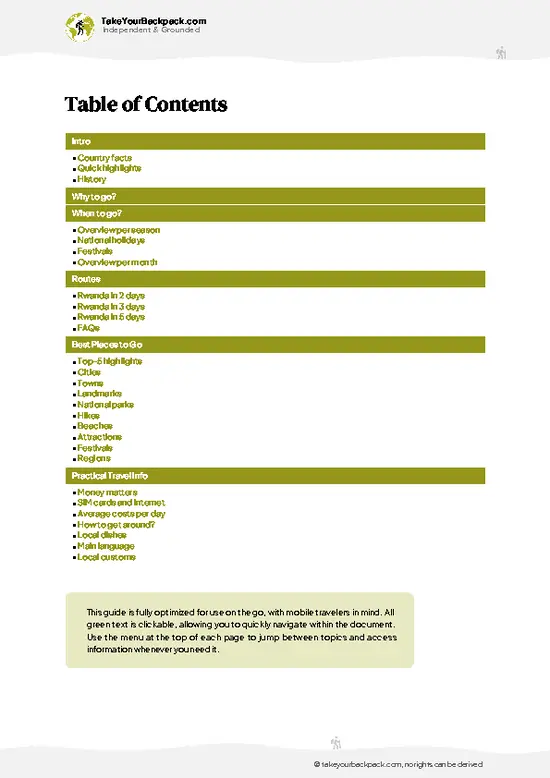
example page 0 from our offline Travel Guide for Rwanda
example page 1 from our offline Travel Guide for Rwanda
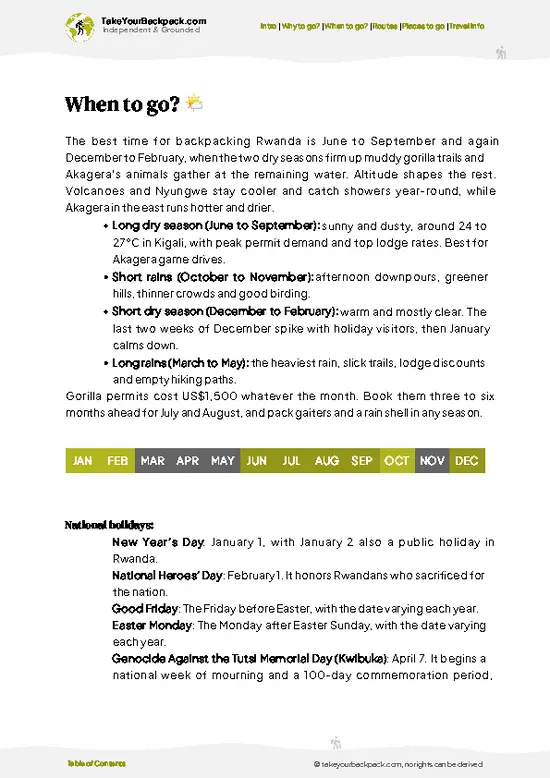
example page 2 from our offline Travel Guide for Rwanda
example page 3 from our offline Travel Guide for Rwanda
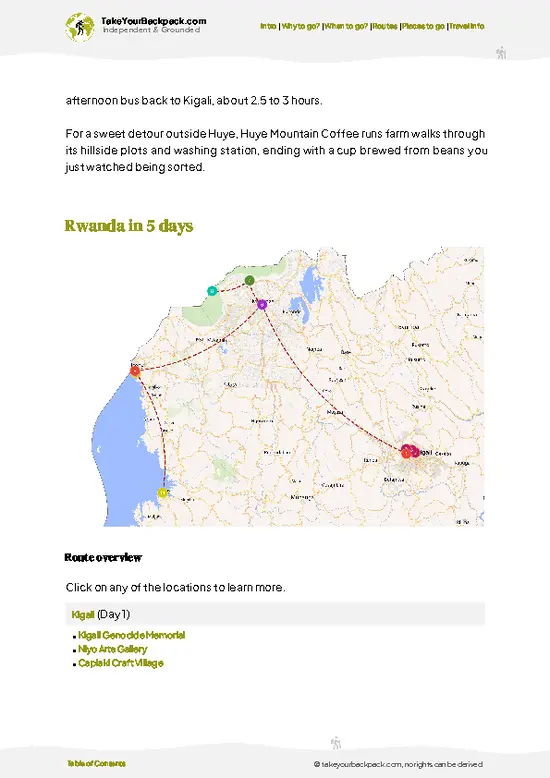
example page 4 from our offline Travel Guide for Rwanda
example page 5 from our offline Travel Guide for Rwanda
example page 6 from our offline Travel Guide for Rwanda
example page 7 from our offline Travel Guide for Rwanda
Loading the map 🌍
CLICK TO FILTER
cities
towns
landmarks
national parks
hikes
beaches
attractions
festivals
regions
SHOW COUNTRY’S BESTSHOW ALL

✨ Why go?
Ranked #1 town in Rwanda
What sets this place apart

Kibuye earns its place on a route because it is the point where Lake Kivu stops being a view from the bus window and becomes something you can paddle across. Most backpackers stay two or three nights, long enough for an island trip, a lazy day on a guesthouse beach and a decent walk uphill. It is also the natural stop to break up a journey along the lake, and the start or end of a walk on the Congo Nile Trail for anyone who wants to continue on foot or by bike. The social side is gentle. Lodges with lakeside terraces and shared tables do the work that nightclubs do elsewhere, so solo travelers get talking without trying. Food is simple and local: grilled tilapia, and isambaza, tiny fried lake fish eaten like crisps with a cold drink. The town also carries a heavy history, and the memorial … read more 👉
Kibuye earns its place on a route because it is the point where Lake Kivu stops being a view from the bus window and becomes something you can paddle across. Most backpackers stay two or three nights, long enough for an island trip, a lazy day on a guesthouse beach and a decent walk uphill. It is also the natural stop to break up a journey along the lake, and the start or end of a walk on the Congo Nile Trail for anyone who wants to continue on foot or by bike. The social side is gentle. Lodges with lakeside terraces and shared tables do the work that nightclubs do elsewhere, so solo travelers get talking without trying. Food is simple and local: grilled tilapia, and isambaza, tiny fried lake fish eaten like crisps with a cold drink. The town also carries a heavy history, and the memorial church in the center is a sober counterweight to the lake’s calm. This suits slow travelers, paddlers, cyclists and anyone happy to read, swim and watch the light on the water. If you need nightlife or a long list of sights, treat it as a single night’s stop.

💡 HighlightsMust-see experiences and standout moments

  1. Kibuye Genocide Memorial Church. This is the sight most visitors search for. Thousands of people who sheltered in the church and the surrounding grounds in April 1994 were killed here, and the church still stands as a memorial with preserved clothing and remains on display. Entry is by donation, the visit takes about an hour, and mornings are quietest. Dress modestly and keep your voice low.
  2. Napoleon Island. A small wooded island a short boat ride offshore, named for its profile, which supposedly resembles a hat. Its main residents are thousands of straw-colored fruit bats, which hang in the trees by day and fly out at dusk. Boat trips cost about US$20 to 40 per boat, and the trip takes two to three hours. Go in late afternoon to see the bats leave.
  3. Amahoro Island. Also called Peace Island,
… read more 👉
  1. Kibuye Genocide Memorial Church. This is the sight most visitors search for. Thousands of people who sheltered in the church and the surrounding grounds in April 1994 were killed here, and the church still stands as a memorial with preserved clothing and remains on display. Entry is by donation, the visit takes about an hour, and mornings are quietest. Dress modestly and keep your voice low.
  2. Napoleon Island. A small wooded island a short boat ride offshore, named for its profile, which supposedly resembles a hat. Its main residents are thousands of straw-colored fruit bats, which hang in the trees by day and fly out at dusk. Boat trips cost about US$20 to 40 per boat, and the trip takes two to three hours. Go in late afternoon to see the bats leave.
  3. Amahoro Island. Also called Peace Island, it has a small walking path, grassy clearings and monkeys that watch from the trees. Boats take 15 to 30 minutes from the harbor and usually cost US$15 to 30 per boat. Allow two hours and bring water, because shade on the open sections is scarce.
  4. Lakeshore beaches and harbor. The town’s waterfront is lined with guesthouse beaches, many open to day visitors for the price of a drink. Swimming is usually calm and the water is cool. Fishing boats go out in the evening with lanterns, and stopping for a brochette at the harbor takes an hour or two. Early morning is calm and best for photographs.
  5. Kayaking on Lake Kivu. Lodges rent kayaks from about US$10 to 20 for a half day, and guided paddles to the nearby islands cost more. Mornings have the glassiest water, and a half-day trip works well for beginners because the shore stays close and the current is mild.
Beyond Kibuye, good day trips include the Bisesero Genocide Memorial in the hills, the Gishwati-Mukura forest for primates and birdlife, and stretches of the Congo Nile Trail along the lake. For a first visit, Napoleon Island at dusk gives you boat travel, the lake and the bat departure in one outing.
Spotted a mistake or missing something? Contact us.

Things to do around Kibuye

Ratings based on Tripadvisor reviews. When you book through this link, you support our work at no extra cost to you.

🏘️ NeighborhoodsKey areas and districts to know

Kibuye is small and spread along hills above Lake Kivu, so its areas are really a handful of lakeshore pockets linked by a single paved road and some dirt lanes. Here is how they compare.
  • Town center and market area: A short strip of shops, mobile money kiosks, small restaurants and a bus park on the hillside. You can cross it on foot in ten minutes. Brochette and fried tilapia with a bottle of Fanta are the standard order, and you leave fed for a few dollars.
  • Lakeshore and port: Down the slope, the jetty is where boats leave for the islands and where fishermen unload in the morning. The walk back up is steep, so plan for it. You get the best view of the water and the green islands from here.
  • Gatwaro Stadium and Church Hill: On the ridge, the Anglican church sits above the lake and the Genocide
… read more 👉
Kibuye is small and spread along hills above Lake Kivu, so its areas are really a handful of lakeshore pockets linked by a single paved road and some dirt lanes. Here is how they compare.
  • Town center and market area: A short strip of shops, mobile money kiosks, small restaurants and a bus park on the hillside. You can cross it on foot in ten minutes. Brochette and fried tilapia with a bottle of Fanta are the standard order, and you leave fed for a few dollars.
  • Lakeshore and port: Down the slope, the jetty is where boats leave for the islands and where fishermen unload in the morning. The walk back up is steep, so plan for it. You get the best view of the water and the green islands from here.
  • Gatwaro Stadium and Church Hill: On the ridge, the Anglican church sits above the lake and the Genocide memorial beside it is a quiet, solemn place. Walking is fine but sun-exposed in the middle of the day. You come away with a clear sense of local history and a wide view over the water.
  • Peninsula resort strip (Bwishyura side road): Lodges and lakefront restaurants spread out along the shore road, mostly not walkable between each other. Motorbike taxis cover the gaps. Evenings are very quiet, and the reward is a sundowner with the lake going dark and little else to hear.
  • Islands (Amahoro, Napoleon, Monkey): Reached by boat only, these are for hikes, birds and fruit bats rather than amenities. Paths are short and clear. You get the lake from the middle, with no road noise.

⌛️ 1 dayHow to make the most of one day

8:00 AM, lakeside breakfast. Start on a guesthouse terrace with coffee and eggs while the water is flat and the fishing boats are heading home. Walk down to the shore afterward to see the nets being sorted, which is the best look at working lake life.
9:30 AM, Kibuye Genocide Memorial Church. Walk or take a short moto ride uphill to the memorial. Spend about an hour inside and in the grounds, reading the displays and standing quietly. The morning light is gentle and the site is usually empty.
11:00 AM, harbor walk. Head back down to the harbor and arrange a boat for the afternoon, comparing prices and confirming a pickup time. Then walk a quiet lane along the lakeshore, past small gardens and houses, to see how locals live beside the water.
12:30 PM, lunch at the waterfront. Order grilled tilapia … read more 👉
8:00 AM, lakeside breakfast. Start on a guesthouse terrace with coffee and eggs while the water is flat and the fishing boats are heading home. Walk down to the shore afterward to see the nets being sorted, which is the best look at working lake life.
9:30 AM, Kibuye Genocide Memorial Church. Walk or take a short moto ride uphill to the memorial. Spend about an hour inside and in the grounds, reading the displays and standing quietly. The morning light is gentle and the site is usually empty.
11:00 AM, harbor walk. Head back down to the harbor and arrange a boat for the afternoon, comparing prices and confirming a pickup time. Then walk a quiet lane along the lakeshore, past small gardens and houses, to see how locals live beside the water.
12:30 PM, lunch at the waterfront. Order grilled tilapia with chips or isambaza at a lakeside restaurant. Take your time, because the boat trip is later.
2:00 PM, a paddle off the beaten track. Rent a kayak from a guesthouse and head along a stretch of shoreline away from the main beach, past fishing canoes and steep banana terraces. Most visitors go straight to the islands, so this stretch is quiet and gives you a lake-level view of the hills.
4:00 PM, Napoleon Island. Take the boat across to the island and wait for the bats. They leave in thick streams as the light fades, and the boat ride back across the water is the best part of the day.
7:00 PM, dinner on the terrace. Finish with a cold beer or tea and grilled fish, and share a table with other travelers. Early nights are normal here.

🌤️ When to go?When to go for the best experience

The long dry season from June to September is the most dependable window for Kibuye, with sunny days of 24 to 28°C (75 to 82°F), cool nights near 15°C (59°F) and dry roads for the hills.
  • Long Dry Season (June to September): Clearest views over Lake Kivu and the best conditions for kayaking and hiking. Lodges fill on weekends and prices edge up.
  • Short Dry Spell (December to February): Warm, mostly sunny, 23 to 27°C (73 to 81°F), with brief showers. Domestic visitors arrive around the holidays.
  • Long Rains (March to May): Heavy downpours, muddy hill roads and low cloud over the water. Daytime temperatures hover around 22 to 25°C (72 to 77°F). Rooms are easiest to get and often cheaper.
  • Short Rains (October to November): Afternoon storms, with mornings often clear. Fewer visitors and quiet islands.
… read more 👉
The long dry season from June to September is the most dependable window for Kibuye, with sunny days of 24 to 28°C (75 to 82°F), cool nights near 15°C (59°F) and dry roads for the hills.
  • Long Dry Season (June to September): Clearest views over Lake Kivu and the best conditions for kayaking and hiking. Lodges fill on weekends and prices edge up.
  • Short Dry Spell (December to February): Warm, mostly sunny, 23 to 27°C (73 to 81°F), with brief showers. Domestic visitors arrive around the holidays.
  • Long Rains (March to May): Heavy downpours, muddy hill roads and low cloud over the water. Daytime temperatures hover around 22 to 25°C (72 to 77°F). Rooms are easiest to get and often cheaper.
  • Short Rains (October to November): Afternoon storms, with mornings often clear. Fewer visitors and quiet islands.
Daylight stays close to twelve hours all year, so start boat trips and hikes in the morning before cloud builds.


source: climatestotravel.comJANJanuary: good for travelingFEBFebruary: good for travelingMARMarch: fair for travelingAPRApril: fair for travelingMAYMay: fair for travelingJUNJune: highly recommended for travelingJULJuly: excellent for travelingAUGAugust: excellent for travelingSEPSeptember: highly recommended for travelingOCTOctober: good for travelingNOVNovember: good for travelingDECDecember: good for traveling
rwanda-city-kibuye v1
© Google |

✈️ The backpacker research shortcutRwanda Travel Guide

An offline-friendly backpacking guide with optimized travel routes, ranked highlights, transport advice, and the best areas to stay.
example page 0 from our offline Travel Guide for Rwanda
example page 1 from our offline Travel Guide for Rwanda
example page 2 from our offline Travel Guide for Rwanda
example page 3 from our offline Travel Guide for Rwanda
example page 4 from our offline Travel Guide for Rwanda
example page 5 from our offline Travel Guide for Rwanda
example page 6 from our offline Travel Guide for Rwanda
example page 7 from our offline Travel Guide for Rwanda
The digital guide (233 pages) contains:
✅ 57 highlights, ranked by travel appeal
✅ Optimized 2, 3 & 5-day travel routes
✅ Cities, national parks, landmarks, beaches
✅ How to get around
✅ Offline-friendly for travel without Wi-Fi
👉 Click to see all 30+ guide features

📅 Plan smarter in minutes, not weeks
✅ Month by month travel advice
✅ Festivals & national holidays
✅ Budget expectations

🗺️ Go to the right places, skip the overrated ones
✅ Honest pros & cons of destinations
✅ Top hikes, parks & viewpoints
✅ Lesser-known places most travelers miss
✅ Clear “worth it vs skip it” guidance

🛏️ Travel smoothly without rookie mistakes
✅ Best areas to stay
✅ Transport systems explained simply
✅ Common scams & safety advice
✅ SIM cards, money & practical tips

🌍 Understand the country, not just visit it
✅ Culture & traditions
✅ 52 Essential phrases & customs
✅ Festivals worth planning around
✅ Traveler-friendly historical context
✅ Insights that make places more meaningful

📱 Built for real travel conditions
✅ Fully downloadable PDF
✅ Works completely offline
✅ Optimized for phone use
✅ Useful in remote areas & buses
✅ Everything in one place
Stop searching, start planning
Get instant access to your full guide. 30‑day money-back guarantee.
+ Add another guide for just

By proceeding you agree to our terms.
Sent to your inbox immediately after payment • 100% Secure Checkout
Best Backpacking Travel Advisor 2025 tourism awardBest Backpacking
Travel Advisor
2025
What others say about Take Your Backpack Guides:
⭐⭐⭐⭐⭐
Fantastic, amazing amount of information!
⭐⭐⭐⭐⭐
My goodness this is amazing, it's what I've been looking for hats off too you!
⭐⭐⭐⭐⭐
I think this is absolutely BRILLIANT
⭐⭐⭐⭐
Very complete and informative. It's still missing places, but I gotta to commend you
⭐⭐⭐⭐⭐
This is truly amazing, thank you, can't wait to explore it with my kids!
⭐⭐⭐⭐⭐
Awesome resource, thank you!
⭐⭐⭐⭐⭐
This is amazing! Can't wait to explore the ones I haven't seen
⭐⭐⭐⭐
I love this! Well done, great idea.
⭐⭐⭐⭐⭐
Thanks for taking the time to make this gem!
⭐⭐⭐⭐⭐
This might be the best website I've ever seen.
⭐⭐⭐⭐⭐
Congratulations, and thank you so much for your work; it's incredibly valuable.
⭐⭐⭐⭐
In all seriousness I think you did a great job pointing out the important spots
⭐⭐⭐⭐⭐
10/10 very good
⭐⭐⭐⭐⭐
As someone who's only just starting to visit regularly this is awesome, thank you.
⭐⭐⭐⭐
Thank you very much! I'm going to visit my dad, it's going to be very useful!
⭐⭐⭐⭐⭐
This is really cool! We'll be travelling for the first time and this definitely come in handy.
⭐⭐⭐⭐⭐
You are now our minister of culture, congratulations 👨‍💼
⭐⭐⭐⭐⭐
Just wanted to tell you that this is a pearl! Going to follow your recommendations.
⭐⭐⭐⭐⭐
This is so cool. I'll definitely be using the resource for my travels soon.
⭐⭐⭐⭐⭐
This is very impressive! Good work.
⭐⭐⭐⭐⭐
This is an amazing and informative site. Very well done!

🛏️ Where to stay?Choosing the right base

The lakeshore around the town center is the best area for a budget bed in Kibuye, because you can walk to the market, the bus stop and the port. Budget guesthouses and a few simple lodges cluster here, and basic double rooms are typically US$10 to 25 a night. Dorm beds are rare, so expect to pay for a private room, with camping at a couple of lakeside lodges being the cheapest option at about US$5 to 10 a person. Noise is low after dark, mostly music from a bar or two that ends early. Walking at night on the lit main street is comfortable, and a moto-taxi covers the climb back.

The second option … read more 👉
The lakeshore around the town center is the best area for a budget bed in Kibuye, because you can walk to the market, the bus stop and the port. Budget guesthouses and a few simple lodges cluster here, and basic double rooms are typically US$10 to 25 a night. Dorm beds are rare, so expect to pay for a private room, with camping at a couple of lakeside lodges being the cheapest option at about US$5 to 10 a person. Noise is low after dark, mostly music from a bar or two that ends early. Walking at night on the lit main street is comfortable, and a moto-taxi covers the climb back.

The second option is the lodges along the shore road outside the center. These suit travelers who want quiet and water access, with kayaks and swimming spots on the doorstep. Prices run higher, around US$25 to 50 for a simple room, and you depend on motorbikes for meals and buses, which is a cost to count. Night transport is thin out here, so arrange your return ride before you leave for dinner. Book ahead on weekends and in the June to September season, as the small number of rooms fill quickly with groups from Kigali.

🚌 Getting aroundHow to get around Kibuye

Kibuye’s center is walkable end to end in about ten minutes, but the steep hills down to the lake and out to the lodges make walking tiring beyond a couple of kilometers, so distances here are better judged by slope than by the map. Most backpackers walk in town, take a motorbike taxi for hill stretches and use boats for the lake. Public transport is reliable on the main road, though few vehicles run after dark.
  • Walking: Free, and the right choice around the market, the port and the memorial hill. The climb back from the jetty takes 10 to 15 minutes at a steady pace, and you are rewarded with views over Lake Kivu at every bend.
  • Moto-taxi: The default for short hops, usually US$0.50 to 2 within town and US$2 to 4 to lodges along the shore road. Agree the price before you get on and ask for a
… read more 👉
Kibuye’s center is walkable end to end in about ten minutes, but the steep hills down to the lake and out to the lodges make walking tiring beyond a couple of kilometers, so distances here are better judged by slope than by the map. Most backpackers walk in town, take a motorbike taxi for hill stretches and use boats for the lake. Public transport is reliable on the main road, though few vehicles run after dark.
  • Walking: Free, and the right choice around the market, the port and the memorial hill. The climb back from the jetty takes 10 to 15 minutes at a steady pace, and you are rewarded with views over Lake Kivu at every bend.
  • Moto-taxi: The default for short hops, usually US$0.50 to 2 within town and US$2 to 4 to lodges along the shore road. Agree the price before you get on and ask for a helmet. Rides are quick, and the hills are steep, so hold on. You get dropped at the door of places that cars struggle to reach.
  • Minibuses and buses: Services run to Kigali (roughly US$4 to 6, 4 to 5 hours), Rubavu/Gisenyi (around US$3 to 5, 3 to 4 hours) and Karongi district points. The main bus stop is in the center. Departures start early, around 6 am, and the last ones leave in the afternoon. Buy your ticket on the bus or at the office, and you travel on a scenic, winding road along the lake ridge.
  • Boats: Small motorboats and canoes go to nearby islands from the port, around US$10 to 30 per boat depending on distance and passengers. Kayak rentals are available at lodges for roughly US$10 to 20. Early mornings are calm, and the water is glassy and quiet.
  • Private car with driver: Possible through your lodge, usually US$40 to 80 a day. It makes sense for reaching the tea plantations and Nyungwe-bound routes, and you stop wherever the view suits you.

👛 Costs (as of 22 October 2026)What things cost and how to budget

Kibuye costs about US$48 a day for a backpacker who sleeps in a basic private room, eats local food and uses moto-taxis.
CategoryBudget RangeLocal Reality
Dorm accommodationUS$10 to 20Dorms are rare, so this is a basic guesthouse room or a lodge campsite at US$5 to 10. Prices climb on weekends and from June to September.
MealsUS$8 to 14Brochettes, fish, rice and beans in local restaurants for US$2 to 5. Lakefront lodge meals run US$8 to 15.
Local transportUS$3 to 6Moto-taxis cost US$0.50 to 4 per ride. Intercity buses to Kigali are US$4 to 6.
Basic activities/entry feesUS$8 to 15Island boat shares US$5 to 15 per person, kayak rental about US$10 to 20, memorial entry by small donation.
Miscellaneous expensesUS$3 to 5Water, mobile data, SIM top-ups and snacks. Payment is in Rwandan francs, and ATMs
… read more 👉
Kibuye costs about US$48 a day for a backpacker who sleeps in a basic private room, eats local food and uses moto-taxis.
CategoryBudget RangeLocal Reality
Dorm accommodationUS$10 to 20Dorms are rare, so this is a basic guesthouse room or a lodge campsite at US$5 to 10. Prices climb on weekends and from June to September.
MealsUS$8 to 14Brochettes, fish, rice and beans in local restaurants for US$2 to 5. Lakefront lodge meals run US$8 to 15.
Local transportUS$3 to 6Moto-taxis cost US$0.50 to 4 per ride. Intercity buses to Kigali are US$4 to 6.
Basic activities/entry feesUS$8 to 15Island boat shares US$5 to 15 per person, kayak rental about US$10 to 20, memorial entry by small donation.
Miscellaneous expensesUS$3 to 5Water, mobile data, SIM top-ups and snacks. Payment is in Rwandan francs, and ATMs are limited.
Total Daily BudgetUS$48Basic comfort, high season.
Share boat hire with other travelers and eat at the small local restaurants near the market, which together can cut your daily spend by US$10 or more. Carry cash from Kigali or Rubavu, as banking options in Kibuye are thin.
⚠️ Prices can change and everyone travels differently, so take this as a rough guide. Hope it helps you plan your adventure!

🚌 Day tripsShort trips worth adding

Kibuye works well as a base for lake and countryside day trips, mostly by boat or moto-taxi, and none needs an overnight stay.
Napoleon Island and Amahoro Island: Short boat rides from the port reach these islands, where you walk simple paths among fruit bats and nesting birds. A boat takes 20 to 40 minutes each way, and a round trip costs roughly US$15 to 40 split among the group. Go in the morning for calm water and best bat watching. First-timers often forget sun protection and water.

Kayaking on Lake Kivu: Paddling the sheltered bays gives a quiet view of fishing canoes and terraced hills. Guided half-day outings cost around US$25 to 50 including the kayak. Dry months from June to September have the calmest mornings. Avoid afternoons, when wind and storms can pick up.
👉 Explore Lake Kivu
Bisesero … read more 👉
Kibuye works well as a base for lake and countryside day trips, mostly by boat or moto-taxi, and none needs an overnight stay.
Napoleon Island and Amahoro Island: Short boat rides from the port reach these islands, where you walk simple paths among fruit bats and nesting birds. A boat takes 20 to 40 minutes each way, and a round trip costs roughly US$15 to 40 split among the group. Go in the morning for calm water and best bat watching. First-timers often forget sun protection and water.

Kayaking on Lake Kivu: Paddling the sheltered bays gives a quiet view of fishing canoes and terraced hills. Guided half-day outings cost around US$25 to 50 including the kayak. Dry months from June to September have the calmest mornings. Avoid afternoons, when wind and storms can pick up.
👉 Explore Lake Kivu
Bisesero Genocide Memorial: About 30 to 40 minutes by road into the hills, this memorial marks where Tutsi resisted for weeks in 1994. A moto-taxi round trip is about US$10 to 15, and entry is a small donation or fee. Allow an hour and a half, go in the morning, and dress modestly.

Rubengera and Gisenyi Coffee Washing Stations: Coffee washing stations in the surrounding hills offer tours in the harvest months, roughly March to July. A moto-taxi costs about US$8 to 15 round trip, and tours run US$5 to 15. Phone ahead, because visits depend on the work schedule.

🛡️ SafetySafety Tips and Common Scams in Kibuye

Kibuye is a calm, low-crime town where the main risks are everyday ones. Petty theft is rare, but keep your phone and wallet out of sight in the market and on crowded buses. Walking the lit main road after dark is fine in a group or pair, while solo travelers should take a moto-taxi for the steep, unlit lakeside lanes, where uneven surfaces cause more trouble than people do. Motorbike rides are the biggest practical danger: insist on a helmet, agree the fare first, and ask the rider to slow down on hills and wet roads. Boat operators sometimes quote inflated prices to foreigners, so settle the cost and duration before leaving the jetty, and check that life jackets are provided. Swimming in the lake is common, but avoid it after storms and at dusk. Plastic bags are banned in Rwanda, so expect checks at the border and in shops.

FAQTraveler FAQ

Kibuye is worth visiting for two or three days, particularly if you like quiet lake scenery over nightlife. Highlights include island boat trips, kayaking on Lake Kivu and the Bisesero memorial, with simple rooms from about US$10 to 25. It sits on the Lake Kivu Congo Nile Trail route, so many travelers pair it with Rubavu and Kigali rather than treating it as a stopover.
Two to three days suit Kibuye well. One day covers the town, the memorial hill and a sundowner by the water, and a second adds an island boat trip or kayak outing for about US$15 to 40. A third day is useful if you want to visit Bisesero or a coffee washing station, or if rain delays your plans.
Kibuye is a long day trip from Kigali, since the bus takes roughly 4 to 5 hours each way for about US$4 to 6. That leaves little time on the lake, so a one-night stay is better value. From Rubavu the ride takes about 3 to 4 hours, which also makes a single day tiring, though a private driver can shorten it somewhat.
⚠️ Things can change over time, so always validate details locally before you go.

Other Rwandan towns near Kibuye

Explore more nearby:

  • Ngororero—Highland market, tea slopes, goat brochettes, district center| 38 km away
  • Cyangugu—Fishing boats, Rusizi River crossing, Bukavu border, Nyungwe gateway| 69 km away
  • Byumba—Northern highway stop, memorial, cathedral, ridge views| 96 km away

💡 Not sure where to go next?
Create a personalized itinerary for Rwanda including Kibuye and the places that fit your trip.

Generate my itinerary

👉 Discover all towns

Or checkout all Rwanda has to offer (think cities, towns, villages, national parks, hikes, beaches, festivals)
Country photo of Rwanda

We 💚 feedbackWhat to keep in mind

Kibuye suits paddlers, cyclists finishing the Congo Nile Trail, and anyone who prefers a quiet lake to a lively strip. I would give it at least two nights, book the island trip for late afternoon, and bring cash, since card machines are unreliable and the walk uphill to the memorial is easier with a pocket full of small notes.

✍️ Help improve this page!
The information on this page is based on in-depth research, insights shared by experienced travelers, and feedback from the local travel community in Rwanda. While every effort is made to keep the information accurate and current, conditions can change — so if you spot anything incorrect or outdated, please get in touch.


🙋‍♂️ Give feedback

👋 Meet the founderWho’s Behind Take Your Backpack?

Johan, backpacker and founder of TakeYourBackpackHi, I’m Johan (Netherlands 🇳🇱), the creator of TakeYourBackpack. Over the past 3 decades, I’ve backpacked through 90+ countries across six continents, gaining extensive experience with independent travel, long-term trips, and overland routes.

This site is built on a combination of firsthand travel experience and carefully curated insights from other backpackers. Many guides are based on places I’ve personally visited, while others bring together tips, observations, and practical advice shared by trusted travelers I’ve met along the way.

The goal is to provide realistic, experience-driven guidance — not generic itineraries — so you can explore destinations with better context, clearer expectations, and more confidence.