×

Rwanda🇷🇼 | townsNgororeroHighland market, tea slopes, goat brochettes, district center | things to do and best time to go

Explore CyanguguExplore Musanze Caves

Backpacking in Ngororero
👌 Worth visitingtown ranked #4
By Johan Kruseman 🇳🇱 | Updated October 22, 2026

Ngororero asks you to decide whether to treat it as a stop in its own right or as a pass-through on the road between Gisenyi and Kigali, and the lack of tourist infrastructure tips it toward a short, purposeful visit. The town sits in the west of Rwanda, in hill country between Lake Kivu and the Nyungwe and Gishwati areas. The main road climbs and drops through terraced slopes of tea, beans and bananas, and the reward is a long view across folded green ridges. Streets are small, with a market, a few basic restaurants and guesthouses. Evenings are quiet, and meeting other backpackers is unlikely, so expect conversations with locals instead. Minibuses connect it to larger towns, though less often than on the main corridors. Bring enough cash in Rwandan francs, since banking and card options are limited.

Discover everything you want to know in the 📖 Rwanda Travel Guide.


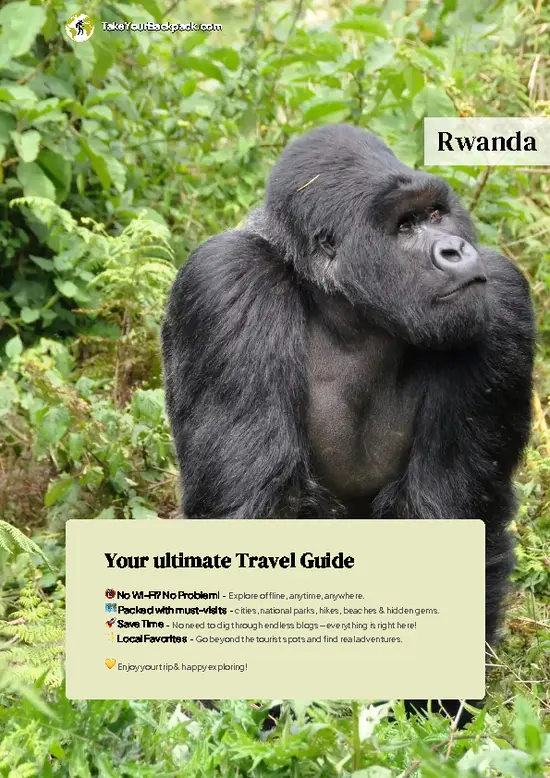
example page 0 from our offline Travel Guide for Rwanda
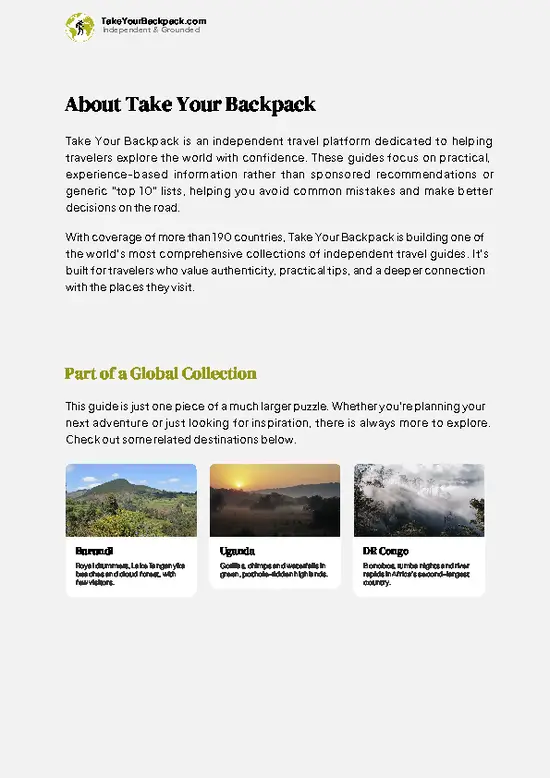
example page 1 from our offline Travel Guide for Rwanda
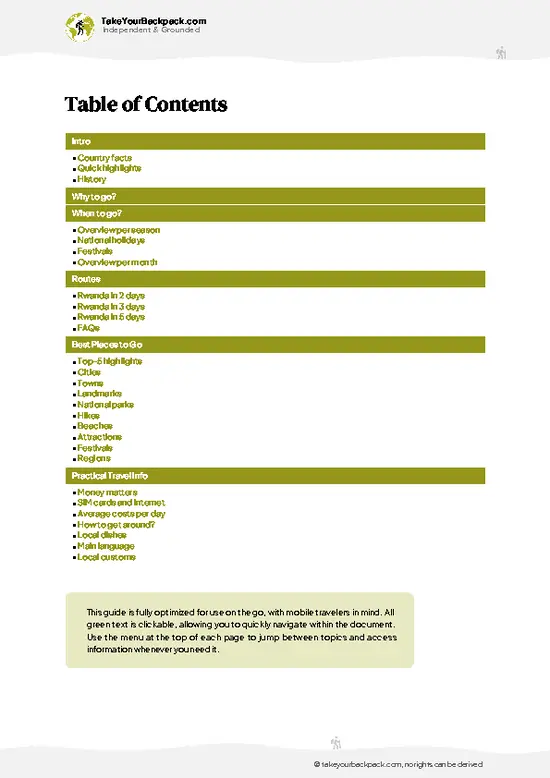
example page 2 from our offline Travel Guide for Rwanda
example page 3 from our offline Travel Guide for Rwanda
example page 4 from our offline Travel Guide for Rwanda
example page 5 from our offline Travel Guide for Rwanda
example page 6 from our offline Travel Guide for Rwanda
example page 7 from our offline Travel Guide for Rwanda
Loading the map 🌍
CLICK TO FILTER
cities
towns
landmarks
national parks
hikes
beaches
attractions
festivals
regions
SHOW COUNTRY’S BESTSHOW ALL

✨ Why go?
Ranked #4 town in Rwanda
The unique appeal for travelers

Ngororero suits the traveler who wants Rwanda’s countryside without the crowds. Its draw is the surrounding landscape: steep ridges, tea and coffee slopes, and rural roads where walking between villages is the main activity. The small district center gives you a cheap guesthouse bed, a plate of brochettes and a chance to watch a working market town rather than a showcase. Most people stay one night, maybe two if they like hiking without a guide book in hand. It is quiet, with almost no nightlife, so it fits slow travelers, solo walkers and cyclists more than anyone chasing a social scene. The nearby Gishwati-Mukura forest area and the climb toward Lake Kivu’s hills make it a handy launch point for those with time. If you only have a few days in Rwanda, pick bigger bases. If you have a week or more, Ngororero rewards the curiosity.

💡 HighlightsThe experiences that define the visit

  1. Ngororero town market: The center of daily life, with piles of beans, sweet potatoes, tomatoes and secondhand clothes. Go in the morning when stalls are fullest. Entry is free, and 45 minutes is enough.
  2. Ridge walks above town: Dirt paths climb through terraced fields and eucalyptus, giving wide views over the valleys. Early morning has the clearest air. Free, allow 2 to 3 hours.
  3. Sector and district center streets: A short stroll shows how a Rwandan highland district runs, with the local offices, shops and motorbike taxi stands along the main road. Free, 30 to 45 minutes.
  4. Roadside tea and coffee slopes: Plantations and small cooperative plots stretch along the hills near town. Mornings are best for seeing farmers at work. Free to look from the road, about an hour.
  5. Local brochette and milk bars:
… read more 👉
  1. Ngororero town market: The center of daily life, with piles of beans, sweet potatoes, tomatoes and secondhand clothes. Go in the morning when stalls are fullest. Entry is free, and 45 minutes is enough.
  2. Ridge walks above town: Dirt paths climb through terraced fields and eucalyptus, giving wide views over the valleys. Early morning has the clearest air. Free, allow 2 to 3 hours.
  3. Sector and district center streets: A short stroll shows how a Rwandan highland district runs, with the local offices, shops and motorbike taxi stands along the main road. Free, 30 to 45 minutes.
  4. Roadside tea and coffee slopes: Plantations and small cooperative plots stretch along the hills near town. Mornings are best for seeing farmers at work. Free to look from the road, about an hour.
  5. Local brochette and milk bars: Simple eateries serve grilled goat, plantain and fresh milk. Evening is when they fill. Expect to pay roughly US$2 to 5, and about an hour.
For day trips, Ngororero works as a jumping-off point for Gishwati-Mukura National Park, Lake Kivu’s shore near Rubavu and Karongi, and the tea country along the Congo-Nile Trail. None of the items above need a ticket or advance booking.
Spotted a mistake or missing something? Contact us.

Things to do near Ngororero

Ratings based on Tripadvisor reviews. When you book through this link, you support our work at no extra cost to you.

🏘️ NeighborhoodsWhere things are and how it's laid out

Ngororero is a small hill town in Rwanda's Western Province, and everything useful sits within a 15-minute walk along one main road and a few side lanes.
  • Town Center and Taxi Park: The tarmac strip holds the district offices, a few banks with ATMs, mobile money kiosks and shops selling phone credit, soap and basic supplies. Brochettes and tea are sold in small cafés and roadside stalls. It is flat enough to walk end to end, and you leave with cash, a SIM top-up and a clear idea of which bus leaves next.
  • Market Area: Traders lay out beans, sorghum, cassava, bananas and tomatoes from nearby hill farms, and the busiest hours are in the morning. The lanes are muddy after rain, so wear closed shoes. You get a cheap fruit breakfast and a sense of what the district grows.
  • Hillside Residential Lanes:
… read more 👉
Ngororero is a small hill town in Rwanda's Western Province, and everything useful sits within a 15-minute walk along one main road and a few side lanes.
  • Town Center and Taxi Park: The tarmac strip holds the district offices, a few banks with ATMs, mobile money kiosks and shops selling phone credit, soap and basic supplies. Brochettes and tea are sold in small cafés and roadside stalls. It is flat enough to walk end to end, and you leave with cash, a SIM top-up and a clear idea of which bus leaves next.
  • Market Area: Traders lay out beans, sorghum, cassava, bananas and tomatoes from nearby hill farms, and the busiest hours are in the morning. The lanes are muddy after rain, so wear closed shoes. You get a cheap fruit breakfast and a sense of what the district grows.
  • Hillside Residential Lanes: Steep dirt tracks climb above the center past brick houses, tea plots and banana groves. Evenings are quiet and walking is slow because of the gradient. At the top you get long views across the folded green hills of the Congo-Nile divide.
  • Roadside Eateries on the Gisenyi Road: A scatter of simple restaurants serves buffet plates of rice, beans, potatoes and goat stew at lunchtime. There is almost no nightlife, so expect an early night with a cold Primus beer. You get a filling meal and a seat facing the passing trucks.

⌛️ 1 dayHow to make the most of one day

7:30 AM: Ngororero town center and main market
Start where the day starts for everyone else, at the stalls along the main road. Farmers bring in beans, sweet potatoes, tomatoes and bunches of green bananas early, and a cup of sweet milky tea from a small café costs very little. Twenty minutes of wandering gets you oriented and gives you a feel for a district that lives off its hills and its farms.

9:00 AM: Walk to the hillside viewpoints above town
Take any of the dirt lanes climbing out of the center and keep going until the houses thin out. Within 30 to 40 minutes you are looking over terraced slopes, banana groves and the folds of the Congo-Nile divide hills. Kids will shout greetings the whole way, so answer in Kinyarwanda if you can manage it. Bring water, because there is little shade. … read more 👉
7:30 AM: Ngororero town center and main market
Start where the day starts for everyone else, at the stalls along the main road. Farmers bring in beans, sweet potatoes, tomatoes and bunches of green bananas early, and a cup of sweet milky tea from a small café costs very little. Twenty minutes of wandering gets you oriented and gives you a feel for a district that lives off its hills and its farms.

9:00 AM: Walk to the hillside viewpoints above town
Take any of the dirt lanes climbing out of the center and keep going until the houses thin out. Within 30 to 40 minutes you are looking over terraced slopes, banana groves and the folds of the Congo-Nile divide hills. Kids will shout greetings the whole way, so answer in Kinyarwanda if you can manage it. Bring water, because there is little shade.

11:30 AM: Back down to a local brochette stop
Head back into town and find a plain restaurant serving grilled goat or beef brochettes with fried plantain and a pile of chips. Order a cold Fanta or a local Primus beer. Lunch is simple, filling and eaten with the people who actually live here.

1:30 PM: Rural lanes toward the Nyabarongo and Satinsyi side
This is the part that is not on any standard itinerary. Hire a moto-taxi for a short ride outside the center, agree on the price first, and get dropped at a village stretch you can walk back along. You pass tea and coffee plots, small cooperatives drying beans on mats, and people who rarely see a foreign visitor. Greet everyone, and ask before taking photos.

4:30 PM: Return to town for a slow afternoon
Settle at a roadside café with a coffee grown in these hills. Rwandan coffee here tastes bright and clean, and it is the best use of an hour while the light softens over the ridges.

6:30 PM: Dinner and an early night
Eat a plate of beans, rice and cooked greens at a simple local spot, then turn in. Evenings are quiet, with little beyond a few bars, so an early night suits the hills and the early start you will want tomorrow.

🌤️ When to go?Weather, crowds, and seasonal trade-offs

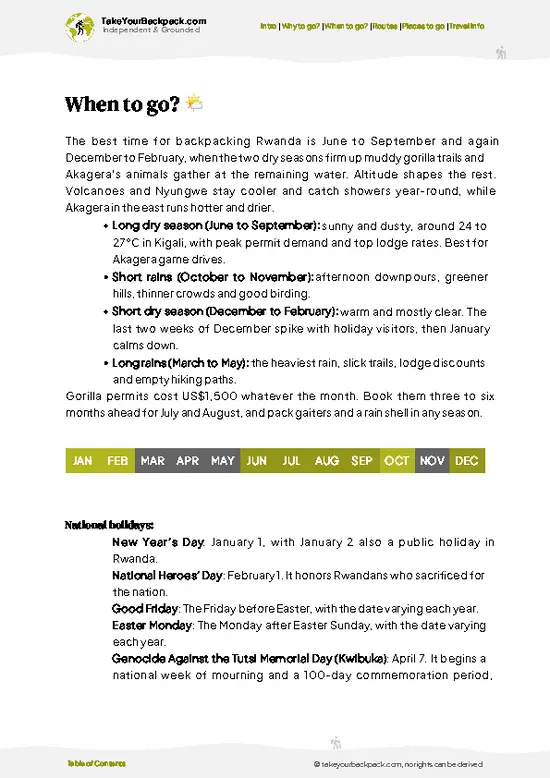
  • Long Dry Season (June to September): Ngororero sits at roughly 1,800 meters, so days reach 22 to 26°C (72 to 79°F) and nights drop to 12 to 14°C (54 to 57°F). Roads and hill paths are firm, views are clearest, and this is when hiking and market visits are easiest. Prices barely change, since few tourists come here.
  • Short Rains (October to December): Expect afternoon downpours, 17 to 24°C (63 to 75°F) and green slopes. Dirt tracks turn slick, and buses run slower.
  • Short Dry Spell (January to February): Mostly sunny with warm days near 25°C (77°F) and cool mornings. Hikes are good again.
  • Long Rains (March to May): The wettest stretch, with landslides possible on steep roads and heavy cloud hiding the views. Daylight stays close to 12 hours all year.
Start day walks by 8 a.m., because clouds build up in the afternoon in most months.

source: climatestotravel.comJANJanuary: excellent for travelingFEBFebruary: excellent for travelingMARMarch: fair for travelingAPRApril: fair for travelingMAYMay: fair for travelingJUNJune: excellent for travelingJULJuly: excellent for travelingAUGAugust: excellent for travelingSEPSeptember: excellent for travelingOCTOctober: fair for travelingNOVNovember: fair for travelingDECDecember: excellent for traveling
when-to-go

✈️ The backpacker research shortcutRwanda Travel Guide

An offline-friendly backpacking guide with optimized travel routes, ranked highlights, transport advice, and the best areas to stay.
example page 0 from our offline Travel Guide for Rwanda
example page 1 from our offline Travel Guide for Rwanda
example page 2 from our offline Travel Guide for Rwanda
example page 3 from our offline Travel Guide for Rwanda
example page 4 from our offline Travel Guide for Rwanda
example page 5 from our offline Travel Guide for Rwanda
example page 6 from our offline Travel Guide for Rwanda
example page 7 from our offline Travel Guide for Rwanda
The digital guide (233 pages) contains:
✅ 57 highlights, ranked by travel appeal
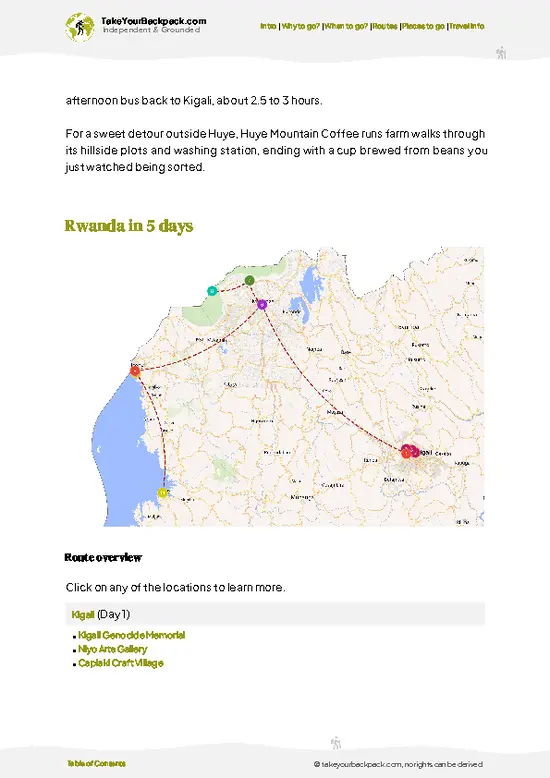
✅ Optimized 2, 3 & 5-day travel routes
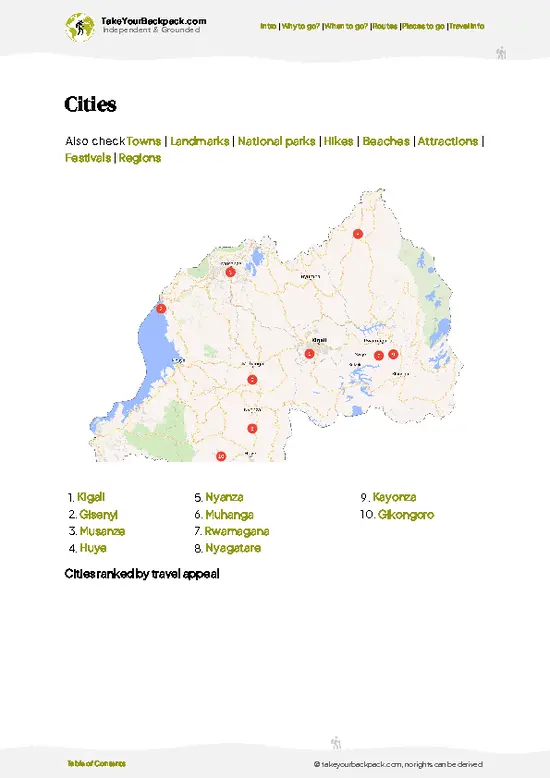
✅ Cities, national parks, landmarks, beaches
✅ How to get around
✅ Offline-friendly for travel without Wi-Fi
👉 Click to see all 30+ guide features

📅 Plan smarter in minutes, not weeks
✅ Month by month travel advice
✅ Festivals & national holidays
✅ Budget expectations

🗺️ Go to the right places, skip the overrated ones
✅ Honest pros & cons of destinations
✅ Top hikes, parks & viewpoints
✅ Lesser-known places most travelers miss
✅ Clear “worth it vs skip it” guidance

🛏️ Travel smoothly without rookie mistakes
✅ Best areas to stay
✅ Transport systems explained simply
✅ Common scams & safety advice
✅ SIM cards, money & practical tips

🌍 Understand the country, not just visit it
✅ Culture & traditions
✅ 52 Essential phrases & customs
✅ Festivals worth planning around
✅ Traveler-friendly historical context
✅ Insights that make places more meaningful

📱 Built for real travel conditions
✅ Fully downloadable PDF
✅ Works completely offline
✅ Optimized for phone use
✅ Useful in remote areas & buses
✅ Everything in one place
Stop searching, start planning
Get instant access to your full guide. 30‑day money-back guarantee.
+ Add another guide for just

By proceeding you agree to our terms.
Sent to your inbox immediately after payment • 100% Secure Checkout
Best Backpacking Travel Advisor 2025 tourism awardBest Backpacking
Travel Advisor
2025
What others say about Take Your Backpack Guides:
⭐⭐⭐⭐⭐
Fantastic, amazing amount of information!
⭐⭐⭐⭐⭐
My goodness this is amazing, it's what I've been looking for hats off too you!
⭐⭐⭐⭐⭐
I think this is absolutely BRILLIANT
⭐⭐⭐⭐
Very complete and informative. It's still missing places, but I gotta to commend you
⭐⭐⭐⭐⭐
This is truly amazing, thank you, can't wait to explore it with my kids!
⭐⭐⭐⭐⭐
Awesome resource, thank you!
⭐⭐⭐⭐⭐
This is amazing! Can't wait to explore the ones I haven't seen
⭐⭐⭐⭐
I love this! Well done, great idea.
⭐⭐⭐⭐⭐
Thanks for taking the time to make this gem!
⭐⭐⭐⭐⭐
This might be the best website I've ever seen.
⭐⭐⭐⭐⭐
Congratulations, and thank you so much for your work; it's incredibly valuable.
⭐⭐⭐⭐
In all seriousness I think you did a great job pointing out the important spots
⭐⭐⭐⭐⭐
10/10 very good
⭐⭐⭐⭐⭐
As someone who's only just starting to visit regularly this is awesome, thank you.
⭐⭐⭐⭐
Thank you very much! I'm going to visit my dad, it's going to be very useful!
⭐⭐⭐⭐⭐
This is really cool! We'll be travelling for the first time and this definitely come in handy.
⭐⭐⭐⭐⭐
You are now our minister of culture, congratulations 👨‍💼
⭐⭐⭐⭐⭐
Just wanted to tell you that this is a pearl! Going to follow your recommendations.
⭐⭐⭐⭐⭐
This is so cool. I'll definitely be using the resource for my travels soon.
⭐⭐⭐⭐⭐
This is very impressive! Good work.
⭐⭐⭐⭐⭐
This is an amazing and informative site. Very well done!

🛏️ Where to stay?Best areas to stay in Rwanda

The center of Ngororero, near the taxi park and the main road, is the best bet for a budget bed. Accommodation here is limited to a handful of small guesthouses and simple lodgings, with private rooms generally the norm and few or no true dorms, so expect to pay US$8 to 20 for a basic room. You will be steps from the minibus departures, ATMs, restaurants and shops, which matters when buses leave early in the morning.

Noise is modest. Trucks use the main road until fairly late and roosters start before dawn, so earplugs help if you sleep lightly. Streets in the center are lit in places and people … read more 👉
The center of Ngororero, near the taxi park and the main road, is the best bet for a budget bed. Accommodation here is limited to a handful of small guesthouses and simple lodgings, with private rooms generally the norm and few or no true dorms, so expect to pay US$8 to 20 for a basic room. You will be steps from the minibus departures, ATMs, restaurants and shops, which matters when buses leave early in the morning.

Noise is modest. Trucks use the main road until fairly late and roosters start before dawn, so earplugs help if you sleep lightly. Streets in the center are lit in places and people are out until about 9 p.m., which makes walking back from dinner straightforward.

If you want quiet, a guesthouse on the slopes just above the center trades a short moto-taxi ride or a steep ten-minute climb for cooler air and a view across the hills. Water can be cold, and hot showers are not guaranteed at the cheapest places, so ask before paying. Electricity occasionally cuts out, so keep a headlamp and a charged power bank. Book ahead only if you plan to arrive on a weekend or during a local event, since the town has few rooms overall. For more choice, Gisenyi and Karongi both have hostels and lakeside options within a few hours by road.

🚌 Getting aroundHow to get from A to B

Ngororero's biggest time-waster is waiting at the roadside for a bus that is already full, when the taxi park in the center is where seats are sold and departures are filled in order. Go there first and ask for the next car to Kigali, Muhanga, Gisenyi (Rubavu) or Karongi. The town itself is compact, but the hills are steep and the roads climb hard, so expect slow progress on foot with a pack. Public transport is dependable on main roads until late afternoon, and thins out after dark.
  • Walking: The center takes about 15 minutes to cross. Side lanes are steep and slippery after rain, so wear shoes with grip. You get close views of terraced farms and tea plots for free.
  • Moto-taxis: These are the fastest way up the hills and to nearby villages. A short ride costs about US$0.50 to 1.50, and longer
… read more 👉
Ngororero's biggest time-waster is waiting at the roadside for a bus that is already full, when the taxi park in the center is where seats are sold and departures are filled in order. Go there first and ask for the next car to Kigali, Muhanga, Gisenyi (Rubavu) or Karongi. The town itself is compact, but the hills are steep and the roads climb hard, so expect slow progress on foot with a pack. Public transport is dependable on main roads until late afternoon, and thins out after dark.
  • Walking: The center takes about 15 minutes to cross. Side lanes are steep and slippery after rain, so wear shoes with grip. You get close views of terraced farms and tea plots for free.
  • Moto-taxis: These are the fastest way up the hills and to nearby villages. A short ride costs about US$0.50 to 1.50, and longer rides to outlying sectors US$2 to 4. Rwandan law requires a helmet for you and a second one for the passenger, so insist on one. You arrive at remote viewpoints without a long climb.
  • Minibuses (twegerane): Shared vans run to Kigali (about 3 to 4 hours, US$4 to 5), Muhanga (about 1.5 to 2 hours, US$2 to 3) and Gisenyi (about 2 to 3 hours, US$3 to 4). Vehicles leave when full, with the most frequent departures from early morning until about 4 or 5 p.m. The ride crosses winding mountain road with views over deep valleys, so a window seat helps with nausea.
  • Private Car and Driver: Rented from Kigali or Gisenyi, this suits a group planning several stops, at roughly US$60 to 100 a day including fuel. It lets you stop for photos on the Congo-Nile ridge.
Pay in Rwandan francs, keep small notes handy and carry a few extra in case a driver cannot change a large one.

👛 Costs (as of 22 October 2026)What things cost and how to budget

Ngororero costs roughly US$38 to 55 a day for a backpacker, and the total below comes to US$49 in high season.
CategoryBudget RangeLocal Reality
Dorm accommodationUS$8 to 15 (low season US$7 to 12)Few true dorms exist, so you will mostly pay for a simple private room with shared bathroom.
MealsUS$6 to 12Buffet plates of rice, beans and potatoes cost US$2 to 3, and brochettes and tea fill the gaps.
Local transportUS$3 to 8Moto-taxis cost US$0.50 to 4 per ride, and minibuses to nearby towns cost US$2 to 5.
Basic activities/entry feesUS$10 to 20Village walks are free, while park visits and guides cost more.
Miscellaneous expensesUS$3 to 5Covers SIM data, water, snacks and small tips.
Total Daily BudgetUS$49Lower if you skip paid activities.
Eat your main meal at lunchtime buffets, which cost less than … read more 👉
Ngororero costs roughly US$38 to 55 a day for a backpacker, and the total below comes to US$49 in high season.
CategoryBudget RangeLocal Reality
Dorm accommodationUS$8 to 15 (low season US$7 to 12)Few true dorms exist, so you will mostly pay for a simple private room with shared bathroom.
MealsUS$6 to 12Buffet plates of rice, beans and potatoes cost US$2 to 3, and brochettes and tea fill the gaps.
Local transportUS$3 to 8Moto-taxis cost US$0.50 to 4 per ride, and minibuses to nearby towns cost US$2 to 5.
Basic activities/entry feesUS$10 to 20Village walks are free, while park visits and guides cost more.
Miscellaneous expensesUS$3 to 5Covers SIM data, water, snacks and small tips.
Total Daily BudgetUS$49Lower if you skip paid activities.
Eat your main meal at lunchtime buffets, which cost less than dinner menus and keep you full through the evening.
⚠️ Prices can change and everyone travels differently, so take this as a rough guide. Hope it helps you plan your adventure!

🚌 Day tripsEasy escapes and nearby places

Ngororero is a workable base for rural, early-start day trips, but there is little organized tourism, so you will rely on minibuses and moto-taxis.
Gishwati-Mukura National Park: Rwanda's smaller, newer forest park lies north of town and protects chimpanzees, golden monkeys and many bird species. Allow 1.5 to 2.5 hours each way by minibus and moto-taxi, plus a park fee that is far lower than at Volcanoes National Park, and budget US$30 to 60 in total with a guide. The dry months from June to September give firmer trails. First-timers often arrive too late, so leave before 7 a.m.

Lake Kivu at Rubavu (Gisenyi): The road north drops to a beach town with a promenade, grilled fish and views of Goma's volcano across the water. The trip takes 2 to 3 hours each way by minibus at US$3 to 4 each way, … read more 👉
Ngororero is a workable base for rural, early-start day trips, but there is little organized tourism, so you will rely on minibuses and moto-taxis.
Gishwati-Mukura National Park: Rwanda's smaller, newer forest park lies north of town and protects chimpanzees, golden monkeys and many bird species. Allow 1.5 to 2.5 hours each way by minibus and moto-taxi, plus a park fee that is far lower than at Volcanoes National Park, and budget US$30 to 60 in total with a guide. The dry months from June to September give firmer trails. First-timers often arrive too late, so leave before 7 a.m.

Lake Kivu at Rubavu (Gisenyi): The road north drops to a beach town with a promenade, grilled fish and views of Goma's volcano across the water. The trip takes 2 to 3 hours each way by minibus at US$3 to 4 each way, so a day return costs about US$12 to 20 with lunch. It works in any season, although mornings are clearest. Do not assume you can return late, because the last reliable minibuses back leave in the afternoon.
👉 Explore Rubavu
Karongi and Kibuye: Another lakeside option to the west, this has small coves, boat trips and cafés looking over forested islands. Expect about 2 to 3 hours each way by road changes and US$20 to 40 with a short boat ride. Dry months give calmer water and better light. A common mistake is skipping the return schedule, so confirm the final departure when you arrive.
👉 Explore Karongi

🛡️ SafetySafety Tips and Common Scams in Ngororero

Ngororero is a quiet rural town where violent crime against visitors is very rare, and most problems are minor. Pickpocketing is uncommon, but keep your phone and wallet zipped away in the taxi park and market, where crowds gather. Moto-taxi drivers may quote a higher price to foreigners, so agree the fare before you get on and always wear the helmet provided. The main danger is road safety: mountain roads are steep and winding, and landslides can block them in heavy rain, so avoid traveling after dark. Solo travelers, including women, generally report friendly and curious locals, though streets are poorly lit after about 9 p.m., so carry a headlamp and walk with a plan. Photographing police, soldiers or government buildings is not allowed. Plastic bags are banned in Rwanda, so do not bring them in.

FAQCommon questions from travelers

Ngororero suits travelers who want rural Rwanda without crowds, but it is more of a base than a headline stop. It offers hill views, market days and access to Gishwati-Mukura National Park, and Lake Kivu at Rubavu is about 2 to 3 hours away. Few services exist beyond the basics, so most visitors pair it with Karongi or Gisenyi.
Ngororero needs one to two days. One day covers the market, town walks and a hillside viewpoint, and a second day allows a trip to Gishwati-Mukura or a longer village walk. Spend a third day only if you plan several hikes, as the town itself has limited sights.
Ngororero is a poor fit for a day trip from Kigali, which lies about 3 to 4 hours away by minibus at US$4 to 5 each way. That leaves little time on the ground once you allow for the return before the last afternoon departures. Staying one night gives you the morning market and a relaxed start, while Muhanga is a more practical day-trip base.
⚠️ Things can change over time, so always validate details locally before you go.

Other Rwandan towns near Ngororero

Explore more nearby:

  • Kibuye—Harbor brochettes, bat island, kayaks, lodge dinners| 38 km away
  • Byumba—Northern highway stop, memorial, cathedral, ridge views| 59 km away
  • Cyangugu—Fishing boats, Rusizi River crossing, Bukavu border, Nyungwe gateway| 106 km away

💡 Not sure where to go next?
Create a personalized itinerary for Rwanda including Ngororero and the places that fit your trip.

Generate my itinerary

👉 Discover all towns

Or checkout all Rwanda has to offer (think cities, towns, villages, national parks, hikes, beaches, festivals)
Country photo of Rwanda

We 💚 feedbackIs it worth it?

Ngororero is for hikers, cyclists and slow travelers who like quiet hills more than company. Go if you want a night away from the Kigali to Gisenyi tourist track. I would bring cash, a rain jacket and a charged phone, and skip the idea of a big night out. Start walking early, because the views are clearest before the clouds roll in.

✍️ Help improve this page!
The information on this page is based on in-depth research, insights shared by experienced travelers, and feedback from the local travel community in Rwanda. While every effort is made to keep the information accurate and current, conditions can change — so if you spot anything incorrect or outdated, please get in touch.


🙋‍♂️ Give feedback

👋 Meet the founderWho’s Behind Take Your Backpack?

Johan, backpacker and founder of TakeYourBackpackHi, I’m Johan (Netherlands 🇳🇱), the creator of TakeYourBackpack. Over the past 3 decades, I’ve backpacked through 90+ countries across six continents, gaining extensive experience with independent travel, long-term trips, and overland routes.

This site is built on a combination of firsthand travel experience and carefully curated insights from other backpackers. Many guides are based on places I’ve personally visited, while others bring together tips, observations, and practical advice shared by trusted travelers I’ve met along the way.

The goal is to provide realistic, experience-driven guidance — not generic itineraries — so you can explore destinations with better context, clearer expectations, and more confidence.