×

Rwanda🇷🇼 | citiesKirehesavanna plains, border crossing, banana groves | things to do and best time to go

Explore GikongoroExplore Kayonza

Backpacking in Kirehe
👌 Worth visitingcity ranked #19
By Johan Kruseman 🇳🇱 | Updated July 27, 2026

Most travelers only realize after leaving: Kirehe’s real gift is how quietly it resets your pace. Tucked in Rwanda’s southeast, near the Tanzanian border, Kirehe is a crossroads town where the air smells of eucalyptus and the hills roll out in muted gold. It’s not a destination for nightlife or postcard markets, but it’s the kind of place where you can actually hear your own footsteps—perfect for catching your breath between the busier circuits of Nyungwe or Akagera. Buses are frequent, the town is walkable, and costs are low, but don’t expect a backpacker scene or hostels; you’ll find more locals than travelers, and evenings are slow, not social. Compared to the bustle of Kibungo or the tourist polish of Kigali, Kirehe is practical, relaxed, and unhurried—best used as a base for rural hikes or a genuine pause on the overland route east.

Discover everything you want to know in the 📖 Rwanda Travel Guide.


Get your Rwanda guide
61 ranked highlights, routes & tips, works offline (246 pages)
Loading the map 🌍
CLICK TO FILTER
cities
towns
landmarks
national parks
hikes
beaches
attractions
festivals
SHOW COUNTRY’S BESTSHOW ALL

✨ Why go?
Ranked #19 city in Rwanda
Why visitors keep coming back

Kirehe serves as a gateway for backpackers seeking adventure in Rwanda. Its proximity to stunning hikes and the shores of Lake Kivu makes it a prime stop. The walkable streets invite exploration, while small-scale guesthouses and hostels offer cozy, affordable stays. You’ll find local food stalls where the aroma of grilled meats and fresh vegetables fills the air, creating a vibrant atmosphere. Travelers often linger a few days, soaking in the friendly social vibe that encourages connections among solo adventurers and small groups alike. It’s a place to recharge before diving into the next leg of your journey.
Want to include Kirehe in your Rwanda route?
Create a personalized Rwanda itinerary that includes Kirehe and the places that fit your trip — based on your travel style, budget, and available time. Get your route in seconds.

Generate my trip

💡 HighlightsDon't-miss highlights and experiences

  • Nyarubuye Genocide Memorial — The memorial at Nyarubuye Church is a solemn, well-maintained site marking one of the major massacre locations from April 1994; there’s a small on-site museum, preserved mass graves, witness testimony, and a quiet hilltop setting that gives real historical and human context to Rwanda’s recent past. Visiting is powerful and respectful; local guides and caretakers provide direct interpretation and reflection.
Akagera National Park (game drives and Lake Ihema boat trips), Lake Ihema itself, and Rusumo Falls on the Kagera River are real, visitable highlights just outside Kirehe that make excellent day trips.
Spotted a mistake or missing something? Contact us.

Things to do near Kirehe

Ratings based on Tripadvisor reviews. When you book through this link, you support our work at no extra cost to you.

🏘️ NeighborhoodsKey areas and districts to know

Kirehe offers a unique blend of culture and nature, perfect for backpackers seeking an authentic Rwandan experience.

Kirehe Town Center: This bustling hub is where you’ll find local markets and eateries. The vibe is lively, with a mix of locals and travelers. It’s walkable, making it easy to explore on foot. Costs are low, ideal for budget-conscious backpackers. Nightlife is minimal, but the atmosphere is vibrant during the day. Perfect for short stays.

Nyamugari: A quieter area, Nyamugari is great for those wanting a peaceful retreat. The scenery is stunning, with views of Lake Kirehe. It’s less walkable, so consider renting a bike. Costs are slightly higher here, but the tranquility is worth it. Best for longer stays where you can soak in the serenity.

Gatare: This neighborhood is a hidden … read more 👉
Kirehe offers a unique blend of culture and nature, perfect for backpackers seeking an authentic Rwandan experience.

Kirehe Town Center: This bustling hub is where you’ll find local markets and eateries. The vibe is lively, with a mix of locals and travelers. It’s walkable, making it easy to explore on foot. Costs are low, ideal for budget-conscious backpackers. Nightlife is minimal, but the atmosphere is vibrant during the day. Perfect for short stays.

Nyamugari: A quieter area, Nyamugari is great for those wanting a peaceful retreat. The scenery is stunning, with views of Lake Kirehe. It’s less walkable, so consider renting a bike. Costs are slightly higher here, but the tranquility is worth it. Best for longer stays where you can soak in the serenity.

Gatare: This neighborhood is a hidden treasure for nature lovers. The trails around are perfect for hiking. It’s less developed, so expect a more rustic experience. Costs are low, and the community is welcoming. Ideal for those looking to immerse themselves in local life for a while.

⌛️ 1 dayWhat you can realistically do in a day

Kirehe, Rwanda, is a vibrant town that pulses with life along the shores of Lake Kivu. Its charm lies in the blend of local culture and stunning landscapes, making it a perfect spot for a day of exploration.

Start your morning at the bustling Kirehe Market. The air is thick with the scent of fresh produce and spices. Engage with local vendors; they’re eager to share stories about their goods. Grab a few ripe bananas or a handful of groundnuts for a quick snack.

In the afternoon, head to the nearby Nyakarambi neighborhood. Here, you’ll find the serene Nyakarambi Church, a beautiful structure that offers a glimpse into local spirituality. Take a moment to soak in the peaceful atmosphere before wandering down to the lakeshore. The shimmering water invites you to relax, perhaps even dip your … read more 👉
Kirehe, Rwanda, is a vibrant town that pulses with life along the shores of Lake Kivu. Its charm lies in the blend of local culture and stunning landscapes, making it a perfect spot for a day of exploration.

Start your morning at the bustling Kirehe Market. The air is thick with the scent of fresh produce and spices. Engage with local vendors; they’re eager to share stories about their goods. Grab a few ripe bananas or a handful of groundnuts for a quick snack.

In the afternoon, head to the nearby Nyakarambi neighborhood. Here, you’ll find the serene Nyakarambi Church, a beautiful structure that offers a glimpse into local spirituality. Take a moment to soak in the peaceful atmosphere before wandering down to the lakeshore. The shimmering water invites you to relax, perhaps even dip your toes in.

As evening approaches, return to the town center for dinner at a local eatery. Try some ugali with grilled fish, a staple that’s both filling and flavorful. The day wraps up with the warm glow of sunset over the lake, a perfect end to your Kirehe adventure.
Turn your Kirehe visit into an Rwanda adventure
Build a complete Rwanda route with Kirehe, hidden gems, must-see destinations, and realistic travel times included.

Generate my trip

🌤️ When to go?Choosing the right time of year


  • Weather: Kirehe’s climate swings between wet and dry seasons. The dry months from June to September offer clearer skies and less mud, making trails easier and the air crisp around 18-25°C (64-77°F).

  • Temperature: Expect mild days and cool nights year-round. The wet season (October to May) brings humidity and occasional heavy rains, pushing temps up to 28°C (82°F), which can sap your energy on hikes.

  • Daylight Hours: Near the equator, daylight stays steady—about 12 hours daily—so you get reliable light for early starts and late finishes, no matter the season.

  • Crowds: Tourist flow peaks during the dry season, especially July and August. Visiting just before or after this window means fewer people and a more intimate experience with local life.

  • Seasonal Activities: Dry months are prime
read more 👉

  • Weather: Kirehe’s climate swings between wet and dry seasons. The dry months from June to September offer clearer skies and less mud, making trails easier and the air crisp around 18-25°C (64-77°F).

  • Temperature: Expect mild days and cool nights year-round. The wet season (October to May) brings humidity and occasional heavy rains, pushing temps up to 28°C (82°F), which can sap your energy on hikes.

  • Daylight Hours: Near the equator, daylight stays steady—about 12 hours daily—so you get reliable light for early starts and late finishes, no matter the season.

  • Crowds: Tourist flow peaks during the dry season, especially July and August. Visiting just before or after this window means fewer people and a more intimate experience with local life.

  • Seasonal Activities: Dry months are prime for trekking and wildlife spotting, while the wet season brings lush greenery and bird migrations, rewarding those willing to brave the mud.

  • Price Fluctuations: Accommodation and tours hike prices in the dry season. Off-peak months offer better deals but prepare for occasional rain interruptions.


Pro-tip: Aim for late June or early September to balance dry trails, manageable crowds, and wallet-friendly rates—perfect for soaking in Kirehe’s raw, earthy charm without the hassle.


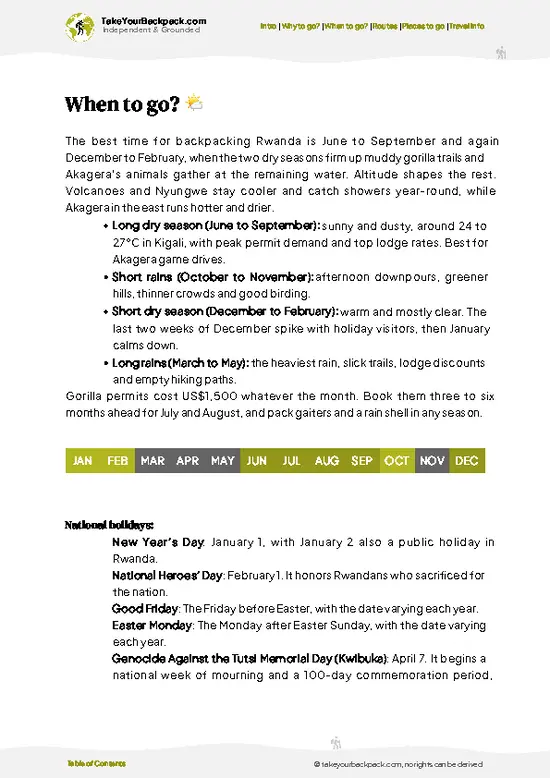
source: climatestotravel.comJANJanuary: fair for travelingFEBFebruary: fair for travelingMARMarch: fair for travelingAPRApril: fair for travelingMAYMay: good for travelingJUNJune: highly recommended for travelingJULJuly: excellent for travelingAUGAugust: excellent for travelingSEPSeptember: highly recommended for travelingOCTOctober: fair for travelingNOVNovember: fair for travelingDECDecember: fair for traveling
when-to-go

✈️ The backpacker research shortcutRwanda Travel Guide

An offline-friendly backpacking guide with optimized travel routes, ranked highlights, transport advice, and the best areas to stay.
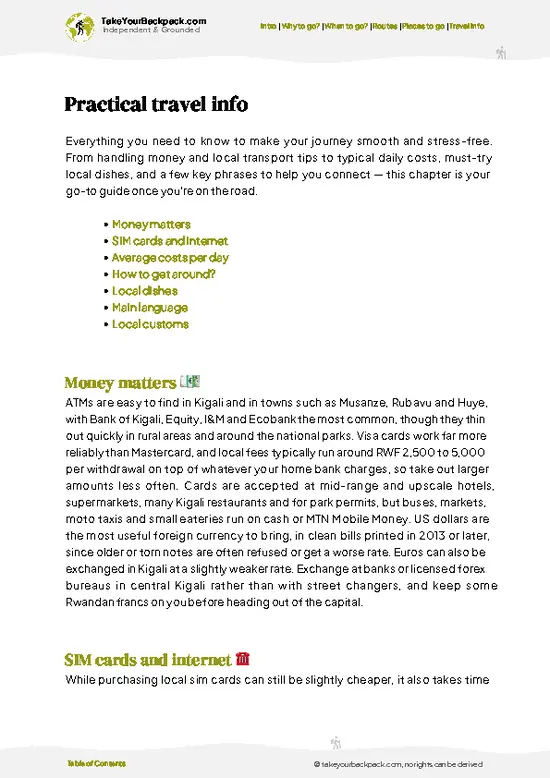
example page 0 from our offline Travel Guide for Rwanda
example page 1 from our offline Travel Guide for Rwanda
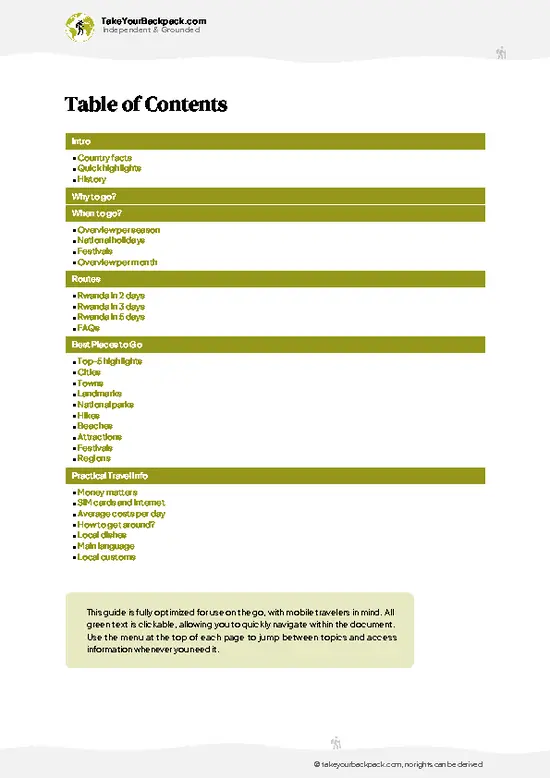
example page 2 from our offline Travel Guide for Rwanda
example page 3 from our offline Travel Guide for Rwanda
example page 4 from our offline Travel Guide for Rwanda
example page 5 from our offline Travel Guide for Rwanda
example page 6 from our offline Travel Guide for Rwanda
example page 7 from our offline Travel Guide for Rwanda
The digital guide (246 pages) contains:
61 highlights, ranked by travel appeal
Optimized 2, 3 & 5-day travel routes
Cities, national parks, landmarks, beaches
How to get around
Offline-friendly for travel without Wi-Fi
👉 Click to see all 30+ guide features

📅 Plan smarter in minutes, not weeks
Month by month travel advice
Festivals & national holidays
Budget expectations

🗺️ Go to the right places, skip the overrated ones
Honest pros & cons of destinations
Top hikes, parks & viewpoints
Lesser-known places most travelers miss
Clear “worth it vs skip it” guidance

🛏️ Travel smoothly without rookie mistakes
Best areas to stay
Transport systems explained simply
Common scams & safety advice
SIM cards, money & practical tips

🌍 Understand the country, not just visit it
Culture & traditions
52 Essential phrases & customs
Festivals worth planning around
Traveler-friendly historical context
Insights that make places more meaningful

📱 Built for real travel conditions
Fully downloadable PDF
Works completely offline
Optimized for phone use
Useful in remote areas & buses
Everything in one place
Save weeks of stressful planning
Get instant access to your full guide. 30‑day money-back guarantee.


By proceeding you agree to our terms.
Sent to your inbox immediately after payment • 100% Secure Checkout
Best Backpacking Travel Advisor 2025 tourism awardBest Backpacking
Travel Advisor
2025
What others say about Take Your Backpack Guides:
⭐⭐⭐⭐⭐
Fantastic, amazing amount of information!
⭐⭐⭐⭐⭐
My goodness this is amazing, it's what I've been looking for hats off too you!
⭐⭐⭐⭐⭐
I think this is absolutely BRILLIANT
⭐⭐⭐⭐
Very complete and informative. It's still missing places, but I gotta to commend you
⭐⭐⭐⭐⭐
This is truly amazing, thank you, can't wait to explore it with my kids!
⭐⭐⭐⭐⭐
Awesome resource, thank you!
⭐⭐⭐⭐⭐
This is amazing! Can't wait to explore the ones I haven't seen
⭐⭐⭐⭐
I love this! Well done, great idea.
⭐⭐⭐⭐⭐
Thanks for taking the time to make this gem!
⭐⭐⭐⭐⭐
This might be the best website I've ever seen.
⭐⭐⭐⭐⭐
Congratulations, and thank you so much for your work; it's incredibly valuable.
⭐⭐⭐⭐
In all seriousness I think you did a great job pointing out the important spots
⭐⭐⭐⭐⭐
10/10 very good
⭐⭐⭐⭐⭐
As someone who's only just starting to visit regularly this is awesome, thank you.
⭐⭐⭐⭐
Thank you very much! I'm going to visit my dad, it's going to be very useful!
⭐⭐⭐⭐⭐
This is really cool! We'll be travelling for the first time and this definitely come in handy.
⭐⭐⭐⭐⭐
You are now our minister of culture, congratulations 👨‍💼
⭐⭐⭐⭐⭐
Just wanted to tell you that this is a pearl! Going to follow your recommendations.
⭐⭐⭐⭐⭐
This is so cool. I'll definitely be using the resource for my travels soon.
⭐⭐⭐⭐⭐
This is very impressive! Good work.
⭐⭐⭐⭐⭐
This is an amazing and informative site. Very well done!

🛏️ Where to stay?Where staying makes the most sense

In Kirehe, the best spot for backpackers is the town center area near the main market and bus station. This neighborhood hums with local life—early morning vendors setting up stalls, the scent of fresh cassava and roasted maize in the air. It’s safe, thanks to the steady flow of people and a visible police presence, which means you can wander without second-guessing every shadow. Socially, it’s where budget travelers converge, drawn by affordable guesthouses and a handful of hostels that foster easy connections over shared meals or evening drinks. Compared to quieter, more residential outskirts, … read more 👉
In Kirehe, the best spot for backpackers is the town center area near the main market and bus station. This neighborhood hums with local life—early morning vendors setting up stalls, the scent of fresh cassava and roasted maize in the air. It’s safe, thanks to the steady flow of people and a visible police presence, which means you can wander without second-guessing every shadow. Socially, it’s where budget travelers converge, drawn by affordable guesthouses and a handful of hostels that foster easy connections over shared meals or evening drinks. Compared to quieter, more residential outskirts, staying here means you’re plugged into the pulse of Kirehe—where the rhythm of daily life doubles as your backdrop and your gateway to authentic encounters. It’s practical, lively, and just gritty enough to feel real.

🚌 Getting aroundMoving around without the hassle

Kirehe moves at its own rhythm—neither clockwork precision nor total chaos, but a blend where local intuition rules the streets. The sun hits the red earth just right in the mornings, casting long shadows that stretch across the dusty roads. Here, schedules exist but bend to the flow of daily life: a minibus might leave when full, not on the hour, and the market buzz peaks when the light softens in the late afternoon. You’ll find the town’s pulse in the way people navigate space—sometimes hurried, often deliberate, always practical. Understanding this flow means you don’t just get from A to B; you glide through the town’s character, saving time and avoiding frustration.


  • Walking: The most reliable and immersive way to get around Kirehe. Streets are compact and mostly flat, making a stroll
read more 👉
Kirehe moves at its own rhythm—neither clockwork precision nor total chaos, but a blend where local intuition rules the streets. The sun hits the red earth just right in the mornings, casting long shadows that stretch across the dusty roads. Here, schedules exist but bend to the flow of daily life: a minibus might leave when full, not on the hour, and the market buzz peaks when the light softens in the late afternoon. You’ll find the town’s pulse in the way people navigate space—sometimes hurried, often deliberate, always practical. Understanding this flow means you don’t just get from A to B; you glide through the town’s character, saving time and avoiding frustration.


  • Walking: The most reliable and immersive way to get around Kirehe. Streets are compact and mostly flat, making a stroll through the town center a sensory experience—smells of fresh cassava and earth, the chatter of vendors. No cost, and you control your pace, but be ready for dusty paths and occasional stray dogs.

  • Local Minibus (Taxi-Brousse): These shared minibuses are the backbone of regional travel. They leave when full, usually between 6:30 AM and 6 PM, costing just a few hundred Rwandan francs. They’re slow and cramped but unbeatable for budget travelers aiming to reach nearby villages or the busier hubs.

  • Bicycle Rentals: A step up in speed and flexibility. Rentals cost around 1,000 RWF per hour, perfect for exploring beyond the town limits without the hassle of waiting for a minibus. The roads can be rough, so a sturdy bike is essential, and mornings are best to avoid the midday heat.

  • Motorcycle Taxi (Moto): Quick and nimble, motos dart through traffic and take you where minibuses don’t go. Prices vary but expect about 500-1,000 RWF for short trips. Helmets aren’t always standard, so hold tight and prepare for a bumpy ride through the dust and sun.

👛 Costs (as of 6 May 2026)Travel costs and budget guide for Kirehe

Backpacking in Kirehe, Rwanda, offers a raw, authentic experience where costs stay modest but the value is high. Here’s what you can expect to spend daily, broken down by essentials.
  • Dorm Accommodation: Options here are limited but growing. Expect basic guesthouses or hostels with shared rooms, often simple but clean. Prices hover around $5 to $10 per night. These places usually have minimal amenities, so pack your patience along with your gear.
  • Meals: Local eateries serve hearty, straightforward meals—think beans, rice, plantains, and fresh vegetables. Street food and small restaurants charge about $2 to $5 per meal. If you want something more substantial or a bit of variety, budget closer to $7.
  • Local Transport: Transport is mostly by motorcycle taxis (motos) or shared minibuses. A typical
read more 👉
Backpacking in Kirehe, Rwanda, offers a raw, authentic experience where costs stay modest but the value is high. Here’s what you can expect to spend daily, broken down by essentials.
  • Dorm Accommodation: Options here are limited but growing. Expect basic guesthouses or hostels with shared rooms, often simple but clean. Prices hover around $5 to $10 per night. These places usually have minimal amenities, so pack your patience along with your gear.
  • Meals: Local eateries serve hearty, straightforward meals—think beans, rice, plantains, and fresh vegetables. Street food and small restaurants charge about $2 to $5 per meal. If you want something more substantial or a bit of variety, budget closer to $7.
  • Local Transport: Transport is mostly by motorcycle taxis (motos) or shared minibuses. A typical moto ride within town costs around $0.50 to $1.50 depending on distance. Shared minibuses for longer trips can run $1 to $3. Walking is often the best way to soak in the atmosphere and save cash.
  • Basic Activities/Entry Fees: Kirehe is more about the landscape and local culture than formal tourist sites. Small community visits or local markets might have nominal fees or suggested donations, usually under $2. If you plan on guided nature walks or cultural tours, expect to pay $5 to $10.
  • Miscellaneous Expenses: This includes bottled water, snacks, or occasional phone credit. Budget around $1 to $3 daily. Keep in mind that reliable Wi-Fi can be patchy, so plan accordingly.

All told, a realistic daily budget for backpacking in Kirehe falls between $10 and $25. This range covers the essentials without cutting corners on comfort or experience, letting you focus on the subtle rhythms of life in this less-traveled corner of Rwanda.


source: rwandatourism.com
⚠️ Prices can change and everyone travels differently, so take this as a rough guide. Hope it helps you plan your adventure!

🚌 Day tripsEasy escapes and nearby places

Kirehe, Rwanda, is a backpacker’s dream base for exploring the rich tapestry of the region. With its vibrant local culture and stunning landscapes, you can easily dive into unforgettable day trips.

Lake Kivu Adventure
A boat ride on Lake Kivu is a must. The shimmering water reflects the sky, and the scent of fresh fish wafts from local markets. It’s about a 1.5-hour drive to Gisenyi, where you can hop on a boat for a few hours of exploration. Expect to spend around $15 for transport and boat rental. The best time to visit is during the dry season, from June to September. Many first-timers underestimate the sun’s intensity; pack sunscreen and a hat to avoid a sunburn.
👉 Explore Lake Kivu

Nyungwe National Park
This lush rainforest is a biodiversity hotspot. It takes about two hours to … read more 👉
Kirehe, Rwanda, is a backpacker’s dream base for exploring the rich tapestry of the region. With its vibrant local culture and stunning landscapes, you can easily dive into unforgettable day trips.

Lake Kivu Adventure
A boat ride on Lake Kivu is a must. The shimmering water reflects the sky, and the scent of fresh fish wafts from local markets. It’s about a 1.5-hour drive to Gisenyi, where you can hop on a boat for a few hours of exploration. Expect to spend around $15 for transport and boat rental. The best time to visit is during the dry season, from June to September. Many first-timers underestimate the sun’s intensity; pack sunscreen and a hat to avoid a sunburn.
👉 Explore Lake Kivu

Nyungwe National Park
This lush rainforest is a biodiversity hotspot. It takes about two hours to reach the park, where you can hike among ancient trees and listen to the calls of monkeys. Entry fees are around $60, but the experience is worth every penny. The dry months are ideal for trekking, but be prepared for muddy trails. A common mistake is not bringing enough water; the humidity can be deceptive.


Kirehe Market Day
Immerse yourself in local life by visiting Kirehe’s bustling market. It’s just a short walk from the town center. The vibrant colors of fruits and vegetables, combined with the lively chatter, create an electric atmosphere. You can grab a hearty meal for under $5. Market days vary, but Thursdays are particularly lively. Many travelers miss out on this authentic experience by sticking to tourist spots.
Want to know what more Rwanda offers?
The Rwanda Travel Guide describes 61 highlights, from cities to national parks, from beaches to hikes

Get the Travel Guide -

🍲 FoodEating & Drinking in Kirehe

In Kirehe, food is a lively negotiation between simplicity and bold flavors. Don’t miss Isombe, a leafy cassava dish simmered with peanut butter—earthy, creamy, and deeply comforting. For a quick bite, grab brochettes sizzling over charcoal at street stalls, where the smoky aroma pulls you in before the first savory taste hits. Locals often gather around bustling markets, where fresh fruits and fried plantains offer a sweet counterpoint to the savory.

Drinks lean local and refreshing—think urwagwa, a traditional banana beer with a slightly sour kick, perfect for cooling down after a day on the trail. Sharing a drink here is more than hydration; it’s a social ritual, so expect to clink glasses with a smile and a nod. Eating is casual but communal—don’t rush. The rhythm of meals here is about connection as much as flavor.

🛡️ SafetySafety Tips and Common Scams in Kirehe

Kirehe is generally safe, but staying aware enhances your experience. Stick to well-lit areas after dark, especially if you’re solo. The local vibe is friendly, but some may approach you with overly eager sales pitches. Politely decline and keep moving; it’s part of the rhythm here.

Watch for common scams like inflated taxi fares; agree on a price beforehand. Carry small bills for easier transactions. Embrace the local culture, but trust your instincts—if something feels off, it probably is. Enjoy the warmth of Kirehe, but stay grounded.

Other Rwandan cities near Kirehe

Explore more nearby:

  • Kayonza—bus junction, roadside markets, agricultural center| 38 km away
  • Rwamagana—Eastern corridor, agricultural hub, roadside commerce| 41 km away
  • Bugesera—wetland reserves, genocide memorials, rural villages| 59 km away

💡 Not sure where to go next?
Create a personalized itinerary for Rwanda including Kirehe and the places that fit your trip.

Generate my itinerary

👉 Discover all cities

Or checkout all Rwanda has to offer (think cities, towns, villages, national parks, hikes, beaches, festivals)
Country photo of Rwanda

We 💚 feedbackIs it worth it?

Kirehe’s charm sneaks up on you. The air hums with the scent of fresh earth and ripe bananas. Don’t miss the local markets; they pulse with life and laughter. Just be ready for the heat—hydrate often. It’s a vibrant dance of culture and nature worth every step.

✍️ Help improve this page!
The information on this page is based on in-depth research, insights shared by experienced travelers, and feedback from the local travel community in Rwanda. While every effort is made to keep the information accurate and current, conditions can change — so if you spot anything incorrect or outdated, please get in touch.


🙋‍♂️ Give feedback

👋 Meet the founderWho’s Behind Take Your Backpack?

Johan, backpacker and founder of TakeYourBackpackHi, I’m Johan (Netherlands 🇳🇱), the creator of TakeYourBackpack. Over the past decade, I’ve backpacked through 80+ countries across six continents, gaining extensive experience with independent travel, long-term trips, and overland routes.

This site is built on a combination of firsthand travel experience and carefully curated insights from other backpackers. Many guides are based on places I’ve personally visited, while others bring together tips, observations, and practical advice shared by trusted travelers I’ve met along the way.

The goal is to provide realistic, experience-driven guidance — not generic itineraries — so you can explore destinations with better context, clearer expectations, and more confidence.

Get full Rwanda guide •
Instant download • 61 highlights • Full Offline guide