
×

St. Lucia🇱🇨 | national parksSoufrière Marine Management AreaPiton waters, reef snorkeling, Key Hole Pinnacles, Sulphur Springs | things to do and best time to go

Explore Pigeon Island National LandmarkExplore Edmund Forest Reserve

Backpacking in Soufrière Marine Management Area
🌟 Highlightnational park ranked #3
By Johan Kruseman 🇳🇱 | Updated October 22, 2026

Most of Soufrière Marine Management Area is water, a managed strip of reef, sea and coast rather than a land park with signed trails. It sits along the southwest coast of Saint Lucia, around the town of Soufrière and below the Pitons. The upside is big: coral walls dropping straight off the shore, turtles, seahorses and a pair of volcanic spires rising from the sea. The downsides are practical. Boat moorings and reserve zones mean you can’t anchor or fish where you like, so book a licensed operator and ask which zones they use. Mornings are calmer for snorkeling, and afternoon cruise-ship days crowd the beaches, so check the port schedule. Rental gear varies, so inspect it before leaving the dock. Bring reef-safe sunscreen and small bills. This suits snorkelers, divers and independent travelers who like sea days. It won’t suit anyone wanting long backcountry treks.

Part of Backpacking in St. Lucia: all 31 places on one map, with routes and the best time to go.
Discover everything you want to know in the 📖 St. Lucia Travel Guide.
Loading the map 🌍
CLICK TO FILTER
towns
landmarks
national parks
hikes
beaches
attractions
festivals
regions
SHOW COUNTRY’S BESTSHOW ALL

✨ Why go?
Ranked #3 national park in St. Lucia
What makes it a must-see national park

Soufrière Marine Management Area works for backpackers because the best of it can be reached without a tour bus or a big budget. Anse Chastanet has a reef you can swim to from the sand, so a mask and fins become your whole itinerary. Dive operators here run to the Key Hole Pinnacles and the walls beneath Petit Piton, and the zoning, which separates fishing areas from protected reserves, is the reason the fish are so abundant and unafraid. That means the water close to shore is the attraction, not something reached only by expensive boat trips. You can also stitch together a self-guided day: swim in the morning, walk to a neighboring beach, then hike or soak on land in the afternoon. Soufrière town is compact, with local eateries, so you can sleep and eat cheaply nearby and spend your money … read more 👉
Soufrière Marine Management Area works for backpackers because the best of it can be reached without a tour bus or a big budget. Anse Chastanet has a reef you can swim to from the sand, so a mask and fins become your whole itinerary. Dive operators here run to the Key Hole Pinnacles and the walls beneath Petit Piton, and the zoning, which separates fishing areas from protected reserves, is the reason the fish are so abundant and unafraid. That means the water close to shore is the attraction, not something reached only by expensive boat trips. You can also stitch together a self-guided day: swim in the morning, walk to a neighboring beach, then hike or soak on land in the afternoon. Soufrière town is compact, with local eateries, so you can sleep and eat cheaply nearby and spend your money on one good dive or a boat ride. Guides are optional for snorkeling but sensible for the mountain.

💡 HighlightsDon't-miss highlights and experiences

  1. The Pitons from the water. Gros Piton and Petit Piton rise steeply from the sea, and the marine area wraps around their base. Paddling or taking a boat shows how sharp the drop is, both above and below the surface.
  2. Anse Chastanet reef. A shore snorkel or dive site with coral close to the beach, plus turtles, trumpetfish and the occasional octopus. Entry is easy from the sand.
  3. Key Hole Pinnacles. Four rock pinnacles rising from the seabed near Petit Piton, covered in sponges and coral and busy with reef fish. This is a favorite for divers.
  4. Turtle Reef. A shallower dive and snorkel site where green and hawksbill turtles are often seen grazing. Calm conditions suit newer divers.
  5. Anse Mamin. A quiet cove reached from Anse Chastanet by a short coastal path, with calmer water and a relaxed beach atmosphere.
… read more 👉
  1. The Pitons from the water. Gros Piton and Petit Piton rise steeply from the sea, and the marine area wraps around their base. Paddling or taking a boat shows how sharp the drop is, both above and below the surface.
  2. Anse Chastanet reef. A shore snorkel or dive site with coral close to the beach, plus turtles, trumpetfish and the occasional octopus. Entry is easy from the sand.
  3. Key Hole Pinnacles. Four rock pinnacles rising from the seabed near Petit Piton, covered in sponges and coral and busy with reef fish. This is a favorite for divers.
  4. Turtle Reef. A shallower dive and snorkel site where green and hawksbill turtles are often seen grazing. Calm conditions suit newer divers.
  5. Anse Mamin. A quiet cove reached from Anse Chastanet by a short coastal path, with calmer water and a relaxed beach atmosphere. Good for a break between swims.
  6. Jalousie Beach. A crescent of imported white sand set squarely between the two Pitons. Snorkeling is easy near the rocks at either end, and the setting is the draw.
  7. Sulphur Springs. A geothermal area on land beside the marine zone, with steaming vents and mineral-stained pools. It makes a good contrast to a day in salt water.
  8. Malgretoute Beach. A secluded stretch below the Pitons, reached by boat or a rough route, where the water is clear and the sand is dark. Few people come here.
For a first visit, Anse Chastanet reef is the one to pick, since you can walk in from the beach and see most of what the protected area is known for.
Spotted a mistake or missing something? Contact us.

🌤️ When to go?Weather, crowds, and seasonal trade-offs

The calmest, clearest water around Soufrière comes from February to May, when rain is light and snorkel visibility off Anse Chastanet and Anse des Pitons is at its best.
  • Dry Season (December to May): Days run 27 to 31°C (81 to 88°F), nights 22 to 24°C (72 to 75°F), with steady trade winds. Daylight lasts about 11 to 12 hours. Christmas to Easter brings the most visitors, and hotel rates and dive packages sit at their highest.
  • Wet Season (June to November): Humidity climbs, showers arrive in short, heavy bursts, and the water temperature reaches about 29°C (84°F). Runoff from the hills can cloud the shallows after storms. Rooms and tours often drop 20 to 40 percent.
  • Hurricane Peak (August to October): Storms are possible, so book flexible rates. Boat trips get canceled on rough days.
  • Whale and
… read more 👉
The calmest, clearest water around Soufrière comes from February to May, when rain is light and snorkel visibility off Anse Chastanet and Anse des Pitons is at its best.
  • Dry Season (December to May): Days run 27 to 31°C (81 to 88°F), nights 22 to 24°C (72 to 75°F), with steady trade winds. Daylight lasts about 11 to 12 hours. Christmas to Easter brings the most visitors, and hotel rates and dive packages sit at their highest.
  • Wet Season (June to November): Humidity climbs, showers arrive in short, heavy bursts, and the water temperature reaches about 29°C (84°F). Runoff from the hills can cloud the shallows after storms. Rooms and tours often drop 20 to 40 percent.
  • Hurricane Peak (August to October): Storms are possible, so book flexible rates. Boat trips get canceled on rough days.
  • Whale and Dolphin Season: Sightings are possible all year, and calmer mornings give the best odds.
I would book for late April or May, when prices ease and the sea is still flat.


source: climatestotravel.comJANJanuary: excellent for travelingFEBFebruary: excellent for travelingMARMarch: excellent for travelingAPRApril: highly recommended for travelingMAYMay: highly recommended for travelingJUNJune: fair for travelingJULJuly: fair for travelingAUGAugust: fair for travelingSEPSeptember: below average for travelingOCTOctober: fair for travelingNOVNovember: highly recommended for travelingDECDecember: excellent for traveling
when-to-go

✈️ The backpacker research shortcutSt. Lucia Travel Guide

What the free pages can't give you: ready-made routes, every place ranked, and it works offline. All in 1 guide.
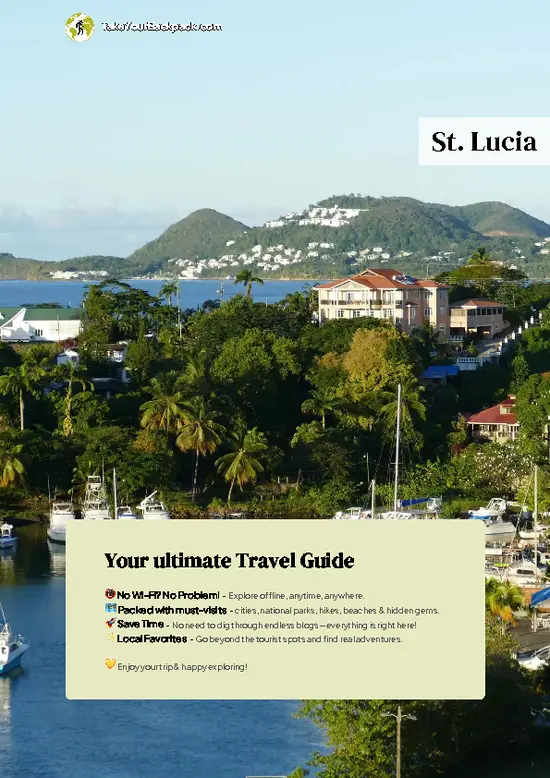
example page 0 from our offline Travel Guide for Saint Lucia
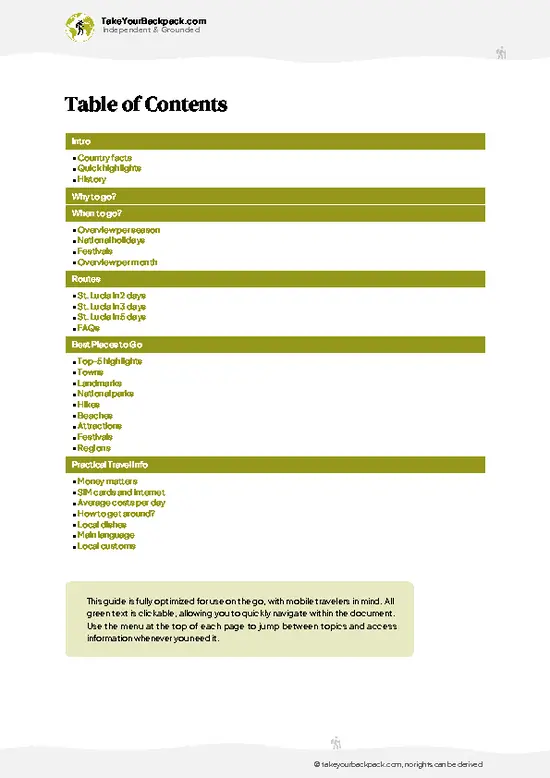
example page 1 from our offline Travel Guide for Saint Lucia
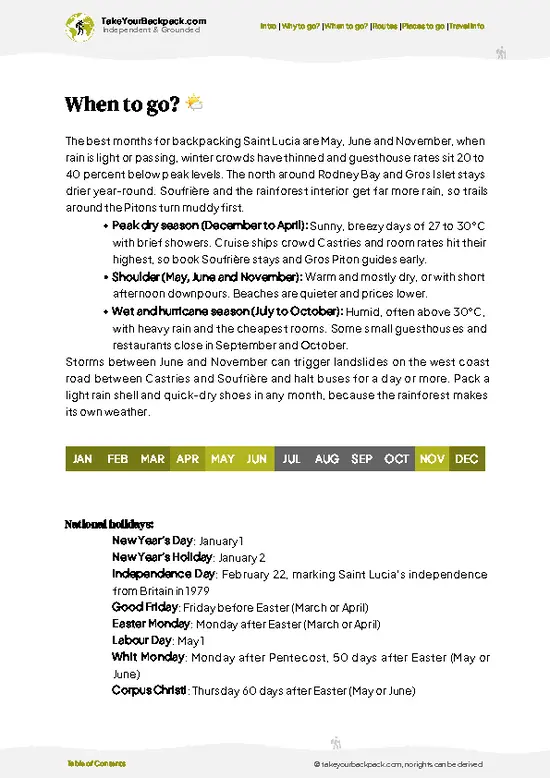
example page 2 from our offline Travel Guide for Saint Lucia
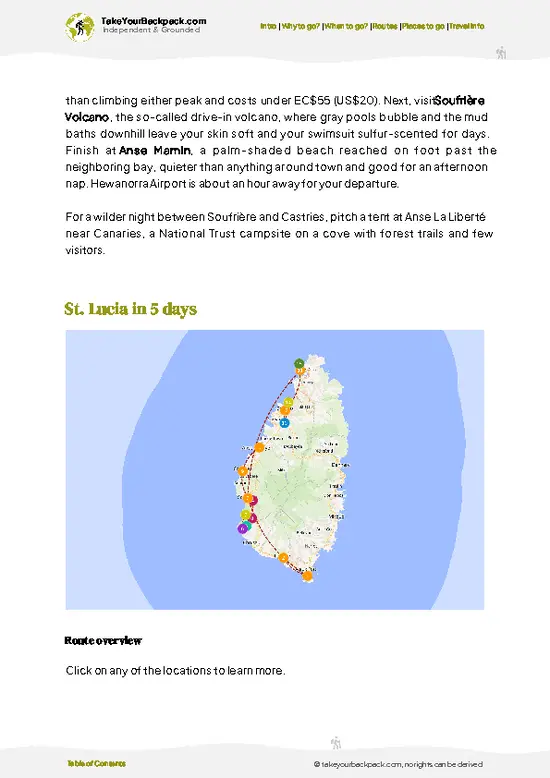
example page 3 from our offline Travel Guide for Saint Lucia
example page 4 from our offline Travel Guide for Saint Lucia
example page 5 from our offline Travel Guide for Saint Lucia
example page 6 from our offline Travel Guide for Saint Lucia
example page 7 from our offline Travel Guide for Saint Lucia
The digital guide (125 pages) contains:-page digital guide:
✅ Ready-made 2, 3 & 5-day routes
✅ All 31 places ranked, so you skip the overrated ones
✅ Works offline, all in 1 guide
✅ Cities, national parks, landmarks, beaches
✅ How to get around
👉 Click to see all 30+ guide features

📅 Plan smarter in minutes, not weeks
✅ Month by month travel advice
✅ Festivals & national holidays
✅ Budget expectations

🗺️ Go to the right places, skip the overrated ones
✅ Honest pros & cons of destinations
✅ Top hikes, parks & viewpoints
✅ Lesser-known places most travelers miss
✅ Clear “worth it vs skip it” guidance

🛏️ Travel smoothly without rookie mistakes
✅ Best areas to stay
✅ Transport systems explained simply
✅ Common scams & safety advice
✅ SIM cards, money & practical tips

🌍 Understand the country, not just visit it
✅ Culture & traditions
✅ 52 Essential phrases & customs
✅ Festivals worth planning around
✅ Traveler-friendly historical context
✅ Insights that make places more meaningful

📱 Built for real travel conditions
✅ Fully downloadable PDF
✅ Works completely offline
✅ Optimized for phone use
✅ Useful in remote areas & buses
✅ All in 1 guide
Stop searching, start planning
Get instant access to your full guide. 30‑day money-back guarantee.


By proceeding you agree to our terms.
Sent to your inbox immediately after payment • 100% Secure Checkout
Best Backpacking Travel Advisor 2025 tourism awardBest Backpacking
Travel Advisor
2025
What others say about Take Your Backpack Guides:
⭐⭐⭐⭐⭐
Fantastic, amazing amount of information!
⭐⭐⭐⭐⭐
My goodness this is amazing, it's what I've been looking for hats off too you!
⭐⭐⭐⭐⭐
I think this is absolutely BRILLIANT
⭐⭐⭐⭐
Very complete and informative. It's still missing places, but I gotta to commend you
⭐⭐⭐⭐⭐
This is truly amazing, thank you, can't wait to explore it with my kids!
⭐⭐⭐⭐⭐
Awesome resource, thank you!
⭐⭐⭐⭐⭐
This is amazing! Can't wait to explore the ones I haven't seen
⭐⭐⭐⭐
I love this! Well done, great idea.
⭐⭐⭐⭐⭐
Thanks for taking the time to make this gem!
⭐⭐⭐⭐⭐
This might be the best website I've ever seen.
⭐⭐⭐⭐⭐
Congratulations, and thank you so much for your work; it's incredibly valuable.
⭐⭐⭐⭐
In all seriousness I think you did a great job pointing out the important spots
⭐⭐⭐⭐⭐
10/10 very good
⭐⭐⭐⭐⭐
As someone who's only just starting to visit regularly this is awesome, thank you.
⭐⭐⭐⭐
Thank you very much! I'm going to visit my dad, it's going to be very useful!
⭐⭐⭐⭐⭐
This is really cool! We'll be travelling for the first time and this definitely come in handy.
⭐⭐⭐⭐⭐
You are now our minister of culture, congratulations 👨‍💼
⭐⭐⭐⭐⭐
Just wanted to tell you that this is a pearl! Going to follow your recommendations.
⭐⭐⭐⭐⭐
This is so cool. I'll definitely be using the resource for my travels soon.
⭐⭐⭐⭐⭐
This is very impressive! Good work.
⭐⭐⭐⭐⭐
This is an amazing and informative site. Very well done!

🛏️ Where to stay?Best areas and accommodation options

Stay in the town of Soufrière itself, because it puts you within walking distance of the waterfront dive shops and a short ride from the beaches that make up the marine area. There are no campgrounds or public lodging inside the marine area, but resorts and small hotels line the coast beside it.
Budget travelers do best in town, where guesthouses and simple rooms run about US$40 to 80 a night, many with fans or air conditioning and a short walk to the jetty and market. Hostel-style dorms are scarce on this stretch of coast, so private rooms are the usual low-cost choice.
Mid-range apartments and … read more 👉
Stay in the town of Soufrière itself, because it puts you within walking distance of the waterfront dive shops and a short ride from the beaches that make up the marine area. There are no campgrounds or public lodging inside the marine area, but resorts and small hotels line the coast beside it.
Budget travelers do best in town, where guesthouses and simple rooms run about US$40 to 80 a night, many with fans or air conditioning and a short walk to the jetty and market. Hostel-style dorms are scarce on this stretch of coast, so private rooms are the usual low-cost choice.
Mid-range apartments and villas on the hills above town cost roughly US$90 to 180 and give you sea views of the Pitons, though you will want a taxi after dark. Anse Chastanet and Jalousie are the luxury end, with rooms from US$300 and up, and they sit right on the best snorkeling reefs.
Choiseul and Canaries are quieter villages nearby with fewer beds. Vieux Fort and Castries are far too distant to use as a base, since the road from Castries takes about 1.5 to 2 hours.

👛 Costs (as of 22 October 2026)Money, prices, and spending tips

A day around the Soufrière Marine Management Area typically costs US$80 to 195 for a budget traveler, with US$100 as a realistic total once a snorkel trip and meals are counted.
CategoryBudget RangeLocal Reality
Marine area useUS$0 to 5Many beaches are free to enter, but access at private resort beaches and day passes may carry small charges.
Accommodation (high season)US$40 to 80Basic guesthouse rooms in Soufrière town. Resorts cost several times more.
Local transportUS$5 to 20Minibuses are cheap along the coast, while taxis between beaches run US$10 to 30 per ride.
Food and suppliesUS$15 to 30Local lunch plates run US$6 to 12, and restaurant dinners cost US$15 to 30.
Snorkeling and toursUS$20 to 60Gear rental is about US$10 to 20, and a guided boat snorkel costs more. Dives run about US$70 to
… read more 👉
A day around the Soufrière Marine Management Area typically costs US$80 to 195 for a budget traveler, with US$100 as a realistic total once a snorkel trip and meals are counted.
CategoryBudget RangeLocal Reality
Marine area useUS$0 to 5Many beaches are free to enter, but access at private resort beaches and day passes may carry small charges.
Accommodation (high season)US$40 to 80Basic guesthouse rooms in Soufrière town. Resorts cost several times more.
Local transportUS$5 to 20Minibuses are cheap along the coast, while taxis between beaches run US$10 to 30 per ride.
Food and suppliesUS$15 to 30Local lunch plates run US$6 to 12, and restaurant dinners cost US$15 to 30.
Snorkeling and toursUS$20 to 60Gear rental is about US$10 to 20, and a guided boat snorkel costs more. Dives run about US$70 to 120.
Total Daily BudgetUS$80 to 195Counts one high-season room, transport, food, and one activity at the lower to mid range.
⚠️ Prices can change and everyone travels differently, so take this as a rough guide. Hope it helps you plan your adventure!

🥾 TrailsBest hikes in Soufrière Marine Management Area national park

Soufrière Marine Management Area has no land trails of its own, so the walking happens in the surrounding coastal hills and on the Pitons that frame it. Terrain is steep, humid, forested and often slippery after rain. Wildlife includes hummingbirds, lizards and the occasional agouti on the slopes, and turtles and reef fish in the water below.
  • Gros Piton Trail: About 2 km one way, roughly 3 to 4 hours round trip, and demanding. It is a steady climb with steps, roots and a final scramble, rewarded by views of Petit Piton and the coast. A local guide is required and is arranged at the trailhead.
  • Petit
… read more 👉
Soufrière Marine Management Area has no land trails of its own, so the walking happens in the surrounding coastal hills and on the Pitons that frame it. Terrain is steep, humid, forested and often slippery after rain. Wildlife includes hummingbirds, lizards and the occasional agouti on the slopes, and turtles and reef fish in the water below.
  • Gros Piton Trail: About 2 km one way, roughly 3 to 4 hours round trip, and demanding. It is a steady climb with steps, roots and a final scramble, rewarded by views of Petit Piton and the coast. A local guide is required and is arranged at the trailhead.
  • Petit Piton: Much steeper and for experienced climbers only, with exposed scrambling. Access can be restricted, so confirm with local guides before planning it.
  • Tet Paul Nature Trail: An easy loop of about 45 minutes to an hour, with stone steps, terraced gardens and viewpoints toward both Pitons and the sea. Good for those who want a gentler outing.
  • Anse Chastanet to Anse Mamin path: A short, easy coastal walk of about 15 minutes through shaded trees, linking two beaches.
Getting here by public transport is simple enough: minibuses run along the west coast to Soufrière town, and from there you can walk, take a taxi or catch a short water taxi to the beaches. The area is open to the public with no gate, but divers and snorkelers pay a small reserve fee through operators. The beaches and sites fill up when cruise ships dock, so go early. Hikes are quieter on weekdays, and carrying water and sturdy shoes is wise.
⚠️ Hiking info can sometimes be outdated or inaccurate. Before you hit the trail, check the latest conditions with locals. If you do spot anything that's off, I'd love to hear from you, so I can update it for fellow travelers.

🛡️ SafetyScams, Hazards, and Annoyances

The water is the main thing to respect here, and the area is generally easy and well managed. Conditions are mostly calm inside the bays, but currents run stronger toward the open sea near the Pitons, so stay inside the marked zones and keep a buoy or float with you if you swim far. Boats operate in designated lanes, which makes a visible float worthwhile.
Sun is the most common problem. Wear a rash guard and reef-safe sunscreen, since coral is protected. Never stand on or touch coral, and do not feed fish. Sea urchins sit on rocky edges, so wear water shoes when entering from stones. Registered dive operators handle gear and briefings well.
On land, the roads around Soufrière are steep and winding, with sudden turns. Keep valuables out of sight on beaches and in parked cars, and use licensed … read more 👉
The water is the main thing to respect here, and the area is generally easy and well managed. Conditions are mostly calm inside the bays, but currents run stronger toward the open sea near the Pitons, so stay inside the marked zones and keep a buoy or float with you if you swim far. Boats operate in designated lanes, which makes a visible float worthwhile.
Sun is the most common problem. Wear a rash guard and reef-safe sunscreen, since coral is protected. Never stand on or touch coral, and do not feed fish. Sea urchins sit on rocky edges, so wear water shoes when entering from stones. Registered dive operators handle gear and briefings well.
On land, the roads around Soufrière are steep and winding, with sudden turns. Keep valuables out of sight on beaches and in parked cars, and use licensed taxis or guides. Carry water, because shade near the shore can be limited.

FAQFrequently asked questions about Soufrière Marine Management Area

Two to three days is enough for Soufrière Marine Management Area if you want a dive or boat trip plus beach time. A first day for snorkeling at Anse Chastanet and Anse des Pitons, a second for a boat tour or dive, and a third for the Pitons or sulfur springs fill the time well. Divers who want several dives should add a day.
Yes, Soufrière Marine Management Area is manageable without a car. Minibuses run between Castries and Soufrière in about 1.5 to 2 hours for roughly US$3 to 5, and local taxis cover the short hops between beaches at about US$10 to 30. Most dive shops, restaurants and the waterfront in Soufrière town are walkable.
Soufrière Marine Management Area has no single park gate, so access to the water is generally free, though some beaches and private resort areas charge day-use fees of around US$5 to 20. Diving and some marine activities require a registered operator, and nearby attractions such as the sulfur springs charge separate entry of roughly US$7 to 10. Prices can change, so confirm locally.
⚠️ Things can change over time, so always validate details locally before you go.

Other Saint Lucian national parks near Soufrière Marine Management Area

Explore more nearby:


💡 Not sure where to go next?
Create a personalized itinerary for St. Lucia including Soufrière Marine Management Area and the places that fit your trip.

Generate my itinerary

👉 Discover all national parks

Or checkout all St. Lucia has to offer (think cities, towns, villages, national parks, hikes, beaches, festivals)
Country photo of St. Lucia

We 💚 feedbackParting advice and final tips

Soufrière Marine Management Area suits snorkelers, divers and curious independent travelers who would rather spend a day in the water than on a bus tour. I would arrive early, book one dive or boat trip with a licensed operator, and leave the rest of the day loose for a beach swim and a guided Gros Piton climb the next morning. Skip it if you dislike humidity and steep steps.

✍️ Help improve this page!
The information on this page is based on in-depth research, insights shared by experienced travelers, and feedback from the local travel community in St. Lucia. While every effort is made to keep the information accurate and current, conditions can change — so if you spot anything incorrect or outdated, please get in touch.


🙋‍♂️ Give feedback

👋 Meet the founderWho’s Behind Take Your Backpack?

Johan, backpacker and founder of TakeYourBackpackHi, I’m Johan (Netherlands 🇳🇱), the creator of TakeYourBackpack. Over the past 30 years, I’ve backpacked through 88 countries across six continents, gaining extensive experience with independent travel, long-term trips, and overland routes.

This site is built on a combination of firsthand travel experience and carefully curated insights from other backpackers. Many guides are based on places I’ve personally visited, while others bring together tips, observations, and practical advice shared by trusted travelers I’ve met along the way.

The goal is to provide realistic, experience-driven guidance — not generic itineraries — so you can explore destinations with better context, clearer expectations, and more confidence.