×

Samoa🇼🇸 | best festivalsYour Guide to the 4 Best festivals in Samoa

Festivals in Samoa are village-owned affairs, not ticketed spectacles. Expect fa’a Samoa ceremony: slapping drums, the sweet reek of coconut oil on dancers’ skin, kava poured under open fales. On Upolu, events near Apia are easy to reach by bus or taxi. On Savai’i, ferries, rough roads and heat shape the day. Independent travelers pay little, yet need patience and modest dress.

By Johan Kruseman 🇳🇱 | Updated October 18, 2026
Explore the best regions in Samoa

Why go?Understanding Their Importance

Samoa suits festivals because village life still runs on the matai chiefly system, church calendars and family obligation. Celebration is built into daily routine, so gatherings feel rooted rather than staged. Expect voices in harmony drifting from white churches, woven mats underfoot, and the smell of umu earth ovens smoking taro and pork.

There are limits. The country is small, with only two main islands, and tourism infrastructure is thin outside Apia and the coasts. Many events are local first and visitor-friendly second, so schedules shift, start late, and are announced by word of mouth. Heat, humidity and sudden downpours are part of the setting. Before choosing Samoa, know that respect matters more than planning: cover your shoulders and knees, sit when elders sit, and accept that Sundays are given over to church.
Our Approach to Ranking
The list of best festivals in Samoa is created based on energy, traditions, crowd experience, activities, and overall excitement. If you feel a festival is missing in this list, please let us know.

When to go?When to Plan Your Trip

Best months and weather: The best months for festivals in Samoa are May to October, the dry season, when days sit around 27 to 30°C and rain is far less likely to flatten an outdoor gathering. Mornings are bright and breezy, and evenings cool enough for long performances.
Shoulder and wet season: April and November are shoulder months, with warm air, building humidity and occasional heavy showers. From December to March the wet season brings roughly 300 to 400 mm of rain a month, thick heat of 28 to 32°C, and a cyclone risk that can cancel transport. Savai’i roads can turn muddy.
Crowds and prices: July to September and the weeks around Christmas are busiest, with returning families filling flights, ferries and guesthouses. Book beds early then. Wet-season rooms can drop 10 to 20 percent.

festival hoppingSuggested Travel Strategies

How long to allow: A trip combining several festivals in Samoa needs 7 to 12 days, because village events run on flexible time and ferries do not wait. Start on Upolu, based around Apia, then cross to Savai’i and finish there.
Pacing and transfers: Give each stop 2 to 3 nights. Apia to the Mulifanua wharf takes about 45 to 60 minutes by bus or taxi, the ferry to Salelologa takes about 60 to 90 minutes, and circling Savai’i’s coast road can take 3 to 4 hours of rattling bus time.
Common planning mistakes: Travelers often schedule back-to-back events across the strait, then lose a day to delays, rain or a Sunday shutdown. Leave a spare day on each island, confirm dates locally, and carry cash for buses and fales.

The ListHighly Recommended festivals of Samoa

1 Teuila Festival

Fire knife contest, Miss Samoa, va’a races, tapa stalls

See Samoa’s signature knife dancers compete after dark, with pageant judging, canoe racing and craft stalls spread along the Apia waterfront.

2 Samoa Independence Day

Fautasi boat races, 1 June, flag ceremonies, umu feasts

Watch village-crewed longboats race across Apia harbor, then follow the brass bands, siva dancing and fire knife shows through free, family-run days.

3 Samoa International Game Fishing Tournament

Marlin weigh-ins, wharf scales, charter crewing, prize night

Join the afternoon crowd at the Apia wharf as crews haul in marlin and tuna, or book an offshore charter yourself.

4 Samoana Jazz and Arts Festival

Free entry, 30 April, Tiapapata hillside, Samoan jazz players, garden stage

Pack a rain layer and head up to the Tiapapata Art Centre for one free afternoon and evening of jazz, local musicians and grilled snacks.

Loading the map 🌍

Expert viewWhat You Should Know

How many to attend: Aim for two or three festivals in a trip of about ten days. That leaves room for Sunday church, swim stops, rain and the slow pace of village timing, so you absorb the drumming and kava rather than rushing between them. You also get time to be invited into a fale for a meal.
Choosing by travel style: Culture seekers should favor village-hosted gatherings, where the reward is hearing a choir fill a hall and sharing taro and fresh coconut. Beach-first travelers do better with town or coastal events near Apia, easier by bus and taxi. Photographers get the best light early, before the 30°C heat flattens everything.
What it costs: Budget about US$45 to 90 a day (roughly WST 125 to 250), covering a beach fale or guesthouse, local meals and buses. Many village events are free or … read more 👉
How many to attend: Aim for two or three festivals in a trip of about ten days. That leaves room for Sunday church, swim stops, rain and the slow pace of village timing, so you absorb the drumming and kava rather than rushing between them. You also get time to be invited into a fale for a meal.
Choosing by travel style: Culture seekers should favor village-hosted gatherings, where the reward is hearing a choir fill a hall and sharing taro and fresh coconut. Beach-first travelers do better with town or coastal events near Apia, easier by bus and taxi. Photographers get the best light early, before the 30°C heat flattens everything.
What it costs: Budget about US$45 to 90 a day (roughly WST 125 to 250), covering a beach fale or guesthouse, local meals and buses. Many village events are free or ask for a donation of WST 5 to 20, while organized cultural shows and guided visits run about WST 40 to 120. Taxis from Apia cost WST 10 to 40 a ride, and the Savai’i ferry is about WST 20 to 30 each way for foot passengers. Carry small notes, since ATMs thin out beyond Apia.
Safety and etiquette: Samoa is generally safe, but cultural rules matter. Wear a lavalava or knee-length skirt, remove hats and sunglasses near chiefs, and never walk in front of seated elders. Ask before photographing ceremonies. Sunday mornings belong to church, so expect quiet roads. Bring sunscreen, a rain shell and mosquito repellent, as evenings carry dengue risk. Accept kava when offered, because it is a gesture of welcome.

✈️ The backpacker research shortcutSamoa Travel Guide

An offline-friendly backpacking guide with optimized travel routes, ranked highlights, transport advice, and the best areas to stay.
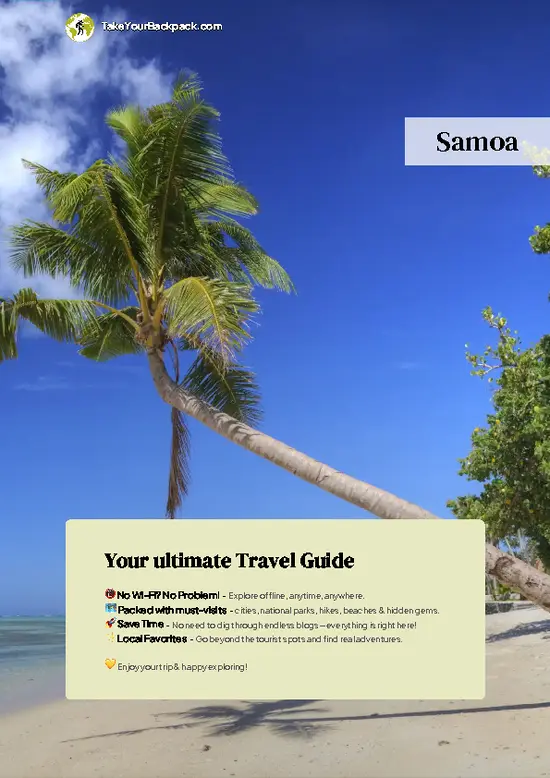
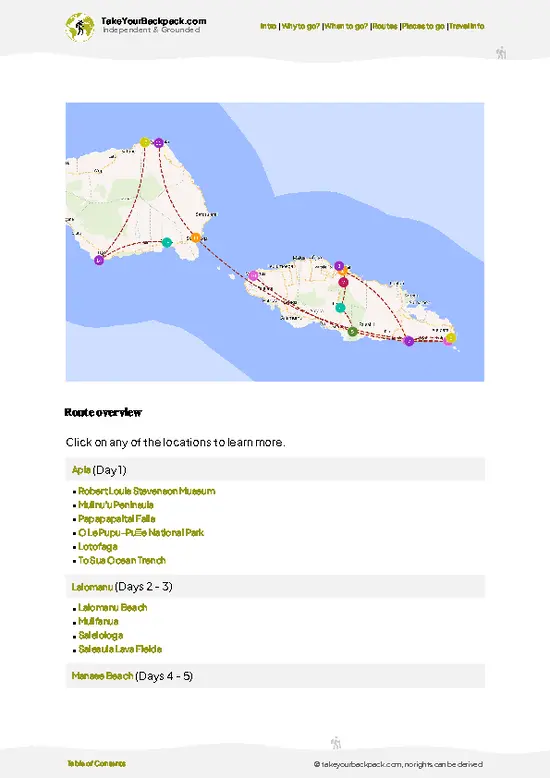
example page 0 from our offline Travel Guide for Samoa
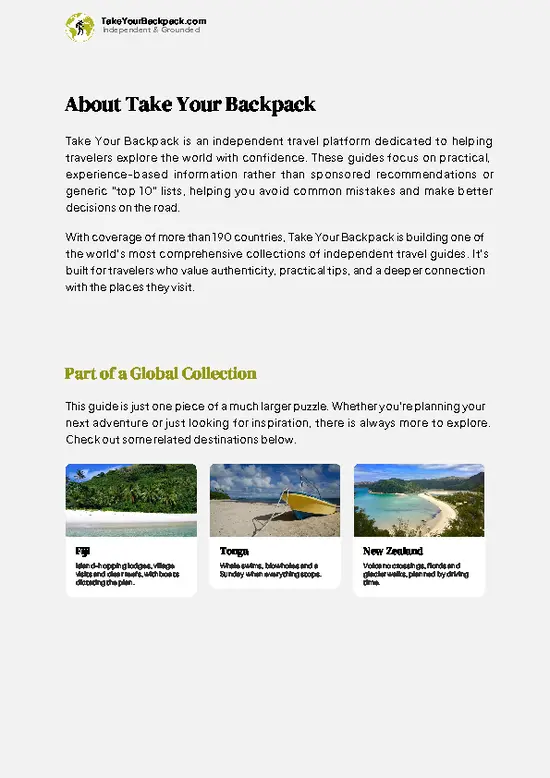
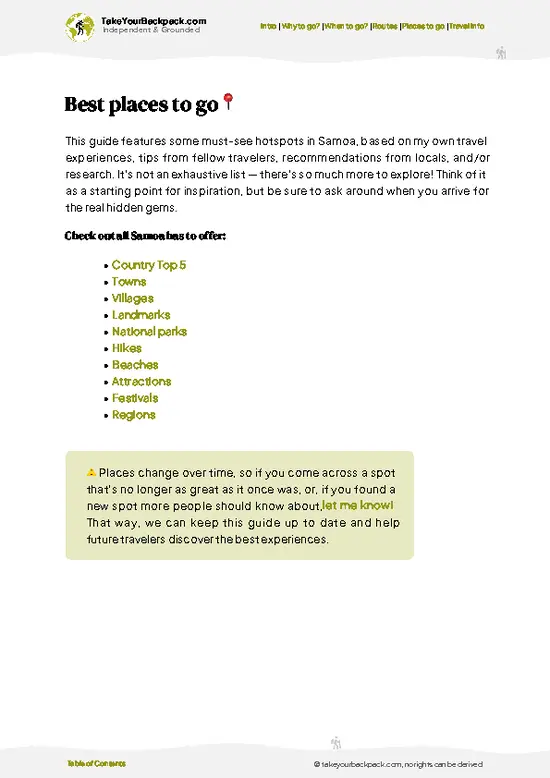
example page 1 from our offline Travel Guide for Samoa
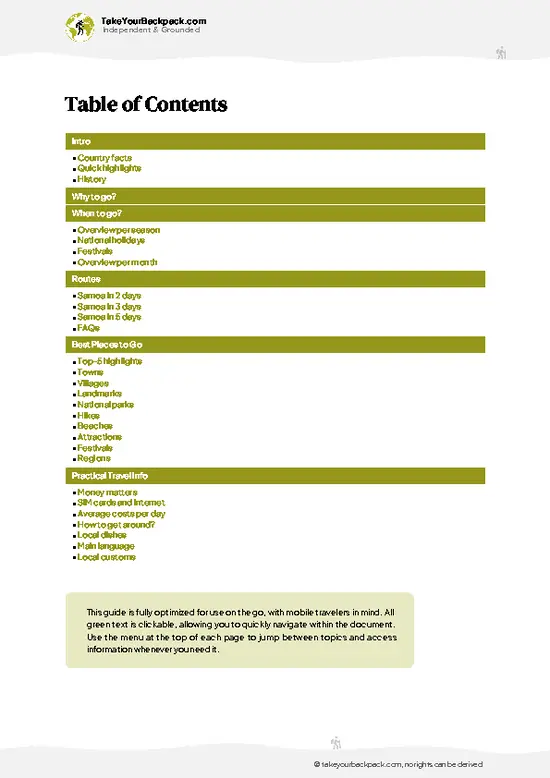
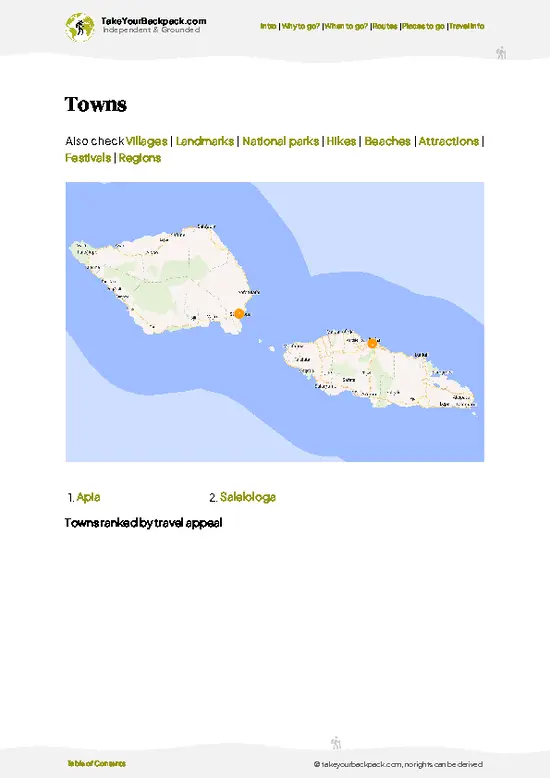
example page 2 from our offline Travel Guide for Samoa
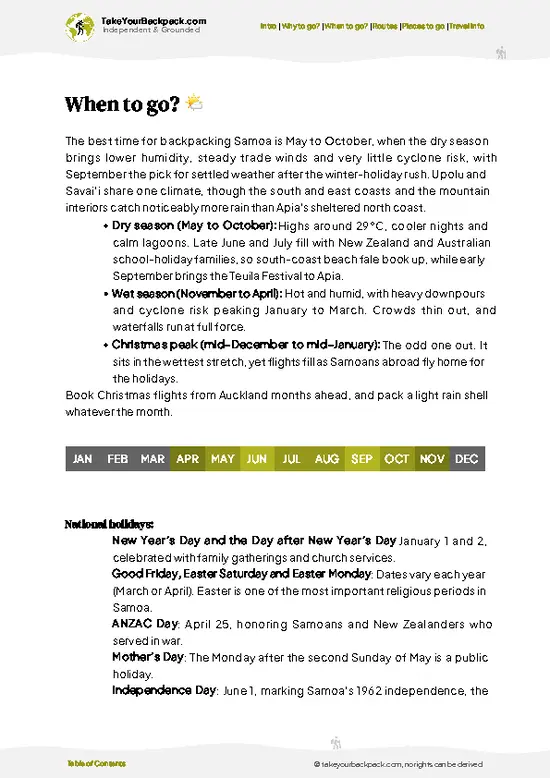
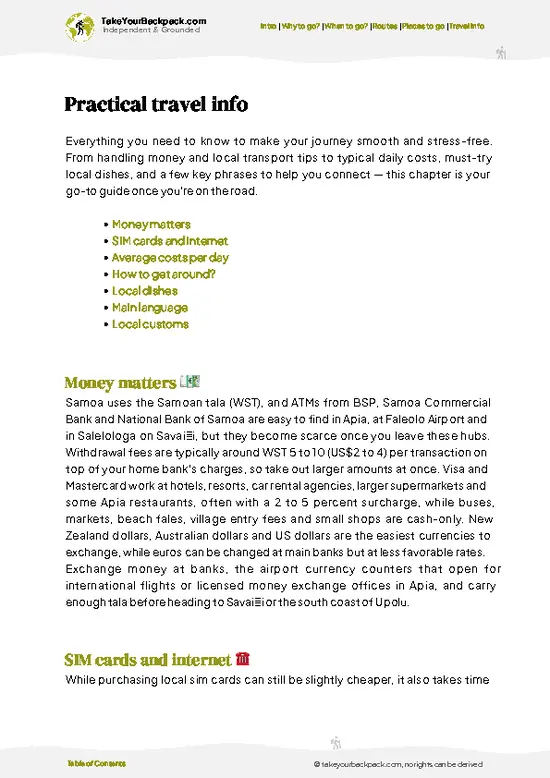
example page 3 from our offline Travel Guide for Samoa
example page 4 from our offline Travel Guide for Samoa
example page 5 from our offline Travel Guide for Samoa
example page 6 from our offline Travel Guide for Samoa
example page 7 from our offline Travel Guide for Samoa
The digital guide (138 pages) contains:
✅ 37 highlights, ranked by travel appeal
✅ Optimized 2, 3 & 5-day travel routes
✅ Cities, national parks, landmarks, beaches
✅ How to get around
✅ Offline-friendly for travel without Wi-Fi
👉 Click to see all 30+ guide features

📅 Plan smarter in minutes, not weeks
✅ Month by month travel advice
✅ Festivals & national holidays
✅ Budget expectations

🗺️ Go to the right places, skip the overrated ones
✅ Honest pros & cons of destinations
✅ Top hikes, parks & viewpoints
✅ Lesser-known places most travelers miss
✅ Clear “worth it vs skip it” guidance

🛏️ Travel smoothly without rookie mistakes
✅ Best areas to stay
✅ Transport systems explained simply
✅ Common scams & safety advice
✅ SIM cards, money & practical tips

🌍 Understand the country, not just visit it
✅ Culture & traditions
✅ 52 Essential phrases & customs
✅ Festivals worth planning around
✅ Traveler-friendly historical context
✅ Insights that make places more meaningful

📱 Built for real travel conditions
✅ Fully downloadable PDF
✅ Works completely offline
✅ Optimized for phone use
✅ Useful in remote areas & buses
✅ Everything in one place
Stop searching, start planning
Get instant access to your full guide. 30‑day money-back guarantee.
+ Add another guide for just

By proceeding you agree to our terms.
Sent to your inbox immediately after payment • 100% Secure Checkout
Best Backpacking Travel Advisor 2025 tourism awardBest Backpacking
Travel Advisor
2025
What others say about Take Your Backpack Guides:
⭐⭐⭐⭐⭐
Fantastic, amazing amount of information!
⭐⭐⭐⭐⭐
My goodness this is amazing, it's what I've been looking for hats off too you!
⭐⭐⭐⭐⭐
I think this is absolutely BRILLIANT
⭐⭐⭐⭐
Very complete and informative. It's still missing places, but I gotta to commend you
⭐⭐⭐⭐⭐
This is truly amazing, thank you, can't wait to explore it with my kids!
⭐⭐⭐⭐⭐
Awesome resource, thank you!
⭐⭐⭐⭐⭐
This is amazing! Can't wait to explore the ones I haven't seen
⭐⭐⭐⭐
I love this! Well done, great idea.
⭐⭐⭐⭐⭐
Thanks for taking the time to make this gem!
⭐⭐⭐⭐⭐
This might be the best website I've ever seen.
⭐⭐⭐⭐⭐
Congratulations, and thank you so much for your work; it's incredibly valuable.
⭐⭐⭐⭐
In all seriousness I think you did a great job pointing out the important spots
⭐⭐⭐⭐⭐
10/10 very good
⭐⭐⭐⭐⭐
As someone who's only just starting to visit regularly this is awesome, thank you.
⭐⭐⭐⭐
Thank you very much! I'm going to visit my dad, it's going to be very useful!
⭐⭐⭐⭐⭐
This is really cool! We'll be travelling for the first time and this definitely come in handy.
⭐⭐⭐⭐⭐
You are now our minister of culture, congratulations 👨‍💼
⭐⭐⭐⭐⭐
Just wanted to tell you that this is a pearl! Going to follow your recommendations.
⭐⭐⭐⭐⭐
This is so cool. I'll definitely be using the resource for my travels soon.
⭐⭐⭐⭐⭐
This is very impressive! Good work.
⭐⭐⭐⭐⭐
This is an amazing and informative site. Very well done!

🛏️ Where to stay?Where to Stay: Samoa Edition

Samoa has only a handful of true dorm hostels, but budget beds are easy to find: open-sided beach “fale” huts run by local families typically cost WST 80 to 150 (about US$30 to 55) per person a night, usually with breakfast and dinner included, alongside simple guesthouses from roughly WST 120 to 200 a room. Apia has the widest choice of guesthouses, plus the country’s only real nightlife, ATMs and bus terminal, though it is hot and traffic-noisy and has no swimmable beach of its own. For beach fales, Lalomanu on Upolu’s southeast coast and Manase on Savai’i’s north shore have the most options and are safe, quiet and right on the sand, but evenings end by about 10 pm, meals are limited to what … read more 👉
Samoa has only a handful of true dorm hostels, but budget beds are easy to find: open-sided beach “fale” huts run by local families typically cost WST 80 to 150 (about US$30 to 55) per person a night, usually with breakfast and dinner included, alongside simple guesthouses from roughly WST 120 to 200 a room. Apia has the widest choice of guesthouses, plus the country’s only real nightlife, ATMs and bus terminal, though it is hot and traffic-noisy and has no swimmable beach of its own. For beach fales, Lalomanu on Upolu’s southeast coast and Manase on Savai’i’s north shore have the most options and are safe, quiet and right on the sand, but evenings end by about 10 pm, meals are limited to what your host serves and getting anywhere means an infrequent bus or a hired car.

If you enjoy meeting fellow travelers, consider choosing hostels with high ratings for atmosphere. On the other hand, if you prefer having your own space, a hotel might be a better option.

SamoaExplore Beyond This Category

👋 Meet the founderWho’s Behind Take Your Backpack?

Johan, backpacker and founder of TakeYourBackpackHi, I’m Johan (Netherlands 🇳🇱), the creator of TakeYourBackpack. Over the past 3 decades, I’ve backpacked through 90+ countries across six continents, gaining extensive experience with independent travel, long-term trips, and overland routes.

This site is built on a combination of firsthand travel experience and carefully curated insights from other backpackers. Many guides are based on places I’ve personally visited, while others bring together tips, observations, and practical advice shared by trusted travelers I’ve met along the way.

The goal is to provide realistic, experience-driven guidance — not generic itineraries — so you can explore destinations with better context, clearer expectations, and more confidence.