×

Samoa🇼🇸 | best hikesYour Guide to the Best hikes in Samoa

Hiking in Samoa means rainforest trails where red earth turns slick, air smells of wet leaf and frangipani, and frogs and fruit bats fill the dusk. Savai’i is quieter and rougher, with lava fields and little signage. Upolu is easier, with village-run tracks and short drives from Apia. Independent travelers pay small village entry fees, so expect cash, sweat and swimming stops.

By Johan Kruseman 🇳🇱 | Updated October 18, 2026
Explore the best beaches in Samoa

Why go?Understanding Their Importance

Samoa’s hiking character comes from land ownership. Almost all land is held under customary village ownership, so trails, waterfalls and lookouts sit on village ground, and access runs through a fee paid at a fale or a family gate. That keeps routes small and personal, but there are few national park-style trail networks, maps are thin and signage can be a hand-painted board.

The terrain is volcanic and tropical: steep ridges, cloud forest on the interior peaks, lava rock near the coast, and humidity that soaks a shirt in minutes. Rain is frequent, mud clings, and tracks can vanish after storms. Bring grippy shoes, water and cash in small notes. Dress modestly in villages, and expect Sunday to be quiet, with church bells, singing and limited access.
Evaluating the Top Choices
The list of best hikes in Samoa is created based on scenery, challenge, trail quality, landmarks, and overall enjoyment. If you feel a hike is missing in this list, please let us know.

When to go?When to Plan Your Trip

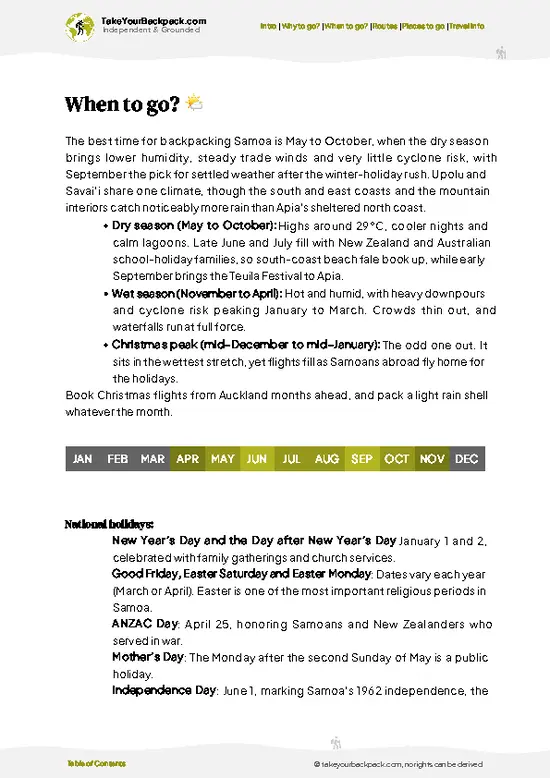
Best months: The best months for hiking in Samoa are May to October, the dry season, when rain eases, humidity drops and trails firm up under the canopy. Days usually run around 27 to 30°C, with nights near 23 to 25°C, and the trade wind carries a cooler edge in the shade.
Wet season and shoulder months: From November to April, heavy downpours turn clay tracks to slick red paste, streams run brown and swollen, and cyclone risk peaks from roughly December to March. Annual rainfall on Upolu’s interior and south coast can exceed 3,000 mm, while Apia is somewhat drier. November and April can still be workable, with fewer visitors and lower accommodation prices. July and August bring more visitors, so book rooms early. Savai’i’s lava coast is hotter and drier than the Upolu highlands.

hike hoppingSuggested Travel Strategies

Trip length and direction: A trip combining several hikes in Samoa needs 5 to 8 days, enough to cover Upolu and add Savai’i without rushing. Start around Apia and the central highlands, then move along Upolu’s south coast or to the Mulifanua wharf, and cross to Savai’i last, when your legs know the mud.
Pacing and transfers: Allow half a day per hike, or a full day for longer tracks. Apia to the Mulifanua wharf takes roughly 45 to 60 minutes by road, the ferry crossing takes about 60 to 90 minutes, and Salelologa to the far Savai’i coasts adds 1 to 2 hours. The common mistake is stacking two big hikes with a ferry in one day. Ferries run to a fixed timetable, afternoon showers arrive quickly, and village roads are slow. Spread transfers over separate mornings, start early, and leave a buffer day for storms.

The ListHighly Recommended hikes of Samoa

1 Afu Aau Waterfall

Savai’i south coast, cash entry fee, cold plunge pool, slippery rainforest track

Follow a short, humid forest track to a tall, narrow fall, then swim in its deep, clear pool and dry off on flat rock ledges.

samoa-hike-afu-aau-waterfall
© Google | Blessing Une Passi
Loading the map 🌍

Expert viewWhat You Should Know

How many hikes: Plan on three to five hikes in total. Heat, humidity and rain make two a day punishing, and each village fee, ride and swim stop eats time, so fewer, longer outings leave you cooler, cleaner and in better spirits, with a cold coconut at the end.
Choosing the kind: Budget travelers should favor short village-run tracks reachable by local bus and a walk, which keep costs low and put you among families, pigs and fale. Adventurous hikers should pick the interior ridges and crater tracks, which are muddier, steeper and quieter, and lean toward a guide. Easygoing travelers do best with coastal and waterfall walks that end in a freshwater swim.
What it costs: Expect US$25 to 45 a day on the ground: local buses cost about WS$2 to 6 a ride, village entry fees usually run WS$5 to 20 (about … read more 👉
How many hikes: Plan on three to five hikes in total. Heat, humidity and rain make two a day punishing, and each village fee, ride and swim stop eats time, so fewer, longer outings leave you cooler, cleaner and in better spirits, with a cold coconut at the end.
Choosing the kind: Budget travelers should favor short village-run tracks reachable by local bus and a walk, which keep costs low and put you among families, pigs and fale. Adventurous hikers should pick the interior ridges and crater tracks, which are muddier, steeper and quieter, and lean toward a guide. Easygoing travelers do best with coastal and waterfall walks that end in a freshwater swim.
What it costs: Expect US$25 to 45 a day on the ground: local buses cost about WS$2 to 6 a ride, village entry fees usually run WS$5 to 20 (about US$2 to 7) a person, and a local guide for a harder route costs roughly WS$50 to 150 (US$18 to 55). A whole hiking visit, with transport, fees and a guide or two, typically lands around US$150 to 300 on top of lodging.
Safety and etiquette: Carry cash in small notes, because villages rarely take cards. Always ask at the fale before walking through, as the land belongs to the village. Cover your knees and shoulders when passing homes, and take hats off. Sunday is for church, and many sites close, so expect to be turned back. Mud is the main danger, so wear shoes with real tread, and avoid swollen rivers after heavy rain, since flash floods rise fast. Carry 2 to 3 liters of water, repellent for daytime mosquitoes and dengue risk, and tell your hosts when you expect to be back. The reward is a track you share with a village, not a crowd.

✈️ The backpacker research shortcutSamoa Travel Guide

An offline-friendly backpacking guide with optimized travel routes, ranked highlights, transport advice, and the best areas to stay.
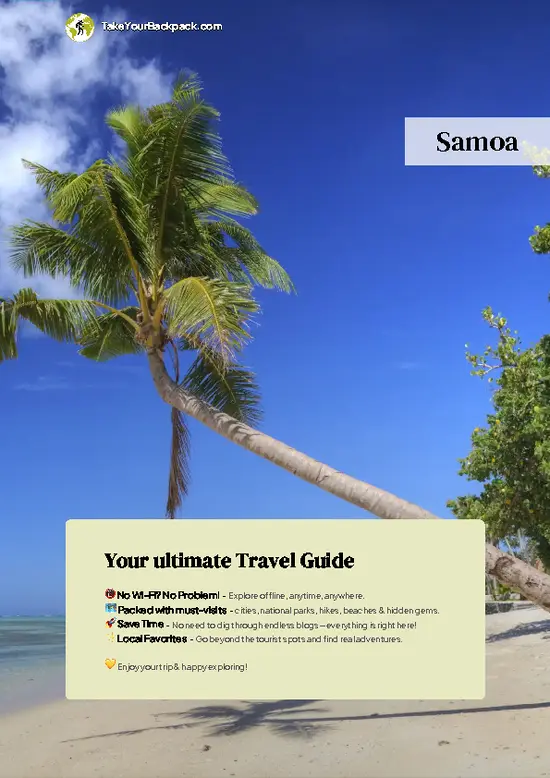
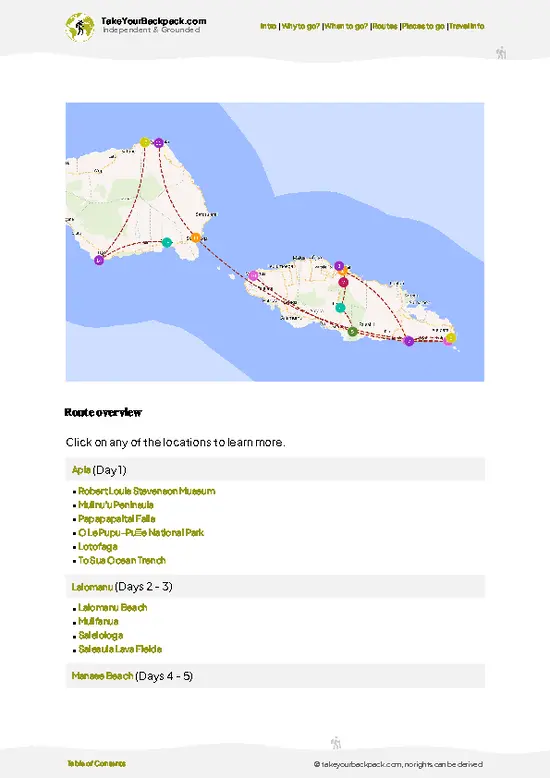
example page 0 from our offline Travel Guide for Samoa
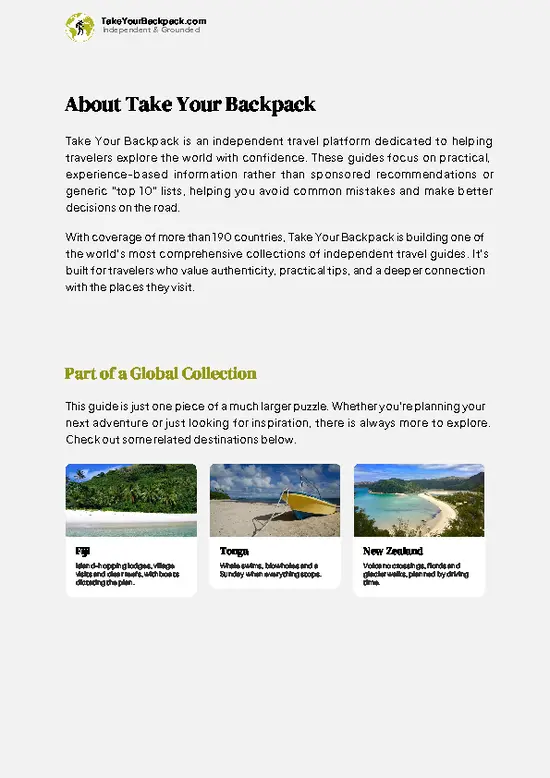
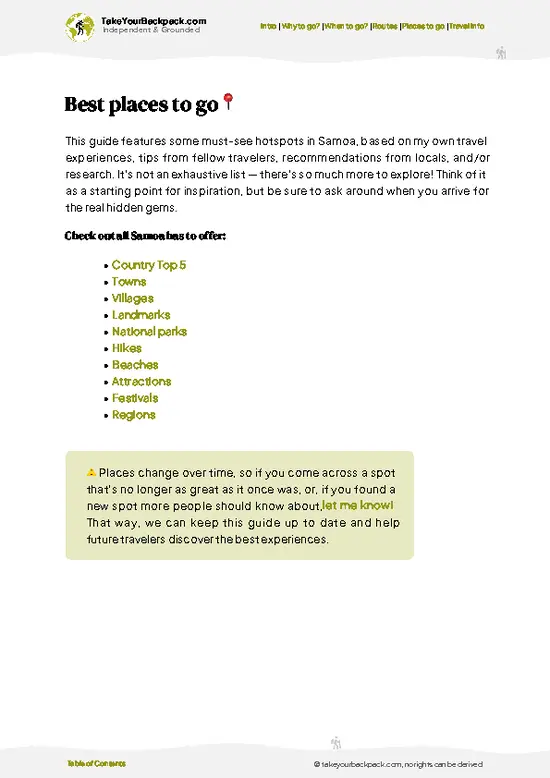
example page 1 from our offline Travel Guide for Samoa
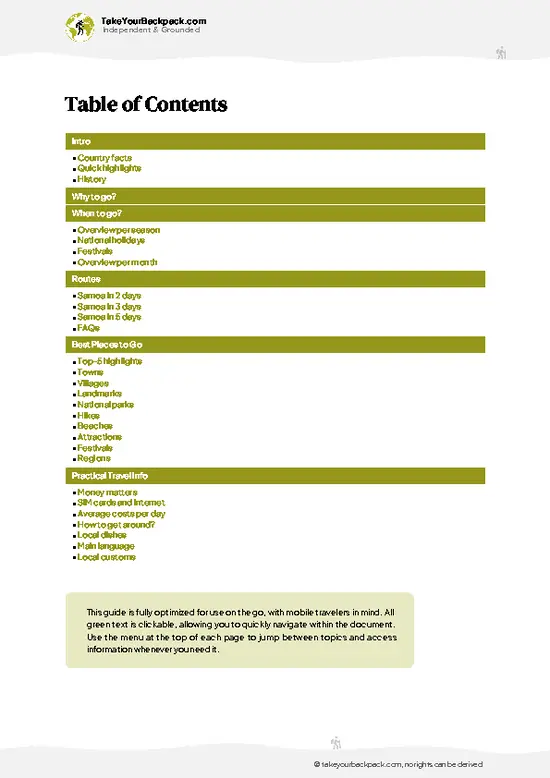
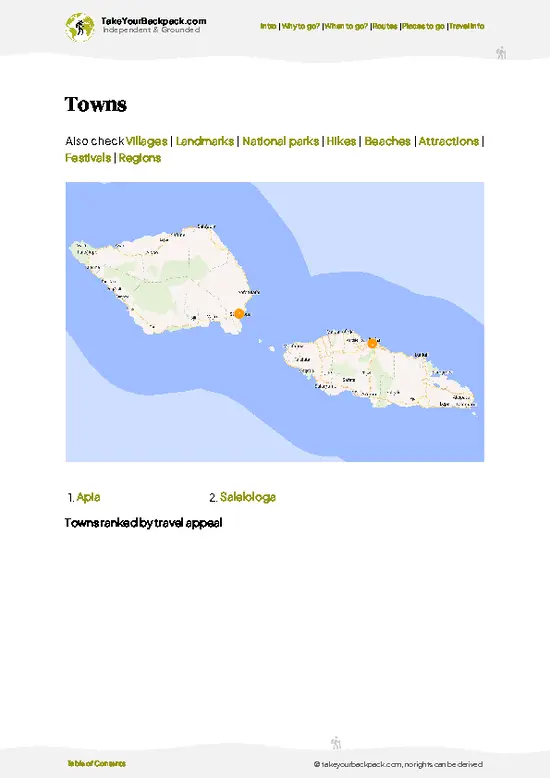
example page 2 from our offline Travel Guide for Samoa
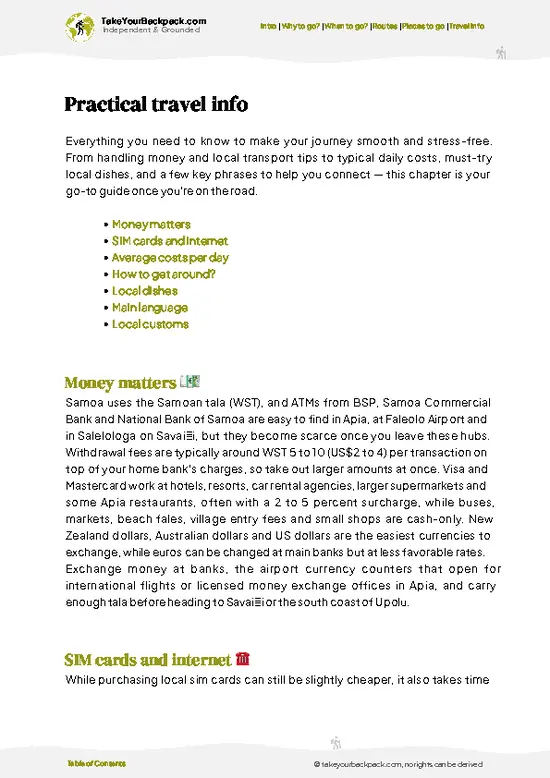
example page 3 from our offline Travel Guide for Samoa
example page 4 from our offline Travel Guide for Samoa
example page 5 from our offline Travel Guide for Samoa
example page 6 from our offline Travel Guide for Samoa
example page 7 from our offline Travel Guide for Samoa
The digital guide (138 pages) contains:
✅ 37 highlights, ranked by travel appeal
✅ Optimized 2, 3 & 5-day travel routes
✅ Cities, national parks, landmarks, beaches
✅ How to get around
✅ Offline-friendly for travel without Wi-Fi
👉 Click to see all 30+ guide features

📅 Plan smarter in minutes, not weeks
✅ Month by month travel advice
✅ Festivals & national holidays
✅ Budget expectations

🗺️ Go to the right places, skip the overrated ones
✅ Honest pros & cons of destinations
✅ Top hikes, parks & viewpoints
✅ Lesser-known places most travelers miss
✅ Clear “worth it vs skip it” guidance

🛏️ Travel smoothly without rookie mistakes
✅ Best areas to stay
✅ Transport systems explained simply
✅ Common scams & safety advice
✅ SIM cards, money & practical tips

🌍 Understand the country, not just visit it
✅ Culture & traditions
✅ 52 Essential phrases & customs
✅ Festivals worth planning around
✅ Traveler-friendly historical context
✅ Insights that make places more meaningful

📱 Built for real travel conditions
✅ Fully downloadable PDF
✅ Works completely offline
✅ Optimized for phone use
✅ Useful in remote areas & buses
✅ Everything in one place
Stop searching, start planning
Get instant access to your full guide. 30‑day money-back guarantee.
+ Add another guide for just

By proceeding you agree to our terms.
Sent to your inbox immediately after payment • 100% Secure Checkout
Best Backpacking Travel Advisor 2025 tourism awardBest Backpacking
Travel Advisor
2025
What others say about Take Your Backpack Guides:
⭐⭐⭐⭐⭐
Fantastic, amazing amount of information!
⭐⭐⭐⭐⭐
My goodness this is amazing, it's what I've been looking for hats off too you!
⭐⭐⭐⭐⭐
I think this is absolutely BRILLIANT
⭐⭐⭐⭐
Very complete and informative. It's still missing places, but I gotta to commend you
⭐⭐⭐⭐⭐
This is truly amazing, thank you, can't wait to explore it with my kids!
⭐⭐⭐⭐⭐
Awesome resource, thank you!
⭐⭐⭐⭐⭐
This is amazing! Can't wait to explore the ones I haven't seen
⭐⭐⭐⭐
I love this! Well done, great idea.
⭐⭐⭐⭐⭐
Thanks for taking the time to make this gem!
⭐⭐⭐⭐⭐
This might be the best website I've ever seen.
⭐⭐⭐⭐⭐
Congratulations, and thank you so much for your work; it's incredibly valuable.
⭐⭐⭐⭐
In all seriousness I think you did a great job pointing out the important spots
⭐⭐⭐⭐⭐
10/10 very good
⭐⭐⭐⭐⭐
As someone who's only just starting to visit regularly this is awesome, thank you.
⭐⭐⭐⭐
Thank you very much! I'm going to visit my dad, it's going to be very useful!
⭐⭐⭐⭐⭐
This is really cool! We'll be travelling for the first time and this definitely come in handy.
⭐⭐⭐⭐⭐
You are now our minister of culture, congratulations 👨‍💼
⭐⭐⭐⭐⭐
Just wanted to tell you that this is a pearl! Going to follow your recommendations.
⭐⭐⭐⭐⭐
This is so cool. I'll definitely be using the resource for my travels soon.
⭐⭐⭐⭐⭐
This is very impressive! Good work.
⭐⭐⭐⭐⭐
This is an amazing and informative site. Very well done!

🛏️ Where to stay?Where to Stay: Samoa Edition

Samoa has only a handful of true dorm hostels, but budget beds are easy to find: open-sided beach “fale” huts run by local families typically cost WST 80 to 150 (about US$30 to 55) per person a night, usually with breakfast and dinner included, alongside simple guesthouses from roughly WST 120 to 200 a room. Apia has the widest choice of guesthouses, plus the country’s only real nightlife, ATMs and bus terminal, though it is hot and traffic-noisy and has no swimmable beach of its own. For beach fales, Lalomanu on Upolu’s southeast coast and Manase on Savai’i’s north shore have the most options and are safe, quiet and right on the sand, but evenings end by about 10 pm, meals are limited to what … read more 👉
Samoa has only a handful of true dorm hostels, but budget beds are easy to find: open-sided beach “fale” huts run by local families typically cost WST 80 to 150 (about US$30 to 55) per person a night, usually with breakfast and dinner included, alongside simple guesthouses from roughly WST 120 to 200 a room. Apia has the widest choice of guesthouses, plus the country’s only real nightlife, ATMs and bus terminal, though it is hot and traffic-noisy and has no swimmable beach of its own. For beach fales, Lalomanu on Upolu’s southeast coast and Manase on Savai’i’s north shore have the most options and are safe, quiet and right on the sand, but evenings end by about 10 pm, meals are limited to what your host serves and getting anywhere means an infrequent bus or a hired car.

If you enjoy meeting fellow travelers, consider choosing hostels with high ratings for atmosphere. On the other hand, if you prefer having your own space, a hotel might be a better option.

SamoaExplore Beyond This Category

👋 Meet the founderWho’s Behind Take Your Backpack?

Johan, backpacker and founder of TakeYourBackpackHi, I’m Johan (Netherlands 🇳🇱), the creator of TakeYourBackpack. Over the past 3 decades, I’ve backpacked through 90+ countries across six continents, gaining extensive experience with independent travel, long-term trips, and overland routes.

This site is built on a combination of firsthand travel experience and carefully curated insights from other backpackers. Many guides are based on places I’ve personally visited, while others bring together tips, observations, and practical advice shared by trusted travelers I’ve met along the way.

The goal is to provide realistic, experience-driven guidance — not generic itineraries — so you can explore destinations with better context, clearer expectations, and more confidence.