×

Samoa🇼🇸 | regionsUpoluSea trenches, white-sand lagoons, Apia markets, waterfall pools | things to do and best time to go

Explore Apolima StraitExplore Savai’i

Backpacking in Upolu
🌟 Highlightregion ranked #2
By Johan Kruseman 🇳🇱 | Updated October 15, 2026

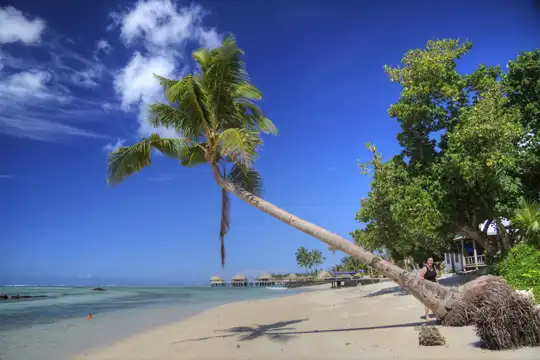
Most people come to Upolu for the beaches and the sea trenches: To Sua Ocean Trench, Lalomanu’s white sand, and water so clear it looks lit from below. What gets overlooked is how intact village life is here. Fale roofs, Sunday church singing drifting over the lagoon, and families who still run the beach huts you sleep in. Upolu sits in the center of Samoa, east of Savai’i, with Apia on its north coast. The trade-off is simple: a rental car costs money but saves hours of waiting for infrequent buses, and the buses cost little but run on island time and diesel fumes. For most backpackers the car, split between travelers, gives the most. Humidity sticks to your skin, afternoon downpours drum on tin roofs, and Sundays go quiet. Spend a first day in Apia’s market over coffee and fresh coconut, then ride a bus south over the mountains to the coast.

Discover everything you want to know in the 📖 Samoa Travel Guide.


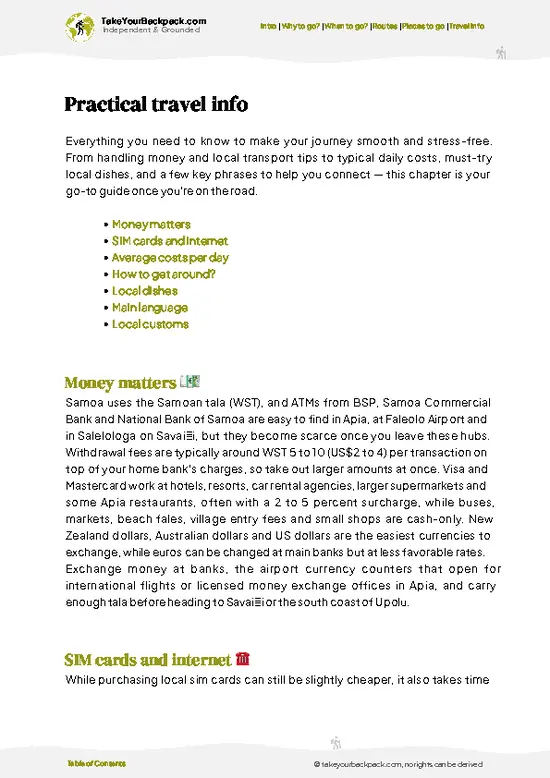
example page 0 from our offline Travel Guide for Samoa
example page 1 from our offline Travel Guide for Samoa
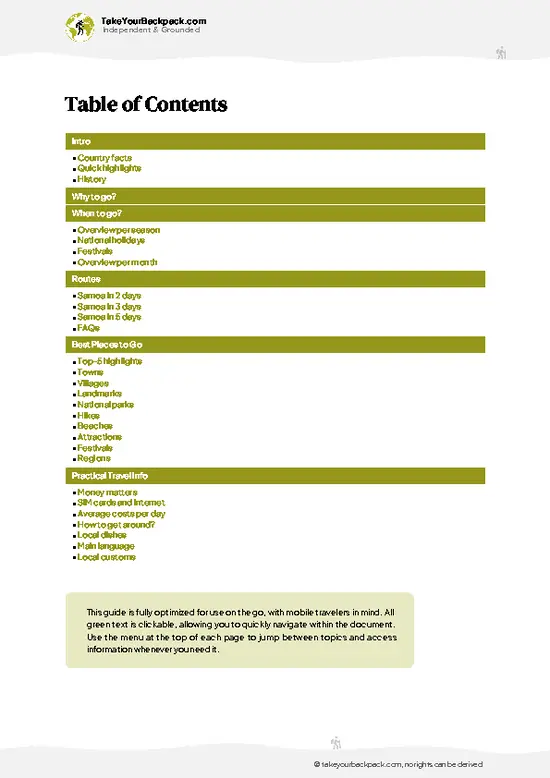
example page 2 from our offline Travel Guide for Samoa
example page 3 from our offline Travel Guide for Samoa
example page 4 from our offline Travel Guide for Samoa
example page 5 from our offline Travel Guide for Samoa
example page 6 from our offline Travel Guide for Samoa
example page 7 from our offline Travel Guide for Samoa
Loading the map 🌍
CLICK TO FILTER
towns
villages
landmarks
national parks
hikes
beaches
attractions
festivals
regions
SHOW COUNTRY’S BESTSHOW ALL

✨ Why go?
Ranked #2 region in Samoa
Why visitors keep coming back

Upolu lets you sleep in one beach fale and still cover a remarkable range without repacking. The island is roughly 75 kilometers long, so the Cross Island Road takes you from Apia’s harbor smells to the cool, fern-filled interior and down to the southern coast in a single morning. Swimming holes, waterfalls and reef-protected lagoons sit within easy reach of each other, so you can alternate a hike with a snorkel the same day.

Culture is the second draw. Village life is organized around the matai (chiefs) and the church, and travelers staying in family-run fale at Lalomanu or the Aleipata coast are guests in a working community, not at a resort. Dress modestly, expect evening prayers, and you will be welcomed into things.

The third reason is flexibility. Local buses wave down anywhere along … read more 👉
Upolu lets you sleep in one beach fale and still cover a remarkable range without repacking. The island is roughly 75 kilometers long, so the Cross Island Road takes you from Apia’s harbor smells to the cool, fern-filled interior and down to the southern coast in a single morning. Swimming holes, waterfalls and reef-protected lagoons sit within easy reach of each other, so you can alternate a hike with a snorkel the same day.

Culture is the second draw. Village life is organized around the matai (chiefs) and the church, and travelers staying in family-run fale at Lalomanu or the Aleipata coast are guests in a working community, not at a resort. Dress modestly, expect evening prayers, and you will be welcomed into things.

The third reason is flexibility. Local buses wave down anywhere along the road, and the Mulifanua ferry wharf on the west end gives you the option to hop to Savai’i whenever you tire of Upolu’s comparative bustle.

💡 HighlightsPlaces and moments you shouldn't skip

  1. To Sua Ocean Trench: A collapsed lava tube forms a deep turquoise swimming hole, reached by a long wooden ladder. There is an entry fee, and it is calmest at mid-tide.
  2. Lalomanu Beach: Powdery white sand and a shallow lagoon on the southeast coast, lined with simple beach fale where you sleep metres from the surf.
  3. Robert Louis Stevenson Museum (Vailima): The author’s restored home on the slopes above Apia, with a short climb to his hilltop tomb and views over the harbor.
  4. Papase’ea Sliding Rock: A natural rock slide into a freshwater pool above Apia, where local kids show you the best line.
  5. Togitogiga Waterfalls: Tiered cascades and swimming pools in a forested park on the south coast, with an easy walking path.
  6. Piula Cave Pool: Freshwater springs beneath a church compound on the north coast, where
… read more 👉
  1. To Sua Ocean Trench: A collapsed lava tube forms a deep turquoise swimming hole, reached by a long wooden ladder. There is an entry fee, and it is calmest at mid-tide.
  2. Lalomanu Beach: Powdery white sand and a shallow lagoon on the southeast coast, lined with simple beach fale where you sleep metres from the surf.
  3. Robert Louis Stevenson Museum (Vailima): The author’s restored home on the slopes above Apia, with a short climb to his hilltop tomb and views over the harbor.
  4. Papase’ea Sliding Rock: A natural rock slide into a freshwater pool above Apia, where local kids show you the best line.
  5. Togitogiga Waterfalls: Tiered cascades and swimming pools in a forested park on the south coast, with an easy walking path.
  6. Piula Cave Pool: Freshwater springs beneath a church compound on the north coast, where you swim in clear pools that run into the sea.
  7. Fagaloa Bay: A remote bay of steep green headlands on the east side, reached by a winding road through quiet villages, rarely visited by tourists.
  8. Apia Flea Market and Fish Market: Early morning tuna, taro, palusami and woven goods, plus cheap local breakfast.
  9. Lefaga and Return to Paradise Beach: A sweeping white-sand cove dotted with black lava rocks on the south coast made famous by a film, now quiet, with surf and a small beach fee.
  10. Palolo Deep Marine Reserve: A snorkeling hole just off Apia’s shore where reef fish crowd a sudden drop-off, the sort of spot locals use after work.
Papase’ea Sliding Rock and the Vailima museum combine well in one day, since both sit in the hills above Apia and you can swim after the history.
Spotted a mistake or missing something? Contact us.

Things to do around Upolu

Ratings based on Tripadvisor reviews. When you book through this link, you support our work at no extra cost to you.

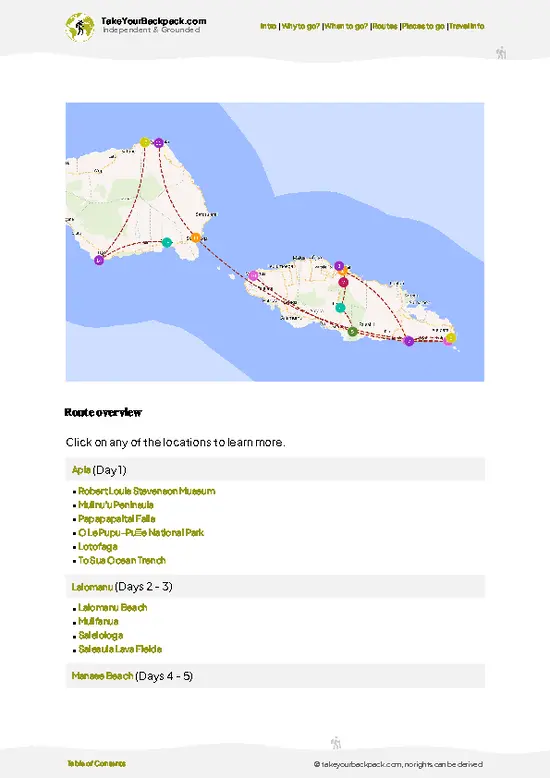
⌛️ 5 daysWhat you can realistically do in a week

Day 1: Apia: Start at the fish and flea markets before the heat builds, then take the walk up to Vailima for Stevenson’s house and tomb. Buses mostly radiate from Apia and thin out in the afternoon, so basing yourself here first keeps the later days flexible. Finish with a swim at Palolo Deep.

Day 2: Cross Island Road to Lefaga: Cross the interior early, stopping at Papase’ea, then drop to the south coast. Buses run less often after midday, so you want to be moving in the morning. Spend the afternoon at Return to Paradise Beach and sleep in a fale.

Day 3: To Sua and Togitogiga: Travel east along the south coast. To Sua is best at mid-tide, and Togitogiga is a gentler pause on the way. A shared rental car makes this stretch easy; the bus makes it long.

Day 4: Lalomanu: Stay put. Snorkel … read more 👉
Day 1: Apia: Start at the fish and flea markets before the heat builds, then take the walk up to Vailima for Stevenson’s house and tomb. Buses mostly radiate from Apia and thin out in the afternoon, so basing yourself here first keeps the later days flexible. Finish with a swim at Palolo Deep.

Day 2: Cross Island Road to Lefaga: Cross the interior early, stopping at Papase’ea, then drop to the south coast. Buses run less often after midday, so you want to be moving in the morning. Spend the afternoon at Return to Paradise Beach and sleep in a fale.

Day 3: To Sua and Togitogiga: Travel east along the south coast. To Sua is best at mid-tide, and Togitogiga is a gentler pause on the way. A shared rental car makes this stretch easy; the bus makes it long.

Day 4: Lalomanu: Stay put. Snorkel the lagoon, walk the village lanes and join the evening meal. Detour: take the road to Fagaloa Bay for a half-day of green headlands and almost no other visitors, then return by dark.

Day 5: Piula and the north coast: Loop back toward Apia via Piula Cave Pool for a last swim. The coast road is flat and the buses are more frequent here, so you can easily reach the ferry wharf or airport afterwards.

If you only have one day, make it Day 3. To Sua at mid-tide, then the waterfalls at Togitogiga, show why the south coast is worth the trip.

🌤️ When to go?Seasonal considerations and timing

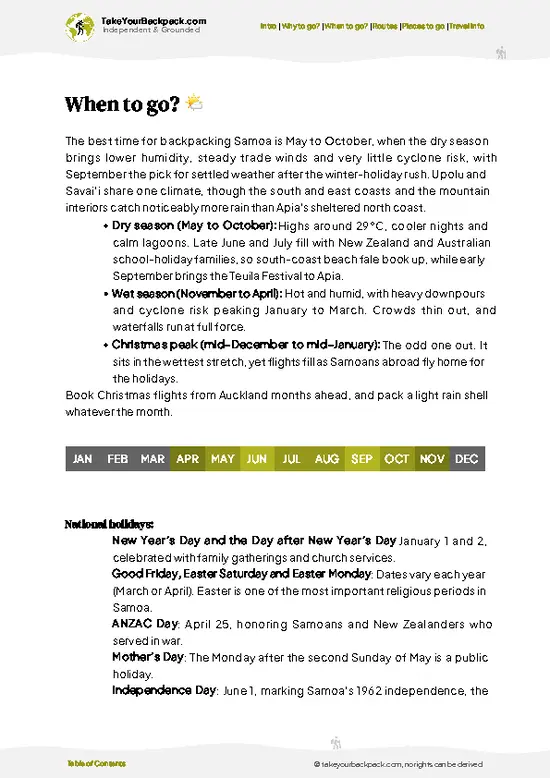
May to October is the best window for Upolu, with the driest weather and the most comfortable heat.
  • Dry Season (May to October): Days run 27 to 30°C (81 to 86°F), nights 22 to 24°C (72 to 75°F), with trade-wind breezes and clear water for snorkeling. Daylight lasts about 11.5 to 12.5 hours. July to September is busiest, so fales and rental cars fill up and prices climb.
  • Wet Season (November to April): Expect 28 to 31°C (82 to 88°F), heavy humidity, and downpours that turn waterfall tracks to mud. Rooms are cheaper and beaches are empty. Cyclones are possible, most often January to March.
  • Shoulder Months (May and October): Rain eases or has not yet returned, rates sit lower, and you get most of the sunshine without the peak crowds.
  • Festival Time: The Teuila Festival in Apia usually runs in early
… read more 👉
May to October is the best window for Upolu, with the driest weather and the most comfortable heat.
  • Dry Season (May to October): Days run 27 to 30°C (81 to 86°F), nights 22 to 24°C (72 to 75°F), with trade-wind breezes and clear water for snorkeling. Daylight lasts about 11.5 to 12.5 hours. July to September is busiest, so fales and rental cars fill up and prices climb.
  • Wet Season (November to April): Expect 28 to 31°C (82 to 88°F), heavy humidity, and downpours that turn waterfall tracks to mud. Rooms are cheaper and beaches are empty. Cyclones are possible, most often January to March.
  • Shoulder Months (May and October): Rain eases or has not yet returned, rates sit lower, and you get most of the sunshine without the peak crowds.
  • Festival Time: The Teuila Festival in Apia usually runs in early September, with dance, canoe racing and craft markets, and it pushes up demand for beds.
Book Upolu bus-and-beach stays about a month ahead for September.


source: climatestotravel.comJANJanuary: fair for travelingFEBFebruary: fair for travelingMARMarch: fair for travelingAPRApril: fair for travelingMAYMay: highly recommended for travelingJUNJune: highly recommended for travelingJULJuly: good for travelingAUGAugust: good for travelingSEPSeptember: highly recommended for travelingOCTOctober: highly recommended for travelingNOVNovember: fair for travelingDECDecember: fair for traveling
when-to-go

✈️ The backpacker research shortcutSamoa Travel Guide

An offline-friendly backpacking guide with optimized travel routes, ranked highlights, transport advice, and the best areas to stay.
example page 0 from our offline Travel Guide for Samoa
example page 1 from our offline Travel Guide for Samoa
example page 2 from our offline Travel Guide for Samoa
example page 3 from our offline Travel Guide for Samoa
example page 4 from our offline Travel Guide for Samoa
example page 5 from our offline Travel Guide for Samoa
example page 6 from our offline Travel Guide for Samoa
example page 7 from our offline Travel Guide for Samoa
The digital guide (138 pages) contains:
✅ 37 highlights, ranked by travel appeal
✅ Optimized 2, 3 & 5-day travel routes
✅ Cities, national parks, landmarks, beaches
✅ How to get around
✅ Offline-friendly for travel without Wi-Fi
👉 Click to see all 30+ guide features

📅 Plan smarter in minutes, not weeks
✅ Month by month travel advice
✅ Festivals & national holidays
✅ Budget expectations

🗺️ Go to the right places, skip the overrated ones
✅ Honest pros & cons of destinations
✅ Top hikes, parks & viewpoints
✅ Lesser-known places most travelers miss
✅ Clear “worth it vs skip it” guidance

🛏️ Travel smoothly without rookie mistakes
✅ Best areas to stay
✅ Transport systems explained simply
✅ Common scams & safety advice
✅ SIM cards, money & practical tips

🌍 Understand the country, not just visit it
✅ Culture & traditions
✅ 52 Essential phrases & customs
✅ Festivals worth planning around
✅ Traveler-friendly historical context
✅ Insights that make places more meaningful

📱 Built for real travel conditions
✅ Fully downloadable PDF
✅ Works completely offline
✅ Optimized for phone use
✅ Useful in remote areas & buses
✅ Everything in one place
Stop searching, start planning
Get instant access to your full guide. 30‑day money-back guarantee.
+ Add another guide for just

By proceeding you agree to our terms.
Sent to your inbox immediately after payment • 100% Secure Checkout
Best Backpacking Travel Advisor 2025 tourism awardBest Backpacking
Travel Advisor
2025
What others say about Take Your Backpack Guides:
⭐⭐⭐⭐⭐
Fantastic, amazing amount of information!
⭐⭐⭐⭐⭐
My goodness this is amazing, it's what I've been looking for hats off too you!
⭐⭐⭐⭐⭐
I think this is absolutely BRILLIANT
⭐⭐⭐⭐
Very complete and informative. It's still missing places, but I gotta to commend you
⭐⭐⭐⭐⭐
This is truly amazing, thank you, can't wait to explore it with my kids!
⭐⭐⭐⭐⭐
Awesome resource, thank you!
⭐⭐⭐⭐⭐
This is amazing! Can't wait to explore the ones I haven't seen
⭐⭐⭐⭐
I love this! Well done, great idea.
⭐⭐⭐⭐⭐
Thanks for taking the time to make this gem!
⭐⭐⭐⭐⭐
This might be the best website I've ever seen.
⭐⭐⭐⭐⭐
Congratulations, and thank you so much for your work; it's incredibly valuable.
⭐⭐⭐⭐
In all seriousness I think you did a great job pointing out the important spots
⭐⭐⭐⭐⭐
10/10 very good
⭐⭐⭐⭐⭐
As someone who's only just starting to visit regularly this is awesome, thank you.
⭐⭐⭐⭐
Thank you very much! I'm going to visit my dad, it's going to be very useful!
⭐⭐⭐⭐⭐
This is really cool! We'll be travelling for the first time and this definitely come in handy.
⭐⭐⭐⭐⭐
You are now our minister of culture, congratulations 👨‍💼
⭐⭐⭐⭐⭐
Just wanted to tell you that this is a pearl! Going to follow your recommendations.
⭐⭐⭐⭐⭐
This is so cool. I'll definitely be using the resource for my travels soon.
⭐⭐⭐⭐⭐
This is very impressive! Good work.
⭐⭐⭐⭐⭐
This is an amazing and informative site. Very well done!

🛏️ Where to stay?Choosing the right base

Apia is the easiest base on Upolu for a first night, with the most beds, ATMs, supermarkets and the bus terminal all within reach. It suits anyone arriving by air or ferry, and nearby harbor-front cafés and the market make for easy meals and company. After dark the center is quiet, but walking in the main streets feels fine.

Lalomanu on the southeast tip is where most backpackers head for beach life. Beach fales, open-sided huts with mattresses and mosquito nets, sit steps from white sand and calm turquoise water, and shared meals keep the mood sociable. It is far from town, so you rely on buses … read more 👉
Apia is the easiest base on Upolu for a first night, with the most beds, ATMs, supermarkets and the bus terminal all within reach. It suits anyone arriving by air or ferry, and nearby harbor-front cafés and the market make for easy meals and company. After dark the center is quiet, but walking in the main streets feels fine.

Lalomanu on the southeast tip is where most backpackers head for beach life. Beach fales, open-sided huts with mattresses and mosquito nets, sit steps from white sand and calm turquoise water, and shared meals keep the mood sociable. It is far from town, so you rely on buses or a taxi.

The south coast around Salamumu, Aleipata and Coconuts Beach area offers rocky coves, tidal pools and a slower pace. Stays here are quieter, better for couples or travelers who want peace and snorkeling.

Manono and the west end near Mulifanua suit those catching the Savai’i ferry, with simple homestays and a village feel. Plan one or two nights in Apia and the rest on the coast, since moving around is slow.

🚌 Getting aroundHow to get around Upolu

Walking works in central Apia, where the harbor front, the clock tower, the market and most cafés sit within about 15 minutes of each other on foot, but beyond that the heat and distances make it a poor idea. The island is roughly 75 km long, and a single ring road plus the cross-island road to the south coast tie it together. Local buses are cheap and colorful, but timetables are loose.
  • Local buses: These are open-sided, wooden-benched buses blasting island pop, with fares around WST 2 to 6 (about US$1 to 2) depending on distance. They leave from the Apia market terminal, and the lack of schedules means you wait. Slow and a little cramped, but the best value by far for reaching the south coast beaches or Lalomanu. Services thin out after mid-afternoon and are scarce on Sundays, so plan return
… read more 👉
Walking works in central Apia, where the harbor front, the clock tower, the market and most cafés sit within about 15 minutes of each other on foot, but beyond that the heat and distances make it a poor idea. The island is roughly 75 km long, and a single ring road plus the cross-island road to the south coast tie it together. Local buses are cheap and colorful, but timetables are loose.
  • Local buses: These are open-sided, wooden-benched buses blasting island pop, with fares around WST 2 to 6 (about US$1 to 2) depending on distance. They leave from the Apia market terminal, and the lack of schedules means you wait. Slow and a little cramped, but the best value by far for reaching the south coast beaches or Lalomanu. Services thin out after mid-afternoon and are scarce on Sundays, so plan return trips early.
  • Taxis: White cars with no meters, so agree the fare first. Around Apia expect WST 5 to 15 (US$2 to 5), and WST 100 to 200 (US$35 to 70) for a long run to the far east. Comfortable and air-conditioned, but pricey for backpackers except when splitting between three or four people.
  • Rental cars: Rates start around WST 120 to 200 (US$45 to 75) a day, and you drive on the left, with permit needed from the local authority. Road edges are lined with pigs, dogs and children, and speed limits are low, about 40 to 55 km/h. Costly alone, but the best choice for a group, because waterfalls, trenches and hidden coves are scattered far apart.
  • Scooters and bicycles: Limited rental options exist near Apia and some beach areas. Heat and sudden rain make long rides tiring, so they suit short hops only.
  • Ferry to Savai’i: Departs from Mulifanua wharf on Upolu’s west end, taking about 1 to 1.5 hours, with passenger fares around WST 15 to 25 (US$5 to 9). Slow, salty and breezy, it is cheap and the only sensible way across with a vehicle.
Carry small bills for buses and start before 10 a.m., when buses are plentiful and the sun is still kind.

🍲 FoodEating & Drinking in Upolu

Start with oka, raw fish marinated in lime juice and coconut cream, which tastes bright, cool and slightly sweet. Then try palusami, taro leaves baked with coconut cream until silky and rich, and taro or breadfruit from the umu, the earth oven. Sunday lunch is the big family meal, with pork, chicken and sapasui (Samoan chop suey) on the table. Drink fresh coconut water straight from the husk, local Vailima beer, and koko Samoa, a hot cocoa brewed from locally grown beans, strong and earthy.

For eating cheap, the Apia Fish Market and the Fugalei Market are busy early, with trays of fried fish, panikeke (banana pancakes), and boiled green bananas. Small roadside shops and cafés offer plates of rice with chicken for about WST 10 to 20 (US$4 to 7). Beach fales usually serve set meals included … read more 👉
Start with oka, raw fish marinated in lime juice and coconut cream, which tastes bright, cool and slightly sweet. Then try palusami, taro leaves baked with coconut cream until silky and rich, and taro or breadfruit from the umu, the earth oven. Sunday lunch is the big family meal, with pork, chicken and sapasui (Samoan chop suey) on the table. Drink fresh coconut water straight from the husk, local Vailima beer, and koko Samoa, a hot cocoa brewed from locally grown beans, strong and earthy.

For eating cheap, the Apia Fish Market and the Fugalei Market are busy early, with trays of fried fish, panikeke (banana pancakes), and boiled green bananas. Small roadside shops and cafés offer plates of rice with chicken for about WST 10 to 20 (US$4 to 7). Beach fales usually serve set meals included in the price, cooked over open flame, smoky and generous.

Manners matter. Many families say a short grace before eating, so wait until others begin. Sunday in villages is quiet, with shops closed and restaurants limited. Evenings in villages often include a prayer hour, so stay respectful and avoid wandering around.

FAQFrequently asked questions about Upolu

Four to five days covers Upolu well. Give one day to Apia, one to the south coast waterfalls and the To Sua Ocean Trench, and two to Lalomanu and the eastern beaches. Add two or three days if you plan to cross to Savai’i, since the ferry takes 1 to 1.5 hours.
Local buses run from the Apia market terminal to most coastal villages for roughly WST 2 to 6 (US$1 to 2), though schedules are loose and thin out by late afternoon. Taxis are available for longer trips, often WST 100 to 200 (US$35 to 70) to the east end, and are best shared. Walking suits only central Apia.
Upolu is known for white-sand beaches, calm lagoons and the To Sua Ocean Trench, a deep swimming hole reached by a ladder, which charges an entry fee of about WST 20 to 30 (US$7 to 11). Robert Louis Stevenson’s hilltop home and grave near Apia draw visitors, as does fa’a Samoa village culture. Beach fales around Lalomanu are the classic budget stay.
⚠️ Things can change over time, so always validate details locally before you go.

Other Samoan regions near Upolu

Explore more nearby:

  • Apolima Strait—Crater island, car-free Manono, reef-gap landings, whale channel| 41 km away
  • Savai’i—Lava fields, blowholes, canopy walk, long distances, beach fales| 81 km away

💡 Not sure where to go next?
Create a personalized itinerary for Samoa including Upolu and the places that fit your trip.

Generate my itinerary

👉 Discover all regions

Or checkout all Samoa has to offer (think cities, towns, villages, national parks, hikes, beaches, festivals)
Country photo of Samoa

We 💚 feedbackSumming up the experience

Go early in the morning, whatever the season. At sunrise the lagoons are glassy, the roosters are loud, and the heat hasn’t arrived yet. By late afternoon clouds often build and the rain drums down for twenty minutes, then clears. I would book beach fale in the dry months, from May to October, and bring a light rain jacket plus small cash for village fees.

✍️ Help improve this page!
The information on this page is based on in-depth research, insights shared by experienced travelers, and feedback from the local travel community in Samoa. While every effort is made to keep the information accurate and current, conditions can change — so if you spot anything incorrect or outdated, please get in touch.


🙋‍♂️ Give feedback

👋 Meet the founderWho’s Behind Take Your Backpack?

Johan, backpacker and founder of TakeYourBackpackHi, I’m Johan (Netherlands 🇳🇱), the creator of TakeYourBackpack. Over the past 3 decades, I’ve backpacked through 90+ countries across six continents, gaining extensive experience with independent travel, long-term trips, and overland routes.

This site is built on a combination of firsthand travel experience and carefully curated insights from other backpackers. Many guides are based on places I’ve personally visited, while others bring together tips, observations, and practical advice shared by trusted travelers I’ve met along the way.

The goal is to provide realistic, experience-driven guidance — not generic itineraries — so you can explore destinations with better context, clearer expectations, and more confidence.