v2.webp)
- Manono Island village loop — A tiny, car-free island where you actually walk through village life: fales on the shoreline, old colonial churches, kids playing, and families fishing from the reef. The whole island is easily circled on foot in under an hour, so you can see how Samoan community life still runs at village pace — no resorts, no tour buses.
- Apolima Island summit ridge & village — A volcanic cone with one small crater-village tucked into it. The short, steep ridge walk gives one of the best 360° views of the Apolima Strait and the neighboring islands; the church and tiny graveyard up top feel intensely local and unchanged. Visiting is more a village call than a tour — you get proper perspective on life between the two big islands.
- Nuʻulopa islet (conservation islet) — Hidden
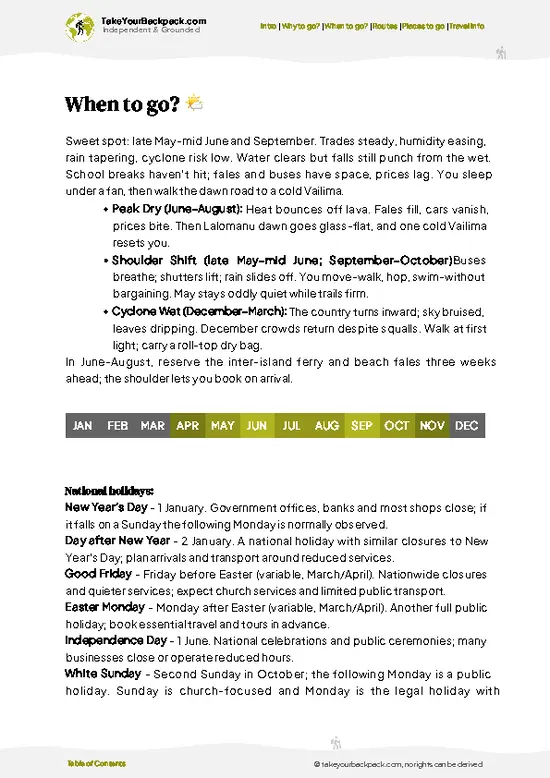
- Manono Island village loop — A tiny, car-free island where you actually walk through village life: fales on the shoreline, old colonial churches, kids playing, and families fishing from the reef. The whole island is easily circled on foot in under an hour, so you can see how Samoan community life still runs at village pace — no resorts, no tour buses.
- Apolima Island summit ridge & village — A volcanic cone with one small crater-village tucked into it. The short, steep ridge walk gives one of the best 360° views of the Apolima Strait and the neighboring islands; the church and tiny graveyard up top feel intensely local and unchanged. Visiting is more a village call than a tour — you get proper perspective on life between the two big islands.
- Nuʻulopa islet (conservation islet) — Hidden gem. A tiny, uninhabited rock in the middle of the strait that’s a resting/nesting spot for turtles and sea birds. You can only land by local boat and the islet is treated with care and local taboos, so go with a guide or fisher who knows the rules. Peaceful, photogenic and ecologically important.
- Mulifanua Bay & the Lapita find site — The place where offshore archaeological finds tied Samoa into the ancient Lapita story were recovered. The bay itself is quiet and local: fishermen, coconut groves, and a ferry terminal that still feels like a working place rather than a tourist zone. History buffs will appreciate how tangible Pacific prehistory meets everyday life here.
- Salelologa wharf & market — The Savaiʻi side of the strait: noisy, busy, and totally Samoan. When a ferry arrives you get fresh fish, root crops, woven mats, and a real market rhythm. It’s the best spot to see locals trading, load up on seasonal fruit, and watch the strait’s comings and goings without any tourist gloss.
- Manono-Apolima coral gardens (short boat snorkel) — Hidden gem. The reefs between the two inhabited isles are shallow, clear and far less trafficked than better-known Samoan dives. Arrange a 20-40 minute boat trip with a local fisher to drop into calm coral gardens — excellent for snorkelers who want bright reef life without crowds.
- Village kava circles and storytelling evenings — Sit with matai and families for an evening kava session and you’ll get more than a drink: genealogy, local news, and myths delivered in a communal way you won’t find at a hotel. Etiquette matters, but when you’re invited it’s one of the most honest cultural exchanges in Samoa.
- Small island church services and choir on Apolima/Manono — Sunday services here are full-throated, dramatic and communal — choir harmonies, traditional dress, and the whole village turning out. The scale is intimate, the acoustics often brilliant, and the feeling is unmistakably Samoan; it’s an experience that’s both spiritual and deeply musical.
- Tidal pools and quiet black-sand coves of Mulifanua — Hidden gem. Walk away from the ferry hub and you’ll find tucked-away coves, sheltered tidal pools and black-sand strips where locals snorkel, crab, and relax. Perfect for a lazy afternoon rinse after a ferry ride, and a low-key way to enjoy the strait without crowds.
- Sunrise/sunset boat ride across the Apolima Strait — The channel itself is the attraction: short boat crossings that frame the three islets, dramatic light on volcanic ridges, and — in season — the chance of spotting migrating whales offshore. It’s a simple trip but the combination of scale (ocean + tiny islands) and village life on shore is something you won’t replicate anywhere else.
Spotted a mistake or missing something? Contact us.

Full Day Tour in Samoa with a Local

Full-Day Upolu Island Highlights Tour from Apia

Apia Cruise: To Sua Trench, Lalomanu Beach

The Pristine Waters of Upolu

Apia Highlights Shore Excursion Tour + Lunch & Island Show

Island Show Fiafia Night @ Le Manumea Hotel

Namua Turtle Island and Eastern Upolu Tour

Guided Tour to Primeval Crystal Waters of Samoa

Tour Samoa with a local Full Day Island Tour of Apia Upolu Samoa



 Best Backpacking
.jpg) Hi, I’m Johan (Netherlands 🇳🇱), the creator of TakeYourBackpack. Over the past decade, I’ve backpacked through 80+ countries across six continents, gaining extensive experience with independent travel, long-term trips, and overland routes.
Hi, I’m Johan (Netherlands 🇳🇱), the creator of TakeYourBackpack. Over the past decade, I’ve backpacked through 80+ countries across six continents, gaining extensive experience with independent travel, long-term trips, and overland routes.