×

Saudi Arabia🇸🇦 | landmarksHegrarock-cut tombs, desert necropolis, Nabatean facades | things to do and best time to go

Explore Great Mosque of MeccaExplore Khaybar Oasis

Backpacking in Hegra
UNESCO World Heritage site
🌟 Highlightunique site ranked #3
By Johan Kruseman 🇳🇱 | Updated October 15, 2026

Most people only realize after they leave that Hegra is one of the rare “world wonder” sites where you can still feel alone with the ruins if you time it right, instead of elbowing through tour-bus chaos. Hegra Archaeological Site (al-Hijr, Madāʾin Ṣāliḥ) sits in northwestern Saudi Arabia near AlUla, out in the desert between Medina and the Jordanian border. For backpackers, it’s a strange mix: visually, it hits the same jaw-drop level as Petra, with rock-cut Nabataean tombs carved into sandstone cliffs, but without the souvenir gauntlet or animal hustles. The downside: it’s not cheap once you factor in mandatory tours and transport, and you can’t just wander freely like a scruffy explorer; access is controlled, scheduled, and a bit polished. Still, the silence, the desert light on the facades, and the sense of deep-time history make it feel serious, not Instagram-fake.

Discover everything you want to know in the 📖 Saudi Arabia Travel Guide.
Safety warning

The current risk level for Saudi Arabia is high. Check the advice before going.


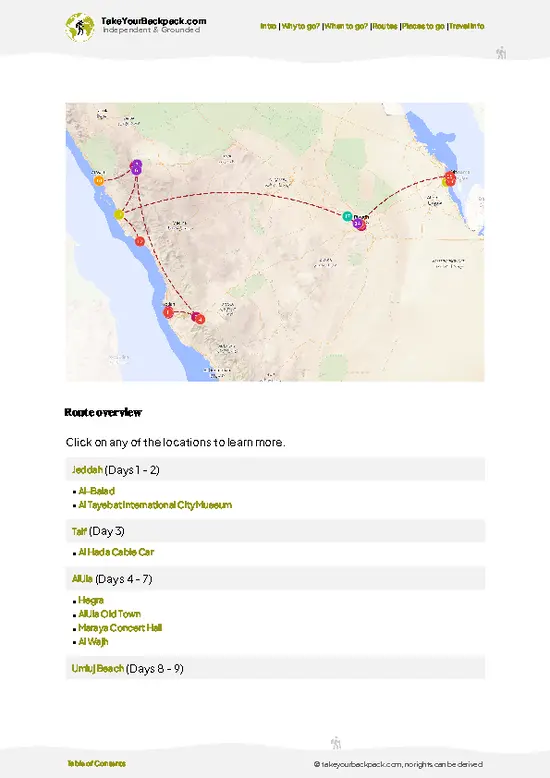
example page 0 from our offline Travel Guide for Saudi Arabia
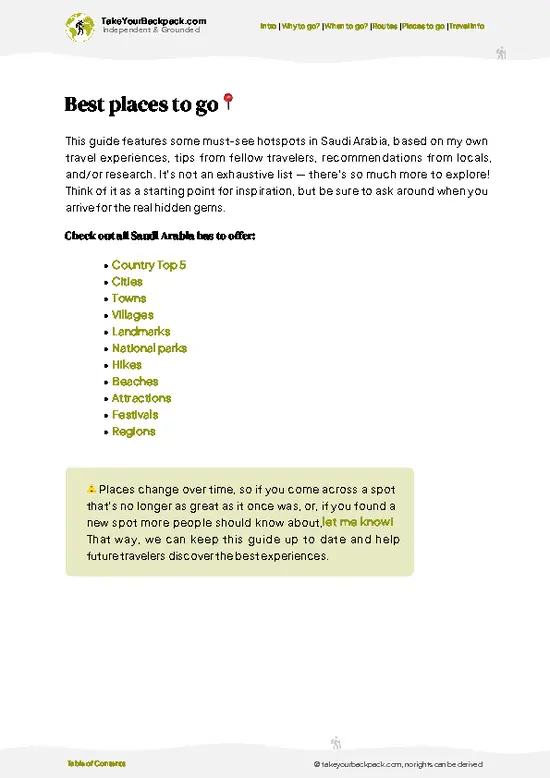
example page 1 from our offline Travel Guide for Saudi Arabia
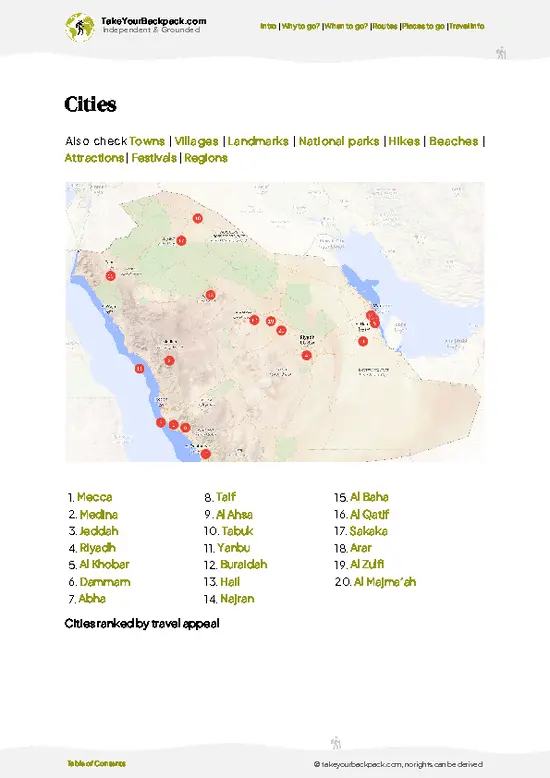
example page 2 from our offline Travel Guide for Saudi Arabia
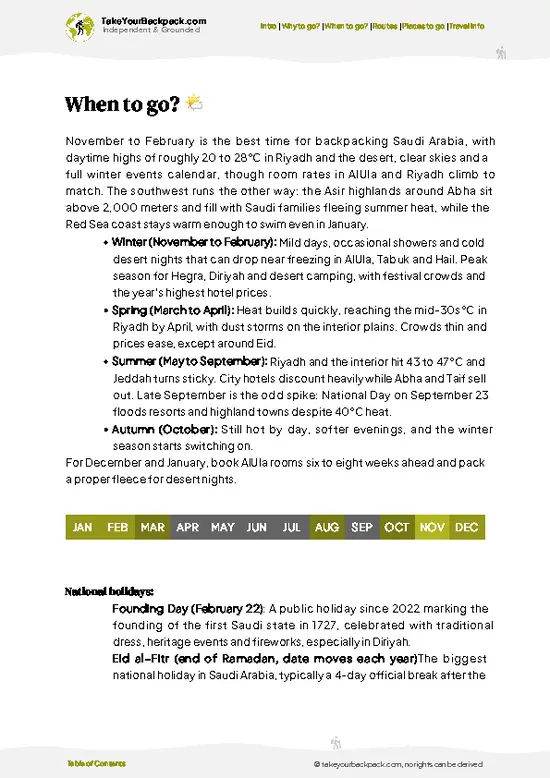
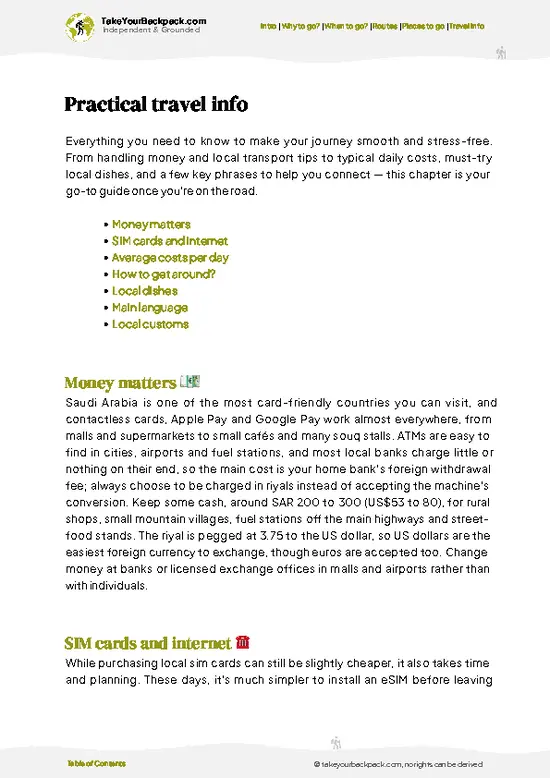
example page 3 from our offline Travel Guide for Saudi Arabia
example page 4 from our offline Travel Guide for Saudi Arabia
example page 5 from our offline Travel Guide for Saudi Arabia
example page 6 from our offline Travel Guide for Saudi Arabia
example page 7 from our offline Travel Guide for Saudi Arabia
Loading the map 🌍
CLICK TO FILTER
cities
towns
villages
landmarks
national parks
hikes
beaches
attractions
festivals
regions
SHOW COUNTRY’S BESTSHOW ALL

✨ Why go?
Ranked #3 unique site in Saudi Arabia
What makes it a must-see unique site

The Hegra Archaeological Site isn’t just another dusty ruin; it’s a gateway to the past that demands your attention. Sure, it’s not as Instagram-famous as Petra, but that’s part of its charm. You’ll dodge the crowds and soak in the authenticity of a UNESCO World Heritage site that feels like a well-kept secret.

Getting there is straightforward. It fits perfectly into a broader route through Saudi Arabia, especially if you’re exploring the Nefud Desert or heading to AlUla. The low cost of entry—around 50 SAR—makes it a no-brainer for backpackers on a budget.

What sets Hegra apart? The rock-cut tombs are stunning, but it’s the stories etched in stone that resonate. Each monument whispers tales of the Nabateans, their trade routes, and their artistry. You’ll find yourself wandering through … read more 👉
The Hegra Archaeological Site isn’t just another dusty ruin; it’s a gateway to the past that demands your attention. Sure, it’s not as Instagram-famous as Petra, but that’s part of its charm. You’ll dodge the crowds and soak in the authenticity of a UNESCO World Heritage site that feels like a well-kept secret.

Getting there is straightforward. It fits perfectly into a broader route through Saudi Arabia, especially if you’re exploring the Nefud Desert or heading to AlUla. The low cost of entry—around 50 SAR—makes it a no-brainer for backpackers on a budget.

What sets Hegra apart? The rock-cut tombs are stunning, but it’s the stories etched in stone that resonate. Each monument whispers tales of the Nabateans, their trade routes, and their artistry. You’ll find yourself wandering through history, feeling the weight of time in a way that selfies can’t capture.

So, if you’re after a real experience that’s rich in culture and history, Hegra is worth every step. It’s not just a stop; it’s a journey into the heart of an ancient civilization.

💡 HighlightsKey sights and experiences for travelers

  1. Qasr al-Farid (The Lonely Castle) — A single, massive unfinished tomb hewn from a freestanding sandstone block. It’s the site’s poster-child: perfectly photogenic, eerily monumental, and a great spot to appreciate Nabataean stonework up close (the interior is usually off-limits, so the outside view is the main event).
  2. The Gallery of Decorated Tomb Façades — Over a hundred carved façades cut into the cliffs, each with Nabataean columns, rosettes and cornices. Seeing so many well-preserved funerary fronts in one place is rare outside Petra and gives a real sense of the city’s wealth and artistic style.
  3. Ancient Inscriptions and Rock Writing — Panels of Nabataean, Lihyanite and Thamudic graffiti and inscriptions scattered around the site. They’re small, easily missed treasures that tell you
… read more 👉
  1. Qasr al-Farid (The Lonely Castle) — A single, massive unfinished tomb hewn from a freestanding sandstone block. It’s the site’s poster-child: perfectly photogenic, eerily monumental, and a great spot to appreciate Nabataean stonework up close (the interior is usually off-limits, so the outside view is the main event).
  2. The Gallery of Decorated Tomb Façades — Over a hundred carved façades cut into the cliffs, each with Nabataean columns, rosettes and cornices. Seeing so many well-preserved funerary fronts in one place is rare outside Petra and gives a real sense of the city’s wealth and artistic style.
  3. Ancient Inscriptions and Rock Writing — Panels of Nabataean, Lihyanite and Thamudic graffiti and inscriptions scattered around the site. They’re small, easily missed treasures that tell you who passed through, lived, or buried their dead here — a direct link to the people behind the monuments.
  4. Waterworks and Oasis Remains — Cisterns, channels and wells carved into rock that show how this desert city managed scarce water. The engineering gives context: Hegra wasn’t just tombs, it was a working settlement that mastered the landscape.
  5. Caravan Route Context and Historical Layers — Walk where incense and spice caravans once crossed; the site sits on long trade networks connecting Arabia to the Mediterranean. That historical role—plus layers of pre-Nabataean occupation—makes Hegra more than a necropolis: it’s a crossroads in stone.
  6. Sandstone Formations and Desert Vistas — The jagged outcrops, honeycombed rock faces and wide desert light are part of the attraction. Sunsets here paint the cliffs warm orange and make even the plainest façade feel cinematic — excellent for slow wandering and photos.
  7. On-site Visitor Experience (guides, trails, and etiquette) — The visitor center and local guides add context you’ll miss solo; trails take you to key clusters while signs explain the highlights. Practical note: bring water, sun protection, and stick to paths — many tomb interiors are protected and off-limits to preserve them.
Spotted a mistake or missing something? Contact us.

Things to do near Hegra

Ratings based on Tripadvisor reviews. When you book through this link, you support our work at no extra cost to you.

🌤️ When to go?Seasonal considerations and timing

  • Weather: The desert climate means scorching summers with highs often above 40°C (104°F), making daytime exploration brutal and downright dangerous without proper gear and hydration. Winters are mild and far more forgiving, with temperatures ranging from 10°C to 20°C (50°F to 68°F), ideal for trekking and photography.
  • Temperature: Expect freezing nights in winter, sometimes dropping close to 0°C (32°F), so pack layers. Spring and autumn offer a sweet spot with daytime temps between 20°C and 30°C (68°F to 86°F), but nights can still be chilly.
  • Daylight Hours: Around 10 to 12 hours of daylight year-round, but the sun rises early and sets quickly in winter, so plan your hikes accordingly to avoid being caught in the dark.
  • Crowds: The site is gaining popularity but remains far from overwhelmed.
… read more 👉
  • Weather: The desert climate means scorching summers with highs often above 40°C (104°F), making daytime exploration brutal and downright dangerous without proper gear and hydration. Winters are mild and far more forgiving, with temperatures ranging from 10°C to 20°C (50°F to 68°F), ideal for trekking and photography.
  • Temperature: Expect freezing nights in winter, sometimes dropping close to 0°C (32°F), so pack layers. Spring and autumn offer a sweet spot with daytime temps between 20°C and 30°C (68°F to 86°F), but nights can still be chilly.
  • Daylight Hours: Around 10 to 12 hours of daylight year-round, but the sun rises early and sets quickly in winter, so plan your hikes accordingly to avoid being caught in the dark.
  • Crowds: The site is gaining popularity but remains far from overwhelmed. Peak visitor season aligns with cooler months (November to March), so expect more groups and guided tours then. Off-season offers solitude but harsher conditions.
  • Seasonal Activities: No flashy festivals here—this is raw history. The best “activity” is simply wandering the carved tombs and inscriptions in comfortable weather, which only happens in the cooler months.
  • Price Fluctuations: Entrance fees and local guide prices stay stable year-round, but accommodation and transport costs spike during the cooler season when demand rises. Budget accordingly if you want comfort.
Pro-tip: Visit between late October and early April for manageable temperatures and decent daylight, but start early and bring layers—this is desert travel, not a beach holiday.


source: climatestotravel.comJANJanuary: excellent for travelingFEBFebruary: excellent for travelingMARMarch: excellent for travelingAPRApril: highly recommended for travelingMAYMay: fair for travelingJUNJune: below average for travelingJULJuly: below average for travelingAUGAugust: below average for travelingSEPSeptember: fair for travelingOCTOctober: highly recommended for travelingNOVNovember: excellent for travelingDECDecember: excellent for traveling
when-to-go

✈️ The backpacker research shortcutSaudi Arabia Travel Guide

An offline-friendly backpacking guide with optimized travel routes, ranked highlights, transport advice, and the best areas to stay.
example page 0 from our offline Travel Guide for Saudi Arabia
example page 1 from our offline Travel Guide for Saudi Arabia
example page 2 from our offline Travel Guide for Saudi Arabia
example page 3 from our offline Travel Guide for Saudi Arabia
example page 4 from our offline Travel Guide for Saudi Arabia
example page 5 from our offline Travel Guide for Saudi Arabia
example page 6 from our offline Travel Guide for Saudi Arabia
example page 7 from our offline Travel Guide for Saudi Arabia
The digital guide (322 pages) contains:
✅ 86 highlights, ranked by travel appeal
✅ Optimized 5, 10 & 15-day travel routes
✅ Cities, national parks, landmarks, beaches
✅ How to get around
✅ Offline-friendly for travel without Wi-Fi
👉 Click to see all 30+ guide features

📅 Plan smarter in minutes, not weeks
✅ Month by month travel advice
✅ Festivals & national holidays
✅ Budget expectations

🗺️ Go to the right places, skip the overrated ones
✅ Honest pros & cons of destinations
✅ Top hikes, parks & viewpoints
✅ Lesser-known places most travelers miss
✅ Clear “worth it vs skip it” guidance

🛏️ Travel smoothly without rookie mistakes
✅ Best areas to stay
✅ Transport systems explained simply
✅ Common scams & safety advice
✅ SIM cards, money & practical tips

🌍 Understand the country, not just visit it
✅ Culture & traditions
✅ 52 Essential phrases & customs
✅ Festivals worth planning around
✅ Traveler-friendly historical context
✅ Insights that make places more meaningful

📱 Built for real travel conditions
✅ Fully downloadable PDF
✅ Works completely offline
✅ Optimized for phone use
✅ Useful in remote areas & buses
✅ Everything in one place
Stop searching, start planning
Get instant access to your full guide. 30‑day money-back guarantee.
+ Add another guide for just

By proceeding you agree to our terms.
Sent to your inbox immediately after payment • 100% Secure Checkout
Best Backpacking Travel Advisor 2025 tourism awardBest Backpacking
Travel Advisor
2025
What others say about Take Your Backpack Guides:
⭐⭐⭐⭐⭐
Fantastic, amazing amount of information!
⭐⭐⭐⭐⭐
My goodness this is amazing, it's what I've been looking for hats off too you!
⭐⭐⭐⭐⭐
I think this is absolutely BRILLIANT
⭐⭐⭐⭐
Very complete and informative. It's still missing places, but I gotta to commend you
⭐⭐⭐⭐⭐
This is truly amazing, thank you, can't wait to explore it with my kids!
⭐⭐⭐⭐⭐
Awesome resource, thank you!
⭐⭐⭐⭐⭐
This is amazing! Can't wait to explore the ones I haven't seen
⭐⭐⭐⭐
I love this! Well done, great idea.
⭐⭐⭐⭐⭐
Thanks for taking the time to make this gem!
⭐⭐⭐⭐⭐
This might be the best website I've ever seen.
⭐⭐⭐⭐⭐
Congratulations, and thank you so much for your work; it's incredibly valuable.
⭐⭐⭐⭐
In all seriousness I think you did a great job pointing out the important spots
⭐⭐⭐⭐⭐
10/10 very good
⭐⭐⭐⭐⭐
As someone who's only just starting to visit regularly this is awesome, thank you.
⭐⭐⭐⭐
Thank you very much! I'm going to visit my dad, it's going to be very useful!
⭐⭐⭐⭐⭐
This is really cool! We'll be travelling for the first time and this definitely come in handy.
⭐⭐⭐⭐⭐
You are now our minister of culture, congratulations 👨‍💼
⭐⭐⭐⭐⭐
Just wanted to tell you that this is a pearl! Going to follow your recommendations.
⭐⭐⭐⭐⭐
This is so cool. I'll definitely be using the resource for my travels soon.
⭐⭐⭐⭐⭐
This is very impressive! Good work.
⭐⭐⭐⭐⭐
This is an amazing and informative site. Very well done!

🛏️ Where to stay?How to pick the right area

Staying near the Hegra Archaeological Site is all about balancing comfort, community, and convenience. The area around Al-Ula is your best bet. It’s a small town with a growing backpacker scene, so you’ll find a mix of budget-friendly accommodations and fellow travelers eager to share stories.

Look for spots near the town center. This area buzzes with life, especially in the evenings. You’ll find local eateries serving up authentic Saudi dishes that won’t break the bank. Plus, being close to the main square means you can easily connect with other backpackers or join group tours to the site.

… read more 👉
Staying near the Hegra Archaeological Site is all about balancing comfort, community, and convenience. The area around Al-Ula is your best bet. It’s a small town with a growing backpacker scene, so you’ll find a mix of budget-friendly accommodations and fellow travelers eager to share stories.

Look for spots near the town center. This area buzzes with life, especially in the evenings. You’ll find local eateries serving up authentic Saudi dishes that won’t break the bank. Plus, being close to the main square means you can easily connect with other backpackers or join group tours to the site.

Another option is to camp or stay in eco-lodges on the outskirts. These places often offer a more immersive experience, surrounded by stunning desert landscapes. You’ll get a chance to meet locals and learn about their culture, which is often missing in more commercial setups.

Safety is generally good, but stick to well-lit areas at night. The vibe here is friendly, and most travelers are respectful and open. Just remember, the magic of Hegra isn’t just in the ruins; it’s in the connections you make along the way.

👛 Costs (as of 15 October 2026)What things cost and how to budget

Visiting the Hegra Archaeological Site is an experience that goes beyond the Instagram hype. Here’s the real deal on what you can expect to spend.
  • Entrance Fee: Expect to pay around €10-€15 ($11-$16) for a ticket. This grants you access to the site, where you can explore the stunning Nabatean tombs and rock carvings. It’s a small price for a deep dive into history.
  • Guided Tours: If you want a richer experience, consider a guided tour. Prices range from €50-€100 ($55-$110) per person. This usually includes a knowledgeable guide who can share insights that you won’t find in a brochure. Worth it if you’re keen on the details.
  • Transportation: Getting to Hegra can be a bit of a trek. If you’re coming from AlUla, expect to spend about €20-€30 ($22-$33) on a taxi or rideshare. Public transport options
… read more 👉
Visiting the Hegra Archaeological Site is an experience that goes beyond the Instagram hype. Here’s the real deal on what you can expect to spend.
  • Entrance Fee: Expect to pay around €10-€15 ($11-$16) for a ticket. This grants you access to the site, where you can explore the stunning Nabatean tombs and rock carvings. It’s a small price for a deep dive into history.
  • Guided Tours: If you want a richer experience, consider a guided tour. Prices range from €50-€100 ($55-$110) per person. This usually includes a knowledgeable guide who can share insights that you won’t find in a brochure. Worth it if you’re keen on the details.
  • Transportation: Getting to Hegra can be a bit of a trek. If you’re coming from AlUla, expect to spend about €20-€30 ($22-$33) on a taxi or rideshare. Public transport options are limited, so budgeting for a private vehicle is smart.
  • Food and Drink: There are limited dining options nearby. A meal can cost you around €10-€20 ($11-$22). Bring snacks and water to save some cash and stay energized while you explore.
  • Accommodation: If you plan to stay overnight, hotels in AlUla range from €50-€200 ($55-$220) per night, depending on your comfort level. Booking in advance can help you snag better deals.

These costs can add up, but the experience of walking among ancient ruins is priceless. Just remember, this isn’t a tourist trap; it’s a genuine slice of history waiting to be explored.
⚠️ Prices can change and everyone travels differently, so take this as a rough guide. Hope it helps you plan your adventure!

FAQTraveler FAQ

Hegra Archaeological Site, also known as al-Hijr or Madā'in Ṣāliḥ, is an ancient Nabatean city in Saudi Arabia, famous for its well-preserved rock-cut tombs dating back to the 1st century BCE. It is the first UNESCO World Heritage Site in Saudi Arabia, showcasing monumental tomb facades and inscriptions.
Visiting Hegra typically requires about half a day to a full day to explore the main tombs, inscriptions, and visitor center thoroughly. Allocate at least 4 to 6 hours to appreciate the site without rushing, especially if you want to take photos and learn about the history.
Hegra is located about 20 kilometers north of Al-`Ula city in northwest Saudi Arabia. The easiest way to get there is by car or organized tour from Al-`Ula, which is accessible by domestic flights or road from major Saudi cities like Riyadh or Jeddah.
⚠️ Things can change over time, so always validate details locally before you go.

Other Saudi landmarks near Hegra

Explore more nearby:

  • Nabatean ancient ruins—trading outposts, carved temples, desert relics| 3 km away
  • AlUla—sandstone canyons, rock art, old town ruins| 23 km away
  • Khaybar Oasis—fortified settlements, basalt walls, abandoned dwellings| 177 km away

💡 Not sure where to go next?
Create a personalized itinerary for Saudi Arabia including Hegra and the places that fit your trip.

Generate my itinerary

👉 Discover all landmarks

Or checkout all Saudi Arabia has to offer (think cities, towns, villages, national parks, hikes, beaches, festivals)
Country photo of Saudi Arabia

We 💚 feedbackSumming up the experience

Hegra is a wild card. Forget the Instagram hype; the crowds can be overwhelming. But once you step away from the main site, the real magic unfolds. The silence, the ancient carvings, and the vast desert stretching endlessly are what hit you. The best surprise? Stumbling upon a hidden tomb with intricate details that few bother to explore. Just watch out for the heat—bring plenty of water and a hat. This place isn’t just history; it’s a connection to something much deeper.

✍️ Help improve this page!
The information on this page is based on in-depth research, insights shared by experienced travelers, and feedback from the local travel community in Saudi Arabia. While every effort is made to keep the information accurate and current, conditions can change — so if you spot anything incorrect or outdated, please get in touch.


🙋‍♂️ Give feedback

👋 Meet the founderWho’s Behind Take Your Backpack?

Johan, backpacker and founder of TakeYourBackpackHi, I’m Johan (Netherlands 🇳🇱), the creator of TakeYourBackpack. Over the past 3 decades, I’ve backpacked through 90+ countries across six continents, gaining extensive experience with independent travel, long-term trips, and overland routes.

This site is built on a combination of firsthand travel experience and carefully curated insights from other backpackers. Many guides are based on places I’ve personally visited, while others bring together tips, observations, and practical advice shared by trusted travelers I’ve met along the way.

The goal is to provide realistic, experience-driven guidance — not generic itineraries — so you can explore destinations with better context, clearer expectations, and more confidence.