×

Saudi Arabia🇸🇦 | landmarksNabatean ancient ruinstrading outposts, carved temples, desert relics | things to do and best time to go

Explore Ain al-SukkarExplore Al Masmak Fortress

Backpacking in Nabatean ancient ruins
👌 Worth visitingunique site ranked #8
By Johan Kruseman 🇳🇱 | Updated May 26, 2026

Let’s cut through the hype: most people chase the Nabatean ancient ruins for that one perfect, sunlit photo—the “Saudi Petra” shot that’s all over social media. But here’s the truth: the real magic isn’t in the Instagrammable façade, it’s in the raw, wind-scoured silence and the sense of ancient ambition carved into every cliff. These ruins, tucked deep in AlUla in northwest Saudi Arabia, aren’t just a backdrop—they’re a living, echoing testament to a civilization that outsmarted the desert. Yes, you’ll pay a premium for entry, and yes, you’ll share the site with tour groups angling for the same angles. But if you’re willing to look past the crowds and the curated photo ops, you’ll find a place that feels both monumental and strangely personal. The scale is jaw-dropping, the history is dense, and the vibe—especially at sunrise—can make you forget the world outside the sandstone. Just don’t expect solitude or a bargain, but do expect to feel small in the best possible way.

Discover everything you want to know in the 📖 Saudi Arabia Travel Guide.
Safety warning

The current risk level for Saudi Arabia is high. Check the advice before going.


Get your Saudi Arabia guide
101 ranked highlights, routes & tips, works offline (373 pages)
Loading the map 🌍
CLICK TO FILTER
cities
towns
landmarks
national parks
hikes
beaches
attractions
festivals
regions
SHOW COUNTRY’S BESTSHOW ALL

✨ Why go?
Ranked #8 unique site in Saudi Arabia
What makes this unique site worth visiting

The Nabatean ancient ruins in Saudi Arabia don’t come with the Instagram gloss of Petra or Machu Picchu, but that’s exactly why they’re a must-see for backpackers who’ve been around the block. First off, these ruins are a rare peek into a civilization that shaped trade routes and desert life long before modern borders existed. The effort-to-reward ratio here is exceptional: you’re not just staring at stone facades; you’re walking through a sprawling, weathered city carved into sandstone, with fewer crowds and a much lower entry cost than the usual world wonders. Accessibility is surprisingly straightforward if you’re already trekking through the Arabian Peninsula—these ruins slot naturally into a broader route that includes desert landscapes, Bedouin culture, and other historical sites, making … read more 👉
The Nabatean ancient ruins in Saudi Arabia don’t come with the Instagram gloss of Petra or Machu Picchu, but that’s exactly why they’re a must-see for backpackers who’ve been around the block. First off, these ruins are a rare peek into a civilization that shaped trade routes and desert life long before modern borders existed. The effort-to-reward ratio here is exceptional: you’re not just staring at stone facades; you’re walking through a sprawling, weathered city carved into sandstone, with fewer crowds and a much lower entry cost than the usual world wonders. Accessibility is surprisingly straightforward if you’re already trekking through the Arabian Peninsula—these ruins slot naturally into a broader route that includes desert landscapes, Bedouin culture, and other historical sites, making it a seamless addition rather than a detour. Forget the tourist traps; this is about raw history meeting rugged terrain, where every step feels like peeling back layers of time. If you want a landmark that challenges your expectations and rewards you with something genuinely off the beaten path, the Nabatean ruins in Saudi Arabia are worth every bit of the journey.
Want to include Nabatean ancient ruins in your Saudi Arabia route?
Create a personalized Saudi Arabia itinerary that includes Nabatean ancient ruins and the places that fit your trip — based on your travel style, budget, and available time. Get your route in seconds.

Generate my trip

💡 HighlightsEssential experiences to have while visiting Nabatean ancient ruins

1. Qasr al-Farid (“The Lonely Castle”)
Let’s get real: you’ve seen this one on every travel feed, but the hype is justified. Qasr al-Farid is a single, colossal tomb carved out of a solitary sandstone monolith, left unfinished by its Nabatean creators. It’s not just the size that hits you—it’s the audacity. The façade is crisp, geometric, and almost alien against the emptiness of the desert. Unlike Petra’s crowded Treasury, you’ll often have this monument to yourself, especially at sunrise or late afternoon. The silence is so complete you can hear your own heartbeat. This is the kind of place that makes you feel like you’ve stumbled onto the set of an ancient epic, minus the crowds and selfie sticks.


2. Madain Salih (Al-Hijr) Tombs
This is the Nabatean answer to Petra, but with a fraction … read more 👉
1. Qasr al-Farid (“The Lonely Castle”)
Let’s get real: you’ve seen this one on every travel feed, but the hype is justified. Qasr al-Farid is a single, colossal tomb carved out of a solitary sandstone monolith, left unfinished by its Nabatean creators. It’s not just the size that hits you—it’s the audacity. The façade is crisp, geometric, and almost alien against the emptiness of the desert. Unlike Petra’s crowded Treasury, you’ll often have this monument to yourself, especially at sunrise or late afternoon. The silence is so complete you can hear your own heartbeat. This is the kind of place that makes you feel like you’ve stumbled onto the set of an ancient epic, minus the crowds and selfie sticks.


2. Madain Salih (Al-Hijr) Tombs
This is the Nabatean answer to Petra, but with a fraction of the foot traffic and a raw, unvarnished atmosphere. Over a hundred monumental tombs are scattered across the site, each carved directly into rose-gold cliffs. The details are wild: Greek-inspired columns, intricate reliefs, and inscriptions that haven’t been scrubbed clean for tourists. You’re not just looking at history—you’re walking through a necropolis that once marked the edge of an empire. The scale is humbling, and the sense of isolation is real. If you want to feel the weight of centuries, this is the spot.


3. Jabal Ithlib
Forget the Instagram filters—Jabal Ithlib is the real deal for anyone who wants to see how the Nabateans engineered their world. This sandstone massif is riddled with ceremonial chambers and meeting halls, including the Diwan, a rock-cut chamber that was probably used for feasts or council meetings. The natural rock formations here are as dramatic as the ruins themselves, with narrow canyons and wind-sculpted arches. You can almost hear the echo of ancient debates bouncing off the walls. It’s a place that rewards slow exploration and a willingness to get a little sand in your boots.


4. The Well System and Water Engineering
Here’s where the Nabateans flexed their genius. In a landscape that should have been unlivable, they built a network of wells, cisterns, and channels to capture every drop of rain. You can still see the remnants—carved steps leading down into the earth, stone-lined basins, and clever runoff systems. This isn’t just old plumbing; it’s survival engineering at its most creative. If you want to understand how a civilization thrived in the middle of nowhere, stand by one of these wells and imagine the relief of cold water after a day in the desert.


5. Rock Art and Inscriptions
Skip the postcard shots and look closer at the stone surfaces scattered across the site. You’ll find ancient graffiti—Nabatean, Thamudic, and even Latin inscriptions—scratched into the rock. Some are prayers, some are names, some are just the ancient equivalent of “I was here.” These marks are raw, personal, and weirdly moving. They’re a reminder that this place was a crossroads, not just a dead city. If you want to touch the past, run your fingers over these carvings and realize you’re part of a very long story.
Spotted a mistake or missing something? Contact us.

Things to do near Nabatean ancient ruins

Ratings based on Tripadvisor reviews. When you book through this link, you support our work at no extra cost to you.

🌤️ When to go?When to go for the best experience


  • Weather: The Nabatean ruins in Saudi Arabia endure brutal summers, with temperatures soaring above 40°C (104°F) from June to August. This isn’t just hot; it’s punishing. Spring (March to May) and autumn (September to November) offer a more bearable climate, with highs ranging from 20°C to 30°C (68°F to 86°F), making exploration doable without melting into the sand.

  • Temperature: Winters (December to February) bring cooler days around 15°C (59°F) and chilly nights dropping to near 5°C (41°F). It’s comfortable for hiking but requires warm layers after sunset. Avoid the peak summer months unless you’re a desert heat masochist.

  • Daylight Hours: Daylight stretches from about 10 to 13 hours across the year. Longer days in spring and autumn maximize your trekking time, while winter’s shorter
read more 👉

  • Weather: The Nabatean ruins in Saudi Arabia endure brutal summers, with temperatures soaring above 40°C (104°F) from June to August. This isn’t just hot; it’s punishing. Spring (March to May) and autumn (September to November) offer a more bearable climate, with highs ranging from 20°C to 30°C (68°F to 86°F), making exploration doable without melting into the sand.

  • Temperature: Winters (December to February) bring cooler days around 15°C (59°F) and chilly nights dropping to near 5°C (41°F). It’s comfortable for hiking but requires warm layers after sunset. Avoid the peak summer months unless you’re a desert heat masochist.

  • Daylight Hours: Daylight stretches from about 10 to 13 hours across the year. Longer days in spring and autumn maximize your trekking time, while winter’s shorter daylight means starting early to squeeze in all the ruins before dark.

  • Crowds: The site sees a surge of visitors during the cooler months, especially December through February, when international tourists flock here. Spring and autumn are less crowded but still lively. Summer? Mostly locals and the occasional foolhardy traveler.

  • Seasonal Activities: Cultural festivals and guided tours ramp up in winter and early spring, offering richer context but also higher prices. Off-season visits mean fewer extras but a more solitary, raw experience of the ruins.

  • Price Fluctuations: Expect peak-season prices from December to March, with accommodation and tours costing 20-30% more. Shoulder seasons (March-May, September-November) offer better deals and fewer crowds, making them the sweet spot for budget-conscious backpackers.


Pro-tip: Aim for late March or early November—cool enough to roam freely, light crowds, and prices that won’t make your wallet scream.


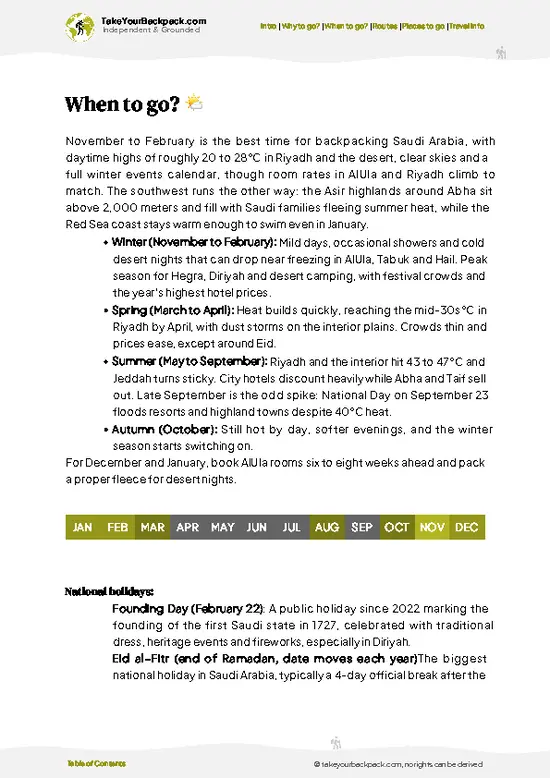
source: climatestotravel.comJANJanuary: highly recommended for travelingFEBFebruary: highly recommended for travelingMARMarch: excellent for travelingAPRApril: excellent for travelingMAYMay: highly recommended for travelingJUNJune: below average for travelingJULJuly: below average for travelingAUGAugust: below average for travelingSEPSeptember: highly recommended for travelingOCTOctober: excellent for travelingNOVNovember: excellent for travelingDECDecember: highly recommended for traveling
when-to-go

✈️ The backpacker research shortcutSaudi Arabia Travel Guide

An offline-friendly backpacking guide with optimized travel routes, ranked highlights, transport advice, and the best areas to stay.
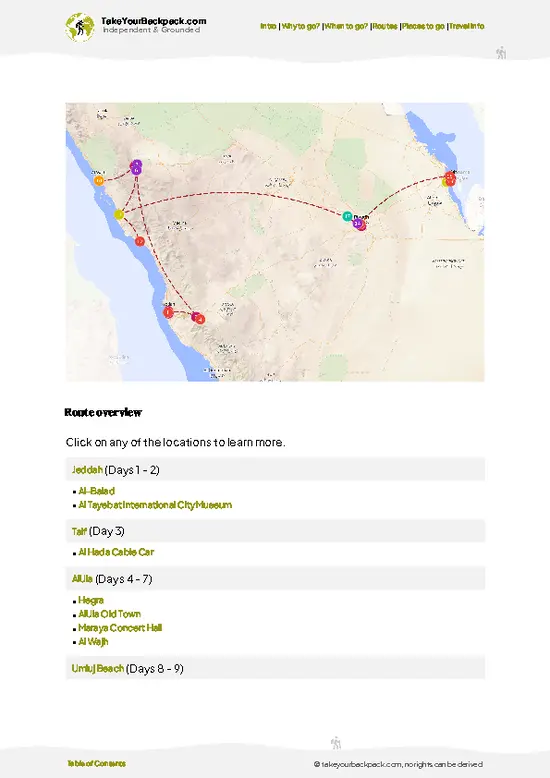
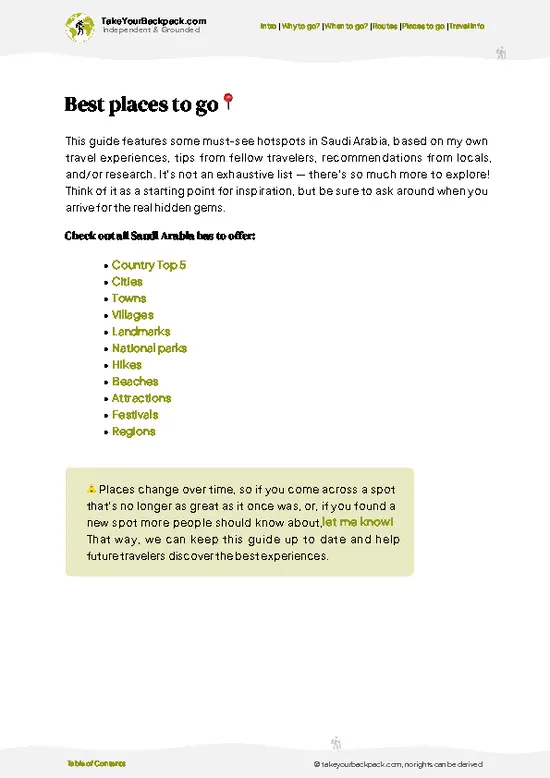
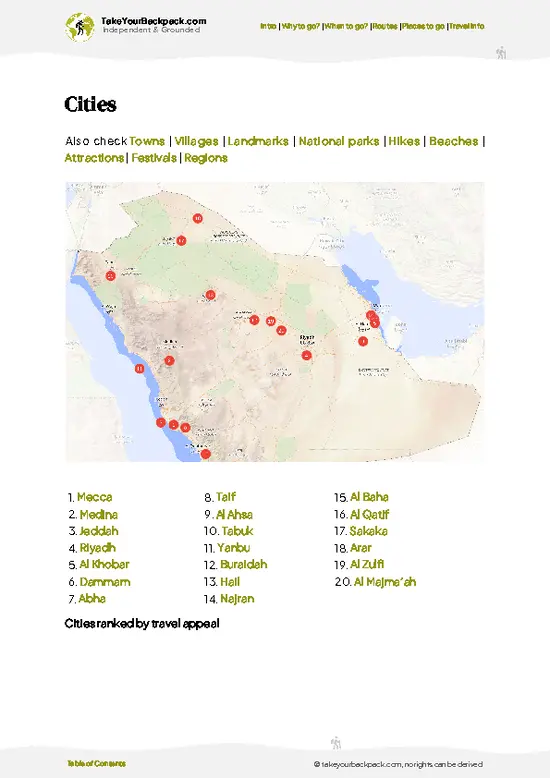
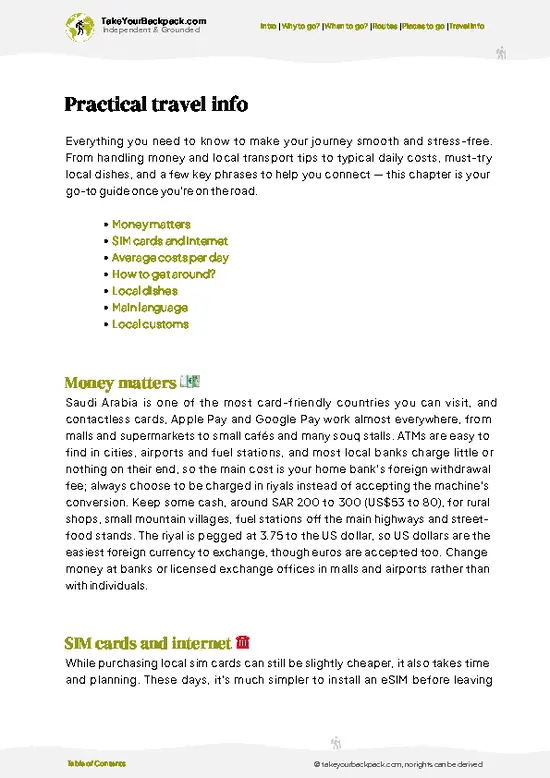
example page 0 from our offline Travel Guide for Saudi Arabia
example page 1 from our offline Travel Guide for Saudi Arabia
example page 2 from our offline Travel Guide for Saudi Arabia
example page 3 from our offline Travel Guide for Saudi Arabia
example page 4 from our offline Travel Guide for Saudi Arabia
example page 5 from our offline Travel Guide for Saudi Arabia
example page 6 from our offline Travel Guide for Saudi Arabia
example page 7 from our offline Travel Guide for Saudi Arabia
The digital guide (373 pages) contains:
101 highlights, ranked by travel appeal
Optimized 5, 10 & 15-day travel routes
Cities, national parks, landmarks, beaches
How to get around
Offline-friendly for travel without Wi-Fi
👉 Click to see all 30+ guide features

📅 Plan smarter in minutes, not weeks
Month by month travel advice
Festivals & national holidays
Budget expectations

🗺️ Go to the right places, skip the overrated ones
Honest pros & cons of destinations
Top hikes, parks & viewpoints
Lesser-known places most travelers miss
Clear “worth it vs skip it” guidance

🛏️ Travel smoothly without rookie mistakes
Best areas to stay
Transport systems explained simply
Common scams & safety advice
SIM cards, money & practical tips

🌍 Understand the country, not just visit it
Culture & traditions
52 Essential phrases & customs
Festivals worth planning around
Traveler-friendly historical context
Insights that make places more meaningful

📱 Built for real travel conditions
Fully downloadable PDF
Works completely offline
Optimized for phone use
Useful in remote areas & buses
Everything in one place
Save weeks of stressful planning
Get instant access to your full guide. 30‑day money-back guarantee.


By proceeding you agree to our terms.
Sent to your inbox immediately after payment • 100% Secure Checkout
Best Backpacking Travel Advisor 2025 tourism awardBest Backpacking
Travel Advisor
2025
What others say about Take Your Backpack Guides:
⭐⭐⭐⭐⭐
Fantastic, amazing amount of information!
⭐⭐⭐⭐⭐
My goodness this is amazing, it's what I've been looking for hats off too you!
⭐⭐⭐⭐⭐
I think this is absolutely BRILLIANT
⭐⭐⭐⭐
Very complete and informative. It's still missing places, but I gotta to commend you
⭐⭐⭐⭐⭐
This is truly amazing, thank you, can't wait to explore it with my kids!
⭐⭐⭐⭐⭐
Awesome resource, thank you!
⭐⭐⭐⭐⭐
This is amazing! Can't wait to explore the ones I haven't seen
⭐⭐⭐⭐
I love this! Well done, great idea.
⭐⭐⭐⭐⭐
Thanks for taking the time to make this gem!
⭐⭐⭐⭐⭐
This might be the best website I've ever seen.
⭐⭐⭐⭐⭐
Congratulations, and thank you so much for your work; it's incredibly valuable.
⭐⭐⭐⭐
In all seriousness I think you did a great job pointing out the important spots
⭐⭐⭐⭐⭐
10/10 very good
⭐⭐⭐⭐⭐
As someone who's only just starting to visit regularly this is awesome, thank you.
⭐⭐⭐⭐
Thank you very much! I'm going to visit my dad, it's going to be very useful!
⭐⭐⭐⭐⭐
This is really cool! We'll be travelling for the first time and this definitely come in handy.
⭐⭐⭐⭐⭐
You are now our minister of culture, congratulations 👨‍💼
⭐⭐⭐⭐⭐
Just wanted to tell you that this is a pearl! Going to follow your recommendations.
⭐⭐⭐⭐⭐
This is so cool. I'll definitely be using the resource for my travels soon.
⭐⭐⭐⭐⭐
This is very impressive! Good work.
⭐⭐⭐⭐⭐
This is an amazing and informative site. Very well done!

🛏️ Where to stay?Where staying makes the most sense

If you’re chasing the raw thrill of the Nabatean ruins in Saudi Arabia, forget the glossy Instagram shots that make it look like you’ll have the place to yourself. The reality? These spots draw a steady stream of curious travelers, especially during peak seasons. Crowds can cluster, and prices near the site spike. But here’s the kicker: the real magic isn’t in dodging people or hunting for the cheapest bed. It’s in finding a base that feels like a launchpad for adventure, where you can swap stories with fellow backpackers and soak in the local vibe without breaking the bank.

The best areas to … read more 👉
If you’re chasing the raw thrill of the Nabatean ruins in Saudi Arabia, forget the glossy Instagram shots that make it look like you’ll have the place to yourself. The reality? These spots draw a steady stream of curious travelers, especially during peak seasons. Crowds can cluster, and prices near the site spike. But here’s the kicker: the real magic isn’t in dodging people or hunting for the cheapest bed. It’s in finding a base that feels like a launchpad for adventure, where you can swap stories with fellow backpackers and soak in the local vibe without breaking the bank.

The best areas to stay are the small towns or villages within a short drive of the ruins. These places offer a safer, more social atmosphere than isolated spots or pricey resorts. You’ll find guesthouses and budget lodgings where the backpacker crowd naturally gathers—think communal spaces, shared meals, and a chance to connect with others who are as fired up about history and culture as you are. It’s not about luxury; it’s about authenticity and camaraderie.

Plus, these towns often have local markets and eateries where you can taste genuine Saudi flavors without the tourist markup. Staying here means you’re not just a visitor rushing through a site—you’re part of a living landscape, with stories and faces that add depth to the ruins themselves. That’s the kind of experience worth every penny and every step.

👛 Costs (as of 1 June 2026)What things cost and how to budget

Visiting the Nabatean ancient ruins in Saudi Arabia involves several cost components to consider for a typical day trip:
  • Entrance Fees: Expect to pay around USD15 to 25 for access to the archaeological site, which is well-maintained and offers guided tours at an additional cost.
  • Transportation: Depending on your starting point, local transport or car rental can range from USD30 to 60 for a round trip, as the site is often located in remote desert areas.
  • Accommodation: If staying overnight nearby, budget hotels or guesthouses typically cost between USD30 and 60 per night.
  • Food and Drinks: Meals in local eateries or small restaurants near the site usually cost USD10 to 20 per day.
  • Guides and Extras: Hiring a knowledgeable guide or joining a small group tour can add USD20 to 40 to your daily expenses,
read more 👉
Visiting the Nabatean ancient ruins in Saudi Arabia involves several cost components to consider for a typical day trip:
  • Entrance Fees: Expect to pay around USD15 to 25 for access to the archaeological site, which is well-maintained and offers guided tours at an additional cost.
  • Transportation: Depending on your starting point, local transport or car rental can range from USD30 to 60 for a round trip, as the site is often located in remote desert areas.
  • Accommodation: If staying overnight nearby, budget hotels or guesthouses typically cost between USD30 and 60 per night.
  • Food and Drinks: Meals in local eateries or small restaurants near the site usually cost USD10 to 20 per day.
  • Guides and Extras: Hiring a knowledgeable guide or joining a small group tour can add USD20 to 40 to your daily expenses, enhancing the experience with historical context and navigation.
⚠️ Prices can change and everyone travels differently, so take this as a rough guide. Hope it helps you plan your adventure!

Other Saudi landmarks near Nabatean ancient ruins

Explore more nearby:


💡 Not sure where to go next?
Create a personalized itinerary for Saudi Arabia including Nabatean ancient ruins and the places that fit your trip.

Generate my itinerary

👉 Discover all landmarks

Or checkout all Saudi Arabia has to offer (think cities, towns, villages, national parks, hikes, beaches, festivals)
Country photo of Saudi Arabia

We 💚 feedbackWhat to keep in mind

Here’s the deal: yes, the Nabatean ruins in Saudi Arabia can feel like a tourist magnet, especially around the iconic spots. But don’t let that scare you off. The real magic happens when you wander beyond the crowds—those quieter corners where the sandstone glows golden in the late afternoon and the silence hits differently. Bring good shoes and patience; the heat and dust aren’t just Instagram filters. If you’re after something raw and ancient, this place delivers in spades—just be ready to earn it.

✍️ Help improve this page!
The information on this page is based on in-depth research, insights shared by experienced travelers, and feedback from the local travel community in Saudi Arabia. While every effort is made to keep the information accurate and current, conditions can change — so if you spot anything incorrect or outdated, please get in touch.


🙋‍♂️ Give feedback

👋 Meet the founderWho’s Behind Take Your Backpack?

Johan, backpacker and founder of TakeYourBackpackHi, I’m Johan (Netherlands 🇳🇱), the creator of TakeYourBackpack. Over the past decade, I’ve backpacked through 80+ countries across six continents, gaining extensive experience with independent travel, long-term trips, and overland routes.

This site is built on a combination of firsthand travel experience and carefully curated insights from other backpackers. Many guides are based on places I’ve personally visited, while others bring together tips, observations, and practical advice shared by trusted travelers I’ve met along the way.

The goal is to provide realistic, experience-driven guidance — not generic itineraries — so you can explore destinations with better context, clearer expectations, and more confidence.

Get full country guide •
Instant download • 101 highlights • Full Offline guide