×

Saudi Arabia🇸🇦 | landmarksKhaybar Oasisfortified settlements, basalt walls, abandoned dwellings | things to do and best time to go

Explore HegraExplore Ain al-Sukkar

Backpacking in Khaybar Oasis
👀 For curious travelersunique site ranked #8
By Johan Kruseman 🇳🇱 | Updated October 15, 2026

Everyone’s chasing that perfect shot of Khaybar’s old Jewish ruins—the crumbling walls, the sun-baked stones, the “I was here first” bragging rights. But let’s be honest: if you’re coming just for the Instagram flex, you’ll leave with a memory card full of rocks and a sense you missed the point. What actually matters here isn’t the photo, but the raw, unfiltered sense of history—centuries of trade, faith, and conflict layered into the basalt. Khaybar sits in the volcanic wilds of northwest Saudi Arabia, north of Medina, where the desert feels ancient and the silence is almost intimidating. For backpackers, the site is a paradox: the wow-factor is real if you care about stories over selfies, but don’t expect polished trails or tourist infrastructure. Crowds are rare (for now), costs are low, but so is accessibility—think rough roads and a real sense of remoteness. The vibe? Stark, contemplative, and absolutely worth it if you crave substance over spectacle.

Discover everything you want to know in the 📖 Saudi Arabia Travel Guide.
Safety warning

The current risk level for Saudi Arabia is high. Check the advice before going.


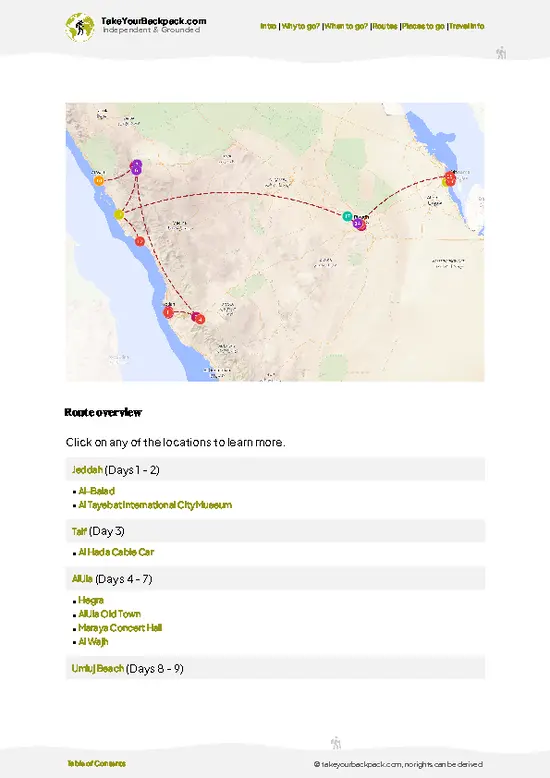
example page 0 from our offline Travel Guide for Saudi Arabia
example page 1 from our offline Travel Guide for Saudi Arabia
example page 2 from our offline Travel Guide for Saudi Arabia
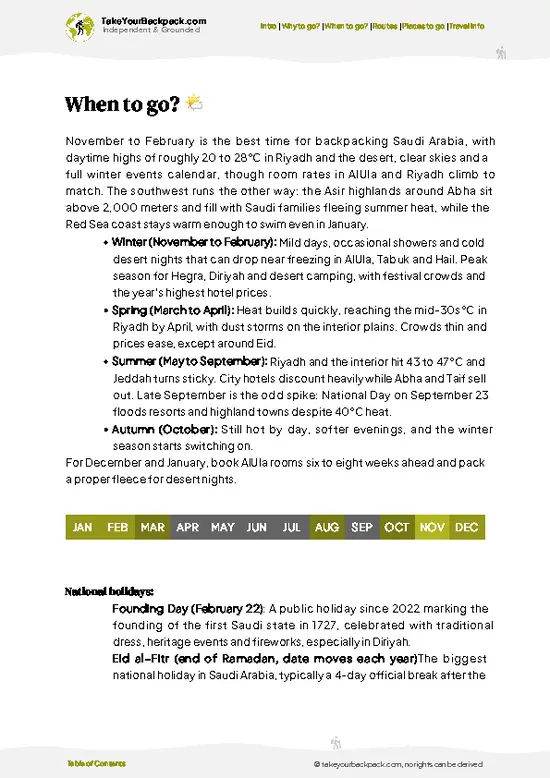
example page 3 from our offline Travel Guide for Saudi Arabia
example page 4 from our offline Travel Guide for Saudi Arabia
example page 5 from our offline Travel Guide for Saudi Arabia
example page 6 from our offline Travel Guide for Saudi Arabia
example page 7 from our offline Travel Guide for Saudi Arabia
Loading the map 🌍
CLICK TO FILTER
cities
towns
villages
landmarks
national parks
hikes
beaches
attractions
festivals
regions
SHOW COUNTRY’S BESTSHOW ALL

✨ Why go?
Ranked #8 unique site in Saudi Arabia
What sets this place apart

The Khaybar Oasis don’t show up on every backpacker’s radar, and that’s exactly why they’re worth your time. Forget the polished, overcrowded tourist traps—you’re stepping into a place where history feels raw and real. Yes, the site is off the beaten path, but that’s part of its charm. The ruins aren’t about flashy monuments; they’re about the layers of stories etched into stone walls and ancient wells, remnants of a community that shaped the region’s history in ways few places can claim.

Getting there isn’t a hassle either. Khaybar fits neatly into a broader northern Saudi route that includes the desert landscapes and other archaeological sites, so it’s not a detour you’ll regret. The cost? Practically nothing beyond your transport and a modest guide if you want one. No overpriced entry … read more 👉
The Khaybar Oasis don’t show up on every backpacker’s radar, and that’s exactly why they’re worth your time. Forget the polished, overcrowded tourist traps—you’re stepping into a place where history feels raw and real. Yes, the site is off the beaten path, but that’s part of its charm. The ruins aren’t about flashy monuments; they’re about the layers of stories etched into stone walls and ancient wells, remnants of a community that shaped the region’s history in ways few places can claim.

Getting there isn’t a hassle either. Khaybar fits neatly into a broader northern Saudi route that includes the desert landscapes and other archaeological sites, so it’s not a detour you’ll regret. The cost? Practically nothing beyond your transport and a modest guide if you want one. No overpriced entry fees or tourist traps selling plastic souvenirs.

If you’re after something that challenges your expectations and rewards you with a genuine connection to a complex past, Khaybar’s old Jewish ruins deliver. It’s not about ticking a box; it’s about standing where history happened, feeling the weight of time without the noise of crowds. That’s the kind of experience that sticks with you.

💡 HighlightsWhat this place is best known for

The Fortress Ruins of Khaybar
Let’s cut through the travel-poster fog: Khaybar’s old Jewish fortress ruins are not a sanitized, selfie-ready theme park. What you get is the raw, sun-bleached skeleton of one of the Arabian Peninsula’s most storied strongholds. The crumbling basalt walls and battered towers are the real deal—no velvet ropes, no curated lighting, just the wind and the weight of centuries. This was once the nerve center of a thriving Jewish community, a place that shaped the region’s history long before the modern borders of Saudi Arabia existed. You’re walking through the bones of a place that survived sieges, alliances, and betrayals that still echo in the stones.


The Ancient Wells (Bi’r)
Forget the Instagram shots of turquoise pools—these wells are deep, functional scars in … read more 👉
The Fortress Ruins of Khaybar
Let’s cut through the travel-poster fog: Khaybar’s old Jewish fortress ruins are not a sanitized, selfie-ready theme park. What you get is the raw, sun-bleached skeleton of one of the Arabian Peninsula’s most storied strongholds. The crumbling basalt walls and battered towers are the real deal—no velvet ropes, no curated lighting, just the wind and the weight of centuries. This was once the nerve center of a thriving Jewish community, a place that shaped the region’s history long before the modern borders of Saudi Arabia existed. You’re walking through the bones of a place that survived sieges, alliances, and betrayals that still echo in the stones.


The Ancient Wells (Bi’r)
Forget the Instagram shots of turquoise pools—these wells are deep, functional scars in the earth, dug by hand and used for centuries. The Jewish tribes of Khaybar engineered a network of wells that turned this volcanic wasteland into an agricultural powerhouse. Stand at the edge, peer down, and you’ll feel the ingenuity and desperation that went into every bucket of water. Some of these wells are still in use, a living link to the past that’s more impressive than any glossy travel brochure.


The Date Palm Groves
You won’t find manicured gardens here. What you will find are tangled, ancient date palms—descendants of the groves that made Khaybar famous for its fruit. The Jewish communities here mastered oasis agriculture, coaxing life from lava rock and dust. Walk through the groves and you’ll catch the scent of sun-warmed dates and the low hum of bees. This is agriculture as survival, not as spectacle.


The Basalt Houses and Alleyways
These aren’t the kind of ruins you tiptoe through with a guidebook. The basalt houses, with their thick, black stone walls, are battered but unmistakably human. Some still have remnants of lintels and doorways, hinting at the lives lived inside. The alleyways are narrow, twisting, and utterly un-touristy. You’ll need sturdy shoes and a sense of curiosity. This is where you feel the pulse of a lost community—no filters, no crowds, just the echo of footsteps on ancient stone.


The Battlefield Sites
History here isn’t just a plaque on a wall—it’s the ground itself. The fields around Khaybar saw one of the most pivotal sieges in early Islamic history. Stand in the dust and try to picture the armies, the negotiations, the drama that unfolded right where you’re standing. There’s no monument, no souvenir stand—just the knowledge that you’re standing on ground that changed the course of a region.


The Silence and Solitude
Here’s the real magic: Khaybar isn’t mobbed by tour buses or souvenir hawkers. You’ll likely have the ruins to yourself, with only the wind and the occasional goat for company. The silence is thick, almost physical. It’s the kind of quiet that lets you hear your own heartbeat—and maybe, if you’re lucky, the faint echoes of a world that vanished centuries ago. This is the anti-Instagram experience: raw, real, and absolutely worth the journey.
Spotted a mistake or missing something? Contact us.

🌤️ When to go?Seasonal considerations and timing

  • Weather: The Khaybar ruins sit in a desert climate, so summers (June to August) are brutal—think 40-45°C (104-113°F). It’s not just hot; it’s punishing. Winters (December to February) are mild and dry, hovering around 15-20°C (59-68°F), making exploration doable without melting into the sand.
  • Temperature: Spring (March to May) and autumn (September to November) offer a sweet spot. Daytime temps range from 25-30°C (77-86°F), cool enough for long hikes but warm enough to enjoy the open air. Nights can drop sharply, so pack layers.
  • Daylight Hours: Around 11-12 hours of daylight year-round, but in winter, the sun sets early, limiting your window for wandering the ruins. Spring and autumn give you more balanced light—perfect for photography and pacing your trek.
  • Crowds: Khaybar isn’t exactly
… read more 👉
  • Weather: The Khaybar ruins sit in a desert climate, so summers (June to August) are brutal—think 40-45°C (104-113°F). It’s not just hot; it’s punishing. Winters (December to February) are mild and dry, hovering around 15-20°C (59-68°F), making exploration doable without melting into the sand.
  • Temperature: Spring (March to May) and autumn (September to November) offer a sweet spot. Daytime temps range from 25-30°C (77-86°F), cool enough for long hikes but warm enough to enjoy the open air. Nights can drop sharply, so pack layers.
  • Daylight Hours: Around 11-12 hours of daylight year-round, but in winter, the sun sets early, limiting your window for wandering the ruins. Spring and autumn give you more balanced light—perfect for photography and pacing your trek.
  • Crowds: Khaybar isn’t exactly a tourist hotspot, but weekends and Saudi holidays see a spike in local visitors. Visiting midweek during off-peak seasons means you’ll have the ruins mostly to yourself, which is priceless for soaking in the atmosphere.
  • Seasonal Activities: There’s no flashy festival calendar here, but winter months sometimes host small cultural events nearby. These can add a layer of local flavor, but they also bump up prices and crowds slightly.
  • Price Fluctuations: Accommodation and transport costs spike during the cooler months (December to February) when more Saudis and expats travel. Booking early in spring or autumn can save you money and hassle.
Pro-tip: Aim for late autumn or early spring—cool temps, fewer crowds, and better prices—so you can explore the ruins without the sweat or the selfie-stick traffic.


source: climatestotravel.comJANJanuary: good for travelingFEBFebruary: good for travelingMARMarch: highly recommended for travelingAPRApril: highly recommended for travelingMAYMay: good for travelingJUNJune: below average for travelingJULJuly: below average for travelingAUGAugust: below average for travelingSEPSeptember: highly recommended for travelingOCTOctober: excellent for travelingNOVNovember: highly recommended for travelingDECDecember: good for traveling
when-to-go

✈️ The backpacker research shortcutSaudi Arabia Travel Guide

An offline-friendly backpacking guide with optimized travel routes, ranked highlights, transport advice, and the best areas to stay.
example page 0 from our offline Travel Guide for Saudi Arabia
example page 1 from our offline Travel Guide for Saudi Arabia
example page 2 from our offline Travel Guide for Saudi Arabia
example page 3 from our offline Travel Guide for Saudi Arabia
example page 4 from our offline Travel Guide for Saudi Arabia
example page 5 from our offline Travel Guide for Saudi Arabia
example page 6 from our offline Travel Guide for Saudi Arabia
example page 7 from our offline Travel Guide for Saudi Arabia
The digital guide (322 pages) contains:
✅ 86 highlights, ranked by travel appeal
✅ Optimized 5, 10 & 15-day travel routes
✅ Cities, national parks, landmarks, beaches
✅ How to get around
✅ Offline-friendly for travel without Wi-Fi
👉 Click to see all 30+ guide features

📅 Plan smarter in minutes, not weeks
✅ Month by month travel advice
✅ Festivals & national holidays
✅ Budget expectations

🗺️ Go to the right places, skip the overrated ones
✅ Honest pros & cons of destinations
✅ Top hikes, parks & viewpoints
✅ Lesser-known places most travelers miss
✅ Clear “worth it vs skip it” guidance

🛏️ Travel smoothly without rookie mistakes
✅ Best areas to stay
✅ Transport systems explained simply
✅ Common scams & safety advice
✅ SIM cards, money & practical tips

🌍 Understand the country, not just visit it
✅ Culture & traditions
✅ 52 Essential phrases & customs
✅ Festivals worth planning around
✅ Traveler-friendly historical context
✅ Insights that make places more meaningful

📱 Built for real travel conditions
✅ Fully downloadable PDF
✅ Works completely offline
✅ Optimized for phone use
✅ Useful in remote areas & buses
✅ Everything in one place
Stop searching, start planning
Get instant access to your full guide. 30‑day money-back guarantee.
+ Add another guide for just

By proceeding you agree to our terms.
Sent to your inbox immediately after payment • 100% Secure Checkout
Best Backpacking Travel Advisor 2025 tourism awardBest Backpacking
Travel Advisor
2025
What others say about Take Your Backpack Guides:
⭐⭐⭐⭐⭐
Fantastic, amazing amount of information!
⭐⭐⭐⭐⭐
My goodness this is amazing, it's what I've been looking for hats off too you!
⭐⭐⭐⭐⭐
I think this is absolutely BRILLIANT
⭐⭐⭐⭐
Very complete and informative. It's still missing places, but I gotta to commend you
⭐⭐⭐⭐⭐
This is truly amazing, thank you, can't wait to explore it with my kids!
⭐⭐⭐⭐⭐
Awesome resource, thank you!
⭐⭐⭐⭐⭐
This is amazing! Can't wait to explore the ones I haven't seen
⭐⭐⭐⭐
I love this! Well done, great idea.
⭐⭐⭐⭐⭐
Thanks for taking the time to make this gem!
⭐⭐⭐⭐⭐
This might be the best website I've ever seen.
⭐⭐⭐⭐⭐
Congratulations, and thank you so much for your work; it's incredibly valuable.
⭐⭐⭐⭐
In all seriousness I think you did a great job pointing out the important spots
⭐⭐⭐⭐⭐
10/10 very good
⭐⭐⭐⭐⭐
As someone who's only just starting to visit regularly this is awesome, thank you.
⭐⭐⭐⭐
Thank you very much! I'm going to visit my dad, it's going to be very useful!
⭐⭐⭐⭐⭐
This is really cool! We'll be travelling for the first time and this definitely come in handy.
⭐⭐⭐⭐⭐
You are now our minister of culture, congratulations 👨‍💼
⭐⭐⭐⭐⭐
Just wanted to tell you that this is a pearl! Going to follow your recommendations.
⭐⭐⭐⭐⭐
This is so cool. I'll definitely be using the resource for my travels soon.
⭐⭐⭐⭐⭐
This is very impressive! Good work.
⭐⭐⭐⭐⭐
This is an amazing and informative site. Very well done!

🛏️ Where to stay?Best areas to stay in Saudi Arabia

Khaybar’s old Jewish ruins are a magnet for history buffs and curious backpackers, but let’s cut through the Instagram gloss: this isn’t a polished tourist hub. The area around Khaybar is remote, and the infrastructure is basic. You won’t find a buzzing backpacker district with bars and cafes spilling onto the street. Instead, the real magic lies in the rawness of the place and the stories etched into its stones.

For backpackers, the best spots to stay are in the nearby towns that serve as practical bases—places like Al-Ula or Medina, which are a couple of hours away but offer a safer, more social … read more 👉
Khaybar’s old Jewish ruins are a magnet for history buffs and curious backpackers, but let’s cut through the Instagram gloss: this isn’t a polished tourist hub. The area around Khaybar is remote, and the infrastructure is basic. You won’t find a buzzing backpacker district with bars and cafes spilling onto the street. Instead, the real magic lies in the rawness of the place and the stories etched into its stones.

For backpackers, the best spots to stay are in the nearby towns that serve as practical bases—places like Al-Ula or Medina, which are a couple of hours away but offer a safer, more social environment. These towns have guesthouses and budget accommodations where you can meet fellow travelers, swap stories, and get reliable local advice. Staying here means you’re not just safe—you’re plugged into a community that understands the region’s nuances and can help you navigate the cultural and logistical challenges.

Closer to Khaybar itself, options are sparse and more isolated, which might appeal if you want solitude but can be a lonely grind if you’re solo and craving connection. The trade-off is clear: proximity versus social vibe and safety. For most backpackers, the smart move is to base yourself in a nearby town, soak up the local culture, and make day trips to the ruins. That way, you get the history without the hassle—and a chance to recharge with other travelers who get why you’re here.

👛 Costs (as of 15 October 2026)What things cost and how to budget

Visiting the Khaybar Oasis, Saudi Arabia, is free of charge. However, access to certain areas may be restricted due to ongoing maintenance. It's advisable to check the latest information before planning your visit.
⚠️ Prices can change and everyone travels differently, so take this as a rough guide. Hope it helps you plan your adventure!

FAQCommon questions from travelers

The Khaybar Oasis are remnants of ancient Jewish settlements and fortresses dating back to the 6th century, located in the oasis of Khaybar in Saudi Arabia. These ruins include old fortresses, wells, and agricultural terraces that reflect the historical Jewish presence in the region.
Visiting the Khaybar Oasis typically requires about half a day to a full day, depending on your interest in exploring the various sites and the surrounding oasis. Most travelers spend around 4 to 6 hours to cover the main ruins and nearby points of interest.
To get to the Khaybar Oasis, you can drive from Medina, which is about 150 kilometers away, taking roughly 2 hours by car. It is recommended to use a private vehicle or arrange a guided tour, as public transport options are limited in this remote area.
⚠️ Things can change over time, so always validate details locally before you go.

Other Saudi landmarks near Khaybar Oasis

Explore more nearby:

  • AlUla—sandstone canyons, rock art, old town ruins| 165 km away
  • Nabatean ancient ruins—trading outposts, carved temples, desert relics| 174 km away
  • Hegra—rock-cut tombs, desert necropolis, Nabatean facades| 177 km away

💡 Not sure where to go next?
Create a personalized itinerary for Saudi Arabia including Khaybar Oasis and the places that fit your trip.

Generate my itinerary

👉 Discover all landmarks

Or checkout all Saudi Arabia has to offer (think cities, towns, villages, national parks, hikes, beaches, festivals)
Country photo of Saudi Arabia

We 💚 feedbackIs it worth it?

Visiting the Khaybar Oasis isn’t about polished tourist trails or Instagram-perfect moments. Expect quiet, dusty stones that whisper stories rather than shout them. The real magic is in the rawness—the way the desert wind carries centuries of history, untouched by crowds or commercial gloss. It’s not flashy, and it’s not easy to get to, but if you’re into peeling back layers of time without distractions, this place hits deep. Just bring water and patience; the silence here speaks louder than any guidebook.

✍️ Help improve this page!
The information on this page is based on in-depth research, insights shared by experienced travelers, and feedback from the local travel community in Saudi Arabia. While every effort is made to keep the information accurate and current, conditions can change — so if you spot anything incorrect or outdated, please get in touch.


🙋‍♂️ Give feedback

👋 Meet the founderWho’s Behind Take Your Backpack?

Johan, backpacker and founder of TakeYourBackpackHi, I’m Johan (Netherlands 🇳🇱), the creator of TakeYourBackpack. Over the past 3 decades, I’ve backpacked through 90+ countries across six continents, gaining extensive experience with independent travel, long-term trips, and overland routes.

This site is built on a combination of firsthand travel experience and carefully curated insights from other backpackers. Many guides are based on places I’ve personally visited, while others bring together tips, observations, and practical advice shared by trusted travelers I’ve met along the way.

The goal is to provide realistic, experience-driven guidance — not generic itineraries — so you can explore destinations with better context, clearer expectations, and more confidence.