
×

Senegal🇸🇳 | citiesSaint-Louiscolonial architecture, island bridges, jazz heritage, riverfront | things to do and best time to go

Explore DakarExplore Ziguinchor

Backpacking in Saint-Louis
🏆 Top pickcity ranked #2
By Johan Kruseman 🇳🇱 | Updated September 3, 2026

Everyone talks about Saint-Louis as the “colonial jewel” of Senegal, but let’s be honest: you’re not flying across continents just to gawk at pastel facades. What actually matters is how Saint-Louis makes you feel—curious, slightly off-balance, and plugged into a rhythm that’s equal parts French nostalgia and Senegalese street life. Perched on an island at the mouth of the Senegal River, just south of the Mauritanian border, Saint-Louis is a city that rewards the traveler who likes their history with a side of real life. The UNESCO-listed old town is atmospheric, yes, but it’s the jazz bars, the crumbling fishermen’s quarter, and the wild birdlife of the Langue de Barbarie that stick with you. Backpackers will find Saint-Louis affordable, walkable, and safer than Dakar, though less cosmopolitan. It’s easy to meet other travelers—especially during the jazz festival—but the scene is quieter, more reflective. If you want nightlife, stick to Dakar. If you want character, come here.

Discover everything you want to know in the 📖 Senegal Travel Guide.


Get your Senegal guide
93 ranked highlights, routes & tips, works offline (380 pages)
Loading the map 🌍
CLICK TO FILTER
cities
towns
villages
landmarks
national parks
hikes
beaches
attractions
festivals
regions
SHOW COUNTRY’S BESTSHOW ALL

✨ Why go?
Ranked #2 city in Senegal
Reasons people choose to visit here

Saint-Louis, Senegal, is a backpacker’s hub that strikes a balance between affordability and authenticity. It’s not just a stopover; it’s a basecamp for those eager to explore the region. The city’s walkability makes it easy to navigate, allowing you to soak in the vibrant streets and local culture without breaking the bank on transport.

Accommodations range from cozy hostels to charming guesthouses, catering to every budget while fostering a sense of community among travelers. When it comes to food, the local cuisine is a feast for the senses, offering everything from street-side snacks to sit-down meals that won’t empty your wallet.

Nightlife here is laid-back yet lively, with bars and music venues that invite you to unwind after a day of exploration. Plus, Saint-Louis serves as a gatewayread more 👉
Saint-Louis, Senegal, is a backpacker’s hub that strikes a balance between affordability and authenticity. It’s not just a stopover; it’s a basecamp for those eager to explore the region. The city’s walkability makes it easy to navigate, allowing you to soak in the vibrant streets and local culture without breaking the bank on transport.

Accommodations range from cozy hostels to charming guesthouses, catering to every budget while fostering a sense of community among travelers. When it comes to food, the local cuisine is a feast for the senses, offering everything from street-side snacks to sit-down meals that won’t empty your wallet.

Nightlife here is laid-back yet lively, with bars and music venues that invite you to unwind after a day of exploration. Plus, Saint-Louis serves as a gateway for day trips to nearby attractions, making it a strategic choice for those looking to maximize their experience without sacrificing comfort.

In short, if you’re after a blend of culture, convenience, and camaraderie, Saint-Louis is more than worth your time; it’s a smart choice in your travel itinerary.
Want to include Saint-Louis in your Senegal route?
Create a personalized Senegal itinerary that includes Saint-Louis and the places that fit your trip — based on your travel style, budget, and available time. Get your route in seconds.

Generate my trip

💡 HighlightsWhat this place is best known for

  • Île de Saint-Louis (the historic island) — The heart of the city and a UNESCO site: narrow colonial streets, weathered French façades, horse-drawn carriages and a real sense of time layered into the architecture. Walk it slowly; every corner has a photo or a story.
  • Pont Faidherbe — The metal bridge that links the island to the mainland and the city’s icon. Great for photos, river views, and watching pirogues thread the Senegal River at sunrise or sunset.
  • Place Faidherbe — The central square beside the bridge: markets, cafés, the Faidherbe statue and an easy place to feel local life—traders, musicians, and people-watching all day long.
  • Palais du Gouverneur — A striking colonial-era building facing the square; even if you can’t go inside every time, the façade and grounds tell a lot about
read more 👉
  • Île de Saint-Louis (the historic island) — The heart of the city and a UNESCO site: narrow colonial streets, weathered French façades, horse-drawn carriages and a real sense of time layered into the architecture. Walk it slowly; every corner has a photo or a story.
  • Pont Faidherbe — The metal bridge that links the island to the mainland and the city’s icon. Great for photos, river views, and watching pirogues thread the Senegal River at sunrise or sunset.
  • Place Faidherbe — The central square beside the bridge: markets, cafés, the Faidherbe statue and an easy place to feel local life—traders, musicians, and people-watching all day long.
  • Palais du Gouverneur — A striking colonial-era building facing the square; even if you can’t go inside every time, the façade and grounds tell a lot about Saint-Louis’s role in West African history.
  • Grande Mosquée de Saint-Louis — An historic mosque with a distinctive minaret and a chance to see everyday spiritual life. Respectful visitors will find the architecture and neighborhood atmosphere rewarding.
  • Guet-Ndar fishing quarter — One of those living neighborhoods that defines the city: crowded pirogues, women processing fish, loud radios, and a community rhythm totally different from the colonial island—raw and unforgettable.
  • Marché aux poissons (the fish market at the quay) — Sensory, energetic and utterly local: watch boats unload, negotiate prices, and maybe eat the freshest grilled fish you’ll have in Senegal right by the river.
  • Cimetière Marin (old seaside cemetery) — Weathered tombstones facing the river and sea breezes. It’s quiet, photogenic, and a good spot to reflect on the city’s eclectic past and maritime life.
  • Quais du Fleuve (riverfront promenade) — Strolls along the Senegal River, take a short pirogue trip, and catch dramatic sunsets. It’s where daily life, commerce and leisure meet in one long, lively ribbon.
  • Artisan lanes and small galleries on the island — Not a single museumpiece, but a network of workshops, tailors, textile sellers and tiny galleries where you can see craftsmen at work and buy authentic pieces—more atmosphere than polished souvenirs.
A few excellent day trips outside the city: Parc National des Oiseaux du Djoudj (world-class birdwatching), the Langue de Barbarie spit and its beaches/dunes, and the small fishing villages and wetlands along the Senegal River that give you a wider sense of the region.
Spotted a mistake or missing something? Contact us.

🏘️ NeighborhoodsNeighborhood guide to Saint-Louis

Saint-Louis, Senegal, is a vibrant blend of history and culture, making it a fascinating stop for backpackers. Here’s a breakdown of key neighborhoods to help you navigate your stay.

Langue de Barbarie: This area is a paradise for nature lovers. It’s close to the national park, offering stunning views and birdwatching opportunities. The vibe is laid-back, perfect for those seeking tranquility. Accommodations here are budget-friendly, and you can easily walk to the beach. Ideal for short stays, but longer visits can feel a bit isolated.

Gare de Saint-Louis: The transport hub of the city, this neighborhood is bustling and lively. It’s where you’ll find the main bus station, making it easy to explore further afield. While it can be noisy, the energy is infectious. Street food stalls and local … read more 👉
Saint-Louis, Senegal, is a vibrant blend of history and culture, making it a fascinating stop for backpackers. Here’s a breakdown of key neighborhoods to help you navigate your stay.

Langue de Barbarie: This area is a paradise for nature lovers. It’s close to the national park, offering stunning views and birdwatching opportunities. The vibe is laid-back, perfect for those seeking tranquility. Accommodations here are budget-friendly, and you can easily walk to the beach. Ideal for short stays, but longer visits can feel a bit isolated.

Gare de Saint-Louis: The transport hub of the city, this neighborhood is bustling and lively. It’s where you’ll find the main bus station, making it easy to explore further afield. While it can be noisy, the energy is infectious. Street food stalls and local markets keep costs low. Great for both short and longer stays, especially if you enjoy a vibrant atmosphere.

Centre Ville: The heart of Saint-Louis, this area is rich in colonial architecture and cultural sites. Walkability is high, with cafes and shops lining the streets. It’s a bit pricier, but the experience is worth it. Nightlife options abound, making it perfect for those who want to socialize. Best suited for longer stays, as you’ll want time to soak it all in.

Île de Saint-Louis: A UNESCO World Heritage site, this island is charming and picturesque. The vibe is romantic and relaxed, with a slower pace. Accommodations can be on the higher side, but the unique experience justifies the cost. Walkable and filled with history, it’s ideal for both short and extended visits.

⌛️ 1 day1-day itinerary for Saint-Louis

Saint-Louis, Senegal, is a city where history and culture collide in a vibrant dance. Once the capital of French West Africa, its colonial architecture and lively streets tell stories of a rich past. The city’s charm lies in its unique blend of African and European influences, making it a fascinating stop on your journey.

Start your day in the heart of the island at the bustling Place Faidherbe. Grab a coffee at a local café and soak in the morning energy as vendors set up their stalls. The square is surrounded by stunning colonial buildings, including the iconic Hôtel de Ville. From there, wander through the narrow streets of the nearby Sor district, where you can admire colorful murals and the rhythm of daily life.

As the sun climbs higher, head to the vibrant fishing port of Guet Ndar. … read more 👉
Saint-Louis, Senegal, is a city where history and culture collide in a vibrant dance. Once the capital of French West Africa, its colonial architecture and lively streets tell stories of a rich past. The city’s charm lies in its unique blend of African and European influences, making it a fascinating stop on your journey.

Start your day in the heart of the island at the bustling Place Faidherbe. Grab a coffee at a local café and soak in the morning energy as vendors set up their stalls. The square is surrounded by stunning colonial buildings, including the iconic Hôtel de Ville. From there, wander through the narrow streets of the nearby Sor district, where you can admire colorful murals and the rhythm of daily life.

As the sun climbs higher, head to the vibrant fishing port of Guet Ndar. Here, you’ll witness fishermen bringing in their catch, a scene that’s both lively and authentic. Take a moment to chat with the locals; they’re often eager to share stories about their lives. This area isn’t on every tourist’s radar, but it offers a genuine glimpse into the city’s soul.

For lunch, find a local eatery and try some thieboudienne, Senegal’s national dish. The flavors are rich, and the atmosphere is welcoming. Afterward, stroll along the banks of the Senegal River, where you can enjoy the scenic views and perhaps spot some birdlife.

As evening approaches, make your way to the historic Île de Saint-Louis. The sunset here is magical, casting a golden hue over the colonial buildings. Enjoy dinner at a waterfront restaurant, where fresh seafood is the star of the menu.

Wrap up your day with a leisurely walk along the river, reflecting on the unique experiences you’ve gathered. Saint-Louis may be small, but its charm and character will linger long after you leave.
Turn your Saint-Louis visit into an Senegal adventure
Build a complete Senegal route with Saint-Louis, hidden gems, must-see destinations, and realistic travel times included.

Generate my trip

🌤️ When to go?Weather, crowds, and seasonal trade-offs


  • Topic: Weather – Saint-Louis has a tropical climate with a distinct wet season from July to October. Expect heavy rains and humidity during these months, which can slow down travel and outdoor activities. The dry season, from November to June, offers clearer skies and less moisture, making it the prime window for backpackers.

  • Topic: Temperature – Temperatures hover between 24°C and 32°C (75°F to 90°F) year-round. The hottest months are March to May, where the heat can feel relentless, especially with the sun beating down on the flat landscape. Cooler evenings during the dry season provide some relief.

  • Topic: Daylight Hours – Daylight remains fairly consistent, around 12 hours daily, thanks to Saint-Louis’ proximity to the equator. This stability means you can plan your days without
read more 👉

  • Topic: Weather – Saint-Louis has a tropical climate with a distinct wet season from July to October. Expect heavy rains and humidity during these months, which can slow down travel and outdoor activities. The dry season, from November to June, offers clearer skies and less moisture, making it the prime window for backpackers.

  • Topic: Temperature – Temperatures hover between 24°C and 32°C (75°F to 90°F) year-round. The hottest months are March to May, where the heat can feel relentless, especially with the sun beating down on the flat landscape. Cooler evenings during the dry season provide some relief.

  • Topic: Daylight Hours – Daylight remains fairly consistent, around 12 hours daily, thanks to Saint-Louis’ proximity to the equator. This stability means you can plan your days without worrying about shifting sunrise or sunset times.

  • Topic: Crowds – Tourist numbers peak during the dry season, especially December to February, coinciding with European winter escapes. This means more competition for budget accommodations and a livelier social scene, but also higher prices.

  • Topic: Seasonal Activities – The dry season is ideal for exploring the colonial architecture, birdwatching in Djoudj National Bird Sanctuary, and enjoying the Saint-Louis Jazz Festival in May. The wet season limits outdoor options but brings lush landscapes and fewer tourists.

  • Topic: Price Fluctuations – Accommodation and transport costs rise during the dry season, particularly around holidays and festival dates. The wet season offers better deals but at the cost of comfort and accessibility.


Pro-tip: Target the shoulder months of November and June for a sweet spot—good weather, fewer crowds, and more reasonable prices.


source: climatestotravel.comJANJanuary: highly recommended for travelingFEBFebruary: highly recommended for travelingMARMarch: good for travelingAPRApril: good for travelingMAYMay: highly recommended for travelingJUNJune: highly recommended for travelingJULJuly: fair for travelingAUGAugust: fair for travelingSEPSeptember: fair for travelingOCTOctober: fair for travelingNOVNovember: highly recommended for travelingDECDecember: highly recommended for traveling
when-to-go

✈️ The backpacker research shortcutSenegal Travel Guide

An offline-friendly backpacking guide with optimized travel routes, ranked highlights, transport advice, and the best areas to stay.
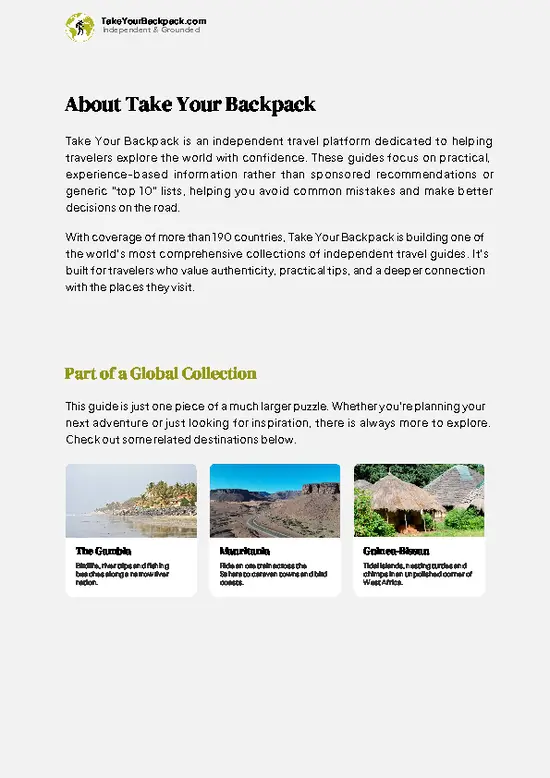
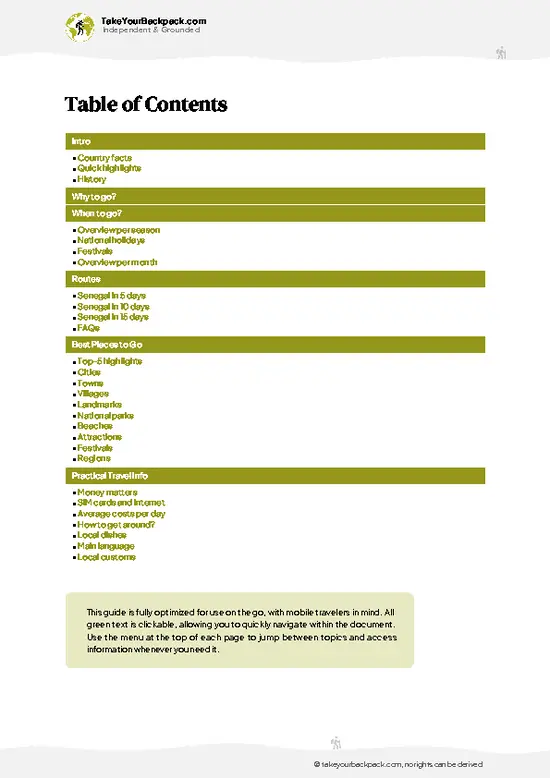
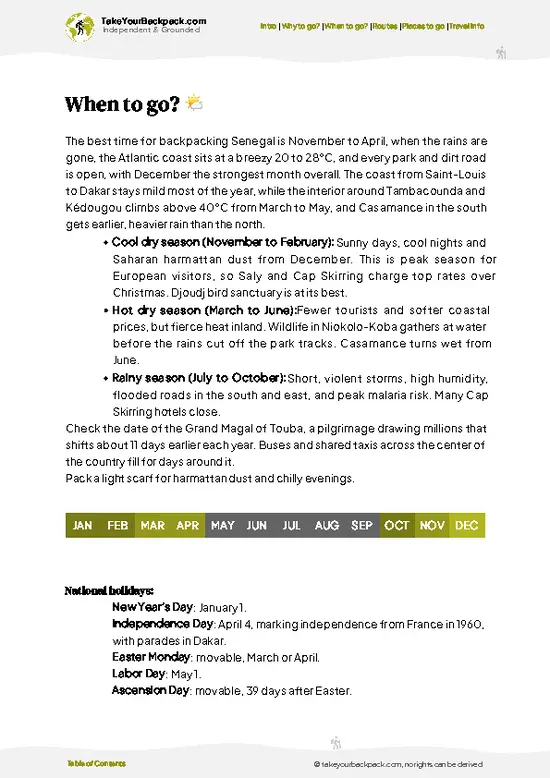
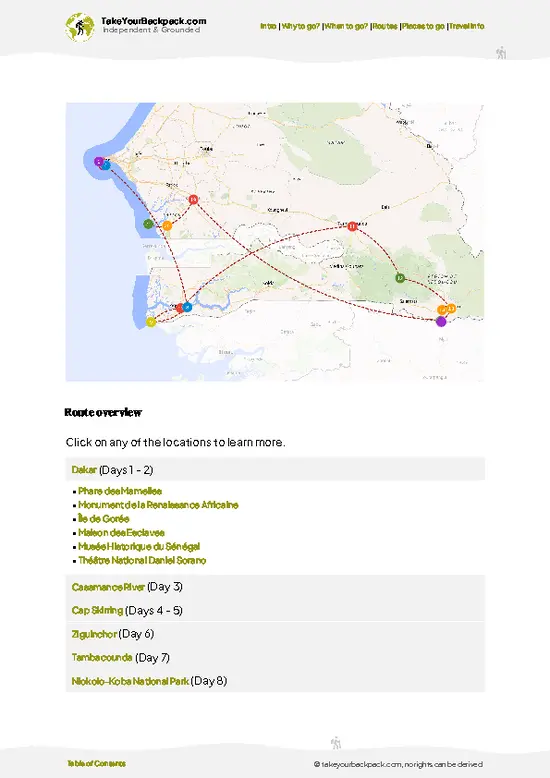
example page 0 from our offline Travel Guide for Senegal
example page 1 from our offline Travel Guide for Senegal
example page 2 from our offline Travel Guide for Senegal
example page 3 from our offline Travel Guide for Senegal
example page 4 from our offline Travel Guide for Senegal
example page 5 from our offline Travel Guide for Senegal
example page 6 from our offline Travel Guide for Senegal
example page 7 from our offline Travel Guide for Senegal
The digital guide (380 pages) contains:
93 highlights, ranked by travel appeal
Optimized 5, 10 & 15-day travel routes
Cities, national parks, landmarks, beaches
How to get around
Offline-friendly for travel without Wi-Fi
👉 Click to see all 30+ guide features

📅 Plan smarter in minutes, not weeks
Month by month travel advice
Festivals & national holidays
Budget expectations

🗺️ Go to the right places, skip the overrated ones
Honest pros & cons of destinations
Top hikes, parks & viewpoints
Lesser-known places most travelers miss
Clear “worth it vs skip it” guidance

🛏️ Travel smoothly without rookie mistakes
Best areas to stay
Transport systems explained simply
Common scams & safety advice
SIM cards, money & practical tips

🌍 Understand the country, not just visit it
Culture & traditions
52 Essential phrases & customs
Festivals worth planning around
Traveler-friendly historical context
Insights that make places more meaningful

📱 Built for real travel conditions
Fully downloadable PDF
Works completely offline
Optimized for phone use
Useful in remote areas & buses
Everything in one place
Save weeks of stressful planning
Get instant access to your full guide. 30‑day money-back guarantee.
+ Add another guide for just US$7.80

By proceeding you agree to our terms.
Sent to your inbox immediately after payment • 100% Secure Checkout
Best Backpacking Travel Advisor 2025 tourism awardBest Backpacking
Travel Advisor
2025
What others say about Take Your Backpack Guides:
⭐⭐⭐⭐⭐
Fantastic, amazing amount of information!
⭐⭐⭐⭐⭐
My goodness this is amazing, it's what I've been looking for hats off too you!
⭐⭐⭐⭐⭐
I think this is absolutely BRILLIANT
⭐⭐⭐⭐
Very complete and informative. It's still missing places, but I gotta to commend you
⭐⭐⭐⭐⭐
This is truly amazing, thank you, can't wait to explore it with my kids!
⭐⭐⭐⭐⭐
Awesome resource, thank you!
⭐⭐⭐⭐⭐
This is amazing! Can't wait to explore the ones I haven't seen
⭐⭐⭐⭐
I love this! Well done, great idea.
⭐⭐⭐⭐⭐
Thanks for taking the time to make this gem!
⭐⭐⭐⭐⭐
This might be the best website I've ever seen.
⭐⭐⭐⭐⭐
Congratulations, and thank you so much for your work; it's incredibly valuable.
⭐⭐⭐⭐
In all seriousness I think you did a great job pointing out the important spots
⭐⭐⭐⭐⭐
10/10 very good
⭐⭐⭐⭐⭐
As someone who's only just starting to visit regularly this is awesome, thank you.
⭐⭐⭐⭐
Thank you very much! I'm going to visit my dad, it's going to be very useful!
⭐⭐⭐⭐⭐
This is really cool! We'll be travelling for the first time and this definitely come in handy.
⭐⭐⭐⭐⭐
You are now our minister of culture, congratulations 👨‍💼
⭐⭐⭐⭐⭐
Just wanted to tell you that this is a pearl! Going to follow your recommendations.
⭐⭐⭐⭐⭐
This is so cool. I'll definitely be using the resource for my travels soon.
⭐⭐⭐⭐⭐
This is very impressive! Good work.
⭐⭐⭐⭐⭐
This is an amazing and informative site. Very well done!

🛏️ Where to stay?Where staying makes the most sense

Saint-Louis is a city where the trade-offs between time, money, and comfort become a strategic puzzle, especially for backpackers. The best area to base yourself is the island district, often called the “Île.” This is where the city’s pulse beats strongest for travelers who want safety, social buzz, and budget-friendly options all in one place. Staying here means you’re within walking distance of the riverfront, markets, and the colonial architecture that defines Saint-Louis’s character. The vibe is relaxed but lively, with plenty of cafés and bars where solo travelers naturally mingle.

Compared … read more 👉
Saint-Louis is a city where the trade-offs between time, money, and comfort become a strategic puzzle, especially for backpackers. The best area to base yourself is the island district, often called the “Île.” This is where the city’s pulse beats strongest for travelers who want safety, social buzz, and budget-friendly options all in one place. Staying here means you’re within walking distance of the riverfront, markets, and the colonial architecture that defines Saint-Louis’s character. The vibe is relaxed but lively, with plenty of cafés and bars where solo travelers naturally mingle.

Compared to the mainland neighborhoods, the Île offers a more compact, walkable experience. You sacrifice a bit of space and modern luxury, but gain immersion and convenience. Hostels and guesthouses cluster here, catering to backpackers who prioritize meeting others and soaking in local rhythms over plush amenities. The trade-off is clear: you’re choosing social capital and authentic atmosphere over isolated comfort.

If you venture to the mainland, you’ll find quieter, more residential zones. These can be cheaper but less social and require transport time to reach the core attractions. For a backpacker, that extra commute eats into your exploration hours and can fragment your experience.

In Saint-Louis, the smartest move is to embrace the island’s compact charm. It’s where your time stretches further, your budget works harder, and your comfort aligns with the city’s unique tempo.

🚌 Getting aroundHow to get from A to B

Saint-Louis moves at its own rhythm—a blend of old-world order and West African spontaneity. The city’s pulse is neither strictly regimented nor entirely chaotic; it’s a dance between fixed schedules and the improvisational flow of daily life. You’ll find buses and ferries that mostly stick to timetables, but expect delays and detours as part of the experience. Street vendors, shared taxis, and pirogues operate on a more intuitive timetable, responding to demand and mood rather than a clock. Understanding this balance is your key to mastering Saint-Louis transit: it’s about reading the city’s tempo and choosing when to lean into structure or embrace flexibility.


  • Walking: Saint-Louis is compact and flat, making walking the most reliable and cost-effective way to get around. It costs nothing,
read more 👉
Saint-Louis moves at its own rhythm—a blend of old-world order and West African spontaneity. The city’s pulse is neither strictly regimented nor entirely chaotic; it’s a dance between fixed schedules and the improvisational flow of daily life. You’ll find buses and ferries that mostly stick to timetables, but expect delays and detours as part of the experience. Street vendors, shared taxis, and pirogues operate on a more intuitive timetable, responding to demand and mood rather than a clock. Understanding this balance is your key to mastering Saint-Louis transit: it’s about reading the city’s tempo and choosing when to lean into structure or embrace flexibility.


  • Walking: Saint-Louis is compact and flat, making walking the most reliable and cost-effective way to get around. It costs nothing, offers full control over your pace, and lets you soak in the city’s colonial architecture and river views up close. Expect to spend 15-30 minutes crossing between major neighborhoods.


  • Car Rapide (Shared Minibus): These minibuses run from early morning (around 6:30 AM) until about 8 PM. Fares are dirt cheap—usually under 200 CFA (~$0.30)—but comfort is minimal, with crowded conditions and frequent stops. They follow main routes but don’t always stick to strict schedules, so timing can be unpredictable. Ideal if you want to save money and don’t mind a bit of hustle.


  • Taxi: Taxis offer door-to-door convenience and run 24/7, but they’re pricier—expect to pay 1,000 to 2,000 CFA (~$1.50-$3) for typical city rides. Negotiation is part of the game since meters aren’t standard. Taxis provide a faster, more comfortable option, especially if you’re traveling in a group or with luggage, but they eat into your budget.


  • Pirogue (Boat): For crossing the Senegal River or exploring nearby islands, pirogues are essential. They operate mostly during daylight hours, with prices varying by distance and negotiation skills. The ride is slow but scenic, offering a unique perspective on the city’s geography and culture. Not the fastest, but a memorable and affordable way to travel.


  • Bicycle Rental: A middle ground between walking and motorized transport, renting a bike costs around 1,000 CFA per day. It’s faster than walking and lets you cover more ground without the unpredictability of public transit. The city’s flat terrain makes cycling accessible, though traffic can be hectic, so it’s best for confident riders.


Each option here represents a trade-off between time, money, and comfort. Walking demands time but costs nothing and offers freedom. Car rapides save cash but test your patience and personal space. Taxis buy you comfort and speed at a premium. Pirogues add a cultural layer but slow your pace. Bikes strike a balance but require physical effort and street savvy. Your smartest move is to mix and match based on your priorities—sometimes sacrificing comfort for budget, other times paying a little more to save hours. Mastering Saint-Louis transit means playing this game with your eyes wide open, turning every trip into a strategic win.

👛 Costs (as of 3 September 2026)Travel costs and budget guide for Saint-Louis

Backpacking in Saint-Louis, Senegal, offers a clear trade-off between cost and comfort, with prices that reflect the city’s laid-back pace and developing tourism scene. Here’s how your daily budget breaks down:
  • Dorm Accommodation (High Season): Expect to pay around €10-€15 per night. High season drives prices up slightly due to demand, but options remain basic and clean rather than luxurious.
  • Dorm Accommodation (Off-Season): Prices drop to about €7-€10 per night. Fewer tourists mean better bargaining power and sometimes added perks like free breakfast or Wi-Fi.
  • Meals: Street food and local eateries dominate here, with meals costing between €2-€5 each. A full day of eating well on local fare will run you about €6-€12, depending on how adventurous or refined your palate is.
  • Local Transport:
read more 👉
Backpacking in Saint-Louis, Senegal, offers a clear trade-off between cost and comfort, with prices that reflect the city’s laid-back pace and developing tourism scene. Here’s how your daily budget breaks down:
  • Dorm Accommodation (High Season): Expect to pay around €10-€15 per night. High season drives prices up slightly due to demand, but options remain basic and clean rather than luxurious.
  • Dorm Accommodation (Off-Season): Prices drop to about €7-€10 per night. Fewer tourists mean better bargaining power and sometimes added perks like free breakfast or Wi-Fi.
  • Meals: Street food and local eateries dominate here, with meals costing between €2-€5 each. A full day of eating well on local fare will run you about €6-€12, depending on how adventurous or refined your palate is.
  • Local Transport: Shared taxis and minibuses are the norm, costing roughly €0.30-€0.50 per trip. Budget around €1.50-€3 daily if you’re moving around moderately.
  • City Transport Pass: Saint-Louis doesn’t have a formal city transport pass system, so individual fares apply. This means you save by walking or cycling when possible.
  • Basic Activities/Entry Fees: Museums, cultural sites, and guided tours typically charge between €2-€7. Budget €5-€10 daily if you plan to explore actively.
  • Miscellaneous Expenses: This includes bottled water, snacks, occasional internet access, and small tips. Set aside about €2-€5 per day for these incidentals.

In total, a realistic daily budget for backpacking in Saint-Louis ranges from about €20 on a tight budget during the off-season, up to around €40 if you lean into more comfort and activity. This range gives you a solid sense of what you’re trading off—whether it’s a few extra euros for a quieter dorm bed or the freedom to hop between cultural spots without watching every cent. Understanding these trade-offs lets you tailor your trip to exactly the experience you want.


source: senegal-tourism.com
⚠️ Prices can change and everyone travels differently, so take this as a rough guide. Hope it helps you plan your adventure!

🚌 Day tripsExploring the surroundings

Saint-Louis, Senegal, is a fantastic launchpad for day trips that blend culture, nature, and adventure. With its rich history and vibrant atmosphere, you’ll find plenty of options that won’t break the bank or your spirit.

Lompoul Desert
Just a couple of hours from Saint-Louis, the Lompoul Desert offers a unique landscape of golden dunes. This isn’t just a desert; it’s a chance to experience the serenity of the Sahara. You can take a camel ride or simply wander the dunes at sunset, which is when the colors explode. Expect to spend around $15 for transportation and a small fee for camel rides. The best time to visit is during the cooler months, from November to February. A common mistake? Underestimating the desert’s chill at night—bring a light jacket.
👉 Explore Lompoul Desert

Langue read more 👉
Saint-Louis, Senegal, is a fantastic launchpad for day trips that blend culture, nature, and adventure. With its rich history and vibrant atmosphere, you’ll find plenty of options that won’t break the bank or your spirit.

Lompoul Desert
Just a couple of hours from Saint-Louis, the Lompoul Desert offers a unique landscape of golden dunes. This isn’t just a desert; it’s a chance to experience the serenity of the Sahara. You can take a camel ride or simply wander the dunes at sunset, which is when the colors explode. Expect to spend around $15 for transportation and a small fee for camel rides. The best time to visit is during the cooler months, from November to February. A common mistake? Underestimating the desert’s chill at night—bring a light jacket.
👉 Explore Lompoul Desert

Langue de Barbarie National Park
A mere 30-minute drive from Saint-Louis, this park is a birdwatcher’s paradise. You can spot pelicans, flamingos, and countless other species while exploring its mangroves and beaches. The park entrance fee is about $5, and you can easily hire a local guide for around $10. The best time for birdwatching is during the migratory season, from November to April. Many first-timers miss the boat (literally) by not checking tide schedules, which can affect your access to certain areas.
👉 Explore Langue de Barbarie National Park

Gorée Island
While technically a bit farther, at about a 2.5-hour journey including a ferry ride, Gorée Island is steeped in history. Known for its role in the slave trade, the island’s museums and colonial architecture offer a poignant glimpse into the past. The ferry costs around $10 round-trip, and you can explore the island on foot. The best time to visit is early in the day to avoid crowds. A common oversight is not allowing enough time to soak in the atmosphere—plan for at least half a day.


The Pink Lake (Lac Rose)
About an hour’s drive from Saint-Louis, Lac Rose is famous for its striking pink waters, especially during the dry season. You can take a dip or even try your hand at salt harvesting with local workers. Expect to spend around $10 for transport and a small fee for swimming. The best time to visit is from November to June when the water is at its pinkest. First-timers often forget sunscreen; the sun can be relentless here.


These day trips not only enrich your experience but also allow you to balance time, money, and comfort effectively. Each offers a unique slice of Senegal that you won’t want to miss.
Want to know what more Senegal offers?
The Senegal Travel Guide describes 93 highlights, from cities to national parks, from beaches to hikes

Get the Travel Guide -

🍲 FoodWhat to Eat & Drink

In Saint-Louis, Senegal, food and drink are more than sustenance; they’re a vibrant part of the culture. Start with thieboudienne, the national dish. This flavorful mix of rice, fish, and vegetables is often cooked in a rich tomato sauce. The aroma wafts through the streets, drawing you in. Don’t miss yassa, marinated chicken or fish grilled to perfection, served with a tangy onion sauce.

Street food is where the magic happens. Vendors line the bustling markets, offering sambusa (savory pastries) and bissap, a refreshing hibiscus drink that’s both tart and sweet. Grab a seat at a local café to sip on attaya, a strong green tea served in three rounds, each sweeter than the last. It’s a ritual that invites conversation and connection.

Dining here is casual and communal. Expect to share dishes, … read more 👉
In Saint-Louis, Senegal, food and drink are more than sustenance; they’re a vibrant part of the culture. Start with thieboudienne, the national dish. This flavorful mix of rice, fish, and vegetables is often cooked in a rich tomato sauce. The aroma wafts through the streets, drawing you in. Don’t miss yassa, marinated chicken or fish grilled to perfection, served with a tangy onion sauce.

Street food is where the magic happens. Vendors line the bustling markets, offering sambusa (savory pastries) and bissap, a refreshing hibiscus drink that’s both tart and sweet. Grab a seat at a local café to sip on attaya, a strong green tea served in three rounds, each sweeter than the last. It’s a ritual that invites conversation and connection.

Dining here is casual and communal. Expect to share dishes, and don’t be surprised if you’re offered a taste of someone else’s meal. It’s all part of the experience. Remember to eat with your right hand, as it’s considered polite.

In Saint-Louis, every bite and sip tells a story, making your culinary journey as rich as the city itself.

🛡️ SafetyScams, Hazards, and Annoyances

Saint-Louis, Senegal, is generally safe, but like any vibrant city, it has its quirks. Stay alert in crowded markets like the Marché Central, where pickpockets can be a nuisance. Keep your valuables close and avoid flashy displays of wealth.

If you’re traveling solo, especially at night, stick to well-lit areas and main streets. The waterfront can be beautiful after dark, but it’s wise to have a local or fellow traveler with you.

Common scams include overly friendly locals who may offer unsolicited assistance, only to expect payment afterward. A polite but firm “no, thank you” usually suffices.

Annoyances like persistent street vendors can test your patience. A friendly smile and a clear “no” can help you navigate these interactions without escalating tension.

Overall, trust your instincts, … read more 👉
Saint-Louis, Senegal, is generally safe, but like any vibrant city, it has its quirks. Stay alert in crowded markets like the Marché Central, where pickpockets can be a nuisance. Keep your valuables close and avoid flashy displays of wealth.

If you’re traveling solo, especially at night, stick to well-lit areas and main streets. The waterfront can be beautiful after dark, but it’s wise to have a local or fellow traveler with you.

Common scams include overly friendly locals who may offer unsolicited assistance, only to expect payment afterward. A polite but firm “no, thank you” usually suffices.

Annoyances like persistent street vendors can test your patience. A friendly smile and a clear “no” can help you navigate these interactions without escalating tension.

Overall, trust your instincts, engage with locals, and embrace the rhythm of the city. It’s all part of the adventure, and you’ll find that most people are genuinely welcoming.

FAQFrequently asked questions about Saint-Louis

3 to 4 days is sufficient to explore Saint-Louis, covering its colonial architecture, local markets, and nearby Langue de Barbarie National Park. This allows time for a relaxed pace and day trips to surrounding areas.
Yes, Saint-Louis is generally safe for solo backpackers, especially during the day and in well-populated areas. Standard precautions like avoiding poorly lit streets at night and securing belongings are advised.
Saint-Louis is known for its well-preserved colonial architecture, vibrant cultural festivals like the Saint-Louis Jazz Festival in May, and its location on the Senegal River delta, which offers unique wildlife and birdwatching opportunities.
⚠️ Things can change over time, so always validate details locally before you go.

Other Senegalese cities near Saint-Louis

Explore more nearby:

  • Louga—cattle markets, Wolof heartland, dry plains, music traditions| 54 km away
  • Richard Toll—Sugar plantations, canal system, French-era chateau| 97 km away
  • Dagana—River border, colonial fort, market gardens| 117 km away

💡 Not sure where to go next?
Create a personalized itinerary for Senegal including Saint-Louis and the places that fit your trip.

Generate my itinerary

👉 Discover all cities

Or checkout all Senegal has to offer (think cities, towns, villages, national parks, hikes, beaches, festivals)
Country photo of Senegal

We 💚 feedbackParting advice and final tips

Saint-Louis has a rhythm that pulls you in. The streets hum with music, and the colors pop like a painter’s palette. Don’t miss the local fish market at dawn; it’s a sensory overload in the best way. But here’s a heads-up: the heat can be relentless. Hydrate and take it slow. Embrace the laid-back vibe, and you’ll find the charm in every corner. It’s a place that feels alive, and you’ll leave with stories that linger long after you’ve gone.

✍️ Help improve this page!
The information on this page is based on in-depth research, insights shared by experienced travelers, and feedback from the local travel community in Senegal. While every effort is made to keep the information accurate and current, conditions can change — so if you spot anything incorrect or outdated, please get in touch.


🙋‍♂️ Give feedback

👋 Meet the founderWho’s Behind Take Your Backpack?

Johan, backpacker and founder of TakeYourBackpackHi, I’m Johan (Netherlands 🇳🇱), the creator of TakeYourBackpack. Over the past decade, I’ve backpacked through 80+ countries across six continents, gaining extensive experience with independent travel, long-term trips, and overland routes.

This site is built on a combination of firsthand travel experience and carefully curated insights from other backpackers. Many guides are based on places I’ve personally visited, while others bring together tips, observations, and practical advice shared by trusted travelers I’ve met along the way.

The goal is to provide realistic, experience-driven guidance — not generic itineraries — so you can explore destinations with better context, clearer expectations, and more confidence.

Get full Senegal guide •
Instant download • 93 highlights • Full Offline guide