v2.webp)
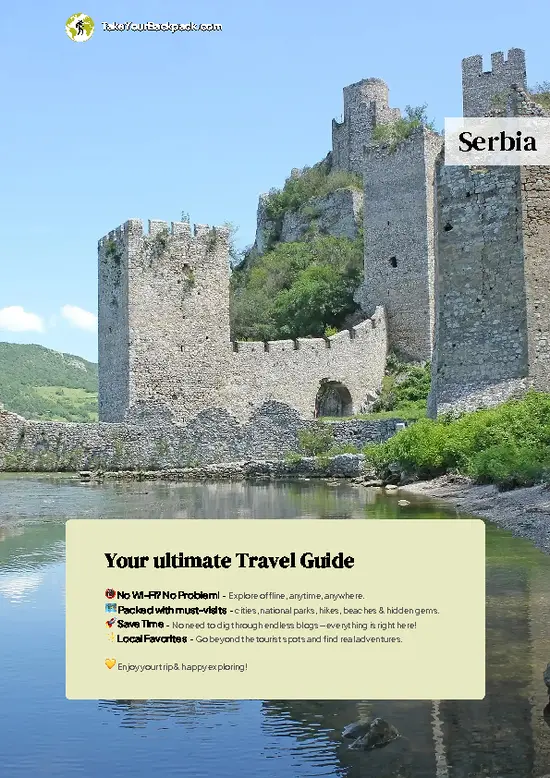
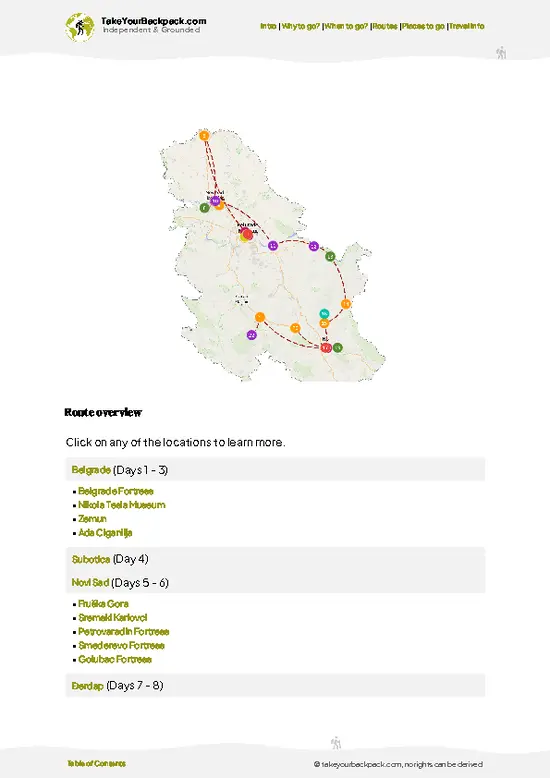
- Fortified walls and towers — Manasija is as much a fortress as a monastery: thick stone curtain walls with corner towers and a massive donjon make it one of the best-preserved fortified monasteries in the Balkans. Walk the outerworks and you’ll get why monks here were also prepared for war.
- Morava-school architecture — The church and buildings are textbook late-medieval Serbian style: elegant blind arcades, carved stone details and rhythmic brickwork. It’s a compact, very photogenic example of a regional architectural language you won’t see everywhere.
- Frescoes and vivid iconography — Inside the katholikon you’ll find powerful 15th-century frescoes (including donor portraits and dramatic scenes) that survive with surprising intensity. The painting style and unusual icon choices make a
- Fortified walls and towers — Manasija is as much a fortress as a monastery: thick stone curtain walls with corner towers and a massive donjon make it one of the best-preserved fortified monasteries in the Balkans. Walk the outerworks and you’ll get why monks here were also prepared for war.
- Morava-school architecture — The church and buildings are textbook late-medieval Serbian style: elegant blind arcades, carved stone details and rhythmic brickwork. It’s a compact, very photogenic example of a regional architectural language you won’t see everywhere.
- Frescoes and vivid iconography — Inside the katholikon you’ll find powerful 15th-century frescoes (including donor portraits and dramatic scenes) that survive with surprising intensity. The painting style and unusual icon choices make a quick interior visit feel like stepping into a different century.
- Resava scriptorium (the manuscript school) — Founded by Despot Stefan Lazarević, Manasija housed a famous scriptorium that standardized medieval Serbian bookmaking. The monastery’s cultural role—copying and preserving texts—was huge for the region’s literary life.
- Treasury and small museum — A tidy display of liturgical objects, icons and fragments gives context to the site: what monks used, what locals donated, and how artistic tastes shifted. Good if you want more than just stones and frescoes.
- View from the Great Tower — Climb up (where allowed) for a panorama of the monastery courtyards, the surrounding oak woods and the wide valley. Best for photos at golden hour or just to breathe in the scale of the place.
- Living monastic life and quiet walking — Catch a service if timing allows—the chanting feels immediate and human—and wander the grassy courtyards and shaded paths. The combo of living tradition and peaceful nature is what makes Manasija feel alive, not just historic.
Spotted a mistake or missing something? Contact us.

Business-class Airport Taxi Transfer in Belgrade

Airport Nis Shuttle Taxi

Full-Day Trip from Belgrade: Tara National Park & The Drina River Valley

A Crash Course through Serbian History

Nis Sightseeing Tour

Belgrade Private City Tour

Belgrade Airport to City Center Transfers

Private Transfer

History and Culture in my Belgrade


 Best Backpacking
.jpg) Hi, I’m Johan (Netherlands 🇳🇱), the creator of TakeYourBackpack. Over the past 3 decades, I’ve backpacked through 90+ countries across six continents, gaining extensive experience with independent travel, long-term trips, and overland routes.
Hi, I’m Johan (Netherlands 🇳🇱), the creator of TakeYourBackpack. Over the past 3 decades, I’ve backpacked through 90+ countries across six continents, gaining extensive experience with independent travel, long-term trips, and overland routes.