×

Serbia🇷🇸 | landmarksStudenica Monasterywhite marble church, UNESCO heritage, remote valley | things to do and best time to go

Explore Smederevo FortressExplore Manasija monastery

Backpacking in Studenica Monastery
🏆 Top pickunique site ranked #1
By Johan Kruseman 🇳🇱 | Updated May 27, 2026

Your boots click on cool stone, incense hangs in the air, and somewhere behind the iconostasis a low chant rolls like distant thunder. Candle wax pools in metal trays, the smoke mixing with the faint smell of damp forest drifting in from outside. A monk passes you without a word, robe whispering, keys clinking softly at his belt. This is Studenica Monastery, tucked in the hills of central Serbia, southwest of Kraljevo, and it feels older than your entire idea of Europe.

For backpackers, Studenica is not a “wow, look at my feed” place; it’s a “sit down and shut up for a second” place. The frescoes are world‑class, the silence is heavy, and the history of medieval Serbia is carved into every wall. It’s cheap to visit, not that easy to reach without a car, and the crowds are light except on religious holidays. Photos are good, but the real payoff is the mood: calm, serious, slightly haunted. If you need nightlife, skip it. If you want your trip to have a spine, come here.

Discover everything you want to know in the 📖 Serbia Travel Guide.


Get your Serbia guide
82 ranked highlights, routes & tips, works offline (325 pages)
Loading the map 🌍
CLICK TO FILTER
cities
towns
villages
landmarks
national parks
hikes
beaches
attractions
festivals
regions
SHOW COUNTRY’S BESTSHOW ALL

✨ Why go?
Ranked #1 unique site in Serbia
Reasons people choose to visit here

Studenica Monastery is a must-see for backpackers in Serbia, and here’s why. First off, the crowds are manageable. Unlike some overhyped spots, you won’t be elbowing your way through selfie sticks. The cost? Minimal. Entry fees are pocket change, and the surrounding area is refreshingly affordable.

What sets Studenica apart is its authenticity. This isn’t just a pretty facade; it’s a living piece of history. The 12th-century architecture and stunning frescoes tell stories that resonate deeply. You can almost feel the weight of centuries as you wander through its serene grounds.

Plus, it fits perfectly into a broader route. If you’re exploring the Raska region, it’s a natural stop between Kopaonik and Novi Pazar. You can easily make a day trip out of it, soaking in the local culture and … read more 👉
Studenica Monastery is a must-see for backpackers in Serbia, and here’s why. First off, the crowds are manageable. Unlike some overhyped spots, you won’t be elbowing your way through selfie sticks. The cost? Minimal. Entry fees are pocket change, and the surrounding area is refreshingly affordable.

What sets Studenica apart is its authenticity. This isn’t just a pretty facade; it’s a living piece of history. The 12th-century architecture and stunning frescoes tell stories that resonate deeply. You can almost feel the weight of centuries as you wander through its serene grounds.

Plus, it fits perfectly into a broader route. If you’re exploring the Raska region, it’s a natural stop between Kopaonik and Novi Pazar. You can easily make a day trip out of it, soaking in the local culture and stunning landscapes along the way.

In a world full of Instagrammable spots, Studenica offers a real connection to Serbia’s rich heritage. Don’t skip it.
Want to include Studenica Monastery in your Serbia route?
Create a personalized Serbia itinerary that includes Studenica Monastery and the places that fit your trip — based on your travel style, budget, and available time. Get your route in seconds.

Generate my trip

💡 HighlightsEssential experiences to have while visiting Studenica Monastery

  • Church of the Virgin (Bogorodica) — The monastery’s centerpiece: a late 12th-century church built in pale stone and marble with a restrained, elegant exterior and an interior that feels surprisingly intimate for something so old. Architecturally it mixes Byzantine form with local touches, and walking inside is like stepping into a calm, centuries-old studio of prayer.
  • Church of the King (Kraljeva crkva) — Smaller but richer in ornament, this 13th-century ”king’s” church holds the royal vibe: lavish marble details, historic inscriptions and an atmosphere tied directly to the Nemanjić dynasty who shaped medieval Serbia. It’s the place where power and piety visibly meet.
  • Medieval frescoes — Some of the best-preserved Byzantine-style frescoes in the region, dating mostly from the 13th century.
read more 👉
  • Church of the Virgin (Bogorodica) — The monastery’s centerpiece: a late 12th-century church built in pale stone and marble with a restrained, elegant exterior and an interior that feels surprisingly intimate for something so old. Architecturally it mixes Byzantine form with local touches, and walking inside is like stepping into a calm, centuries-old studio of prayer.
  • Church of the King (Kraljeva crkva) — Smaller but richer in ornament, this 13th-century ”king’s” church holds the royal vibe: lavish marble details, historic inscriptions and an atmosphere tied directly to the Nemanjić dynasty who shaped medieval Serbia. It’s the place where power and piety visibly meet.
  • Medieval frescoes — Some of the best-preserved Byzantine-style frescoes in the region, dating mostly from the 13th century. The colors and facial expressions are startlingly vivid for their age; they show biblical scenes and portraits that give a real sense of medieval visual storytelling.
  • Nemanjić dynasty heritage — Studenica was a spiritual and dynastic heartland for Serbia’s founding royal family. The site contains tombs and monuments connected to that dynasty, so you’re literally walking through the place that helped define Serbian medieval identity.
  • Treasury and museum collection — A compact but impressive set of liturgical objects, icons, manuscripts and metalwork. The craftsmanship on display — tiny details on crosses and book covers — is a reminder how much artistic skill was poured into devotional life here.
  • UNESCO status and historical weight — Studenica isn’t just pretty; it’s a UNESCO World Heritage site because of its artistic, architectural and historical importance. That official tag helps protect what you’re seeing and signals this isn’t just another old church — it’s a cornerstone of Balkan history.
  • Quiet valley setting and monastic rhythm — The monastery sits in a pine-fringed valley along the Studenica river. It’s peaceful: stone paths, bell calls, and a few resident monks keeping centuries-old routines. For backpackers who like a short hike, the surrounding trails and viewpoints make for a perfect half-day escape.
Spotted a mistake or missing something? Contact us.

Things to do near Studenica Monastery

Ratings based on Tripadvisor reviews. When you book through this link, you support our work at no extra cost to you.

🌤️ When to go?Weather, crowds, and seasonal trade-offs


  • Weather: Spring (April to June) and early autumn (September to October) offer the most comfortable weather. Expect mild temperatures around 15-22°C (59-72°F). Summers can scorch you with highs hitting 30°C (86°F), making midday exploration brutal.

  • Temperature: Winters are cold and often snowy, dropping below freezing (0°C/32°F), which can limit access and make the site less enjoyable. If you’re not into frostbite, avoid December through February.

  • Daylight Hours: Long daylight in late spring and summer means more time to soak in the frescoes and grounds. In winter, short days cut your visit short, and the monastery’s magic dims early.

  • Crowds: Peak tourist season is July and August. The place fills up with bus tours and selfie sticks, killing the quiet reverence. Shoulder seasons are
read more 👉

  • Weather: Spring (April to June) and early autumn (September to October) offer the most comfortable weather. Expect mild temperatures around 15-22°C (59-72°F). Summers can scorch you with highs hitting 30°C (86°F), making midday exploration brutal.

  • Temperature: Winters are cold and often snowy, dropping below freezing (0°C/32°F), which can limit access and make the site less enjoyable. If you’re not into frostbite, avoid December through February.

  • Daylight Hours: Long daylight in late spring and summer means more time to soak in the frescoes and grounds. In winter, short days cut your visit short, and the monastery’s magic dims early.

  • Crowds: Peak tourist season is July and August. The place fills up with bus tours and selfie sticks, killing the quiet reverence. Shoulder seasons are quieter, letting you breathe in the history without elbowing through crowds.

  • Seasonal Activities: Spring and autumn bring local festivals and religious ceremonies that add authentic flavor to your visit. Summer’s heat and crowds drown out these moments.

  • Price Fluctuations: Accommodation and transport costs spike in summer. Visiting off-peak saves money and delivers a more genuine experience without the inflated tourist markup.


Pro-tip: Aim for late April or early October—cool, calm, and rich with local life, minus the tourist circus.


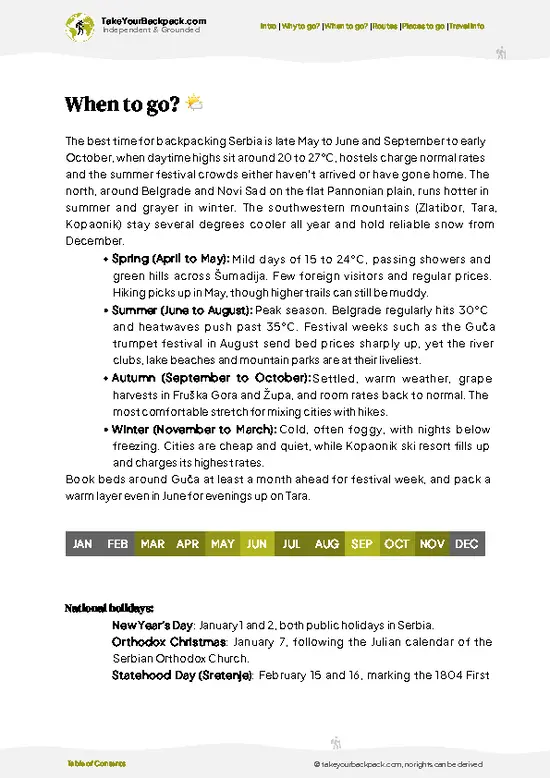
source: climatestotravel.comJANJanuary: below average for travelingFEBFebruary: below average for travelingMARMarch: good for travelingAPRApril: excellent for travelingMAYMay: excellent for travelingJUNJune: excellent for travelingJULJuly: fair for travelingAUGAugust: fair for travelingSEPSeptember: highly recommended for travelingOCTOctober: highly recommended for travelingNOVNovember: good for travelingDECDecember: below average for traveling
serbia-unique-site-studenica-monastery
© Google | Veljko Matic

✈️ The backpacker research shortcutSerbia Travel Guide

An offline-friendly backpacking guide with optimized travel routes, ranked highlights, transport advice, and the best areas to stay.
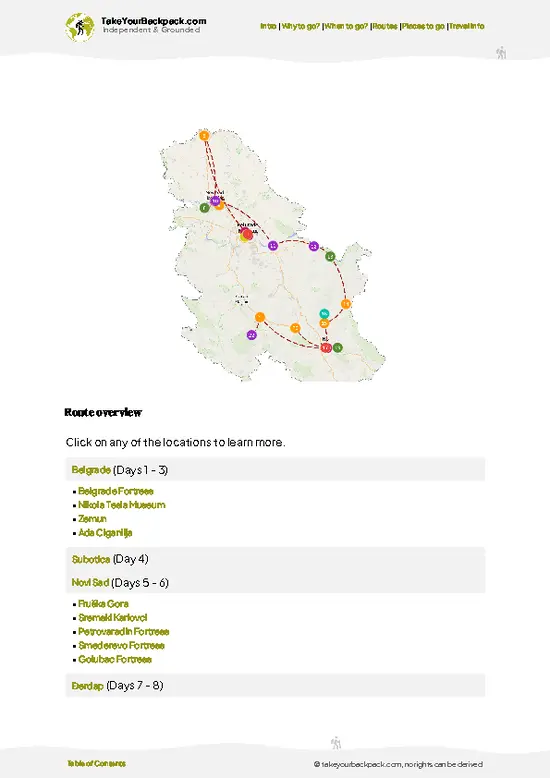
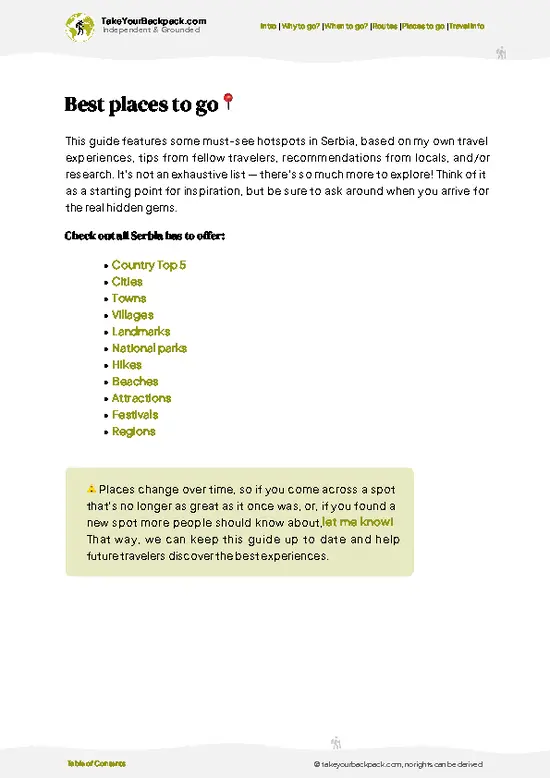
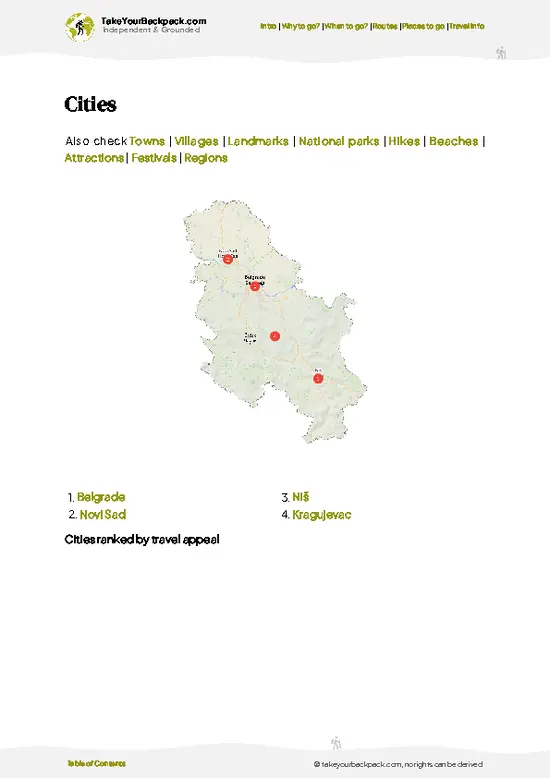
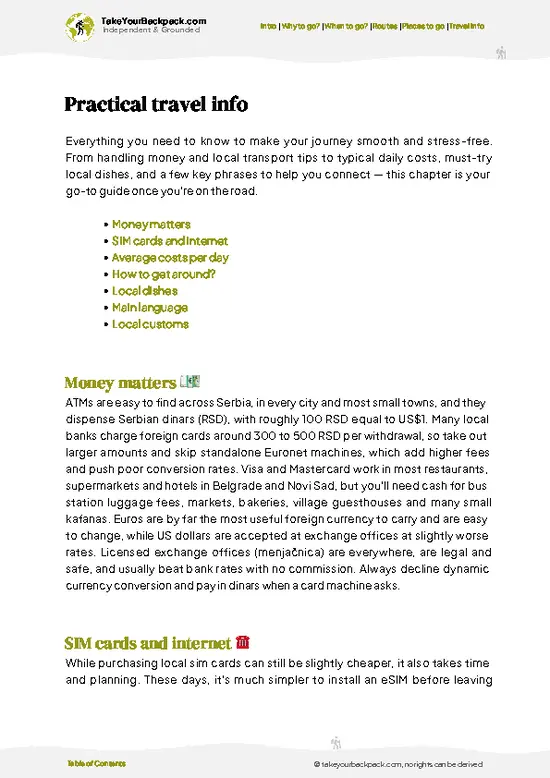
example page 0 from our offline Travel Guide for Serbia
example page 1 from our offline Travel Guide for Serbia
example page 2 from our offline Travel Guide for Serbia
example page 3 from our offline Travel Guide for Serbia
example page 4 from our offline Travel Guide for Serbia
example page 5 from our offline Travel Guide for Serbia
example page 6 from our offline Travel Guide for Serbia
example page 7 from our offline Travel Guide for Serbia
The digital guide (325 pages) contains:
82 highlights, ranked by travel appeal
Optimized 5, 10 & 15-day travel routes
Cities, national parks, landmarks, beaches
How to get around
Offline-friendly for travel without Wi-Fi
👉 Click to see all 30+ guide features

📅 Plan smarter in minutes, not weeks
Month by month travel advice
Festivals & national holidays
Budget expectations

🗺️ Go to the right places, skip the overrated ones
Honest pros & cons of destinations
Top hikes, parks & viewpoints
Lesser-known places most travelers miss
Clear “worth it vs skip it” guidance

🛏️ Travel smoothly without rookie mistakes
Best areas to stay
Transport systems explained simply
Common scams & safety advice
SIM cards, money & practical tips

🌍 Understand the country, not just visit it
Culture & traditions
52 Essential phrases & customs
Festivals worth planning around
Traveler-friendly historical context
Insights that make places more meaningful

📱 Built for real travel conditions
Fully downloadable PDF
Works completely offline
Optimized for phone use
Useful in remote areas & buses
Everything in one place
Save weeks of stressful planning
Get instant access to your full guide. 30‑day money-back guarantee.


By proceeding you agree to our terms.
Sent to your inbox immediately after payment • 100% Secure Checkout
Best Backpacking Travel Advisor 2025 tourism awardBest Backpacking
Travel Advisor
2025
What others say about Take Your Backpack Guides:
⭐⭐⭐⭐⭐
Fantastic, amazing amount of information!
⭐⭐⭐⭐⭐
My goodness this is amazing, it's what I've been looking for hats off too you!
⭐⭐⭐⭐⭐
I think this is absolutely BRILLIANT
⭐⭐⭐⭐
Very complete and informative. It's still missing places, but I gotta to commend you
⭐⭐⭐⭐⭐
This is truly amazing, thank you, can't wait to explore it with my kids!
⭐⭐⭐⭐⭐
Awesome resource, thank you!
⭐⭐⭐⭐⭐
This is amazing! Can't wait to explore the ones I haven't seen
⭐⭐⭐⭐
I love this! Well done, great idea.
⭐⭐⭐⭐⭐
Thanks for taking the time to make this gem!
⭐⭐⭐⭐⭐
This might be the best website I've ever seen.
⭐⭐⭐⭐⭐
Congratulations, and thank you so much for your work; it's incredibly valuable.
⭐⭐⭐⭐
In all seriousness I think you did a great job pointing out the important spots
⭐⭐⭐⭐⭐
10/10 very good
⭐⭐⭐⭐⭐
As someone who's only just starting to visit regularly this is awesome, thank you.
⭐⭐⭐⭐
Thank you very much! I'm going to visit my dad, it's going to be very useful!
⭐⭐⭐⭐⭐
This is really cool! We'll be travelling for the first time and this definitely come in handy.
⭐⭐⭐⭐⭐
You are now our minister of culture, congratulations 👨‍💼
⭐⭐⭐⭐⭐
Just wanted to tell you that this is a pearl! Going to follow your recommendations.
⭐⭐⭐⭐⭐
This is so cool. I'll definitely be using the resource for my travels soon.
⭐⭐⭐⭐⭐
This is very impressive! Good work.
⭐⭐⭐⭐⭐
This is an amazing and informative site. Very well done!

🛏️ Where to stay?How to pick the right area

When you’re heading to Studenica Monastery, you want to be close enough to soak in the history without getting lost in the tourist chaos. The nearby town of Kraljevo is your best bet. It’s a hub for backpackers, with a mix of affordable accommodations and a lively atmosphere. You’ll find fellow travelers here, making it easy to swap stories and tips over a cheap meal.

Another option is the village of Studenica itself. It’s quieter and gives you a more authentic feel of rural Serbia. You can wake up to the sound of nature, and the monastery is just a short walk away. This area is less commercialized, … read more 👉
When you’re heading to Studenica Monastery, you want to be close enough to soak in the history without getting lost in the tourist chaos. The nearby town of Kraljevo is your best bet. It’s a hub for backpackers, with a mix of affordable accommodations and a lively atmosphere. You’ll find fellow travelers here, making it easy to swap stories and tips over a cheap meal.

Another option is the village of Studenica itself. It’s quieter and gives you a more authentic feel of rural Serbia. You can wake up to the sound of nature, and the monastery is just a short walk away. This area is less commercialized, so you can connect with locals and experience their hospitality firsthand.

Safety is generally good in both spots, but always trust your instincts. Look for places with communal areas; they’re perfect for meeting other solo adventurers. Whether you’re in Kraljevo or Studenica, the real magic lies in the connections you make and the stories you gather.

👛 Costs (as of 31 March 2025)Money, prices, and spending tips

Visiting Studenica Monastery in Serbia isn’t just about the stunning architecture; it’s also about navigating the costs. Here’s a breakdown to help you plan your visit.
  • Entrance Fee: Expect to pay around €3 to €5. This fee grants you access to the monastery grounds and its remarkable frescoes. It’s a small price for a slice of history.
  • Guided Tours: If you want a deeper understanding, guided tours range from €10 to €20. These often include insights that you won’t get just wandering around. Worth it if you’re keen on the details.
  • Transportation: Getting there can vary. A bus from Kraljevo costs about €2 to €4. If you’re considering a taxi, budget around €20 to €30 for a one-way trip. Car rentals are also an option, typically around €30 to €50 per day.
  • Food and Drink: There are limited dining options
read more 👉
Visiting Studenica Monastery in Serbia isn’t just about the stunning architecture; it’s also about navigating the costs. Here’s a breakdown to help you plan your visit.
  • Entrance Fee: Expect to pay around €3 to €5. This fee grants you access to the monastery grounds and its remarkable frescoes. It’s a small price for a slice of history.
  • Guided Tours: If you want a deeper understanding, guided tours range from €10 to €20. These often include insights that you won’t get just wandering around. Worth it if you’re keen on the details.
  • Transportation: Getting there can vary. A bus from Kraljevo costs about €2 to €4. If you’re considering a taxi, budget around €20 to €30 for a one-way trip. Car rentals are also an option, typically around €30 to €50 per day.
  • Food and Drink: There are limited dining options nearby. A meal at a local eatery will set you back about €5 to €10. Bring snacks if you want to save a bit and enjoy the scenery without breaking the bank.
  • Accommodation: If you plan to stay overnight, nearby guesthouses charge between €20 to €40 per night. It’s a cozy way to soak in the atmosphere and explore more of the area.

Understanding these costs helps you appreciate the experience without the shock of unexpected expenses. Studenica Monastery offers a rich tapestry of history and spirituality that’s well worth the investment.


source: serbia.travel
⚠️ Prices can change and everyone travels differently, so take this as a rough guide. Hope it helps you plan your adventure!

Other Serbian landmarks near Studenica Monastery

Explore more nearby:

  • Oplenac—royal mausoleum, mosaic interiors, forested hill| 85 km away
  • Manasija monastery—fortified walls, medieval frescoes, monastic silence| 102 km away
  • Resava Cave—stalactite chambers, underground rivers, limestone formations| 110 km away

💡 Not sure where to go next?
Create a personalized itinerary for Serbia including Studenica Monastery and the places that fit your trip.

Generate my itinerary

👉 Discover all landmarks

Or checkout all Serbia has to offer (think cities, towns, villages, national parks, hikes, beaches, festivals)
Country photo of Serbia

We 💚 feedbackParting advice and final tips

Studenica Monastery is a must-see, but don’t expect solitude. The crowds can be overwhelming, especially in peak season. Still, the moment you step inside the church, the atmosphere shifts. The frescoes are breathtaking—each one tells a story that pulls you in. The best surprise? The serene gardens that offer a quiet escape. Just a heads-up: wear good shoes; the paths can be uneven. Embrace the history, but don’t rush. It’s worth savoring.

✍️ Help improve this page!
The information on this page is based on in-depth research, insights shared by experienced travelers, and feedback from the local travel community in Serbia. While every effort is made to keep the information accurate and current, conditions can change — so if you spot anything incorrect or outdated, please get in touch.


🙋‍♂️ Give feedback

👋 Meet the founderWho’s Behind Take Your Backpack?

Johan, backpacker and founder of TakeYourBackpackHi, I’m Johan (Netherlands 🇳🇱), the creator of TakeYourBackpack. Over the past decade, I’ve backpacked through 80+ countries across six continents, gaining extensive experience with independent travel, long-term trips, and overland routes.

This site is built on a combination of firsthand travel experience and carefully curated insights from other backpackers. Many guides are based on places I’ve personally visited, while others bring together tips, observations, and practical advice shared by trusted travelers I’ve met along the way.

The goal is to provide realistic, experience-driven guidance — not generic itineraries — so you can explore destinations with better context, clearer expectations, and more confidence.

Get full Serbia guide •
Instant download • 82 highlights • Full Offline guide