×

Sierra Leone🇸🇱 | townsBumbunahydroelectric dam, Sula Mountains, reservoir lake | things to do and best time to go

Explore SegbwemaExplore Tongo

Backpacking in Bumbuna
🌟 Highlighttown ranked #5
By Johan Kruseman 🇳🇱 | Updated September 3, 2026

Most travelers only realize after arriving: Bumbuna’s real advantage is how quickly you can swap the sticky, restless heat of Sierra Leone’s main roads for the cool mist and hush of forested hills—without a marathon journey. Tucked in the north, about halfway between Makeni and Kabala, Bumbuna itself is a small, workaday town, not a postcard. But as a base for the waterfall and dam, it’s gold: you can walk to the falls, then return for a cold drink and a slow evening. There’s little nightlife, and you’ll meet more local workers than backpackers, but that’s part of the charm—no touts, no pressure, just honest, low-key Sierra Leone. It’s cheaper and calmer than Makeni, but less lively; transport is simple by shared taxi, and you’ll rarely need more than your own two feet. Safety is straightforward: keep your wits, but the vibe is relaxed.

Discover everything you want to know in the 📖 Sierra Leone Travel Guide.
Loading the map 🌍
CLICK TO FILTER
cities
towns
landmarks
national parks
hikes
beaches
attractions
festivals
regions
SHOW COUNTRY’S BESTSHOW ALL

✨ Why go?
Ranked #5 town in Sierra Leone
Why Bumbuna should be on your travel list

Bumbuna is a backpacker’s waypoint in Sierra Leone, perfectly positioned for those who crave both nature and culture. The town serves as a launchpad for nearby hikes in lush landscapes, where the air is thick with the scent of damp earth and wildflowers. You’ll find small-scale hostels and guesthouses that offer a cozy atmosphere, making it easy to connect with fellow travelers. The walkable streets are lined with local food stalls, where the aroma of spicy jollof rice fills the air, inviting you to sit and savor the flavors of Sierra Leone.

Most backpackers tend to stay a few days, soaking in the friendly social vibe while sharing stories over a meal. This place attracts slow travelers and solo adventurers looking for authentic experiences rather than a party scene. If you’re seeking a blend … read more 👉
Bumbuna is a backpacker’s waypoint in Sierra Leone, perfectly positioned for those who crave both nature and culture. The town serves as a launchpad for nearby hikes in lush landscapes, where the air is thick with the scent of damp earth and wildflowers. You’ll find small-scale hostels and guesthouses that offer a cozy atmosphere, making it easy to connect with fellow travelers. The walkable streets are lined with local food stalls, where the aroma of spicy jollof rice fills the air, inviting you to sit and savor the flavors of Sierra Leone.

Most backpackers tend to stay a few days, soaking in the friendly social vibe while sharing stories over a meal. This place attracts slow travelers and solo adventurers looking for authentic experiences rather than a party scene. If you’re seeking a blend of tranquility and connection, Bumbuna is a perfect stop to recharge before heading to the next adventure.
Want to include Bumbuna in your Sierra Leone route?
Create a personalized Sierra Leone itinerary that includes Bumbuna and the places that fit your trip — based on your travel style, budget, and available time. Get your route in seconds.

Generate my trip

💡 HighlightsPlaces and moments you shouldn't skip

  1. Bumbuna Hydroelectric Dam and Power Station — The single biggest thing people come to see: impressive concrete works, the turbines (you can often see parts of the plant from the access road) and a clear window into how electrification actually shaped this area.
  2. Bumbuna Reservoir (the lake behind the dam) — Wide water, fishing boats at dawn, and shoreline walks; great for watching local fishermen, getting a boat ride, or just seeing how the river was transformed into a community resource.
  3. Seli River rapids and riverbank — Where the river squeezes past the village you can feel the current, scout small waterfalls and eddies, and watch traditional fishermen set traps or cast nets from rocky banks.
  4. Bumbuna Central Market — A lively, very local market with fresh produce, dried fish, charcoal,
read more 👉
  1. Bumbuna Hydroelectric Dam and Power Station — The single biggest thing people come to see: impressive concrete works, the turbines (you can often see parts of the plant from the access road) and a clear window into how electrification actually shaped this area.
  2. Bumbuna Reservoir (the lake behind the dam) — Wide water, fishing boats at dawn, and shoreline walks; great for watching local fishermen, getting a boat ride, or just seeing how the river was transformed into a community resource.
  3. Seli River rapids and riverbank — Where the river squeezes past the village you can feel the current, scout small waterfalls and eddies, and watch traditional fishermen set traps or cast nets from rocky banks.
  4. Bumbuna Central Market — A lively, very local market with fresh produce, dried fish, charcoal, and basic supplies; excellent for people-watching and trying honest street snacks while practicing a few Temne phrases.
  5. Paramount Chief’s Compound (traditional chief’s lodge) — The social and political heart of village life: ceremonial space, palms and thatched buildings where disputes are heard and ceremonies take place. Visiting gives real insight into governance and customs.
  6. Village Mosque and Christian Worship Halls — These active places of worship show the religious blend of the village; attend a service or simply observe the rhythms of daily prayers and community gatherings to understand social life here.
  7. Bumbuna School Compound — More than a school: a daytime hub where kids learn by lamplight, teachers double as community leaders, and you can meet locals invested in the village’s future.
  8. Local Crafts and Women’s Cooperative Areas — Small workshops and cooperative stalls where women make palm oil, weave mats, or sell handcrafts. Worth visiting to see livelihoods up close and buy directly from makers.
  9. Fishing Camps and Shoreline Villages — Tiny settlements and landing strips along the reservoir where nets are mended and fish smoked; visiting at sunrise or sunset is atmospheric and deeply local.
  10. Rice Paddies, Farming Tracks and Footpaths — Walks through irrigated fields and along footpaths between homesteads offer honest, hands-on views of agricultural life — planting or harvest seasons are especially revealing.
A few real day-trip options nearby: the regional hub of Makeni for bigger markets and services, boat trips upriver along the Seli to neighboring riverside villages, and short visits to other Tonkolili chiefdom towns around the reservoir.
Spotted a mistake or missing something? Contact us.

🏘️ NeighborhoodsWhere things are and how it's laid out

Bumbuna is a vibrant town where the pulse of local life beats strong. Each neighborhood offers a unique flavor, making it essential to choose wisely for your stay.

Town Center: This is the heart of Bumbuna. The vibe is bustling, with markets and street vendors filling the air with the scent of grilled fish and spices. It’s walkable, but be prepared for uneven paths. Nightlife here is lively, with local bars offering a taste of Sierra Leonean music. Perfect for short stays, as you can soak up the atmosphere quickly, but longer stays might feel a bit chaotic.

Waterfront: If you crave tranquility, head to the waterfront area. The views of the river are stunning, especially at sunset. It’s quieter, making it ideal for relaxation and reflection. Accommodations here tend to be more affordable, … read more 👉
Bumbuna is a vibrant town where the pulse of local life beats strong. Each neighborhood offers a unique flavor, making it essential to choose wisely for your stay.

Town Center: This is the heart of Bumbuna. The vibe is bustling, with markets and street vendors filling the air with the scent of grilled fish and spices. It’s walkable, but be prepared for uneven paths. Nightlife here is lively, with local bars offering a taste of Sierra Leonean music. Perfect for short stays, as you can soak up the atmosphere quickly, but longer stays might feel a bit chaotic.

Waterfront: If you crave tranquility, head to the waterfront area. The views of the river are stunning, especially at sunset. It’s quieter, making it ideal for relaxation and reflection. Accommodations here tend to be more affordable, and you can easily walk to local eateries. This area is great for longer stays, allowing you to immerse yourself in the serene environment.

Outskirts: Venture to the outskirts for a taste of rural life. The vibe shifts to a slower pace, with lush greenery and friendly locals. Transport options are less frequent, so plan your trips carefully. This area is best for longer stays, as you’ll want time to explore the surrounding nature and connect with the community. The scent of earth after rain here is a sensory delight, grounding you in the experience.

⌛️ 1 day1-day itinerary for Bumbuna

Bumbuna, Sierra Leone, is a town that pulses with the rhythm of life, where the sound of the waterfall mingles with the laughter of children playing in the streets. It’s a place where the air is thick with the scent of fresh palm oil and the warmth of community spirit. You won’t find it on every tourist map, but that’s what makes it special.

Start your morning with a stroll through the bustling market in the heart of town. The vibrant colors of fruits and vegetables pop against the backdrop of simple wooden stalls. Engage with local vendors; their stories are as rich as the produce they sell. Grab a breakfast of cassava porridge from a street vendor—it’s hearty and will fuel your day.

As the sun climbs higher, head to the Bumbuna Hydroelectric Dam. It’s not just an engineering marvel; the … read more 👉
Bumbuna, Sierra Leone, is a town that pulses with the rhythm of life, where the sound of the waterfall mingles with the laughter of children playing in the streets. It’s a place where the air is thick with the scent of fresh palm oil and the warmth of community spirit. You won’t find it on every tourist map, but that’s what makes it special.

Start your morning with a stroll through the bustling market in the heart of town. The vibrant colors of fruits and vegetables pop against the backdrop of simple wooden stalls. Engage with local vendors; their stories are as rich as the produce they sell. Grab a breakfast of cassava porridge from a street vendor—it’s hearty and will fuel your day.

As the sun climbs higher, head to the Bumbuna Hydroelectric Dam. It’s not just an engineering marvel; the surrounding area offers stunning views of the lush hills. Take a guided tour to understand its impact on the region. The guide will share insights that connect you to the local culture, making the experience feel personal.

In the afternoon, wander through the neighborhoods of Koidu and Makeni. Here, you’ll find friendly faces and perhaps a game of football in progress. Join in if you can; it’s a great way to break the ice.

As evening approaches, find a spot near the riverbank. The sunset casts a golden hue over the water, creating a perfect backdrop for reflection. For dinner, seek out a local eatery serving jollof rice and grilled fish. The flavors will linger long after your visit, a delicious reminder of your day in Bumbuna.
Turn your Bumbuna visit into an Sierra Leone adventure
Build a complete Sierra Leone route with Bumbuna, hidden gems, must-see destinations, and realistic travel times included.

Generate my trip

🌤️ When to go?Weather, crowds, and seasonal trade-offs


  • Topic: Weather – The dry season from November to April is your best bet. Expect clear skies and minimal rain, which means trails won’t turn into mud baths and the air feels fresher, not heavy with humidity.

  • Topic: Temperature – Daytime highs hover around 28-32°C (82-90°F), perfect for trekking without overheating. Nights cool down to 20-22°C (68-72°F), making campfires and star-gazing comfortable.

  • Topic: Daylight Hours – Roughly 11 to 12 hours of daylight year-round, but the dry season offers more consistent sunrise and sunset times, helping you plan hikes and activities without rushing.

  • Topic: Crowds – Bumbuna isn’t a tourist hotspot, but visiting in the dry season means you’ll mostly share the trails with locals rather than seasonal workers or rainy-season avoiders.

  • Topic: Seasonal
read more 👉

  • Topic: Weather – The dry season from November to April is your best bet. Expect clear skies and minimal rain, which means trails won’t turn into mud baths and the air feels fresher, not heavy with humidity.

  • Topic: Temperature – Daytime highs hover around 28-32°C (82-90°F), perfect for trekking without overheating. Nights cool down to 20-22°C (68-72°F), making campfires and star-gazing comfortable.

  • Topic: Daylight Hours – Roughly 11 to 12 hours of daylight year-round, but the dry season offers more consistent sunrise and sunset times, helping you plan hikes and activities without rushing.

  • Topic: Crowds – Bumbuna isn’t a tourist hotspot, but visiting in the dry season means you’ll mostly share the trails with locals rather than seasonal workers or rainy-season avoiders.

  • Topic: Seasonal Activities – Dry months are ideal for exploring the Bumbuna Falls and nearby villages, as river levels are lower and paths are accessible. Wet season can flood trails and limit access.

  • Topic: Price Fluctuations – Prices for local guides and accommodations tend to be steadier in the dry season due to steady demand; the wet season might offer cheaper rates but comes with logistical headaches.


Pro-tip: Aim for late November to early March—when the air smells of dry earth and the sun sets with a golden glow—to get the most out of Bumbuna’s rugged charm without the hassle of rain or heat exhaustion.


source: climatestotravel.comJANJanuary: excellent for travelingFEBFebruary: excellent for travelingMARMarch: excellent for travelingAPRApril: highly recommended for travelingMAYMay: fair for travelingJUNJune: below average for travelingJULJuly: below average for travelingAUGAugust: below average for travelingSEPSeptember: fair for travelingOCTOctober: good for travelingNOVNovember: excellent for travelingDECDecember: excellent for traveling
when-to-go

✈️ The backpacker research shortcutSierra Leone Travel Guide

An offline-friendly backpacking guide with optimized travel routes, ranked highlights, transport advice, and the best areas to stay.
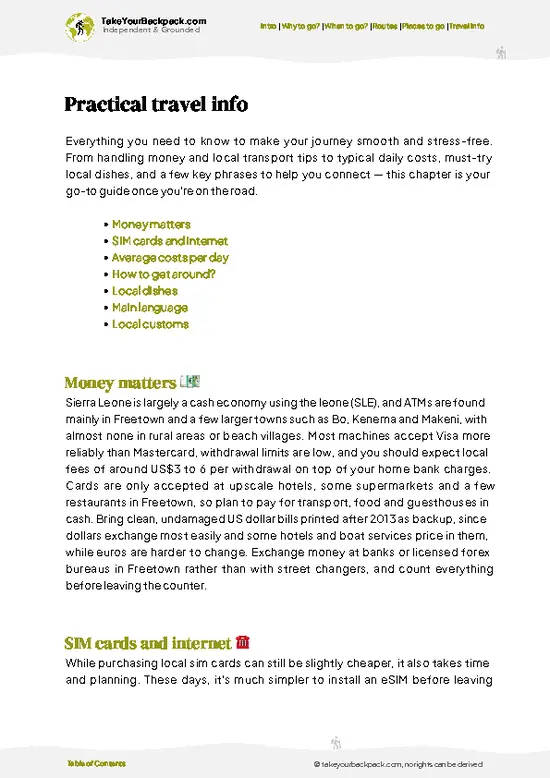
example page 0 from our offline Travel Guide for Sierra Leone
example page 1 from our offline Travel Guide for Sierra Leone
example page 2 from our offline Travel Guide for Sierra Leone
example page 3 from our offline Travel Guide for Sierra Leone
example page 4 from our offline Travel Guide for Sierra Leone
example page 5 from our offline Travel Guide for Sierra Leone
example page 6 from our offline Travel Guide for Sierra Leone
example page 7 from our offline Travel Guide for Sierra Leone
The digital guide (275 pages) contains:
63 highlights, ranked by travel appeal
Optimized 5, 10 & 15-day travel routes
Cities, national parks, landmarks, beaches
How to get around
Offline-friendly for travel without Wi-Fi
👉 Click to see all 30+ guide features

📅 Plan smarter in minutes, not weeks
Month by month travel advice
Festivals & national holidays
Budget expectations

🗺️ Go to the right places, skip the overrated ones
Honest pros & cons of destinations
Top hikes, parks & viewpoints
Lesser-known places most travelers miss
Clear “worth it vs skip it” guidance

🛏️ Travel smoothly without rookie mistakes
Best areas to stay
Transport systems explained simply
Common scams & safety advice
SIM cards, money & practical tips

🌍 Understand the country, not just visit it
Culture & traditions
52 Essential phrases & customs
Festivals worth planning around
Traveler-friendly historical context
Insights that make places more meaningful

📱 Built for real travel conditions
Fully downloadable PDF
Works completely offline
Optimized for phone use
Useful in remote areas & buses
Everything in one place
Save weeks of stressful planning
Get instant access to your full guide. 30‑day money-back guarantee.
+ Add another guide for just US$7.80

By proceeding you agree to our terms.
Sent to your inbox immediately after payment • 100% Secure Checkout
Best Backpacking Travel Advisor 2025 tourism awardBest Backpacking
Travel Advisor
2025
What others say about Take Your Backpack Guides:
⭐⭐⭐⭐⭐
Fantastic, amazing amount of information!
⭐⭐⭐⭐⭐
My goodness this is amazing, it's what I've been looking for hats off too you!
⭐⭐⭐⭐⭐
I think this is absolutely BRILLIANT
⭐⭐⭐⭐
Very complete and informative. It's still missing places, but I gotta to commend you
⭐⭐⭐⭐⭐
This is truly amazing, thank you, can't wait to explore it with my kids!
⭐⭐⭐⭐⭐
Awesome resource, thank you!
⭐⭐⭐⭐⭐
This is amazing! Can't wait to explore the ones I haven't seen
⭐⭐⭐⭐
I love this! Well done, great idea.
⭐⭐⭐⭐⭐
Thanks for taking the time to make this gem!
⭐⭐⭐⭐⭐
This might be the best website I've ever seen.
⭐⭐⭐⭐⭐
Congratulations, and thank you so much for your work; it's incredibly valuable.
⭐⭐⭐⭐
In all seriousness I think you did a great job pointing out the important spots
⭐⭐⭐⭐⭐
10/10 very good
⭐⭐⭐⭐⭐
As someone who's only just starting to visit regularly this is awesome, thank you.
⭐⭐⭐⭐
Thank you very much! I'm going to visit my dad, it's going to be very useful!
⭐⭐⭐⭐⭐
This is really cool! We'll be travelling for the first time and this definitely come in handy.
⭐⭐⭐⭐⭐
You are now our minister of culture, congratulations 👨‍💼
⭐⭐⭐⭐⭐
Just wanted to tell you that this is a pearl! Going to follow your recommendations.
⭐⭐⭐⭐⭐
This is so cool. I'll definitely be using the resource for my travels soon.
⭐⭐⭐⭐⭐
This is very impressive! Good work.
⭐⭐⭐⭐⭐
This is an amazing and informative site. Very well done!

🛏️ Where to stay?Choosing the right base

Bumbuna’s heart for backpackers pulses strongest near the town center, where the streets hum with local life and the scent of grilled fish mingles with fresh earth after rain. This area offers a practical blend of safety and social buzz—locals and travelers cross paths in small markets and roadside cafés, creating a low-key but lively atmosphere. It’s where you’ll find the few budget guesthouses and informal hostels that cater to solo adventurers, providing a chance to swap stories over shared meals or evening fires. Venturing outside this core means stepping into quieter, less connected neighborhoods … read more 👉
Bumbuna’s heart for backpackers pulses strongest near the town center, where the streets hum with local life and the scent of grilled fish mingles with fresh earth after rain. This area offers a practical blend of safety and social buzz—locals and travelers cross paths in small markets and roadside cafés, creating a low-key but lively atmosphere. It’s where you’ll find the few budget guesthouses and informal hostels that cater to solo adventurers, providing a chance to swap stories over shared meals or evening fires. Venturing outside this core means stepping into quieter, less connected neighborhoods that lack the same sense of community or easy access to essentials. Staying central isn’t just about convenience; it’s about plugging into Bumbuna’s rhythm without losing your footing.

🚌 Getting aroundTransportation options and practical tips

Bumbuna moves to the rhythm of the river and the pulse of the market, not a clock. The town’s pace is deliberate, shaped by the heat that softens the edges of urgency and the scent of earth and wood smoke that lingers in the air. You won’t find rigid timetables here; instead, travel flows with the sun’s climb and fall, and the chatter of locals setting out or returning. This is a place where intuition beats schedules, and knowing when to move is as much about reading the mood as checking a watch. Embrace the unpredictability—it’s part of the town’s charm and the key to unlocking its authentic rhythm.


  • Walking: The most reliable and immersive way to get around. Streets are compact but uneven, so sturdy shoes are a must. Walking lets you catch the scent of fresh cassava and the sound of children
read more 👉
Bumbuna moves to the rhythm of the river and the pulse of the market, not a clock. The town’s pace is deliberate, shaped by the heat that softens the edges of urgency and the scent of earth and wood smoke that lingers in the air. You won’t find rigid timetables here; instead, travel flows with the sun’s climb and fall, and the chatter of locals setting out or returning. This is a place where intuition beats schedules, and knowing when to move is as much about reading the mood as checking a watch. Embrace the unpredictability—it’s part of the town’s charm and the key to unlocking its authentic rhythm.


  • Walking: The most reliable and immersive way to get around. Streets are compact but uneven, so sturdy shoes are a must. Walking lets you catch the scent of fresh cassava and the sound of children playing, all while avoiding transport costs.

  • Motorbike Taxis (Okadas): These dart through traffic and dirt paths alike, offering quick rides for about 1,000–2,000 Leones. They run from dawn until dusk but expect to negotiate fares upfront—no meters here.

  • Shared Minibuses: The budget backbone for longer trips, especially to nearby towns. They leave when full, which means waiting can be unpredictable. Fares hover around 5,000 Leones, and the ride is bumpy but social.

  • Bicycle Rentals: A quiet, flexible option if you want to explore beyond the center. Rentals cost roughly 10,000 Leones per day. The terrain is mostly flat but watch for loose gravel on side roads.

  • River Canoes: For the adventurous, canoes offer a scenic, slow ride along the Seli River. Departures depend on water levels and demand, so timing is fluid. Prices vary but expect to pay a premium for this unique perspective.

👛 Costs (as of 3 September 2026)How expensive it really is

Backpacking in Bumbuna, Sierra Leone, means embracing simplicity with a touch of adventure, and your daily costs reflect that straightforward lifestyle.
  • Dorm Accommodation: Options here are extremely limited and basic, often guesthouses rather than formal hostels. Expect to pay around $5 to $10 per night for a shared room, sometimes with mosquito nets but rarely with hot water or reliable electricity. The vibe is rustic, so bring your patience and a good headlamp.
  • Meals: Local eateries serve hearty, no-frills meals centered on rice, stews, and fresh produce. A typical meal costs between $1.50 and $3.50. Street food is cheaper but less predictable in hygiene. Drinking water should be bottled, adding a small daily cost of about $0.50 to $1.
  • Local Transport: Transport is mostly by shared motorbike
read more 👉
Backpacking in Bumbuna, Sierra Leone, means embracing simplicity with a touch of adventure, and your daily costs reflect that straightforward lifestyle.
  • Dorm Accommodation: Options here are extremely limited and basic, often guesthouses rather than formal hostels. Expect to pay around $5 to $10 per night for a shared room, sometimes with mosquito nets but rarely with hot water or reliable electricity. The vibe is rustic, so bring your patience and a good headlamp.
  • Meals: Local eateries serve hearty, no-frills meals centered on rice, stews, and fresh produce. A typical meal costs between $1.50 and $3.50. Street food is cheaper but less predictable in hygiene. Drinking water should be bottled, adding a small daily cost of about $0.50 to $1.
  • Local Transport: Transport is mostly by shared motorbike taxis or minibuses. A short ride within town costs about $0.50 to $1. Longer trips to nearby villages or the dam area might run $2 to $5. The roads are rough, so rides can be bumpy and slow, but they’re the only practical way to get around.
  • Basic Activities/Entry Fees: Visiting the Bumbuna Hydroelectric Dam or local markets usually doesn’t have a formal entry fee, but small tips or informal payments of $1 to $3 might be expected for guides or access to certain areas. Organized tours are rare and tend to be informal arrangements with locals.
  • Miscellaneous Expenses: Budget for essentials like SIM cards and data ($5 to $10 for a decent package), occasional bottled water refills, and small purchases like snacks or toiletries. These can add up to about $2 to $4 daily.

All told, a realistic daily budget for backpacking in Bumbuna falls between $10 and $25. This range covers the basics without luxury, letting you focus on the raw, authentic experience of a place where infrastructure is sparse but the atmosphere is rich with local life.
⚠️ Prices can change and everyone travels differently, so take this as a rough guide. Hope it helps you plan your adventure!

🚌 Day tripsWhere to go beyond the main area

Bumbuna, Sierra Leone, is a fantastic base for day trips that reveal the heart of this vibrant country. The lush landscapes and rich culture are just waiting to be explored. Here are some standout options.

Bumbuna Waterfall Hike
Just a short trek from town, the Bumbuna Waterfall is a must-see. The trail winds through dense forest, where the air is thick with the scent of damp earth and wildflowers. The sound of rushing water grows louder as you approach, and the sight of the falls cascading into a crystal-clear pool is worth every step. Plan for about a 2-hour hike each way, and bring a packed lunch to enjoy by the water. Expect to spend around $5 on transport and snacks. The best time to go is during the dry season, from November to April, when the trails are more manageable. A common … read more 👉
Bumbuna, Sierra Leone, is a fantastic base for day trips that reveal the heart of this vibrant country. The lush landscapes and rich culture are just waiting to be explored. Here are some standout options.

Bumbuna Waterfall Hike
Just a short trek from town, the Bumbuna Waterfall is a must-see. The trail winds through dense forest, where the air is thick with the scent of damp earth and wildflowers. The sound of rushing water grows louder as you approach, and the sight of the falls cascading into a crystal-clear pool is worth every step. Plan for about a 2-hour hike each way, and bring a packed lunch to enjoy by the water. Expect to spend around $5 on transport and snacks. The best time to go is during the dry season, from November to April, when the trails are more manageable. A common mistake is underestimating the trail’s difficulty; sturdy shoes are essential.


Makeni City Exploration
A 1.5-hour ride from Bumbuna, Makeni offers a lively urban experience. The bustling markets are filled with the aroma of street food—think spicy jollof rice and grilled fish. Spend your day wandering through the vibrant streets, chatting with locals, and soaking in the culture. Transport costs about $10 round trip. Weekdays are best for a more authentic vibe, as weekends can get crowded. Many first-timers miss the local crafts; don’t skip the artisan stalls for unique souvenirs.
👉 Explore Makeni

Tiwai Island Wildlife Sanctuary
For nature lovers, Tiwai Island is a gem. It’s about a 3-hour journey, but the boat ride through the mangroves is a highlight. Once on the island, you can spot rare monkeys and vibrant bird species. The entrance fee is around $15, and you’ll want to bring snacks and water. The dry season is ideal for wildlife spotting. A common pitfall is not booking a guide; they enhance the experience with local knowledge.


Kono Diamond Mines
A trip to the Kono Diamond Mines offers a glimpse into Sierra Leone’s history. It’s roughly a 2-hour drive, and the stories you’ll hear from locals are captivating. Expect to pay about $10 for transport and a small fee for a guided tour. The best time to visit is during the dry season. Many newcomers overlook the importance of engaging with local miners; their stories add depth to the experience.
👉 Explore Kono Diamond Mines
Want to know what more Sierra Leone offers?
The Sierra Leone Travel Guide describes 63 highlights, from cities to national parks, from beaches to hikes

Get the Travel Guide -

🛡️ SafetyStaying Safe: What Travelers Should Know

Bumbuna, Sierra Leone, is generally safe, but a few practical tips can enhance your experience. Stay alert in crowded areas, especially near markets where distractions can lead to pickpocketing. If you’re solo, avoid wandering too far after dark; the streets can feel different when the sun sets, and it’s best to stick to well-lit paths.

Common scams are rare, but be cautious of overly friendly locals who might offer unsolicited help with an expectation of payment. A polite but firm “no, thank you” usually suffices.

Carry yourself confidently. A relaxed demeanor can deter unwanted attention. Trust your instincts; if something feels off, it probably is. Embrace the vibrant atmosphere, but keep your wits about you, and you’ll unlock the true charm of Bumbuna.

FAQCommon questions from travelers

Bumbuna is primarily a stopover rather than a destination for extended visits. It is known for the Bumbuna Hydroelectric Power Station, but there are limited tourist attractions. Most travelers pass through while heading to other parts of Sierra Leone.
One day is sufficient for Bumbuna, mainly to see the hydroelectric dam and surrounding natural scenery. There are no significant accommodations or activities that require a longer stay.
Yes, Bumbuna can be visited as a day trip from Makeni, which is about 50 kilometers away. The journey takes around 1.5 to 2 hours by road, making it feasible for a round trip within a day.
⚠️ Things can change over time, so always validate details locally before you go.

Other Sierra Leonean towns near Bumbuna

Explore more nearby:

  • Binkolo—small villages, farming landscape, Temne heritage| 27 km away
  • Magburaka—market town, riverbank setting, local trade| 43 km away
  • Kabala—hilltop views, cool climate, Limba culture| 63 km away

💡 Not sure where to go next?
Create a personalized itinerary for Sierra Leone including Bumbuna and the places that fit your trip.

Generate my itinerary

👉 Discover all towns

Or checkout all Sierra Leone has to offer (think cities, towns, villages, national parks, hikes, beaches, festivals)
Country photo of Sierra Leone

We 💚 feedbackParting advice and final tips

Bumbuna has a pulse that’s hard to ignore. The air hums with the sound of the waterfall, a constant reminder of nature’s power. You’ll be surprised by the warmth of the locals; their smiles are as bright as the sun filtering through the trees. Just be ready for the humidity—it’s intense. Embrace it. The sweat is part of the experience, and it makes that cool river dip feel like pure bliss.

✍️ Help improve this page!
The information on this page is based on in-depth research, insights shared by experienced travelers, and feedback from the local travel community in Sierra Leone. While every effort is made to keep the information accurate and current, conditions can change — so if you spot anything incorrect or outdated, please get in touch.


🙋‍♂️ Give feedback

👋 Meet the founderWho’s Behind Take Your Backpack?

Johan, backpacker and founder of TakeYourBackpackHi, I’m Johan (Netherlands 🇳🇱), the creator of TakeYourBackpack. Over the past decade, I’ve backpacked through 80+ countries across six continents, gaining extensive experience with independent travel, long-term trips, and overland routes.

This site is built on a combination of firsthand travel experience and carefully curated insights from other backpackers. Many guides are based on places I’ve personally visited, while others bring together tips, observations, and practical advice shared by trusted travelers I’ve met along the way.

The goal is to provide realistic, experience-driven guidance — not generic itineraries — so you can explore destinations with better context, clearer expectations, and more confidence.

Get full country guide •
Instant download • 63 highlights • Full Offline guide