How many towns to visit: I advise
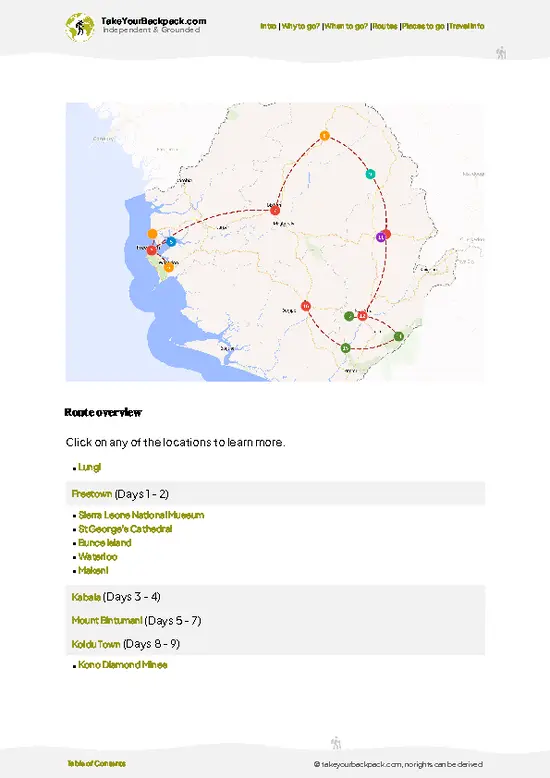
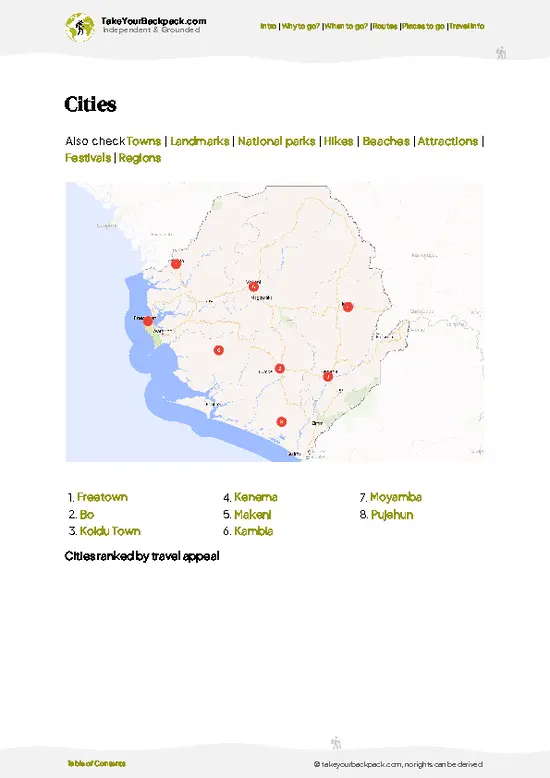
three to five towns in a trip of two weeks. Each takes a half day to reach, and each rewards two nights: one to arrive, sleep through the generator hum and wander the evening market, and one to see it in daylight. Beyond five, you spend your trip in shared taxis, and the red dust and heat wear thin.
Choosing between kinds of towns: Coastal towns suit those who want
beaches, fresh grilled fish and easier logistics, with guesthouses that have working fans and sometimes hot water. Interior market towns suit travelers after
local life: cassava leaf stew over rice, drumming at dusk, and hosts who stay up to talk. Pick coastal for comfort and a first visit, interior for depth. Mixing one of each gives contrast without exhaustion.
What it costs: A backpacker budget …
read more 👉 How many towns to visit: I advise
three to five towns in a trip of two weeks. Each takes a half day to reach, and each rewards two nights: one to arrive, sleep through the generator hum and wander the evening market, and one to see it in daylight. Beyond five, you spend your trip in shared taxis, and the red dust and heat wear thin.
Choosing between kinds of towns: Coastal towns suit those who want
beaches, fresh grilled fish and easier logistics, with guesthouses that have working fans and sometimes hot water. Interior market towns suit travelers after
local life: cassava leaf stew over rice, drumming at dusk, and hosts who stay up to talk. Pick coastal for comfort and a first visit, interior for depth. Mixing one of each gives contrast without exhaustion.
What it costs: A backpacker budget runs about
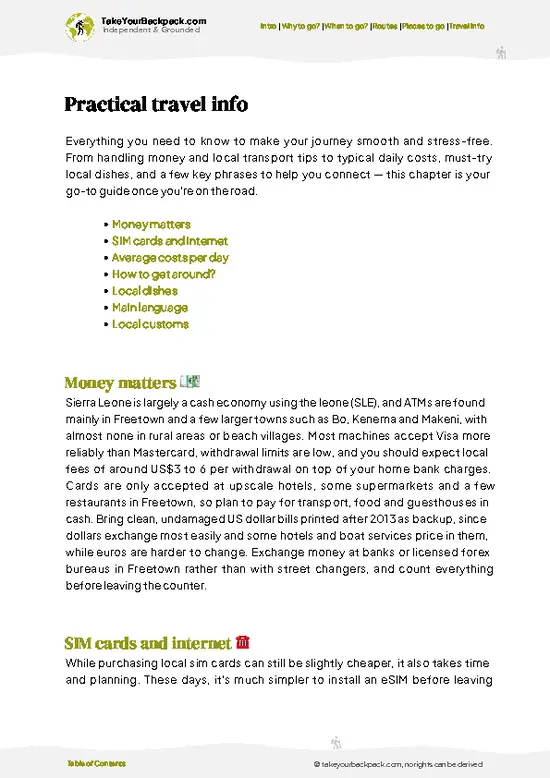
US$30 to 50 a day. Basic guesthouse rooms cost roughly US$12 to 25 in provincial towns and US$30 to 60 near Freetown. Street meals of rice and sauce cost about US$2 to 4, and a sit-down meal US$5 to 10. Shared taxis between towns run about US$5 to 15 per leg depending on distance, and a motorbike taxi around town is usually under US$2. Local guides for forest or village visits cost around US$15 to 30 a day, and small community or reserve fees are typically a few dollars to about US$10. Carry
cash in US dollars and Leones, as cards are rarely accepted outside Freetown, and fresh, undamaged notes get the best rates.
Safety and cultural considerations: Sierra Leone is
generally safe and friendly, but petty theft happens in crowded motor parks and at night in Freetown, so keep phones tucked away and skip walking after dark. Greet everyone before asking anything; a handshake and a “how di body” opens doors, and skipping it reads as rude. Use your right hand for giving and eating. Dress modestly, especially in Muslim-majority towns, with covered shoulders and knees. Ask before photographing people, markets or officials. Roadside
police checkpoints are frequent, so keep your passport copy and yellow fever certificate handy and stay patient and polite. Malaria is a real risk year-round, so carry prophylaxis and a net, and drink only bottled or filtered water.

 Best Backpacking
 Hi, I’m Johan (Netherlands 🇳🇱), the creator of TakeYourBackpack. Over the past 3 decades, I’ve backpacked through 90+ countries across six continents, gaining extensive experience with independent travel, long-term trips, and overland routes.