×

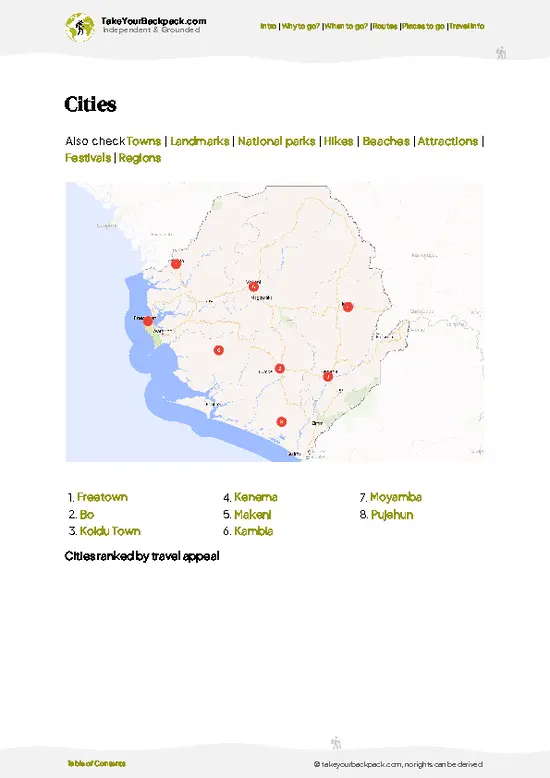
Sierra Leone🇸🇱 | citiesKenemaDiamond dealers, Eastern Province market, clock tower junction, palm wine bars | things to do and best time to go

Explore KambiaExplore Koidu Town

Backpacking in Kenema
🌟 Highlightcity ranked #4
By Johan Kruseman 🇳🇱 | Updated October 22, 2026

Kenema is the Eastern Province’s capital and a diamond-trading hub, and travelers often assume it is a rough frontier outpost when the center is a busy, friendly market town of tin roofs and red dust. It sits in the southeast of Sierra Leone, a long day’s drive from Freetown. Mornings smell of woodsmoke and frying dough, motorbike taxis whine through every street, and the heat builds by midday. It suits travelers who want a working Sierra Leonean town without a tourist layer, and it suits gateway trips to the rainforest. It does not suit anyone craving polish, nightlife or sights in town. Hotels are basic and power is patchy. A paid-up seat in a shared car costs the least in money but the most in comfort and time, while a private car costs more and saves hours, so for most backpackers the shared car is the best value if you start early. Carry plenty of small notes, because change is scarce.

Discover everything you want to know in the 📖 Sierra Leone Travel Guide.


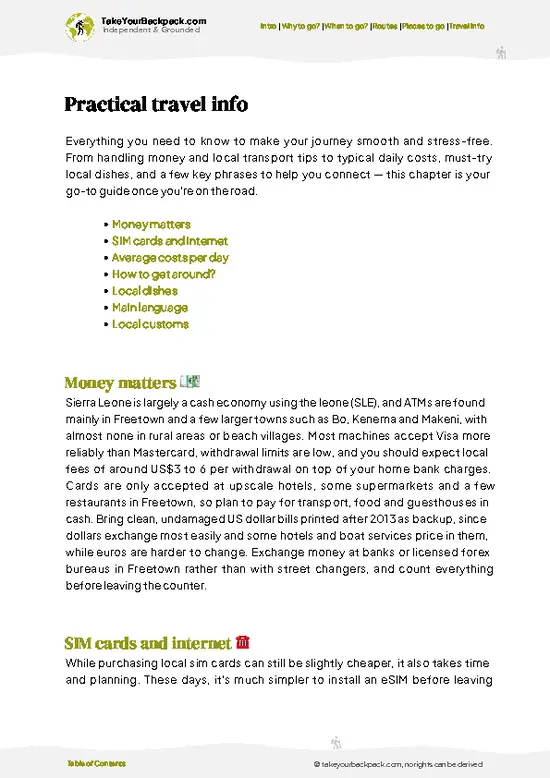
example page 0 from our offline Travel Guide for Sierra Leone
example page 1 from our offline Travel Guide for Sierra Leone
example page 2 from our offline Travel Guide for Sierra Leone
example page 3 from our offline Travel Guide for Sierra Leone
example page 4 from our offline Travel Guide for Sierra Leone
example page 5 from our offline Travel Guide for Sierra Leone
example page 6 from our offline Travel Guide for Sierra Leone
example page 7 from our offline Travel Guide for Sierra Leone
Loading the map 🌍
CLICK TO FILTER
cities
towns
landmarks
national parks
hikes
beaches
attractions
festivals
regions
SHOW COUNTRY’S BESTSHOW ALL

✨ Why go?
Ranked #4 city in Sierra Leone
What makes this city worth visiting

Kenema earns its place on a route as the practical doorway to the east, where Gola Rainforest and the Liberian border region lie within reach. Backpackers come because the town lets you reach forest and village areas that are awkward to approach from anywhere else, and you can sort out supplies, cash and guides here. The Gola Rainforest National Park trips usually start with a stop in town, and the Kenema market district gives you a real look at daily trade, from palm oil to mining tools. Guesthouses are simple, food is filling rice dishes and grilled meat from street stalls, and the center is walkable in an hour or two. Nightlife is low-key, with a few open-air bars. Treat Kenema as a two-night stop for planning and day trips rather than a place to linger, and you will use it well.

💡 HighlightsTop highlights of Kenema

  1. Kenema Central Market: The town’s trading heart, stacked with palm oil, dried fish, cloth and cassava leaf. Go before 10 AM when it is cooler and busiest. Free to enter, 1 to 2 hours.
  2. Clock Tower roundabout: The main junction where taxis, bikes and vendors converge, a good place to watch town life with a cold drink. Late afternoon is best. Free, 30 minutes.
  3. Diamond dealers’ quarter: Along the main streets you can see small buying offices and dealers weighing stones. Look from outside and ask permission before photographing. Mornings are best. Free, 30 to 45 minutes.
  4. Kenema Central Mosque: One of the town’s largest places of worship, reflecting the strong Muslim community. Visit outside prayer times and dress modestly. Free or a small donation, 20 to 30 minutes.
  5. Hangha Road viewpoints: Higher spots
… read more 👉
  1. Kenema Central Market: The town’s trading heart, stacked with palm oil, dried fish, cloth and cassava leaf. Go before 10 AM when it is cooler and busiest. Free to enter, 1 to 2 hours.
  2. Clock Tower roundabout: The main junction where taxis, bikes and vendors converge, a good place to watch town life with a cold drink. Late afternoon is best. Free, 30 minutes.
  3. Diamond dealers’ quarter: Along the main streets you can see small buying offices and dealers weighing stones. Look from outside and ask permission before photographing. Mornings are best. Free, 30 to 45 minutes.
  4. Kenema Central Mosque: One of the town’s largest places of worship, reflecting the strong Muslim community. Visit outside prayer times and dress modestly. Free or a small donation, 20 to 30 minutes.
  5. Hangha Road viewpoints: Higher spots on the edges of town give views over rusted roofs and green hills, especially in the early morning. Free, about 30 minutes.
  6. Local palm wine and bar spots: Open-air bars on the town’s side streets serve cold beer and local drinks with grilled meat. Go after 5 PM. Expect US$1 to 4, 1 to 2 hours.
Kenema’s highlights nearby include Gola Rainforest National Park, Tiwai Island and the Kambui Hills Forest Reserve, all best reached as day trips or short overnights from town. Together the sights in town fill about half a day.
Spotted a mistake or missing something? Contact us.

🏘️ NeighborhoodsKey areas and districts to know

Kenema is a hilly diamond-and-cocoa town where a handful of areas cover almost everything you need, and a motorbike hop links them for pennies.
  • Central Market and Hangha Road: This is the loud core. Expect red dust, hawkers calling out, piles of palm oil, cassava leaf and secondhand clothes, and exhaust from every direction. Street grills and cold drink stalls make it the cheapest place to eat. It is walkable on foot, but the midday heat and open drains punish long strolls, so go early.
  • Nongowa and the Clock Tower area: The administrative heart has banks, ATMs, money changers and offices along wider roads. It is quieter after dark and easy to walk, which makes it the best spot to sort out cash and SIM cards in one morning.
  • Combema Road and Blama Road: Longer strips with bars, small restaurants
… read more 👉
Kenema is a hilly diamond-and-cocoa town where a handful of areas cover almost everything you need, and a motorbike hop links them for pennies.
  • Central Market and Hangha Road: This is the loud core. Expect red dust, hawkers calling out, piles of palm oil, cassava leaf and secondhand clothes, and exhaust from every direction. Street grills and cold drink stalls make it the cheapest place to eat. It is walkable on foot, but the midday heat and open drains punish long strolls, so go early.
  • Nongowa and the Clock Tower area: The administrative heart has banks, ATMs, money changers and offices along wider roads. It is quieter after dark and easy to walk, which makes it the best spot to sort out cash and SIM cards in one morning.
  • Combema Road and Blama Road: Longer strips with bars, small restaurants and music thumping from open-fronted speakers on weekends. You will spend little on beer here, but the walk back is unlit in places, so take a bike taxi at night.
  • Nyandeyama and the hill outskirts: Green, breezy and calmer, with views toward the Gola forest on clear mornings. Roosters and generators are the soundtrack. It costs more time to reach, so visit only for a view and a slow afternoon.
For most backpackers, the center around the market gives the most for the least effort and money.

⌛️ 1 dayWhat you can realistically do in a day

7:30 AM: Kenema Central Market Start while it is cool and the traders are setting out palm oil, dried fish and cloth. Buy a bag of fried dough and watch the morning rush, then walk ten minutes to the center.
9:30 AM: Clock Tower roundabout Grab a coffee or sweet tea from a street seller and watch bikes and shared taxis weave through. It is a good place to ask about onward transport.
11:00 AM: Diamond dealers’ quarter Stroll the main streets where buyers weigh stones in small offices. Look rather than photograph, and keep your questions polite.
12:30 PM: Lunch at a local cookhouse Order rice with cassava leaf or groundnut stew, a filling meal that keeps you going through the heat.
2:00 PM: Kenema Central Mosque Visit outside prayer times, dressing modestly, and talk to the caretaker if he is around. … read more 👉
7:30 AM: Kenema Central Market Start while it is cool and the traders are setting out palm oil, dried fish and cloth. Buy a bag of fried dough and watch the morning rush, then walk ten minutes to the center.
9:30 AM: Clock Tower roundabout Grab a coffee or sweet tea from a street seller and watch bikes and shared taxis weave through. It is a good place to ask about onward transport.
11:00 AM: Diamond dealers’ quarter Stroll the main streets where buyers weigh stones in small offices. Look rather than photograph, and keep your questions polite.
12:30 PM: Lunch at a local cookhouse Order rice with cassava leaf or groundnut stew, a filling meal that keeps you going through the heat.
2:00 PM: Kenema Central Mosque Visit outside prayer times, dressing modestly, and talk to the caretaker if he is around. A calm contrast to the market.
4:00 PM: Edge-of-town hill viewpoints This is the off-route stop. Take a motorbike taxi up to the higher streets and look across the rusty rooftops to the green hills as the day cools.
6:00 PM: Open-air bar Finish with a cold drink and grilled meat at a side-street bar, where the town’s evening life starts and generators hum.

🌤️ When to go?Seasonal considerations and timing

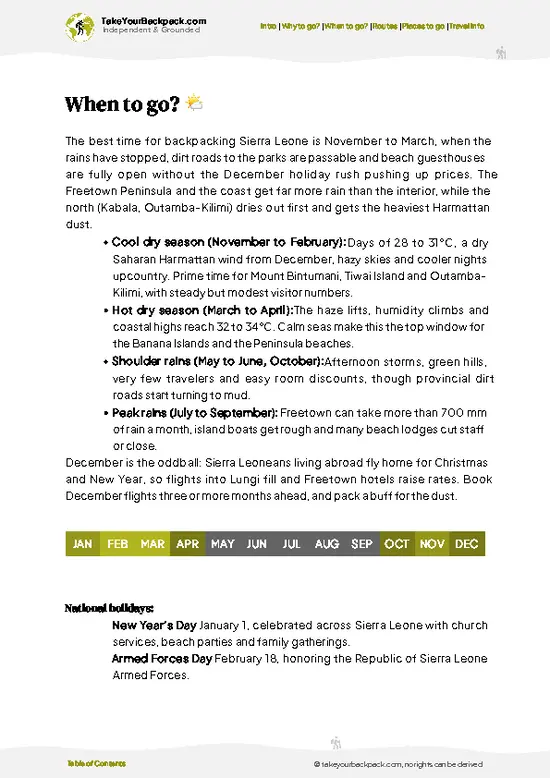
November to March is the easiest window for Kenema, with dry roads, bright days and cool nights.
  • Dry Season (November to April): Days reach 30 to 34°C (86 to 93°F) and nights drop to about 20°C (68°F). December and January bring harmattan haze and dust. Roads to the forest and villages are firmest, and guesthouses fill a little with returning families and aid workers.
  • Early Rains (May to June): Showers arrive in the afternoon, temperatures sit around 27 to 31°C (81 to 88°F), and the hills turn deep green.
  • Peak Rains (July to September): Kenema is one of the wettest parts of the country, with downpours that turn laterite tracks to mud and can stop transport. Fewer travelers come, and prices barely change.
  • Festive Season: Christmas and Eid bring crowded buses and higher fares.
Daylight stays close … read more 👉
November to March is the easiest window for Kenema, with dry roads, bright days and cool nights.
  • Dry Season (November to April): Days reach 30 to 34°C (86 to 93°F) and nights drop to about 20°C (68°F). December and January bring harmattan haze and dust. Roads to the forest and villages are firmest, and guesthouses fill a little with returning families and aid workers.
  • Early Rains (May to June): Showers arrive in the afternoon, temperatures sit around 27 to 31°C (81 to 88°F), and the hills turn deep green.
  • Peak Rains (July to September): Kenema is one of the wettest parts of the country, with downpours that turn laterite tracks to mud and can stop transport. Fewer travelers come, and prices barely change.
  • Festive Season: Christmas and Eid bring crowded buses and higher fares.
Daylight stays close to 12 hours all year, so plan any road leg to finish before dark.


source: climatestotravel.comJANJanuary: excellent for travelingFEBFebruary: excellent for travelingMARMarch: excellent for travelingAPRApril: highly recommended for travelingMAYMay: fair for travelingJUNJune: fair for travelingJULJuly: fair for travelingAUGAugust: fair for travelingSEPSeptember: fair for travelingOCTOctober: fair for travelingNOVNovember: highly recommended for travelingDECDecember: excellent for traveling
when-to-go

✈️ The backpacker research shortcutSierra Leone Travel Guide

An offline-friendly backpacking guide with optimized travel routes, ranked highlights, transport advice, and the best areas to stay.
example page 0 from our offline Travel Guide for Sierra Leone
example page 1 from our offline Travel Guide for Sierra Leone
example page 2 from our offline Travel Guide for Sierra Leone
example page 3 from our offline Travel Guide for Sierra Leone
example page 4 from our offline Travel Guide for Sierra Leone
example page 5 from our offline Travel Guide for Sierra Leone
example page 6 from our offline Travel Guide for Sierra Leone
example page 7 from our offline Travel Guide for Sierra Leone
The digital guide (242 pages) contains:
✅ 50 highlights, ranked by travel appeal
✅ Optimized 5, 10 & 15-day travel routes
✅ Cities, national parks, landmarks, beaches
✅ How to get around
✅ Offline-friendly for travel without Wi-Fi
👉 Click to see all 30+ guide features

📅 Plan smarter in minutes, not weeks
✅ Month by month travel advice
✅ Festivals & national holidays
✅ Budget expectations

🗺️ Go to the right places, skip the overrated ones
✅ Honest pros & cons of destinations
✅ Top hikes, parks & viewpoints
✅ Lesser-known places most travelers miss
✅ Clear “worth it vs skip it” guidance

🛏️ Travel smoothly without rookie mistakes
✅ Best areas to stay
✅ Transport systems explained simply
✅ Common scams & safety advice
✅ SIM cards, money & practical tips

🌍 Understand the country, not just visit it
✅ Culture & traditions
✅ 52 Essential phrases & customs
✅ Festivals worth planning around
✅ Traveler-friendly historical context
✅ Insights that make places more meaningful

📱 Built for real travel conditions
✅ Fully downloadable PDF
✅ Works completely offline
✅ Optimized for phone use
✅ Useful in remote areas & buses
✅ Everything in one place
Stop searching, start planning
Get instant access to your full guide. 30‑day money-back guarantee.
+ Add another guide for just

By proceeding you agree to our terms.
Sent to your inbox immediately after payment • 100% Secure Checkout
Best Backpacking Travel Advisor 2025 tourism awardBest Backpacking
Travel Advisor
2025
What others say about Take Your Backpack Guides:
⭐⭐⭐⭐⭐
Fantastic, amazing amount of information!
⭐⭐⭐⭐⭐
My goodness this is amazing, it's what I've been looking for hats off too you!
⭐⭐⭐⭐⭐
I think this is absolutely BRILLIANT
⭐⭐⭐⭐
Very complete and informative. It's still missing places, but I gotta to commend you
⭐⭐⭐⭐⭐
This is truly amazing, thank you, can't wait to explore it with my kids!
⭐⭐⭐⭐⭐
Awesome resource, thank you!
⭐⭐⭐⭐⭐
This is amazing! Can't wait to explore the ones I haven't seen
⭐⭐⭐⭐
I love this! Well done, great idea.
⭐⭐⭐⭐⭐
Thanks for taking the time to make this gem!
⭐⭐⭐⭐⭐
This might be the best website I've ever seen.
⭐⭐⭐⭐⭐
Congratulations, and thank you so much for your work; it's incredibly valuable.
⭐⭐⭐⭐
In all seriousness I think you did a great job pointing out the important spots
⭐⭐⭐⭐⭐
10/10 very good
⭐⭐⭐⭐⭐
As someone who's only just starting to visit regularly this is awesome, thank you.
⭐⭐⭐⭐
Thank you very much! I'm going to visit my dad, it's going to be very useful!
⭐⭐⭐⭐⭐
This is really cool! We'll be travelling for the first time and this definitely come in handy.
⭐⭐⭐⭐⭐
You are now our minister of culture, congratulations 👨‍💼
⭐⭐⭐⭐⭐
Just wanted to tell you that this is a pearl! Going to follow your recommendations.
⭐⭐⭐⭐⭐
This is so cool. I'll definitely be using the resource for my travels soon.
⭐⭐⭐⭐⭐
This is very impressive! Good work.
⭐⭐⭐⭐⭐
This is an amazing and informative site. Very well done!

🛏️ Where to stay?Where staying makes the most sense

The center near the main market and the clock tower is the best place for a budget bed in Kenema, since most basic guesthouses and small hotels cluster within a few blocks of the main roads.
Dedicated hostels with dorms are not part of the scene here. Instead you will find simple private rooms, typically US$12 to 30 a night, often with a fan and a bucket or shared bathroom. Look for ones that mention a generator or inverter, because power cuts are common and a fan is only useful when it runs. Being central means shared taxis, banks and food stalls are a short walk or bike ride away, which saves … read more 👉
The center near the main market and the clock tower is the best place for a budget bed in Kenema, since most basic guesthouses and small hotels cluster within a few blocks of the main roads.
Dedicated hostels with dorms are not part of the scene here. Instead you will find simple private rooms, typically US$12 to 30 a night, often with a fan and a bucket or shared bathroom. Look for ones that mention a generator or inverter, because power cuts are common and a fan is only useful when it runs. Being central means shared taxis, banks and food stalls are a short walk or bike ride away, which saves money and time.
Noise is the price. Generators, mosques at dawn and music from nearby bars can start early, so ask for a room at the back and bring earplugs.
The second option is the quieter, more residential hillside around Nyandeyama and the outskirts. Rooms there are calmer and breezier at night, and a bike ride into town is cheap, but you will depend on okada rides after dark and there are fewer places to eat nearby. Book ahead around holidays and when mining or NGO events fill the town.

🚌 Getting aroundTransportation options and practical tips

Kenema is small enough that your own feet plus the occasional motorbike taxi cover nearly everything, since the market, banks and main roads sit within a couple of kilometers.
  • Walking: Free and fastest for the center. The pavement is patchy, the sun is hard from late morning, and you share the road with bikes, so start early and carry water. Most backpackers walk in the morning and ride after lunch.
  • Okada (motorbike taxi): The workhorse. Rides inside town cost about US$0.30 to 1, depending on distance and your bargaining, and you should settle the price before climbing on. They are quick through the jams, but the dust gets into everything and helmets are rare, so ask for a slow pace on wet roads.
  • Keke (three-wheeler tuk-tuk): Dry, roomier and handy with luggage or in rain. Shared rides in town
… read more 👉
Kenema is small enough that your own feet plus the occasional motorbike taxi cover nearly everything, since the market, banks and main roads sit within a couple of kilometers.
  • Walking: Free and fastest for the center. The pavement is patchy, the sun is hard from late morning, and you share the road with bikes, so start early and carry water. Most backpackers walk in the morning and ride after lunch.
  • Okada (motorbike taxi): The workhorse. Rides inside town cost about US$0.30 to 1, depending on distance and your bargaining, and you should settle the price before climbing on. They are quick through the jams, but the dust gets into everything and helmets are rare, so ask for a slow pace on wet roads.
  • Keke (three-wheeler tuk-tuk): Dry, roomier and handy with luggage or in rain. Shared rides in town run about US$0.30 to 0.60 a seat, a private hire costs a few times that. They are slower than bikes and fill up at rush hour.
  • Shared taxis and minibuses (poda-poda): These take you out of town toward Bo, Kailahun, Segbwema and Freetown. Bo takes roughly 1.5 to 2 hours for about US$3 to 5, and Freetown 5 to 7 hours for about US$10 to 14 in a shared car or bus. Vehicles leave when full, usually from the early morning until mid-afternoon, and after dark options dry up. Seats are tight and bags go on the roof, but this is the cheapest and most flexible way out.
  • Private car with driver: Useful for Gola forest or Tiwai trips. Expect roughly US$50 to 100 a day including fuel. It is comfortable and saves time on rough tracks, though a shared seat is far cheaper.

👛 Costs (as of 22 October 2026)Typical daily expenses

Kenema costs a backpacker about US$12 to 20 a day, with the total daily budget sitting at US$43, and cheap food is the main reason it stays low.
CategoryBudget RangeLocal Reality
Dorm accommodation (high season)US$12 to 20No true dorms. A basic private room with a fan is the norm in November to March.
Dorm accommodation (off-season)US$10 to 16Rooms drop slightly in the rainy months when fewer travelers pass through.
MealsUS$6 to 10Rice and stew at market stalls is about US$1 to 3 a plate.
Local transportUS$2 to 5Okada and keke rides cost about US$0.30 to 1 each.
City transport passNot availableNo pass exists. You pay per ride.
Basic activities and entry feesUS$5 to 10Markets are free. Forest and park entry fees cost more.
MiscellaneousUS$3 to 5Bottled water, SIM data and snacks.
Total Daily BudgetUS$38
… read more 👉
Kenema costs a backpacker about US$12 to 20 a day, with the total daily budget sitting at US$43, and cheap food is the main reason it stays low.
CategoryBudget RangeLocal Reality
Dorm accommodation (high season)US$12 to 20No true dorms. A basic private room with a fan is the norm in November to March.
Dorm accommodation (off-season)US$10 to 16Rooms drop slightly in the rainy months when fewer travelers pass through.
MealsUS$6 to 10Rice and stew at market stalls is about US$1 to 3 a plate.
Local transportUS$2 to 5Okada and keke rides cost about US$0.30 to 1 each.
City transport passNot availableNo pass exists. You pay per ride.
Basic activities and entry feesUS$5 to 10Markets are free. Forest and park entry fees cost more.
MiscellaneousUS$3 to 5Bottled water, SIM data and snacks.
Total Daily BudgetUS$38 to 48About US$43 on a typical day.
Carry small notes in the local currency and eat where the market women do, since this lowers your costs and avoids change problems.
⚠️ Prices can change and everyone travels differently, so take this as a rough guide. Hope it helps you plan your adventure!

🚌 Day tripsWhere to go beyond the main area

Kenema works well as a base for forest and village day trips, though most need a hired bike or driver, because public transport thins out beyond the main roads.Gola Rainforest National Park: The country’s largest remaining tract of rainforest lies east of town, with chimpanzees, hornbills and pygmy hippo habitat. Count on 1 to 2 hours each way by hired car or bike toward the Lalehun or Kenema-side entry points. Budget US$50 to 100 for transport, plus park and guide fees. Visit in the dry season, and the common mistake is arriving without arranging the guide and permit through the park office first.
👉 Explore Gola Rainforest National ParkTiwai Island Wildlife Sanctuary: A river island on the Moa where you can see seven primate species, including Diana monkeys and chimpanzees. The drive is about … read more 👉
Kenema works well as a base for forest and village day trips, though most need a hired bike or driver, because public transport thins out beyond the main roads.Gola Rainforest National Park: The country’s largest remaining tract of rainforest lies east of town, with chimpanzees, hornbills and pygmy hippo habitat. Count on 1 to 2 hours each way by hired car or bike toward the Lalehun or Kenema-side entry points. Budget US$50 to 100 for transport, plus park and guide fees. Visit in the dry season, and the common mistake is arriving without arranging the guide and permit through the park office first.
👉 Explore Gola Rainforest National ParkTiwai Island Wildlife Sanctuary: A river island on the Moa where you can see seven primate species, including Diana monkeys and chimpanzees. The drive is about 2 to 3 hours by road, then a short canoe hop. Costs run roughly US$40 to 80 with entry and a boat. Go early for monkeys, and bring insect repellent. Many visitors stay overnight, but a long day works.
👉 Explore Tiwai Island Wildlife SanctuaryBo: Sierra Leone’s second city lies west by shared car in about 1.5 to 2 hours, with fares near US$3 to 5. It has a lively market, colonial-era buildings and a different feel from Kenema. Go in the morning and return before the afternoon cars thin out.
👉 Explore BoSegbwema: A smaller town along the road toward Kailahun, with local markets and rural hills. It is a short shared ride for about US$2 to 4, ideal for seeing village life.
👉 Explore Segbwema

🍲 FoodLocal Cuisine & Drinks

Kenema sits in cocoa and coffee country in the Mende heartland, so the table here leans on cassava leaf and potato leaf stews simmered with palm oil and smoked fish, served over rice. Look for groundnut soup and pepper soup too, where heat is part of the point. Bush meat is sold in places, but ask what you are being served.
The cheapest eating is around the central market, where women ladle rice and stew from pots into plastic bowls for about US$1 to 3. Early mornings bring fried cassava, plantain and bean cakes from roadside stalls, sizzling in oil and eaten with pepper sauce. Grilled street meat and fish appear at dusk along the main roads, with smoke drifting over the red dust.
For a drink, small bars along Combema Road pour cold Star beer for about US$1 to 2, and many sell palm wine in the … read more 👉
Kenema sits in cocoa and coffee country in the Mende heartland, so the table here leans on cassava leaf and potato leaf stews simmered with palm oil and smoked fish, served over rice. Look for groundnut soup and pepper soup too, where heat is part of the point. Bush meat is sold in places, but ask what you are being served.
The cheapest eating is around the central market, where women ladle rice and stew from pots into plastic bowls for about US$1 to 3. Early mornings bring fried cassava, plantain and bean cakes from roadside stalls, sizzling in oil and eaten with pepper sauce. Grilled street meat and fish appear at dusk along the main roads, with smoke drifting over the red dust.
For a drink, small bars along Combema Road pour cold Star beer for about US$1 to 2, and many sell palm wine in the morning, milky and slightly sour, which gets stronger as the day goes on. Fresh pineapples, oranges and mangoes come cheaply in season. Eating with your right hand is normal and nobody minds if you ask for a spoon.

🛡️ SafetyStaying Safe: What Travelers Should Know

Kenema is generally relaxed and friendly, and most problems are petty rather than dangerous. Keep phones and cash out of sight in the crowded central market, where pickpocketing happens, and carry only what you need for the day. Walking after dark is best avoided on unlit roads such as the outskirts of Combema and Blama roads. Take a bike or keke instead, and agree the price first to avoid the inflated fare quoted to visitors. Solo travelers, including women, usually find people curious and helpful, though persistent attention and requests for money can be tiring, so a firm, smiling no works well. Dress modestly and ask before photographing people, military sites or mining areas, which can cause friction. Rainy season roads and unlit okada rides are a bigger risk than crime, so ask for a slower … read more 👉
Kenema is generally relaxed and friendly, and most problems are petty rather than dangerous. Keep phones and cash out of sight in the crowded central market, where pickpocketing happens, and carry only what you need for the day. Walking after dark is best avoided on unlit roads such as the outskirts of Combema and Blama roads. Take a bike or keke instead, and agree the price first to avoid the inflated fare quoted to visitors. Solo travelers, including women, usually find people curious and helpful, though persistent attention and requests for money can be tiring, so a firm, smiling no works well. Dress modestly and ask before photographing people, military sites or mining areas, which can cause friction. Rainy season roads and unlit okada rides are a bigger risk than crime, so ask for a slower pace and wear a helmet if you can. Drink only bottled or filtered water and use malaria precautions.

FAQTraveler FAQ

Two days is enough to see Kenema’s market, hills and nearby sights, and three to four if you add the Gola Rainforest or Tiwai Island. The town itself takes about a day, and forest trips each need a full day of 1 to 3 hours’ drive each way. Budget about US$40 to 50 a day for rooms, food and bikes.
Kenema is generally safe for solo backpackers, with petty theft in the central market the main concern. Avoid unlit roads at night and use an okada or keke after dark, paying about US$0.30 to 1 per ride. Agree fares first, keep your phone out of sight, and expect friendly curiosity from locals.
Kenema is known as the main town of eastern Sierra Leone, a hub of diamond trading, cocoa and coffee farming in Mende country. It is the gateway to Gola Rainforest National Park, about 1 to 2 hours away, and Tiwai Island, roughly 2 to 3 hours. Its crowded central market is the best place to try cassava leaf stew for about US$1 to 3.
⚠️ Things can change over time, so always validate details locally before you go.

Other Sierra Leonean cities near Kenema

Explore more nearby:

  • Bo—Bo School grounds, tailor lanes, Bo Rangers match days, red-dust market| 61 km away
  • Pujehun—Waanje River landing, court barray, swamp farm paths, far-south market| 81 km away
  • Koidu Town—Kimberlite pit, hand-dug diamond sites, Sefadu lanes, night grills| 90 km away

💡 Not sure where to go next?
Create a personalized itinerary for Sierra Leone including Kenema and the places that fit your trip.

Generate my itinerary

👉 Discover all cities

Or checkout all Sierra Leone has to offer (think cities, towns, villages, national parks, hikes, beaches, festivals)
Country photo of Sierra Leone

We 💚 feedbackFinal thoughts on visiting Kenema

Most first-timers rush past Kenema’s side streets, but the small workshops there, where tailors, welders and bike mechanics work in the open, show the town’s real energy. I would walk them in the morning before the heat builds, and I would carry plenty of small notes for tips and snacks.

✍️ Help improve this page!
The information on this page is based on in-depth research, insights shared by experienced travelers, and feedback from the local travel community in Sierra Leone. While every effort is made to keep the information accurate and current, conditions can change — so if you spot anything incorrect or outdated, please get in touch.


🙋‍♂️ Give feedback

👋 Meet the founderWho’s Behind Take Your Backpack?

Johan, backpacker and founder of TakeYourBackpackHi, I’m Johan (Netherlands 🇳🇱), the creator of TakeYourBackpack. Over the past 3 decades, I’ve backpacked through 90+ countries across six continents, gaining extensive experience with independent travel, long-term trips, and overland routes.

This site is built on a combination of firsthand travel experience and carefully curated insights from other backpackers. Many guides are based on places I’ve personally visited, while others bring together tips, observations, and practical advice shared by trusted travelers I’ve met along the way.

The goal is to provide realistic, experience-driven guidance — not generic itineraries — so you can explore destinations with better context, clearer expectations, and more confidence.