v2.webp)
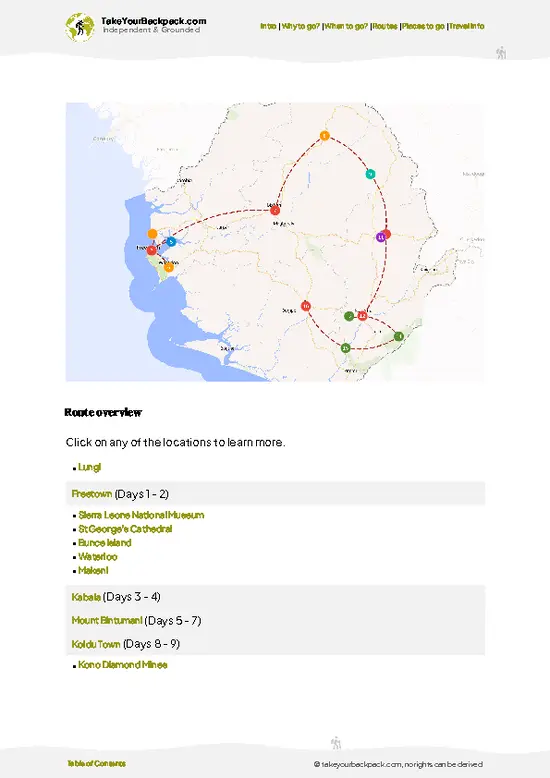
- Koidu Kimberlite Mine: The industrial open pit on the edge of Koidu is the headline, a deep terraced hole cut into the kimberlite pipes that were found after the alluvial boom. You will hear blasting and see haul trucks from the perimeter. Entry is restricted, so treat it as a viewing-from-outside stop unless you arrange permission through the operator.
- Artisanal alluvial diggings: Across the swampy valleys around Koidu, teams dig pits, haul gravel and wash it in sieves, with a watcher scanning every pan. It is muddy, loud with pumps and chatter, and far more revealing than the big mine. Go with a local guide and ask before taking any photo.
- Koidu central market: Piles of cassava, palm oil, dried fish and secondhand clothes sit beside phone-charging stalls, and the crowd is thick with miners
- Koidu Kimberlite Mine: The industrial open pit on the edge of Koidu is the headline, a deep terraced hole cut into the kimberlite pipes that were found after the alluvial boom. You will hear blasting and see haul trucks from the perimeter. Entry is restricted, so treat it as a viewing-from-outside stop unless you arrange permission through the operator.
- Artisanal alluvial diggings: Across the swampy valleys around Koidu, teams dig pits, haul gravel and wash it in sieves, with a watcher scanning every pan. It is muddy, loud with pumps and chatter, and far more revealing than the big mine. Go with a local guide and ask before taking any photo.
- Koidu central market: Piles of cassava, palm oil, dried fish and secondhand clothes sit beside phone-charging stalls, and the crowd is thick with miners spending their week’s earnings. It is the best place to hear the town’s rhythm and eat cheap rice and stew with sauce that stings.
- Licensed diamond buying offices: In town, dealers weigh and grade stones on small scales behind counters. Some will explain how stones are valued if you are polite and not pushing to buy. Never trade on the street. Unlicensed buying is illegal and a classic way to lose money.
- Yengema: This old mining settlement northeast of Koidu was the heart of the colonial-era operation, and diamond history is stacked thick here. The 969-carat Star of Sierra Leone was found in the area in the early 1970s. Former company infrastructure and elderly residents with long memories make it worth a conversation-led visit.
- Sewa River banks: The Sewa carries the sediment that built the district’s alluvial deposits. Along its banks you can watch dredging, sieving and fishing happening side by side, with kids swimming where the water slows. Late afternoon, when the work eases, is the calmest hour here.
Spotted a mistake or missing something? Contact us.

 Best Backpacking
.jpg) Hi, I’m Johan (Netherlands 🇳🇱), the creator of TakeYourBackpack. Over the past 3 decades, I’ve backpacked through 90+ countries across six continents, gaining extensive experience with independent travel, long-term trips, and overland routes.
Hi, I’m Johan (Netherlands 🇳🇱), the creator of TakeYourBackpack. Over the past 3 decades, I’ve backpacked through 90+ countries across six continents, gaining extensive experience with independent travel, long-term trips, and overland routes.