×

Sierra Leone🇸🇱 | townsKamakwieWednesday market, mission hospital, foot-pedal tailors | things to do and best time to go

Explore BinkoloExplore Kono Diamond Mines

Backpacking in Kamakwie
👍 Recommendedtown ranked #11
By Johan Kruseman 🇳🇱 | Updated October 22, 2026

Kamakwie sits in the north of Sierra Leone, in Karene District, on the road between Makeni and the Guinea border. Its Wednesday market fills the main road with rice sacks, palm oil in reused bottles and the smell of woodsmoke. Power is patchy because the grid is thin, so bring a charged power bank and expect candlelit evenings. Lodging is basic, so ask for a fan room and carry cash, since there are few ATMs. It is a rural stop, not a party town, and meeting other backpackers is rare, but locals talk readily. Unlike Makeni, a larger regional hub with more services, Kamakwie is smaller, quieter and closer to farmland.

Discover everything you want to know in the 📖 Sierra Leone Travel Guide.


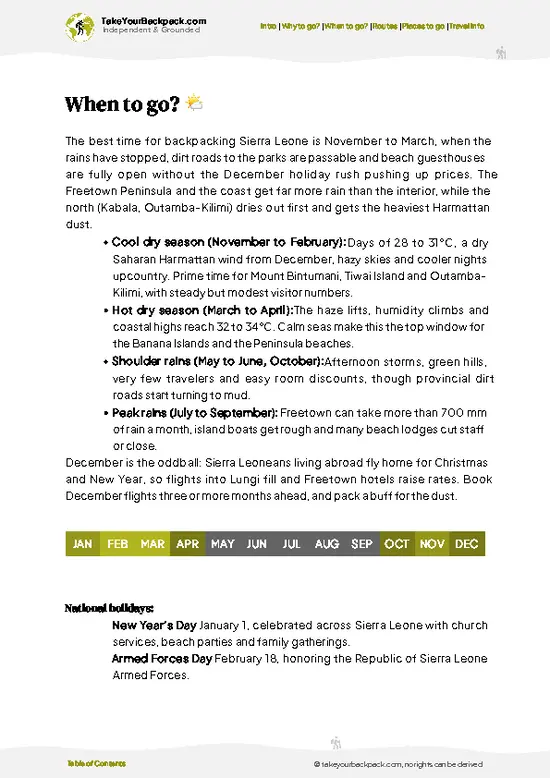
example page 0 from our offline Travel Guide for Sierra Leone
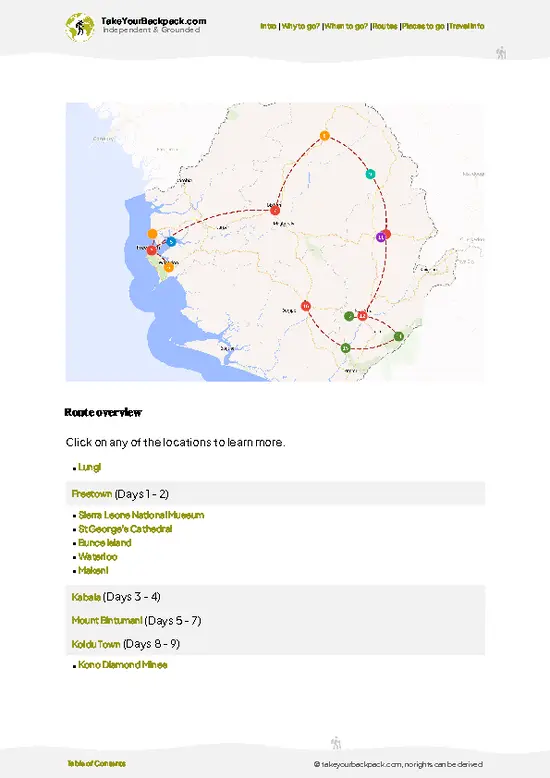
example page 1 from our offline Travel Guide for Sierra Leone
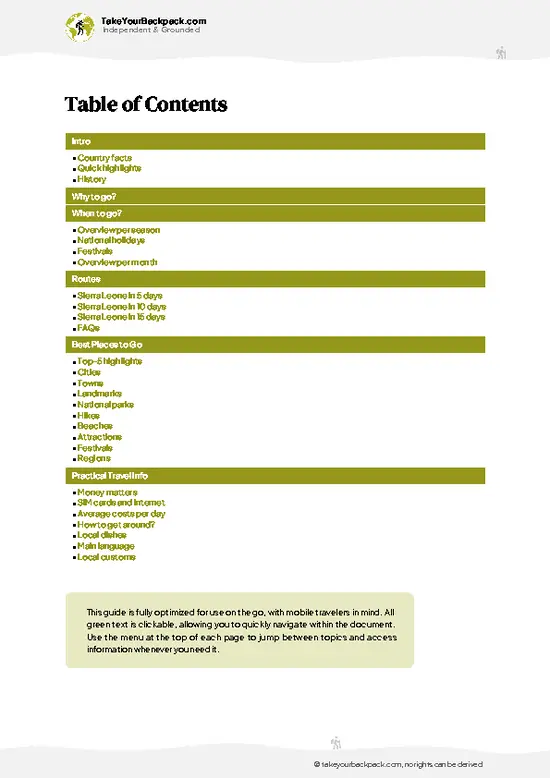
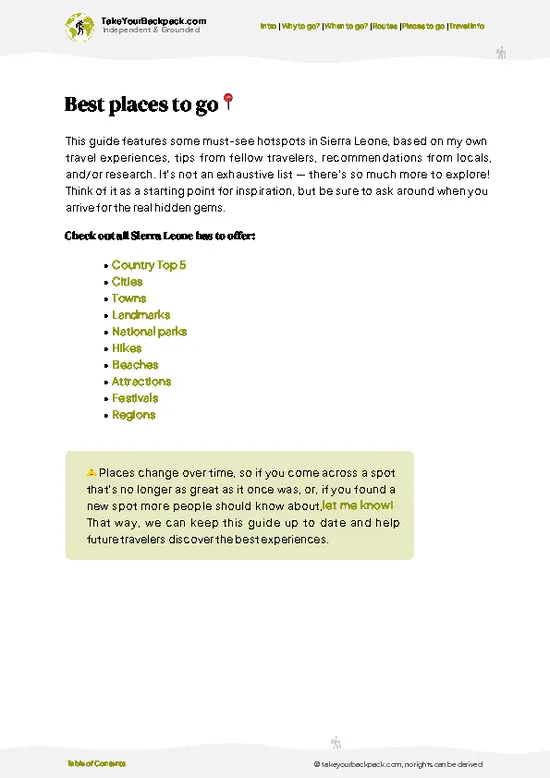
example page 2 from our offline Travel Guide for Sierra Leone
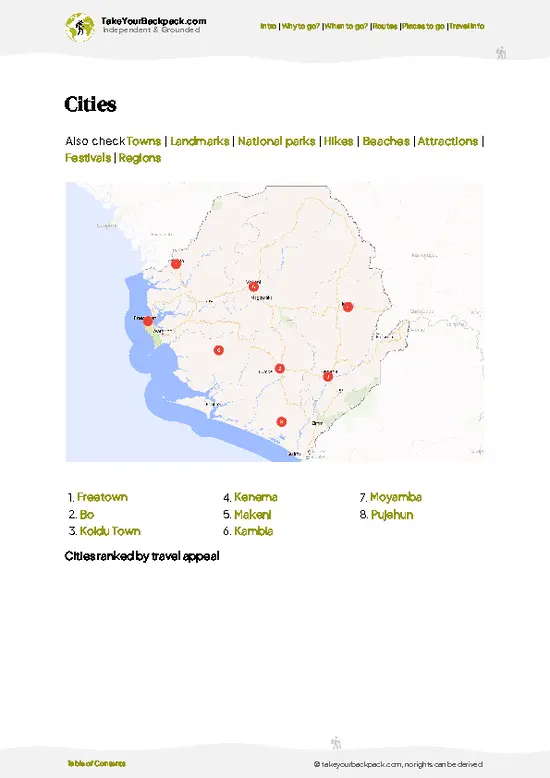
example page 3 from our offline Travel Guide for Sierra Leone
example page 4 from our offline Travel Guide for Sierra Leone
example page 5 from our offline Travel Guide for Sierra Leone
example page 6 from our offline Travel Guide for Sierra Leone
example page 7 from our offline Travel Guide for Sierra Leone
Loading the map 🌍
CLICK TO FILTER
cities
towns
landmarks
national parks
hikes
beaches
attractions
festivals
regions
SHOW COUNTRY’S BESTSHOW ALL

✨ Why go?
Ranked #11 town in Sierra Leone
What makes it a must-see town

Kamakwie suits slow travelers who like to see northern Sierra Leone away from the usual circuit. Its draw is the Wednesday market, when farmers from surrounding villages come in and the town triples in noise and color. The Wesleyan hospital also anchors the town, which gives it a steadier, more purposeful feel than other roadside stops. Most people stay one night, two if they want to walk out to nearby villages and farm tracks. Evenings are quiet: a plastic chair, a cold drink and conversation with neighbors. Solo travelers and independent hikers will enjoy the friendliness, though anyone wanting hostels, cafés or other backpackers should stay in a bigger town.

💡 HighlightsMust-see experiences and standout moments

  1. Wednesday Market: The town’s main event, when traders crowd the roadside with produce, cloth, dried fish and palm oil. Go before noon for the best selection. Entry is free, and an hour or two is plenty. Bring small notes.
  2. Kamakwie Wesleyan Hospital: A long-established mission hospital that shapes local life. You can see the grounds and the old brick buildings from outside, and staff are used to curious visitors. Free to look. Allow 30 minutes in the morning.
  3. Main Road Street Life: The strip through town is where bike taxis, vendors and tailors work side by side. Late afternoon is livelier and cooler. Free, and an hour of strolling does it.
  4. Local Cotton and Cloth Stalls: Tailors and cloth sellers cut and sew bright fabric on foot-pedal machines. A custom shirt is cheap, around US$5 to 10, with
… read more 👉
  1. Wednesday Market: The town’s main event, when traders crowd the roadside with produce, cloth, dried fish and palm oil. Go before noon for the best selection. Entry is free, and an hour or two is plenty. Bring small notes.
  2. Kamakwie Wesleyan Hospital: A long-established mission hospital that shapes local life. You can see the grounds and the old brick buildings from outside, and staff are used to curious visitors. Free to look. Allow 30 minutes in the morning.
  3. Main Road Street Life: The strip through town is where bike taxis, vendors and tailors work side by side. Late afternoon is livelier and cooler. Free, and an hour of strolling does it.
  4. Local Cotton and Cloth Stalls: Tailors and cloth sellers cut and sew bright fabric on foot-pedal machines. A custom shirt is cheap, around US$5 to 10, with a day or two for completion. Visit mornings, 30 to 45 minutes.
  5. Village Walks on Farm Tracks: Paths lead from the edge of town through rice fields, cassava patches and small villages. Go early, before the heat. Free, 2 to 3 hours, and greet everyone you pass.
Kamakwie also gives access to hills and river villages in Karene District, which you can explore with a local guide on day trips. All of this fits comfortably into one full day.
Spotted a mistake or missing something? Contact us.

🏘️ NeighborhoodsNeighborhood guide to Kamakwie

Kamakwie is a compact Bullom-and-Limba-area market town in Karene District, and you can cover all of it on foot in under an hour. Distances are short because everything grew along the main road, so walk it early, before the heat flattens the afternoon.
  • Main Road and Market Area: This is the center. Red dust coats the stalls, motorbike horns cut through radio music, and women sell cassava leaf, palm oil, dried fish and oranges from low tables. Go before 10 am, when produce is freshest and the sun is still kind. Bring small notes, because vendors rarely have change for large ones.
  • Wesleyan Hospital Area: The Kamakwie Wesleyan Hospital is the town’s landmark and a major employer. The compound is calm, with mango shade and quiet paths. Ask before wandering in, as it is a working medical site.
  • Roadside
… read more 👉
Kamakwie is a compact Bullom-and-Limba-area market town in Karene District, and you can cover all of it on foot in under an hour. Distances are short because everything grew along the main road, so walk it early, before the heat flattens the afternoon.
  • Main Road and Market Area: This is the center. Red dust coats the stalls, motorbike horns cut through radio music, and women sell cassava leaf, palm oil, dried fish and oranges from low tables. Go before 10 am, when produce is freshest and the sun is still kind. Bring small notes, because vendors rarely have change for large ones.
  • Wesleyan Hospital Area: The Kamakwie Wesleyan Hospital is the town’s landmark and a major employer. The compound is calm, with mango shade and quiet paths. Ask before wandering in, as it is a working medical site.
  • Roadside Eating Spots: Small stalls near the junction serve rice with cassava or potato leaf sauce and grilled street snacks. Meals are ready by early afternoon and often sell out by evening, so eat at midday.
  • Outer Residential Quarters: Mud-brick and zinc-roof homes sit among palms and farm plots. Nights are very quiet and dark, with generators humming, so carry a headlamp for walks.

⌛️ 1 daySeeing the highlights in 24 hours

7:30 AM: Main Road breakfast. Start where the day begins, on the main road, where women fry doughnuts and sell hot bread and coffee. Eat standing and watch the town open up, then walk toward the hospital.
9:00 AM: Wesleyan Hospital grounds. Look at the old mission buildings from outside and the busy compound. It is a short walk, and you will see why the town matters regionally.
10:30 AM: Cloth and tailor stalls. Browse the fabrics and watch tailors work. Order a shirt if you are staying the night, then head to the market.
12:30 PM: Lunch. Rice with cassava leaf or groundnut stew from a local cookhouse is the standard. Rest through the heat.
3:00 PM: Farm track walk. Away from the usual stops, head out of town on the footpaths through rice fields to a small village. Greet people, ask permission … read more 👉
7:30 AM: Main Road breakfast. Start where the day begins, on the main road, where women fry doughnuts and sell hot bread and coffee. Eat standing and watch the town open up, then walk toward the hospital.
9:00 AM: Wesleyan Hospital grounds. Look at the old mission buildings from outside and the busy compound. It is a short walk, and you will see why the town matters regionally.
10:30 AM: Cloth and tailor stalls. Browse the fabrics and watch tailors work. Order a shirt if you are staying the night, then head to the market.
12:30 PM: Lunch. Rice with cassava leaf or groundnut stew from a local cookhouse is the standard. Rest through the heat.
3:00 PM: Farm track walk. Away from the usual stops, head out of town on the footpaths through rice fields to a small village. Greet people, ask permission before photos and carry water.
5:30 PM: Return along the main road. Collect your shirt if ready and sit with a drink as bike taxis and lamps come on. It is a gentle end to the day.

🌤️ When to go?Seasonal considerations and timing

  • Dry Season (November to April): Skies are clear and roads are firm. Days reach 32 to 37°C (90 to 99°F), nights drop to 20 to 24°C (68 to 75°F). Harmattan haze from December can dull views. Vehicles are plentiful, and this is the easiest period for travel.
  • Early Rains (May to June): Warm, humid, 25 to 32°C (77 to 90°F), with sharp afternoon storms. Green farmland returns and dust settles.
  • Peak Rains (July to September): Very heavy downpours, 23 to 29°C (73 to 84°F), and muddy, slow laterite roads. Transport is scarcer and fares can climb.
  • Late Rains (October): Storms ease and roads begin to dry.
Plan to arrive in daylight, since days are roughly 11.5 to 12.5 hours year-round and nobody wants to look for transport in the dark.

source: climatestotravel.comJANJanuary: highly recommended for travelingFEBFebruary: highly recommended for travelingMARMarch: excellent for travelingAPRApril: excellent for travelingMAYMay: fair for travelingJUNJune: fair for travelingJULJuly: fair for travelingAUGAugust: fair for travelingSEPSeptember: fair for travelingOCTOctober: fair for travelingNOVNovember: highly recommended for travelingDECDecember: highly recommended for traveling
when-to-go

✈️ The backpacker research shortcutSierra Leone Travel Guide

An offline-friendly backpacking guide with optimized travel routes, ranked highlights, transport advice, and the best areas to stay.
example page 0 from our offline Travel Guide for Sierra Leone
example page 1 from our offline Travel Guide for Sierra Leone
example page 2 from our offline Travel Guide for Sierra Leone
example page 3 from our offline Travel Guide for Sierra Leone
example page 4 from our offline Travel Guide for Sierra Leone
example page 5 from our offline Travel Guide for Sierra Leone
example page 6 from our offline Travel Guide for Sierra Leone
example page 7 from our offline Travel Guide for Sierra Leone
The digital guide (242 pages) contains:
✅ 50 highlights, ranked by travel appeal
✅ Optimized 5, 10 & 15-day travel routes
✅ Cities, national parks, landmarks, beaches
✅ How to get around
✅ Offline-friendly for travel without Wi-Fi
👉 Click to see all 30+ guide features

📅 Plan smarter in minutes, not weeks
✅ Month by month travel advice
✅ Festivals & national holidays
✅ Budget expectations

🗺️ Go to the right places, skip the overrated ones
✅ Honest pros & cons of destinations
✅ Top hikes, parks & viewpoints
✅ Lesser-known places most travelers miss
✅ Clear “worth it vs skip it” guidance

🛏️ Travel smoothly without rookie mistakes
✅ Best areas to stay
✅ Transport systems explained simply
✅ Common scams & safety advice
✅ SIM cards, money & practical tips

🌍 Understand the country, not just visit it
✅ Culture & traditions
✅ 52 Essential phrases & customs
✅ Festivals worth planning around
✅ Traveler-friendly historical context
✅ Insights that make places more meaningful

📱 Built for real travel conditions
✅ Fully downloadable PDF
✅ Works completely offline
✅ Optimized for phone use
✅ Useful in remote areas & buses
✅ Everything in one place
Stop searching, start planning
Get instant access to your full guide. 30‑day money-back guarantee.
+ Add another guide for just

By proceeding you agree to our terms.
Sent to your inbox immediately after payment • 100% Secure Checkout
Best Backpacking Travel Advisor 2025 tourism awardBest Backpacking
Travel Advisor
2025
What others say about Take Your Backpack Guides:
⭐⭐⭐⭐⭐
Fantastic, amazing amount of information!
⭐⭐⭐⭐⭐
My goodness this is amazing, it's what I've been looking for hats off too you!
⭐⭐⭐⭐⭐
I think this is absolutely BRILLIANT
⭐⭐⭐⭐
Very complete and informative. It's still missing places, but I gotta to commend you
⭐⭐⭐⭐⭐
This is truly amazing, thank you, can't wait to explore it with my kids!
⭐⭐⭐⭐⭐
Awesome resource, thank you!
⭐⭐⭐⭐⭐
This is amazing! Can't wait to explore the ones I haven't seen
⭐⭐⭐⭐
I love this! Well done, great idea.
⭐⭐⭐⭐⭐
Thanks for taking the time to make this gem!
⭐⭐⭐⭐⭐
This might be the best website I've ever seen.
⭐⭐⭐⭐⭐
Congratulations, and thank you so much for your work; it's incredibly valuable.
⭐⭐⭐⭐
In all seriousness I think you did a great job pointing out the important spots
⭐⭐⭐⭐⭐
10/10 very good
⭐⭐⭐⭐⭐
As someone who's only just starting to visit regularly this is awesome, thank you.
⭐⭐⭐⭐
Thank you very much! I'm going to visit my dad, it's going to be very useful!
⭐⭐⭐⭐⭐
This is really cool! We'll be travelling for the first time and this definitely come in handy.
⭐⭐⭐⭐⭐
You are now our minister of culture, congratulations 👨‍💼
⭐⭐⭐⭐⭐
Just wanted to tell you that this is a pearl! Going to follow your recommendations.
⭐⭐⭐⭐⭐
This is so cool. I'll definitely be using the resource for my travels soon.
⭐⭐⭐⭐⭐
This is very impressive! Good work.
⭐⭐⭐⭐⭐
This is an amazing and informative site. Very well done!

🛏️ Where to stay?Best areas and accommodation options

Stay near the main road and market area, because that is where Kamakwie’s few guesthouses sit and where you can reach shared transport on foot at dawn. There are no true hostels, so budget travelers rely on simple guesthouses with private rooms, often with a fan and bucket bath. Rooms can fill when hospital visitors or NGO staff are in town, so arrive by early afternoon rather than evening.

A second option is the quieter streets close to the Wesleyan Hospital. Nights here are calmer, with less motorbike noise and fewer late radios, and the walk back is easy by daylight. Street lighting is minimal, … read more 👉
Stay near the main road and market area, because that is where Kamakwie’s few guesthouses sit and where you can reach shared transport on foot at dawn. There are no true hostels, so budget travelers rely on simple guesthouses with private rooms, often with a fan and bucket bath. Rooms can fill when hospital visitors or NGO staff are in town, so arrive by early afternoon rather than evening.

A second option is the quieter streets close to the Wesleyan Hospital. Nights here are calmer, with less motorbike noise and fewer late radios, and the walk back is easy by daylight. Street lighting is minimal, so carry a headlamp and avoid wandering after dark. Power usually comes from generators, so ask when they run and whether the room has a socket for charging.

🚌 Getting aroundTransportation options and practical tips

Showing up at the Makeni vehicle park after midday is the mistake that costs the most time, because shared vehicles to Kamakwie fill and leave in the morning and you may wait for hours or pay for empty seats. Kamakwie is small enough that you will walk nearly everywhere, though the road in is rough and slow, especially in the rains.
  • Walking: Free and the best way to see town. The main road, market and hospital are within about 1 km of each other. Go early or after 4 pm, when the red dust and heat ease, and watch for motorbikes passing close.
  • Okada (motorbike taxi): The everyday local option, usually US$0.30 to 1 within town. Agree the fare before climbing on, since there are no meters, and ask the rider to slow down on loose gravel. Wear a helmet if offered.
  • Shared taxis and minibuses to Makeni:
… read more 👉
Showing up at the Makeni vehicle park after midday is the mistake that costs the most time, because shared vehicles to Kamakwie fill and leave in the morning and you may wait for hours or pay for empty seats. Kamakwie is small enough that you will walk nearly everywhere, though the road in is rough and slow, especially in the rains.
  • Walking: Free and the best way to see town. The main road, market and hospital are within about 1 km of each other. Go early or after 4 pm, when the red dust and heat ease, and watch for motorbikes passing close.
  • Okada (motorbike taxi): The everyday local option, usually US$0.30 to 1 within town. Agree the fare before climbing on, since there are no meters, and ask the rider to slow down on loose gravel. Wear a helmet if offered.
  • Shared taxis and minibuses to Makeni: Roughly US$5 to 9 for a seat, and about 2.5 to 4 hours depending on the road and rain. Vehicles leave when full, mostly from early morning until early afternoon. Get there by 7 am and expect to sit squeezed, windows open, luggage on the roof.
  • Chartered motorbike or car: Useful for villages off the main road. Expect about US$10 to 15 for a motorbike day and US$50 to 80 for a car with fuel. Negotiate in advance and confirm the return time, because after dark there is almost no way back.

👛 Costs (as of 22 October 2026)How expensive it really is

Kamakwie costs about US$28 to 45 per day for a backpacker, and the total below is US$40 for high season. Prices are low, but cash is essential and travelers pay in Sierra Leonean leones.
CategoryBudget RangeLocal Reality
Dorm accommodation (high season)US$12 to 20No dorms, so a basic private guesthouse room with fan; low season is a few dollars less.
MealsUS$6 to 10Rice with leaf sauce and fish from local stalls; fewer options at night.
Local transportUS$2 to 5Okada rides within town; longer trips cost more.
Basic activities/entry feesUS$0 to 5Market walks and village visits are mostly free; small guide gifts are customary.
Miscellaneous expensesUS$3 to 5Water, phone data, generator charging.
Total Daily BudgetUS$40Realistic for one traveler in high season.
Bring enough cash from Makeni, since banking … read more 👉
Kamakwie costs about US$28 to 45 per day for a backpacker, and the total below is US$40 for high season. Prices are low, but cash is essential and travelers pay in Sierra Leonean leones.
CategoryBudget RangeLocal Reality
Dorm accommodation (high season)US$12 to 20No dorms, so a basic private guesthouse room with fan; low season is a few dollars less.
MealsUS$6 to 10Rice with leaf sauce and fish from local stalls; fewer options at night.
Local transportUS$2 to 5Okada rides within town; longer trips cost more.
Basic activities/entry feesUS$0 to 5Market walks and village visits are mostly free; small guide gifts are customary.
Miscellaneous expensesUS$3 to 5Water, phone data, generator charging.
Total Daily BudgetUS$40Realistic for one traveler in high season.
Bring enough cash from Makeni, since banking options in Kamakwie are limited, and buy water in bulk to save money.
⚠️ Prices can change and everyone travels differently, so take this as a rough guide. Hope it helps you plan your adventure!

🚌 Day tripsBest day trips from Kamakwie

Kamakwie works as a base for rural day trips if you accept slow roads and arrange transport yourself. Distances are modest, but travel is by okada or a chartered vehicle, and getting home before dark matters.Makeni: Northern Sierra Leone’s largest city offers ATMs, a big market, and better food and supplies. Shared vehicles take 2.5 to 4 hours each way, so leave early and plan to be back by mid-afternoon. Budget US$12 to 20 including transport and lunch. First-timers often leave too late and miss the last ride back. Best in the dry season.
👉 Explore Makeni
Bumbuna: Bumbuna is known for its hydroelectric dam and waterfall area in the hills southeast. Reaching it takes a long day and a hired vehicle or several shared rides, so ask locally about road conditions first. Costs run about US$25 to 45 … read more 👉
Kamakwie works as a base for rural day trips if you accept slow roads and arrange transport yourself. Distances are modest, but travel is by okada or a chartered vehicle, and getting home before dark matters.Makeni: Northern Sierra Leone’s largest city offers ATMs, a big market, and better food and supplies. Shared vehicles take 2.5 to 4 hours each way, so leave early and plan to be back by mid-afternoon. Budget US$12 to 20 including transport and lunch. First-timers often leave too late and miss the last ride back. Best in the dry season.
👉 Explore Makeni
Bumbuna: Bumbuna is known for its hydroelectric dam and waterfall area in the hills southeast. Reaching it takes a long day and a hired vehicle or several shared rides, so ask locally about road conditions first. Costs run about US$25 to 45 with chartered transport. Visit between December and April, when tracks are driest.
👉 Explore Bumbuna
Kambia Border Region: Heading northwest toward the Guinea border shows remote farming country, small markets and river crossings. It suits travelers who like rough roads and can hire a motorbike driver for the day, around US$15 to 25. Carry your passport, because checkpoints are common.
👉 Explore Kambia

🛡️ SafetyTraveler Safety Guide

Kamakwie is a quiet, friendly town, and serious crime against visitors is uncommon. Most problems are small: inflated prices for foreigners, motorbike fares changed after the ride, and requests for money from children or officials. Agree fares first, carry small notes, and keep a calm, polite tone. Street lighting is minimal, so avoid walking alone after dark and carry a headlamp. Solo women usually find the town manageable, but should dress modestly and expect attention. Carry photocopies of your passport, and stay at checkpoints courteous and patient. Malaria is the bigger health concern, so use repellent and prophylaxis. Roads are the real hazard, particularly motorbikes in rain.

FAQFrequently asked questions about Kamakwie

Kamakwie is worth a visit if you want a real northern Sierra Leone market town with almost no tourist infrastructure, rather than a stopover. You can see the main road market, the Wesleyan Hospital compound and nearby villages in a day. Expect basic guesthouses at roughly US$12 to 20 a night and slow roads. It suits patient, self-sufficient travelers.
Kamakwie needs one to two days for most travelers. One day covers the market, walking the main road and an evening meal, while a second day allows a village trip by motorbike for about US$15 to 25. Add a day of buffer for the 2.5 to 4 hour journey from Makeni, especially in the rainy season.
Kamakwie can be done as a long day trip from Makeni, though it is tiring. The ride takes roughly 2.5 to 4 hours each way and costs US$5 to 9 per seat, leaving only a few hours in town. Shared vehicles leave mostly in the morning and return before dark, so staying one night is much more comfortable.
⚠️ Things can change over time, so always validate details locally before you go.

Other Sierra Leonean towns near Kamakwie

Explore more nearby:

  • Binkolo—Highway junction market, charcoal-fried cassava, Bombali farm paths| 67 km away
  • Bumbuna—Seli River dam, reservoir ridges, riverbank laundry| 74 km away
  • Kabala—Yagala Falls, Wara Wara ridges, cool evenings, motorbike taxis| 75 km away

💡 Not sure where to go next?
Create a personalized itinerary for Sierra Leone including Kamakwie and the places that fit your trip.

Generate my itinerary

👉 Discover all towns

Or checkout all Sierra Leone has to offer (think cities, towns, villages, national parks, hikes, beaches, festivals)
Country photo of Sierra Leone

We 💚 feedbackFinal thoughts on visiting Kamakwie

Kamakwie works best as a pause between Makeni and the far north, so pair it with Kabala’s hill country and the highland trails around Mount Bintumani rather than treating it as a destination alone. I would arrive before market day, carry small bills, and plan an unhurried afternoon of wandering the red-dirt lanes, because the town gives back more when you stop and talk.

✍️ Help improve this page!
The information on this page is based on in-depth research, insights shared by experienced travelers, and feedback from the local travel community in Sierra Leone. While every effort is made to keep the information accurate and current, conditions can change — so if you spot anything incorrect or outdated, please get in touch.


🙋‍♂️ Give feedback

👋 Meet the founderWho’s Behind Take Your Backpack?

Johan, backpacker and founder of TakeYourBackpackHi, I’m Johan (Netherlands 🇳🇱), the creator of TakeYourBackpack. Over the past 3 decades, I’ve backpacked through 90+ countries across six continents, gaining extensive experience with independent travel, long-term trips, and overland routes.

This site is built on a combination of firsthand travel experience and carefully curated insights from other backpackers. Many guides are based on places I’ve personally visited, while others bring together tips, observations, and practical advice shared by trusted travelers I’ve met along the way.

The goal is to provide realistic, experience-driven guidance — not generic itineraries — so you can explore destinations with better context, clearer expectations, and more confidence.