×

Sierra Leone🇸🇱 | national parksOutamba-Kilimi National ParkRanger-led chimp tracking, Little Scarcies canoe, Kilimi floodplain, elephant sign | things to do and best time to go

Explore Tiwai Island Wildlife SanctuaryExplore Western Area Peninsula National Park

Backpacking in Outamba-Kilimi
🌟 Highlightnational park ranked #3
By Johan Kruseman 🇳🇱 | Updated October 22, 2026

Somewhere past the Little Scarcies River, a pygmy hippo-sized silence settles, then a troop of chimpanzees erupts in pant-hoots from the canopy and your guide stops mid-step. Outamba-Kilimi National Park sits in the far north of Sierra Leone, against the Guinea border, and it is really two parks joined: Outamba is savanna woodland and forest, Kilimi is river, swamp and grassland. Getting here is slow because the roads are rough and unsigned, so hire a driver and arrive with food, since nothing is sold inside. You also need a ranger to walk with you, because the animals are shy and the trails are faint; that is the rule, and it keeps you from getting lost. Crowds do not exist. The comfort level is basic and the sightings are never guaranteed, but the reward is quiet. Red dust clings to your sweat, and at dusk the river smells of wet clay and woodsmoke.

Discover everything you want to know in the 📖 Sierra Leone Travel Guide.


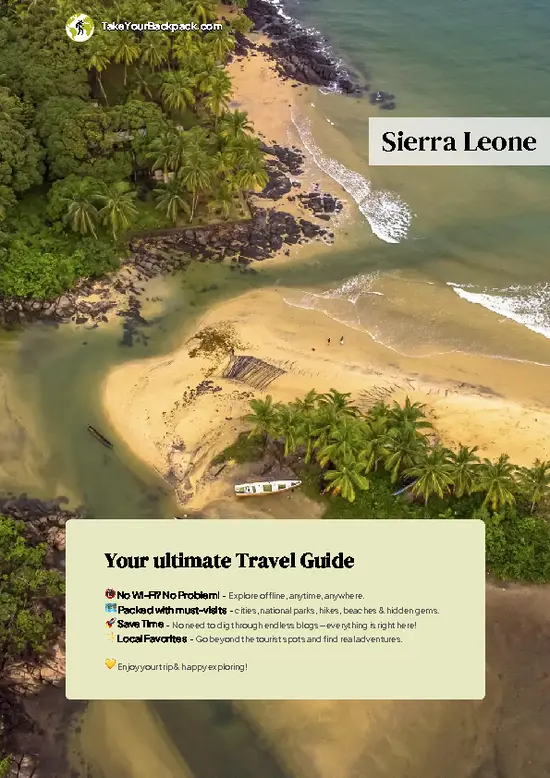
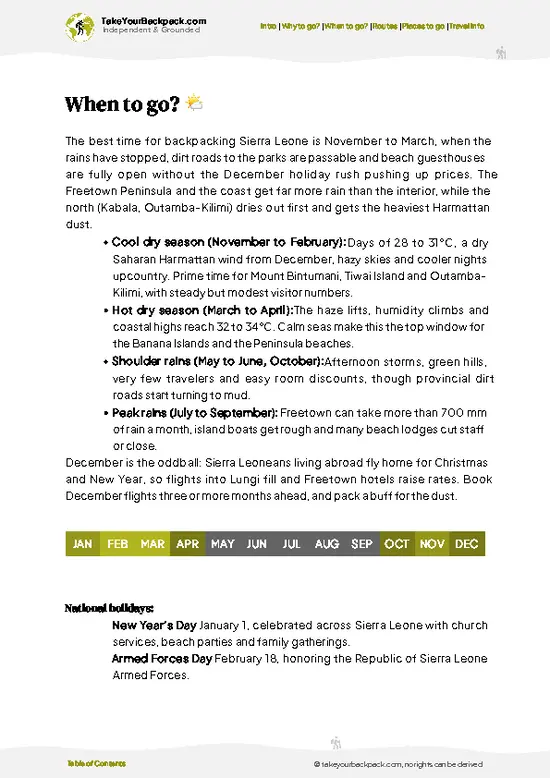
example page 0 from our offline Travel Guide for Sierra Leone
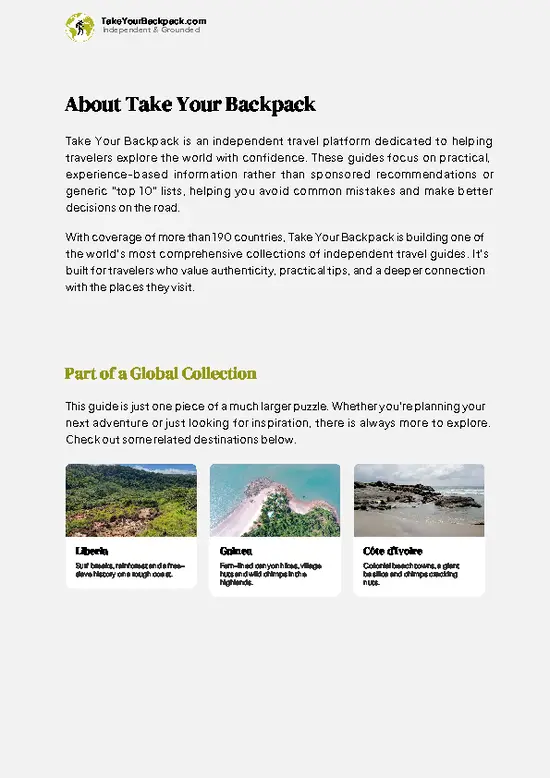
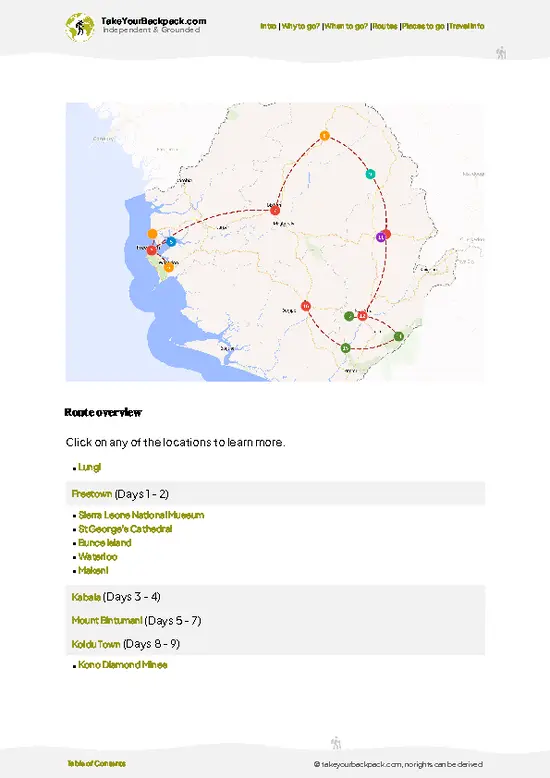
example page 1 from our offline Travel Guide for Sierra Leone
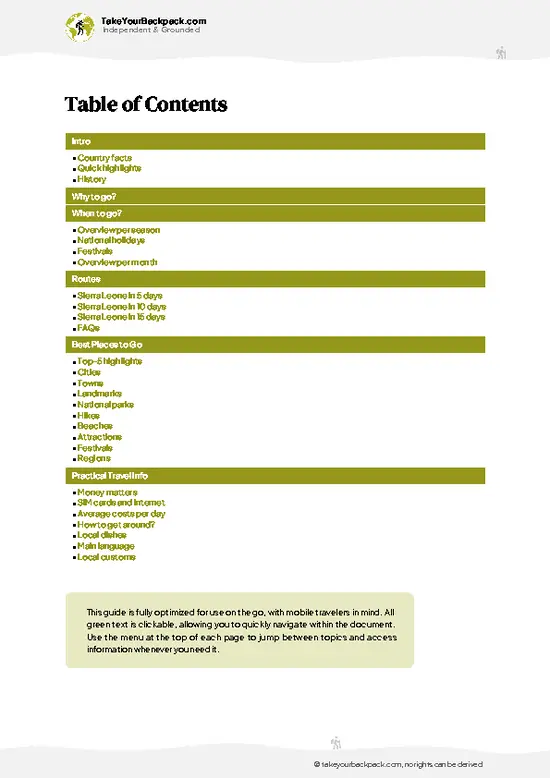
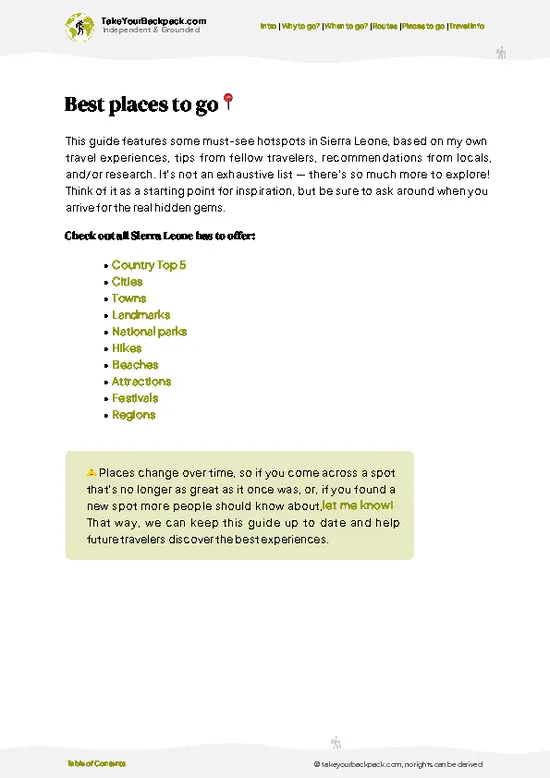
example page 2 from our offline Travel Guide for Sierra Leone
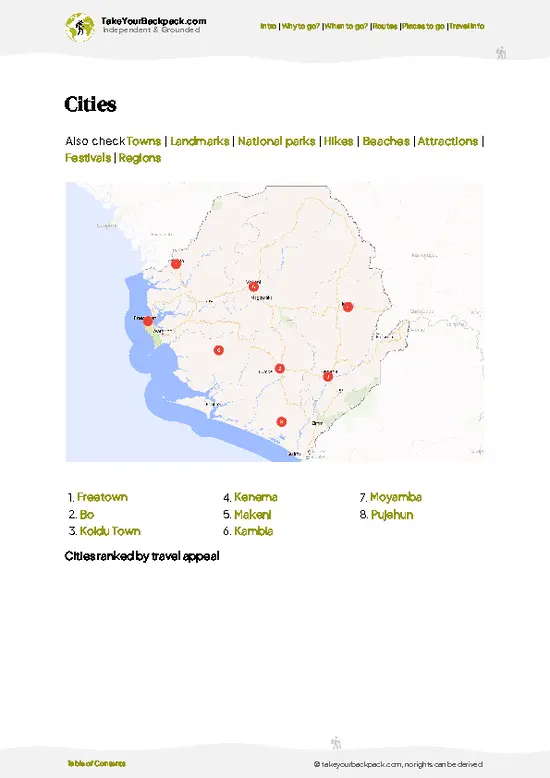
example page 3 from our offline Travel Guide for Sierra Leone
example page 4 from our offline Travel Guide for Sierra Leone
example page 5 from our offline Travel Guide for Sierra Leone
example page 6 from our offline Travel Guide for Sierra Leone
example page 7 from our offline Travel Guide for Sierra Leone
Loading the map 🌍
CLICK TO FILTER
cities
towns
landmarks
national parks
hikes
beaches
attractions
festivals
regions
SHOW COUNTRY’S BESTSHOW ALL

✨ Why go?
Ranked #3 national park in Sierra Leone
Reasons people choose to explore here

Outamba-Kilimi National Park suits backpackers who like earning their wildlife. There is no tour-bus circuit here, so you set the pace with a ranger instead of a schedule, and you can add a night or two without anyone rushing you out. The park is home to chimpanzees, forest elephants, pygmy hippos and a wide range of monkeys and birds, and the chance of a sighting grows when you are patient, quiet and willing to rise early.

The terrain also gives you variety that few West African parks can match. You can walk through Outamba’s savanna and forest in the morning, then drift on a Little Scarcies River canoe in the afternoon, where hippos and birdlife share the bank. Camping or simple lodging keeps the experience affordable and close to nature. It works best for self-guided travelers who can … read more 👉
Outamba-Kilimi National Park suits backpackers who like earning their wildlife. There is no tour-bus circuit here, so you set the pace with a ranger instead of a schedule, and you can add a night or two without anyone rushing you out. The park is home to chimpanzees, forest elephants, pygmy hippos and a wide range of monkeys and birds, and the chance of a sighting grows when you are patient, quiet and willing to rise early.

The terrain also gives you variety that few West African parks can match. You can walk through Outamba’s savanna and forest in the morning, then drift on a Little Scarcies River canoe in the afternoon, where hippos and birdlife share the bank. Camping or simple lodging keeps the experience affordable and close to nature. It works best for self-guided travelers who can plan their own food and transport, and who are happy with a bare-bones trip that has almost no other visitors.

💡 HighlightsEssential experiences to have while exploring Outamba-Kilimi

  1. Chimpanzee tracking in Outamba: The headline draw. Rangers lead you along forest paths toward feeding trees, listening for pant-hoots. Sightings are not guaranteed, but hearing them is common.
  2. Little Scarcies River canoe trip: Paddling slowly past muddy banks, you may spot hippos, crocodiles and kingfishers. The river is calm and the morning light is soft.
  3. Kilimi sector: The northern part of the park is a mix of grassland, floodplain and swamp. It feels open and quiet after Outamba’s forest, and it is good for birdwatching.
  4. Pygmy hippo habitat: These shy, nocturnal animals live in the streams and swampy forest. You are more likely to find tracks or dung than the animal itself, but the possibility keeps the walks interesting.
  5. Forest elephant tracks: Elephants are rarely seen, but their trails,
… read more 👉
  1. Chimpanzee tracking in Outamba: The headline draw. Rangers lead you along forest paths toward feeding trees, listening for pant-hoots. Sightings are not guaranteed, but hearing them is common.
  2. Little Scarcies River canoe trip: Paddling slowly past muddy banks, you may spot hippos, crocodiles and kingfishers. The river is calm and the morning light is soft.
  3. Kilimi sector: The northern part of the park is a mix of grassland, floodplain and swamp. It feels open and quiet after Outamba’s forest, and it is good for birdwatching.
  4. Pygmy hippo habitat: These shy, nocturnal animals live in the streams and swampy forest. You are more likely to find tracks or dung than the animal itself, but the possibility keeps the walks interesting.
  5. Forest elephant tracks: Elephants are rarely seen, but their trails, broken branches and droppings are easy to find. A ranger can explain how to read the signs.
  6. Monkey troops: Several monkey species move through the canopy, and the forest edges often give the best views. Early morning is the busiest time.
  7. Birdwatching along the savanna edge: Hornbills, turacos and bee-eaters appear along open trails and riverbanks. Bring binoculars and be patient.
  8. Evening at the camp riverside: Frogs, insects and distant calls fill the dusk. It costs nothing extra and makes a fitting end to the day.
The riverside evening at the camp is free, while every other item needs a ranger and a park fee.
Spotted a mistake or missing something? Contact us.

🌤️ When to go?Choosing the right time of year

  • Peak Dry Season (December to February): Trails are firm, rivers are low and wildlife is easiest to spot at waterholes. Days run 30 to 35°C (86 to 95°F), nights 18 to 22°C (64 to 72°F). Harmattan haze can flatten views, and dust hangs in the air. Daylight lasts about 12 hours. Rooms and vehicle hire cost the most.
  • Late Dry Season (March to April): Heat builds to 35 to 38°C (95 to 100°F), so walks start at dawn. Grass burns off, which opens sightlines. Crowds thin out after the holidays and prices ease.
  • Rainy Season (May to October): Downpours turn the laterite tracks to mud, rivers rise and the Little Scarcies is often impassable by canoe or on foot. Temperatures sit at 24 to 30°C (75 to 86°F) with high humidity. Ranger camps may close, but prices drop and you will likely have the forest to yourself.
… read more 👉
  • Peak Dry Season (December to February): Trails are firm, rivers are low and wildlife is easiest to spot at waterholes. Days run 30 to 35°C (86 to 95°F), nights 18 to 22°C (64 to 72°F). Harmattan haze can flatten views, and dust hangs in the air. Daylight lasts about 12 hours. Rooms and vehicle hire cost the most.
  • Late Dry Season (March to April): Heat builds to 35 to 38°C (95 to 100°F), so walks start at dawn. Grass burns off, which opens sightlines. Crowds thin out after the holidays and prices ease.
  • Rainy Season (May to October): Downpours turn the laterite tracks to mud, rivers rise and the Little Scarcies is often impassable by canoe or on foot. Temperatures sit at 24 to 30°C (75 to 86°F) with high humidity. Ranger camps may close, but prices drop and you will likely have the forest to yourself.
  • Early November: Rains fade, vegetation is lush and the air is clear. Visitor numbers are still low.
Arrive in the first half of December to catch drying tracks before the holiday rush pushes prices up.


source: climatestotravel.comJANJanuary: excellent for travelingFEBFebruary: excellent for travelingMARMarch: excellent for travelingAPRApril: highly recommended for travelingMAYMay: fair for travelingJUNJune: fair for travelingJULJuly: below average for travelingAUGAugust: below average for travelingSEPSeptember: fair for travelingOCTOctober: fair for travelingNOVNovember: highly recommended for travelingDECDecember: excellent for traveling
when-to-go

✈️ The backpacker research shortcutSierra Leone Travel Guide

An offline-friendly backpacking guide with optimized travel routes, ranked highlights, transport advice, and the best areas to stay.
example page 0 from our offline Travel Guide for Sierra Leone
example page 1 from our offline Travel Guide for Sierra Leone
example page 2 from our offline Travel Guide for Sierra Leone
example page 3 from our offline Travel Guide for Sierra Leone
example page 4 from our offline Travel Guide for Sierra Leone
example page 5 from our offline Travel Guide for Sierra Leone
example page 6 from our offline Travel Guide for Sierra Leone
example page 7 from our offline Travel Guide for Sierra Leone
The digital guide (242 pages) contains:
✅ 50 highlights, ranked by travel appeal
✅ Optimized 5, 10 & 15-day travel routes
✅ Cities, national parks, landmarks, beaches
✅ How to get around
✅ Offline-friendly for travel without Wi-Fi
👉 Click to see all 30+ guide features

📅 Plan smarter in minutes, not weeks
✅ Month by month travel advice
✅ Festivals & national holidays
✅ Budget expectations

🗺️ Go to the right places, skip the overrated ones
✅ Honest pros & cons of destinations
✅ Top hikes, parks & viewpoints
✅ Lesser-known places most travelers miss
✅ Clear “worth it vs skip it” guidance

🛏️ Travel smoothly without rookie mistakes
✅ Best areas to stay
✅ Transport systems explained simply
✅ Common scams & safety advice
✅ SIM cards, money & practical tips

🌍 Understand the country, not just visit it
✅ Culture & traditions
✅ 52 Essential phrases & customs
✅ Festivals worth planning around
✅ Traveler-friendly historical context
✅ Insights that make places more meaningful

📱 Built for real travel conditions
✅ Fully downloadable PDF
✅ Works completely offline
✅ Optimized for phone use
✅ Useful in remote areas & buses
✅ Everything in one place
Stop searching, start planning
Get instant access to your full guide. 30‑day money-back guarantee.
+ Add another guide for just

By proceeding you agree to our terms.
Sent to your inbox immediately after payment • 100% Secure Checkout
Best Backpacking Travel Advisor 2025 tourism awardBest Backpacking
Travel Advisor
2025
What others say about Take Your Backpack Guides:
⭐⭐⭐⭐⭐
Fantastic, amazing amount of information!
⭐⭐⭐⭐⭐
My goodness this is amazing, it's what I've been looking for hats off too you!
⭐⭐⭐⭐⭐
I think this is absolutely BRILLIANT
⭐⭐⭐⭐
Very complete and informative. It's still missing places, but I gotta to commend you
⭐⭐⭐⭐⭐
This is truly amazing, thank you, can't wait to explore it with my kids!
⭐⭐⭐⭐⭐
Awesome resource, thank you!
⭐⭐⭐⭐⭐
This is amazing! Can't wait to explore the ones I haven't seen
⭐⭐⭐⭐
I love this! Well done, great idea.
⭐⭐⭐⭐⭐
Thanks for taking the time to make this gem!
⭐⭐⭐⭐⭐
This might be the best website I've ever seen.
⭐⭐⭐⭐⭐
Congratulations, and thank you so much for your work; it's incredibly valuable.
⭐⭐⭐⭐
In all seriousness I think you did a great job pointing out the important spots
⭐⭐⭐⭐⭐
10/10 very good
⭐⭐⭐⭐⭐
As someone who's only just starting to visit regularly this is awesome, thank you.
⭐⭐⭐⭐
Thank you very much! I'm going to visit my dad, it's going to be very useful!
⭐⭐⭐⭐⭐
This is really cool! We'll be travelling for the first time and this definitely come in handy.
⭐⭐⭐⭐⭐
You are now our minister of culture, congratulations 👨‍💼
⭐⭐⭐⭐⭐
Just wanted to tell you that this is a pearl! Going to follow your recommendations.
⭐⭐⭐⭐⭐
This is so cool. I'll definitely be using the resource for my travels soon.
⭐⭐⭐⭐⭐
This is very impressive! Good work.
⭐⭐⭐⭐⭐
This is an amazing and informative site. Very well done!

🛏️ Where to stay?Best areas to stay in Sierra Leone

The best base is inside the park itself, at the ranger-run camps. Outamba-Kilimi has simple guesthouse-style lodgings at Kabala Rock Camp (Outamba sector) and at Kamakwie-side Kilimi camp, usually basic rooms or huts with shared bucket showers and no reliable electricity. Bring a sleeping bag liner, a headlamp and a water filter. Meals can be arranged with the rangers if you give notice and pay for the ingredients, but carrying your own staples is smarter. Camping is possible with your own tent and is the cheapest route.
Outside the park, Kabala is the main town for supplies, with modest guesthouses … read more 👉
The best base is inside the park itself, at the ranger-run camps. Outamba-Kilimi has simple guesthouse-style lodgings at Kabala Rock Camp (Outamba sector) and at Kamakwie-side Kilimi camp, usually basic rooms or huts with shared bucket showers and no reliable electricity. Bring a sleeping bag liner, a headlamp and a water filter. Meals can be arranged with the rangers if you give notice and pay for the ingredients, but carrying your own staples is smarter. Camping is possible with your own tent and is the cheapest route.
Outside the park, Kabala is the main town for supplies, with modest guesthouses and a few small hotels, plus a lively market for stocking up. It sits in the Koinadugu hills a few hours by road from the Outamba entrance. Kamakwie is the closest sizable town to the park, with basic lodging and a market, and it works well as a stopover before the park track. Madina Oula, near the Guinea border, is a small border town and offers little beyond a bed and a meal. Most travelers go through Makeni, the largest northern city, where hotels and guesthouses are far more plentiful. Book the park camps through the park office or Freetown contacts in advance, since walk-in availability is not guaranteed.

👛 Costs (as of 22 October 2026)What things cost and how to budget

A realistic budget for Outamba-Kilimi National Park is about US$55 to 85 per day, with most of the spend going to the entry fee, ranger service and transport to a remote corner of the north.
CategoryBudget RangeLocal Reality
Entrance and ranger feesUS$10 to 20Paid at the park office or gate. Ranger escort is expected on walks and may carry a small extra fee.
Accommodation (high season)US$10 to 25Basic ranger-camp rooms or huts. Camping with your own tent costs less. Rainy-season rates drop slightly.
Local transportUS$15 to 25Shared taxi or minibus to Kabala or Kamakwie, then a hired motorbike or vehicle for the final track. Per-day average on a multi-day trip.
Food and suppliesUS$10 to 15Rice dishes in towns cost little. Inside the park you rely on rangers’ cooking or your own stock bought in Kabala
… read more 👉
A realistic budget for Outamba-Kilimi National Park is about US$55 to 85 per day, with most of the spend going to the entry fee, ranger service and transport to a remote corner of the north.
CategoryBudget RangeLocal Reality
Entrance and ranger feesUS$10 to 20Paid at the park office or gate. Ranger escort is expected on walks and may carry a small extra fee.
Accommodation (high season)US$10 to 25Basic ranger-camp rooms or huts. Camping with your own tent costs less. Rainy-season rates drop slightly.
Local transportUS$15 to 25Shared taxi or minibus to Kabala or Kamakwie, then a hired motorbike or vehicle for the final track. Per-day average on a multi-day trip.
Food and suppliesUS$10 to 15Rice dishes in towns cost little. Inside the park you rely on rangers’ cooking or your own stock bought in Kabala or Kamakwie.
Guide and canoe extrasUS$5 to 10Small payments for boat trips on the river or longer guided walks. Pay in cash, local currency is common.
Total Daily BudgetUS$55 to 85Cash is essential, since there are no ATMs near the park. Bring small notes.
⚠️ Prices can change and everyone travels differently, so take this as a rough guide. Hope it helps you plan your adventure!

🥾 TrailsPlan your hike in Outamba-Kilimi: routes, terrain, and sights

Outamba-Kilimi National Park is walked mostly on ranger-led routes rather than on signposted, named trails, so expect to choose a route with your guide on arrival. The terrain is flat to gently rolling, with red dirt paths, grass up to shoulder height and shaded forest stretches.
  • Forest chimpanzee walk: Starts from the Outamba camp and heads into the forest. Allow 3 to 5 hours. Easy to moderate, though heat and humidity make it tiring. Go early, move quietly and expect long pauses.
  • Savanna loop: A shorter walk of 2 to 3 hours through open woodland and grass. Easy. Good for birds, monkeys and animal
… read more 👉
Outamba-Kilimi National Park is walked mostly on ranger-led routes rather than on signposted, named trails, so expect to choose a route with your guide on arrival. The terrain is flat to gently rolling, with red dirt paths, grass up to shoulder height and shaded forest stretches.
  • Forest chimpanzee walk: Starts from the Outamba camp and heads into the forest. Allow 3 to 5 hours. Easy to moderate, though heat and humidity make it tiring. Go early, move quietly and expect long pauses.
  • Savanna loop: A shorter walk of 2 to 3 hours through open woodland and grass. Easy. Good for birds, monkeys and animal tracks, with little shade at midday.
  • River canoe outing: A calm paddle of 1 to 3 hours on the Little Scarcies River. Easy. Hippos, crocodiles and waterbirds are the main sightings, and you stay seated the whole time.
  • Kilimi floodplain walk: A longer day trip across grassland and swamp edge. Moderate. Expect wet feet in the rainy season and open sun in the dry months.
  • Night or dawn listening walk: A short walk near camp, with a guide, to hear frogs, owls and distant primates. Easy, but bring a headlamp.
Wildlife includes chimpanzees, forest elephants, pygmy hippos, buffalo and many monkeys, though sightings depend on patience and luck. Wear long trousers, sturdy shoes and light, neutral colors, and carry plenty of water.
Getting to Outamba-Kilimi National Park is the hardest part. There is no regular public transport to the gate, so most travelers go by hired 4x4 or shared vehicle to the nearest town and then arrange the last stretch. Roads can be rough, and in the rainy season some sections become hard to pass. The park is almost always quiet, with few other visitors. An entrance fee and a ranger fee apply, and you pay in cash. Bring food, since there is no shop on site.
⚠️ Hiking info can sometimes be outdated or inaccurate. Before you hit the trail, check the latest conditions with locals. If you do spot anything that's off, I'd love to hear from you, so I can update it for fellow travelers.

🛡️ SafetyScams, Hazards, and Annoyances

Outamba-Kilimi is a remote, lightly visited park, and the main risks are heat, mud and self-reliance rather than danger. Rangers accompany walks, which is expected and keeps you on faint paths where navigation is hard. Start at dawn, carry at least 3 liters of water per person and treat all stream water. Trails are flat to gently rolling, but they turn slick in the rains and river crossings can run chest-deep, so wear sturdy shoes with grip. Elephants, pygmy hippos, chimpanzees and buffalo live here, though sightings are uncommon. If you meet elephants or buffalo, stay quiet, keep distance and follow your ranger’s lead. Snakes and tsetse flies are present, so wear long sleeves and trousers. Malaria is a real concern, so take prophylaxis and a net. First-timers often arrive without enough cash, … read more 👉
Outamba-Kilimi is a remote, lightly visited park, and the main risks are heat, mud and self-reliance rather than danger. Rangers accompany walks, which is expected and keeps you on faint paths where navigation is hard. Start at dawn, carry at least 3 liters of water per person and treat all stream water. Trails are flat to gently rolling, but they turn slick in the rains and river crossings can run chest-deep, so wear sturdy shoes with grip. Elephants, pygmy hippos, chimpanzees and buffalo live here, though sightings are uncommon. If you meet elephants or buffalo, stay quiet, keep distance and follow your ranger’s lead. Snakes and tsetse flies are present, so wear long sleeves and trousers. Malaria is a real concern, so take prophylaxis and a net. First-timers often arrive without enough cash, food and a first-aid kit, and the nearest clinic is far away, so pack for self-sufficiency.

FAQFrequently asked questions about Outamba-Kilimi

Plan on 2 to 3 days at Outamba-Kilimi National Park, not counting travel. Most visitors spend one day getting there from Kabala or Kamakwie, one full day walking Outamba’s forest and savanna trails with a ranger, and a third for a canoe trip on the Little Scarcies in Kilimi. Allow 4 to 5 days if you add Freetown or Makeni legs.
Going without a car is possible but slow, since public transport stops short of the park. Take a shared taxi or minibus from Makeni to Kabala or Kamakwie, which takes several hours, then hire a motorbike or arrange a ranger pickup for the final dirt track. Expect to pay roughly US$15 to 30 for that last leg, and arrange it in advance for Outamba-Kilimi National Park.
Yes, Outamba-Kilimi National Park charges an entrance fee, usually about US$10 to 20 per person, plus a ranger escort fee for walks. No separate hiking permit is normally required, but visitors register at the park office or ranger post on arrival. Contact the Sierra Leone Conservation Society or Freetown office before you go, since rates change and camp spaces are limited.
⚠️ Things can change over time, so always validate details locally before you go.

Other Sierra Leonean national parks near Outamba-Kilimi

Explore more nearby:


💡 Not sure where to go next?
Create a personalized itinerary for Sierra Leone including Outamba-Kilimi and the places that fit your trip.

Generate my itinerary

👉 Discover all national parks

Or checkout all Sierra Leone has to offer (think cities, towns, villages, national parks, hikes, beaches, festivals)
Country photo of Sierra Leone

We 💚 feedbackParting advice and final tips

Outamba-Kilimi National Park pairs well with a trip through northern Sierra Leone, so I would link it with a stop in Kabala and the hills around it, then finish back in Freetown. Bring your own food and cash, give yourself at least two nights so the forest has time to open up, and keep your expectations low and your ears sharp.

✍️ Help improve this page!
The information on this page is based on in-depth research, insights shared by experienced travelers, and feedback from the local travel community in Sierra Leone. While every effort is made to keep the information accurate and current, conditions can change — so if you spot anything incorrect or outdated, please get in touch.


🙋‍♂️ Give feedback

👋 Meet the founderWho’s Behind Take Your Backpack?

Johan, backpacker and founder of TakeYourBackpackHi, I’m Johan (Netherlands 🇳🇱), the creator of TakeYourBackpack. Over the past 3 decades, I’ve backpacked through 90+ countries across six continents, gaining extensive experience with independent travel, long-term trips, and overland routes.

This site is built on a combination of firsthand travel experience and carefully curated insights from other backpackers. Many guides are based on places I’ve personally visited, while others bring together tips, observations, and practical advice shared by trusted travelers I’ve met along the way.

The goal is to provide realistic, experience-driven guidance — not generic itineraries — so you can explore destinations with better context, clearer expectations, and more confidence.