×

Sierra Leone🇸🇱 | best national parksWhere to Find the 7 Best national parks in Sierra Leone

Sierra Leone’s national parks are small, wild and lightly staffed, with nothing like the minibus convoys of East Africa. In the east, Gola Rainforest means red-clay tracks, dripping canopy, the smell of wet leaf litter and hornbill wingbeats overhead. Near Freetown, the Western Area Peninsula offers forest within an hour of the capital. Up north, Outamba-Kilimi brings savanna woodland, harmattan haze and river channels. Costs stay modest, but access is the real price: long, bumpy transfers, few signs, and almost no other visitors. Backpacking independently works if you accept slow days, sweat and basic bunks.

By Johan Kruseman 🇳🇱 | Updated October 23, 2026
Explore the best hikes in Sierra Leone

Why go?Key Factors That Shape the Experience

Sierra Leone suits national parks that are rainforest-first. It sits on the Upper Guinean forest belt, one of West Africa’s richest pockets of biodiversity, and its protected areas hold chimpanzees, pygmy hippos, forest elephants and dozens of primate and bird species. That wildlife lives in dense forest, so expect to hear animals far more often than see them. Sightings come through patience, early starts and a guide who reads a broken twig.

The country’s history shapes everything. The 1991 to 2002 civil war halted conservation work and tourism, and the parks are still rebuilding. Facilities are simple: a handful of lodges, community-run camps, bucket showers, generators that cut out at night. Visitor numbers stay in the low hundreds or thousands a year, which means quiet trails and no queues, … read more 👉
Sierra Leone suits national parks that are rainforest-first. It sits on the Upper Guinean forest belt, one of West Africa’s richest pockets of biodiversity, and its protected areas hold chimpanzees, pygmy hippos, forest elephants and dozens of primate and bird species. That wildlife lives in dense forest, so expect to hear animals far more often than see them. Sightings come through patience, early starts and a guide who reads a broken twig.

The country’s history shapes everything. The 1991 to 2002 civil war halted conservation work and tourism, and the parks are still rebuilding. Facilities are simple: a handful of lodges, community-run camps, bucket showers, generators that cut out at night. Visitor numbers stay in the low hundreds or thousands a year, which means quiet trails and no queues, but also thin infrastructure.

Several parks and reserves are managed with local communities, so your fees often feed village budgets directly. Before committing, know that roads degrade fast in the rains, signal is patchy, cards are rarely accepted outside Freetown, and logistics need arranging ahead through park offices or conservation groups. The reward is raw, humid, uncrowded forest that few travelers have seen.
How the List Was Created
The list of best national parks in Sierra Leone is created based on landscapes, wildlife, adventure opportunities, facilities, and overall experience. If you feel a national park is missing in this list, please let us know.

When to go?Best Time to Visit Sierra Leone for national parks

Best months for park visits: The best months are December to March, when the dry season brings clear skies, firm tracks and daytime highs around 30 to 34°C. Rain is minimal then, usually under 50 mm a month, so forest trails are muddy only in patches and river crossings stay passable.

Shoulder seasons and the rains: November and April to May are the shoulder months. Showers arrive in sharp afternoon bursts, humidity climbs past 80 percent, and the air smells of hot earth then wet leaves. Trails are still walkable, and lodges are quieter. From June to October the monsoon dominates. Freetown and the coast can receive 3,000 mm or more across the season, with August the wettest. Red-clay roads turn to soup, rivers rise, leeches appear, and some park tracks become impassable for days.

Regional … read more 👉
Best months for park visits: The best months are December to March, when the dry season brings clear skies, firm tracks and daytime highs around 30 to 34°C. Rain is minimal then, usually under 50 mm a month, so forest trails are muddy only in patches and river crossings stay passable.

Shoulder seasons and the rains: November and April to May are the shoulder months. Showers arrive in sharp afternoon bursts, humidity climbs past 80 percent, and the air smells of hot earth then wet leaves. Trails are still walkable, and lodges are quieter. From June to October the monsoon dominates. Freetown and the coast can receive 3,000 mm or more across the season, with August the wettest. Red-clay roads turn to soup, rivers rise, leeches appear, and some park tracks become impassable for days.

Regional differences: The north is drier and hotter. From December to February the harmattan wind carries Saharan dust, dropping visibility and bringing cooler nights near 20°C. The east and south stay wetter and greener, with forest dampness lingering even in January. Peak season is December to February, when lodge and guide prices may rise by 10 to 20 percent and rooms near Freetown fill around Christmas, so book ahead. Wildlife is easiest to spot in the late dry season, when fruiting trees concentrate animals and dry leaf litter lets you hear movement.

national park hoppingOptimizing Your Multi-Stop Itinerary

How many days to allow: A trip combining several national parks in Sierra Leone needs 10 to 14 days, because transfers eat more time than any trail does. Give each park 2 to 3 nights, so you get at least one full dawn walk and one recovery afternoon.

Grouping regions and direction: Freetown is the natural hub. The Western Area Peninsula sits within an hour or two of the capital, so it works as an easy start or finish. The east (via Bo and Kenema) and the north (via Makeni and Kabala) pull in opposite directions, and linking them directly is slow. A loop works best: Freetown, then east, back through Bo, then north from Freetown or Makeni. Expect 5 to 8 hours from Freetown to Bo or Makeni on shared taxis or poda-podas, and another 2 to 5 hours on rough tracks to park gateways, sometimes by … read more 👉
How many days to allow: A trip combining several national parks in Sierra Leone needs 10 to 14 days, because transfers eat more time than any trail does. Give each park 2 to 3 nights, so you get at least one full dawn walk and one recovery afternoon.

Grouping regions and direction: Freetown is the natural hub. The Western Area Peninsula sits within an hour or two of the capital, so it works as an easy start or finish. The east (via Bo and Kenema) and the north (via Makeni and Kabala) pull in opposite directions, and linking them directly is slow. A loop works best: Freetown, then east, back through Bo, then north from Freetown or Makeni. Expect 5 to 8 hours from Freetown to Bo or Makeni on shared taxis or poda-podas, and another 2 to 5 hours on rough tracks to park gateways, sometimes by motorbike taxi.

Planning mistakes to avoid: Travelers often cram three parks into a week, then spend most of it in sweltering vehicles. Choose two regions and go deep. Another error is leaving permits and guides to chance. Contact park offices or conservation groups a few weeks early. Many also trust departure times: shared taxis leave only when full, so start at dawn. Add a buffer day before any flight home, since flooded or broken roads in the rains can add hours.

The ListThe Best national parks of Sierra Leone

1 Gola Rainforest National Park

Lalehun village base, chimp pant-hoots, leech-prone mud trails, night walks

Walk deep into a vast mainland rainforest with village guides from Lalehun, tracking chimpanzee nests, hornbill wingbeats and canopy monkeys by ear.

2 Tiwai Island Wildlife Sanctuary

Dugout crossing, Moa River island, pygmy hippo habitat, canopy tower

Cross the Moa River by dugout from Kambama, then join dawn primate walks, headlamp night walks and a climb up the canopy platform.

3 Outamba-Kilimi National Park

Ranger-led chimp tracking, Little Scarcies canoe, Kilimi floodplain, elephant sign

Pair forest tracking in Outamba with a slow canoe trip down the Little Scarcies, then look for hippos and kingfishers along the banks.

4 Western Area Peninsula National Park

Peninsula ridge views, laterite paths, lowland canopy, edge-village approaches

Follow red clay trails from edge communities through lowland forest, crossing streams to ridge openings that look toward the Atlantic and the Freetown estuary.

5 Tacugama Chimpanzee Sanctuary

Rescued chimps, guided viewing slots, eco-lodge cabins, Freetown hills

Book a guided walk above the enclosures to learn each rescued chimp's story, then stay overnight in forest cabins for dawn calls.

6 Loma Mountains National Park

Bintumani ascent, cloud forest, summit grasslands, Kuranko foothills

Hike with local guides and porters from foothill villages through dripping cloud forest to cold, windswept grassland ridges on the highest peak.

7 Kambui Hills Forest Reserve

Kenema-edge ridges, granite viewpoints, forest butterflies, small waterfalls

Climb short, muddy trails over steep granite ridges outside Kenema, passing cocoa plots and streams toward open rock lookouts above the farmland.

Loading the map 🌍

Expert viewWhat You Should Know

How many parks to visit: I recommend two parks, three at most. Transfers are long, trails demand early starts, and every park rewards a second morning, since the first often yields only sound and glimpses. Two parks leave time to adjust to heat and humidity, and a buffer when a road washes out. You come away with the thick, resin-scented hush of rainforest, or a hornbill crashing through a fig tree, rather than a blur of vehicle windows.

Choosing between kinds of park: For primates and big forest, go for rainforest parks in the east: damp, dark, steep and physically demanding. Best if you have strong legs and patience for sightings measured in hours. For easy access and a short trip, choose peninsula forest near Freetown, where you hear colobus and birdsong within a morning and sleep in a … read more 👉
How many parks to visit: I recommend two parks, three at most. Transfers are long, trails demand early starts, and every park rewards a second morning, since the first often yields only sound and glimpses. Two parks leave time to adjust to heat and humidity, and a buffer when a road washes out. You come away with the thick, resin-scented hush of rainforest, or a hornbill crashing through a fig tree, rather than a blur of vehicle windows.

Choosing between kinds of park: For primates and big forest, go for rainforest parks in the east: damp, dark, steep and physically demanding. Best if you have strong legs and patience for sightings measured in hours. For easy access and a short trip, choose peninsula forest near Freetown, where you hear colobus and birdsong within a morning and sleep in a real bed that night. For open woodland, rivers and a quieter feel, the north suits travelers with more time and tolerance for rough roads, with dry-season light that turns the grass gold at dawn.

What it costs: Plan US$40 to 90 a day including park costs, mostly because guides, lodging and transport are priced for few visitors. Entry fees typically run US$5 to 20 per person per day, with guide or ranger fees of US$10 to 30 a day. Basic camp or guesthouse beds run US$10 to 40 a night, while a lodge room can reach US$60 to 100. Shared transport to park gateways costs US$5 to 25, but a private driver or motorbike for the last stretch can add US$20 to 60. Budget US$150 to 300 for a typical visit of two or three nights. Bring cash in US dollars or leones, since cards seldom work outside Freetown. Local currency is the leone, and small notes help in villages.

Safety and cultural considerations: Malaria is a real risk, so take prophylaxis, wear long sleeves at dusk, and sleep under a net. Carry a yellow fever certificate, since it is required for entry. Always walk with a ranger or guide. Trails are unmarked, forest is easy to lose yourself in, and snakes, driver ants and slippery clay need respect. Keep a distance from chimpanzees and avoid food that attracts monkeys.

Gatekeepers are often community members, and visits go smoothly when you greet village elders, ask before photographing people, and dress modestly in villages, with shoulders and knees covered. Many communities observe Friday prayers, so expect quieter mornings. Bring small gifts of useful items rather than handing out money or sweets, and pay guides at the agreed rate, because their income often depends on the few visitors who come.

✈️ The backpacker research shortcutSierra Leone Travel Guide

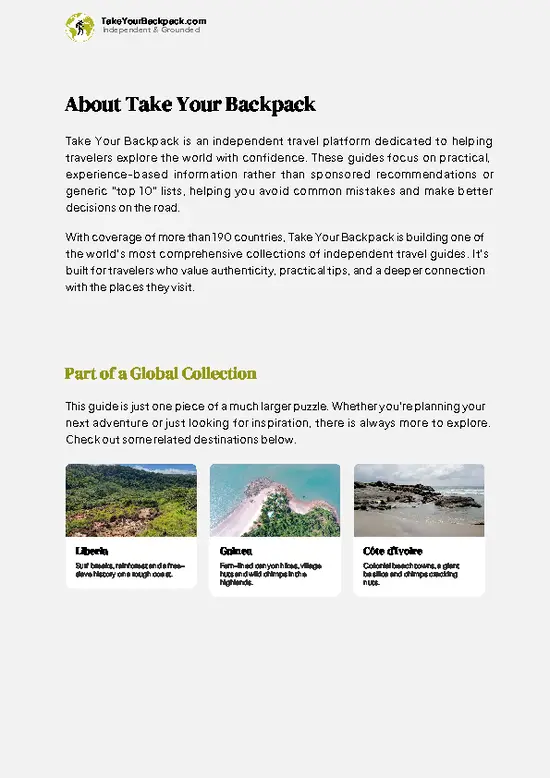
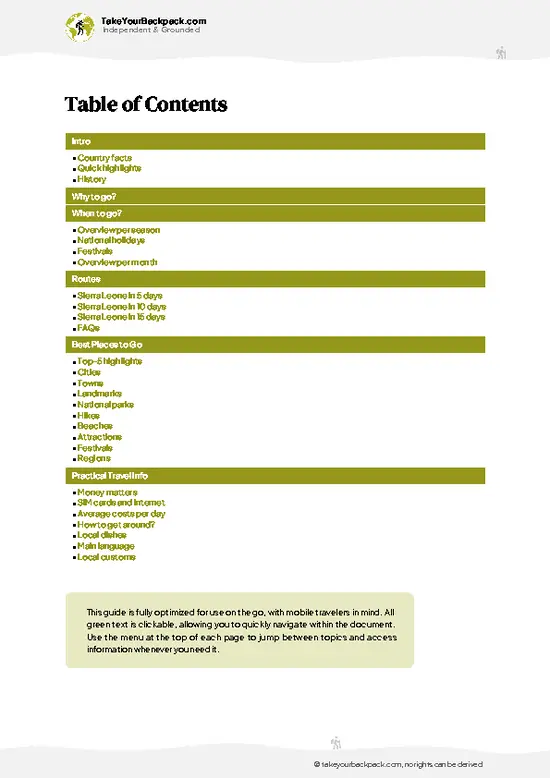
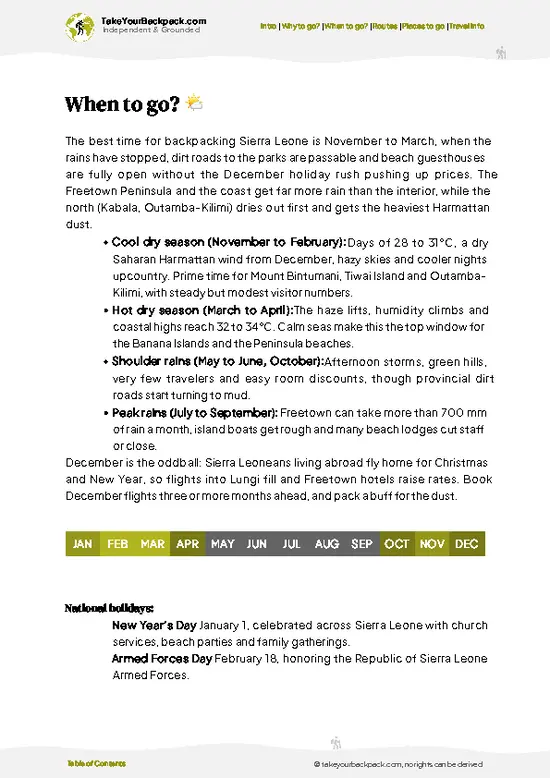
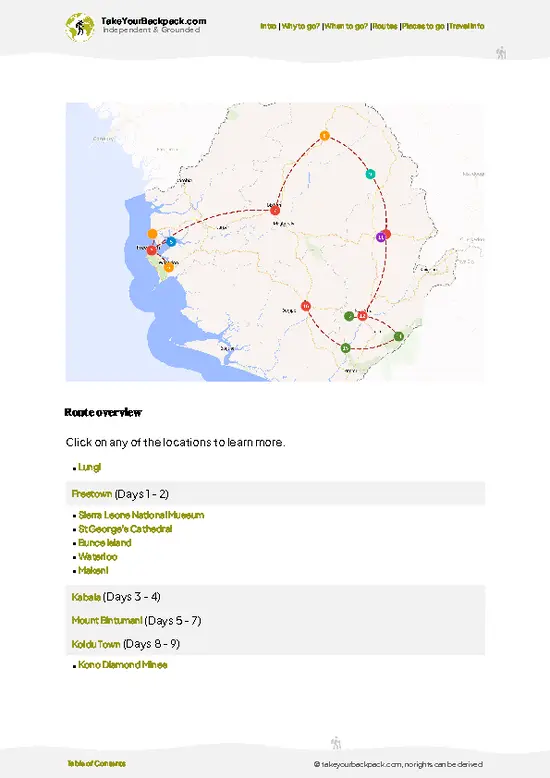
An offline-friendly backpacking guide with optimized travel routes, ranked highlights, transport advice, and the best areas to stay.
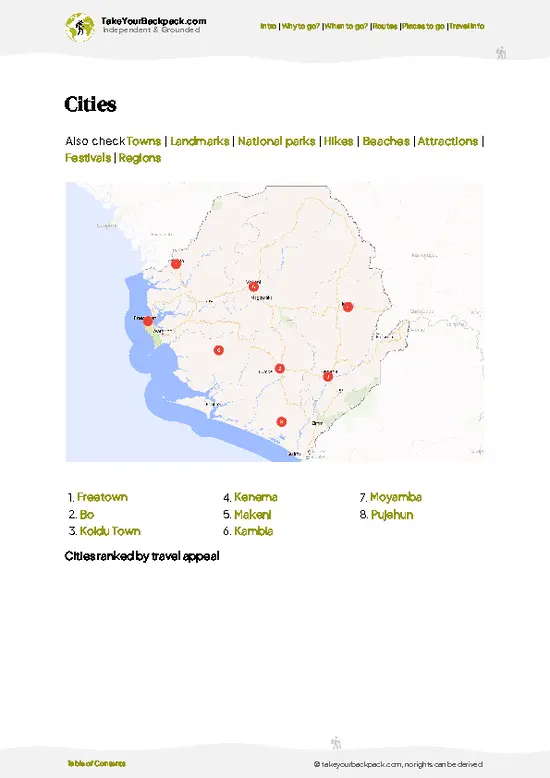
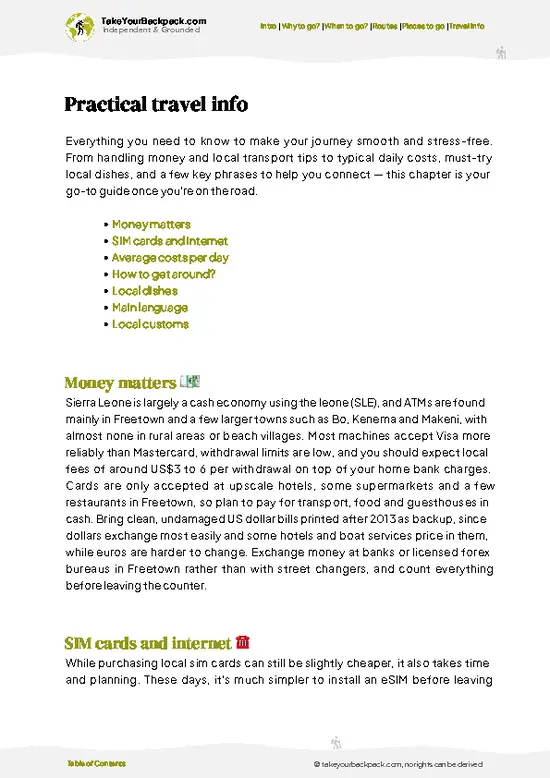
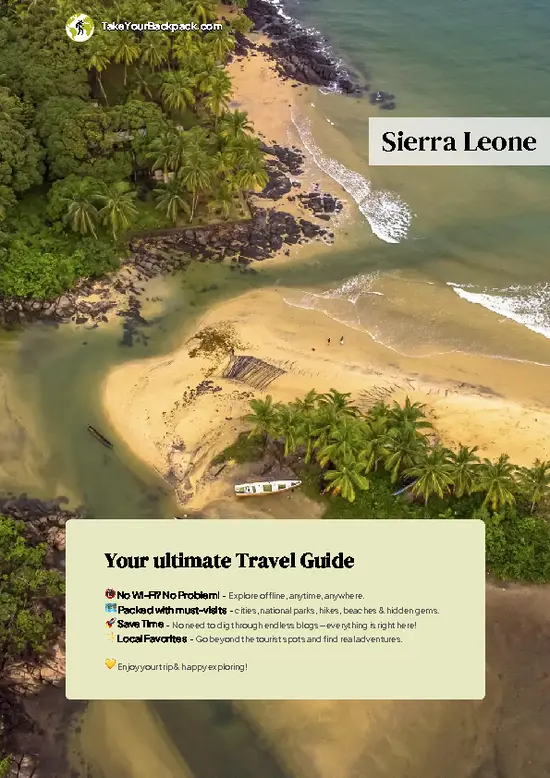
example page 0 from our offline Travel Guide for Sierra Leone
example page 1 from our offline Travel Guide for Sierra Leone
example page 2 from our offline Travel Guide for Sierra Leone
example page 3 from our offline Travel Guide for Sierra Leone
example page 4 from our offline Travel Guide for Sierra Leone
example page 5 from our offline Travel Guide for Sierra Leone
example page 6 from our offline Travel Guide for Sierra Leone
example page 7 from our offline Travel Guide for Sierra Leone
The digital guide (242 pages) contains:
✅ 50 highlights, ranked by travel appeal
✅ Optimized 5, 10 & 15-day travel routes
✅ Cities, national parks, landmarks, beaches
✅ How to get around
✅ Offline-friendly for travel without Wi-Fi
👉 Click to see all 30+ guide features

📅 Plan smarter in minutes, not weeks
✅ Month by month travel advice
✅ Festivals & national holidays
✅ Budget expectations

🗺️ Go to the right places, skip the overrated ones
✅ Honest pros & cons of destinations
✅ Top hikes, parks & viewpoints
✅ Lesser-known places most travelers miss
✅ Clear “worth it vs skip it” guidance

🛏️ Travel smoothly without rookie mistakes
✅ Best areas to stay
✅ Transport systems explained simply
✅ Common scams & safety advice
✅ SIM cards, money & practical tips

🌍 Understand the country, not just visit it
✅ Culture & traditions
✅ 52 Essential phrases & customs
✅ Festivals worth planning around
✅ Traveler-friendly historical context
✅ Insights that make places more meaningful

📱 Built for real travel conditions
✅ Fully downloadable PDF
✅ Works completely offline
✅ Optimized for phone use
✅ Useful in remote areas & buses
✅ Everything in one place
Stop searching, start planning
Get instant access to your full guide. 30‑day money-back guarantee.
+ Add another guide for just

By proceeding you agree to our terms.
Sent to your inbox immediately after payment • 100% Secure Checkout
Best Backpacking Travel Advisor 2025 tourism awardBest Backpacking
Travel Advisor
2025
What others say about Take Your Backpack Guides:
⭐⭐⭐⭐⭐
Fantastic, amazing amount of information!
⭐⭐⭐⭐⭐
My goodness this is amazing, it's what I've been looking for hats off too you!
⭐⭐⭐⭐⭐
I think this is absolutely BRILLIANT
⭐⭐⭐⭐
Very complete and informative. It's still missing places, but I gotta to commend you
⭐⭐⭐⭐⭐
This is truly amazing, thank you, can't wait to explore it with my kids!
⭐⭐⭐⭐⭐
Awesome resource, thank you!
⭐⭐⭐⭐⭐
This is amazing! Can't wait to explore the ones I haven't seen
⭐⭐⭐⭐
I love this! Well done, great idea.
⭐⭐⭐⭐⭐
Thanks for taking the time to make this gem!
⭐⭐⭐⭐⭐
This might be the best website I've ever seen.
⭐⭐⭐⭐⭐
Congratulations, and thank you so much for your work; it's incredibly valuable.
⭐⭐⭐⭐
In all seriousness I think you did a great job pointing out the important spots
⭐⭐⭐⭐⭐
10/10 very good
⭐⭐⭐⭐⭐
As someone who's only just starting to visit regularly this is awesome, thank you.
⭐⭐⭐⭐
Thank you very much! I'm going to visit my dad, it's going to be very useful!
⭐⭐⭐⭐⭐
This is really cool! We'll be travelling for the first time and this definitely come in handy.
⭐⭐⭐⭐⭐
You are now our minister of culture, congratulations 👨‍💼
⭐⭐⭐⭐⭐
Just wanted to tell you that this is a pearl! Going to follow your recommendations.
⭐⭐⭐⭐⭐
This is so cool. I'll definitely be using the resource for my travels soon.
⭐⭐⭐⭐⭐
This is very impressive! Good work.
⭐⭐⭐⭐⭐
This is an amazing and informative site. Very well done!

🛏️ Where to stay?Top Areas to Stay

Backpacking Sierra Leone means budget guesthouses and simple beach huts rather than true hostels, with basic double rooms in Freetown typically running SLE 450 to 900 (about US$20 to 40) a night and dorm beds rare. Aberdeen and Lumley on the western side of the city have the most choice, with the beach, bars and nightlife on your doorstep and a calmer, safer feel, while the cheaper rooms around the city center sit near the markets and the Cotton Tree but come with traffic noise and streets that get sketchy after dark. For quiet, head down the peninsula to River Number Two, Tokeh or Bureh Beach, where beach huts and camping put you right on the sand but far from shops, ATMs and anything open … read more 👉
Backpacking Sierra Leone means budget guesthouses and simple beach huts rather than true hostels, with basic double rooms in Freetown typically running SLE 450 to 900 (about US$20 to 40) a night and dorm beds rare. Aberdeen and Lumley on the western side of the city have the most choice, with the beach, bars and nightlife on your doorstep and a calmer, safer feel, while the cheaper rooms around the city center sit near the markets and the Cotton Tree but come with traffic noise and streets that get sketchy after dark. For quiet, head down the peninsula to River Number Two, Tokeh or Bureh Beach, where beach huts and camping put you right on the sand but far from shops, ATMs and anything open late.

If you enjoy meeting fellow travelers, consider choosing hostels with high ratings for atmosphere. On the other hand, if you prefer having your own space, a hotel might be a better option.

Sierra LeoneDiscover the Country

👋 Meet the founderWho’s Behind Take Your Backpack?

Johan, backpacker and founder of TakeYourBackpackHi, I’m Johan (Netherlands 🇳🇱), the creator of TakeYourBackpack. Over the past 3 decades, I’ve backpacked through 90+ countries across six continents, gaining extensive experience with independent travel, long-term trips, and overland routes.

This site is built on a combination of firsthand travel experience and carefully curated insights from other backpackers. Many guides are based on places I’ve personally visited, while others bring together tips, observations, and practical advice shared by trusted travelers I’ve met along the way.

The goal is to provide realistic, experience-driven guidance — not generic itineraries — so you can explore destinations with better context, clearer expectations, and more confidence.