×

Sierra Leone🇸🇱 | townsPort LokoTidal creek wharf, Temne chieftaincy, colonial-era streets | things to do and best time to go

Explore MagburakaExplore Lunsar

Backpacking in Port Loko
👍 Recommendedtown ranked #8
By Johan Kruseman 🇳🇱 | Updated October 22, 2026

Motorbike taxis whine past a roadside stall where women stir palm oil stew, and the red dust coats your shoes before you find a seat. Port Loko sits in the north of Sierra Leone, on a tidal creek of the Rokel estuary, east of Freetown. It has no hostel scene and almost no tourist infrastructure, which is why you meet locals rather than other backpackers. Shared taxis from Freetown reach it on the main northern highway, so ask drivers where they leave from and expect to wait until the car fills. Evenings are quiet, with generator hum, radio music and cold drinks at small bars. Bring cash, since cards are rarely accepted. Curious, patient travelers who like history will love it. Anyone wanting comfort, nightlife or a packed sightseeing list will not.

Discover everything you want to know in the 📖 Sierra Leone Travel Guide.


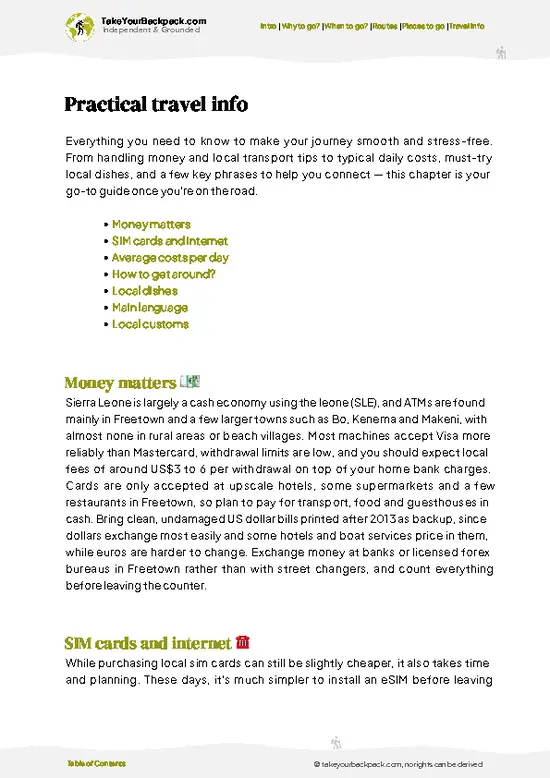
example page 0 from our offline Travel Guide for Sierra Leone
example page 1 from our offline Travel Guide for Sierra Leone
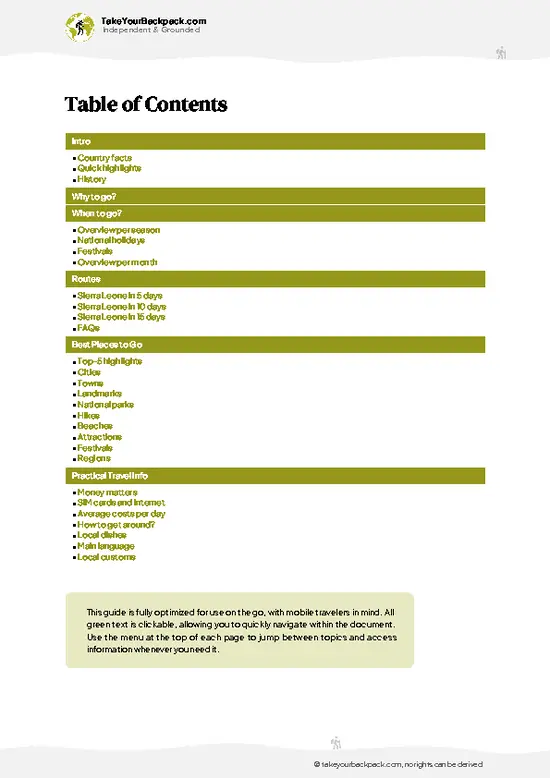
example page 2 from our offline Travel Guide for Sierra Leone
example page 3 from our offline Travel Guide for Sierra Leone
example page 4 from our offline Travel Guide for Sierra Leone
example page 5 from our offline Travel Guide for Sierra Leone
example page 6 from our offline Travel Guide for Sierra Leone
example page 7 from our offline Travel Guide for Sierra Leone
Loading the map 🌍
CLICK TO FILTER
cities
towns
landmarks
national parks
hikes
beaches
attractions
festivals
regions
SHOW COUNTRY’S BESTSHOW ALL

✨ Why go?
Ranked #8 town in Sierra Leone
Reasons people choose to visit here

Port Loko rewards the backpacker who wants a working Sierra Leonean town rather than a sightseeing circuit. Its old role as a river port in the slave-trade era and as a seat of a Temne chiefdom gives it more depth than its modest streets suggest, and people will explain it to you if you ask. The creek and the wharf at the edge of town are the daily center of life, with boats loading and traders haggling. Most travelers stay a night or two, usually when heading north toward Kambia or the Guinea border. Solo travelers do well here because strangers get greeted and curiosity is welcomed. Guesthouses are basic and few, so keep expectations plain. If you need a busy social scene, push on. If you like slow conversations and honest local color, it fits.

💡 HighlightsEssential experiences to have while visiting Port Loko

  1. Port Loko Wharf and Creek: The historic landing on the tidal creek, where wooden boats unload goods and passengers. Go in the morning when trading is busiest. Free, 1 hour.
  2. Central Market: Stalls of cassava leaf, dried fish, palm oil, cloth and phone credit. Mornings are liveliest and the heat is gentler. Buying a snack costs US$1 to 2. Allow 1 hour.
  3. Port Loko Central Mosque: A prominent place of worship reflecting the town’s strong Muslim community. Visit outside prayer times, dress modestly and ask permission before photos. Free, 20 to 30 minutes.
  4. Old colonial-era streets and buildings: Weathered structures near the center hint at the town’s trading past. Walk in the cooler late afternoon. Free, 1 hour.
  5. Paramount Chief’s area and local chiefdom life: Respectful visitors can learn how Temne chieftaincy
… read more 👉
  1. Port Loko Wharf and Creek: The historic landing on the tidal creek, where wooden boats unload goods and passengers. Go in the morning when trading is busiest. Free, 1 hour.
  2. Central Market: Stalls of cassava leaf, dried fish, palm oil, cloth and phone credit. Mornings are liveliest and the heat is gentler. Buying a snack costs US$1 to 2. Allow 1 hour.
  3. Port Loko Central Mosque: A prominent place of worship reflecting the town’s strong Muslim community. Visit outside prayer times, dress modestly and ask permission before photos. Free, 20 to 30 minutes.
  4. Old colonial-era streets and buildings: Weathered structures near the center hint at the town’s trading past. Walk in the cooler late afternoon. Free, 1 hour.
  5. Paramount Chief’s area and local chiefdom life: Respectful visitors can learn how Temne chieftaincy still shapes local affairs. Ask a local contact to introduce you, and bring a small courtesy gift. Free to modest donation, 30 to 60 minutes.
Port Loko is a good base for visiting the Rokel Creek communities, Lunsar and the road towards Kambia. All of the town’s sights fit comfortably into half a day.
Spotted a mistake or missing something? Contact us.

🏘️ NeighborhoodsUnderstanding the local layout

Port Loko is small enough to cover on foot in a morning, and its areas blur into each other along the main road and the creek. Heat builds fast after 10 am, so do your walking early and rest through midday, when the town goes quiet under tin roofs.
  • Town Center and Main Market: The market is the loudest, most colorful stretch, with piled cassava, palm oil in recycled bottles, dried fish and bright cloth. Stalls open at first light and thin out by mid-afternoon, so go before noon. Cooked rice with cassava-leaf or potato-leaf stew from roadside women costs little and sells out early. Keep small notes ready, since vendors rarely have change for large ones.
  • Old Town and Mosque Quarter: Narrow lanes of mud-brick and cement houses, with the call to prayer carrying across rooftops. Port Loko has a long
… read more 👉
Port Loko is small enough to cover on foot in a morning, and its areas blur into each other along the main road and the creek. Heat builds fast after 10 am, so do your walking early and rest through midday, when the town goes quiet under tin roofs.
  • Town Center and Main Market: The market is the loudest, most colorful stretch, with piled cassava, palm oil in recycled bottles, dried fish and bright cloth. Stalls open at first light and thin out by mid-afternoon, so go before noon. Cooked rice with cassava-leaf or potato-leaf stew from roadside women costs little and sells out early. Keep small notes ready, since vendors rarely have change for large ones.
  • Old Town and Mosque Quarter: Narrow lanes of mud-brick and cement houses, with the call to prayer carrying across rooftops. Port Loko has a long Muslim trading history, and greeting elders before you photograph anything is expected. Ask first, because people here dislike being photographed without it. The lanes turn muddy and slick in rain, so wear closed shoes.
  • Waterfront and Creek Landing: Mangrove-edged water smells of salt, mud and woodsmoke, and canoes come and go in the morning. Evenings are calm and breezy, with little nightlife beyond a few open-air bars playing loud Afrobeat and local music. Power cuts are common, so carry a headlamp for the walk back.

⌛️ 1 day1-day itinerary for Port Loko

A slow creekside and market day suits Port Loko best.

7:30 AM, Port Loko Wharf: Start where the day starts. Boats unload, fish are weighed and the air is cool. Watch quietly, then ask before taking photos. Walk ten minutes uphill to the center.

9:00 AM, Central Market: Browse the produce and cloth lanes and try a hot street breakfast of fried dough or rice bread. Greet vendors first and bargaining goes smoothly.

11:00 AM, Central Mosque: Visit before midday prayers if invited, dress modestly and keep your voice low. It is a short stroll from the market.

12:30 PM, Lunch: Pick a small eatery for rice with cassava leaf or groundnut stew. Rest through the hottest hours.

3:00 PM, Old streets and backroads: Wander the weathered older quarters beyond the main road, where few visitors go. Kids … read more 👉
A slow creekside and market day suits Port Loko best.

7:30 AM, Port Loko Wharf: Start where the day starts. Boats unload, fish are weighed and the air is cool. Watch quietly, then ask before taking photos. Walk ten minutes uphill to the center.

9:00 AM, Central Market: Browse the produce and cloth lanes and try a hot street breakfast of fried dough or rice bread. Greet vendors first and bargaining goes smoothly.

11:00 AM, Central Mosque: Visit before midday prayers if invited, dress modestly and keep your voice low. It is a short stroll from the market.

12:30 PM, Lunch: Pick a small eatery for rice with cassava leaf or groundnut stew. Rest through the hottest hours.

3:00 PM, Old streets and backroads: Wander the weathered older quarters beyond the main road, where few visitors go. Kids will say hello and people sit chatting in doorways. Ask residents about the town’s past, and someone usually knows a story.

5:00 PM, Creek edge at dusk: Return to the water as the light softens and fishermen head home. Finish with a cold drink at a simple bar nearby.

🌤️ When to go?Best time to visit Port Loko

November to April gives the most dependable travel weather, with dry roads and sunny days of roughly 28 to 35°C (82 to 95°F), though harmattan haze in December and January dulls the sky and dries your throat.
  • Dry Season (November to April): Easiest for roads and creek trips. Daylight lasts about 12 hours year-round. Prices stay steady, and Christmas and Eid periods bring returning families and fuller transport.
  • Early Rains (May to June): Hot and sticky, 26 to 32°C (79 to 90°F), with afternoon downpours starting to soften dirt tracks.
  • Peak Rains (July to September): Among the wettest places in West Africa, with rain nearly daily and 24 to 29°C (75 to 84°F). Roads can wash out, and fares rise when drivers fear damage.
Aim for late November, when the land is still green but the roads have dried.

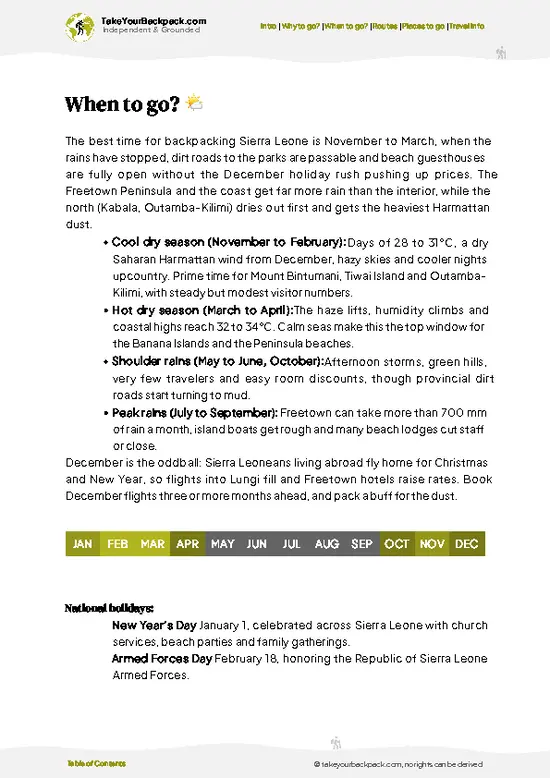
source: climatestotravel.comJANJanuary: excellent for travelingFEBFebruary: excellent for travelingMARMarch: excellent for travelingAPRApril: highly recommended for travelingMAYMay: fair for travelingJUNJune: fair for travelingJULJuly: fair for travelingAUGAugust: fair for travelingSEPSeptember: fair for travelingOCTOctober: fair for travelingNOVNovember: highly recommended for travelingDECDecember: excellent for traveling
when-to-go

✈️ The backpacker research shortcutSierra Leone Travel Guide

An offline-friendly backpacking guide with optimized travel routes, ranked highlights, transport advice, and the best areas to stay.
example page 0 from our offline Travel Guide for Sierra Leone
example page 1 from our offline Travel Guide for Sierra Leone
example page 2 from our offline Travel Guide for Sierra Leone
example page 3 from our offline Travel Guide for Sierra Leone
example page 4 from our offline Travel Guide for Sierra Leone
example page 5 from our offline Travel Guide for Sierra Leone
example page 6 from our offline Travel Guide for Sierra Leone
example page 7 from our offline Travel Guide for Sierra Leone
The digital guide (242 pages) contains:
✅ 50 highlights, ranked by travel appeal
✅ Optimized 5, 10 & 15-day travel routes
✅ Cities, national parks, landmarks, beaches
✅ How to get around
✅ Offline-friendly for travel without Wi-Fi
👉 Click to see all 30+ guide features

📅 Plan smarter in minutes, not weeks
✅ Month by month travel advice
✅ Festivals & national holidays
✅ Budget expectations

🗺️ Go to the right places, skip the overrated ones
✅ Honest pros & cons of destinations
✅ Top hikes, parks & viewpoints
✅ Lesser-known places most travelers miss
✅ Clear “worth it vs skip it” guidance

🛏️ Travel smoothly without rookie mistakes
✅ Best areas to stay
✅ Transport systems explained simply
✅ Common scams & safety advice
✅ SIM cards, money & practical tips

🌍 Understand the country, not just visit it
✅ Culture & traditions
✅ 52 Essential phrases & customs
✅ Festivals worth planning around
✅ Traveler-friendly historical context
✅ Insights that make places more meaningful

📱 Built for real travel conditions
✅ Fully downloadable PDF
✅ Works completely offline
✅ Optimized for phone use
✅ Useful in remote areas & buses
✅ Everything in one place
Stop searching, start planning
Get instant access to your full guide. 30‑day money-back guarantee.
+ Add another guide for just

By proceeding you agree to our terms.
Sent to your inbox immediately after payment • 100% Secure Checkout
Best Backpacking Travel Advisor 2025 tourism awardBest Backpacking
Travel Advisor
2025
What others say about Take Your Backpack Guides:
⭐⭐⭐⭐⭐
Fantastic, amazing amount of information!
⭐⭐⭐⭐⭐
My goodness this is amazing, it's what I've been looking for hats off too you!
⭐⭐⭐⭐⭐
I think this is absolutely BRILLIANT
⭐⭐⭐⭐
Very complete and informative. It's still missing places, but I gotta to commend you
⭐⭐⭐⭐⭐
This is truly amazing, thank you, can't wait to explore it with my kids!
⭐⭐⭐⭐⭐
Awesome resource, thank you!
⭐⭐⭐⭐⭐
This is amazing! Can't wait to explore the ones I haven't seen
⭐⭐⭐⭐
I love this! Well done, great idea.
⭐⭐⭐⭐⭐
Thanks for taking the time to make this gem!
⭐⭐⭐⭐⭐
This might be the best website I've ever seen.
⭐⭐⭐⭐⭐
Congratulations, and thank you so much for your work; it's incredibly valuable.
⭐⭐⭐⭐
In all seriousness I think you did a great job pointing out the important spots
⭐⭐⭐⭐⭐
10/10 very good
⭐⭐⭐⭐⭐
As someone who's only just starting to visit regularly this is awesome, thank you.
⭐⭐⭐⭐
Thank you very much! I'm going to visit my dad, it's going to be very useful!
⭐⭐⭐⭐⭐
This is really cool! We'll be travelling for the first time and this definitely come in handy.
⭐⭐⭐⭐⭐
You are now our minister of culture, congratulations 👨‍💼
⭐⭐⭐⭐⭐
Just wanted to tell you that this is a pearl! Going to follow your recommendations.
⭐⭐⭐⭐⭐
This is so cool. I'll definitely be using the resource for my travels soon.
⭐⭐⭐⭐⭐
This is very impressive! Good work.
⭐⭐⭐⭐⭐
This is an amazing and informative site. Very well done!

🛏️ Where to stay?Best areas and accommodation options

The area around the main road and town center is the best base in Port Loko, since guesthouses are concentrated there and transport is a short walk away. There are no true hostels, so budget travelers use small guesthouses with fan rooms, generally US$10 to 25 a night, and should confirm that the generator or power supply runs overnight. Rooms near the main junction get early noise from taxis, roosters and the call to prayer, so ask for a room at the back. The quieter streets toward the waterfront side feel calmer at night and are still within a 10 to 15 minute walk of the market. Streets are … read more 👉
The area around the main road and town center is the best base in Port Loko, since guesthouses are concentrated there and transport is a short walk away. There are no true hostels, so budget travelers use small guesthouses with fan rooms, generally US$10 to 25 a night, and should confirm that the generator or power supply runs overnight. Rooms near the main junction get early noise from taxis, roosters and the call to prayer, so ask for a room at the back. The quieter streets toward the waterfront side feel calmer at night and are still within a 10 to 15 minute walk of the market. Streets are poorly lit, so choose a place close to where you plan to eat, and arrive in daylight. Book ahead only around Eid and Christmas, when returning families fill the few decent rooms. Otherwise, walking in and looking at the room first usually works, and you can often bargain a little for stays of more than two nights.

🚌 Getting aroundTransportation options and practical tips

Shared taxis and motorbike taxis are the easiest way to move around Port Loko, because the town is spread along one main road and distances are too hot to walk for long. Traffic is light, but the Freetown road clogs near the junction when vehicles queue. There is no formal city bus network, so you flag whatever is going your way and agree prices first.
  • Walking: Free, and fine for the market, mosque quarter and landing before the midday heat. Dust, open drains and uneven paths mean sturdy sandals, not flip-flops.
  • Okada (motorbike taxi): Rides in town cost about US$0.50 to 1.50 depending on distance. They are fast and wind-cooled but have no meter, so fix the fare before climbing on and ask for a helmet, which many riders do not have.
  • Shared taxi: Fixed-route cars and minibuses run along the main
… read more 👉
Shared taxis and motorbike taxis are the easiest way to move around Port Loko, because the town is spread along one main road and distances are too hot to walk for long. Traffic is light, but the Freetown road clogs near the junction when vehicles queue. There is no formal city bus network, so you flag whatever is going your way and agree prices first.
  • Walking: Free, and fine for the market, mosque quarter and landing before the midday heat. Dust, open drains and uneven paths mean sturdy sandals, not flip-flops.
  • Okada (motorbike taxi): Rides in town cost about US$0.50 to 1.50 depending on distance. They are fast and wind-cooled but have no meter, so fix the fare before climbing on and ask for a helmet, which many riders do not have.
  • Shared taxi: Fixed-route cars and minibuses run along the main road for under US$1 a hop. They leave when full, so waiting can take 15 to 45 minutes, and you will share seats tightly with bags and produce.
  • Poda-poda minibus to Freetown: The long-distance option costs about US$4 to 7 and takes roughly 2.5 to 4 hours depending on checkpoints and traffic. Leave by early morning for the best chance of a seat and cooler air, since afternoon departures can stretch into the evening.
  • Chartered boat or canoe: Creek trips are arranged at the landing for about US$10 to 30 a boat, depending on distance and negotiation. Choose calm mornings and ask about life jackets before agreeing.
Carry small bills for every ride, because drivers seldom have change, and avoid traveling after dark when unlit roads and breakdowns make journeys riskier.

👛 Costs (as of 22 October 2026)How expensive it really is

Port Loko costs a backpacker about US$15 to 25 a day, and the total daily budget below is US$62 at the high end of guesthouse prices. Travelers pay in Sierra Leonean leones, though US dollars are sometimes accepted for lodging. Cash is the rule, because cards are almost never used.
CategoryBudget RangeLocal Reality
Dorm accommodation (high season)US$15 to 25No hostels, so a private fan room in a basic guesthouse is the norm. Low season can drop to US$10 to 18.
MealsUS$6 to 12Rice with stew or fried fish from roadside cooks is the cheapest. Restaurant meals cost more.
Local transportUS$3 to 6Okadas and shared taxis for a few hops each day.
Basic activities/entry feesUS$5 to 12Mostly free walking. A boat or guide on the creek adds the cost.
Miscellaneous expensesUS$4 to 7Water, phone credit, small
… read more 👉
Port Loko costs a backpacker about US$15 to 25 a day, and the total daily budget below is US$62 at the high end of guesthouse prices. Travelers pay in Sierra Leonean leones, though US dollars are sometimes accepted for lodging. Cash is the rule, because cards are almost never used.
CategoryBudget RangeLocal Reality
Dorm accommodation (high season)US$15 to 25No hostels, so a private fan room in a basic guesthouse is the norm. Low season can drop to US$10 to 18.
MealsUS$6 to 12Rice with stew or fried fish from roadside cooks is the cheapest. Restaurant meals cost more.
Local transportUS$3 to 6Okadas and shared taxis for a few hops each day.
Basic activities/entry feesUS$5 to 12Mostly free walking. A boat or guide on the creek adds the cost.
Miscellaneous expensesUS$4 to 7Water, phone credit, small tips and snacks.
Total Daily BudgetUS$62Lower if you eat street food and walk.
Buy sealed water in larger bottles and eat where locals queue, which cuts daily food costs noticeably.
⚠️ Prices can change and everyone travels differently, so take this as a rough guide. Hope it helps you plan your adventure!

🚌 Day tripsShort trips worth adding

Port Loko works well as a base for short outings by road and creek, though most trips involve rough transport and early starts.Lungi and Aberdeen Beaches: Beaches near the Lungi peninsula and the Freetown approach offer sand and sea air after a dusty week inland. Expect 2 to 3 hours each way by shared taxi, with a ferry or road leg depending on your route, and a total cost of about US$15 to 30. Go in the dry months, and leave early, as a common mistake is starting after noon and getting stuck.
👉 Explore LungiLunsar: Lunsar is a former iron ore mining town about an hour away by shared taxi, costing roughly US$2 to 4 round trip. It makes a good half day to see a working market and the legacy of the old mine railway. Go on a market day if you can, and carry cash, as there is nowhere to change … read more 👉
Port Loko works well as a base for short outings by road and creek, though most trips involve rough transport and early starts.Lungi and Aberdeen Beaches: Beaches near the Lungi peninsula and the Freetown approach offer sand and sea air after a dusty week inland. Expect 2 to 3 hours each way by shared taxi, with a ferry or road leg depending on your route, and a total cost of about US$15 to 30. Go in the dry months, and leave early, as a common mistake is starting after noon and getting stuck.
👉 Explore LungiLunsar: Lunsar is a former iron ore mining town about an hour away by shared taxi, costing roughly US$2 to 4 round trip. It makes a good half day to see a working market and the legacy of the old mine railway. Go on a market day if you can, and carry cash, as there is nowhere to change money.
👉 Explore LunsarRokel Creek and Mangrove Villages: Chartered canoes from the Port Loko landing take you through mangroves to fishing hamlets, with egrets overhead and smoked fish drying on racks. Allow 3 to 5 hours and US$15 to 30 split among passengers. Dry season mornings are calmest. First-timers often forget sun protection, and the water reflects strong glare.
Freetown: Freetown is a long but doable day by poda-poda, at 2.5 to 4 hours each way and US$8 to 14 round trip. It suits a quick visit to markets and the National Museum, but an early return is vital since after-dark travel is unwise.
👉 Explore Freetown

🛡️ SafetyStaying Safe: What Travelers Should Know

Port Loko is a calm, welcoming town where most problems are petty, and locals will often look out for a visitor who is clearly polite. Keep your phone and cash out of sight in crowded markets and at transport stops, where pickpocketing and overcharging are the usual issues. Foreigners may hear inflated prices, so ask a guesthouse owner what a fair fare is before you go. Unofficial fees at checkpoints and landings occasionally come up, and a calm, friendly manner and a copy of your passport tend to settle things. Solo travelers, including women, generally manage well, but dress modestly and avoid walking unlit streets after dark, as uneven ground and open drains are a bigger risk than crime. Take a motorbike taxi back at night instead. Malaria is present year-round, so use repellent and sleep under a net.

FAQFrequently asked questions about Port Loko

Port Loko is worth a stop of a day or two if you want a working market town on a creek, without other travelers around. Its market, mosque quarter and mangrove landing are the main draws, and a canoe trip costs about US$15 to 30. It is not a place for big sights, so it suits those curious about everyday life north of Freetown.
Two days is enough for Port Loko, giving you one day for the market, old quarter and waterfront and another for a creek trip or a visit to nearby Lunsar. Add a third day if you want to rest or travel at a slower pace. Guesthouses run about US$10 to 25 a night.
Port Loko can be reached from Freetown on a long day, with the poda-poda ride taking 2.5 to 4 hours each way and costing about US$4 to 7 one way. That leaves only a few hours on the ground, and the return should leave before late afternoon since night roads are poor. Staying one night lets you see the early market and creek at their best.
⚠️ Things can change over time, so always validate details locally before you go.

Other Sierra Leonean towns near Port Loko

Explore more nearby:

  • Lunsar—Ore railway remains, Marampa hills, junction grills| 29 km away
  • Rokupr—Rice research station, Great Scarcies landing, tidal paddies| 33 km away
  • Lungi—Ferry jetty, estuary fish landing, mangrove shoreline| 50 km away

💡 Not sure where to go next?
Create a personalized itinerary for Sierra Leone including Port Loko and the places that fit your trip.

Generate my itinerary

👉 Discover all towns

Or checkout all Sierra Leone has to offer (think cities, towns, villages, national parks, hikes, beaches, festivals)
Country photo of Sierra Leone

We 💚 feedbackWhat to keep in mind

Port Loko’s biggest overlooked detail is the creek itself, because the whole town’s story runs through it. Spend time at the water in the early morning and again at dusk, and you will understand more than any building can tell you. I would carry small bills and a phrase or two of Temne greetings.

✍️ Help improve this page!
The information on this page is based on in-depth research, insights shared by experienced travelers, and feedback from the local travel community in Sierra Leone. While every effort is made to keep the information accurate and current, conditions can change — so if you spot anything incorrect or outdated, please get in touch.


🙋‍♂️ Give feedback

👋 Meet the founderWho’s Behind Take Your Backpack?

Johan, backpacker and founder of TakeYourBackpackHi, I’m Johan (Netherlands 🇳🇱), the creator of TakeYourBackpack. Over the past 3 decades, I’ve backpacked through 90+ countries across six continents, gaining extensive experience with independent travel, long-term trips, and overland routes.

This site is built on a combination of firsthand travel experience and carefully curated insights from other backpackers. Many guides are based on places I’ve personally visited, while others bring together tips, observations, and practical advice shared by trusted travelers I’ve met along the way.

The goal is to provide realistic, experience-driven guidance — not generic itineraries — so you can explore destinations with better context, clearer expectations, and more confidence.