×

Sierra Leone🇸🇱 | townsLunsarmining legacy, roadside stalls, transport hub | things to do and best time to go

Explore Port LokoExplore Waterloo

Backpacking in Lunsar
👍 Recommendedtown ranked #9
By Johan Kruseman 🇳🇱 | Updated September 4, 2026

The trick with Lunsar—the thing most travelers only realize after they’ve left—is how much smoother your Sierra Leone journey runs if you use it as a launchpad, not a destination. Lunsar sits in the country’s northwestern corridor, about two hours east of Freetown, just off the main highway that slices toward Makeni and the wild, forested north. The town itself is no postcard: it’s a working crossroads, a place where red dust hangs in the air and the scent of roasted groundnuts mixes with diesel and rain-soaked earth. But that’s the point. Lunsar isn’t about urban thrills; it’s about access. You’re here because it’s the most practical base for day trips to the Loma Mountains or for catching onward transport without the chaos of Freetown. It’s quieter than Makeni, less touristy than the beach towns, and you’ll find a few simple guesthouses, a market that wakes up early, and evenings that settle into slow, social rhythms—locals chatting over Star beer, travelers swapping tips in the courtyard. Costs are low, safety is decent if you keep your wits, and while you won’t find a backpacker scene, you’ll meet people with stories to share if you linger. Lunsar is the pause that makes the next move easier.

Discover everything you want to know in the 📖 Sierra Leone Travel Guide.
Loading the map 🌍
CLICK TO FILTER
cities
towns
landmarks
national parks
hikes
beaches
attractions
festivals
regions
SHOW COUNTRY’S BESTSHOW ALL

✨ Why go?
Ranked #9 town in Sierra Leone
What makes this town worth visiting

Lunsar is a strategic stop for backpackers navigating Sierra Leone. Its proximity to hikes like the lush hills of the surrounding countryside makes it a perfect base for those seeking adventure. The local guesthouses offer a cozy, intimate atmosphere, ideal for solo travelers or small groups looking to connect. You’ll find affordable meals bursting with local flavor, from spicy jollof rice to fresh fish, all served with a side of warm smiles from the locals.

The streets are walkable, inviting you to explore at your own pace, whether you’re wandering to a nearby market or soaking in the laid-back vibe. Many travelers tend to linger a few days, soaking up the friendly social atmosphere and sharing stories with fellow adventurers. While Lunsar isn’t a nightlife hub, its charm lies in the authentic read more 👉
Lunsar is a strategic stop for backpackers navigating Sierra Leone. Its proximity to hikes like the lush hills of the surrounding countryside makes it a perfect base for those seeking adventure. The local guesthouses offer a cozy, intimate atmosphere, ideal for solo travelers or small groups looking to connect. You’ll find affordable meals bursting with local flavor, from spicy jollof rice to fresh fish, all served with a side of warm smiles from the locals.

The streets are walkable, inviting you to explore at your own pace, whether you’re wandering to a nearby market or soaking in the laid-back vibe. Many travelers tend to linger a few days, soaking up the friendly social atmosphere and sharing stories with fellow adventurers. While Lunsar isn’t a nightlife hub, its charm lies in the authentic experiences and the chance to engage with the culture. If you’re a slow traveler or a hiker, this town will feel like a welcoming embrace on your journey.
Want to include Lunsar in your Sierra Leone route?
Create a personalized Sierra Leone itinerary that includes Lunsar and the places that fit your trip — based on your travel style, budget, and available time. Get your route in seconds.

Generate my trip

💡 HighlightsPlaces and moments you shouldn't skip

  • Lunsar Market — The town’s beating heart: a chaotic, colorful market where you can watch traders haggle over rice, vegetables, fabrics and second-hand clothes, taste fresh snacks, and feel daily life up close.
  • Marampa iron-ore workings — The old mining area on Lunsar’s edge that made the town important. Even if full industrial access is restricted, the pits, spoil heaps and occasional machinery left behind tell the story of Sierra Leone’s mining era and make for stark, memorable walks (ask locally before exploring).
  • Railway embankment and loading yards — Remnants of the rail link that once moved iron ore toward the coast. Rails, sleepers and loading platforms are still visible around town; they’re low-key industrial archaeology and a good place to see how Lunsar connected to the wider
read more 👉
  • Lunsar Market — The town’s beating heart: a chaotic, colorful market where you can watch traders haggle over rice, vegetables, fabrics and second-hand clothes, taste fresh snacks, and feel daily life up close.
  • Marampa iron-ore workings — The old mining area on Lunsar’s edge that made the town important. Even if full industrial access is restricted, the pits, spoil heaps and occasional machinery left behind tell the story of Sierra Leone’s mining era and make for stark, memorable walks (ask locally before exploring).
  • Railway embankment and loading yards — Remnants of the rail link that once moved iron ore toward the coast. Rails, sleepers and loading platforms are still visible around town; they’re low-key industrial archaeology and a good place to see how Lunsar connected to the wider region.
  • Lunsar Sporting Ground (town field) — Simple, dusty and loud on match day. Local football games are a fantastic cultural experience: informal betting, drumming, cheers — great place to meet people and feel local pride.
  • Paramount Chief’s compound (town court) — The local seat of traditional authority. Visiting (with permission) gives insight into local governance, customary justice and ceremonial life — chiefs and elders remain central to community decisions in Lunsar.
  • Main Mosque — The mosque at the town centre is more than a place of worship; the calls to prayer and the rhythms of daily attendance show the role of Islam in public life. Non-Muslim visitors should be respectful and ask before entering.
  • One of Lunsar’s historic churches — Several older Christian congregations anchor community life here. Attending a service or simply seeing the churchyard offers perspective on the town’s religious mix and social networks.
  • Lunsar Secondary School — A local landmark and community hub. Schools in towns like Lunsar often have long histories and tight alumni connections; a walk past (or a polite visit) shows everyday life and education’s role locally.
  • Artisan and trade quarter (tailors, carpenters, blacksmiths) — A cluster of small workshops where you can watch craftsmen at work, buy a tailor-made shirt, or see traditional metalwork and carpentry. Practical, hands-on, and a great way to support local makers.
  • Street-food lane & palm-wine spots — The informal evening spots where people gather to eat cassava, grilled fish and braised meat and sip palm wine. Purely experiential: flavors, conversation and the town’s social life condensed into a few stalls and stools.
For nearby day trips: consider the Marampa mine workings and coastal loading jetties toward Port Pepel, the historic market town of Port Loko, and Makeni (regional hub with markets, university and lively street life) — all easily reached from Lunsar.
Spotted a mistake or missing something? Contact us.

🏘️ NeighborhoodsKey areas and districts to know

Lunsar is a vibrant town that offers a unique blend of local culture and practical amenities for backpackers. Here’s how to navigate its neighborhoods for the best experience.

Central Lunsar: This is the heartbeat of the town. The streets buzz with local markets and food stalls, where the scent of grilled fish mingles with spices. It’s walkable, making it easy to explore on foot. Budget-friendly guesthouses line the streets, perfect for short stays. Nightlife is low-key, with a few bars where you can sip palm wine and chat with locals.

Makeni Road Area: A bit quieter, this area is ideal for those seeking a more laid-back vibe. It’s less crowded, with a few small shops and cafes. Transport access is decent, with shared taxis available to the center. This neighborhood suits longer stays, especially … read more 👉
Lunsar is a vibrant town that offers a unique blend of local culture and practical amenities for backpackers. Here’s how to navigate its neighborhoods for the best experience.

Central Lunsar: This is the heartbeat of the town. The streets buzz with local markets and food stalls, where the scent of grilled fish mingles with spices. It’s walkable, making it easy to explore on foot. Budget-friendly guesthouses line the streets, perfect for short stays. Nightlife is low-key, with a few bars where you can sip palm wine and chat with locals.

Makeni Road Area: A bit quieter, this area is ideal for those seeking a more laid-back vibe. It’s less crowded, with a few small shops and cafes. Transport access is decent, with shared taxis available to the center. This neighborhood suits longer stays, especially if you want to immerse yourself in daily life.

St. Joseph’s Neighborhood: Known for its community feel, this area is where you’ll find friendly faces and local events. It’s a bit off the main tourist path, which means lower prices and a more authentic experience. Walkability is moderate; you’ll need to plan your routes. It’s perfect for backpackers looking to connect with the culture, especially if you’re staying a week or more.

⌛️ 1 dayA smart one-day plan

Lunsar, a small town in Sierra Leone, pulses with the rhythm of everyday life. It’s a place where the scent of fresh cassava mingles with the earthy aroma of the surrounding hills. You’ll find vibrant markets and friendly faces, making it a perfect spot to dive into local culture.

Start your morning at the bustling Lunsar Market. The sun filters through the awnings, casting playful shadows on the stalls. Here, you can sip on sweet, spicy ginger tea while browsing colorful fabrics and handmade crafts. Engage with the vendors; their stories are as rich as the goods they sell. This isn’t just shopping; it’s a chance to connect.

As the day warms, head to the nearby Koya River. The path is lined with lush greenery, and the sound of water flowing creates a soothing backdrop. Bring a light lunch—perhaps … read more 👉
Lunsar, a small town in Sierra Leone, pulses with the rhythm of everyday life. It’s a place where the scent of fresh cassava mingles with the earthy aroma of the surrounding hills. You’ll find vibrant markets and friendly faces, making it a perfect spot to dive into local culture.

Start your morning at the bustling Lunsar Market. The sun filters through the awnings, casting playful shadows on the stalls. Here, you can sip on sweet, spicy ginger tea while browsing colorful fabrics and handmade crafts. Engage with the vendors; their stories are as rich as the goods they sell. This isn’t just shopping; it’s a chance to connect.

As the day warms, head to the nearby Koya River. The path is lined with lush greenery, and the sound of water flowing creates a soothing backdrop. Bring a light lunch—perhaps some jollof rice from a local eatery—and enjoy it by the riverbank. The tranquility here is a refreshing contrast to the market’s hustle.

In the afternoon, explore the nearby neighborhoods, particularly the vibrant community of Masiaka. It’s less frequented by tourists, but the warmth of the locals will make you feel right at home. Join a community soccer game or simply watch as children play, their laughter echoing in the air.

As evening approaches, return to Lunsar and find a local spot for dinner. Try the grilled fish, seasoned to perfection, while listening to the sounds of the town winding down. The day may have been simple, but the connections you’ve made and the experiences you’ve had will linger long after you leave.
Turn your Lunsar visit into an Sierra Leone adventure
Build a complete Sierra Leone route with Lunsar, hidden gems, must-see destinations, and realistic travel times included.

Generate my trip

🌤️ When to go?Seasonal considerations and timing


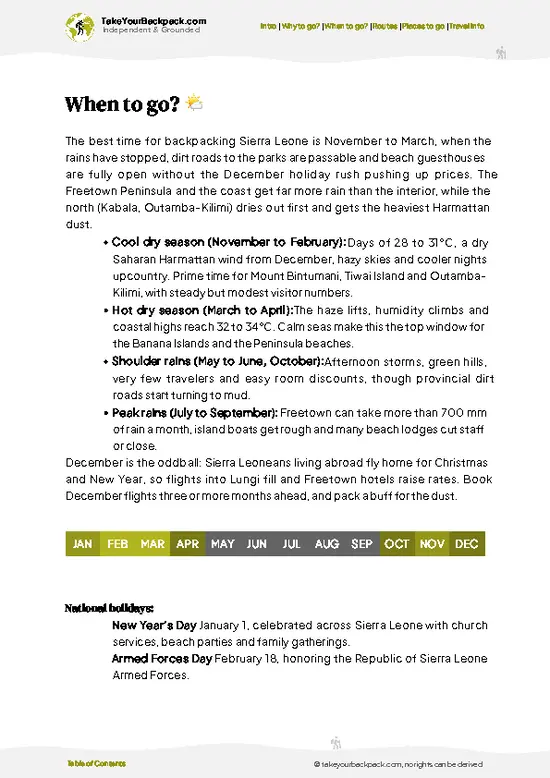
  • Weather: Lunsar’s dry season from November to April offers clear skies and minimal rain, making trails less slippery and the air easier to breathe. The wet season, May to October, drenches the landscape, turning paths into mud and flooding some areas.

  • Temperature: Expect highs around 30-33°C (86-91°F) during the dry months, with cooler evenings dropping to 22-24°C (72-75°F). The wet season feels hotter and more humid, often pushing 34°C (93°F), which can sap your energy fast.

  • Daylight Hours: Near the equator, daylight stays steady year-round—roughly 12 hours—so you won’t lose hiking time to early sunsets, but plan to start early to avoid midday heat.

  • Crowds: Lunsar isn’t a tourist hotspot, but local festivals and market days in the dry season bring a lively buzz. Visiting then means
read more 👉

  • Weather: Lunsar’s dry season from November to April offers clear skies and minimal rain, making trails less slippery and the air easier to breathe. The wet season, May to October, drenches the landscape, turning paths into mud and flooding some areas.

  • Temperature: Expect highs around 30-33°C (86-91°F) during the dry months, with cooler evenings dropping to 22-24°C (72-75°F). The wet season feels hotter and more humid, often pushing 34°C (93°F), which can sap your energy fast.

  • Daylight Hours: Near the equator, daylight stays steady year-round—roughly 12 hours—so you won’t lose hiking time to early sunsets, but plan to start early to avoid midday heat.

  • Crowds: Lunsar isn’t a tourist hotspot, but local festivals and market days in the dry season bring a lively buzz. Visiting then means more interaction but also slightly higher prices.

  • Seasonal Activities: Dry months are prime for exploring nearby nature reserves and cultural sites without the hassle of rain. The wet season’s lush greenery is beautiful but can limit access to some trails.

  • Price Fluctuations: Accommodation and transport costs rise modestly during the dry season due to increased demand. The wet season offers better deals but at the expense of comfort and accessibility.


Pro-tip: Aim for late dry season—March to April—when the air is fresh, the landscape is still green, and prices haven’t peaked yet.


source: climatestotravel.comJANJanuary: highly recommended for travelingFEBFebruary: highly recommended for travelingMARMarch: excellent for travelingAPRApril: excellent for travelingMAYMay: fair for travelingJUNJune: fair for travelingJULJuly: below average for travelingAUGAugust: below average for travelingSEPSeptember: fair for travelingOCTOctober: fair for travelingNOVNovember: highly recommended for travelingDECDecember: highly recommended for traveling
when-to-go

✈️ The backpacker research shortcutSierra Leone Travel Guide

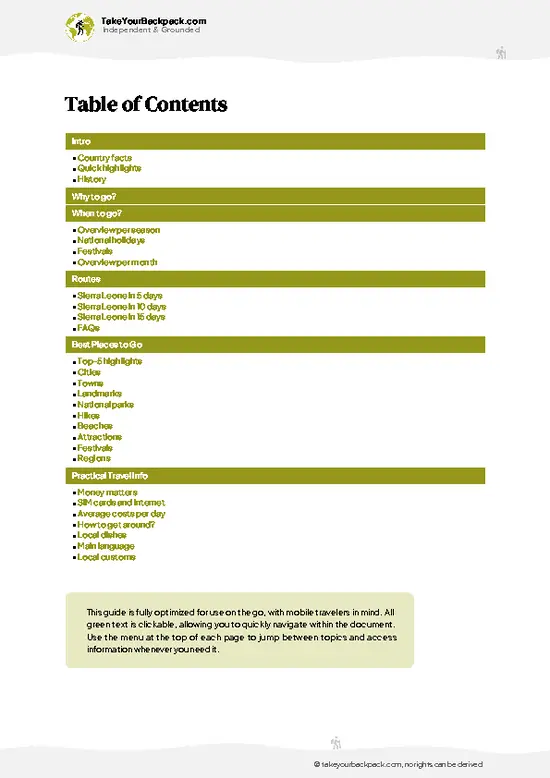
An offline-friendly backpacking guide with optimized travel routes, ranked highlights, transport advice, and the best areas to stay.
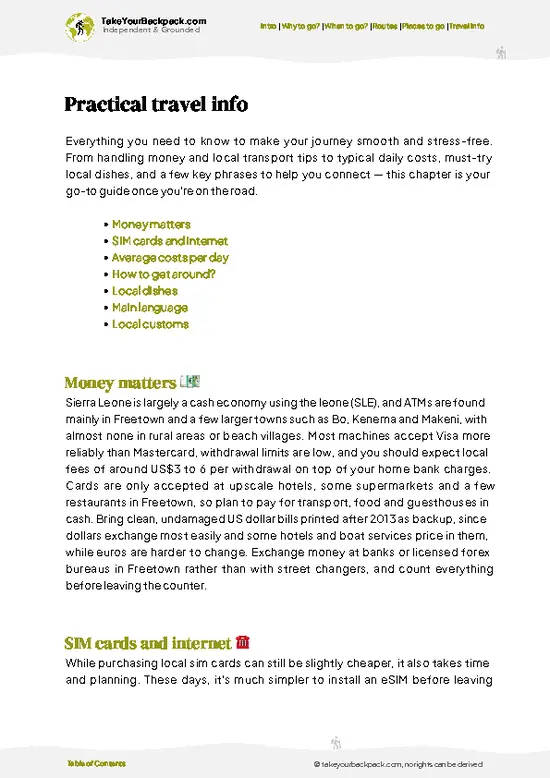
example page 0 from our offline Travel Guide for Sierra Leone
example page 1 from our offline Travel Guide for Sierra Leone
example page 2 from our offline Travel Guide for Sierra Leone
example page 3 from our offline Travel Guide for Sierra Leone
example page 4 from our offline Travel Guide for Sierra Leone
example page 5 from our offline Travel Guide for Sierra Leone
example page 6 from our offline Travel Guide for Sierra Leone
example page 7 from our offline Travel Guide for Sierra Leone
The digital guide (275 pages) contains:
63 highlights, ranked by travel appeal
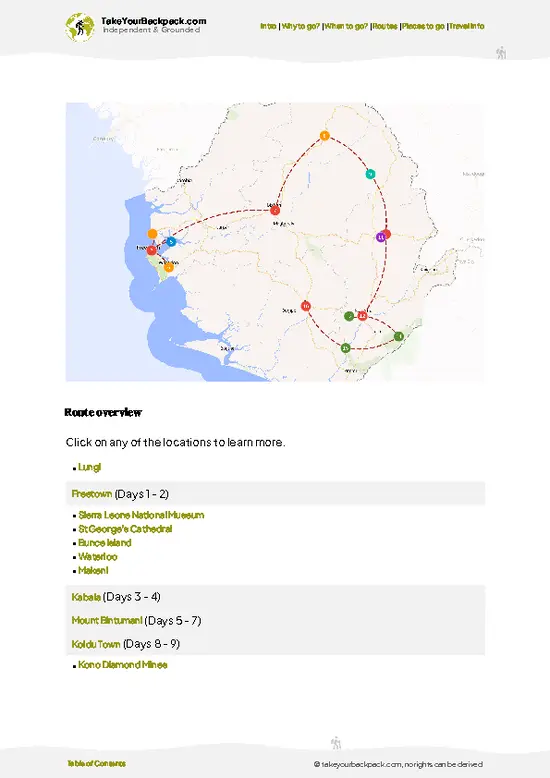
Optimized 5, 10 & 15-day travel routes
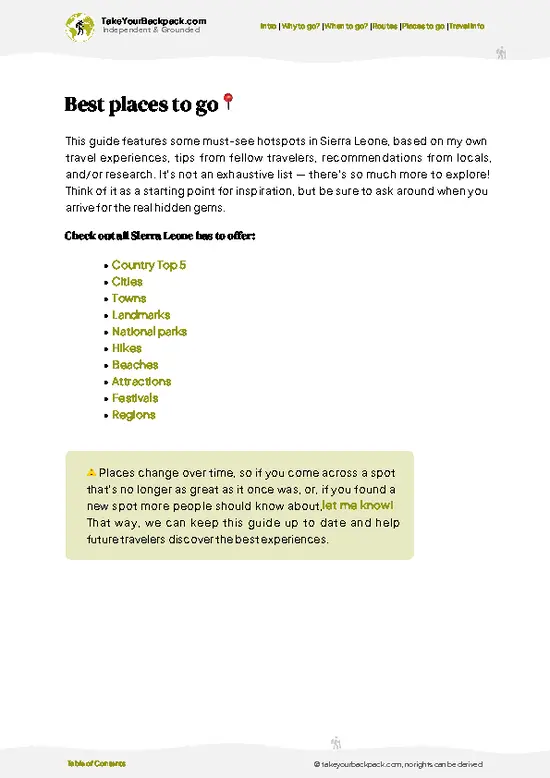
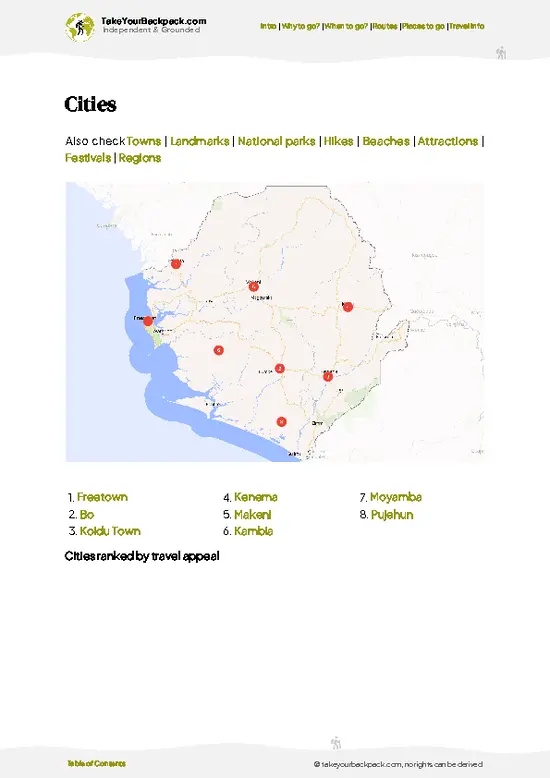
Cities, national parks, landmarks, beaches
How to get around
Offline-friendly for travel without Wi-Fi
👉 Click to see all 30+ guide features

📅 Plan smarter in minutes, not weeks
Month by month travel advice
Festivals & national holidays
Budget expectations

🗺️ Go to the right places, skip the overrated ones
Honest pros & cons of destinations
Top hikes, parks & viewpoints
Lesser-known places most travelers miss
Clear “worth it vs skip it” guidance

🛏️ Travel smoothly without rookie mistakes
Best areas to stay
Transport systems explained simply
Common scams & safety advice
SIM cards, money & practical tips

🌍 Understand the country, not just visit it
Culture & traditions
52 Essential phrases & customs
Festivals worth planning around
Traveler-friendly historical context
Insights that make places more meaningful

📱 Built for real travel conditions
Fully downloadable PDF
Works completely offline
Optimized for phone use
Useful in remote areas & buses
Everything in one place
Save weeks of stressful planning
Get instant access to your full guide. 30‑day money-back guarantee.
+ Add another guide for just US$7.80

By proceeding you agree to our terms.
Sent to your inbox immediately after payment • 100% Secure Checkout
Best Backpacking Travel Advisor 2025 tourism awardBest Backpacking
Travel Advisor
2025
What others say about Take Your Backpack Guides:
⭐⭐⭐⭐⭐
Fantastic, amazing amount of information!
⭐⭐⭐⭐⭐
My goodness this is amazing, it's what I've been looking for hats off too you!
⭐⭐⭐⭐⭐
I think this is absolutely BRILLIANT
⭐⭐⭐⭐
Very complete and informative. It's still missing places, but I gotta to commend you
⭐⭐⭐⭐⭐
This is truly amazing, thank you, can't wait to explore it with my kids!
⭐⭐⭐⭐⭐
Awesome resource, thank you!
⭐⭐⭐⭐⭐
This is amazing! Can't wait to explore the ones I haven't seen
⭐⭐⭐⭐
I love this! Well done, great idea.
⭐⭐⭐⭐⭐
Thanks for taking the time to make this gem!
⭐⭐⭐⭐⭐
This might be the best website I've ever seen.
⭐⭐⭐⭐⭐
Congratulations, and thank you so much for your work; it's incredibly valuable.
⭐⭐⭐⭐
In all seriousness I think you did a great job pointing out the important spots
⭐⭐⭐⭐⭐
10/10 very good
⭐⭐⭐⭐⭐
As someone who's only just starting to visit regularly this is awesome, thank you.
⭐⭐⭐⭐
Thank you very much! I'm going to visit my dad, it's going to be very useful!
⭐⭐⭐⭐⭐
This is really cool! We'll be travelling for the first time and this definitely come in handy.
⭐⭐⭐⭐⭐
You are now our minister of culture, congratulations 👨‍💼
⭐⭐⭐⭐⭐
Just wanted to tell you that this is a pearl! Going to follow your recommendations.
⭐⭐⭐⭐⭐
This is so cool. I'll definitely be using the resource for my travels soon.
⭐⭐⭐⭐⭐
This is very impressive! Good work.
⭐⭐⭐⭐⭐
This is an amazing and informative site. Very well done!

🛏️ Where to stay?Best areas to stay in Sierra Leone

In Lunsar, the best spot for backpackers is the town center, where the pulse of daily life hums steadily. This area is compact, making it easy to navigate on foot, which is a blessing when you’re carrying a pack and want to soak in the local rhythm without getting lost in the maze of less familiar neighborhoods. The streets here are lined with small markets and street food stalls, offering the kind of sensory immersion that makes you feel part of the place rather than a visitor peering in.

Safety-wise, the town center benefits from a steady flow of locals and travelers alike, which naturally … read more 👉
In Lunsar, the best spot for backpackers is the town center, where the pulse of daily life hums steadily. This area is compact, making it easy to navigate on foot, which is a blessing when you’re carrying a pack and want to soak in the local rhythm without getting lost in the maze of less familiar neighborhoods. The streets here are lined with small markets and street food stalls, offering the kind of sensory immersion that makes you feel part of the place rather than a visitor peering in.

Safety-wise, the town center benefits from a steady flow of locals and travelers alike, which naturally keeps things more secure after dark compared to the quieter outskirts. It’s also where you’ll find the handful of budget accommodations and hostels that cater to solo travelers and backpackers, creating a social atmosphere that’s hard to replicate elsewhere in Lunsar. The vibe is unpretentious and lively, with a mix of chatter, the scent of grilled fish, and the occasional burst of local music spilling into the streets.

Avoid the more residential or industrial zones—they’re quieter but lack the social buzz and practical conveniences that make a stay enjoyable and hassle-free. Staying central means you’re plugged into the town’s heartbeat, making every step outside your door a chance to connect, explore, and feel grounded in Sierra Leone’s everyday life.

🚌 Getting aroundHow to get from A to B

Lunsar moves at its own rhythm—less a clockwork town and more a pulse you feel in the dust and chatter. The sun slants low, casting long shadows over the dusty streets where motorbikes weave through clusters of market stalls and the scent of grilled fish mingles with the earth. It’s not about strict timetables here; it’s about catching the right moment, the right ride, the right nod from a driver who knows the roads like the back of his hand. This is a place where patience pays off, and the reward is a ride that feels like a local secret rather than a tourist shuffle.

Walking: The most straightforward way to soak in Lunsar’s atmosphere. Streets are compact enough to cover on foot, letting you catch the small details—the cracked paint on a shopfront, the laughter spilling from a corner café. … read more 👉
Lunsar moves at its own rhythm—less a clockwork town and more a pulse you feel in the dust and chatter. The sun slants low, casting long shadows over the dusty streets where motorbikes weave through clusters of market stalls and the scent of grilled fish mingles with the earth. It’s not about strict timetables here; it’s about catching the right moment, the right ride, the right nod from a driver who knows the roads like the back of his hand. This is a place where patience pays off, and the reward is a ride that feels like a local secret rather than a tourist shuffle.

Walking: The most straightforward way to soak in Lunsar’s atmosphere. Streets are compact enough to cover on foot, letting you catch the small details—the cracked paint on a shopfront, the laughter spilling from a corner café. It’s free, obviously, and perfect for short hops or exploring the town center at your own pace. Just watch for uneven sidewalks and the occasional stray dog.

Motorbike Taxis (Okadas): The lifeblood of quick, flexible transit here. They dart through traffic with a reckless grace, and fares usually start around 1,000 Leones for short trips. No fixed schedule—just flag one down and negotiate before you hop on. They’re fast, but hold tight; the roads can be rough and the ride bumpy. Great for when time is tight or you want to cover more ground without breaking the bank.

Shared Minibuses: These are the budget traveler’s workhorse for longer distances, especially if you’re heading out of town. They leave when full, so expect some waiting and a bit of a crowd. Fares hover around 3,000 to 5,000 Leones depending on the route. Not the most comfortable, but they offer a genuine slice of local life and a chance to chat with fellow passengers.

Bicycle Rentals: A slower, sweatier option but one that lets you control your pace and explore beyond the town’s edges. Rentals cost about 10,000 Leones per day. The terrain can be uneven, so a sturdy bike is a must. Early morning rides catch the cool air and soft light, making the effort worth it.

Private Car Hire: If your budget allows, this is the smoothest way to navigate Lunsar and its surroundings without the unpredictability of public transit. Prices vary widely, but expect to pay upwards of 100,000 Leones for a day. It’s comfortable, air-conditioned, and flexible—ideal if you’re carrying gear or traveling with a group.

Mastering Lunsar’s transit means embracing its organic flow—no rigid schedules, just a dance of timing, negotiation, and local know-how. Nail that, and every ride becomes part of the adventure, not just a means to an end.

👛 Costs (as of 4 September 2026)How expensive it really is

Backpacking in Lunsar, Sierra Leone, means embracing a raw, off-the-beaten-path vibe where costs stay modest but the experience is rich with local color and straightforward living.
  • Dorm Accommodation: Expect basic guesthouses or hostels with shared rooms, often without fancy amenities but clean enough. Prices hover around $5 to $10 USD per night. The lighting is usually soft, natural daylight filtering through simple windows, and the atmosphere is quiet, giving you a genuine sense of local life.
  • Meals: Street food and small local eateries dominate. A hearty meal of rice, stew, and some greens will set you back about $2 to $4 USD. The smell of fresh spices and grilled fish fills the air, and meals are often served with a side of lively chatter from locals.
  • Local Transport: Transport is mostly
read more 👉
Backpacking in Lunsar, Sierra Leone, means embracing a raw, off-the-beaten-path vibe where costs stay modest but the experience is rich with local color and straightforward living.
  • Dorm Accommodation: Expect basic guesthouses or hostels with shared rooms, often without fancy amenities but clean enough. Prices hover around $5 to $10 USD per night. The lighting is usually soft, natural daylight filtering through simple windows, and the atmosphere is quiet, giving you a genuine sense of local life.
  • Meals: Street food and small local eateries dominate. A hearty meal of rice, stew, and some greens will set you back about $2 to $4 USD. The smell of fresh spices and grilled fish fills the air, and meals are often served with a side of lively chatter from locals.
  • Local Transport: Transport is mostly shared taxis or motorbike taxis (okadas). A typical short ride costs around $0.50 to $1.50 USD. The roads are dusty, the air warm and thick, and the rides offer a close-up view of daily hustle and roadside markets.
  • Basic Activities/Entry Fees: Lunsar isn’t a tourist hotspot with formal entry fees, but visiting local markets or cultural spots might involve small tips or donations, usually under $1 USD. The real activity is soaking in the atmosphere—no ticket required.
  • Miscellaneous Expenses: Bottled water, snacks, or phone credit add up to about $1 to $2 USD daily. The heat makes hydration non-negotiable, and the occasional purchase of a cold drink feels like a small luxury.

All told, you’re looking at roughly $10 to $18 USD per day to cover the essentials in Lunsar. It’s a budget that keeps you close to the ground, letting you experience the town’s rhythm without fuss or fluff.
⚠️ Prices can change and everyone travels differently, so take this as a rough guide. Hope it helps you plan your adventure!

🚌 Day tripsWhere to go beyond the main area

Lunsar, Sierra Leone, is a backpacker’s dream base for day trips, offering a blend of culture, nature, and adventure. The vibrant local life and the scent of fresh palm oil wafting through the streets set the stage for unforgettable excursions.

1. Tiwai Island
A short boat ride from Lunsar, Tiwai Island is a wildlife sanctuary that feels like stepping into another world. Spend the day trekking through dense rainforest, where the air is thick with the sounds of howler monkeys and the scent of damp earth. The island is home to diverse wildlife, including rare pygmy hippos. Plan for about a 2-hour journey each way, and budget around $15 for transport and entry fees. The best time to visit is during the dry season, from November to April, when trails are more accessible. A common mistake is … read more 👉
Lunsar, Sierra Leone, is a backpacker’s dream base for day trips, offering a blend of culture, nature, and adventure. The vibrant local life and the scent of fresh palm oil wafting through the streets set the stage for unforgettable excursions.

1. Tiwai Island
A short boat ride from Lunsar, Tiwai Island is a wildlife sanctuary that feels like stepping into another world. Spend the day trekking through dense rainforest, where the air is thick with the sounds of howler monkeys and the scent of damp earth. The island is home to diverse wildlife, including rare pygmy hippos. Plan for about a 2-hour journey each way, and budget around $15 for transport and entry fees. The best time to visit is during the dry season, from November to April, when trails are more accessible. A common mistake is underestimating the need for sturdy footwear; muddy paths can be tricky.


2. Makeni
Just an hour’s drive from Lunsar, Makeni offers a taste of urban life with a local twist. Explore bustling markets where vendors sell everything from fresh produce to handmade crafts. The vibrant colors and lively chatter create an electric atmosphere. Expect to spend around $10 on transport and snacks. Visit in the morning to catch the market at its peak. First-timers often miss the chance to engage with locals; don’t hesitate to strike up a conversation.
👉 Explore Makeni

3. Bumbuna Waterfall
A 1.5-hour journey leads you to the stunning Bumbuna Waterfall, where the roar of cascading water fills the air. The hike to the falls is rewarding, with breathtaking views of the surrounding hills. Bring a picnic to enjoy by the water’s edge. Total costs can be around $20 for transport and a small entry fee. The rainy season can make the falls more dramatic, but be cautious of slippery trails. Many overlook the importance of timing; early mornings offer the best light for photos.


4. Kono District
For a taste of Sierra Leone’s diamond mining history, head to Kono District, about two hours away. The landscape shifts dramatically, with rolling hills and mining sites. Engage with local miners and learn about their daily lives. Expect to spend around $25 for transport and a guided tour. The dry season is ideal for visiting, as roads can be challenging during rains. A common pitfall is not arranging a guide; local insights enhance the experience.
👉 Explore Kono District
Want to know what more Sierra Leone offers?
The Sierra Leone Travel Guide describes 63 highlights, from cities to national parks, from beaches to hikes

Get the Travel Guide -

🛡️ SafetyScams, Hazards, and Annoyances

Lunsar is generally safe, but like any place, a little awareness goes a long way. Stick to well-lit areas after dark, especially if you’re solo. The streets can feel quiet, and while that’s often peaceful, it’s best to avoid wandering too far off the beaten path at night.

Keep an eye on your belongings, especially in crowded spots like markets. Vendors can be friendly, but some may try to upsell or mislead you about prices. Always ask for the price upfront and don’t hesitate to walk away if it feels off.

Annoyances can crop up, like the occasional power outage or slow internet, but these are part of the local rhythm. Embrace the moment; it’s all part of the experience. Stay relaxed, be aware, and you’ll find Lunsar’s charm shines through.

FAQFrequently asked questions about Lunsar

Lunsar is primarily a stopover rather than a destination for extended visits. It is a small mining town with limited tourist attractions, mostly serving travelers moving between Freetown and northern Sierra Leone. The town offers basic amenities but few cultural or natural sights to explore.
One day is sufficient for Lunsar, mainly to rest or resupply during travel. There are no major attractions requiring multiple days, so most travelers pass through quickly. Staying longer than a day is generally unnecessary unless you have specific business or local connections.
Yes, Lunsar can be visited as a day trip from Makeni, which is about 40 kilometers away. The journey takes roughly one hour by road, making it feasible for a quick visit to experience local life or transit. However, the town's limited attractions mean day trips are usually functional rather than recreational.
⚠️ Things can change over time, so always validate details locally before you go.

Other Sierra Leonean towns near Lunsar

Explore more nearby:

  • Port Loko—river crossings, local markets, transport hub, rural surroundings| 29 km away
  • Rokupr—rice fields, agricultural research, river crossing| 58 km away
  • Magburaka—market town, riverbank setting, local trade| 64 km away

💡 Not sure where to go next?
Create a personalized itinerary for Sierra Leone including Lunsar and the places that fit your trip.

Generate my itinerary

👉 Discover all towns

Or checkout all Sierra Leone has to offer (think cities, towns, villages, national parks, hikes, beaches, festivals)
Country photo of Sierra Leone

We 💚 feedbackWhat to keep in mind

Lunsar has a raw, unfiltered vibe that’s hard to find elsewhere. The air is thick with the scent of palm oil and laughter from the bustling market. You might be surprised by the warmth of the locals; they’ll share stories over a shared bowl of jollof rice. Just a heads-up: the roads can be rough, so take it slow. Embrace the journey; it’s all part of the experience. You’ll leave with more than just memories.

✍️ Help improve this page!
The information on this page is based on in-depth research, insights shared by experienced travelers, and feedback from the local travel community in Sierra Leone. While every effort is made to keep the information accurate and current, conditions can change — so if you spot anything incorrect or outdated, please get in touch.


🙋‍♂️ Give feedback

👋 Meet the founderWho’s Behind Take Your Backpack?

Johan, backpacker and founder of TakeYourBackpackHi, I’m Johan (Netherlands 🇳🇱), the creator of TakeYourBackpack. Over the past decade, I’ve backpacked through 80+ countries across six continents, gaining extensive experience with independent travel, long-term trips, and overland routes.

This site is built on a combination of firsthand travel experience and carefully curated insights from other backpackers. Many guides are based on places I’ve personally visited, while others bring together tips, observations, and practical advice shared by trusted travelers I’ve met along the way.

The goal is to provide realistic, experience-driven guidance — not generic itineraries — so you can explore destinations with better context, clearer expectations, and more confidence.

Get full country guide •
Instant download • 63 highlights • Full Offline guide