×

Slovenia🇸🇮 | best festivalsExplore the 10 Best festivals in Slovenia

Festivals in Slovenia are small, local and tightly tied to place, which is why they suit independent travel so well. The country is only about 20,000 square kilometers, so the difference between regions is one of character rather than distance. Ljubljana concentrates summer stages, free open-air programs and the densest crowds. The Alpine northwest and the Adriatic coast run on seasonal schedules and cost more in July and August. The Štajerska and Pomurje wine country in the east is cheaper, quieter and slower to reach without a car. Knowing this tells a backpacker whether to chase atmosphere, savings or convenience.

By Johan Kruseman 🇳🇱 | Updated October 17, 2026
Explore the best regions in Slovenia

Why go?What Makes Them Special

Slovenia suits festivals because of scale and geography. Roughly two million people live in a country where the Alps, the Pannonian plain, the Karst and the Adriatic meet, so each area developed its own food, dialect and calendar of village celebrations. Many events follow agricultural and religious rhythms such as harvest, grape picking, cattle returning from alpine pastures and saints’ days. That keeps them rooted in the community rather than built for tourists.

A strong tradition of cultural societies and municipal funding also matters. Brass bands, folk groups and volunteer organizers are common even in small towns, and the state supports a large share of the arts programming. Many events therefore charge low or no admission.

There are limits to know before choosing Slovenia. It lacks … read more 👉
Slovenia suits festivals because of scale and geography. Roughly two million people live in a country where the Alps, the Pannonian plain, the Karst and the Adriatic meet, so each area developed its own food, dialect and calendar of village celebrations. Many events follow agricultural and religious rhythms such as harvest, grape picking, cattle returning from alpine pastures and saints’ days. That keeps them rooted in the community rather than built for tourists.

A strong tradition of cultural societies and municipal funding also matters. Brass bands, folk groups and volunteer organizers are common even in small towns, and the state supports a large share of the arts programming. Many events therefore charge low or no admission.

There are limits to know before choosing Slovenia. It lacks the giant, multi-day mega-festivals of larger neighbors, and programs are modest in size. Information is often published in Slovenian first, with English added later or not at all. Public transport thins out after evening events, especially in rural areas, and accommodation in small towns can fill up quickly on festival weekends. Alpine and coastal weather can also change plans for open-air events. Travelers who value intimacy, local food and easy movement across short distances will find Slovenia especially rewarding. Those seeking spectacle at huge scale may want to look elsewhere.
Our Approach to Ranking
The list of best festivals in Slovenia is created based on energy, traditions, crowd experience, activities, and overall excitement. If you feel a festival is missing in this list, please let us know.

When to go?Timing Your Visit for the Best Experience

Best months for festivals: June to September is the best window, because open-air programs cluster in these warm, mostly dry months and daylight lasts until about 9 pm in midsummer. Daytime highs run roughly 22 to 29°C in Ljubljana and the eastern lowlands, and the coast is similar with sea temperatures of 22 to 25°C by August.
Shoulder seasons: May and October are the main shoulder months. Temperatures sit around 12 to 20°C, and autumn brings wine harvest and food events in the east and the Karst. Rain is the main risk, with Slovenia among Europe’s wetter countries. The Alpine northwest and Ljubljana can see 120 to 160 mm in a typical autumn month, so a waterproof layer matters. Thunderstorms in summer afternoons are common in the mountains.
Peak periods and prices: July and August push coastal … read more 👉
Best months for festivals: June to September is the best window, because open-air programs cluster in these warm, mostly dry months and daylight lasts until about 9 pm in midsummer. Daytime highs run roughly 22 to 29°C in Ljubljana and the eastern lowlands, and the coast is similar with sea temperatures of 22 to 25°C by August.
Shoulder seasons: May and October are the main shoulder months. Temperatures sit around 12 to 20°C, and autumn brings wine harvest and food events in the east and the Karst. Rain is the main risk, with Slovenia among Europe’s wetter countries. The Alpine northwest and Ljubljana can see 120 to 160 mm in a typical autumn month, so a waterproof layer matters. Thunderstorms in summer afternoons are common in the mountains.
Peak periods and prices: July and August push coastal and Bled-area accommodation up by roughly 30 to 60 percent compared with May or September. Dorm beds that cost about €20 to 30 in spring can reach €35 to 50 on peak weekends, and rooms in small festival towns book out weeks ahead. Ljubljana stays busy but is easier to manage. Winter and early spring bring colder, shorter days, with Alpine temperatures often below freezing, so outdoor events are fewer and indoor and carnival-season programs take over.

festival hoppingTips for Visiting Multiple Destinations

How many days to plan: A trip combining several festivals in Slovenia needs 7 to 12 days, since the country is compact but festival dates rarely line up neatly. Travel between regions is short. Ljubljana to Bled or the Julian Alps takes 1 to 1.5 hours, Ljubljana to the coast (Piran, Koper) about 1.5 to 2 hours, and Ljubljana to Maribor around 2 to 2.5 hours by train or bus.
Which regions group well: Ljubljana works as the central hub, with buses and trains radiating out. A loop that begins in the northwest, drops through the capital to the Karst and coast, then finishes in the northeast wine country follows the rail and bus network with little backtracking. Allow 2 to 3 nights per stop in the capital and the larger bases, and 1 to 2 nights in smaller towns, where the evening event often ends … read more 👉
How many days to plan: A trip combining several festivals in Slovenia needs 7 to 12 days, since the country is compact but festival dates rarely line up neatly. Travel between regions is short. Ljubljana to Bled or the Julian Alps takes 1 to 1.5 hours, Ljubljana to the coast (Piran, Koper) about 1.5 to 2 hours, and Ljubljana to Maribor around 2 to 2.5 hours by train or bus.
Which regions group well: Ljubljana works as the central hub, with buses and trains radiating out. A loop that begins in the northwest, drops through the capital to the Karst and coast, then finishes in the northeast wine country follows the rail and bus network with little backtracking. Allow 2 to 3 nights per stop in the capital and the larger bases, and 1 to 2 nights in smaller towns, where the evening event often ends after the last bus.
Planning mistakes: The most common error is stacking events in distant corners on consecutive days. Even a two-hour transfer eats a half day once luggage and connections are counted. Space distant stops by at least a day. Another is relying on buses to rural venues. Services drop sharply in the evening and on Sundays, so staying in the host town or sharing a rental car is safer. Book beds early when dates fall on summer weekends, and leave one open day to absorb weather changes.

The ListMust-Visit festivals in Slovenia

1 Lent Festival

riverbank stages, diverse music, outdoor gatherings

Join crowds along the Drava River for live performances spanning multiple genres, with informal social spaces and local food stalls.

2 Kurentovanje

masked processions, folk rituals, traditional costumes

Witness ancient customs as costumed figures parade through town, marking the end of winter with distinctive masks and rhythmic celebrations.

3 Ana Desetnica

open-air performances, urban spaces, street artists

Experience city streets transformed by international performers, with spontaneous shows and interactive acts woven into daily urban life.

4 Ljubljana Festival

international artists, opera, ballet, summer concerts

Attend large-scale productions and orchestral concerts in open-air and historic venues, featuring artists from across Europe and beyond.

5 Pivo in cvetje

beer tents, folk music, floral displays

Sample Slovenian brews and enjoy live folk performances, with decorative flower arrangements creating a festive atmosphere in the town center.

6 Festival Maribor

classical music, orchestras, historic venues

Attend concerts in architecturally significant spaces, where renowned musicians interpret classical works in a focused, acoustically rich setting.

7 Grossmann Fantastic Film and Wine Festival

genre cinema, cult films, regional wine tastings

Watch horror and fantasy films alongside tastings of local wines, blending cinematic discovery with regional flavors in a relaxed environment.

8 Tartini Festival

chamber music, coastal churches, baroque repertoire

Listen to intimate concerts in seaside churches, where skilled ensembles interpret works inspired by the region’s musical heritage.

9 Tolminator

extreme metal, mountain backdrop, riverside venue

Immerse yourself in intense metal shows set against alpine scenery, with riverside access and a dedicated crowd of genre enthusiasts.

10 Ljubljana Dragon Carnival

parade floats, dragon motifs, family activities

See imaginative costumes and themed floats fill city streets, offering playful spectacles and participatory events for all ages.

Loading the map 🌍

Expert viewTips and Advice from Travelers

How many festivals to attend: Two to four festivals is the number I advise for a typical one to two week trip. Slovenia’s events are small and spread across regions, so each one tends to be a full day or evening rather than a multi-day commitment. Beyond four, you spend more time on buses and in packing than at the events. Fewer than two means you miss the contrast between urban and rural celebrations.
Choosing between kinds: Match the type to your travel style. Culture and music seekers get the most from summer programs in Ljubljana and the larger towns, where English information and late transport are easiest. Food and wine travelers are better served by autumn harvest events in the east and the Karst, which are cheaper but usually need a car or an early plan for the last bus. Those who want … read more 👉
How many festivals to attend: Two to four festivals is the number I advise for a typical one to two week trip. Slovenia’s events are small and spread across regions, so each one tends to be a full day or evening rather than a multi-day commitment. Beyond four, you spend more time on buses and in packing than at the events. Fewer than two means you miss the contrast between urban and rural celebrations.
Choosing between kinds: Match the type to your travel style. Culture and music seekers get the most from summer programs in Ljubljana and the larger towns, where English information and late transport are easiest. Food and wine travelers are better served by autumn harvest events in the east and the Karst, which are cheaper but usually need a car or an early plan for the last bus. Those who want something local and unpolished should pick village and folk events, where the experience is rooted in the community and rarely translated, so a little Slovenian helps.
What it costs: Plan on €45 to 80 a day in summer, including a €20 to 45 dorm or budget room, food at €15 to 25 and local transport. Many open-air and street events are free. Ticketed concerts and theater typically run €10 to 40, and larger music events can reach €60 to 100 for multi-day passes. Food and drink stalls charge roughly €3 to 8 per portion and €3 to 5 for a beer or glass of wine. A festival day with transport usually adds €10 to 30 to your normal daily spend. Book accommodation first, because beds in small towns sell out before tickets do.
Safety and etiquette: Slovenia is among Europe’s safest countries, and petty theft is the main risk, mostly in crowded Ljubljana and coastal squares. Keep your phone and wallet in front pockets. Drinking is part of many events, but public drunkenness is frowned on, and drink-driving limits are strict (0.05 percent, and zero for new drivers). Use taxis or arrange a designated driver, since late buses are rare. At village and religious events, dress modestly, ask before photographing performers or participants in costume, and keep noise down near private homes. Carry a rain layer and plan for thunderstorms in the Alps, where weather can end an outdoor program early.

✈️ The backpacker research shortcutSlovenia Travel Guide

An offline-friendly backpacking guide with optimized travel routes, ranked highlights, transport advice, and the best areas to stay.
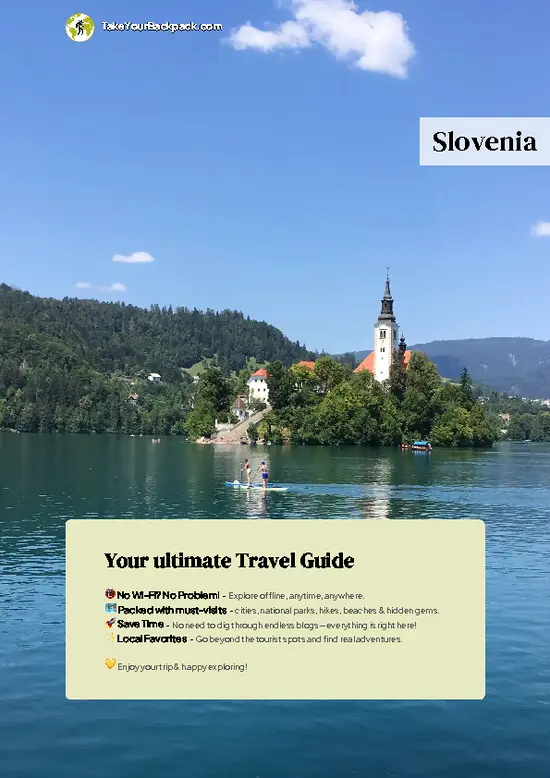
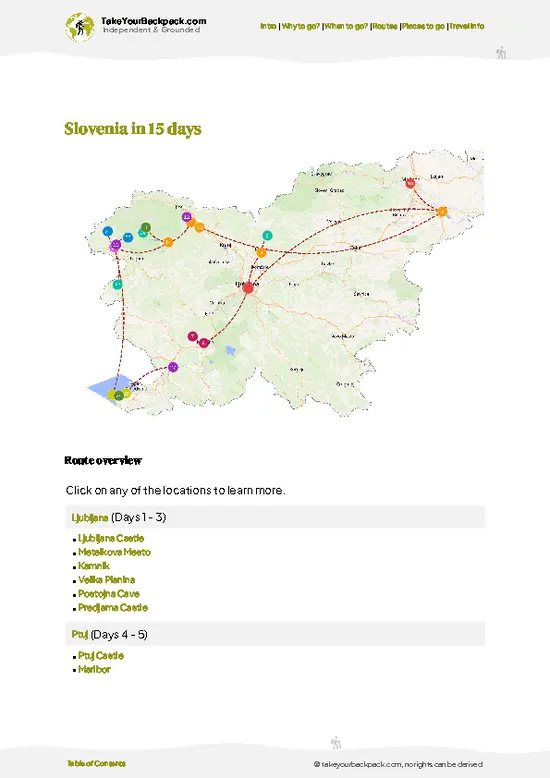
example page 0 from our offline Travel Guide for Slovenia
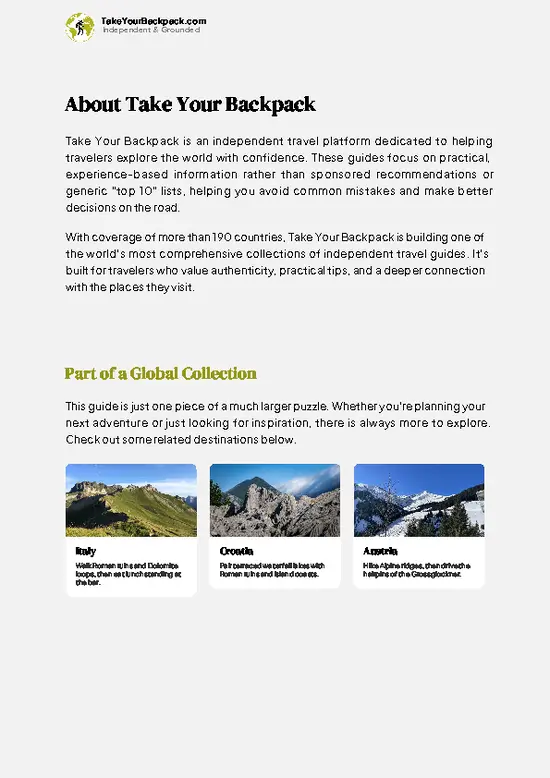
example page 1 from our offline Travel Guide for Slovenia
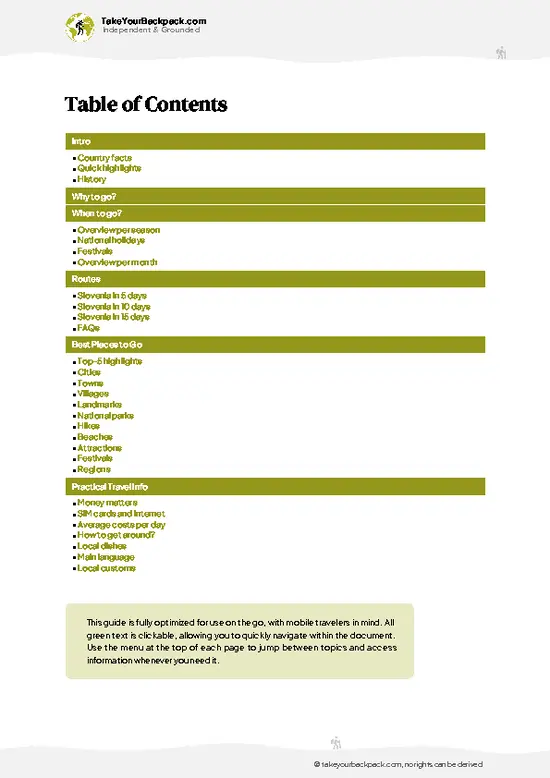
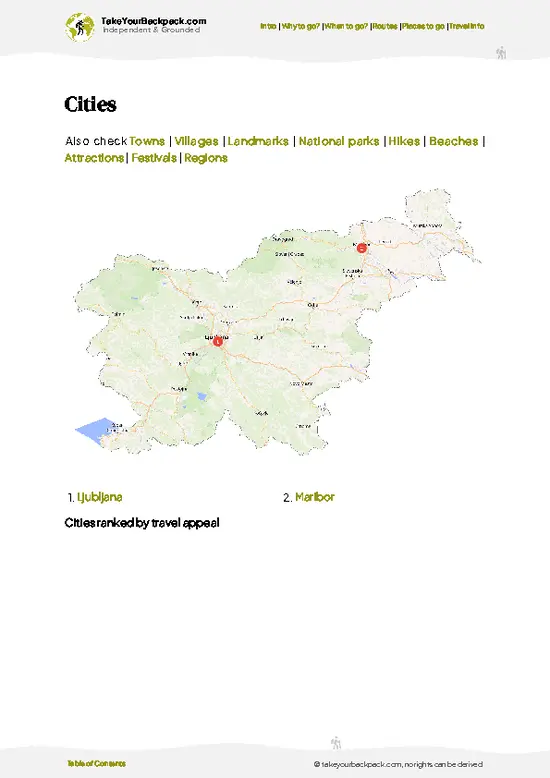
example page 2 from our offline Travel Guide for Slovenia
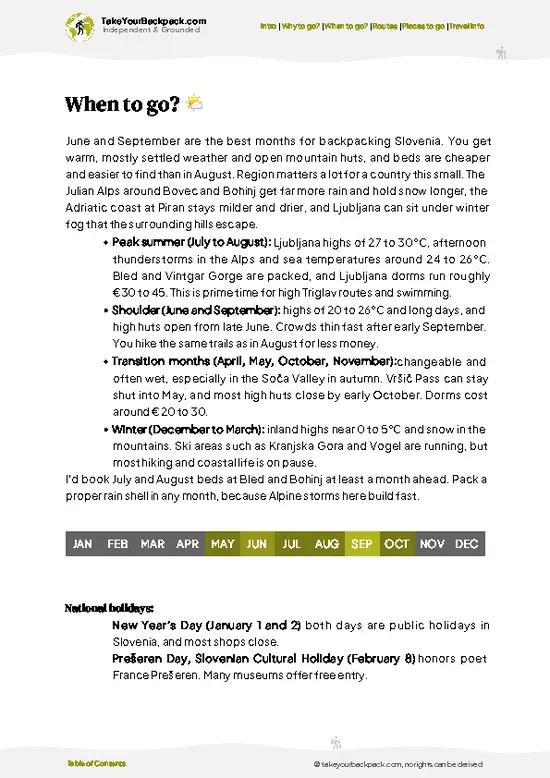
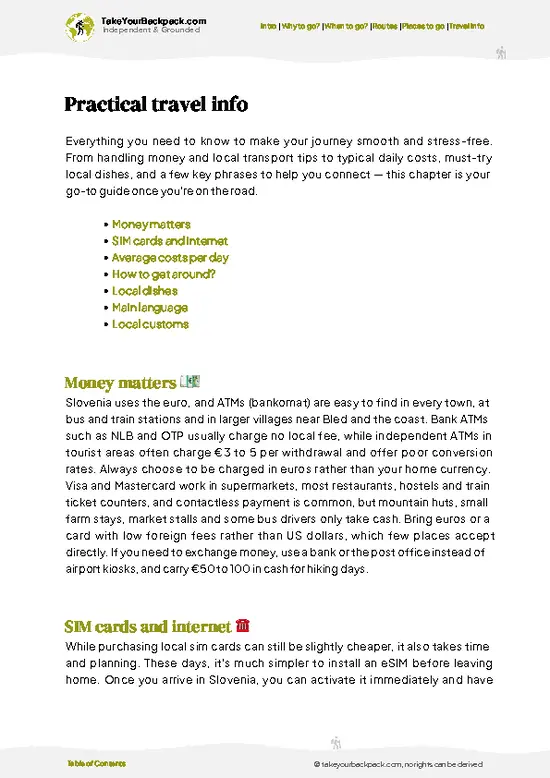
example page 3 from our offline Travel Guide for Slovenia
example page 4 from our offline Travel Guide for Slovenia
example page 5 from our offline Travel Guide for Slovenia
example page 6 from our offline Travel Guide for Slovenia
example page 7 from our offline Travel Guide for Slovenia
The digital guide (310 pages) contains:
✅ 77 highlights, ranked by travel appeal
✅ Optimized 5, 10 & 15-day travel routes
✅ Cities, national parks, landmarks, beaches
✅ How to get around
✅ Offline-friendly for travel without Wi-Fi
👉 Click to see all 30+ guide features

📅 Plan smarter in minutes, not weeks
✅ Month by month travel advice
✅ Festivals & national holidays
✅ Budget expectations

🗺️ Go to the right places, skip the overrated ones
✅ Honest pros & cons of destinations
✅ Top hikes, parks & viewpoints
✅ Lesser-known places most travelers miss
✅ Clear “worth it vs skip it” guidance

🛏️ Travel smoothly without rookie mistakes
✅ Best areas to stay
✅ Transport systems explained simply
✅ Common scams & safety advice
✅ SIM cards, money & practical tips

🌍 Understand the country, not just visit it
✅ Culture & traditions
✅ 52 Essential phrases & customs
✅ Festivals worth planning around
✅ Traveler-friendly historical context
✅ Insights that make places more meaningful

📱 Built for real travel conditions
✅ Fully downloadable PDF
✅ Works completely offline
✅ Optimized for phone use
✅ Useful in remote areas & buses
✅ Everything in one place
Stop searching, start planning
Get instant access to your full guide. 30‑day money-back guarantee.
+ Add another guide for just

By proceeding you agree to our terms.
Sent to your inbox immediately after payment • 100% Secure Checkout
Best Backpacking Travel Advisor 2025 tourism awardBest Backpacking
Travel Advisor
2025
What others say about Take Your Backpack Guides:
⭐⭐⭐⭐⭐
Fantastic, amazing amount of information!
⭐⭐⭐⭐⭐
My goodness this is amazing, it's what I've been looking for hats off too you!
⭐⭐⭐⭐⭐
I think this is absolutely BRILLIANT
⭐⭐⭐⭐
Very complete and informative. It's still missing places, but I gotta to commend you
⭐⭐⭐⭐⭐
This is truly amazing, thank you, can't wait to explore it with my kids!
⭐⭐⭐⭐⭐
Awesome resource, thank you!
⭐⭐⭐⭐⭐
This is amazing! Can't wait to explore the ones I haven't seen
⭐⭐⭐⭐
I love this! Well done, great idea.
⭐⭐⭐⭐⭐
Thanks for taking the time to make this gem!
⭐⭐⭐⭐⭐
This might be the best website I've ever seen.
⭐⭐⭐⭐⭐
Congratulations, and thank you so much for your work; it's incredibly valuable.
⭐⭐⭐⭐
In all seriousness I think you did a great job pointing out the important spots
⭐⭐⭐⭐⭐
10/10 very good
⭐⭐⭐⭐⭐
As someone who's only just starting to visit regularly this is awesome, thank you.
⭐⭐⭐⭐
Thank you very much! I'm going to visit my dad, it's going to be very useful!
⭐⭐⭐⭐⭐
This is really cool! We'll be travelling for the first time and this definitely come in handy.
⭐⭐⭐⭐⭐
You are now our minister of culture, congratulations 👨‍💼
⭐⭐⭐⭐⭐
Just wanted to tell you that this is a pearl! Going to follow your recommendations.
⭐⭐⭐⭐⭐
This is so cool. I'll definitely be using the resource for my travels soon.
⭐⭐⭐⭐⭐
This is very impressive! Good work.
⭐⭐⭐⭐⭐
This is an amazing and informative site. Very well done!

🛏️ Where to stay?Where to Stay in Slovenia

Slovenia has a solid hostel network, with dorm beds running roughly €20 to €35 a night in summer and private guesthouse rooms (look for “sobe” signs) from about €50 to €80. In Ljubljana, the Old Town puts you on foot to the castle and riverside bars but gets loud on weekend nights, while the streets around the train station and Metelkova are cheaper, close to transport and the alternative club scene, though grittier after dark (still very safe by European standards). Outside the capital, Bled and Bohinj fill up fast in July and August with quiet, lake-close options, and Piran on the coast has few beds inside its car-free old core, so book weeks ahead.

If you enjoy meeting fellow travelers, consider … read more 👉
Slovenia has a solid hostel network, with dorm beds running roughly €20 to €35 a night in summer and private guesthouse rooms (look for “sobe” signs) from about €50 to €80. In Ljubljana, the Old Town puts you on foot to the castle and riverside bars but gets loud on weekend nights, while the streets around the train station and Metelkova are cheaper, close to transport and the alternative club scene, though grittier after dark (still very safe by European standards). Outside the capital, Bled and Bohinj fill up fast in July and August with quiet, lake-close options, and Piran on the coast has few beds inside its car-free old core, so book weeks ahead.

If you enjoy meeting fellow travelers, consider choosing hostels with high ratings for atmosphere. On the other hand, if you prefer having your own space, a hotel might be a better option.

SloveniaMore of Slovenia

👋 Meet the founderWho’s Behind Take Your Backpack?

Johan, backpacker and founder of TakeYourBackpackHi, I’m Johan (Netherlands 🇳🇱), the creator of TakeYourBackpack. Over the past 3 decades, I’ve backpacked through 90+ countries across six continents, gaining extensive experience with independent travel, long-term trips, and overland routes.

This site is built on a combination of firsthand travel experience and carefully curated insights from other backpackers. Many guides are based on places I’ve personally visited, while others bring together tips, observations, and practical advice shared by trusted travelers I’ve met along the way.

The goal is to provide realistic, experience-driven guidance — not generic itineraries — so you can explore destinations with better context, clearer expectations, and more confidence.