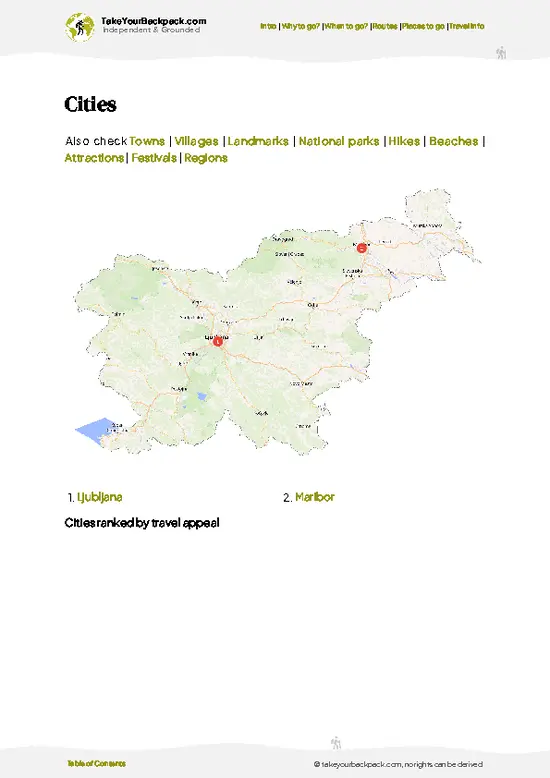
How many cities to visit: I advise
three to four cities on a first trip. Slovenia is small enough that more only adds transfers, and fewer leaves you without the variety that makes the country interesting. Each stop needs a full day plus an evening, since most old centers are compact and the atmosphere shifts after dark.
Choosing the kind of city: Match the stop to your travel style. For
social backpackers, the capital and university-influenced towns have hostels, student bars and the most events. For
outdoor-minded travelers, Alpine towns work as bases for hiking, lakes and canyons, and the city part is secondary. For
wine and food seekers, the eastern towns offer cellars and slower evenings at lower prices. Coastal towns suit those who want sea swimming and Venetian-style architecture, but …
read more 👉 How many cities to visit: I advise
three to four cities on a first trip. Slovenia is small enough that more only adds transfers, and fewer leaves you without the variety that makes the country interesting. Each stop needs a full day plus an evening, since most old centers are compact and the atmosphere shifts after dark.
Choosing the kind of city: Match the stop to your travel style. For
social backpackers, the capital and university-influenced towns have hostels, student bars and the most events. For
outdoor-minded travelers, Alpine towns work as bases for hiking, lakes and canyons, and the city part is secondary. For
wine and food seekers, the eastern towns offer cellars and slower evenings at lower prices. Coastal towns suit those who want sea swimming and Venetian-style architecture, but they are the most expensive and the most crowded in summer. An experienced traveler mixes one busy base with one quiet one, because Slovenia’s appeal is the contrast.
What it costs: Plan
US$60 to 100 a day (roughly €55 to 90) on a budget, or more on the coast in July and August. Dorm beds run about €22 to 40, private rooms €55 to 110, and a daily menu lunch in a restaurant is often €10 to 14, the cheapest proper meal. Castle and museum entries are mostly €6 to 15, and a funicular or tower is similar. Guided walking tours range from free (tip-based) to €15 to 25. Intercity buses cost around €5 to 15 for most legs, and trains are similar or a little cheaper. Alpine lake areas and the coast can add 20 to 40 percent. Cooking in hostel kitchens and buying at markets cuts food costs sharply.
Safety and cultural points: Slovenia is among the
safest countries in Europe, with low violent crime. Pickpocketing is uncommon but possible in crowded summer centers, so keep valuables zipped. Cities are strict about
recycling and quiet hours, usually from 10 p.m., so noisy late-night groups on a residential street draw complaints and sometimes police. Most places are
cashless-friendly, but small cellars and rural stops may prefer cash. Many shops close on Sundays or early, so buy supplies on Saturday. Greet staff with “dober dan” and expect people to be polite and reserved. Tap water is excellent everywhere, so a refillable bottle saves money. In winter, carry traction for icy cobblestones, which are slippery in old centers.
v2.webp)
 Best Backpacking
.jpg) Hi, I’m Johan (Netherlands 🇳🇱), the creator of TakeYourBackpack. Over the past 3 decades, I’ve backpacked through 90+ countries across six continents, gaining extensive experience with independent travel, long-term trips, and overland routes.
Hi, I’m Johan (Netherlands 🇳🇱), the creator of TakeYourBackpack. Over the past 3 decades, I’ve backpacked through 90+ countries across six continents, gaining extensive experience with independent travel, long-term trips, and overland routes.