×

Solomon Islands🇸🇧 | beachesMarau SoundSheltered lagoon, island hopping by boat, dugout canoes, copper dusk | things to do and best time to go

Explore Skull Island ShrineExplore Nusa Tupe

Backpacking in Marau Sound
👍 Recommendedbeach ranked #3
By Johan Kruseman 🇳🇱 | Updated October 22, 2026

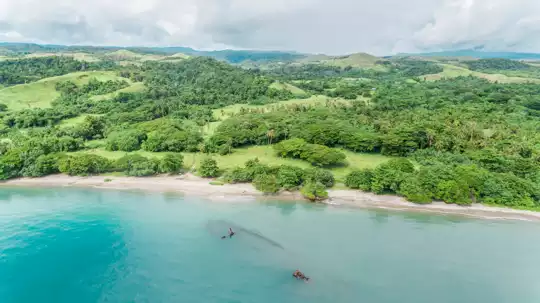
Marau Sound is a sheltered lagoon of small islands, reef flats and sandbars rather than one long strip of sand, so you choose an island or village shore and reach it by boat. It lies at the southeastern end of Guadalcanal in the Solomon Islands, east of Honiara. The water is warm, glassy and clear, with no surf to speak of, and snorkeling over the coral shallows is the main event. Crowds barely exist. That is the appeal, and also why there are no beach bars and few shops. Meals mean fish, rice and sweet potato from a village kitchen or a resort. Skip it if you want nightlife. Come for quiet, and expect the road and the crossing to take planning. On a first day, drop your pack, snorkel the nearest reef while the morning light is flat and bright, eat whatever the family cooks, and watch the lagoon go copper at dusk.

Discover everything you want to know in the 📖 Solomon Islands Travel Guide.


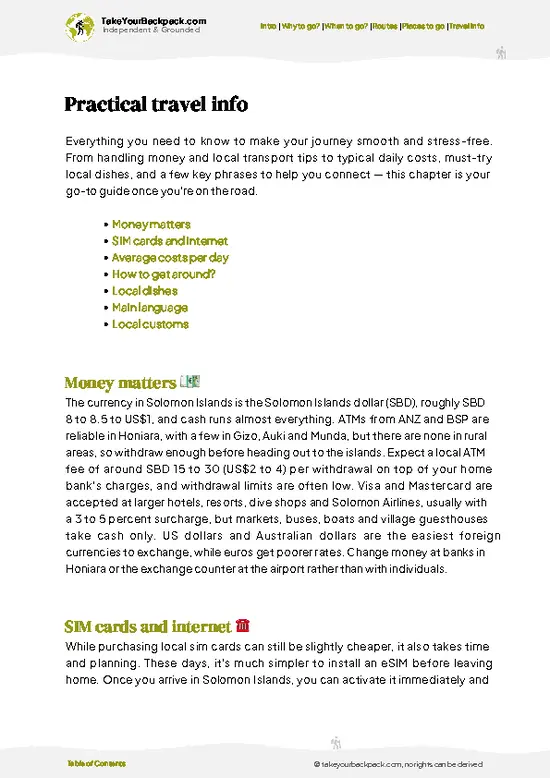
example page 0 from our offline Travel Guide for Solomon Islands
example page 1 from our offline Travel Guide for Solomon Islands
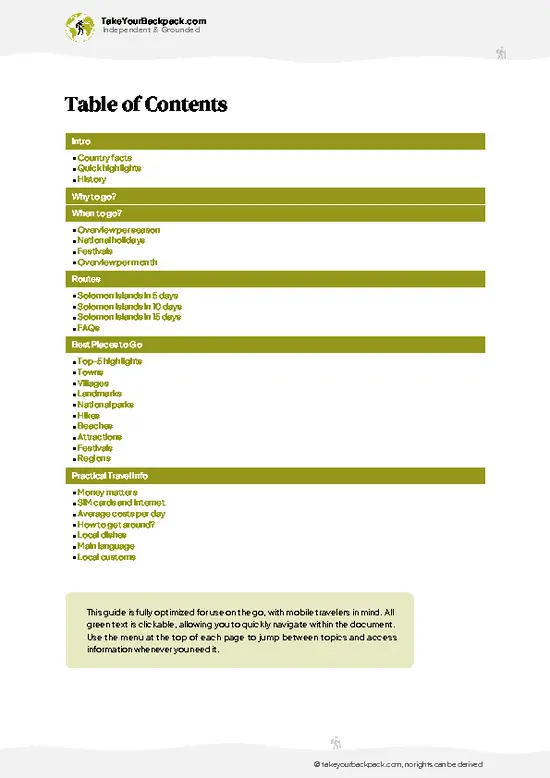
example page 2 from our offline Travel Guide for Solomon Islands
example page 3 from our offline Travel Guide for Solomon Islands
example page 4 from our offline Travel Guide for Solomon Islands
example page 5 from our offline Travel Guide for Solomon Islands
example page 6 from our offline Travel Guide for Solomon Islands
example page 7 from our offline Travel Guide for Solomon Islands
Loading the map 🌍
CLICK TO FILTER
towns
villages
landmarks
national parks
hikes
beaches
attractions
festivals
regions
SHOW COUNTRY’S BESTSHOW ALL

✨ Why go?
Ranked #3 beach in Solomon Islands
What makes it a must-see beach

Backpackers stop here because the lagoon gives you a whole cluster of islands to move between, and almost nobody else is doing it. Tavanipupu Island is the famous one, but the cheaper and more interesting story is the village shoreline, where homestay-style stays put you beside fishing families who paddle out at dawn and come back with the day’s catch. Mornings smell of woodsmoke and salt, and the only engine noise is the occasional outboard.

The second reason is contrast. Honiara is hot, dusty and loud, and the road east of the capital runs through palm plantations and river crossings before boats and planes take over for the last stretch to the sound. Arriving at water this calm feels like a reset. Because the lagoon is protected, the sheltered reef shallows suit beginners who have never … read more 👉
Backpackers stop here because the lagoon gives you a whole cluster of islands to move between, and almost nobody else is doing it. Tavanipupu Island is the famous one, but the cheaper and more interesting story is the village shoreline, where homestay-style stays put you beside fishing families who paddle out at dawn and come back with the day’s catch. Mornings smell of woodsmoke and salt, and the only engine noise is the occasional outboard.

The second reason is contrast. Honiara is hot, dusty and loud, and the road east of the capital runs through palm plantations and river crossings before boats and planes take over for the last stretch to the sound. Arriving at water this calm feels like a reset. Because the lagoon is protected, the sheltered reef shallows suit beginners who have never put a mask on, and confident swimmers can drift over coral edges without fighting a current.

There is no scene to join here. You stay for the stillness, the starry nights and the slow rhythm of village life.

💡 HighlightsTop highlights of Marau Sound

  1. Tavanipupu Island: The best-known spot in the sound, a small private-feeling island with white sand and a resort that hosted Prince William and Catherine on their royal visit. Even if you are not staying, its beaches and fringing reef show you what the lagoon looks like at its most polished.
  2. Snorkeling the lagoon reefs: Coral heads rise from shallow, calm water close to shore, and reef fish are easy to find without a boat ride out to open sea. Go in the morning when the sun is high enough to light the bottom and the wind has not yet ruffled the surface.
  3. Paddling a dugout canoe between the islets: Villagers get around by canoe, and this is the quietest way to see the sound. You glide past mangrove edges and sandbars, and you hear water dripping off the paddle rather than a motor. Ask a local
… read more 👉
  1. Tavanipupu Island: The best-known spot in the sound, a small private-feeling island with white sand and a resort that hosted Prince William and Catherine on their royal visit. Even if you are not staying, its beaches and fringing reef show you what the lagoon looks like at its most polished.
  2. Snorkeling the lagoon reefs: Coral heads rise from shallow, calm water close to shore, and reef fish are easy to find without a boat ride out to open sea. Go in the morning when the sun is high enough to light the bottom and the wind has not yet ruffled the surface.
  3. Paddling a dugout canoe between the islets: Villagers get around by canoe, and this is the quietest way to see the sound. You glide past mangrove edges and sandbars, and you hear water dripping off the paddle rather than a motor. Ask a local family to guide you, since channels and shallows are hard to read.
  4. Village visits along the Marau coast: The people here have their own language and customs, and walking through a village gives you a clear view of daily life: gardens, canoe-building, women sorting the catch. Bring a small gift such as rice or school supplies if you visit, and ask before taking photos.
  5. Sunset and night sky from the shore: With no streetlights and few generators, the stars come out thick above the water after dark. Sunset turns the lagoon orange and pink, and you can watch fishing canoes head out with lamps for the night catch.
For a first visit, the lagoon reef snorkeling gives you the clearest sense of why anyone makes the trip out here.
Spotted a mistake or missing something? Contact us.

Things to do near Marau Sound

Ratings based on Tripadvisor reviews. When you book through this link, you support our work at no extra cost to you.

🌤️ When to go?Choosing the right time of year

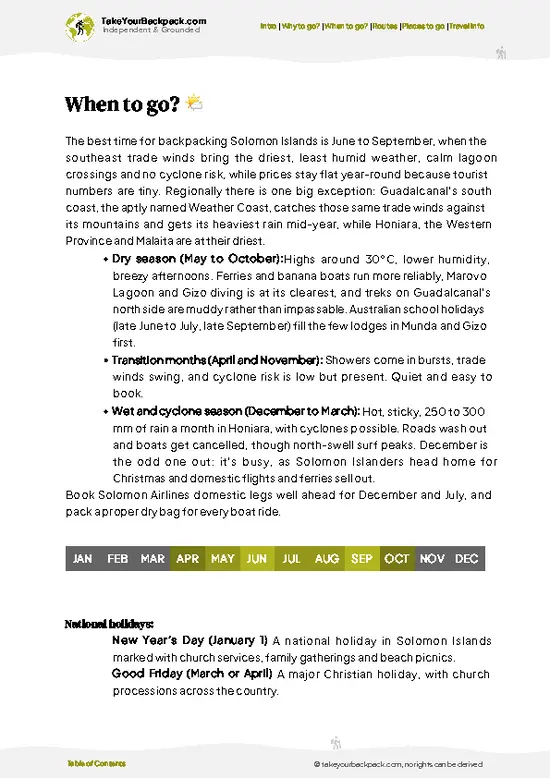
  • Dry Season (May to October): The southeast trade winds blow and rain eases, so boat crossings across Marau Sound are calmer on most mornings. Days run 27 to 30°C (81 to 86°F), nights drop to about 23°C (73°F). Sunrise and sunset sit near 6:15 and 6:00, so you get roughly 12 hours of light.
  • Wet Season (November to April): Expect humid heat of 28 to 32°C (82 to 90°F), heavy downpours and muddy tracks on Guadalcanal's far southeast. Cyclone risk peaks January to March, and small-boat services get cancelled or delayed. Lodging is quiet and negotiable.
  • Crowds and Prices: Marau is remote, so visitor numbers stay low all year. A few yachts and dive or fishing visitors drift through in the drier months, and boat fares track fuel prices more than season.
  • Activities: Clearer water for snorkeling and fishing
… read more 👉
  • Dry Season (May to October): The southeast trade winds blow and rain eases, so boat crossings across Marau Sound are calmer on most mornings. Days run 27 to 30°C (81 to 86°F), nights drop to about 23°C (73°F). Sunrise and sunset sit near 6:15 and 6:00, so you get roughly 12 hours of light.
  • Wet Season (November to April): Expect humid heat of 28 to 32°C (82 to 90°F), heavy downpours and muddy tracks on Guadalcanal's far southeast. Cyclone risk peaks January to March, and small-boat services get cancelled or delayed. Lodging is quiet and negotiable.
  • Crowds and Prices: Marau is remote, so visitor numbers stay low all year. A few yachts and dive or fishing visitors drift through in the drier months, and boat fares track fuel prices more than season.
  • Activities: Clearer water for snorkeling and fishing trips comes between June and September.
Book onward transport with a few spare days, since schedules here shift with the weather.


source: climatestotravel.comJANJanuary: fair for travelingFEBFebruary: fair for travelingMARMarch: fair for travelingAPRApril: highly recommended for travelingMAYMay: excellent for travelingJUNJune: excellent for travelingJULJuly: excellent for travelingAUGAugust: excellent for travelingSEPSeptember: excellent for travelingOCTOctober: highly recommended for travelingNOVNovember: fair for travelingDECDecember: fair for traveling
when-to-go

✈️ The backpacker research shortcutSolomon Islands Travel Guide

An offline-friendly backpacking guide with optimized travel routes, ranked highlights, transport advice, and the best areas to stay.
example page 0 from our offline Travel Guide for Solomon Islands
example page 1 from our offline Travel Guide for Solomon Islands
example page 2 from our offline Travel Guide for Solomon Islands
example page 3 from our offline Travel Guide for Solomon Islands
example page 4 from our offline Travel Guide for Solomon Islands
example page 5 from our offline Travel Guide for Solomon Islands
example page 6 from our offline Travel Guide for Solomon Islands
example page 7 from our offline Travel Guide for Solomon Islands
The digital guide (145 pages) contains:
✅ 33 highlights, ranked by travel appeal
✅ Optimized 5, 10 & 15-day travel routes
✅ Cities, national parks, landmarks, beaches
✅ How to get around
✅ Offline-friendly for travel without Wi-Fi
👉 Click to see all 30+ guide features

📅 Plan smarter in minutes, not weeks
✅ Month by month travel advice
✅ Festivals & national holidays
✅ Budget expectations

🗺️ Go to the right places, skip the overrated ones
✅ Honest pros & cons of destinations
✅ Top hikes, parks & viewpoints
✅ Lesser-known places most travelers miss
✅ Clear “worth it vs skip it” guidance

🛏️ Travel smoothly without rookie mistakes
✅ Best areas to stay
✅ Transport systems explained simply
✅ Common scams & safety advice
✅ SIM cards, money & practical tips

🌍 Understand the country, not just visit it
✅ Culture & traditions
✅ 52 Essential phrases & customs
✅ Festivals worth planning around
✅ Traveler-friendly historical context
✅ Insights that make places more meaningful

📱 Built for real travel conditions
✅ Fully downloadable PDF
✅ Works completely offline
✅ Optimized for phone use
✅ Useful in remote areas & buses
✅ Everything in one place
Stop searching, start planning
Get instant access to your full guide. 30‑day money-back guarantee.
+ Add another guide for just

By proceeding you agree to our terms.
Sent to your inbox immediately after payment • 100% Secure Checkout
Best Backpacking Travel Advisor 2025 tourism awardBest Backpacking
Travel Advisor
2025
What others say about Take Your Backpack Guides:
⭐⭐⭐⭐⭐
Fantastic, amazing amount of information!
⭐⭐⭐⭐⭐
My goodness this is amazing, it's what I've been looking for hats off too you!
⭐⭐⭐⭐⭐
I think this is absolutely BRILLIANT
⭐⭐⭐⭐
Very complete and informative. It's still missing places, but I gotta to commend you
⭐⭐⭐⭐⭐
This is truly amazing, thank you, can't wait to explore it with my kids!
⭐⭐⭐⭐⭐
Awesome resource, thank you!
⭐⭐⭐⭐⭐
This is amazing! Can't wait to explore the ones I haven't seen
⭐⭐⭐⭐
I love this! Well done, great idea.
⭐⭐⭐⭐⭐
Thanks for taking the time to make this gem!
⭐⭐⭐⭐⭐
This might be the best website I've ever seen.
⭐⭐⭐⭐⭐
Congratulations, and thank you so much for your work; it's incredibly valuable.
⭐⭐⭐⭐
In all seriousness I think you did a great job pointing out the important spots
⭐⭐⭐⭐⭐
10/10 very good
⭐⭐⭐⭐⭐
As someone who's only just starting to visit regularly this is awesome, thank you.
⭐⭐⭐⭐
Thank you very much! I'm going to visit my dad, it's going to be very useful!
⭐⭐⭐⭐⭐
This is really cool! We'll be travelling for the first time and this definitely come in handy.
⭐⭐⭐⭐⭐
You are now our minister of culture, congratulations 👨‍💼
⭐⭐⭐⭐⭐
Just wanted to tell you that this is a pearl! Going to follow your recommendations.
⭐⭐⭐⭐⭐
This is so cool. I'll definitely be using the resource for my travels soon.
⭐⭐⭐⭐⭐
This is very impressive! Good work.
⭐⭐⭐⭐⭐
This is an amazing and informative site. Very well done!

🛏️ Where to stay?Choosing the right base

The most practical base is the Marau Sound shoreline itself, in simple village guesthouses and family-run lodges on the mainland coast or on the small islets inside the sound. There is no hostel scene here. Expect basic rooms or leaf-house bungalows, shared bathrooms, rainwater showers, and limited or solar-only electricity. Budget around SI$300 to 700 (US$35 to 85) per person a night, and meals are often included because there is nowhere else to eat.

Staying on the islets puts you next to calm lagoon water, with snorkeling off the front step and canoe rides arranged through your hosts. The mainland … read more 👉
The most practical base is the Marau Sound shoreline itself, in simple village guesthouses and family-run lodges on the mainland coast or on the small islets inside the sound. There is no hostel scene here. Expect basic rooms or leaf-house bungalows, shared bathrooms, rainwater showers, and limited or solar-only electricity. Budget around SI$300 to 700 (US$35 to 85) per person a night, and meals are often included because there is nowhere else to eat.

Staying on the islets puts you next to calm lagoon water, with snorkeling off the front step and canoe rides arranged through your hosts. The mainland side is easier for onward road or boat connections toward Honiara. Social life comes from the hosts and other guests, often a handful of divers, anglers and Peace Corps-style volunteers rather than a crowd of backpackers. Evenings revolve around shared dinners and the sound of the tide.

Bring cash in Solomon Islands dollars, since cards and ATMs are not available, and arrange your stay and boat pickup by phone or message ahead. Pack a power bank, a headlamp and a mosquito net, and carry snacks and drinking water for the first day.

🛡️ SafetyTraveler Safety Guide

Marau Sound is a sheltered lagoon, and the swimming is generally calm and safe. Water inside the sound has little wave energy, and currents mostly show up at the reef passes where tides push water in and out, so stay away from those channels unless a local is guiding you. Check the tide before wading across shallow flats, since the water can run faster than you expect on the turn.

Reef edges bring coral cuts and the odd stonefish or sea urchin, so wear reef shoes and avoid walking on live coral. Crocodiles live in parts of the Solomons, so ask your host before swimming near river mouths or mangroves. Reef sharks are present but rarely a concern for snorkelers.

The sun is strong from mid-morning to mid-afternoon, and a rash shirt helps. Theft is uncommon, but keep valuables with your host … read more 👉
Marau Sound is a sheltered lagoon, and the swimming is generally calm and safe. Water inside the sound has little wave energy, and currents mostly show up at the reef passes where tides push water in and out, so stay away from those channels unless a local is guiding you. Check the tide before wading across shallow flats, since the water can run faster than you expect on the turn.

Reef edges bring coral cuts and the odd stonefish or sea urchin, so wear reef shoes and avoid walking on live coral. Crocodiles live in parts of the Solomons, so ask your host before swimming near river mouths or mangroves. Reef sharks are present but rarely a concern for snorkelers.

The sun is strong from mid-morning to mid-afternoon, and a rash shirt helps. Theft is uncommon, but keep valuables with your host and ask permission before using or photographing village beaches, because shorelines are customary land. Open-water boat trips can turn rough in afternoon winds, so travel in the morning.

FAQFrequently asked questions about Marau Sound

Most travelers reach Marau Sound from Honiara, on the north coast of Guadalcanal, either on a short Solomon Airlines flight to the Marau airstrip (about 25 minutes, only a few days a week) or by a long boat ride east along the coast. Allow a full day, with boat travel of roughly 5 to 8 hours depending on weather and the vessel. Charters are costly (often several hundred US$), so ask guesthouses in Honiara to connect you with shared boats or to arrange a pickup. Local transport runs irregularly, and weather can delay departures.
The lagoon inside Marau Sound is good for snorkeling and relaxed swimming, with calm water and coral patches close to the islets. Visibility is usually best from June to September, and boat trips to the outer reef or passes should be arranged with a local guide. Surfing is not a feature of the sound, since the water inside is sheltered and flat. Bring your own mask, snorkel and reef shoes, because rental gear is scarce.
There is no entrance fee for the beach itself, but the shoreline and reef belong to local landowning families, so ask permission and expect to pay a small customary fee, often SI$20 to 100 (US$2 to 12) per person for access or a guide. Staying at a guesthouse usually covers beach use, and your host can arrange canoe rides or snorkeling trips for a few hundred Solomon Islands dollars. Carry small notes in cash, since no card payments are available.
⚠️ Things can change over time, so always validate details locally before you go.

Other Solomon Islander beaches near Marau Sound

Explore more nearby:

  • Turtle Reef—seagrass beds, turtle sightings, shallow snorkeling, offshore sandbar| 112 km away
  • Uepi Island—Reef wall, Marovo Lagoon, night snorkel, woodcarving villages| 351 km away
  • Rendova Island Beach—Dark volcanic sand, Mount Rendova, wartime relics, village paths| 409 km away

💡 Not sure where to go next?
Create a personalized itinerary for Solomon Islands including Marau Sound and the places that fit your trip.

Generate my itinerary

👉 Discover all beaches

Or checkout all Solomon Islands has to offer (think cities, towns, villages, national parks, hikes, beaches, festivals)
Country photo of Solomon Islands

We 💚 feedbackFinal thoughts on visiting Marau Sound

Plan two or three nights. One is too few, because the journey eats most of the first day and you will only just have found your rhythm when you leave. Longer than three suits you only if you love village routine and a good book. Bring your own mask and reef-safe sunscreen, and keep cash in small notes for boat rides and meals.

✍️ Help improve this page!
The information on this page is based on in-depth research, insights shared by experienced travelers, and feedback from the local travel community in Solomon Islands. While every effort is made to keep the information accurate and current, conditions can change — so if you spot anything incorrect or outdated, please get in touch.


🙋‍♂️ Give feedback

👋 Meet the founderWho’s Behind Take Your Backpack?

Johan, backpacker and founder of TakeYourBackpackHi, I’m Johan (Netherlands 🇳🇱), the creator of TakeYourBackpack. Over the past 3 decades, I’ve backpacked through 90+ countries across six continents, gaining extensive experience with independent travel, long-term trips, and overland routes.

This site is built on a combination of firsthand travel experience and carefully curated insights from other backpackers. Many guides are based on places I’ve personally visited, while others bring together tips, observations, and practical advice shared by trusted travelers I’ve met along the way.

The goal is to provide realistic, experience-driven guidance — not generic itineraries — so you can explore destinations with better context, clearer expectations, and more confidence.