×

Solomon Islands🇸🇧 | attractionsSkull Island ShrineRoviana Lagoon, Chief Hiqava, sacred skulls, landowner guides | things to do and best time to go

Explore Kennedy IslandExplore Marau Sound

Backpacking in Skull Island Shrine
By Johan Kruseman 🇳🇱 | Updated October 15, 2026

The skulls here were not collected by tourists’ imagination: they belong to a living custom, and the landowners who guard them charge a fee and decide how you behave. The shrine sits on a tiny islet in the Vonavona Lagoon, next to Roviana Lagoon, Western Province, in the west of Solomon Islands, a boat hop from Munda on New Georgia. Expect a pile of sun-bleached skulls and old shell valuables under a rough shelter, with coral underfoot, frigatebirds overhead and the smell of salt and rotting leaf litter. It is small. Twenty minutes is plenty, so the lagoon boat ride is half the point. The wow-factor is quiet rather than loud, and the history of headhunting hits harder in person than in any photo. Crowds are almost nonexistent, which keeps the mood respectful. It is worth the time if you care about custom and history; skip it if you want a slick attraction. Arrange the boat and the custom fee with locals in Munda, and carry cash.

Discover everything you want to know in the 📖 Solomon Islands Travel Guide.


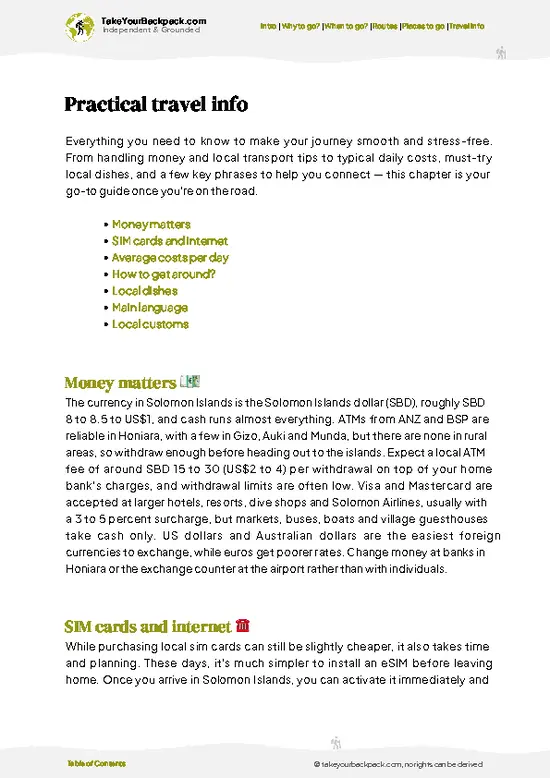
example page 0 from our offline Travel Guide for Solomon Islands
example page 1 from our offline Travel Guide for Solomon Islands
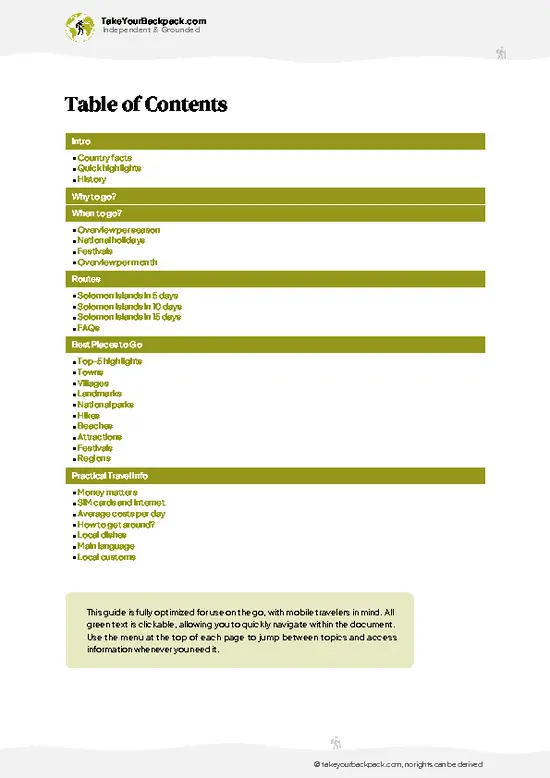
example page 2 from our offline Travel Guide for Solomon Islands
example page 3 from our offline Travel Guide for Solomon Islands
example page 4 from our offline Travel Guide for Solomon Islands
example page 5 from our offline Travel Guide for Solomon Islands
example page 6 from our offline Travel Guide for Solomon Islands
example page 7 from our offline Travel Guide for Solomon Islands
Loading the map 🌍
CLICK TO FILTER
towns
villages
landmarks
national parks
hikes
beaches
attractions
festivals
regions
SHOW COUNTRY’S BESTSHOW ALL

✨ Why go?
Ranked #99 attraction in Solomon Islands
Why visitors keep coming back

Few places in the Pacific let you stand this close to the physical evidence of headhunting without a glass case between you and it. The shrine is linked to Chief Hiqava, the Roviana leader whose raiding canoes terrorized the central islands before missionaries and colonial authority arrived in the early 1900s. That context turns a heap of bone into a story about power, trade and belief, and you hear it from local guides whose families still hold the land.

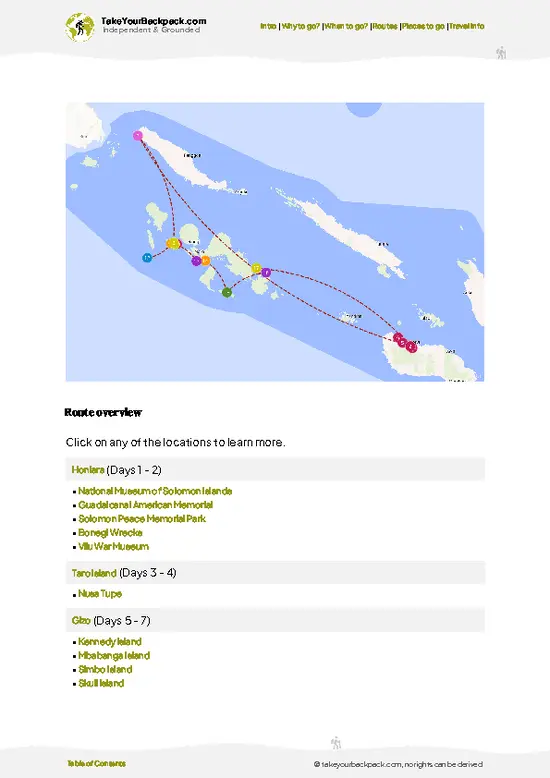
The second reason is the route. The trip fits neatly into a few days around Munda, the western gateway where Roviana Lagoon, Kolombangara’s cone and World War II wrecks and airstrips are all within reach. Skull Island gives the area a cultural anchor beyond diving and snorkeling.

Finally, the effort is modest and the encounter is personal. … read more 👉
Few places in the Pacific let you stand this close to the physical evidence of headhunting without a glass case between you and it. The shrine is linked to Chief Hiqava, the Roviana leader whose raiding canoes terrorized the central islands before missionaries and colonial authority arrived in the early 1900s. That context turns a heap of bone into a story about power, trade and belief, and you hear it from local guides whose families still hold the land.

The second reason is the route. The trip fits neatly into a few days around Munda, the western gateway where Roviana Lagoon, Kolombangara’s cone and World War II wrecks and airstrips are all within reach. Skull Island gives the area a cultural anchor beyond diving and snorkeling.

Finally, the effort is modest and the encounter is personal. You pay the custom fee directly to the people who care for the place, which means your money lands where it matters. A guide who explains the taboos beats any plaque, and it is the kind of stop that makes a Solomons trip feel like more than beaches.

💡 HighlightsThe experiences that define the visit

  1. Skull Island Shrine: the main sight, a small shelter on a coral islet where skulls are stacked and laid out alongside old shell valuables. It is compact, silent and deeply atmospheric, and the guide’s explanation of who the skulls belonged to is the real draw.
  2. The skulls of Chief Hiqava’s era: the remains are tied to the Roviana headhunting chief’s raiding past. Seeing the weathered bone beside offerings shows that the site is still treated as sacred rather than preserved as a curiosity.
  3. Shell valuables and offerings: clam-shell pieces and other traditional items placed at the shrine reflect the wealth and ritual that surrounded headhunting. Look at how they are arranged, since each placement means something to the custodians.
  4. The boat ride across Roviana Lagoon: shallow turquoise water, mangrove
… read more 👉
  1. Skull Island Shrine: the main sight, a small shelter on a coral islet where skulls are stacked and laid out alongside old shell valuables. It is compact, silent and deeply atmospheric, and the guide’s explanation of who the skulls belonged to is the real draw.
  2. The skulls of Chief Hiqava’s era: the remains are tied to the Roviana headhunting chief’s raiding past. Seeing the weathered bone beside offerings shows that the site is still treated as sacred rather than preserved as a curiosity.
  3. Shell valuables and offerings: clam-shell pieces and other traditional items placed at the shrine reflect the wealth and ritual that surrounded headhunting. Look at how they are arranged, since each placement means something to the custodians.
  4. The boat ride across Roviana Lagoon: shallow turquoise water, mangrove edges and the green cone of Kolombangara on the horizon make the approach a highlight in itself. Go in calm morning light for glassy water and clearer views.
  5. Custom welcome and guide storytelling: the landowners’ briefing sets the rules, from where to step to what to photograph. It is an exchange with local people, not a ticket booth, and it adds more than any signage could.
  6. Munda’s World War II relics: the town sits on a former Japanese-built airfield that was fiercely contested in 1943, with wrecks, guns and rusting remnants nearby. It makes a sober companion to the older, pre-colonial violence at the shrine.
  7. Snorkeling in Roviana and Vonavona Lagoons: coral gardens and clear shallows sit between the islets, so a swim stop on the way back is easy to arrange with your boatman.
Most visitors miss Nusa Roviana, the nearby island with the stone ruins of Hiqava’s headhunting stronghold, where platforms and shrine remains show how the whole chiefdom was organized.
Spotted a mistake or missing something? Contact us.

🌤️ When to go?Best time to visit Skull Island Shrine

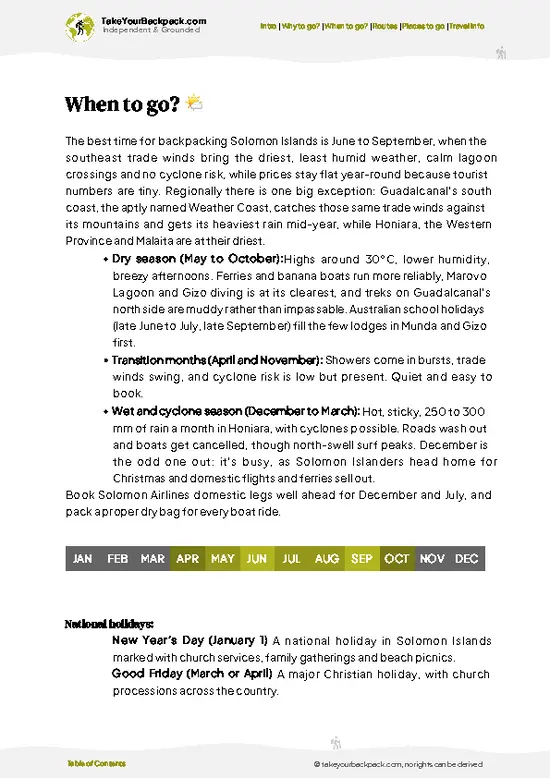
The best window for Skull Island Shrine is May to October, when southeast trade winds keep the lagoon crossing near Munda calmer and the skies clearer.
  • Dry Season (May to October): Days run about 27 to 31°C (81 to 88°F), nights drop to roughly 23°C (73°F), and rain falls in short showers. Sunrise is around 6:00 and sunset around 18:00. Lagoon water is flatter, so boat transfers are easier and photos of the shrine’s weathered skull houses come out crisp.
  • Wet Season (November to April): Humidity climbs, afternoons reach 32°C (90°F), and heavy downpours turn paths muddy. Cyclone-season swells can cancel canoe and boat runs for a day or more. Guesthouses and boat hire are easiest to book at this time, and prices rarely change much.
  • Visitor Numbers: Visitors are few year-round. Dive-boat and cruise
… read more 👉
The best window for Skull Island Shrine is May to October, when southeast trade winds keep the lagoon crossing near Munda calmer and the skies clearer.
  • Dry Season (May to October): Days run about 27 to 31°C (81 to 88°F), nights drop to roughly 23°C (73°F), and rain falls in short showers. Sunrise is around 6:00 and sunset around 18:00. Lagoon water is flatter, so boat transfers are easier and photos of the shrine’s weathered skull houses come out crisp.
  • Wet Season (November to April): Humidity climbs, afternoons reach 32°C (90°F), and heavy downpours turn paths muddy. Cyclone-season swells can cancel canoe and boat runs for a day or more. Guesthouses and boat hire are easiest to book at this time, and prices rarely change much.
  • Visitor Numbers: Visitors are few year-round. Dive-boat and cruise groups around Munda cluster in the dry months, so a weekday morning keeps the shrine quieter.
Book your boat the evening before and leave by 8:00, since the morning lagoon is glassiest and the midday sun is brutal on the open water.


source: climatestotravel.comJANJanuary: fair for travelingFEBFebruary: fair for travelingMARMarch: fair for travelingAPRApril: fair for travelingMAYMay: excellent for travelingJUNJune: highly recommended for travelingJULJuly: highly recommended for travelingAUGAugust: highly recommended for travelingSEPSeptember: excellent for travelingOCTOctober: highly recommended for travelingNOVNovember: fair for travelingDECDecember: fair for traveling
when-to-go

✈️ The backpacker research shortcutSolomon Islands Travel Guide

An offline-friendly backpacking guide with optimized travel routes, ranked highlights, transport advice, and the best areas to stay.
example page 0 from our offline Travel Guide for Solomon Islands
example page 1 from our offline Travel Guide for Solomon Islands
example page 2 from our offline Travel Guide for Solomon Islands
example page 3 from our offline Travel Guide for Solomon Islands
example page 4 from our offline Travel Guide for Solomon Islands
example page 5 from our offline Travel Guide for Solomon Islands
example page 6 from our offline Travel Guide for Solomon Islands
example page 7 from our offline Travel Guide for Solomon Islands
The digital guide (145 pages) contains:
✅ 33 highlights, ranked by travel appeal
✅ Optimized 5, 10 & 15-day travel routes
✅ Cities, national parks, landmarks, beaches
✅ How to get around
✅ Offline-friendly for travel without Wi-Fi
👉 Click to see all 30+ guide features

📅 Plan smarter in minutes, not weeks
✅ Month by month travel advice
✅ Festivals & national holidays
✅ Budget expectations

🗺️ Go to the right places, skip the overrated ones
✅ Honest pros & cons of destinations
✅ Top hikes, parks & viewpoints
✅ Lesser-known places most travelers miss
✅ Clear “worth it vs skip it” guidance

🛏️ Travel smoothly without rookie mistakes
✅ Best areas to stay
✅ Transport systems explained simply
✅ Common scams & safety advice
✅ SIM cards, money & practical tips

🌍 Understand the country, not just visit it
✅ Culture & traditions
✅ 52 Essential phrases & customs
✅ Festivals worth planning around
✅ Traveler-friendly historical context
✅ Insights that make places more meaningful

📱 Built for real travel conditions
✅ Fully downloadable PDF
✅ Works completely offline
✅ Optimized for phone use
✅ Useful in remote areas & buses
✅ Everything in one place
Stop searching, start planning
Get instant access to your full guide. 30‑day money-back guarantee.
+ Add another guide for just

By proceeding you agree to our terms.
Sent to your inbox immediately after payment • 100% Secure Checkout
Best Backpacking Travel Advisor 2025 tourism awardBest Backpacking
Travel Advisor
2025
What others say about Take Your Backpack Guides:
⭐⭐⭐⭐⭐
Fantastic, amazing amount of information!
⭐⭐⭐⭐⭐
My goodness this is amazing, it's what I've been looking for hats off too you!
⭐⭐⭐⭐⭐
I think this is absolutely BRILLIANT
⭐⭐⭐⭐
Very complete and informative. It's still missing places, but I gotta to commend you
⭐⭐⭐⭐⭐
This is truly amazing, thank you, can't wait to explore it with my kids!
⭐⭐⭐⭐⭐
Awesome resource, thank you!
⭐⭐⭐⭐⭐
This is amazing! Can't wait to explore the ones I haven't seen
⭐⭐⭐⭐
I love this! Well done, great idea.
⭐⭐⭐⭐⭐
Thanks for taking the time to make this gem!
⭐⭐⭐⭐⭐
This might be the best website I've ever seen.
⭐⭐⭐⭐⭐
Congratulations, and thank you so much for your work; it's incredibly valuable.
⭐⭐⭐⭐
In all seriousness I think you did a great job pointing out the important spots
⭐⭐⭐⭐⭐
10/10 very good
⭐⭐⭐⭐⭐
As someone who's only just starting to visit regularly this is awesome, thank you.
⭐⭐⭐⭐
Thank you very much! I'm going to visit my dad, it's going to be very useful!
⭐⭐⭐⭐⭐
This is really cool! We'll be travelling for the first time and this definitely come in handy.
⭐⭐⭐⭐⭐
You are now our minister of culture, congratulations 👨‍💼
⭐⭐⭐⭐⭐
Just wanted to tell you that this is a pearl! Going to follow your recommendations.
⭐⭐⭐⭐⭐
This is so cool. I'll definitely be using the resource for my travels soon.
⭐⭐⭐⭐⭐
This is very impressive! Good work.
⭐⭐⭐⭐⭐
This is an amazing and informative site. Very well done!

🛏️ Where to stay?Best areas and accommodation options

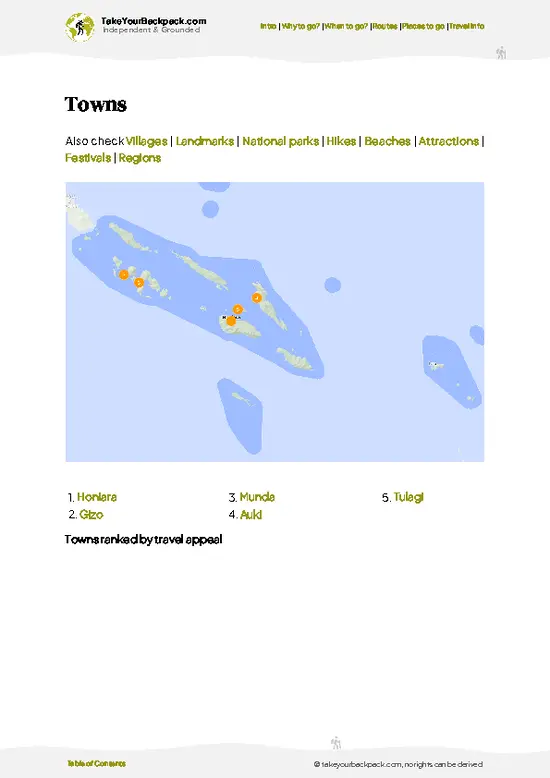
Munda, on New Georgia Island in the Western Province, is the place to sleep, because the shrine is reached by a short boat trip across the lagoon from there.
The Munda area has the widest spread of budget options in the region: simple guesthouses, family-run homestays and a few dive-oriented lodges strung along the waterfront. It is also the most social corner of the province, since divers, WWII relic hunters and Peace Corps-style volunteers all pass through, so you will find people to split a boat fare with. That matters, because chartering a boat alone is the biggest expense of the trip.
The town … read more 👉
Munda, on New Georgia Island in the Western Province, is the place to sleep, because the shrine is reached by a short boat trip across the lagoon from there.
The Munda area has the widest spread of budget options in the region: simple guesthouses, family-run homestays and a few dive-oriented lodges strung along the waterfront. It is also the most social corner of the province, since divers, WWII relic hunters and Peace Corps-style volunteers all pass through, so you will find people to split a boat fare with. That matters, because chartering a boat alone is the biggest expense of the trip.
The town has a market, a few small stores, an ATM, and the airstrip with flights from Honiara. Walking around after dark feels relaxed, but take a torch because streetlights are sparse.
For a quieter option, look at village homestays on nearby lagoon islands. You eat with a family, pay a small fee and often find the boat owner right there. Ask the host to arrange the shrine visit and the custom permission, which is essential since the site is on tribal land. Sleeping outside Munda means fewer shops and patchy electricity, so bring cash and snacks.
Gizo, a longer trip away, has more hostels and cafes but adds hours to your day, so it suits a separate stay rather than a base for the shrine.

👛 Costs (as of 15 October 2026)Money, prices, and spending tips

A day at Skull Island Shrine runs about US$106 to 192 for a backpacker, and nearly all of that goes on getting there and paying the custodians. The shrine sits on Roviana Lagoon near Munda in the Western Province, and prices are paid in Solomon dollars or cash.
CategoryBudget RangeLocal Reality
Visitor feeUS$6 to 12Paid in cash to the local custodians when you land. The fee supports upkeep of the skull houses and is set by the local community, so amounts vary.
Boat charter from MundaUS$45 to 80A motorized canoe or small boat is the usual way out. The price is for the whole boat, so splitting it with other travelers cuts your share sharply.
Local guideUS$10 to 20Often arranged with the boat driver or your guesthouse. A guide explains the skull houses and which areas are tabu.
Accommodation (high
… read more 👉
A day at Skull Island Shrine runs about US$106 to 192 for a backpacker, and nearly all of that goes on getting there and paying the custodians. The shrine sits on Roviana Lagoon near Munda in the Western Province, and prices are paid in Solomon dollars or cash.
CategoryBudget RangeLocal Reality
Visitor feeUS$6 to 12Paid in cash to the local custodians when you land. The fee supports upkeep of the skull houses and is set by the local community, so amounts vary.
Boat charter from MundaUS$45 to 80A motorized canoe or small boat is the usual way out. The price is for the whole boat, so splitting it with other travelers cuts your share sharply.
Local guideUS$10 to 20Often arranged with the boat driver or your guesthouse. A guide explains the skull houses and which areas are tabu.
Accommodation (high season)US$25 to 45Basic guesthouse or homestay rooms in Munda, usually with a fan and shared bathroom. The low season is about US$20 to 35.
MealsUS$12 to 20Rice, fish, taro and cassava at guesthouses or small Munda shops. Restaurant meals cost more.
Local transportUS$5 to 10Shared vans and short taxi rides around Munda. Airport transfers are extra.
Water and snacksUS$3 to 5Bottled water and store snacks. Carry enough for the boat trip, as there are no shops on the island.
Total Daily BudgetUS$106 to 192Roughly US$115 to 160 for most travelers when the boat is shared, using the high-season accommodation rate.
⚠️ Prices can change and everyone travels differently, so take this as a rough guide. Hope it helps you plan your adventure!

FAQTraveler FAQ

Plan on half a day. The boat crossing from Munda takes roughly 30 to 60 minutes each way depending on the sea, and the shrine itself needs only 30 to 45 minutes. Many travelers pair it with other lagoon stops such as WWII sites, which stretches the outing to a full day.
It depends on your interest, since the fees are small, usually US$6 to 15 paid to the landowners, and the real cost is the boat, around US$20 to 40 each when shared. You see weathered skull offerings from the head-hunting era, in a setting with a strong sense of custom. If you care about history and Melanesian culture, yes. If you want a polished attraction, skip it.
Fly from Honiara to Munda, which takes about an hour on Solomon Airlines, then hire a boat from the Munda waterfront. Your guesthouse can arrange the boatman and the permission for the site, which is on customary land. The lagoon crossing takes roughly 30 to 60 minutes, and you should leave in the morning for calmer water.
⚠️ Things can change over time, so always validate details locally before you go.

Other Solomon Islander attractions near Skull Island Shrine

Explore more nearby:

  • Kennedy Island—PT-109 survivors, palm-ringed islet, Blackett Strait, Kolombangara cone| 37 km away
  • Vilu War Museum—Open-air relics, anti-aircraft guns, aircraft wreckage, village guides| 309 km away
  • Bonegi Wrecks—Shore-entry wrecks, black volcanic beach, rusted hull ribs, Kinugawa Maru| 319 km away

💡 Not sure where to go next?
Create a personalized itinerary for Solomon Islands including Skull Island Shrine and the places that fit your trip.

Generate my itinerary

👉 Discover all attractions

Or checkout all Solomon Islands has to offer (think cities, towns, villages, national parks, hikes, beaches, festivals)
Country photo of Solomon Islands

We 💚 feedbackParting advice and final tips

Pair Skull Island with Nusa Roviana’s stone ruins and a lagoon snorkel on the same morning, then spend the afternoon among Munda’s war relics. That sequence shows you the full arc, from chiefly power to colonial conflict. Bring small bills for the custom fee, and keep your camera down until your guide says it is fine.

✍️ Help improve this page!
The information on this page is based on in-depth research, insights shared by experienced travelers, and feedback from the local travel community in Solomon Islands. While every effort is made to keep the information accurate and current, conditions can change — so if you spot anything incorrect or outdated, please get in touch.


🙋‍♂️ Give feedback

👋 Meet the founderWho’s Behind Take Your Backpack?

Johan, backpacker and founder of TakeYourBackpackHi, I’m Johan (Netherlands 🇳🇱), the creator of TakeYourBackpack. Over the past 3 decades, I’ve backpacked through 90+ countries across six continents, gaining extensive experience with independent travel, long-term trips, and overland routes.

This site is built on a combination of firsthand travel experience and carefully curated insights from other backpackers. Many guides are based on places I’ve personally visited, while others bring together tips, observations, and practical advice shared by trusted travelers I’ve met along the way.

The goal is to provide realistic, experience-driven guidance — not generic itineraries — so you can explore destinations with better context, clearer expectations, and more confidence.