×

Solomon Islands🇸🇧 | regionsSavo IslandBlack sand, steaming crater, hot springs, megapode nests | things to do and best time to go

Explore Vonavona LagoonExplore Simbo Island

Backpacking in Savo Island
👍 Recommendedregion ranked #5
By Johan Kruseman 🇳🇱 | Updated October 15, 2026

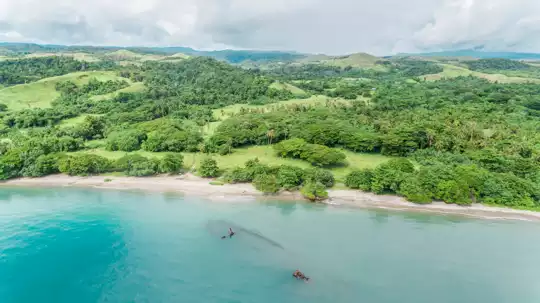
Warm black sand shifts under your sandals, and a few meters inland the ground steams and smells faintly of sulfur. Savo Island beach sits on a small volcanic island in Central Province, Solomon Islands, northwest of Honiara across Iron Bottom Sound. Expect almost no crowds, dark sand framed by coconut palms, village life going on around you, and water that is calm on the sheltered side. Sand is gritty and dark, so it heats up fast at midday. Facilities are minimal, accommodation is basic and cheap, and meals mostly mean what villagers cook for you. Snorkeling exists but visibility varies. Unlike the white-sand, resort-leaning beaches on Honiara's doorstep, Savo is a working volcano island where you walk to the hot springs and the megapode nesting grounds, not a place for lounging.

Discover everything you want to know in the 📖 Solomon Islands Travel Guide.


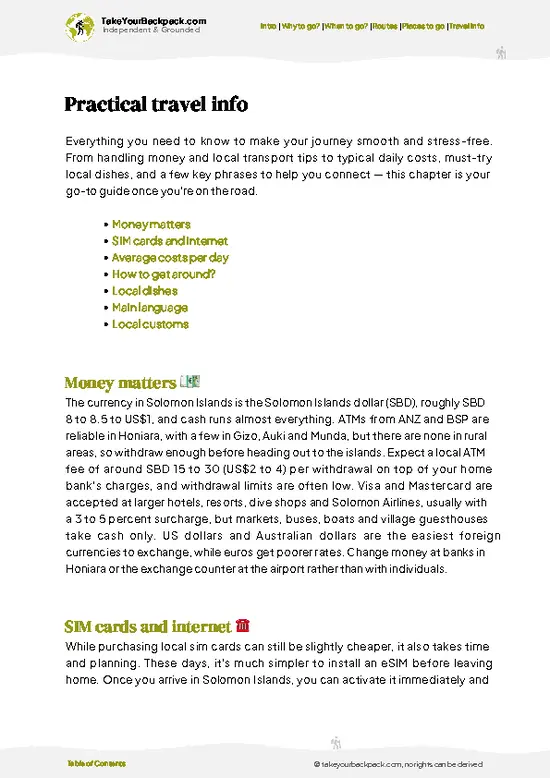
example page 0 from our offline Travel Guide for Solomon Islands
example page 1 from our offline Travel Guide for Solomon Islands
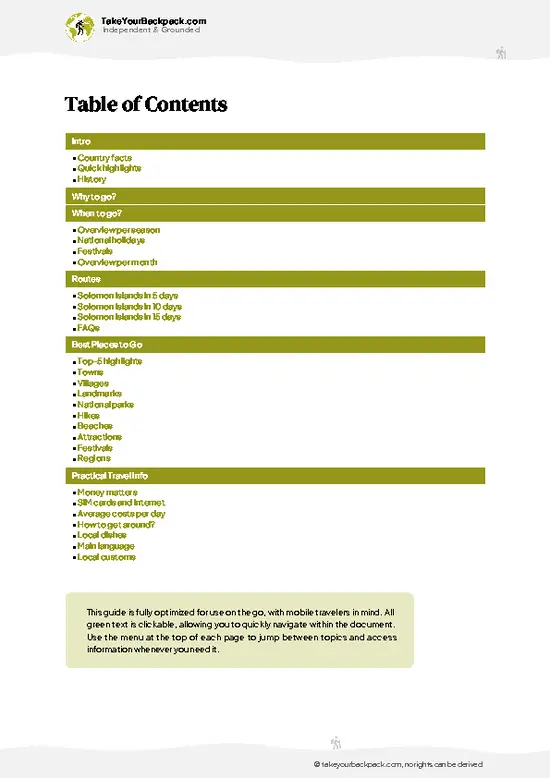
example page 2 from our offline Travel Guide for Solomon Islands
example page 3 from our offline Travel Guide for Solomon Islands
example page 4 from our offline Travel Guide for Solomon Islands
example page 5 from our offline Travel Guide for Solomon Islands
example page 6 from our offline Travel Guide for Solomon Islands
example page 7 from our offline Travel Guide for Solomon Islands
Loading the map 🌍
CLICK TO FILTER
towns
villages
landmarks
national parks
hikes
beaches
attractions
festivals
regions
SHOW COUNTRY’S BESTSHOW ALL

✨ Why go?
Ranked #5 region in Solomon Islands
What makes this region worth visiting

People come to Savo because the beach is only one part of an island that is itself a volcano. The black sand is the entry point, but the draw is the geothermal fields a short walk inland, where hot water bubbles from the ground and villagers have long used the heat for cooking. Then there are the megapode birds, which lay eggs in warm volcanic soil and leave the ground to incubate them. Watching locals dig out eggs and talk about the practice is a rare window on how people here live with the mountain.

The second reason is the stay itself. With village guesthouses run by families, you eat what is caught or grown that day, and you pay the community directly. That keeps things affordable and gives your visit a clear purpose. If you want a place where nobody is selling you a tour package, this is it.

💡 HighlightsWhat this place is best known for

  1. Savo Volcano crater walk: The island is one big dormant volcano, and a guided hike climbs through coconut groves and thick forest to the steaming crater rim. Steam leaks from vents, the ground smells faintly of sulfur, and on clear days you can see Guadalcanal and the Florida Islands across the water. Go early, before the heat builds, and hire a local guide from the village you land in.
  2. Megapode nesting grounds: Savo is famous for the megapode, a ground-dwelling bird that buries its eggs in the warm black sand and soil instead of sitting on them. Walking the nesting areas behind the shore, you see the scraped hollows and mounds where the birds dig. Locals know the spots and will show you how the nests are harvested and protected.
  3. Hot springs and thermal pools: Near the shore, hot water seeps
… read more 👉
  1. Savo Volcano crater walk: The island is one big dormant volcano, and a guided hike climbs through coconut groves and thick forest to the steaming crater rim. Steam leaks from vents, the ground smells faintly of sulfur, and on clear days you can see Guadalcanal and the Florida Islands across the water. Go early, before the heat builds, and hire a local guide from the village you land in.
  2. Megapode nesting grounds: Savo is famous for the megapode, a ground-dwelling bird that buries its eggs in the warm black sand and soil instead of sitting on them. Walking the nesting areas behind the shore, you see the scraped hollows and mounds where the birds dig. Locals know the spots and will show you how the nests are harvested and protected.
  3. Hot springs and thermal pools: Near the shore, hot water seeps out of the ground and into pools, and some bubble right at the edge of the sea. Dip a hand in carefully, because the temperature varies from pleasant to scalding within a few steps. Stopping here after the crater walk is the easiest way to soothe tired legs.
  4. Black sand shoreline: The beach is dark volcanic sand, warm underfoot by midday and speckled with pumice. Swimming is calm and easy off the village shores, and the walk along the coast passes outrigger canoes, fishing nets and kids splashing in the shallows. Bring sandals, since the sand can burn bare feet.
  5. Village life and snorkeling: Savo’s coastal villages are the real draw once you land. You can walk between hamlets, chat with families, and snorkel over the nearby reef, where coral drops off close to shore. Ask your host to point out the best entry point, as the currents are not the same everywhere.
If time is short, skip the full village-to-village shoreline stroll and put your energy into the crater walk.
Spotted a mistake or missing something? Contact us.

Things to do near Savo Island

Ratings based on Tripadvisor reviews. When you book through this link, you support our work at no extra cost to you.

⌛️ 5 daysWhat you can realistically do in a week

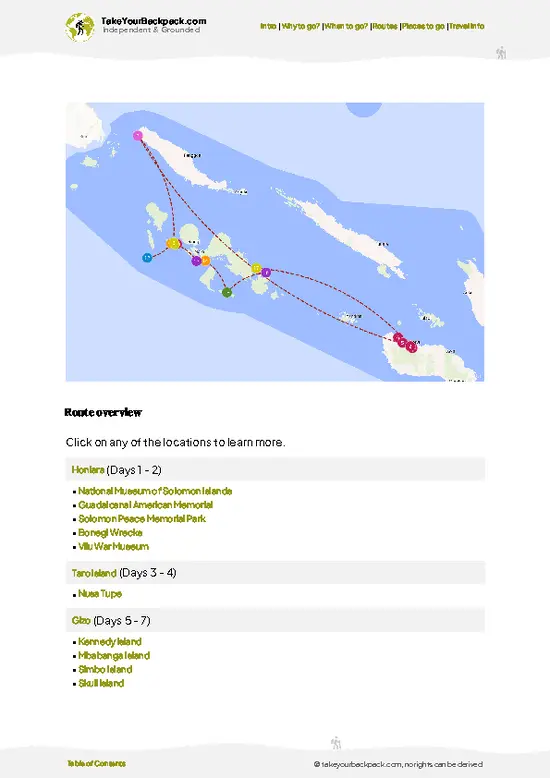
Day 1: Savo Island Landing: A slow, sweaty arrival day, the kind where nothing starts until the boat does. Boats from Honiara, the capital, land on the island’s shore, and the timing of that crossing sets the rhythm for everything after. Drop your pack at a village guesthouse, then walk the coastal track and let the heat pass in the shade. The volcano above you is dormant, and the whole island is basically one cone, so there is no getting lost for long.

Day 2: Megapode Fields: Day two is for the island’s oddest residents. Megapode birds bury their eggs in warm volcanic sand, and locals harvest them in a managed way. Go with a village guide to the nesting grounds, where steaming ground and hot springs sit close together. Everything is on foot because the island has no real road network, so … read more 👉
Day 1: Savo Island Landing: A slow, sweaty arrival day, the kind where nothing starts until the boat does. Boats from Honiara, the capital, land on the island’s shore, and the timing of that crossing sets the rhythm for everything after. Drop your pack at a village guesthouse, then walk the coastal track and let the heat pass in the shade. The volcano above you is dormant, and the whole island is basically one cone, so there is no getting lost for long.

Day 2: Megapode Fields: Day two is for the island’s oddest residents. Megapode birds bury their eggs in warm volcanic sand, and locals harvest them in a managed way. Go with a village guide to the nesting grounds, where steaming ground and hot springs sit close together. Everything is on foot because the island has no real road network, so you stay near your bed and avoid wasted hours waiting on transport.

Day 3: Volcano Crater: Climb the volcano early with a local guide, since the trail is steep and slick. The crater rim gives you views across the sound to the neighboring islands. Come down by midday and swim off the shore to cool off.

Day 4: Detour to the Reef: For a detour that adds a lot without breaking the schedule, ask your host to paddle you out to the nearby reef by canoe. Snorkeling over the coral takes half a day and returns you to the same village, so the plan stays intact. The sound also holds World War II wrecks, which divers come for, though you need a dive operator for those.

Day 5: Back to the Mainland: Boat departures dictate the final day, so confirm the crossing the night before and be on the beach early. Spend the last hours on the village visit you skipped.

If you can only keep one day, keep Day 2. Standing on steaming sand where birds lay eggs is something you will not find elsewhere in the country.

🌤️ When to go?Weather, crowds, and seasonal trade-offs

  • Dry Season (May to October): The most reliable window for crossing from Guadalcanal and for hiking the volcano. Days run about 24 to 31°C (75 to 88°F), the southeast trades keep the sea choppy at times, and rain falls mostly in short bursts.
  • Wet Season (November to April): Humid, heavy showers, and 26 to 32°C (79 to 90°F). Trails up the crater turn to mud, and cyclones can pass through between January and March, which cancels boats.
  • Daylight: Near the equator, sunrise and sunset shift by less than an hour all year, with roughly 12 hours of light. Plan hikes and crossings to finish by mid-afternoon.
  • Crowds and Prices: Savo sees few visitors in any month. Guesthouse and boat prices barely move with the season, though August and the December holidays can make seats on boats from Honiara tighter.
… read more 👉
  • Dry Season (May to October): The most reliable window for crossing from Guadalcanal and for hiking the volcano. Days run about 24 to 31°C (75 to 88°F), the southeast trades keep the sea choppy at times, and rain falls mostly in short bursts.
  • Wet Season (November to April): Humid, heavy showers, and 26 to 32°C (79 to 90°F). Trails up the crater turn to mud, and cyclones can pass through between January and March, which cancels boats.
  • Daylight: Near the equator, sunrise and sunset shift by less than an hour all year, with roughly 12 hours of light. Plan hikes and crossings to finish by mid-afternoon.
  • Crowds and Prices: Savo sees few visitors in any month. Guesthouse and boat prices barely move with the season, though August and the December holidays can make seats on boats from Honiara tighter.
  • Activities: Calm, clear water for snorkeling and the megapode nesting grounds are best when the sea is flat, typically April to June and October.
Book your return crossing for the morning, since the afternoon sea is rougher.


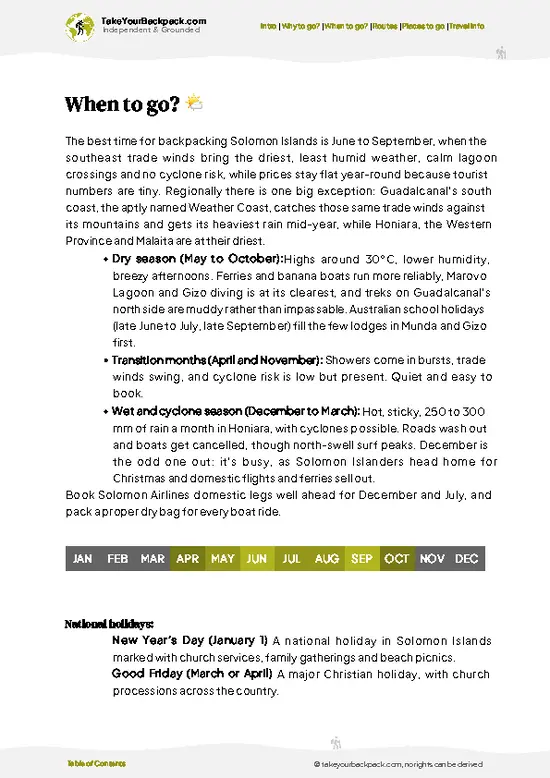
source: climatestotravel.comJANJanuary: fair for travelingFEBFebruary: fair for travelingMARMarch: fair for travelingAPRApril: highly recommended for travelingMAYMay: excellent for travelingJUNJune: excellent for travelingJULJuly: excellent for travelingAUGAugust: excellent for travelingSEPSeptember: excellent for travelingOCTOctober: highly recommended for travelingNOVNovember: fair for travelingDECDecember: fair for traveling
when-to-go

✈️ The backpacker research shortcutSolomon Islands Travel Guide

An offline-friendly backpacking guide with optimized travel routes, ranked highlights, transport advice, and the best areas to stay.
example page 0 from our offline Travel Guide for Solomon Islands
example page 1 from our offline Travel Guide for Solomon Islands
example page 2 from our offline Travel Guide for Solomon Islands
example page 3 from our offline Travel Guide for Solomon Islands
example page 4 from our offline Travel Guide for Solomon Islands
example page 5 from our offline Travel Guide for Solomon Islands
example page 6 from our offline Travel Guide for Solomon Islands
example page 7 from our offline Travel Guide for Solomon Islands
The digital guide (145 pages) contains:
✅ 33 highlights, ranked by travel appeal
✅ Optimized 5, 10 & 15-day travel routes
✅ Cities, national parks, landmarks, beaches
✅ How to get around
✅ Offline-friendly for travel without Wi-Fi
👉 Click to see all 30+ guide features

📅 Plan smarter in minutes, not weeks
✅ Month by month travel advice
✅ Festivals & national holidays
✅ Budget expectations

🗺️ Go to the right places, skip the overrated ones
✅ Honest pros & cons of destinations
✅ Top hikes, parks & viewpoints
✅ Lesser-known places most travelers miss
✅ Clear “worth it vs skip it” guidance

🛏️ Travel smoothly without rookie mistakes
✅ Best areas to stay
✅ Transport systems explained simply
✅ Common scams & safety advice
✅ SIM cards, money & practical tips

🌍 Understand the country, not just visit it
✅ Culture & traditions
✅ 52 Essential phrases & customs
✅ Festivals worth planning around
✅ Traveler-friendly historical context
✅ Insights that make places more meaningful

📱 Built for real travel conditions
✅ Fully downloadable PDF
✅ Works completely offline
✅ Optimized for phone use
✅ Useful in remote areas & buses
✅ Everything in one place
Stop searching, start planning
Get instant access to your full guide. 30‑day money-back guarantee.
+ Add another guide for just

By proceeding you agree to our terms.
Sent to your inbox immediately after payment • 100% Secure Checkout
Best Backpacking Travel Advisor 2025 tourism awardBest Backpacking
Travel Advisor
2025
What others say about Take Your Backpack Guides:
⭐⭐⭐⭐⭐
Fantastic, amazing amount of information!
⭐⭐⭐⭐⭐
My goodness this is amazing, it's what I've been looking for hats off too you!
⭐⭐⭐⭐⭐
I think this is absolutely BRILLIANT
⭐⭐⭐⭐
Very complete and informative. It's still missing places, but I gotta to commend you
⭐⭐⭐⭐⭐
This is truly amazing, thank you, can't wait to explore it with my kids!
⭐⭐⭐⭐⭐
Awesome resource, thank you!
⭐⭐⭐⭐⭐
This is amazing! Can't wait to explore the ones I haven't seen
⭐⭐⭐⭐
I love this! Well done, great idea.
⭐⭐⭐⭐⭐
Thanks for taking the time to make this gem!
⭐⭐⭐⭐⭐
This might be the best website I've ever seen.
⭐⭐⭐⭐⭐
Congratulations, and thank you so much for your work; it's incredibly valuable.
⭐⭐⭐⭐
In all seriousness I think you did a great job pointing out the important spots
⭐⭐⭐⭐⭐
10/10 very good
⭐⭐⭐⭐⭐
As someone who's only just starting to visit regularly this is awesome, thank you.
⭐⭐⭐⭐
Thank you very much! I'm going to visit my dad, it's going to be very useful!
⭐⭐⭐⭐⭐
This is really cool! We'll be travelling for the first time and this definitely come in handy.
⭐⭐⭐⭐⭐
You are now our minister of culture, congratulations 👨‍💼
⭐⭐⭐⭐⭐
Just wanted to tell you that this is a pearl! Going to follow your recommendations.
⭐⭐⭐⭐⭐
This is so cool. I'll definitely be using the resource for my travels soon.
⭐⭐⭐⭐⭐
This is very impressive! Good work.
⭐⭐⭐⭐⭐
This is an amazing and informative site. Very well done!

🛏️ Where to stay?Best areas and accommodation options

The best area to stay is the coastal strip along Savo’s western and southern shore, where village guesthouses sit within a short walk of the black volcanic sand. Savo has no hostels or resorts, so you stay in simple family-run lodgings, usually leaf-house bungalows or basic rooms with shared bathrooms. Expect to pay roughly SBD 200 to 400 (US$25 to 50) per night, often with meals included, and bring cash because there are no ATMs on the island.
Staying near the villages on the southwest side, close to where boats land from Guadalcanal, is the easiest option. Arrival is simple, you meet locals quickly, … read more 👉
The best area to stay is the coastal strip along Savo’s western and southern shore, where village guesthouses sit within a short walk of the black volcanic sand. Savo has no hostels or resorts, so you stay in simple family-run lodgings, usually leaf-house bungalows or basic rooms with shared bathrooms. Expect to pay roughly SBD 200 to 400 (US$25 to 50) per night, often with meals included, and bring cash because there are no ATMs on the island.
Staying near the villages on the southwest side, close to where boats land from Guadalcanal, is the easiest option. Arrival is simple, you meet locals quickly, and you are close to the beach for snorkeling. This is the most social choice, since hosts often arrange guides for the crater hike and the hot springs and megapode nesting grounds.
The northern and eastern sides are quieter and more remote. They suit travelers who want solitude, but getting around needs a guide or a prearranged boat. Send word to your host before you travel, since there is little mobile coverage and hosts need notice to prepare food. Bring a flashlight, because power is limited and often solar.

🚌 Getting aroundGetting around like a local

Turning up at the Honiara waterfront or Point Cruz and expecting a fixed Savo ferry timetable is the error that burns the most hours and cash. Boats to Savo leave when they fill, mostly in the morning, and the crossing is open water, so a missed departure often means a night in Honiara or a pricey private charter. Once you land, everything is on foot or by village boat, and that part is easy and unhurried.

  • Public boat from Honiara (via Tulagi-side or Visale area departures): Plan on roughly US$10 to 20 one way and about 1.5 to 3 hours depending on the boat and sea. Open fiberglass boats with outboards are wet, loud and smell of petrol and fish, and the spray is real, so wrap your pack in a dry bag. This is the cheapest way over and gives a backpacker the most for the money, as long as you
… read more 👉
Turning up at the Honiara waterfront or Point Cruz and expecting a fixed Savo ferry timetable is the error that burns the most hours and cash. Boats to Savo leave when they fill, mostly in the morning, and the crossing is open water, so a missed departure often means a night in Honiara or a pricey private charter. Once you land, everything is on foot or by village boat, and that part is easy and unhurried.

  • Public boat from Honiara (via Tulagi-side or Visale area departures): Plan on roughly US$10 to 20 one way and about 1.5 to 3 hours depending on the boat and sea. Open fiberglass boats with outboards are wet, loud and smell of petrol and fish, and the spray is real, so wrap your pack in a dry bag. This is the cheapest way over and gives a backpacker the most for the money, as long as you accept waiting for it to fill.
  • Chartered banana boat: Expect US$100 to 250 for the whole boat, split among a group. It costs far more but leaves on your schedule and often drops you at the exact village beach. Worth it only if you are four or more or have a flight to catch.
  • Walking the coastal track: The island is small, about 5 kilometers (3 miles) across, and a ring track runs through coconut groves, past black volcanic sand and warm ground near the vents. It costs nothing, takes 3 to 5 hours for a loop at an easy pace, and gives the best return for time. Midday heat is thick, so go early and carry water.
  • Village dugouts and small boats: Locals will paddle or motor you along the coast or to nearby spots for about US$5 to 20 depending on distance and fuel. Quiet, slow and tactile, with the hiss of water under the hull, it is better than walking when the track is muddy after rain.

Arrange your return boat with your host the day you arrive, since they know who is crossing and when. Pay fuel costs in cash in local currency and carry small notes.

🍲 FoodLocal Cuisine & Drinks

Eat what the island grows and the lagoon gives. Fresh fish comes off the beach grilled over coals, smoky and salty, often beside cassava, sweet potato and taro with a dense, starchy chew. Many meals are cooked in a mumu, an earth oven where hot stones steam parcels of greens, root crops and fish in leaves, giving everything a deep, earthy sweetness. Coconut cream shows up in stews and puddings, and the green kakake (slippery cabbage) soaks it up nicely.

Savo is also known for its megapode eggs, which are laid in warm volcanic sand and taken by village families. Rich and creamy, they taste like a bigger, denser egg.

For a backpacker, eating means village guesthouse meals, small roadside stalls selling fried dough and bananas, and the occasional shop with tinned fish, rice and noodles. Bring … read more 👉
Eat what the island grows and the lagoon gives. Fresh fish comes off the beach grilled over coals, smoky and salty, often beside cassava, sweet potato and taro with a dense, starchy chew. Many meals are cooked in a mumu, an earth oven where hot stones steam parcels of greens, root crops and fish in leaves, giving everything a deep, earthy sweetness. Coconut cream shows up in stews and puddings, and the green kakake (slippery cabbage) soaks it up nicely.

Savo is also known for its megapode eggs, which are laid in warm volcanic sand and taken by village families. Rich and creamy, they taste like a bigger, denser egg.

For a backpacker, eating means village guesthouse meals, small roadside stalls selling fried dough and bananas, and the occasional shop with tinned fish, rice and noodles. Bring snacks from Honiara. Drink fresh coconut water cracked open at your feet, and tea or instant coffee in the morning. Meals are shared and unhurried, so wait until your host invites you to start, and take modest portions.

🛡️ SafetyStaying Safe: What Travelers Should Know

Savo’s beaches are generally safe, with calm, shallow water on the sheltered sides and little surf. Currents are mild close to shore, though the channel between Savo and Guadalcanal can be rough, and swimming far out is unwise. Reef edges drop off quickly in places, so wear reef shoes to protect against coral cuts and sea urchins. Saltwater crocodiles live in Solomon waters, so ask your host which stretches locals use for swimming and avoid river mouths, especially at dusk. Sun is intense from mid-morning, so cover up and swim early or late. Cuts can infect fast in the humidity, so clean them promptly. Theft is rare, but keep valuables out of sight, and always ask permission before swimming or camping, since beaches belong to villages. Respect custom areas and dress modestly away from the … read more 👉
Savo’s beaches are generally safe, with calm, shallow water on the sheltered sides and little surf. Currents are mild close to shore, though the channel between Savo and Guadalcanal can be rough, and swimming far out is unwise. Reef edges drop off quickly in places, so wear reef shoes to protect against coral cuts and sea urchins. Saltwater crocodiles live in Solomon waters, so ask your host which stretches locals use for swimming and avoid river mouths, especially at dusk. Sun is intense from mid-morning, so cover up and swim early or late. Cuts can infect fast in the humidity, so clean them promptly. Theft is rare, but keep valuables out of sight, and always ask permission before swimming or camping, since beaches belong to villages. Respect custom areas and dress modestly away from the water. Hot sand near the volcanic vents can burn bare feet, so keep sandals on.

FAQFrequently asked questions about Savo Island

Take a boat from Honiara on Guadalcanal, which is the only practical way to reach Savo. Crossings by small motorized canoe or the occasional passenger boat take about 1.5 to 2.5 hours, depending on the sea and vessel, and cost roughly SBD 150 to 300 (US$18 to 36) each way. Boats leave from the Honiara waterfront and Point Cruz area, usually in the morning, so confirm your guesthouse and return transport in advance.
Swimming and snorkeling are the main draws, while surfing is not an option because there is no real surf. The water is calm and clear on the sheltered side, with reef patches and tropical fish a short swim from shore. Bring your own mask and snorkel, since rentals are rare on the island, and check conditions with your host before entering the water.
Yes, there is no entrance fee, though the beaches belong to local villages and a small courtesy payment is customary, often SBD 20 to 50 (US$2.50 to 6). Hiking the volcano with a local guide costs extra, typically around SBD 200 to 400 (US$25 to 50) per group. Ask your host to arrange permission before you swim or camp.
⚠️ Things can change over time, so always validate details locally before you go.

Other Solomon Islander regions near Savo Island

Explore more nearby:

  • Nggela Islands—Tulagi wartime ruins, Mboli Passage, village stays, wreck dives| 47 km away
  • Malaita Island—Artificial lagoon islands, shell money, Kwaio highlands, Auki market| 127 km away
  • Simbo Island—Patukio crater, megapode sands, hot springs, tapu skull shrines| 373 km away

💡 Not sure where to go next?
Create a personalized itinerary for Solomon Islands including Savo Island and the places that fit your trip.

Generate my itinerary

👉 Discover all regions

Or checkout all Solomon Islands has to offer (think cities, towns, villages, national parks, hikes, beaches, festivals)
Country photo of Solomon Islands

We 💚 feedbackSumming up the experience

Many travelers treat Savo as a quick beach stop and arrive without arranging anything with the village. Don’t do that. Sort out your guesthouse and a local guide for the hot springs and megapode grounds before you go, bring cash in small bills and your own snacks, and plan to stay overnight so you aren’t rushing the walk.

✍️ Help improve this page!
The information on this page is based on in-depth research, insights shared by experienced travelers, and feedback from the local travel community in Solomon Islands. While every effort is made to keep the information accurate and current, conditions can change — so if you spot anything incorrect or outdated, please get in touch.


🙋‍♂️ Give feedback

👋 Meet the founderWho’s Behind Take Your Backpack?

Johan, backpacker and founder of TakeYourBackpackHi, I’m Johan (Netherlands 🇳🇱), the creator of TakeYourBackpack. Over the past 3 decades, I’ve backpacked through 90+ countries across six continents, gaining extensive experience with independent travel, long-term trips, and overland routes.

This site is built on a combination of firsthand travel experience and carefully curated insights from other backpackers. Many guides are based on places I’ve personally visited, while others bring together tips, observations, and practical advice shared by trusted travelers I’ve met along the way.

The goal is to provide realistic, experience-driven guidance — not generic itineraries — so you can explore destinations with better context, clearer expectations, and more confidence.