×

Solomon Islands🇸🇧 | regionsMalaita IslandAuki markets, artificial islands, traditional panpipe music, lagoon villages | things to do and best time to go

Explore Ngella IslandsExplore Auki

Backpacking in Malaita Island
👍 Recommendedregion ranked #2
By Johan Kruseman 🇳🇱 | Updated September 23, 2026

Everyone talks about Malaita for the shark-calling stories and kastom legends, but if you actually go, what matters more is how raw your day-to-day will feel: slow boats, muddy roads, and some of the most direct, no-filter village time in the Solomons. Malaita sits east of Guadalcanal in the Solomon Islands chain, a long, rugged island that feels a world away from Honiara’s fumes and chaos. For backpackers, it’s high on authenticity, low on convenience. You get wild green ridges, reef-fringed coast, proper wantok hospitality, and almost no package-tour crowd, but you pay in time, patience, and a bit of comfort. Transport between towns is mostly outboard canoes and rough trucks, so moving around is an adventure, not a commute. Compared with more visited spots like Western Province, Malaita is cheaper, less polished, more conservative, and way more “guest in someone’s home” than “customer in a resort.”

Discover everything you want to know in the 📖 Solomon Islands Travel Guide.
Loading the map 🌍
CLICK TO FILTER
towns
villages
landmarks
national parks
hikes
beaches
attractions
festivals
regions
SHOW COUNTRY’S BESTSHOW ALL

✨ Why go?
Ranked #2 region in Solomon Islands
What makes it a must-see region

Malaita Island in the Solomon Islands is a backpacker’s playground. Here, you can dive into a variety of landscapes without the hassle of constant relocation. Picture lush rainforests, rugged coastlines, and serene lagoons all within a short distance. This means you can spend more time soaking in the beauty and less time packing and unpacking.

Transport is surprisingly flexible. Local boats and buses make it easy to hop between villages and attractions. You can explore the island at your own pace, which is perfect for those who want to mix nature and culture. Spend a day hiking to a waterfall, then the next learning about traditional crafts from local artisans.

The beauty of slow travel here is that it allows you to connect with the community. You’re not just a visitor; you’re part of the … read more 👉
Malaita Island in the Solomon Islands is a backpacker’s playground. Here, you can dive into a variety of landscapes without the hassle of constant relocation. Picture lush rainforests, rugged coastlines, and serene lagoons all within a short distance. This means you can spend more time soaking in the beauty and less time packing and unpacking.

Transport is surprisingly flexible. Local boats and buses make it easy to hop between villages and attractions. You can explore the island at your own pace, which is perfect for those who want to mix nature and culture. Spend a day hiking to a waterfall, then the next learning about traditional crafts from local artisans.

The beauty of slow travel here is that it allows you to connect with the community. You’re not just a visitor; you’re part of the rhythm of life on the island. This immersive experience is what makes Malaita truly special. You’ll leave with stories and friendships that go beyond the typical tourist experience. So, if you’re looking for high-value experiences, Malaita is where it’s at.
Want to include Malaita Island in your Solomon Islands route?
Create a personalized Solomon Islands itinerary that includes Malaita Island and the places that fit your trip — based on your travel style, budget, and available time. Get your route in seconds.

Generate my trip

💡 HighlightsEssential experiences to have while visiting Malaita Island

  1. Auki market & foreshore — The island’s main hub where you’ll see village produce, fresh fish, pandanus weaving and shell-money being traded. It’s the easiest place to feel Malaitan daily life, pick up local snacks, hire boats or find a homestay host who knows the island’s trails.
  2. Lau Lagoon stilt-village network — A maze of raised houses, narrow canoe lanes and saltwater gardens on Malaita’s northeast coast. The stilt villages and floating gardens are visually unique: take a canoe ride, stay overnight in a village house and watch craftsmen make shell money and fish traps from up close.
  3. Langa-Langa Lagoon shell-money villages — One of the best places to see traditional shell-money production and its social role. Watching the delicate shell-cutting, stringing and the way it’s used in bridewealth
… read more 👉
  1. Auki market & foreshore — The island’s main hub where you’ll see village produce, fresh fish, pandanus weaving and shell-money being traded. It’s the easiest place to feel Malaitan daily life, pick up local snacks, hire boats or find a homestay host who knows the island’s trails.
  2. Lau Lagoon stilt-village network — A maze of raised houses, narrow canoe lanes and saltwater gardens on Malaita’s northeast coast. The stilt villages and floating gardens are visually unique: take a canoe ride, stay overnight in a village house and watch craftsmen make shell money and fish traps from up close.
  3. Langa-Langa Lagoon shell-money villages — One of the best places to see traditional shell-money production and its social role. Watching the delicate shell-cutting, stringing and the way it’s used in bridewealth and local transactions is something you won’t easily find elsewhere.
  4. Maramasike Passage canoe trip — The winding channel between parts of Malaita offers mangrove tunnels, limestone banks and quiet village landings. It’s a proper slow-travel experience: paddle through tidal creeks, meet families who still use outrigger canoes daily and camp or stay in simple village houses.
  5. Kwaio cultural walks and village ceremonies — Inland Kwaio communities keep strong customary practices, song, and craft. With a local guide and permission you can learn about ancestral sites, traditional law and customary arts — a deep cultural encounter that rewards patience and respect.
  6. Baegu highland trails & village stays — The island’s interior ridges and terraces host Baegu villages with taro gardens, ridge-top viewpoints and trails that connect villages over waterfalls and streams. Hikes here are low-traffic and give a real sense of island agriculture and daily village life.
  7. Fringing reefs and snorkeling off Malaita’s coasts — The coral gardens right off many village beaches are healthy and rarely crowded. Snorkel from a village landing to see reef fish, giant clams and coral bommies; local fishers will happily point out the best spots and sometimes join you for a boat trip.
  8. (Hidden gem) Traditional canoe-building and carving sessions — A lot of tourists miss the handful of village workshops where craftsmen carve outrigger hulls and intricate wooden items. It’s hands-on, practical, and you learn the living traditions behind boat culture — bring a tape and be ready to barter for a small carved keepsake.
  9. (Hidden gem) Night-fishing with Lau-Lagoon fishermen — Join small crews for torch-light fishing, squid jigging or mud-crab trips in the lagoon. It’s cheap, local, and you’ll eat what you catch. This overnight, communal rhythm of work and food is a simple way to connect with everyday life.
  10. (Hidden gem) Mangrove creeks and birding in the inner lagoons — Paddle quiet creeks at dawn to see mangrove specialists and shorebirds, and learn about the lagoon’s ecology from fishers who know every channel. These skinny, peaceful waterways are photogenic and largely undiscovered by guidebook itineraries.
Spotted a mistake or missing something? Contact us.
⌛️ 5 daysWhat you can realistically do in a week

Day 1: Auki
The journey kicks off in Auki, the capital of Malaita. This is your gateway to the island, where you’ll find local markets buzzing with life and the scent of fresh fish wafting through the air. Spend the day acclimating and exploring the waterfront. The transport system here is simple but effective; you’ll rely on buses and boats to navigate the island. Grab a local meal at a roadside stall—trust me, the flavors are worth it.

Day 2: East Coast Villages
Hop on a boat to the east coast. This is where the real charm of Malaita lies. The ride is scenic, with lush greenery lining the shores. You’ll visit villages like Taba’a and Fiu, where you can engage with locals and learn about their customs. The pace is slower here, allowing you to soak in the culture. This is a day to savor, … read more 👉
Day 1: Auki
The journey kicks off in Auki, the capital of Malaita. This is your gateway to the island, where you’ll find local markets buzzing with life and the scent of fresh fish wafting through the air. Spend the day acclimating and exploring the waterfront. The transport system here is simple but effective; you’ll rely on buses and boats to navigate the island. Grab a local meal at a roadside stall—trust me, the flavors are worth it.

Day 2: East Coast Villages
Hop on a boat to the east coast. This is where the real charm of Malaita lies. The ride is scenic, with lush greenery lining the shores. You’ll visit villages like Taba’a and Fiu, where you can engage with locals and learn about their customs. The pace is slower here, allowing you to soak in the culture. This is a day to savor, so don’t rush.

Day 3: Hiking to the Waterfalls
Today, you’ll tackle a hike to the stunning waterfalls near the village of Atoifi. The trek is a bit challenging, but the reward is a refreshing swim in crystal-clear waters. This is where the transport system becomes a bit tricky; you’ll need to arrange for a local guide. It’s worth it, though. The experience feels exclusive, like you’ve stumbled upon a secret paradise.

Day 4: Off-Path Reward - Malaita’s North Coast
Take a detour to the north coast. This area is less frequented by tourists, offering pristine beaches and untouched landscapes. Spend the day lounging and swimming. The locals here are friendly and often invite you to join in their daily activities. This is a chance to connect on a deeper level, away from the usual tourist spots.

Day 5: Return to Auki
Wrap up your trip by heading back to Auki. Reflect on your experiences and maybe pick up some local crafts as souvenirs. This day is about winding down and enjoying the laid-back vibe of the capital.

The must-do day? Day 2 on the East Coast. It encapsulates the essence of Malaita—cultural immersion, stunning scenery, and a pace that allows you to truly appreciate the island’s spirit.
Turn your Malaita Island visit into an Solomon Islands adventure
Build a complete Solomon Islands route with Malaita Island, hidden gems, must-see destinations, and realistic travel times included.

Generate my trip

🌤️ When to go?Seasonal considerations and timing


  • Weather: The dry season from April to October is your best bet. Expect less rain, making trails and village visits way more enjoyable. The wet season (November to March) brings heavy downpours and sticky humidity that can turn your plans upside down.

  • Temperature: Daytime temps hover around 27-31°C (80-88°F) year-round, but the dry season feels more comfortable with lower humidity. Nights cool down to about 22-24°C (72-75°F), perfect for camping without sweating buckets.

  • Daylight Hours: Daylight is pretty consistent, roughly 11-12 hours daily. Plan your hikes early to avoid the midday heat and maximize your daylight for exploring remote spots.

  • Crowds: Malaita Island stays low-key, but the dry season sees a slight uptick in visitors. You’ll still have plenty of quiet moments, especially
… read more 👉

  • Weather: The dry season from April to October is your best bet. Expect less rain, making trails and village visits way more enjoyable. The wet season (November to March) brings heavy downpours and sticky humidity that can turn your plans upside down.

  • Temperature: Daytime temps hover around 27-31°C (80-88°F) year-round, but the dry season feels more comfortable with lower humidity. Nights cool down to about 22-24°C (72-75°F), perfect for camping without sweating buckets.

  • Daylight Hours: Daylight is pretty consistent, roughly 11-12 hours daily. Plan your hikes early to avoid the midday heat and maximize your daylight for exploring remote spots.

  • Crowds: Malaita Island stays low-key, but the dry season sees a slight uptick in visitors. You’ll still have plenty of quiet moments, especially if you avoid weekends and local holidays.

  • Seasonal Activities: Dry months are prime for diving, snorkeling, and cultural festivals. The wet season limits water clarity and outdoor events, so you’ll miss out on those vivid underwater scenes and village celebrations.

  • Price Fluctuations: Expect higher prices during the dry season—flights and accommodation can spike by 20-30%. The wet season offers deals but at the cost of comfort and accessibility.


Pro-tip: Book your trip for May or September—sweet spots where the weather is solid, crowds are thin, and prices haven’t hit their peak yet.


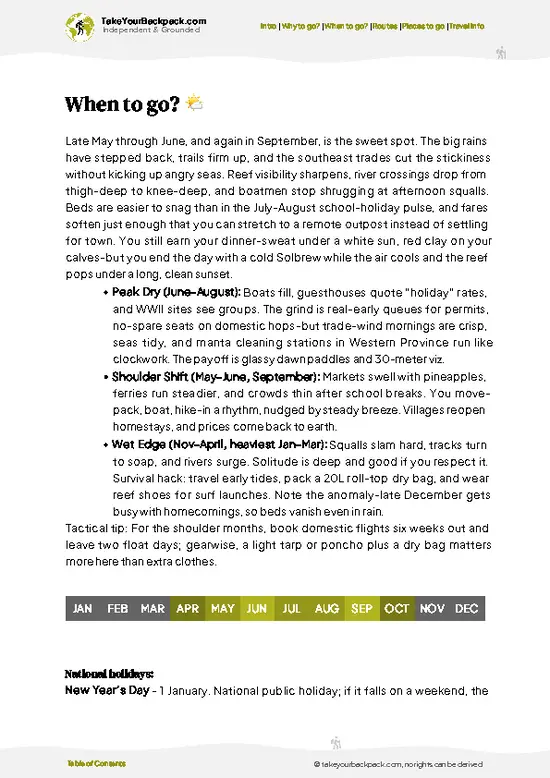
source: climatestotravel.comJANJanuary: fair for travelingFEBFebruary: fair for travelingMARMarch: fair for travelingAPRApril: highly recommended for travelingMAYMay: excellent for travelingJUNJune: highly recommended for travelingJULJuly: highly recommended for travelingAUGAugust: highly recommended for travelingSEPSeptember: excellent for travelingOCTOctober: highly recommended for travelingNOVNovember: fair for travelingDECDecember: fair for traveling
when-to-go

✈️ The backpacker research shortcutSolomon Islands Travel Guide

An offline-friendly backpacking guide with optimized travel routes, ranked highlights, transport advice, and the best areas to stay.
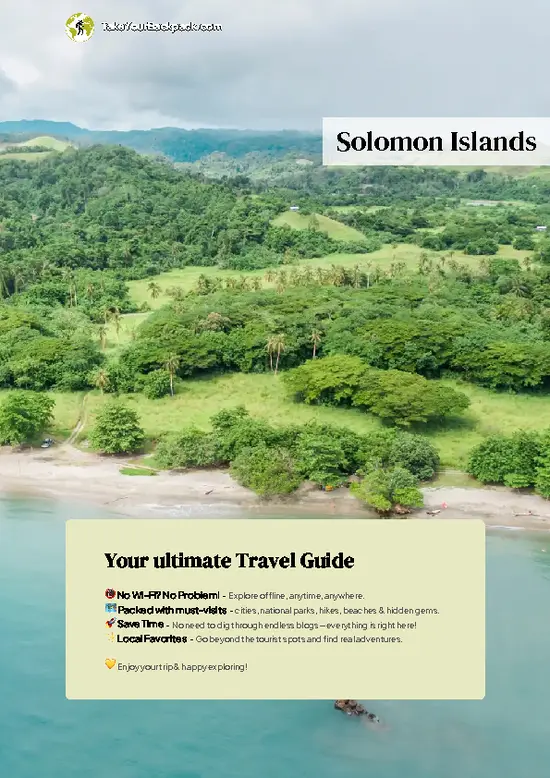
example page 0 from our offline Travel Guide for Solomon Islands
example page 1 from our offline Travel Guide for Solomon Islands
example page 2 from our offline Travel Guide for Solomon Islands
example page 3 from our offline Travel Guide for Solomon Islands
example page 4 from our offline Travel Guide for Solomon Islands
example page 5 from our offline Travel Guide for Solomon Islands
example page 6 from our offline Travel Guide for Solomon Islands
example page 7 from our offline Travel Guide for Solomon Islands
The digital guide (173 pages) contains:
✅ 39 highlights, ranked by travel appeal
✅ Optimized 5, 10 & 15-day travel routes
✅ Cities, national parks, landmarks, beaches
✅ How to get around
✅ Offline-friendly for travel without Wi-Fi
👉 Click to see all 30+ guide features

📅 Plan smarter in minutes, not weeks
✅ Month by month travel advice
✅ Festivals & national holidays
✅ Budget expectations

🗺️ Go to the right places, skip the overrated ones
✅ Honest pros & cons of destinations
✅ Top hikes, parks & viewpoints
✅ Lesser-known places most travelers miss
✅ Clear “worth it vs skip it” guidance

🛏️ Travel smoothly without rookie mistakes
✅ Best areas to stay
✅ Transport systems explained simply
✅ Common scams & safety advice
✅ SIM cards, money & practical tips

🌍 Understand the country, not just visit it
✅ Culture & traditions
✅ 52 Essential phrases & customs
✅ Festivals worth planning around
✅ Traveler-friendly historical context
✅ Insights that make places more meaningful

📱 Built for real travel conditions
✅ Fully downloadable PDF
✅ Works completely offline
✅ Optimized for phone use
✅ Useful in remote areas & buses
✅ Everything in one place
Save weeks of stressful planning
Get instant access to your full guide. 30‑day money-back guarantee.
+ Add another guide for just

By proceeding you agree to our terms.
Sent to your inbox immediately after payment • 100% Secure Checkout
Best Backpacking Travel Advisor 2025 tourism awardBest Backpacking
Travel Advisor
2025
What others say about Take Your Backpack Guides:
⭐⭐⭐⭐⭐
Fantastic, amazing amount of information!
⭐⭐⭐⭐⭐
My goodness this is amazing, it's what I've been looking for hats off too you!
⭐⭐⭐⭐⭐
I think this is absolutely BRILLIANT
⭐⭐⭐⭐
Very complete and informative. It's still missing places, but I gotta to commend you
⭐⭐⭐⭐⭐
This is truly amazing, thank you, can't wait to explore it with my kids!
⭐⭐⭐⭐⭐
Awesome resource, thank you!
⭐⭐⭐⭐⭐
This is amazing! Can't wait to explore the ones I haven't seen
⭐⭐⭐⭐
I love this! Well done, great idea.
⭐⭐⭐⭐⭐
Thanks for taking the time to make this gem!
⭐⭐⭐⭐⭐
This might be the best website I've ever seen.
⭐⭐⭐⭐⭐
Congratulations, and thank you so much for your work; it's incredibly valuable.
⭐⭐⭐⭐
In all seriousness I think you did a great job pointing out the important spots
⭐⭐⭐⭐⭐
10/10 very good
⭐⭐⭐⭐⭐
As someone who's only just starting to visit regularly this is awesome, thank you.
⭐⭐⭐⭐
Thank you very much! I'm going to visit my dad, it's going to be very useful!
⭐⭐⭐⭐⭐
This is really cool! We'll be travelling for the first time and this definitely come in handy.
⭐⭐⭐⭐⭐
You are now our minister of culture, congratulations 👨‍💼
⭐⭐⭐⭐⭐
Just wanted to tell you that this is a pearl! Going to follow your recommendations.
⭐⭐⭐⭐⭐
This is so cool. I'll definitely be using the resource for my travels soon.
⭐⭐⭐⭐⭐
This is very impressive! Good work.
⭐⭐⭐⭐⭐
This is an amazing and informative site. Very well done!

🛏️ Where to stay?Where staying makes the most sense

When you hit Malaita Island, you’ll want to dive into the heart of its culture without breaking the bank. Start in Auki, the capital. It’s buzzing with local life, and you’ll find plenty of markets and eateries where you can grab a bite and chat with the locals. The waterfront is a great spot to meet fellow travelers and swap stories.

Then there’s the village of Langa Langa. It’s a bit quieter but offers a genuine glimpse into traditional Solomon Island life. You’ll feel the warmth of the community here, and the scenery is simply breathtaking. Plus, it’s a fantastic base for exploring nearby … read more 👉
When you hit Malaita Island, you’ll want to dive into the heart of its culture without breaking the bank. Start in Auki, the capital. It’s buzzing with local life, and you’ll find plenty of markets and eateries where you can grab a bite and chat with the locals. The waterfront is a great spot to meet fellow travelers and swap stories.

Then there’s the village of Langa Langa. It’s a bit quieter but offers a genuine glimpse into traditional Solomon Island life. You’ll feel the warmth of the community here, and the scenery is simply breathtaking. Plus, it’s a fantastic base for exploring nearby islands.

Don’t overlook the small village of Suava Bay. It’s a hidden treasure for backpackers seeking a more laid-back vibe. You can chill on the beach, snorkel, or just soak in the tranquility.

Timing is key. Visit during the dry season (May to October) for the best weather and social scene. You’ll find that locals are more open and eager to share their culture.

Choose wisely, and you’ll walk away with experiences that stick with you long after you leave.

🚌 Getting aroundTransportation options and practical tips

Malaita Island is a world where time bends and flows like the tides. Forget rigid schedules; here, the rhythm is dictated by the sun and the sea. You’ll find yourself in a dance of intuition, where the next boat or bus might arrive when it feels like it, or not at all. This isn’t a place for the anxious planner; it’s for the adventurous spirit ready to embrace the unexpected. The locals are masters of this chaotic ballet, and if you lean into it, you’ll discover the real pulse of the island.


  • Outboard Motorboats: These are your lifeline to the outer villages. They typically run from dawn until around 4 PM, depending on the weather. Expect to pay between 50 to 100 Solomon Islands dollars (about $6 to $12 USD) for a ride. The speed varies, but you’ll often be zipping across the water, feeling
… read more 👉
Malaita Island is a world where time bends and flows like the tides. Forget rigid schedules; here, the rhythm is dictated by the sun and the sea. You’ll find yourself in a dance of intuition, where the next boat or bus might arrive when it feels like it, or not at all. This isn’t a place for the anxious planner; it’s for the adventurous spirit ready to embrace the unexpected. The locals are masters of this chaotic ballet, and if you lean into it, you’ll discover the real pulse of the island.


  • Outboard Motorboats: These are your lifeline to the outer villages. They typically run from dawn until around 4 PM, depending on the weather. Expect to pay between 50 to 100 Solomon Islands dollars (about $6 to $12 USD) for a ride. The speed varies, but you’ll often be zipping across the water, feeling the wind whip through your hair. Comfort? Think basic; you’re on a boat, not a yacht.


  • Public Buses: These colorful, often crowded buses are a staple for getting around the island. They usually start rolling out around 6 AM and stop around 5 PM. A ticket costs about 20 to 30 Solomon Islands dollars (roughly $2 to $4 USD). They’re slow and can be cramped, but you’ll get a real taste of local life as you share the ride with friendly faces and lively chatter.


  • Private Taxis: If you’re looking for a bit more comfort and speed, private taxis are available, though they can be pricier. Expect to pay around 200 to 300 Solomon Islands dollars (about $25 to $35 USD) for a short trip. They’re more reliable time-wise, but you’ll sacrifice the local experience for a bit of convenience.


  • Walking: Don’t underestimate the power of your own two feet. Many villages are close enough to explore on foot, and it’s the best way to soak in the scenery and meet locals. It’s free, and you’ll get a real sense of the island’s charm. Just be prepared for some uneven paths and the occasional muddy stretch.


For a tactical edge, always check with locals about the best times to catch boats or buses. They know the unspoken schedules and can steer you clear of long waits. Embrace the chaos, and you’ll find that the journey is just as rewarding as the destination.

🍲 FoodEating & Drinking in Malaita Island

On Malaita Island, food is a vibrant tapestry of flavors, deeply rooted in local culture. You can’t miss the root crops like taro and yam, often served with fresh fish caught that very morning. The coconut crab is a must-try; its rich, sweet meat is a delicacy that locals savor. Pair it with a side of green papaya salad, and you’ll taste the island’s essence.

For a true backpacker experience, hit the local markets. The bustling stalls are alive with chatter and the scent of grilled fish wafting through the air. Grab a plate of sapasui (noodle stir-fry) from a street vendor, and you’ll feel like you’ve unlocked a culinary secret. Don’t overlook the kava bars; sipping this traditional drink is a rite of passage. It’s earthy and calming, perfect for winding down after a day of exploration.

… read more 👉
On Malaita Island, food is a vibrant tapestry of flavors, deeply rooted in local culture. You can’t miss the root crops like taro and yam, often served with fresh fish caught that very morning. The coconut crab is a must-try; its rich, sweet meat is a delicacy that locals savor. Pair it with a side of green papaya salad, and you’ll taste the island’s essence.

For a true backpacker experience, hit the local markets. The bustling stalls are alive with chatter and the scent of grilled fish wafting through the air. Grab a plate of sapasui (noodle stir-fry) from a street vendor, and you’ll feel like you’ve unlocked a culinary secret. Don’t overlook the kava bars; sipping this traditional drink is a rite of passage. It’s earthy and calming, perfect for winding down after a day of exploration.

Dining here is casual and communal. Expect to share tables and stories with locals. When invited to eat, it’s polite to accept, as food is a symbol of hospitality. Just remember, it’s customary to eat with your hands—embrace the mess! This isn’t just a meal; it’s a connection to the island and its people.

FAQFrequently asked questions about Malaita Island

4 to 5 days are sufficient to explore Malaita Island thoroughly. This allows time to visit key villages, experience local culture, and explore natural sites like the Lau Lagoon. Additional days may be needed for remote areas or diving excursions.
You get around Malaita Island primarily by boat and on foot. Local boats connect villages along the coast, while walking is common within villages and for short inland treks. There are no formal public transport systems or car rentals available on the island.
Malaita Island is known for its rich cultural heritage and traditional villages. It is famous for the Lau Lagoon, a large area of stilt villages and excellent snorkeling spots. The island also has a history of shell money production, a traditional currency still used locally.
⚠️ Things can change over time, so always validate details locally before you go.

More places to explore across Solomon Islands

Malaita Island isn’t the only highlight in Solomon Islands. Explore all what Solomon Islands has to offer.
Country photo of Solomon Islands

We 💚 feedbackIs it worth it?

Malaita Island is a wild card in the Solomon Islands deck. The vibe? Raw and real, with locals who’ll treat you like family. Don’t miss the stunning waterfalls; they’re a refreshing surprise after a sweaty hike. Just a heads-up: the roads can be rough, so brace yourself for some bumpy rides. Embrace the chaos, and you’ll find beauty in the unexpected. This isn’t just a destination; it’s an experience that’ll stick with you long after you leave.

✍️ Help improve this page!
The information on this page is based on in-depth research, insights shared by experienced travelers, and feedback from the local travel community in Solomon Islands. While every effort is made to keep the information accurate and current, conditions can change — so if you spot anything incorrect or outdated, please get in touch.


🙋‍♂️ Give feedback

👋 Meet the founderWho’s Behind Take Your Backpack?

Johan, backpacker and founder of TakeYourBackpackHi, I’m Johan (Netherlands 🇳🇱), the creator of TakeYourBackpack. Over the past decade, I’ve backpacked through 80+ countries across six continents, gaining extensive experience with independent travel, long-term trips, and overland routes.

This site is built on a combination of firsthand travel experience and carefully curated insights from other backpackers. Many guides are based on places I’ve personally visited, while others bring together tips, observations, and practical advice shared by trusted travelers I’ve met along the way.

The goal is to provide realistic, experience-driven guidance — not generic itineraries — so you can explore destinations with better context, clearer expectations, and more confidence.

Get full country guide •
Instant download • 39 highlights • Full Offline guide