×

Somalia🇸🇴 | attractionsArba’a Rukun MosqueFour pillars, weathered coral stone, call to prayer, Hamar Weyne lanes | things to do and best time to go

Explore AbasaExplore Fakr ad-Din Mosque

Backpacking in Arba’a Rukun Mosque
🏆 Top pickattraction ranked #2
By Johan Kruseman 🇳🇱 | Updated November 2, 2026

Arba’a Rukun Mosque has been a working place of worship for roughly 750 years, which makes it one of the oldest buildings you can still walk up to in the Horn of Africa, and its name means “four pillars” in Arabic. It stands in Shangani, the old coastal quarter of Mogadishu, Somalia’s capital. Do not expect a polished heritage site. There is no ticket booth, no gift shop and no display boards, and scars from the civil war years are still visible around the old quarter. Visitors are rare, so you will not fight crowds, but you will draw attention. The mosque is first a place of daily prayer, and it is worth the detour only if you arrive modestly dressed, respectful and ideally with a local host. Skip any plan for a long visit inside. Come for the old coral-stone lanes, the weathered walls and the call to prayer drifting over the rooftops toward the Indian Ocean.

Part of Backpacking in Somalia: all 68 places on one map, with routes and the best time to go.
Discover everything you want to know in the 📖 Somalia Travel Guide.
Safety warning

The current risk level for Somalia is high. Check the advice before going.


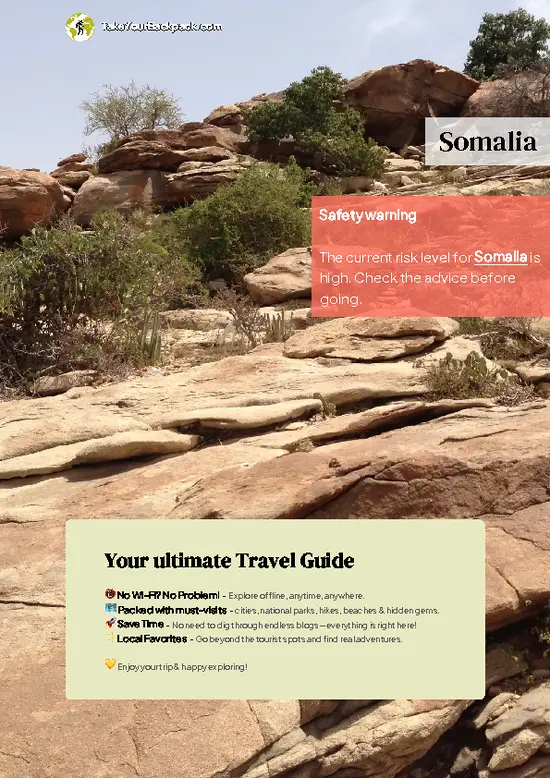
example page 0 from our offline Travel Guide for Somalia
example page 1 from our offline Travel Guide for Somalia
example page 2 from our offline Travel Guide for Somalia
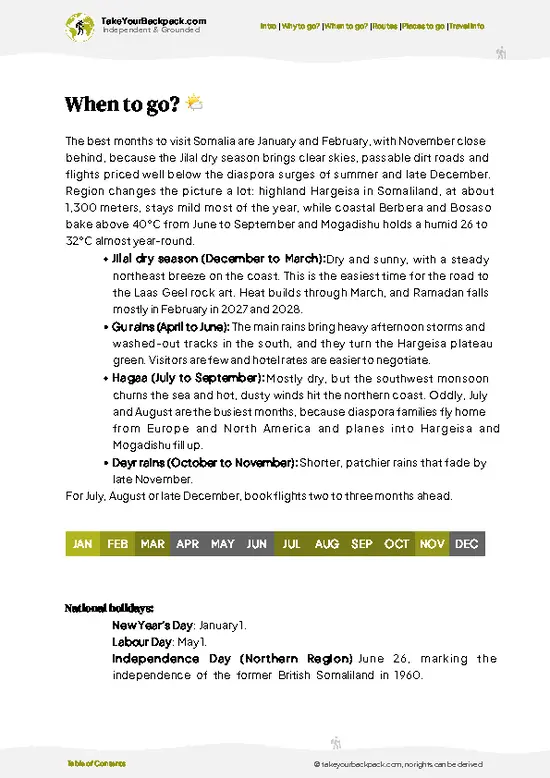
example page 3 from our offline Travel Guide for Somalia
example page 4 from our offline Travel Guide for Somalia
example page 5 from our offline Travel Guide for Somalia
example page 6 from our offline Travel Guide for Somalia
example page 7 from our offline Travel Guide for Somalia
Loading the map 🌍
CLICK TO FILTER
cities
towns
landmarks
national parks
hikes
beaches
attractions
festivals
regions
SHOW COUNTRY’S BESTSHOW ALL

✨ Why go?
Ranked #2 attraction in Somalia
What sets this place apart

Arba’a Rukun Mosque is the kind of place that lets you touch Somalia’s Indian Ocean past rather than read about it. Mogadishu was a wealthy trading city centuries before most European ports mattered to the region, and this 13th-century prayer house is one of the few structures that still carries that story in its stone. It has outlasted sultans, colonial rule and decades of conflict, and people still pray here every day.

The second reason is the setting. The mosque sits in Shangani, the old merchant quarter beside the port, where narrow lanes, coral-stone houses and the smell of salt and fish give you the feel of the old Swahili-coast trading world. Few places in East Africa let you see it without a tour group in sight.

Finally, it is a meaningful milestone for anyone crossing Somalia. Most … read more 👉
Arba’a Rukun Mosque is the kind of place that lets you touch Somalia’s Indian Ocean past rather than read about it. Mogadishu was a wealthy trading city centuries before most European ports mattered to the region, and this 13th-century prayer house is one of the few structures that still carries that story in its stone. It has outlasted sultans, colonial rule and decades of conflict, and people still pray here every day.

The second reason is the setting. The mosque sits in Shangani, the old merchant quarter beside the port, where narrow lanes, coral-stone houses and the smell of salt and fish give you the feel of the old Swahili-coast trading world. Few places in East Africa let you see it without a tour group in sight.

Finally, it is a meaningful milestone for anyone crossing Somalia. Most backpackers never get here, so reaching a landmark this old, in a city rebuilding itself, gives your route real weight. Go with a trusted local guide, keep your visit short and quiet, and treat it as a rare look at a living piece of history.

💡 HighlightsMust-see experiences and standout moments

  1. Arba’a Rukun Mosque: the main event. Look at the simple, weathered exterior and the small scale of the building, then listen for the call to prayer. It is a working mosque, so visit outside prayer times and dress modestly, with shoulders and knees covered.
  2. Fakr ad-Din Mosque: another medieval mosque in the same old quarter, dating to the 13th century. Seeing both gives you a sense of how early Islam took root on this coast, and the older stonework rewards close attention.
  3. Hamar Weyne old quarter: wander the narrow lanes between traditional coral-stone and limestone buildings. Many are damaged, and some are restored, and the mix tells the city’s story better than any plaque. Keep a local guide beside you.
  4. Shingani: the neighboring historic district, once home to the city’s early merchants. It
… read more 👉
  1. Arba’a Rukun Mosque: the main event. Look at the simple, weathered exterior and the small scale of the building, then listen for the call to prayer. It is a working mosque, so visit outside prayer times and dress modestly, with shoulders and knees covered.
  2. Fakr ad-Din Mosque: another medieval mosque in the same old quarter, dating to the 13th century. Seeing both gives you a sense of how early Islam took root on this coast, and the older stonework rewards close attention.
  3. Hamar Weyne old quarter: wander the narrow lanes between traditional coral-stone and limestone buildings. Many are damaged, and some are restored, and the mix tells the city’s story better than any plaque. Keep a local guide beside you.
  4. Shingani: the neighboring historic district, once home to the city’s early merchants. It shares the same layered architecture of Arab, Persian and Somali influence, and the street life is lively in the morning.
  5. Mogadishu fish market: a short distance away on the waterfront. Boats unload the catch, auctioneers shout prices and the whole scene is loud, salty and genuinely local. Ask before photographing anyone.
  6. Liido Beach: the city’s most popular stretch of sand. Families gather in the late afternoon, and young Somalis play football and eat fresh seafood. It is a relaxed way to end a day in the old districts and meet locals.
Start with Arba’a Rukun Mosque itself, early in the day before the heat builds and outside prayer times, so you can take in the old walls quietly before the rest of the quarter wakes up.
Spotted a mistake or missing something? Contact us.

🌤️ When to go?Best time to visit Arba’a Rukun Mosque

  • Jilaal (Dec to Mar): Dry, hot and dusty, with highs of 30 to 33°C (86 to 91°F) and nights near 23°C (73°F). Streets are easy to walk and the mosque area is at its most comfortable for photos in the morning.
  • Gu (Apr to Jun): The main rains bring humid heat of 28 to 32°C (82 to 90°F). Downpours can flood unpaved lanes in Hamar Weyne, so allow extra time between stops.
  • Xagaa (Jul to Sep): Cooler and windy, around 25 to 29°C (77 to 84°F), with a choppy sea and overcast skies. Many travelers find this the most pleasant walking weather.
  • Deyr (Oct to Nov): Shorter, lighter rains and 27 to 31°C (81 to 88°F). Days are fairly even at roughly 12 hours of light all year.
  • Prayer and Ramadan: Visits outside the five daily prayers are easier, and Fridays around midday are best avoided. Crowds are never large,
… read more 👉
  • Jilaal (Dec to Mar): Dry, hot and dusty, with highs of 30 to 33°C (86 to 91°F) and nights near 23°C (73°F). Streets are easy to walk and the mosque area is at its most comfortable for photos in the morning.
  • Gu (Apr to Jun): The main rains bring humid heat of 28 to 32°C (82 to 90°F). Downpours can flood unpaved lanes in Hamar Weyne, so allow extra time between stops.
  • Xagaa (Jul to Sep): Cooler and windy, around 25 to 29°C (77 to 84°F), with a choppy sea and overcast skies. Many travelers find this the most pleasant walking weather.
  • Deyr (Oct to Nov): Shorter, lighter rains and 27 to 31°C (81 to 88°F). Days are fairly even at roughly 12 hours of light all year.
  • Prayer and Ramadan: Visits outside the five daily prayers are easier, and Fridays around midday are best avoided. Crowds are never large, and prices for guides and drivers stay steady, though security costs can shift.
Plan your visit for the cooler Xagaa months, and arrive mid-morning, away from prayer times.


source: climatestotravel.comJANJanuary: excellent for travelingFEBFebruary: excellent for travelingMARMarch: fair for travelingAPRApril: fair for travelingMAYMay: fair for travelingJUNJune: good for travelingJULJuly: good for travelingAUGAugust: good for travelingSEPSeptember: good for travelingOCTOctober: highly recommended for travelingNOVNovember: excellent for travelingDECDecember: excellent for traveling
when-to-go

✈️ The backpacker research shortcutSomalia Travel Guide

What the free pages can't give you: ready-made routes, every place ranked, and it works offline. All in 1 guide.
example page 0 from our offline Travel Guide for Somalia
example page 1 from our offline Travel Guide for Somalia
example page 2 from our offline Travel Guide for Somalia
example page 3 from our offline Travel Guide for Somalia
example page 4 from our offline Travel Guide for Somalia
example page 5 from our offline Travel Guide for Somalia
example page 6 from our offline Travel Guide for Somalia
example page 7 from our offline Travel Guide for Somalia
The digital guide (237 pages) contains:-page digital guide:
✅ Ready-made 5, 10 & 15-day routes
✅ All 68 places ranked, so you skip the overrated ones
✅ Works offline, all in 1 guide
✅ Cities, national parks, landmarks, beaches
✅ How to get around
👉 Click to see all 30+ guide features

📅 Plan smarter in minutes, not weeks
✅ Month by month travel advice
✅ Festivals & national holidays
✅ Budget expectations

🗺️ Go to the right places, skip the overrated ones
✅ Honest pros & cons of destinations
✅ Top hikes, parks & viewpoints
✅ Lesser-known places most travelers miss
✅ Clear “worth it vs skip it” guidance

🛏️ Travel smoothly without rookie mistakes
✅ Best areas to stay
✅ Transport systems explained simply
✅ Common scams & safety advice
✅ SIM cards, money & practical tips

🌍 Understand the country, not just visit it
✅ Culture & traditions
✅ 52 Essential phrases & customs
✅ Festivals worth planning around
✅ Traveler-friendly historical context
✅ Insights that make places more meaningful

📱 Built for real travel conditions
✅ Fully downloadable PDF
✅ Works completely offline
✅ Optimized for phone use
✅ Useful in remote areas & buses
✅ All in 1 guide
Stop searching, start planning
Get instant access to your full guide. 30‑day money-back guarantee.


By proceeding you agree to our terms.
Sent to your inbox immediately after payment • 100% Secure Checkout
Best Backpacking Travel Advisor 2025 tourism awardBest Backpacking
Travel Advisor
2025
What others say about Take Your Backpack Guides:
⭐⭐⭐⭐⭐
Fantastic, amazing amount of information!
⭐⭐⭐⭐⭐
My goodness this is amazing, it's what I've been looking for hats off too you!
⭐⭐⭐⭐⭐
I think this is absolutely BRILLIANT
⭐⭐⭐⭐
Very complete and informative. It's still missing places, but I gotta to commend you
⭐⭐⭐⭐⭐
This is truly amazing, thank you, can't wait to explore it with my kids!
⭐⭐⭐⭐⭐
Awesome resource, thank you!
⭐⭐⭐⭐⭐
This is amazing! Can't wait to explore the ones I haven't seen
⭐⭐⭐⭐
I love this! Well done, great idea.
⭐⭐⭐⭐⭐
Thanks for taking the time to make this gem!
⭐⭐⭐⭐⭐
This might be the best website I've ever seen.
⭐⭐⭐⭐⭐
Congratulations, and thank you so much for your work; it's incredibly valuable.
⭐⭐⭐⭐
In all seriousness I think you did a great job pointing out the important spots
⭐⭐⭐⭐⭐
10/10 very good
⭐⭐⭐⭐⭐
As someone who's only just starting to visit regularly this is awesome, thank you.
⭐⭐⭐⭐
Thank you very much! I'm going to visit my dad, it's going to be very useful!
⭐⭐⭐⭐⭐
This is really cool! We'll be travelling for the first time and this definitely come in handy.
⭐⭐⭐⭐⭐
You are now our minister of culture, congratulations 👨‍💼
⭐⭐⭐⭐⭐
Just wanted to tell you that this is a pearl! Going to follow your recommendations.
⭐⭐⭐⭐⭐
This is so cool. I'll definitely be using the resource for my travels soon.
⭐⭐⭐⭐⭐
This is very impressive! Good work.
⭐⭐⭐⭐⭐
This is an amazing and informative site. Very well done!

🛏️ Where to stay?Best areas to stay in Somalia

Hamar Weyne and Shingani, the old coastal districts of Mogadishu, are the most practical areas to stay near Arba’a Rukun Mosque, because the mosque sits within this historic waterfront quarter and walking distances are short. Guesthouses here are small, family-run and used to the occasional foreign visitor, though a true backpacker hostel scene does not exist in Somalia. Expect shared courtyards, simple rooms and a chance to talk with local hosts, which is the nearest thing to a social atmosphere you will find. Prices run roughly US$25 to 60 a night.

The second option is the Hodan and Waberi … read more 👉
Hamar Weyne and Shingani, the old coastal districts of Mogadishu, are the most practical areas to stay near Arba’a Rukun Mosque, because the mosque sits within this historic waterfront quarter and walking distances are short. Guesthouses here are small, family-run and used to the occasional foreign visitor, though a true backpacker hostel scene does not exist in Somalia. Expect shared courtyards, simple rooms and a chance to talk with local hosts, which is the nearest thing to a social atmosphere you will find. Prices run roughly US$25 to 60 a night.

The second option is the Hodan and Waberi side of the city, closer to the airport road and the Lido beachfront. These areas have more established hotels with compound walls and on-site security, which is the main reason solo travelers choose them. You trade atmosphere for peace of mind, and you will need a vetted driver for short hops to the old town.

Whichever area you pick, book ahead through a trusted local contact, ask the host to arrange transport and armed escorts if advised, and avoid wandering at night. Solo travelers should share their plans with the host each morning.

👛 Costs (as of 2 November 2026)Typical daily expenses

Arba’a Rukun Mosque costs about US$51 to 122 a day for a backpacker in Mogadishu, mostly because of lodging and security rather than entry, which is free. Travelers pay in Somali shillings or US dollars, and US dollars are widely accepted.
CategoryBudget RangeLocal Reality
Entrance feeUS$0No ticket for the mosque. Visitors dress modestly and avoid prayer times.
Accommodation (high season)US$25 to 60Guesthouse in Hamar Weyne or a secured hotel elsewhere. Rates drop slightly in the rainy months.
FoodUS$6 to 12Rice and goat or fish at local restaurants, plus tea and camel milk. Fresh juice is cheap.
Local transportUS$5 to 15Bajaj tuk-tuks and private cars for short hops. Fares are agreed in advance.
Security and guideUS$15 to 30A vetted local escort or driver is the norm for visitors and is the most
… read more 👉
Arba’a Rukun Mosque costs about US$51 to 122 a day for a backpacker in Mogadishu, mostly because of lodging and security rather than entry, which is free. Travelers pay in Somali shillings or US dollars, and US dollars are widely accepted.
CategoryBudget RangeLocal Reality
Entrance feeUS$0No ticket for the mosque. Visitors dress modestly and avoid prayer times.
Accommodation (high season)US$25 to 60Guesthouse in Hamar Weyne or a secured hotel elsewhere. Rates drop slightly in the rainy months.
FoodUS$6 to 12Rice and goat or fish at local restaurants, plus tea and camel milk. Fresh juice is cheap.
Local transportUS$5 to 15Bajaj tuk-tuks and private cars for short hops. Fares are agreed in advance.
Security and guideUS$15 to 30A vetted local escort or driver is the norm for visitors and is the most variable cost.
Extras and donationsUS$0 to 5Small tips or donations to the caretaker. Phone SIM and data are inexpensive.
Total Daily BudgetUS$51 to 122Roughly US$85 for a typical day.
⚠️ Prices can change and everyone travels differently, so take this as a rough guide. Hope it helps you plan your adventure!

FAQTraveler FAQ

Arba’a Rukun Mosque needs about 30 to 60 minutes for the building, its Fakr ad-Din-era architecture and a look at the surrounding lanes. Add another 2 to 3 hours if you combine it with Hamar Weyne, the old Shingani quarter and the nearby seafront. Visit in the morning and avoid the five daily prayer times, especially Friday midday.
Arba’a Rukun Mosque has no entrance fee, so the question is really about the time and security cost of getting there. Its value lies in being one of Mogadishu’s oldest surviving mosques, dating to the 13th century, in the historic waterfront quarter. A donation of US$1 to 3 to the caretaker is appreciated, and an escort or guide typically costs US$15 to 30 a day.
Arba’a Rukun Mosque lies in the Shangani district of Mogadishu, about 10 to 20 minutes by car from Aden Adde International Airport depending on checkpoints and traffic. Most visitors arrange a vetted driver or hotel transfer for roughly US$5 to 15 each way. Bajaj tuk-tuks run locally, but local advice on security and routes should be followed before you set out.
⚠️ Things can change over time, so always validate details locally before you go.

Other Somali attractions near Arba’a Rukun Mosque

Explore more nearby:


💡 Not sure where to go next?
Create a personalized itinerary for Somalia including Arba’a Rukun Mosque and the places that fit your trip.

Generate my itinerary

👉 Discover all attractions

Or checkout all Somalia has to offer (think cities, towns, villages, national parks, hikes, beaches, festivals)
Country photo of Somalia

We 💚 feedbackKey takeaways before you go

Arba’a Rukun Mosque deserves about an hour on its own, or a relaxed half day if you add the neighboring old quarter and the fish market. I would not stretch it longer, since the interior is small and active. Bring a headscarf if you are a woman, wear long sleeves, and let your local host set the pace.

✍️ Help improve this page!
The information on this page is based on in-depth research, insights shared by experienced travelers, and feedback from the local travel community in Somalia. While every effort is made to keep the information accurate and current, conditions can change — so if you spot anything incorrect or outdated, please get in touch.


🙋‍♂️ Give feedback

👋 Meet the founderWho’s Behind Take Your Backpack?

Johan, backpacker and founder of TakeYourBackpackHi, I’m Johan (Netherlands 🇳🇱), the creator of TakeYourBackpack. Over the past 30 years, I’ve backpacked through 88 countries across six continents, gaining extensive experience with independent travel, long-term trips, and overland routes.

This site is built on a combination of firsthand travel experience and carefully curated insights from other backpackers. Many guides are based on places I’ve personally visited, while others bring together tips, observations, and practical advice shared by trusted travelers I’ve met along the way.

The goal is to provide realistic, experience-driven guidance — not generic itineraries — so you can explore destinations with better context, clearer expectations, and more confidence.