×

Somalia🇸🇴 | attractionsFakr ad-Din Mosque1269 inscription, Kufic lettering, plain prayer hall, medieval trade | things to do and best time to go

Explore Arba’a Rukun MosqueExplore Sheikh Pass

Backpacking in Fakr ad-Din Mosque
🏆 Top pickattraction ranked #3
By Johan Kruseman 🇳🇱 | Updated November 2, 2026

Fakr ad-Din Mosque sits inside the old quarter, so one short walk also covers Arba’a Rukun Mosque nearby, the fish market and the waterfront. It stands in Hamar Weyne, the historic seaside district of Mogadishu, Somalia’s capital. Its age is the draw: an inscription dates it to 1269, and that makes it a rare surviving piece of the medieval Indian Ocean trade. It is small, plain and working, so the visit is short. Worshippers use it daily, so dress modestly and ask a local host to introduce you at the door. Mogadishu needs a trusted local contact or guide, because security changes block by block and a guide knows which lanes are fine today. Skip any plan to spend hours here. Spend them in the surrounding streets instead. History-minded travelers and architecture fans will like it most. Anyone wanting grand domes or ticketed interiors will be disappointed.

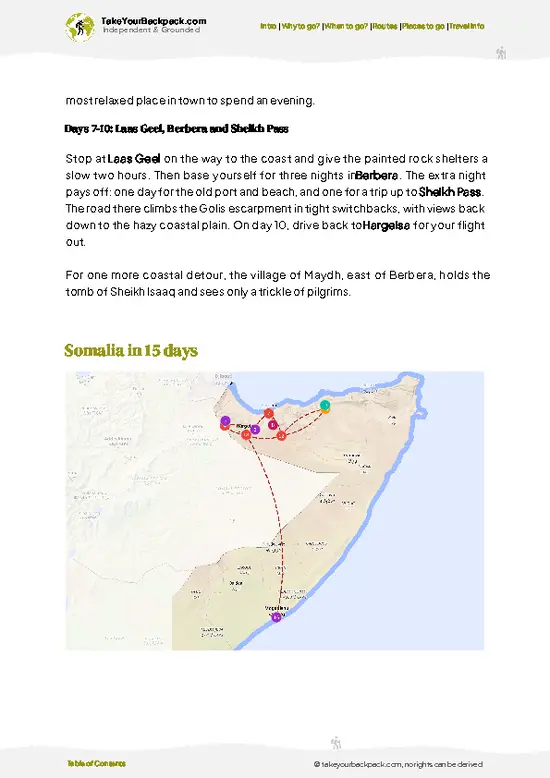
Part of Backpacking in Somalia: all 68 places on one map, with routes and the best time to go.
Discover everything you want to know in the 📖 Somalia Travel Guide.
Safety warning

The current risk level for Somalia is high. Check the advice before going.


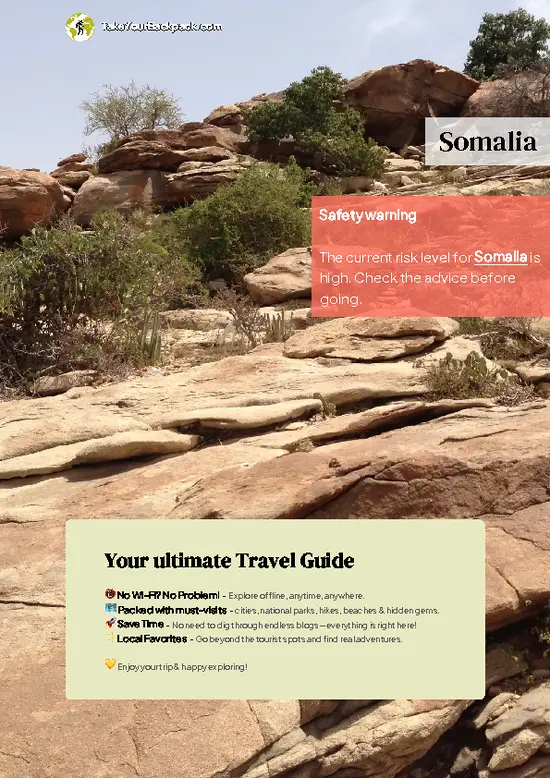
example page 0 from our offline Travel Guide for Somalia
example page 1 from our offline Travel Guide for Somalia
example page 2 from our offline Travel Guide for Somalia
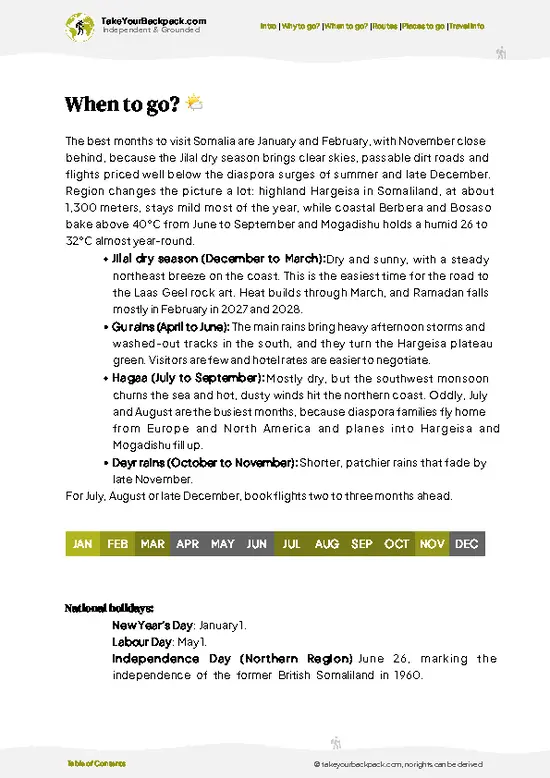
example page 3 from our offline Travel Guide for Somalia
example page 4 from our offline Travel Guide for Somalia
example page 5 from our offline Travel Guide for Somalia
example page 6 from our offline Travel Guide for Somalia
example page 7 from our offline Travel Guide for Somalia
Loading the map 🌍
CLICK TO FILTER
cities
towns
landmarks
national parks
hikes
beaches
attractions
festivals
regions
SHOW COUNTRY’S BESTSHOW ALL

✨ Why go?
Ranked #3 attraction in Somalia
Why Fakr ad-Din Mosque should be on your travel list

Fakr ad-Din Mosque is the clearest physical link to the sultanate that made Mogadishu a port city on the Indian Ocean trade routes. The Kufic-style inscription dated 667 AH (1269 CE) names the founder, which is an unusual level of documentation for a building in this part of East Africa. Standing in front of it, you see what a thirteenth-century coastal Muslim state left behind, in a city where much of the old fabric has been lost to war and neglect.

The second reason is context. It sits in Hamar Weyne, the oldest part of the capital, where lanes of coral-stone houses run toward the old harbor. A visit here turns a walk through the quarter into something with a thread: you know who built the place, when, and why the port mattered. For a country route, it is the sort of stop that makes Mogadishu … read more 👉
Fakr ad-Din Mosque is the clearest physical link to the sultanate that made Mogadishu a port city on the Indian Ocean trade routes. The Kufic-style inscription dated 667 AH (1269 CE) names the founder, which is an unusual level of documentation for a building in this part of East Africa. Standing in front of it, you see what a thirteenth-century coastal Muslim state left behind, in a city where much of the old fabric has been lost to war and neglect.

The second reason is context. It sits in Hamar Weyne, the oldest part of the capital, where lanes of coral-stone houses run toward the old harbor. A visit here turns a walk through the quarter into something with a thread: you know who built the place, when, and why the port mattered. For a country route, it is the sort of stop that makes Mogadishu make sense. It also repays the effort of arranging a secure local escort, since the sights cluster tightly and you can see several in one outing.

💡 HighlightsTop highlights of Fakr ad-Din Mosque

  1. Fakr ad-Din Mosque: The reason you came. A modest coral-stone building whose founding inscription dates it to 1269, with a small prayer hall that is still in daily use. Look at the proportions and the thick walls, built for heat rather than show.
  2. The Kufic inscription: Carved Arabic lettering naming the builder and the year. It is the best-known feature among historians and the detail that sets this mosque apart from newer ones nearby.
  3. The mihrab and prayer niche: The niche marking the direction of Mecca is the focal point inside, a plain reminder of how early Islamic architecture on this coast stayed restrained. Visitors should look from the entrance unless invited further.
  4. Arba’a Rukun Mosque: A short walk away, this is another early mosque in neighboring Shangani, dating to the thirteenth
… read more 👉
  1. Fakr ad-Din Mosque: The reason you came. A modest coral-stone building whose founding inscription dates it to 1269, with a small prayer hall that is still in daily use. Look at the proportions and the thick walls, built for heat rather than show.
  2. The Kufic inscription: Carved Arabic lettering naming the builder and the year. It is the best-known feature among historians and the detail that sets this mosque apart from newer ones nearby.
  3. The mihrab and prayer niche: The niche marking the direction of Mecca is the focal point inside, a plain reminder of how early Islamic architecture on this coast stayed restrained. Visitors should look from the entrance unless invited further.
  4. Arba’a Rukun Mosque: A short walk away, this is another early mosque in neighboring Shangani, dating to the thirteenth century. Seeing both side by side shows how old the Muslim presence in the city is.
  5. Hamar Weyne old quarter: Narrow lanes, coral-stone and plastered houses and carved doorways. Many buildings are worn or patched, and that wear is part of the interest. Photograph only with your guide’s approval.
  6. Hamar Weyne market: The trading streets around the old quarter, with cloth, household goods and food stalls. It is loud, crowded and the best way to see everyday Mogadishu close up.
  7. Old port and fish market: Down at the waterfront, fishermen bring in the catch and boats sit along the shore. The harbor explains why a sultanate formed on this spot in the first place.
  8. Mogadishu Lighthouse: An Italian-era lighthouse near the old port area, a useful landmark that marks the colonial layer added on top of the medieval one.
Fakr ad-Din Mosque and Arba’a Rukun Mosque combine well in one morning, since both are in the adjoining old quarters and you can finish at the market.
Spotted a mistake or missing something? Contact us.

🌤️ When to go?Best time to visit Fakr ad-Din Mosque

  • Jilaal (December to March): Dry, hot and dusty, with highs of 30 to 33°C (86 to 91°F) and cooler nights near 23°C (73°F). Sea breezes off the Indian Ocean make the Hamar Weyne and Shingani coast walk comfortable, and this is the easiest season for photographing the mosque’s weathered coral-stone walls.
  • Gu (April to June): The main rains turn lanes muddy and flood low streets. Temperatures sit around 28 to 32°C (82 to 90°F), humidity climbs, and the sea is rough. Fewer outsiders visit, so prices for flights and rooms can ease.
  • Xagaa (July to September): Cooler and windy, 26 to 30°C (79 to 86°F), with a choppy monsoon coast and overcast skies. Dry enough for walking, and quieter for hotels.
  • Deyr (October to November): Shorter, lighter rains with highs of 29 to 32°C (84 to 90°F). Daylight stays
… read more 👉
  • Jilaal (December to March): Dry, hot and dusty, with highs of 30 to 33°C (86 to 91°F) and cooler nights near 23°C (73°F). Sea breezes off the Indian Ocean make the Hamar Weyne and Shingani coast walk comfortable, and this is the easiest season for photographing the mosque’s weathered coral-stone walls.
  • Gu (April to June): The main rains turn lanes muddy and flood low streets. Temperatures sit around 28 to 32°C (82 to 90°F), humidity climbs, and the sea is rough. Fewer outsiders visit, so prices for flights and rooms can ease.
  • Xagaa (July to September): Cooler and windy, 26 to 30°C (79 to 86°F), with a choppy monsoon coast and overcast skies. Dry enough for walking, and quieter for hotels.
  • Deyr (October to November): Shorter, lighter rains with highs of 29 to 32°C (84 to 90°F). Daylight stays near 12 hours all year.
Visit around the Friday midday prayer only as a respectful observer, and aim for a weekday morning before the heat builds.


source: climatestotravel.comJANJanuary: excellent for travelingFEBFebruary: excellent for travelingMARMarch: good for travelingAPRApril: fair for travelingMAYMay: fair for travelingJUNJune: fair for travelingJULJuly: good for travelingAUGAugust: good for travelingSEPSeptember: good for travelingOCTOctober: good for travelingNOVNovember: highly recommended for travelingDECDecember: excellent for traveling
when-to-go

✈️ The backpacker research shortcutSomalia Travel Guide

What the free pages can't give you: ready-made routes, every place ranked, and it works offline. All in 1 guide.
example page 0 from our offline Travel Guide for Somalia
example page 1 from our offline Travel Guide for Somalia
example page 2 from our offline Travel Guide for Somalia
example page 3 from our offline Travel Guide for Somalia
example page 4 from our offline Travel Guide for Somalia
example page 5 from our offline Travel Guide for Somalia
example page 6 from our offline Travel Guide for Somalia
example page 7 from our offline Travel Guide for Somalia
The digital guide (237 pages) contains:-page digital guide:
✅ Ready-made 5, 10 & 15-day routes
✅ All 68 places ranked, so you skip the overrated ones
✅ Works offline, all in 1 guide
✅ Cities, national parks, landmarks, beaches
✅ How to get around
👉 Click to see all 30+ guide features

📅 Plan smarter in minutes, not weeks
✅ Month by month travel advice
✅ Festivals & national holidays
✅ Budget expectations

🗺️ Go to the right places, skip the overrated ones
✅ Honest pros & cons of destinations
✅ Top hikes, parks & viewpoints
✅ Lesser-known places most travelers miss
✅ Clear “worth it vs skip it” guidance

🛏️ Travel smoothly without rookie mistakes
✅ Best areas to stay
✅ Transport systems explained simply
✅ Common scams & safety advice
✅ SIM cards, money & practical tips

🌍 Understand the country, not just visit it
✅ Culture & traditions
✅ 52 Essential phrases & customs
✅ Festivals worth planning around
✅ Traveler-friendly historical context
✅ Insights that make places more meaningful

📱 Built for real travel conditions
✅ Fully downloadable PDF
✅ Works completely offline
✅ Optimized for phone use
✅ Useful in remote areas & buses
✅ All in 1 guide
Stop searching, start planning
Get instant access to your full guide. 30‑day money-back guarantee.


By proceeding you agree to our terms.
Sent to your inbox immediately after payment • 100% Secure Checkout
Best Backpacking Travel Advisor 2025 tourism awardBest Backpacking
Travel Advisor
2025
What others say about Take Your Backpack Guides:
⭐⭐⭐⭐⭐
Fantastic, amazing amount of information!
⭐⭐⭐⭐⭐
My goodness this is amazing, it's what I've been looking for hats off too you!
⭐⭐⭐⭐⭐
I think this is absolutely BRILLIANT
⭐⭐⭐⭐
Very complete and informative. It's still missing places, but I gotta to commend you
⭐⭐⭐⭐⭐
This is truly amazing, thank you, can't wait to explore it with my kids!
⭐⭐⭐⭐⭐
Awesome resource, thank you!
⭐⭐⭐⭐⭐
This is amazing! Can't wait to explore the ones I haven't seen
⭐⭐⭐⭐
I love this! Well done, great idea.
⭐⭐⭐⭐⭐
Thanks for taking the time to make this gem!
⭐⭐⭐⭐⭐
This might be the best website I've ever seen.
⭐⭐⭐⭐⭐
Congratulations, and thank you so much for your work; it's incredibly valuable.
⭐⭐⭐⭐
In all seriousness I think you did a great job pointing out the important spots
⭐⭐⭐⭐⭐
10/10 very good
⭐⭐⭐⭐⭐
As someone who's only just starting to visit regularly this is awesome, thank you.
⭐⭐⭐⭐
Thank you very much! I'm going to visit my dad, it's going to be very useful!
⭐⭐⭐⭐⭐
This is really cool! We'll be travelling for the first time and this definitely come in handy.
⭐⭐⭐⭐⭐
You are now our minister of culture, congratulations 👨‍💼
⭐⭐⭐⭐⭐
Just wanted to tell you that this is a pearl! Going to follow your recommendations.
⭐⭐⭐⭐⭐
This is so cool. I'll definitely be using the resource for my travels soon.
⭐⭐⭐⭐⭐
This is very impressive! Good work.
⭐⭐⭐⭐⭐
This is an amazing and informative site. Very well done!

🛏️ Where to stay?Choosing the right base

The Shingani and Hamar Weyne districts of old Mogadishu put you within a short walk of Fakr ad-Din Mosque, and they are the most practical bases for backpackers. Hamar Weyne has the densest cluster of coral-stone houses, small restaurants and tea stalls, so you can eat and orient yourself on foot with a local guide or host. Shingani sits right beside the old harbor, and its sea-facing lanes are the quietest after dark. Both areas are historic and busy by day, but security conditions in Somalia require care, so most budget travelers choose guesthouses with walled compounds and their own guards … read more 👉
The Shingani and Hamar Weyne districts of old Mogadishu put you within a short walk of Fakr ad-Din Mosque, and they are the most practical bases for backpackers. Hamar Weyne has the densest cluster of coral-stone houses, small restaurants and tea stalls, so you can eat and orient yourself on foot with a local guide or host. Shingani sits right beside the old harbor, and its sea-facing lanes are the quietest after dark. Both areas are historic and busy by day, but security conditions in Somalia require care, so most budget travelers choose guesthouses with walled compounds and their own guards rather than wandering freely. Staying near the Lido or Liido beach area is the other option. It is more relaxed, with seafood restaurants and a seaside promenade, and some guesthouses there are used to foreign visitors and NGO workers. The trade-off is a longer drive to the old city. Social atmosphere is limited compared with other backpacker destinations, since few dedicated hostels exist. Expect to meet other guests mainly through shared guesthouse meals, journalists, aid workers and returning diaspora. Arrange your stay and an escort in advance, and move between areas by pre-booked car rather than street taxis.

👛 Costs (as of 2 November 2026)Travel costs and budget guide for Fakr ad-Din Mosque

Expect to spend roughly US$93 to 168 a day around Fakr ad-Din Mosque, mostly because security escorts and guesthouse stays drive the cost. The mosque itself has no ticket, and travelers pay in US dollars or Somali shillings through mobile money.
CategoryBudget RangeLocal Reality
Entry feeUS$0No ticket. A small donation is appreciated, and modest dress is expected.
Accommodation (low season)US$35 to 60Walled guesthouse rooms, often with meals included.
Accommodation (high season)US$50 to 80Prices rise from December to March and when events fill rooms.
FoodUS$8 to 15Rice, goat, fish and tea at local restaurants cost far less than guesthouse meals.
Local transportUS$5 to 15Pre-booked car or tuk-tuk between the old city and your guesthouse.
Guide and security escortUS$30 to 60Strongly advised for the
… read more 👉
Expect to spend roughly US$93 to 168 a day around Fakr ad-Din Mosque, mostly because security escorts and guesthouse stays drive the cost. The mosque itself has no ticket, and travelers pay in US dollars or Somali shillings through mobile money.
CategoryBudget RangeLocal Reality
Entry feeUS$0No ticket. A small donation is appreciated, and modest dress is expected.
Accommodation (low season)US$35 to 60Walled guesthouse rooms, often with meals included.
Accommodation (high season)US$50 to 80Prices rise from December to March and when events fill rooms.
FoodUS$8 to 15Rice, goat, fish and tea at local restaurants cost far less than guesthouse meals.
Local transportUS$5 to 15Pre-booked car or tuk-tuk between the old city and your guesthouse.
Guide and security escortUS$30 to 60Strongly advised for the old city. Rates vary with the level of protection.
Total Daily BudgetUS$93 to 168Based on high-season lodging, with escort and transport included.
⚠️ Prices can change and everyone travels differently, so take this as a rough guide. Hope it helps you plan your adventure!

FAQTraveler FAQ

Half a day is enough for Fakr ad-Din Mosque, since the building is small and a visit takes 30 to 60 minutes. Add another two to three hours if you also walk the old Hamar Weyne and Shingani lanes with a guide. Most travelers fold it into a one or two-day stay in Mogadishu.
Yes, mainly because Fakr ad-Din Mosque costs nothing to enter. A small donation of US$1 to 3 is a courteous gesture. You are paying instead for the guide and escort, about US$30 to 60 a day, which are what make the visit possible.
Fly into Aden Adde International Airport, about 10 to 15 minutes by car from the old city center, then take a pre-booked vehicle to Fakr ad-Din Mosque in Hamar Weyne. Expect to pay US$5 to 15 for the ride, and the traffic can stretch the trip to 30 minutes or more. Independent walking or street taxis are not recommended, so arrange transport through your guesthouse.
⚠️ Things can change over time, so always validate details locally before you go.

Other Somali attractions near Fakr ad-Din Mosque

Explore more nearby:


💡 Not sure where to go next?
Create a personalized itinerary for Somalia including Fakr ad-Din Mosque and the places that fit your trip.

Generate my itinerary

👉 Discover all attractions

Or checkout all Somalia has to offer (think cities, towns, villages, national parks, hikes, beaches, festivals)
Country photo of Somalia

We 💚 feedbackParting advice and final tips

Fakr ad-Din Mosque is best on a weekday morning, when the lanes of Hamar Weyne are busy but calm and the light is soft on the coral stone. Avoid Friday around midday prayers, when the area fills with worshippers. I would bring a scarf or long sleeves, arrange your guide the day before, and leave the camera in the bag until you are asked.

✍️ Help improve this page!
The information on this page is based on in-depth research, insights shared by experienced travelers, and feedback from the local travel community in Somalia. While every effort is made to keep the information accurate and current, conditions can change — so if you spot anything incorrect or outdated, please get in touch.


🙋‍♂️ Give feedback

👋 Meet the founderWho’s Behind Take Your Backpack?

Johan, backpacker and founder of TakeYourBackpackHi, I’m Johan (Netherlands 🇳🇱), the creator of TakeYourBackpack. Over the past 30 years, I’ve backpacked through 88 countries across six continents, gaining extensive experience with independent travel, long-term trips, and overland routes.

This site is built on a combination of firsthand travel experience and carefully curated insights from other backpackers. Many guides are based on places I’ve personally visited, while others bring together tips, observations, and practical advice shared by trusted travelers I’ve met along the way.

The goal is to provide realistic, experience-driven guidance — not generic itineraries — so you can explore destinations with better context, clearer expectations, and more confidence.