×

Somalia🇸🇴 | townsDoolowDawa River, Ethiopian border trade, Gedo | things to do and best time to go

Explore JalalaqsiExplore El Wak

Backpacking in Doolow
👌 Worth visitingtown ranked #14
By Johan Kruseman 🇳🇱 | Updated November 1, 2026

Whether to go at all is the decision here, and security tips it: Doolow sits in Gedo, where Al-Shabaab activity and federal-versus-state friction make casual visits a poor idea, so only go with a trusted local host and current advice. The town lies in southwestern Somalia, on the Ethiopian border where the Dawa River runs past. Reaching it is slow and unpredictable, so build in slack. Hostels and backpacker cafés don’t exist, which means evenings are quiet and you meet locals, not travelers. Skip sightseeing plans. Spend your time on the riverfront and market. Before going, arrange hosts and movement through a local contact.

Part of Backpacking in Somalia: all 68 places on one map, with routes and the best time to go.
Discover everything you want to know in the 📖 Somalia Travel Guide.
Safety warning

The current risk level for Somalia is high. Check the advice before going.


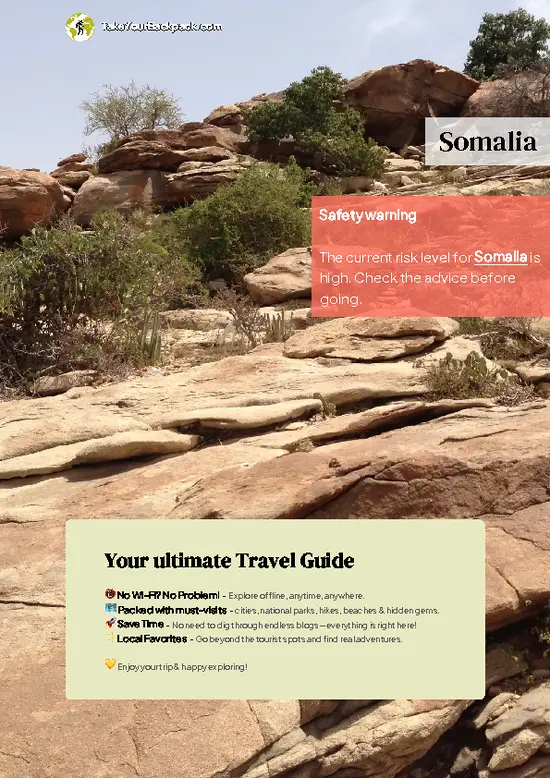
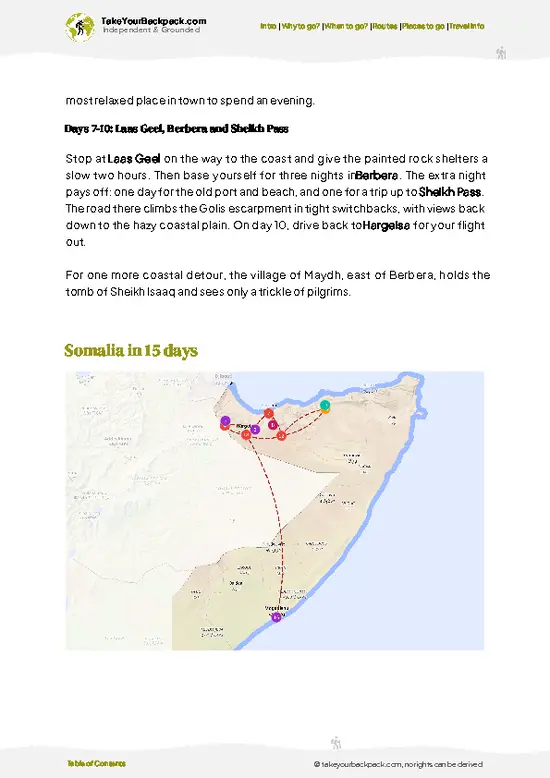
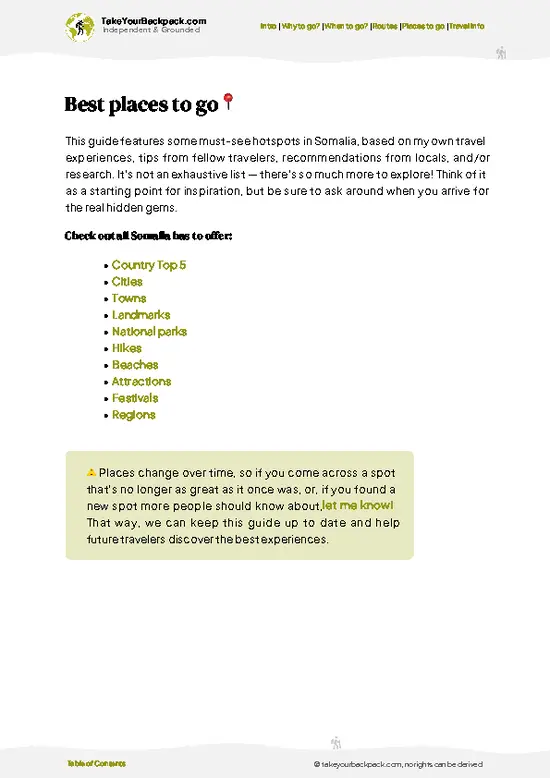
example page 0 from our offline Travel Guide for Somalia
example page 1 from our offline Travel Guide for Somalia
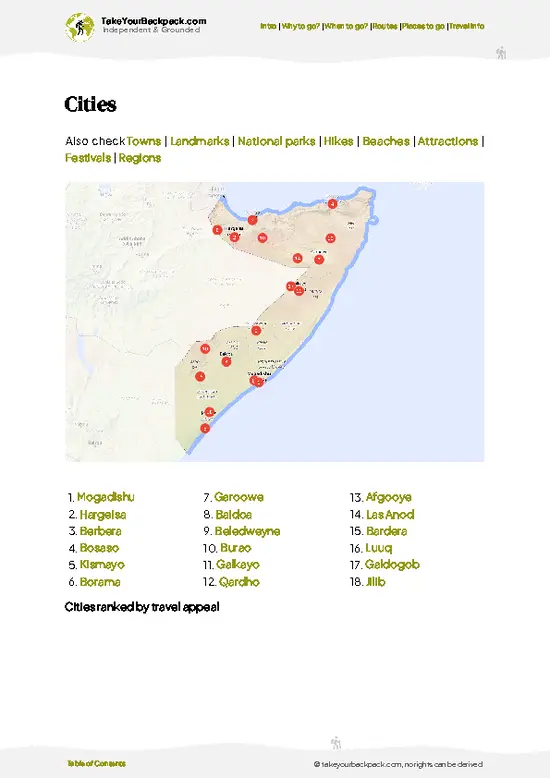
example page 2 from our offline Travel Guide for Somalia
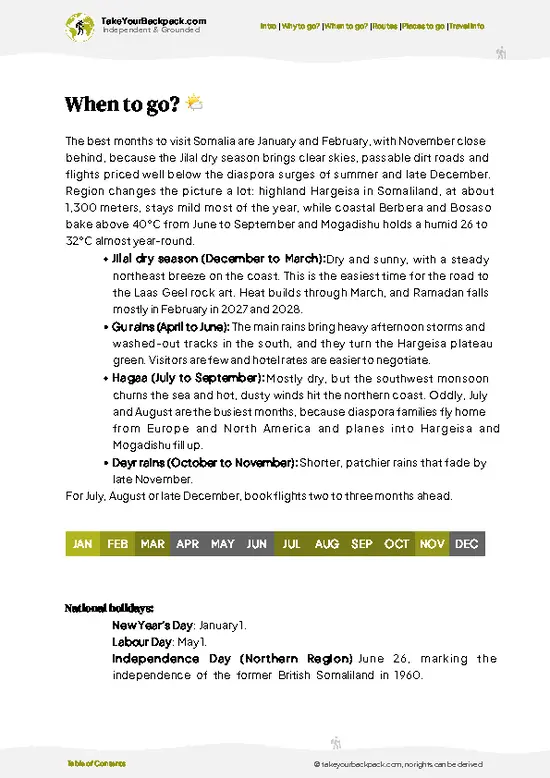
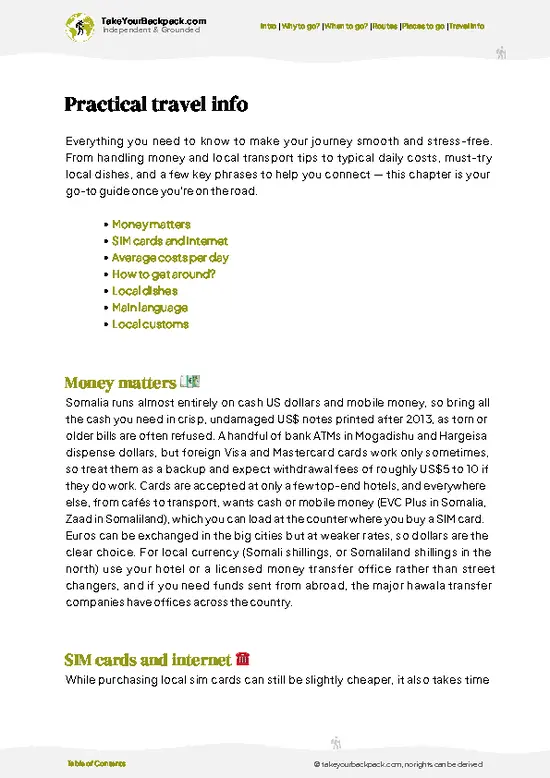
example page 3 from our offline Travel Guide for Somalia
example page 4 from our offline Travel Guide for Somalia
example page 5 from our offline Travel Guide for Somalia
example page 6 from our offline Travel Guide for Somalia
example page 7 from our offline Travel Guide for Somalia
Loading the map 🌍
CLICK TO FILTER
cities
towns
landmarks
national parks
hikes
beaches
attractions
festivals
regions
SHOW COUNTRY’S BESTSHOW ALL

✨ Why go?
Ranked #14 town in Somalia
Why Doolow should be on your travel list

Doolow suits only the rare traveler already working in or around Gedo, or one with strong local family or clan connections, who wants to see a Somali border town on the Dawa River without any tourist veneer. Stays are short, a night or two, because there is little structured to do and movement is tightly managed. The draw is the Dawa River frontier, with Ethiopia’s Dollo Ado visible across the water, and the everyday trade of a border market town where livestock, tea and goods move across a line most people ignore. Social life happens in tea houses and through hosts. Slow, patient, experienced travelers will get something from it. Anyone wanting hostels, nightlife or a checklist of sights should choose elsewhere.

💡 HighlightsDon't-miss highlights and experiences

  1. Dawa River banks: The river marking the Ethiopian border is the reason the town exists, with water, livestock and washing all concentrated here. Go in the cool early morning, when the light is soft and the bank is busiest. Free, and 1 to 2 hours is plenty. Keep your camera away from border posts and ask your host before photographing anything.
  2. Doolow main market: Stalls sell food staples, cloth, sandals, phone credit and goods that arrive across the border. It is the best place to see how the town trades with its Ethiopian neighbor. Visit mid-morning before the heat peaks. Entry is free, a few dollars buys snacks or tea, and 1 to 2 hours covers it.
  3. Local tea houses: Sweet spiced tea and a seat in the shade are how conversations start here. Pick one with your host’s recommendation, since people
… read more 👉
  1. Dawa River banks: The river marking the Ethiopian border is the reason the town exists, with water, livestock and washing all concentrated here. Go in the cool early morning, when the light is soft and the bank is busiest. Free, and 1 to 2 hours is plenty. Keep your camera away from border posts and ask your host before photographing anything.
  2. Doolow main market: Stalls sell food staples, cloth, sandals, phone credit and goods that arrive across the border. It is the best place to see how the town trades with its Ethiopian neighbor. Visit mid-morning before the heat peaks. Entry is free, a few dollars buys snacks or tea, and 1 to 2 hours covers it.
  3. Local tea houses: Sweet spiced tea and a seat in the shade are how conversations start here. Pick one with your host’s recommendation, since people talk freely when introduced. Expect US$0.50 to 1 for tea and an hour or so of company, best in the late afternoon.
Doolow’s surroundings include Luuq, an older town on the Juba River downstream, and Beled Hawo on the Kenyan frontier, both reachable only with local arrangements and fresh security advice. Everything above fits comfortably into half a day.
Spotted a mistake or missing something? Contact us.

🏘️ NeighborhoodsKey areas and districts to know

Doolow is small and sits on the Dawa River at the Ethiopian border, so you can cover every area on foot in a morning. Foreign visitors are rare, and the security situation limits where you can go, so local guidance matters more than any map.
  • Town center and main market: The commercial core, with stalls for fabric, phone credit, camel milk and fresh produce. It is worth an hour because this is where you meet people and get a feel for border trade. Go in the morning, before the heat builds.
  • Riverside along the Dawa: Quiet banks with goats, laundry and farm plots. It is pleasant for a short walk, but skip it at dusk. Few people are around and you will be conspicuous.
  • Border-side districts: Busy with traders and travelers crossing between Somalia and Ethiopia. Little to see, and cameras draw attention,
… read more 👉
Doolow is small and sits on the Dawa River at the Ethiopian border, so you can cover every area on foot in a morning. Foreign visitors are rare, and the security situation limits where you can go, so local guidance matters more than any map.
  • Town center and main market: The commercial core, with stalls for fabric, phone credit, camel milk and fresh produce. It is worth an hour because this is where you meet people and get a feel for border trade. Go in the morning, before the heat builds.
  • Riverside along the Dawa: Quiet banks with goats, laundry and farm plots. It is pleasant for a short walk, but skip it at dusk. Few people are around and you will be conspicuous.
  • Border-side districts: Busy with traders and travelers crossing between Somalia and Ethiopia. Little to see, and cameras draw attention, so pass through only with a local host.
  • Outer settlements: Camps and spread-out neighborhoods. Not worth the time as a visitor, and moving around them without an escort is unwise.

⌛️ 1 dayA smart one-day plan

7:00 AM, Dawa River bank: Start where the town begins, at the water, while it’s cool and herders bring animals down. Walk the accessible stretch with your host, watch the routine, then head back toward the center on foot.

9:00 AM, Tea house breakfast: Sit down for sweet tea and flatbread or a simple meal. This is where locals trade news, and a host can introduce you to people who know the area’s history.

10:30 AM, Main market: Wander the stalls while trading is lively. Buy water, fruit or a head scarf if you need one. Notice the Ethiopian goods mixed in with Somali ones.

12:30 PM, Rest indoors: Midday heat is heavy. Eat lunch with your host, pray if you are observant, and rest through the worst of it.

3:30 PM, Livestock gathering area: Ask your host to take you to where herders gather animals … read more 👉
7:00 AM, Dawa River bank: Start where the town begins, at the water, while it’s cool and herders bring animals down. Walk the accessible stretch with your host, watch the routine, then head back toward the center on foot.

9:00 AM, Tea house breakfast: Sit down for sweet tea and flatbread or a simple meal. This is where locals trade news, and a host can introduce you to people who know the area’s history.

10:30 AM, Main market: Wander the stalls while trading is lively. Buy water, fruit or a head scarf if you need one. Notice the Ethiopian goods mixed in with Somali ones.

12:30 PM, Rest indoors: Midday heat is heavy. Eat lunch with your host, pray if you are observant, and rest through the worst of it.

3:30 PM, Livestock gathering area: Ask your host to take you to where herders gather animals for sale, a spot almost no outsider sees. Go only if it is calm and your host agrees, and stay for about an hour.

5:30 PM, Evening tea: Finish at a different tea house as the town cools. Return to your lodging before dark.

🌤️ When to go?When to go for the best experience

  • Jilaal (Dec to Mar): The driest and hottest stretch, with highs of 33 to 38°C (91 to 100°F) and dust. Water is scarce and pasture is thin.
  • Gu rains (Apr to Jun): Heavy showers, highs near 32 to 35°C (90 to 95°F), green land. Dirt roads turn to mud and river crossings swell.
  • Xagaa (Jul to Aug): Dry, slightly cooler and breezy, around 30 to 34°C (86 to 93°F). Travel conditions are steadiest.
  • Deyr rains (Oct to Nov): Shorter, lighter showers and highs of 31 to 35°C (88 to 95°F).
Daylight stays close to 12 hours all year. Plan movement for July and August, and avoid the peak of the Gu rains.

source: climatestotravel.comJANJanuary: excellent for travelingFEBFebruary: excellent for travelingMARMarch: fair for travelingAPRApril: below average for travelingMAYMay: below average for travelingJUNJune: fair for travelingJULJuly: fair for travelingAUGAugust: fair for travelingSEPSeptember: fair for travelingOCTOctober: good for travelingNOVNovember: excellent for travelingDECDecember: excellent for traveling
when-to-go

✈️ The backpacker research shortcutSomalia Travel Guide

What the free pages can't give you: ready-made routes, every place ranked, and it works offline. All in 1 guide.
example page 0 from our offline Travel Guide for Somalia
example page 1 from our offline Travel Guide for Somalia
example page 2 from our offline Travel Guide for Somalia
example page 3 from our offline Travel Guide for Somalia
example page 4 from our offline Travel Guide for Somalia
example page 5 from our offline Travel Guide for Somalia
example page 6 from our offline Travel Guide for Somalia
example page 7 from our offline Travel Guide for Somalia
The digital guide (237 pages) contains:-page digital guide:
✅ Ready-made 5, 10 & 15-day routes
✅ All 68 places ranked, so you skip the overrated ones
✅ Works offline, all in 1 guide
✅ Cities, national parks, landmarks, beaches
✅ How to get around
👉 Click to see all 30+ guide features

📅 Plan smarter in minutes, not weeks
✅ Month by month travel advice
✅ Festivals & national holidays
✅ Budget expectations

🗺️ Go to the right places, skip the overrated ones
✅ Honest pros & cons of destinations
✅ Top hikes, parks & viewpoints
✅ Lesser-known places most travelers miss
✅ Clear “worth it vs skip it” guidance

🛏️ Travel smoothly without rookie mistakes
✅ Best areas to stay
✅ Transport systems explained simply
✅ Common scams & safety advice
✅ SIM cards, money & practical tips

🌍 Understand the country, not just visit it
✅ Culture & traditions
✅ 52 Essential phrases & customs
✅ Festivals worth planning around
✅ Traveler-friendly historical context
✅ Insights that make places more meaningful

📱 Built for real travel conditions
✅ Fully downloadable PDF
✅ Works completely offline
✅ Optimized for phone use
✅ Useful in remote areas & buses
✅ All in 1 guide
Stop searching, start planning
Get instant access to your full guide. 30‑day money-back guarantee.


By proceeding you agree to our terms.
Sent to your inbox immediately after payment • 100% Secure Checkout
Best Backpacking Travel Advisor 2025 tourism awardBest Backpacking
Travel Advisor
2025
What others say about Take Your Backpack Guides:
⭐⭐⭐⭐⭐
Fantastic, amazing amount of information!
⭐⭐⭐⭐⭐
My goodness this is amazing, it's what I've been looking for hats off too you!
⭐⭐⭐⭐⭐
I think this is absolutely BRILLIANT
⭐⭐⭐⭐
Very complete and informative. It's still missing places, but I gotta to commend you
⭐⭐⭐⭐⭐
This is truly amazing, thank you, can't wait to explore it with my kids!
⭐⭐⭐⭐⭐
Awesome resource, thank you!
⭐⭐⭐⭐⭐
This is amazing! Can't wait to explore the ones I haven't seen
⭐⭐⭐⭐
I love this! Well done, great idea.
⭐⭐⭐⭐⭐
Thanks for taking the time to make this gem!
⭐⭐⭐⭐⭐
This might be the best website I've ever seen.
⭐⭐⭐⭐⭐
Congratulations, and thank you so much for your work; it's incredibly valuable.
⭐⭐⭐⭐
In all seriousness I think you did a great job pointing out the important spots
⭐⭐⭐⭐⭐
10/10 very good
⭐⭐⭐⭐⭐
As someone who's only just starting to visit regularly this is awesome, thank you.
⭐⭐⭐⭐
Thank you very much! I'm going to visit my dad, it's going to be very useful!
⭐⭐⭐⭐⭐
This is really cool! We'll be travelling for the first time and this definitely come in handy.
⭐⭐⭐⭐⭐
You are now our minister of culture, congratulations 👨‍💼
⭐⭐⭐⭐⭐
Just wanted to tell you that this is a pearl! Going to follow your recommendations.
⭐⭐⭐⭐⭐
This is so cool. I'll definitely be using the resource for my travels soon.
⭐⭐⭐⭐⭐
This is very impressive! Good work.
⭐⭐⭐⭐⭐
This is an amazing and informative site. Very well done!

🛏️ Where to stay?How to pick the right area

The center near the main market is the best area to sleep, because lodging, food stalls, money agents and transport all sit within a few minutes’ walk. Budget beds are limited and basic, usually simple rooms or guesthouses rather than dorm-style hostels, so expect to arrange things through local contacts and to pay roughly US$10 to 30 a night. Noise comes from early prayer calls and market activity, which starts at dawn. At night the center is far calmer than the outskirts, and staying close to people you know matters more than any amenity. The riverside edge is quieter, but it is more isolated … read more 👉
The center near the main market is the best area to sleep, because lodging, food stalls, money agents and transport all sit within a few minutes’ walk. Budget beds are limited and basic, usually simple rooms or guesthouses rather than dorm-style hostels, so expect to arrange things through local contacts and to pay roughly US$10 to 30 a night. Noise comes from early prayer calls and market activity, which starts at dawn. At night the center is far calmer than the outskirts, and staying close to people you know matters more than any amenity. The riverside edge is quieter, but it is more isolated after dark and farther from transport, so I would avoid it. Choose a place with a lockable room and a generator or backup power.

🚌 Getting aroundTransportation options and practical tips

Doolow is compact enough to cross on foot in 15 to 20 minutes, and walking stops making sense only at the edges, where distances stretch and daytime heat reaches 35°C (95°F) or more. Traffic is light, and there is no formal public transport system. Locals use shared three-wheelers and motorbike taxis, and visitors do best arranging a trusted local driver through their host.
  • Walking: Free and fastest in the center. Go before late morning, carry water, and keep to busy streets since a stranger on a quiet lane attracts attention.
  • Bajaj (three-wheeler): Short hops cost roughly US$0.50 to 1.50. They run from early morning until dusk, and you should agree the fare first because there are no meters.
  • Motorbike taxi: Cheaper and quicker at US$0.50 to 1, but dusty and open to the heat. Skip it on rough
… read more 👉
Doolow is compact enough to cross on foot in 15 to 20 minutes, and walking stops making sense only at the edges, where distances stretch and daytime heat reaches 35°C (95°F) or more. Traffic is light, and there is no formal public transport system. Locals use shared three-wheelers and motorbike taxis, and visitors do best arranging a trusted local driver through their host.
  • Walking: Free and fastest in the center. Go before late morning, carry water, and keep to busy streets since a stranger on a quiet lane attracts attention.
  • Bajaj (three-wheeler): Short hops cost roughly US$0.50 to 1.50. They run from early morning until dusk, and you should agree the fare first because there are no meters.
  • Motorbike taxi: Cheaper and quicker at US$0.50 to 1, but dusty and open to the heat. Skip it on rough roads or in rain, when the surface turns slick.
  • Hired car with driver: The practical choice for anything beyond town, usually US$40 to 100 a day depending on distance and fuel. Pay for a local driver who knows current road conditions, because an unfamiliar route costs more than the fare saved.
Intercity buses and shared vehicles to other Somali towns or across the border exist, but schedules are informal, vehicles leave when full, and checkpoints slow trips. Ask your host for departure points, never rely on posted times.

👛 Costs (as of 1 November 2026)Typical daily expenses

Doolow costs a backpacker about US$25 to 70 a day, and this table gives a total of US$62 at the high-season accommodation rate. Prices are set in cash and US dollars are widely accepted, though change is often given in shillings.
CategoryBudget RangeLocal Reality
Dorm accommodationUS$10 to 25Basic guesthouse rooms rather than dorms; high season runs at the upper end
MealsUS$8 to 15Rice, pasta, goat or camel meat and flatbread at local eateries
Local transportUS$2 to 8Bajaj and motorbike taxis for short hops
Basic activities/entry feesUS$0 to 10Few formal sights; escorts or guides cost extra
Miscellaneous expensesUS$5 to 12Phone data, water, tea and small gifts to hosts
Total Daily BudgetUS$62Ranges vary with escort needs
Eating where locals eat and agreeing every fare before you ride cuts costs more than any other habit.

source: who.int
⚠️ Prices can change and everyone travels differently, so take this as a rough guide. Hope it helps you plan your adventure!

🚌 Day tripsWhere to go beyond the main area

Doolow works as a base for short outings only when security and local contacts allow, and the options are few, so keep expectations modest and plans flexible.Dawa River banks: Farm plots, grazing animals and river views lie within a short drive or walk of town. Budget roughly US$5 to 15 for a local escort or ride. Go in the dry months when ground is firm. First-timers often wander off alone, so stay with your host.
Border area at Dolo Ado: Across the river lies the Ethiopian town of Dolo Ado, a lively trading point. The crossing takes about 20 to 30 minutes on a good day, but you need valid Ethiopian visa documents and the border may be closed. Plan US$10 to 30 for transport and fees. Many travelers arrive without paperwork and are turned back.
Rural villages near Doolow: Pastoral settlements … read more 👉
Doolow works as a base for short outings only when security and local contacts allow, and the options are few, so keep expectations modest and plans flexible.Dawa River banks: Farm plots, grazing animals and river views lie within a short drive or walk of town. Budget roughly US$5 to 15 for a local escort or ride. Go in the dry months when ground is firm. First-timers often wander off alone, so stay with your host.
Border area at Dolo Ado: Across the river lies the Ethiopian town of Dolo Ado, a lively trading point. The crossing takes about 20 to 30 minutes on a good day, but you need valid Ethiopian visa documents and the border may be closed. Plan US$10 to 30 for transport and fees. Many travelers arrive without paperwork and are turned back.
Rural villages near Doolow: Pastoral settlements around town show camel herding and water-point life. A half-day trip with a local driver runs about US$30 to 60. Visit in the cooler morning hours, and always ask permission before photographing people or animals.

🛡️ SafetyTraveler Safety Guide

Doolow is not a casual destination, and security here is unpredictable, so get current local advice before you arrive and again each morning. Tension, armed groups and clan disputes in the region mean independent wandering is unwise. Stay with a trusted local host, avoid movement at night, and skip travel outside town without an escort. Keep a low profile, dress modestly, and ask before taking photos, especially near officials or the border. Petty theft is less common than overcharging, so agree prices first. Solo travelers, particularly women, should be hosted and accompanied.

FAQFrequently asked questions about Doolow

Doolow is worth a visit only for travelers with strong local contacts and a real interest in border-region life, and it is not a casual stopover. Its appeal is the Dawa River setting, a busy market and the nearby Ethiopian crossing at Dolo Ado. Expect a basic stay at roughly US$10 to 30 a night and limited tourist infrastructure.
One to two days is enough in Doolow to see the market, walk the river edge and meet locals. A third day makes sense only if you plan a border crossing, which can take half a day for paperwork alone. Budget around US$60 a day including a local escort.
Doolow is hard to reach as a day trip from any major city, since the nearest large Somali centers are a long overland journey away through checkpoints. From the Ethiopian side, Dolo Ado is only a 20 to 30 minute crossing, but visas and open-border status are required. Most visitors plan to stay at least one night.
⚠️ Things can change over time, so always validate details locally before you go.

Other Somali towns near Doolow

Explore more nearby:

  • Wajid—Bakool bush country, airstrip, livestock gathering| 135 km away
  • El Wak—Divided border town, deep wells, pastoral trade| 193 km away
  • Buurhakaba—Sorghum belt, roadside tea, Af-Maay talk| 269 km away

💡 Not sure where to go next?
Create a personalized itinerary for Somalia including Doolow and the places that fit your trip.

Generate my itinerary

👉 Discover all towns

Or checkout all Somalia has to offer (think cities, towns, villages, national parks, hikes, beaches, festivals)
Country photo of Somalia

We 💚 feedbackIs it worth it?

Doolow works best as a brief, hosted stop paired with time in Gedo’s other towns such as Luuq, or a crossing toward Ethiopia’s Dollo Ado, not as a destination on its own. I would travel only with a local host and leave after a night or two.

✍️ Help improve this page!
The information on this page is based on in-depth research, insights shared by experienced travelers, and feedback from the local travel community in Somalia. While every effort is made to keep the information accurate and current, conditions can change — so if you spot anything incorrect or outdated, please get in touch.


🙋‍♂️ Give feedback

👋 Meet the founderWho’s Behind Take Your Backpack?

Johan, backpacker and founder of TakeYourBackpackHi, I’m Johan (Netherlands 🇳🇱), the creator of TakeYourBackpack. Over the past 30 years, I’ve backpacked through 88 countries across six continents, gaining extensive experience with independent travel, long-term trips, and overland routes.

This site is built on a combination of firsthand travel experience and carefully curated insights from other backpackers. Many guides are based on places I’ve personally visited, while others bring together tips, observations, and practical advice shared by trusted travelers I’ve met along the way.

The goal is to provide realistic, experience-driven guidance — not generic itineraries — so you can explore destinations with better context, clearer expectations, and more confidence.