×
Drakensberg

South Africa🇿🇦 | hikesDrakensbergbasalt cliffs, alpine meadows, high passes, San rock art | things to do and best time to go

Explore Mieliepop FestivalExplore Otter Trail

Backpacking in Drakensberg
🏆 Top pickhike ranked #2
By Johan Kruseman 🇳🇱 | Updated September 3, 2026

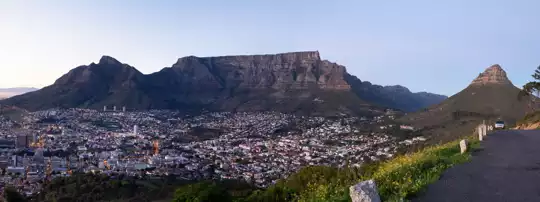
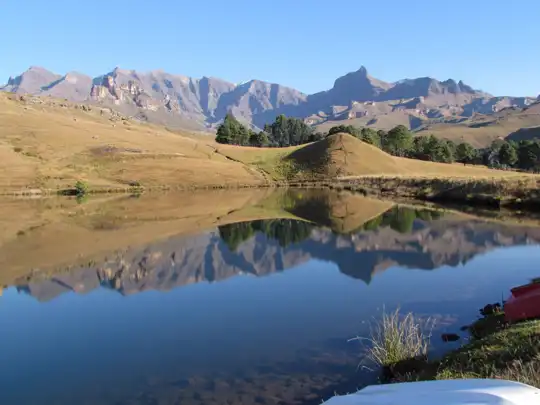
Most people only realize after the fact: Drakensberg’s biggest gift is how quickly you can leave civilization behind. One minute you’re on a bus from Durban or Johannesburg, the next you’re staring up at basalt cliffs that look like the edge of the world. The Drakensberg mountains slice through eastern South Africa, forming a natural border with Lesotho—a wall of green, gold, and shadow. The main hike here isn’t a single trail but a choose-your-own-adventure of ridges, passes, and valleys. The scenery is raw: vertical amphitheaters, waterfalls that vanish into mist, and grasslands that hum with insects. It’s tough going—expect steep climbs, unpredictable weather, and trails that sometimes vanish into sheep tracks. But the payoff is real: sunrise over the escarpment, the kind of silence that makes your ears ring, and the first sip of water after a brutal ascent. Compared to Table Mountain’s crowds or the Garden Route’s gentler paths, Drakensberg feels wild, unfiltered, and earned.

Discover everything you want to know in the 📖 South Africa Travel Guide.
Best time to go: March - May, October - November
Duration: 12 to 14 days
Distance: 1,000 kilometers
Total ascent: 1,200 meters
Loading the map 🌍
CLICK TO FILTER
cities
towns
villages
landmarks
national parks
hikes
beaches
attractions
festivals
regions
SHOW COUNTRY’S BESTSHOW ALL

✨ Why go?
Ranked #2 hike in South Africa
What sets this place apart

The Drakensberg is a backpacker’s playground, where every step is a dance between effort and reward. The scenery-to-effort ratio is off the charts. You’ll find yourself scaling rugged cliffs, with the majestic peaks looming overhead, and valleys that stretch endlessly below. Each vista feels like a personal trophy, earned through sweat and determination.

Getting there is a breeze. Public transport access is solid, with buses and shuttles whisking you from major cities like Durban. Once you’re in the area, the low cost of camping or staying in local huts makes it easy to stretch your budget. You can choose your own adventure with flexible distances—from a quick day hike to multi-day treks that challenge your limits.

The Drakensberg fits seamlessly into a longer backpacking route through South … read more 👉
The Drakensberg is a backpacker’s playground, where every step is a dance between effort and reward. The scenery-to-effort ratio is off the charts. You’ll find yourself scaling rugged cliffs, with the majestic peaks looming overhead, and valleys that stretch endlessly below. Each vista feels like a personal trophy, earned through sweat and determination.

Getting there is a breeze. Public transport access is solid, with buses and shuttles whisking you from major cities like Durban. Once you’re in the area, the low cost of camping or staying in local huts makes it easy to stretch your budget. You can choose your own adventure with flexible distances—from a quick day hike to multi-day treks that challenge your limits.

The Drakensberg fits seamlessly into a longer backpacking route through South Africa. It’s a natural stop between the coast and the interior, making it a perfect pit stop for those craving both adventure and serenity. The trails are alive with the sounds of nature, and the moment you reach the summit, the burn in your legs fades away, replaced by the thrill of the view and the promise of a cold beer waiting at the end of the day.
Want to include Drakensberg in your South Africa route?
Create a personalized South Africa itinerary that includes Drakensberg and the places that fit your trip — based on your travel style, budget, and available time. Get your route in seconds.

Generate my trip

💡 HighlightsKey sights and experiences for travelers

  1. The Amphitheatre & Tugela Falls — a jaw-dropping 5-km high basalt cliff face with the Tugela drops plunging from it; the scale is the thing here — you’re standing beneath a wall of rock and a thundering waterfall (best after rain), which makes for one of the most dramatic single-viewpoint experiences in southern Africa.
  2. Chain Ladders to the Amphitheatre Rim — a short, steep scramble aided by metal ladders and handholds that gets you up onto the lip of the Amphitheatre; not a casual stroll — it’s a bit of an adrenaline hit and the payoff is one of the most cinematic ridge views you’ll find anywhere.
  3. Giants Castle San Rock Art & Reserve — combines mellow hikes with world-class San (Bushman) rock paintings and a working conservation area; culturally rich and quieter than the big tourist spots,
read more 👉
  1. The Amphitheatre & Tugela Falls — a jaw-dropping 5-km high basalt cliff face with the Tugela drops plunging from it; the scale is the thing here — you’re standing beneath a wall of rock and a thundering waterfall (best after rain), which makes for one of the most dramatic single-viewpoint experiences in southern Africa.
  2. Chain Ladders to the Amphitheatre Rim — a short, steep scramble aided by metal ladders and handholds that gets you up onto the lip of the Amphitheatre; not a casual stroll — it’s a bit of an adrenaline hit and the payoff is one of the most cinematic ridge views you’ll find anywhere.
  3. Giants Castle San Rock Art & Reserve — combines mellow hikes with world-class San (Bushman) rock paintings and a working conservation area; culturally rich and quieter than the big tourist spots, plus decent chances to spot grazing antelope (eland, blesbok) and lots of upland birdlife.
  4. Cathedral Peak Ridge — an iconic spire that defines the skyline and rewards hikers with long ridge walks, dramatic cols and panoramic sunrise/sunset views; the geology and jagged skyline give it an alpine feel you don’t expect in Africa, and routes range from chill day-walks to proper scrambles.
  5. Sani Pass & Sani Top (Lesotho border) — the approach and summit change the landscape fast: steep, raw, and otherworldly. You can hike (or 4x4) to Sani Top, cross into Lesotho, visit the famous “highest pub in Africa” and experience Basotho culture and the broad highland plateaus — a nice contrast to the escarpment cliffs.
Spotted a mistake or missing something? Contact us.

🌤️ When to go?Best time to hike the Drakensberg


  • Weather: The Drakensberg’s weather swings hard. Late spring (October-November) and early autumn (March-April) offer dry trails and mild skies. Avoid summer’s heavy rains that turn paths into mudslides and winter’s icy grip that chills to 0°C (32°F) or below.

  • Temperature: Daytime highs in spring and autumn hover around 20-25°C (68-77°F), perfect for sweating it out without overheating. Nights can dip to 5-10°C (41-50°F), so pack layers.

  • Daylight Hours: Spring and autumn provide balanced daylight—about 10-12 hours—enough time to push hard and still catch sunset views without rushing.

  • Crowds: Peak summer and school holidays pack the trails. Spring and autumn see fewer hikers, letting you claim the wild without elbowing through groups.

  • Seasonal Activities: Spring blooms burst with wildflowers,
read more 👉

  • Weather: The Drakensberg’s weather swings hard. Late spring (October-November) and early autumn (March-April) offer dry trails and mild skies. Avoid summer’s heavy rains that turn paths into mudslides and winter’s icy grip that chills to 0°C (32°F) or below.

  • Temperature: Daytime highs in spring and autumn hover around 20-25°C (68-77°F), perfect for sweating it out without overheating. Nights can dip to 5-10°C (41-50°F), so pack layers.

  • Daylight Hours: Spring and autumn provide balanced daylight—about 10-12 hours—enough time to push hard and still catch sunset views without rushing.

  • Crowds: Peak summer and school holidays pack the trails. Spring and autumn see fewer hikers, letting you claim the wild without elbowing through groups.

  • Seasonal Activities: Spring blooms burst with wildflowers, adding color to the rugged landscape. Autumn’s crisp air sharpens the vistas, making every summit feel earned.

  • Price Fluctuations: Off-peak seasons (spring and autumn) often bring better deals on lodging and permits. Summer’s high demand pushes prices up, especially around holidays.


Pro-tip: Time your hike for early spring to dodge crowds, catch wildflowers, and enjoy firm, dry trails before the summer storms roll in.


source: climatestotravel.comJANJanuary: fair for travelingFEBFebruary: fair for travelingMARMarch: highly recommended for travelingAPRApril: highly recommended for travelingMAYMay: good for travelingJUNJune: below average for travelingJULJuly: below average for travelingAUGAugust: below average for travelingSEPSeptember: fair for travelingOCTOctober: excellent for travelingNOVNovember: excellent for travelingDECDecember: fair for traveling
South Africa - Drakensberg

✈️ The backpacker research shortcutSouth Africa Travel Guide

An offline-friendly backpacking guide with optimized travel routes, ranked highlights, transport advice, and the best areas to stay.
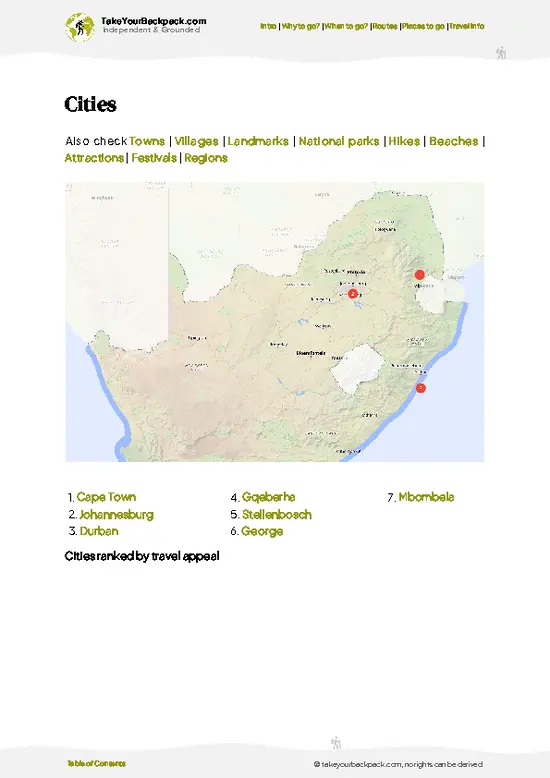
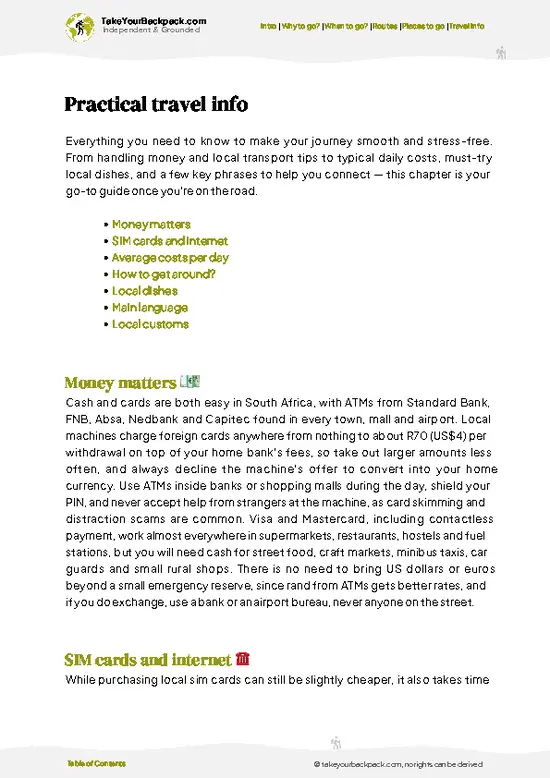
example page 0 from our offline Travel Guide for South Africa
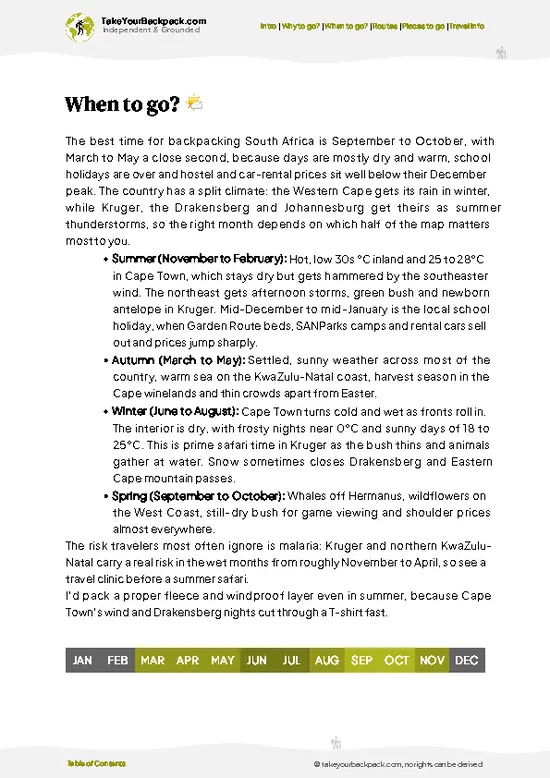
example page 1 from our offline Travel Guide for South Africa
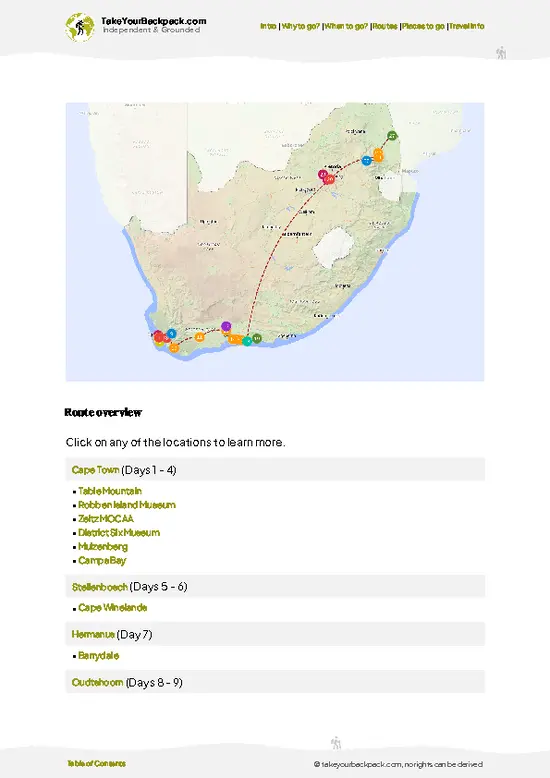
example page 2 from our offline Travel Guide for South Africa
example page 3 from our offline Travel Guide for South Africa
example page 4 from our offline Travel Guide for South Africa
example page 5 from our offline Travel Guide for South Africa
example page 6 from our offline Travel Guide for South Africa
example page 7 from our offline Travel Guide for South Africa
The digital guide (453 pages) contains:
129 highlights, ranked by travel appeal
Optimized 7, 14 & 21-day travel routes
Cities, national parks, landmarks, beaches
How to get around
Offline-friendly for travel without Wi-Fi
👉 Click to see all 30+ guide features

📅 Plan smarter in minutes, not weeks
Month by month travel advice
Festivals & national holidays
Budget expectations

🗺️ Go to the right places, skip the overrated ones
Honest pros & cons of destinations
Top hikes, parks & viewpoints
Lesser-known places most travelers miss
Clear “worth it vs skip it” guidance

🛏️ Travel smoothly without rookie mistakes
Best areas to stay
Transport systems explained simply
Common scams & safety advice
SIM cards, money & practical tips

🌍 Understand the country, not just visit it
Culture & traditions
Local customs
Festivals worth planning around
Traveler-friendly historical context
Insights that make places more meaningful

📱 Built for real travel conditions
Fully downloadable PDF
Works completely offline
Optimized for phone use
Useful in remote areas & buses
Everything in one place
Save weeks of stressful planning
Get instant access to your full guide. 30‑day money-back guarantee.
+ Add another guide for just US$7.80

By proceeding you agree to our terms.
Sent to your inbox immediately after payment • 100% Secure Checkout
Best Backpacking Travel Advisor 2025 tourism awardBest Backpacking
Travel Advisor
2025
What others say about Take Your Backpack Guides:
⭐⭐⭐⭐⭐
Fantastic, amazing amount of information!
⭐⭐⭐⭐⭐
My goodness this is amazing, it's what I've been looking for hats off too you!
⭐⭐⭐⭐⭐
I think this is absolutely BRILLIANT
⭐⭐⭐⭐
Very complete and informative. It's still missing places, but I gotta to commend you
⭐⭐⭐⭐⭐
This is truly amazing, thank you, can't wait to explore it with my kids!
⭐⭐⭐⭐⭐
Awesome resource, thank you!
⭐⭐⭐⭐⭐
This is amazing! Can't wait to explore the ones I haven't seen
⭐⭐⭐⭐
I love this! Well done, great idea.
⭐⭐⭐⭐⭐
Thanks for taking the time to make this gem!
⭐⭐⭐⭐⭐
This might be the best website I've ever seen.
⭐⭐⭐⭐⭐
Congratulations, and thank you so much for your work; it's incredibly valuable.
⭐⭐⭐⭐
In all seriousness I think you did a great job pointing out the important spots
⭐⭐⭐⭐⭐
10/10 very good
⭐⭐⭐⭐⭐
As someone who's only just starting to visit regularly this is awesome, thank you.
⭐⭐⭐⭐
Thank you very much! I'm going to visit my dad, it's going to be very useful!
⭐⭐⭐⭐⭐
This is really cool! We'll be travelling for the first time and this definitely come in handy.
⭐⭐⭐⭐⭐
You are now our minister of culture, congratulations 👨‍💼
⭐⭐⭐⭐⭐
Just wanted to tell you that this is a pearl! Going to follow your recommendations.
⭐⭐⭐⭐⭐
This is so cool. I'll definitely be using the resource for my travels soon.
⭐⭐⭐⭐⭐
This is very impressive! Good work.
⭐⭐⭐⭐⭐
This is an amazing and informative site. Very well done!

🛏️ Where to stay?Best areas and accommodation options

If you enjoy meeting fellow travelers, consider choosing hostels with high ratings for atmosphere. On the other hand, if you prefer having your own space, a hotel might be a better option.

🥾 Hike detailsTrail overview: what to expect on the hike

Total Distance: The Drakensberg trail spans about 200 kilometers (around 124 miles) if you tackle the whole Amphitheatre route, but you can easily break it down into shorter sections depending on your stamina and time.

Estimated Duration: Expect to spend around 7 to 10 days for the full trek, depending on your pace and how much time you want to spend soaking in the views. If you’re just doing a section, plan for a few hours to a full day.

Difficulty Level: This trail is generally rated as moderate to challenging. Some parts are steep and rocky, so a good level of fitness is beneficial. You don’t … read more 👉
Total Distance: The Drakensberg trail spans about 200 kilometers (around 124 miles) if you tackle the whole Amphitheatre route, but you can easily break it down into shorter sections depending on your stamina and time.

Estimated Duration: Expect to spend around 7 to 10 days for the full trek, depending on your pace and how much time you want to spend soaking in the views. If you’re just doing a section, plan for a few hours to a full day.

Difficulty Level: This trail is generally rated as moderate to challenging. Some parts are steep and rocky, so a good level of fitness is beneficial. You don’t need to be a pro, but don’t underestimate it either.

Starting Point: You can kick off your hike at the Royal Natal National Park. To get there via public transport, take a bus from Durban to the small town of Bergville. From Bergville, you can catch a local taxi or arrange a shuttle to the park entrance.

Major Landmarks:
  • The Amphitheatre: This iconic cliff face is a jaw-dropper and a great spot for photos.
  • Cathedral Peak: A stunning peak that offers a challenging hike for those looking to summit.
  • Thukela Falls: One of the highest waterfalls in Africa, it’s worth a detour.

Type of Terrain and Scenery: You’ll encounter a mix of rocky paths, grassy slopes, and some steep ascents. The views are absolutely breathtaking, with dramatic cliffs, rolling hills, and valleys that stretch for miles. You’ll also find some river crossings, so be prepared for wet feet now and then.

Typical Vegetation and Wildlife:
  • Vegetation: Expect to see a variety of plant life, including grasslands, alpine flowers, and even some indigenous trees like yellowwood.
  • Wildlife: Keep an eye out for baboons, eland, and various bird species, including the rare Bearded Vulture.

Pack smart, stay hydrated, and enjoy the amazing landscapes!
⚠️ Hiking info can sometimes be outdated or inaccurate. Before you hit the trail, check the latest conditions with locals. If you do spot anything that's off, I'd love to hear from you, so I can update it for fellow travelers.

🛡️ SafetyStaying Safe: What Travelers Should Know

The Drakensberg trails are a playground of rugged beauty, but they demand respect. Weather can shift in an instant. One moment, you’re basking in sunshine; the next, clouds roll in, bringing rain and chill. Layer your clothing and pack a waterproof jacket.

The terrain varies from gentle slopes to steep ascents that will test your legs. Navigation is straightforward on well-marked paths, but keep your eyes peeled for rocky sections that can trip you up. River crossings can be tricky after rain, so scout your route carefully.

Wildlife is part of the experience. You might spot a baboon or a rare bird, but keep your distance. They’re more curious than aggressive, but feeding them is a no-go.

First-timers often underestimate the altitude. Hydrate well and take your time. Pace yourself, especially … read more 👉
The Drakensberg trails are a playground of rugged beauty, but they demand respect. Weather can shift in an instant. One moment, you’re basking in sunshine; the next, clouds roll in, bringing rain and chill. Layer your clothing and pack a waterproof jacket.

The terrain varies from gentle slopes to steep ascents that will test your legs. Navigation is straightforward on well-marked paths, but keep your eyes peeled for rocky sections that can trip you up. River crossings can be tricky after rain, so scout your route carefully.

Wildlife is part of the experience. You might spot a baboon or a rare bird, but keep your distance. They’re more curious than aggressive, but feeding them is a no-go.

First-timers often underestimate the altitude. Hydrate well and take your time. Pace yourself, especially on the climbs. The reward? A breathtaking view that makes every step worthwhile. After a long day, nothing beats that first cold beer at camp.

FAQFrequently asked questions about Drakensberg

The Drakensberg hike typically takes between 3 to 7 days depending on the route and pace. Popular routes like the Amphitheatre or the Tugela Falls hike can be completed in 2 to 4 days. Longer multi-day treks covering more remote areas can extend up to a week.
The difficulty of the Drakensberg hike ranges from moderate to strenuous. Trails involve steep ascents, rocky terrain, and variable weather, with altitudes reaching over 3,000 meters. Hikers should be in good physical condition and prepared for challenging conditions.
Yes, a permit is required for most Drakensberg hikes, especially in the uKhahlamba-Drakensberg Park. Guides are not mandatory but recommended for safety and navigation on complex routes. Permits typically cost around 100 to 150 ZAR per day and can be obtained from park offices.
⚠️ Things can change over time, so always validate details locally before you go.

Other South African hikes near Drakensberg

Explore more nearby:

  • Giant’s Cup Trail—Drakensberg foothills, sandstone outcrops, grassland plateaus, river valleys| 219 km away
  • Fanie Botha Trail—pine plantations, mistbelt forest, escarpment views, waterfalls| 322 km away
  • Wild Coast Hiking Trail—untamed beaches, river crossings, rural villages, rolling hills| 421 km away

💡 Not sure where to go next?
Create a personalized itinerary for South Africa including Drakensberg and the places that fit your trip.

Generate my itinerary

👉 Discover all hikes

Or checkout all South Africa has to offer (think cities, towns, villages, national parks, hikes, beaches, festivals)
Country photo of South Africa

We 💚 feedbackWhat to keep in mind

The Drakensberg is a playground for the adventurous spirit. Picture this: you’re scaling rocky paths, breathless, and then—bam!—the view opens up, revealing valleys that stretch endlessly. It’s pure magic. But let’s keep it real: the weather can flip on you. One moment it’s sunny, the next you’re dodging rain. Pack smart and embrace the unpredictability. The rewards are worth every step, but be ready for a little grit along the way.

✈️ When did I visit South Africa?
I have visited South Africa, before and after my Zimbabwe trip in 2001.

✍️ Help improve this page!
The information on this page is based on my own backpacking experience in South Africa, supplemented with up-to-date research and feedback from other travelers. Travel details can change, so if you notice anything outdated or incomplete, feel free to let me know.


🙋‍♂️ Give feedback

👋 Meet the founderWho’s Behind Take Your Backpack?

Johan, backpacker and founder of TakeYourBackpackHi, I’m Johan (Netherlands 🇳🇱), the creator of TakeYourBackpack. Over the past decade, I’ve backpacked through 80+ countries across six continents, gaining extensive experience with independent travel, long-term trips, and overland routes.

This site is built on a combination of firsthand travel experience and carefully curated insights from other backpackers. Many guides are based on places I’ve personally visited, while others bring together tips, observations, and practical advice shared by trusted travelers I’ve met along the way.

The goal is to provide realistic, experience-driven guidance — not generic itineraries — so you can explore destinations with better context, clearer expectations, and more confidence.

Get full country guide •
Instant download • 129 highlights • Full Offline guide