

×

South Africa🇿🇦 | hikesHarkerville Coastal TrailSandstone cliffs, ladders and gullies, forest hut, tidal pools | things to do and best time to go

Explore Giant’s Cup TrailExplore Fanie Botha Trail

Backpacking in Harkerville Coastal Trail
👀 For curious travelershike ranked #11
By Johan Kruseman 🇳🇱 | Updated October 22, 2026

I stepped off the gravel track at the trailhead and heard the Indian Ocean before I saw it, a low boom rolling up through the milkwood forest, and my first impression was how fast the trees gave way to open cliff. The Harkerville Coastal Trail runs along the coast east of Knysna in South Africa’s Western Cape, through forest, fynbos and sea cliffs. The scenery is excellent: ladders, gullies and sheer drops over surf. It is a tough 2-day slog, with steep, slippery sections, and no bus reaches the start, so you need a car or shuttle. Skip it if you dislike scrambling. Go if you want wild coastline. Fit hikers will love it; casual walkers won’t.

Discover everything you want to know in the 📖 South Africa Travel Guide.
Best time to go: September - May
Duration: 2 days
Distance: 25 kilometers
Total ascent: 900 meters


example page 0 from our offline Travel Guide for South Africa
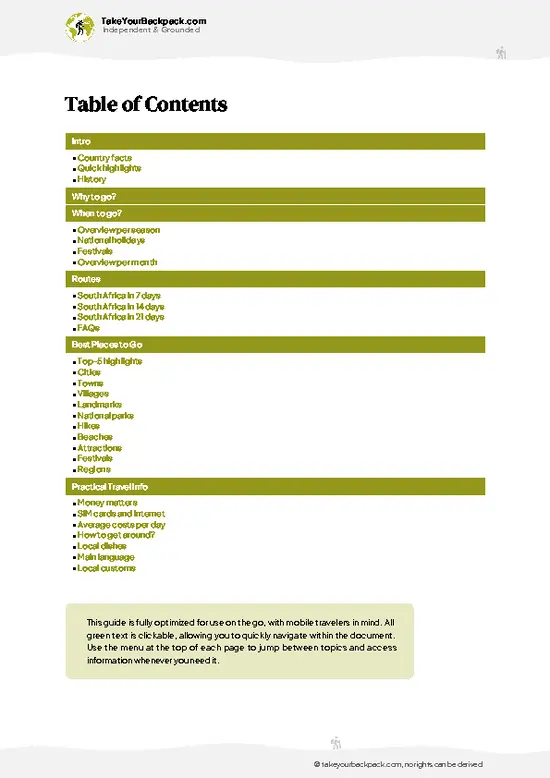
example page 1 from our offline Travel Guide for South Africa
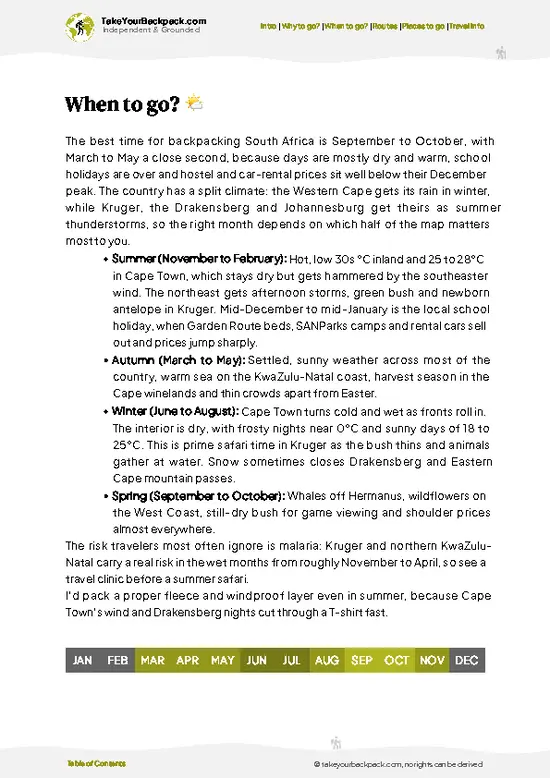
example page 2 from our offline Travel Guide for South Africa
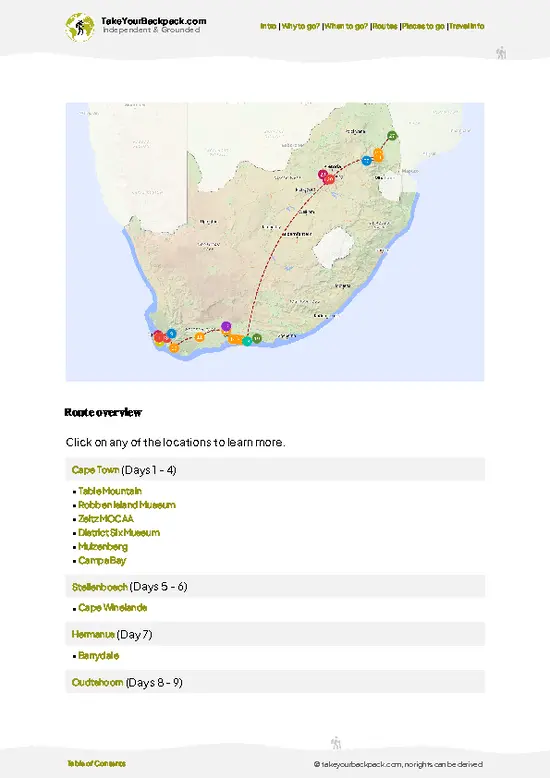
example page 3 from our offline Travel Guide for South Africa
example page 4 from our offline Travel Guide for South Africa
example page 5 from our offline Travel Guide for South Africa
example page 6 from our offline Travel Guide for South Africa
example page 7 from our offline Travel Guide for South Africa
Loading the map 🌍
CLICK TO FILTER
cities
towns
villages
landmarks
national parks
hikes
beaches
attractions
festivals
regions
SHOW COUNTRY’S BESTSHOW ALL

✨ Why go?
Ranked #11 hike in South Africa
What sets this place apart

Harkerville Coastal Trail packs a huge amount of coastline into two days, and that is the main reason backpackers seek it out. You walk through Afromontane forest of yellowwood and stinkwood, then break onto cliff tops where the surf crashes far below. The route is a loop, so there is no shuttle puzzle at the end, and the overnight hut gives you a proper dry bed without a tent. It also sits neatly on the Garden Route, between Knysna and Plettenberg Bay, so it slots into a longer road or bus journey. The Sandstone Gorge and Sinclair’s Bay sections are the draw: ladders, rock steps and a rocky shore that few day-trippers ever reach.

💡 HighlightsKey sights and experiences for travelers

  1. Cliff-top coastal sections: The trail’s signature stretch follows sheer sandstone cliffs above the Indian Ocean, with long views of surf and, at times, dolphins offshore.
  2. Forest of Harkerville: Tall yellowwood and stinkwood trees create a dim, mossy canopy, with birdsong and the occasional glimpse of a bushbuck.
  3. Ladder and gully crossings: Steep rock steps, ladders and gullies make the walk feel like an adventure and slow you down in the best way.
  4. Overnight hut: A basic trail hut gives you a bed and a place to cook, with the sound of the sea close by.
  5. Rocky shoreline and tidal pools: Where the trail reaches the shore, you can scramble over boulders and look into pools full of small marine life.
Harkerville Coastal Trail requires booking ahead for the overnight hut and trail permit through the managing authority, especially in holiday periods.
Spotted a mistake or missing something? Contact us.

Things to do near Harkerville Coastal Trail

Ratings based on Tripadvisor reviews. When you book through this link, you support our work at no extra cost to you.

🌤️ When to go?Best time to hike the Harkerville Coastal Trail

  • Autumn (March to May): Clear, settled days of 16 to 24°C (61 to 75°F) make this the most comfortable window for the rocky sections, with moderate crowds and steady prices.
  • Winter (June to August): Days reach 15 to 20°C (59 to 68°F), nights drop to 6 to 9°C (43 to 48°F), and cold fronts bring rain. Daylight is short, so start early. Huts are quiet and cheaper.
  • Spring (September to November): Fynbos blooms and temperatures sit at 14 to 22°C (57 to 72°F), though rain and wind can arrive suddenly.
  • Summer (December to February): Expect 18 to 27°C (64 to 81°F), humidity, and long daylight. December school holidays fill the huts, and prices climb.
Book the overnight huts well ahead for December and Easter, and check the tide timing for the coastal sections.

source: climatestotravel.comJANJanuary: excellent for travelingFEBFebruary: excellent for travelingMARMarch: excellent for travelingAPRApril: highly recommended for travelingMAYMay: highly recommended for travelingJUNJune: fair for travelingJULJuly: below average for travelingAUGAugust: fair for travelingSEPSeptember: highly recommended for travelingOCTOctober: excellent for travelingNOVNovember: excellent for travelingDECDecember: highly recommended for traveling
when-to-go

✈️ The backpacker research shortcutSouth Africa Travel Guide

An offline-friendly backpacking guide with optimized travel routes, ranked highlights, transport advice, and the best areas to stay.
example page 0 from our offline Travel Guide for South Africa
example page 1 from our offline Travel Guide for South Africa
example page 2 from our offline Travel Guide for South Africa
example page 3 from our offline Travel Guide for South Africa
example page 4 from our offline Travel Guide for South Africa
example page 5 from our offline Travel Guide for South Africa
example page 6 from our offline Travel Guide for South Africa
example page 7 from our offline Travel Guide for South Africa
The digital guide (457 pages) contains:
✅ 125 highlights, ranked by travel appeal
✅ Optimized 7, 14 & 21-day travel routes
✅ Cities, national parks, landmarks, beaches
✅ How to get around
✅ Offline-friendly for travel without Wi-Fi
👉 Click to see all 30+ guide features

📅 Plan smarter in minutes, not weeks
✅ Month by month travel advice
✅ Festivals & national holidays
✅ Budget expectations

🗺️ Go to the right places, skip the overrated ones
✅ Honest pros & cons of destinations
✅ Top hikes, parks & viewpoints
✅ Lesser-known places most travelers miss
✅ Clear “worth it vs skip it” guidance

🛏️ Travel smoothly without rookie mistakes
✅ Best areas to stay
✅ Transport systems explained simply
✅ Common scams & safety advice
✅ SIM cards, money & practical tips

🌍 Understand the country, not just visit it
✅ Culture & traditions
✅ 52 Essential phrases & customs
✅ Festivals worth planning around
✅ Traveler-friendly historical context
✅ Insights that make places more meaningful

📱 Built for real travel conditions
✅ Fully downloadable PDF
✅ Works completely offline
✅ Optimized for phone use
✅ Useful in remote areas & buses
✅ Everything in one place
Stop searching, start planning
Get instant access to your full guide. 30‑day money-back guarantee.
+ Add another guide for just

By proceeding you agree to our terms.
Sent to your inbox immediately after payment • 100% Secure Checkout
Best Backpacking Travel Advisor 2025 tourism awardBest Backpacking
Travel Advisor
2025
What others say about Take Your Backpack Guides:
⭐⭐⭐⭐⭐
Fantastic, amazing amount of information!
⭐⭐⭐⭐⭐
My goodness this is amazing, it's what I've been looking for hats off too you!
⭐⭐⭐⭐⭐
I think this is absolutely BRILLIANT
⭐⭐⭐⭐
Very complete and informative. It's still missing places, but I gotta to commend you
⭐⭐⭐⭐⭐
This is truly amazing, thank you, can't wait to explore it with my kids!
⭐⭐⭐⭐⭐
Awesome resource, thank you!
⭐⭐⭐⭐⭐
This is amazing! Can't wait to explore the ones I haven't seen
⭐⭐⭐⭐
I love this! Well done, great idea.
⭐⭐⭐⭐⭐
Thanks for taking the time to make this gem!
⭐⭐⭐⭐⭐
This might be the best website I've ever seen.
⭐⭐⭐⭐⭐
Congratulations, and thank you so much for your work; it's incredibly valuable.
⭐⭐⭐⭐
In all seriousness I think you did a great job pointing out the important spots
⭐⭐⭐⭐⭐
10/10 very good
⭐⭐⭐⭐⭐
As someone who's only just starting to visit regularly this is awesome, thank you.
⭐⭐⭐⭐
Thank you very much! I'm going to visit my dad, it's going to be very useful!
⭐⭐⭐⭐⭐
This is really cool! We'll be travelling for the first time and this definitely come in handy.
⭐⭐⭐⭐⭐
You are now our minister of culture, congratulations 👨‍💼
⭐⭐⭐⭐⭐
Just wanted to tell you that this is a pearl! Going to follow your recommendations.
⭐⭐⭐⭐⭐
This is so cool. I'll definitely be using the resource for my travels soon.
⭐⭐⭐⭐⭐
This is very impressive! Good work.
⭐⭐⭐⭐⭐
This is an amazing and informative site. Very well done!

🛏️ Where to stay?Choosing the right base

If you enjoy meeting fellow travelers, consider choosing hostels with high ratings for atmosphere. On the other hand, if you prefer having your own space, a hotel might be a better option.

🥾 Hike detailsEverything you need to know before hiking Harkerville Coastal Trail

Total Distance: Harkerville Coastal Trail is a loop of roughly 25 kilometers, usually split over two days.
Duration: Two days with one night in the hut, about 6 to 8 hours of walking each day.
Difficulty: Hard. Expect steep climbs, ladders, slippery rock and exposed edges.
Starting Point: The trailhead lies in Harkerville Forest, east of Knysna off the N2. No regular public transport reaches it, so most hikers arrive by car or arranged transfer.
Major Landmarks:
  • Forest sections: Indigenous canopy and mossy paths.
  • Sea cliffs: Open ledges with long ocean views.
  • Overnight hut: The halfway point for rest.
… read more 👉
Total Distance: Harkerville Coastal Trail is a loop of roughly 25 kilometers, usually split over two days.
Duration: Two days with one night in the hut, about 6 to 8 hours of walking each day.
Difficulty: Hard. Expect steep climbs, ladders, slippery rock and exposed edges.
Starting Point: The trailhead lies in Harkerville Forest, east of Knysna off the N2. No regular public transport reaches it, so most hikers arrive by car or arranged transfer.
Major Landmarks:
  • Forest sections: Indigenous canopy and mossy paths.
  • Sea cliffs: Open ledges with long ocean views.
  • Overnight hut: The halfway point for rest.
Terrain and Scenery: Rocky paths, wooden steps, ladders, gullies and boulder scrambles above a rugged shore.
Vegetation: Afromontane forest, coastal fynbos and thicket.
Wildlife: Bushbuck, vervet monkeys, forest birds and, offshore, dolphins and sometimes whales.
⚠️ Hiking info can sometimes be outdated or inaccurate. Before you hit the trail, check the latest conditions with locals. If you do spot anything that's off, I'd love to hear from you, so I can update it for fellow travelers.

🛡️ SafetyScams, Hazards, and Annoyances

Harkerville Coastal Trail is well marked, but the terrain is the real challenge. Sections of slippery rock, ladders, steep forest climbs and boulder scrambles over the sea cliffs demand sturdy boots with good grip and a slow pace, especially after rain. Weather turns fast on this coast, so carry a waterproof layer even on clear mornings. Take plenty of water, because the trail has little drinking supply on the exposed stretches, and carry a charged phone for the patchy signal. Keep to the marked route near cliff edges and never approach the waves on low rocks. Baboons and bushbuck sometimes appear, so secure your food in the huts and keep your distance from the animals.

FAQCommon questions from travelers

Harkerville Coastal Trail takes either one day or two days depending on the route. The Red Route is a roughly 7 hour day hike of about 15 kilometers (9 miles), while the Blue Route is a 2-day, 1-night option of about 20 kilometers (12 miles) with hut stays. Both start at Harkerville Forest Station, around 20 minutes by road from Plettenberg Bay.
Harkerville Coastal Trail is moderate to challenging, mostly because of the terrain rather than the distance. Expect steep forest climbs, slippery rock, boulder hopping and ladders over the coastal cliffs, with the Red Route being the hardest. A reasonable level of fitness and sturdy boots are needed, and the trail is not suitable for young children or anyone afraid of heights.
Harkerville Coastal Trail needs a permit, but not a guide. You book and pay through SANParks, with day hikers typically paying around US$10 to 20 per person and overnight hut stays costing more. Check in at Harkerville Forest Station, where the trail is clearly marked and you can walk it independently, though numbers are limited so booking ahead is wise.
⚠️ Things can change over time, so always validate details locally before you go.

Other South African hikes near Harkerville Coastal Trail

Explore more nearby:

  • Robberg Nature Reserve—Seal colony, The Gap, Witsand dune, 9.2 km loop| 17 km away
  • Tsitsikamma Trail—Huts and farm stays, fynbos ridges, river gorges, 6 to 8 days| 31 km away
  • Otter Trail—12-person permits, Waterfall Bay, Bloukrans tide crossing, 42 km| 45 km away

💡 Not sure where to go next?
Create a personalized itinerary for South Africa including Harkerville Coastal Trail and the places that fit your trip.

Generate my itinerary

👉 Discover all hikes

Or checkout all South Africa has to offer (think cities, towns, villages, national parks, hikes, beaches, festivals)
Country photo of South Africa

We 💚 feedbackParting advice and final tips

Harkerville Coastal Trail is best in the cooler, drier months of winter and early spring, when the rock is less slick and the cliff views are clearest. I would start the first day early so you reach the hut with light to spare, and bring grippy boots.

✈️ When did I visit South Africa?
I have visited South Africa, before and after my Zimbabwe trip in 2001.

✍️ Help improve this page!
The information on this page is based on my own backpacking experience in South Africa, supplemented with up-to-date research and feedback from other travelers. Travel details can change, so if you notice anything outdated or incomplete, feel free to let me know.


🙋‍♂️ Give feedback

👋 Meet the founderWho’s Behind Take Your Backpack?

Johan, backpacker and founder of TakeYourBackpackHi, I’m Johan (Netherlands 🇳🇱), the creator of TakeYourBackpack. Over the past 3 decades, I’ve backpacked through 90+ countries across six continents, gaining extensive experience with independent travel, long-term trips, and overland routes.

This site is built on a combination of firsthand travel experience and carefully curated insights from other backpackers. Many guides are based on places I’ve personally visited, while others bring together tips, observations, and practical advice shared by trusted travelers I’ve met along the way.

The goal is to provide realistic, experience-driven guidance — not generic itineraries — so you can explore destinations with better context, clearer expectations, and more confidence.