×

South Africa🇿🇦 | citiesDurbanIndian Ocean promenade, Zulu markets, subtropical climate, curry houses | things to do and best time to go

Explore Cape TownExplore Johannesburg

Backpacking in Durban
🌟 Highlightcity ranked #3
By Johan Kruseman 🇳🇱 | Updated May 19, 2026

You land in Durban and face your first real fork: do you splurge on a beachfront hostel in Umhlanga, or save cash by bunking downtown and braving the minibus taxis? This isn’t just about where you sleep—it’s about how you’ll experience the city’s pulse, and what you’ll trade in time, money, and comfort to do it. Durban sits on South Africa’s east coast, where the Indian Ocean’s humidity meets Zulu culture and colonial leftovers. For backpackers, Durban is a paradox: the Golden Mile’s surf and curry houses are magnetic, but the city’s sprawl and patchy public transport can eat hours if you’re not strategic. I’ve met more locals than travelers here—Durban’s not Cape Town’s Instagram darling, nor Joburg’s urban jungle, but that’s its charm. It’s affordable, especially for food (bunny chow is a rite of passage), but safety means staying sharp after dark. The city’s energy is raw, a little chaotic, and if you like your travel with a side of unpredictability, Durban rewards you.

Discover everything you want to know in the 📖 South Africa Travel Guide.
Loading the map 🌍
CLICK TO FILTER
city
town
village
unique site
national park
hike
beach
attraction
festival
region
SHOW COUNTRY’S BESTSHOW ALL

✨ Why go?
Ranked #3 city in South Africa
The unique appeal for travelers

Durban is a backpacker’s playground that strikes a balance between affordability and vibrancy. It’s not just a pit stop; it’s a basecamp for adventure. The hostel scene is diverse, offering everything from budget dorms to cozy private rooms, making it easy to meet fellow travelers. You’ll find a range of affordable food options, from local street vendors serving up bunny chow to trendy cafes with a twist on traditional dishes.

The city is walkable, with a lively beachfront promenade that invites exploration. You can easily wander from the bustling markets to the laid-back beaches, soaking in the local culture. When the sun sets, the nightlife kicks in, with bars and clubs that cater to all tastes, ensuring you can unwind after a day of adventure.

Durban also serves as a gateway for day … read more 👉
Durban is a backpacker’s playground that strikes a balance between affordability and vibrancy. It’s not just a pit stop; it’s a basecamp for adventure. The hostel scene is diverse, offering everything from budget dorms to cozy private rooms, making it easy to meet fellow travelers. You’ll find a range of affordable food options, from local street vendors serving up bunny chow to trendy cafes with a twist on traditional dishes.

The city is walkable, with a lively beachfront promenade that invites exploration. You can easily wander from the bustling markets to the laid-back beaches, soaking in the local culture. When the sun sets, the nightlife kicks in, with bars and clubs that cater to all tastes, ensuring you can unwind after a day of adventure.

Durban also serves as a gateway for day trips to nearby attractions, making it a strategic stop on your route. Whether you’re heading to the Drakensberg Mountains or the Wild Coast, the city’s transport links are solid. If you’re looking for a place that offers both character and convenience, Durban is a smart choice.
Get the complete Travel Guide for South Africa
Everything organized for offline planning — routes, highlights, costs & tips

See what’s inside 👉

Get the Travel Guide -

💡 HighlightsDon't-miss highlights and experiences

  • uShaka Marine World — South Africa’s big beachfront aquarium and waterpark tucked at the Point; brilliant for seeing local marine life up close, walking the aquarium tunnels, and for the lively waterfront atmosphere (street food, dhow boats and cheapish rides make it a proper Durban outing).
  • Moses Mabhida Stadium — that massive arch is more than a photo op: take the SkyCar or the arch walk for panoramic city-and-coast views, try the Big Rush swing if you’re game, and feel how modern Durban stages big public events.
  • Victoria Street Market — the sensory core of Durban’s Indian Quarter: spices, fresh curry ingredients, fabrics and beadwork; a real place to learn (and taste) how Indian influences shape Durban’s food and street culture.
  • Durban Botanic Gardens — one of Africa’s oldest botanic
read more 👉
  • uShaka Marine World — South Africa’s big beachfront aquarium and waterpark tucked at the Point; brilliant for seeing local marine life up close, walking the aquarium tunnels, and for the lively waterfront atmosphere (street food, dhow boats and cheapish rides make it a proper Durban outing).
  • Moses Mabhida Stadium — that massive arch is more than a photo op: take the SkyCar or the arch walk for panoramic city-and-coast views, try the Big Rush swing if you’re game, and feel how modern Durban stages big public events.
  • Victoria Street Market — the sensory core of Durban’s Indian Quarter: spices, fresh curry ingredients, fabrics and beadwork; a real place to learn (and taste) how Indian influences shape Durban’s food and street culture.
  • Durban Botanic Gardens — one of Africa’s oldest botanic gardens: shady camphor trees, orchids, and calm picnic lawns. It’s a quiet, historic green lung that explains Durban’s colonial and horticultural past.
  • KwaMuhle Museum — a short, moving museum in the city centre that tells Durban’s 20th-century social history, especially urbanisation and forced removals under apartheid; straightforward exhibits that add real context to the modern city you’re walking through.
  • Phansi Museum — a small, well-curated collection of Zulu and KwaZulu-Natal craft, beadwork and regalia housed in a Victorian building; the displays and friendly guides give a human face to traditional arts you’ll otherwise only see as souvenirs.
  • BAT Centre (Centre for the Creative Arts) — a converted old building turned arts hub where local theatre, galleries, workshops and live music happen. It’s where Durban’s creative community meets, and you’ll often catch affordable shows or pop-up markets.
  • Florida Road — a long strip of cafés, bars, murals and independent shops that’s the city’s most relaxed hangout. Great for people-watching, affordable eats, and a sense of contemporary Durban life after dark or on a lazy afternoon.
  • The Golden Mile (North & South Beach promenades) — Durban’s iconic beachfront: lifeguarded bathing, surf and skate culture, snack stalls selling bunny chow and sugarcane juice, plus a long promenade that captures the city’s seaside heart.
  • Durban City Hall & Durban Art Gallery — the old City Hall and attached art gallery sit in the civic heart of the city; the architecture, war memorials and local art exhibits give a compact history-and-culture stop right in the centre.
If you’ve got a day spare, easy nearby day trips include Umhlanga Rocks (beaches and lighthouse), the Valley of a Thousand Hills for Zulu culture and views, and the Howick area in the KZN Midlands (Howick Falls and craft markets).
Spotted a mistake or missing something? Contact us.

Things to do in Durban

Ratings based on Tripadvisor reviews. When you book through this link, you support our work at no extra cost to you.

🏘️ NeighborhoodsKey areas and districts to know

Durban is a vibrant city that offers a mix of cultures, stunning coastlines, and a laid-back atmosphere. Here’s how to navigate its neighborhoods for the best backpacking experience.

Umhlanga Rocks: This upscale area is known for its beautiful beaches and trendy vibe. It’s a bit pricier, but the beachfront accommodations are worth it for the views. Walkability is high, and you can easily hop on public transport to explore further. Great for a short stay if you want a taste of luxury without breaking the bank.

Durban Central: The heart of the city, this area is bustling with energy. It’s budget-friendly, with plenty of hostels and local eateries. While it can get noisy, it’s a hub for nightlife and cultural experiences. Perfect for longer stays if you want to immerse yourself in local life. … read more 👉
Durban is a vibrant city that offers a mix of cultures, stunning coastlines, and a laid-back atmosphere. Here’s how to navigate its neighborhoods for the best backpacking experience.

Umhlanga Rocks: This upscale area is known for its beautiful beaches and trendy vibe. It’s a bit pricier, but the beachfront accommodations are worth it for the views. Walkability is high, and you can easily hop on public transport to explore further. Great for a short stay if you want a taste of luxury without breaking the bank.

Durban Central: The heart of the city, this area is bustling with energy. It’s budget-friendly, with plenty of hostels and local eateries. While it can get noisy, it’s a hub for nightlife and cultural experiences. Perfect for longer stays if you want to immerse yourself in local life. Just be mindful of your surroundings at night.

Florida Road: Known for its vibrant café culture and nightlife, Florida Road is a hotspot for socializing. It’s walkable, with a mix of bars and restaurants. Prices are moderate, making it accessible for backpackers. Ideal for those looking to balance comfort and fun, whether for a short or extended visit.

Point Waterfront: This area offers a quieter vibe with stunning views of the harbor. It’s a bit more upscale, but you can find affordable options if you look. Walkability is decent, and it’s a great spot for a peaceful retreat after a day of exploring. Best for longer stays if you want to unwind.

⌛️ 1 day1-day itinerary for Durban

Durban, South Africa, is a vibrant coastal city where the Indian Ocean meets a rich tapestry of cultures. Known for its warm weather and stunning beaches, it also boasts a unique blend of Zulu heritage and colonial history. You can spend a day here that feels both leisurely and packed with experiences, all while avoiding the tourist traps.

Start your morning in the bustling neighborhood of **Morningside**. Grab a coffee and a bunny chow at **The Bunny Chow Café**. This local dish, a hollowed-out loaf filled with curry, is a must-try. The café’s laid-back vibe sets the tone for a day of exploration. After breakfast, stroll through the **Durban Botanic Gardens**. The lush greenery and diverse plant species offer a peaceful escape, and you might even catch a glimpse of the resident monkeys swinging … read more 👉
Durban, South Africa, is a vibrant coastal city where the Indian Ocean meets a rich tapestry of cultures. Known for its warm weather and stunning beaches, it also boasts a unique blend of Zulu heritage and colonial history. You can spend a day here that feels both leisurely and packed with experiences, all while avoiding the tourist traps.

Start your morning in the bustling neighborhood of **Morningside**. Grab a coffee and a bunny chow at **The Bunny Chow Café**. This local dish, a hollowed-out loaf filled with curry, is a must-try. The café’s laid-back vibe sets the tone for a day of exploration. After breakfast, stroll through the **Durban Botanic Gardens**. The lush greenery and diverse plant species offer a peaceful escape, and you might even catch a glimpse of the resident monkeys swinging through the trees.

As the sun climbs higher, head to **uShaka Marine World**. While it’s a popular spot, the aquarium is worth the visit. It’s not just about the sea life; the architecture mimics a shipwreck, adding a unique flair. Spend a couple of hours here, soaking in the marine wonders and maybe even catching a dolphin show.

In the afternoon, venture to **Berea**, a neighborhood that often flies under the radar. Check out the **Victoria Street Market**, where the vibrant stalls overflow with spices, crafts, and local delicacies. It’s a sensory overload in the best way. Grab a few snacks for later and chat with the vendors; they often have the best stories.

As evening approaches, make your way to **The Golden Mile**. Walk along the beachfront promenade, where the ocean breeze feels refreshing. For dinner, consider **The Oyster Box** in nearby Umhlanga. While it’s a splurge, the view of the lighthouse and the ocean at sunset is worth every penny.

Wrap up your day with a stroll along the beach, reflecting on the rich experiences you’ve packed into just one day. In Durban, every moment is a chance to connect with the city’s soul.
Build the Right Itinerary
Use the South Africa Travel Guide’s 7, 14 & 21-day routes as a starting point to plan a trip that actually works on the ground.

Get the Travel Guide -

🌤️ When to go?Best time to visit Durban


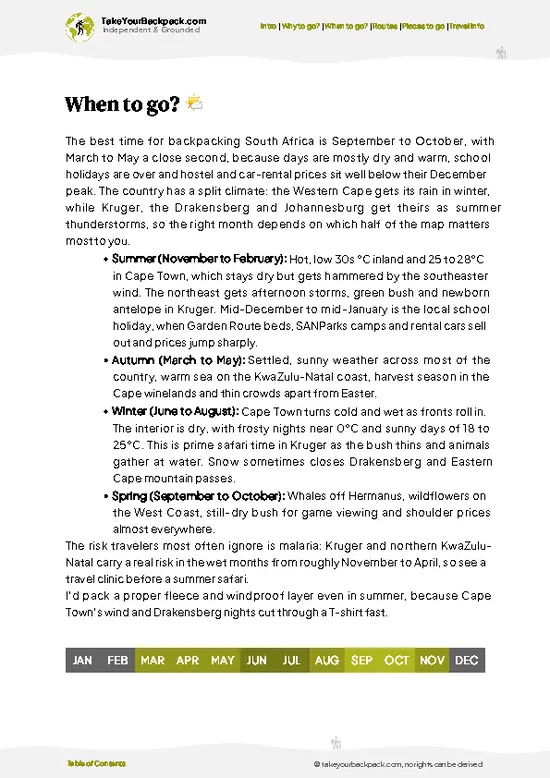
  • Weather: Durban enjoys a subtropical climate, meaning warm, humid summers and mild, dry winters. December to February sees highs around 28-31°C (82-88°F), perfect for beach days but expect humidity and occasional afternoon thunderstorms.

  • Temperature: Winter months (June to August) offer cooler, more comfortable temperatures averaging 19-23°C (66-73°F), ideal if you want to avoid sweat and still enjoy outdoor activities without the summer heat.

  • Daylight Hours: Summer days stretch longer, with up to 13 hours of daylight in December, giving you more time to explore. Winter days shorten to about 10 hours, so plan your hikes and city tours accordingly.

  • Crowds: Peak tourist season aligns with South African summer holidays (December to January), so expect busier beaches and higher prices.
read more 👉

  • Weather: Durban enjoys a subtropical climate, meaning warm, humid summers and mild, dry winters. December to February sees highs around 28-31°C (82-88°F), perfect for beach days but expect humidity and occasional afternoon thunderstorms.

  • Temperature: Winter months (June to August) offer cooler, more comfortable temperatures averaging 19-23°C (66-73°F), ideal if you want to avoid sweat and still enjoy outdoor activities without the summer heat.

  • Daylight Hours: Summer days stretch longer, with up to 13 hours of daylight in December, giving you more time to explore. Winter days shorten to about 10 hours, so plan your hikes and city tours accordingly.

  • Crowds: Peak tourist season aligns with South African summer holidays (December to January), so expect busier beaches and higher prices. Off-peak months like May and September offer quieter streets and a more local vibe.

  • Seasonal Activities: Summer is prime for surfing, snorkeling, and vibrant outdoor festivals. Winter brings whale watching opportunities along the coast and fewer tourists, making it easier to snag deals on tours.

  • Price Fluctuations: Accommodation and flights spike during December holidays and school breaks. Booking in shoulder seasons (March-May or September-November) can save you money without sacrificing decent weather.


Pro-tip: Aim for late spring (September-November) to balance pleasant weather, manageable crowds, and better prices—Durban’s sweet spot for backpackers who want it all without compromise.


source: climatestotravel.comJANJanuary: highly recommended for travelingFEBFebruary: good for travelingMARMarch: highly recommended for travelingAPRApril: highly recommended for travelingMAYMay: highly recommended for travelingJUNJune: good for travelingJULJuly: good for travelingAUGAugust: good for travelingSEPSeptember: excellent for travelingOCTOctober: excellent for travelingNOVNovember: excellent for travelingDECDecember: good for traveling
when-to-go

✈️ The backpacker research shortcutSouth Africa Travel Guide

An offline-friendly backpacking guide with optimized travel routes, ranked highlights, transport advice, and the best areas to stay.
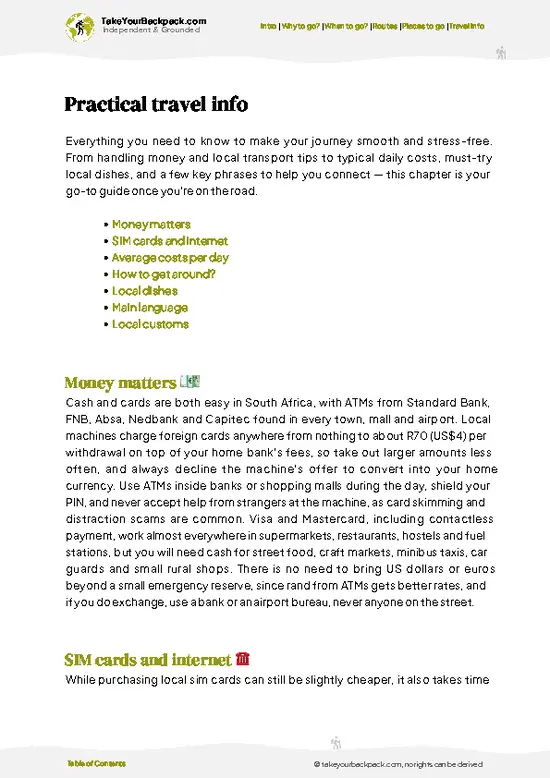
example page 0 from our offline Travel Guide for South Africaexample page 1 from our offline Travel Guide for South Africaexample page 2 from our offline Travel Guide for South Africaexample page 3 from our offline Travel Guide for South Africaexample page 4 from our offline Travel Guide for South Africaexample page 5 from our offline Travel Guide for South Africaexample page 6 from our offline Travel Guide for South Africaexample page 7 from our offline Travel Guide for South Africa
The digital guide (461 pages) contains:
131 highlights, ranked by travel appeal
Optimized 7, 14 & 21-day travel routes
Cities, national parks, beaches, historical sites, ...
How to get around
Offline-friendly for travel without Wi-Fi
👉 Click to see all 30+ guide features

📅 Plan smarter in minutes, not weeks
Month by month travel advice
Festivals & national holidays
Budget expectations

🗺️ Go to the right places, skip the overrated ones
Honest pros & cons of destinations
Top hikes, parks & viewpoints
Lesser-known places most travelers miss
Clear “worth it vs skip it” guidance

🛏️ Travel smoothly without rookie mistakes
Best areas to stay
Transport systems explained simply
Common scams & safety advice
SIM cards, money & practical tips

🌍 Understand the country, not just visit it
Culture & traditions
Local customs
Festivals worth planning around
Traveler-friendly historical context
Insights that make places more meaningful

📱 Built for real travel conditions
Fully downloadable PDF
Works completely offline
Optimized for phone use
Useful in remote areas & buses
Everything in one place
Save weeks of stressful planning
Get instant access to the full guide directly. 30-day money-back guarantee.


Sent to your inbox immediately after payment • 100% Secure Checkout
Best Backpacking Travel Advisor 2025 tourism awardBest Backpacking
Travel Advisor
2025
What others say about Take Your Backpack Guides:
⭐⭐⭐⭐⭐
Fantastic, amazing amount of information!
⭐⭐⭐⭐⭐
My goodness this is amazing, it's what I've been looking for hats off too you!
⭐⭐⭐⭐⭐
I think this is absolutely BRILLIANT
⭐⭐⭐⭐
Very complete and informative. It's still missing places, but I gotta to commend you
⭐⭐⭐⭐⭐
This is truly amazing, thank you, can't wait to explore it with my kids!
⭐⭐⭐⭐⭐
Awesome resource, thank you!
⭐⭐⭐⭐⭐
This is amazing! Can't wait to explore the ones I haven't seen
⭐⭐⭐⭐
I love this! Well done, great idea.
⭐⭐⭐⭐⭐
Thanks for taking the time to make this gem!
⭐⭐⭐⭐⭐
This might be the best website I've ever seen.
⭐⭐⭐⭐⭐
Congratulations, and thank you so much for your work; it's incredibly valuable.
⭐⭐⭐⭐
In all seriousness I think you did a great job pointing out the important spots
⭐⭐⭐⭐⭐
10/10 very good
⭐⭐⭐⭐⭐
As someone who's only just starting to visit regularly this is awesome, thank you.
⭐⭐⭐⭐
Thank you very much! I'm going to visit my dad, it's going to be very useful!
⭐⭐⭐⭐⭐
This is really cool! We'll be travelling for the first time and this definitely come in handy.
⭐⭐⭐⭐⭐
You are now our minister of culture, congratulations 👨‍💼
⭐⭐⭐⭐⭐
Just wanted to tell you that this is a pearl! Going to follow your recommendations.
⭐⭐⭐⭐⭐
This is so cool. I'll definitely be using the resource for my travels soon.
⭐⭐⭐⭐⭐
This is very impressive! Good work.
⭐⭐⭐⭐⭐
This is an amazing and informative site. Very well done!

🛏️ Where to stay?Best areas and accommodation options

Durban’s backpacker sweet spot is definitely the area around Florida Road and the nearby Morningside neighborhood. This zone nails the balance between safety, social buzz, and budget-friendly options. Florida Road pulses with energy—cafes, bars, and street art create a laid-back vibe that’s perfect for solo travelers looking to connect without the chaos of a tourist trap. Hostels here tend to be lively hubs, making it easy to meet fellow backpackers without sacrificing a sense of security.

Morningside, just a stone’s throw away, offers a quieter, more residential feel but still keeps you close … read more 👉
Durban’s backpacker sweet spot is definitely the area around Florida Road and the nearby Morningside neighborhood. This zone nails the balance between safety, social buzz, and budget-friendly options. Florida Road pulses with energy—cafes, bars, and street art create a laid-back vibe that’s perfect for solo travelers looking to connect without the chaos of a tourist trap. Hostels here tend to be lively hubs, making it easy to meet fellow backpackers without sacrificing a sense of security.

Morningside, just a stone’s throw away, offers a quieter, more residential feel but still keeps you close to the action. It’s a bit more relaxed, which means you can recover from late-night socializing without feeling cut off. The hostels here often have a homier atmosphere, ideal if you want a break from the party scene but still crave community.

Compared to the city center, which can feel a bit rough and transactional, or the beachfront area, which leans toward pricier resorts and less authentic local interaction, Florida Road and Morningside strike the best trade-off. You’re not just paying less—you’re gaining a genuine Durban experience with safety and social life dialed in. It’s the kind of place where your time, money, and comfort align without compromise.

🚌 Getting aroundTransportation options and practical tips

Durban moves with a pulse that’s part laid-back coastal vibe, part urban hustle. It’s not a city where every bus or taxi arrives on the dot, but it’s also not a free-for-all chaos. Think of it as a dance between schedules and street smarts—if you know when to jump in, you’ll glide through the city efficiently. The trade-off here is clear: you can save money by embracing the local rhythm, but that means accepting a bit of unpredictability in timing and comfort. Mastering Durban’s transit is about reading the flow, not forcing it.


  • Walking: Durban’s flat terrain and beachfront make walking a surprisingly viable option, especially around the Golden Mile and city center. It costs nothing, offers full control over your pace, and lets you soak in the city’s street life, but distances beyond 3-4
read more 👉
Durban moves with a pulse that’s part laid-back coastal vibe, part urban hustle. It’s not a city where every bus or taxi arrives on the dot, but it’s also not a free-for-all chaos. Think of it as a dance between schedules and street smarts—if you know when to jump in, you’ll glide through the city efficiently. The trade-off here is clear: you can save money by embracing the local rhythm, but that means accepting a bit of unpredictability in timing and comfort. Mastering Durban’s transit is about reading the flow, not forcing it.


  • Walking: Durban’s flat terrain and beachfront make walking a surprisingly viable option, especially around the Golden Mile and city center. It costs nothing, offers full control over your pace, and lets you soak in the city’s street life, but distances beyond 3-4 km can become tiring under the sun.


  • Minibus Taxis: The backbone of Durban’s budget transit, these shared vans run on flexible routes with no fixed schedules. Fares hover around 10-15 ZAR per trip, making them the cheapest option. They’re fast in traffic due to their ability to weave through streets, but comfort is minimal and safety standards vary. Expect crowded rides and a bit of a wild card on timing.


  • Metrobus: Durban’s official bus service offers a more structured schedule, with routes covering major suburbs and the city center. Operating roughly from 5:30 AM to 9 PM, fares range from 10 to 20 ZAR. It’s slower than minibus taxis but more predictable and safer, with moderate comfort—think basic seats and occasional air conditioning.


  • Uber and Bolt: App-based ride-hailing services provide door-to-door comfort and reliability, with fares typically starting around 40 ZAR for short trips within the city. They’re the fastest and most comfortable option, especially late at night or for airport transfers, but they come at a premium that can quickly add up if you’re on a tight budget.


  • Train (Metrorail): Trains connect Durban to outlying areas like Umlazi and KwaMashu, with fares as low as 5 ZAR. They run from early morning until late evening but are slower and less frequent than buses. Safety and cleanliness can be concerns, so they’re best for those comfortable with local transit quirks and looking to save money over speed or comfort.

👛 Costs (as of 10 March 2025)Typical daily expenses

Backpacking in Durban, South Africa, offers a clear trade-off between budget and comfort, with costs that reflect both the city’s vibrant local culture and its appeal as a coastal destination.
  • Dorm Accommodation (High Season): Expect to pay around $15 to $25 per night in popular hostels during peak months (December to February). These dorms are often lively, with good social vibes but limited privacy.
  • Dorm Accommodation (Off-Season): Prices drop to about $10 to $18 per night outside the high season, making it easier to find quieter spots and sometimes better deals on longer stays.
  • Meals: Street food and casual local eateries will cost between $3 and $7 per meal. If you opt for a mix of groceries and occasional restaurant meals, budgeting around $10 to $15 daily keeps you well-fed without
read more 👉
Backpacking in Durban, South Africa, offers a clear trade-off between budget and comfort, with costs that reflect both the city’s vibrant local culture and its appeal as a coastal destination.
  • Dorm Accommodation (High Season): Expect to pay around $15 to $25 per night in popular hostels during peak months (December to February). These dorms are often lively, with good social vibes but limited privacy.
  • Dorm Accommodation (Off-Season): Prices drop to about $10 to $18 per night outside the high season, making it easier to find quieter spots and sometimes better deals on longer stays.
  • Meals: Street food and casual local eateries will cost between $3 and $7 per meal. If you opt for a mix of groceries and occasional restaurant meals, budgeting around $10 to $15 daily keeps you well-fed without splurging.
  • Local Transport: Minibus taxis are the cheapest option, usually costing under $1 per trip within the city, but they can be unpredictable and crowded. For a more reliable ride, budget $1.50 to $3 per trip on buses or shared shuttles.
  • City Transport Pass: Durban doesn’t have a unified city transport pass like some bigger metros, so daily transport costs depend on your itinerary. If you plan multiple trips, setting aside $5 to $7 per day for transport is a safe bet.
  • Basic Activities/Entry Fees: Many beaches and public parks are free, but expect to pay $3 to $10 for entry to museums, botanical gardens, or cultural sites. Budget around $5 daily if you plan to explore a few spots.
  • Miscellaneous Expenses: This covers essentials like bottled water, occasional snacks, or small souvenirs. Around $3 to $5 per day is a reasonable buffer.

Altogether, a realistic daily budget for backpacking in Durban ranges from about $30 on the tightest budget to $50 if you want a bit more comfort and flexibility. This range lets you balance saving money with enjoying the city’s unique offerings without feeling squeezed.


source: visitdurban.travel
⚠️ Prices can change and everyone travels differently, so take this as a rough guide. Hope it helps you plan your adventure!

🚌 Day tripsEasy escapes and nearby places

Durban is a fantastic launchpad for day trips that blend adventure, culture, and stunning landscapes. Here are some high-value excursions that will enrich your experience without draining your wallet.

Hluhluwe-Imfolozi Park
Just a three-hour drive from Durban, this park is a must for wildlife enthusiasts. It’s one of the oldest game reserves in Africa, where you can spot the Big Five without the crowds of Kruger. The entrance fee is around R200, and you can easily share a ride with fellow travelers to cut costs. Early mornings are best for animal sightings, so set your alarm! A common mistake is underestimating the park’s size; plan your route ahead to maximize your time.


Drakensberg Mountains
About two hours from Durban, the Drakensberg offers breathtaking hikes and stunning views. … read more 👉
Durban is a fantastic launchpad for day trips that blend adventure, culture, and stunning landscapes. Here are some high-value excursions that will enrich your experience without draining your wallet.

Hluhluwe-Imfolozi Park
Just a three-hour drive from Durban, this park is a must for wildlife enthusiasts. It’s one of the oldest game reserves in Africa, where you can spot the Big Five without the crowds of Kruger. The entrance fee is around R200, and you can easily share a ride with fellow travelers to cut costs. Early mornings are best for animal sightings, so set your alarm! A common mistake is underestimating the park’s size; plan your route ahead to maximize your time.


Drakensberg Mountains
About two hours from Durban, the Drakensberg offers breathtaking hikes and stunning views. The Amphitheatre hike is a highlight, showcasing dramatic cliffs and ancient rock art. You can do this trip on a budget by packing your own food and water, keeping costs under R100 for the day. The best time to visit is during the dry winter months (May to September) when the skies are clear. Don’t forget to check the weather; storms can roll in quickly, and you don’t want to be caught unprepared.


iSimangaliso Wetland Park
This UNESCO World Heritage site is about a three-hour drive north of Durban. It’s a paradise for nature lovers, with diverse ecosystems ranging from wetlands to beaches. Entry is around R150, and you can rent a kayak for a few hundred rand to explore the estuary. The best time to visit is during the summer months when wildlife is more active. A common pitfall is trying to see everything in one day; focus on one area to fully appreciate its beauty.
👉 Explore iSimangaliso Wetland Park

Sani Pass
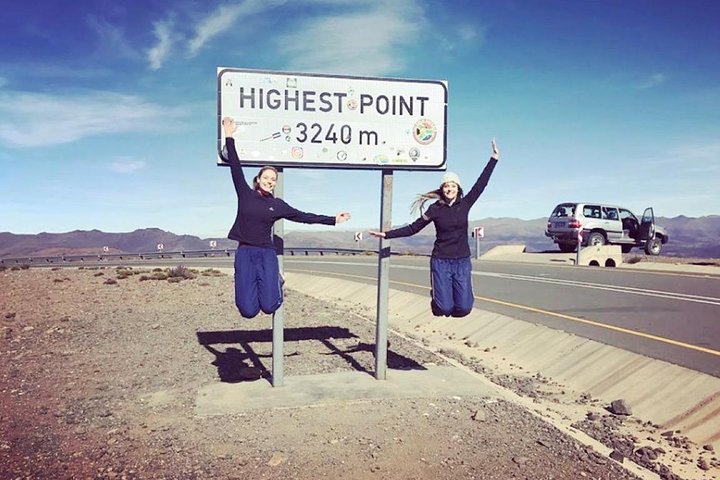
For a taste of the Lesotho highlands, head to Sani Pass, just under two hours from Durban. This rugged road offers stunning views and a chance to visit the highest pub in Africa. The trip typically costs around R600 for a guided tour, which is worth it for the local insights. The best time to go is during the dry season (May to September) for safer driving conditions. Many first-timers forget their passports; you’ll need them to cross the border!
👉 Explore Sani Pass

Shark Diving in Umhlanga
If you’re feeling adventurous, consider a shark diving experience just 30 minutes from Durban. This thrilling activity usually costs around R1,500, but it’s a once-in-a-lifetime experience. The best time for diving is during the warmer months when the waters are teeming with life. A common mistake is not booking in advance; spots fill up quickly, especially during peak season.
Want to know what more South Africa offers?
The South Africa Travel Guide describes 131 highlights, from cities to national parks, from beaches to hikes

Get the Travel Guide -

🍲 FoodLocal Flavors for Backpackers

In Durban, the food scene is a vibrant tapestry of flavors, reflecting its rich cultural mix. You can’t visit without trying bunny chow—a hollowed-out loaf filled with spicy curry. It’s a street food staple, often enjoyed on the go. The aroma of spices wafts through the air as vendors serve this dish, making it a must-have for any backpacker.

Don’t miss the biltong, South Africa’s answer to jerky. This dried, cured meat is perfect for snacking while you explore. Grab some at local markets, where the hustle and bustle adds to the experience. The Victoria Street Market is a sensory overload, with stalls brimming with fresh produce, spices, and local delicacies.

When it comes to drinks, try a local craft beer or a sugarcane drink called tshwala. It’s often served in casual settings, where … read more 👉
In Durban, the food scene is a vibrant tapestry of flavors, reflecting its rich cultural mix. You can’t visit without trying bunny chow—a hollowed-out loaf filled with spicy curry. It’s a street food staple, often enjoyed on the go. The aroma of spices wafts through the air as vendors serve this dish, making it a must-have for any backpacker.

Don’t miss the biltong, South Africa’s answer to jerky. This dried, cured meat is perfect for snacking while you explore. Grab some at local markets, where the hustle and bustle adds to the experience. The Victoria Street Market is a sensory overload, with stalls brimming with fresh produce, spices, and local delicacies.

When it comes to drinks, try a local craft beer or a sugarcane drink called tshwala. It’s often served in casual settings, where you can mingle with locals.

Eating customs here are relaxed. Sharing food is common, and you’ll often see groups gathered around a table, enjoying a meal together. Just remember, it’s polite to greet your hosts and share a few laughs. This communal vibe makes every bite taste even better.

🛡️ SafetyScams, Hazards, and Annoyances

Durban is generally safe for backpackers, but like any city, it has its nuances. Areas like the beachfront and the Golden Mile are popular and well-patrolled, but stay alert, especially in less crowded spots. If you’re wandering around at night, stick to well-lit areas and avoid the quieter beaches after dark.

Solo travelers should be mindful of their surroundings. Keep your belongings secure and avoid displaying valuables. A common annoyance is the occasional street vendor who can be persistent. A polite but firm ”no, thank you” usually does the trick.

Scams are rare, but be cautious of anyone offering unsolicited help, especially with transportation. Always use reputable taxi services or rideshare apps. Trust your instincts; if something feels off, it probably is. By staying aware and … read more 👉
Durban is generally safe for backpackers, but like any city, it has its nuances. Areas like the beachfront and the Golden Mile are popular and well-patrolled, but stay alert, especially in less crowded spots. If you’re wandering around at night, stick to well-lit areas and avoid the quieter beaches after dark.

Solo travelers should be mindful of their surroundings. Keep your belongings secure and avoid displaying valuables. A common annoyance is the occasional street vendor who can be persistent. A polite but firm ”no, thank you” usually does the trick.

Scams are rare, but be cautious of anyone offering unsolicited help, especially with transportation. Always use reputable taxi services or rideshare apps. Trust your instincts; if something feels off, it probably is. By staying aware and carrying yourself confidently, you can enjoy Durban’s vibrant culture without unnecessary stress.

Other South African cities near Durban

Explore more nearby:

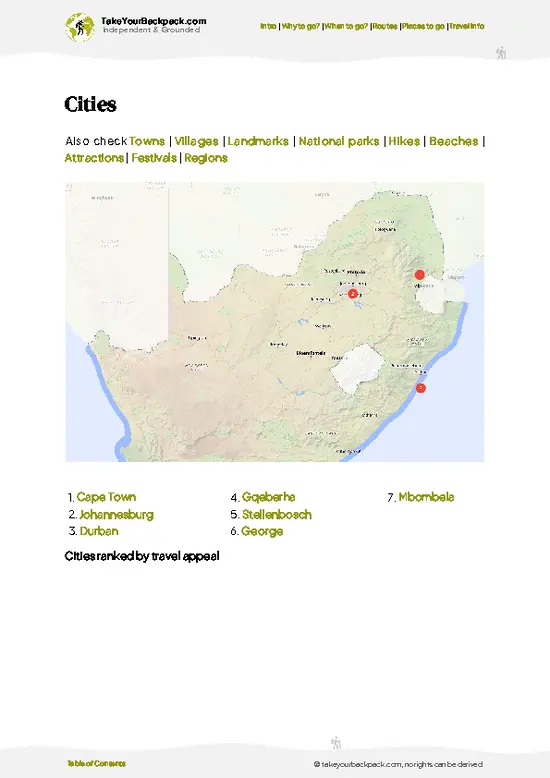
  • Ballito—tidal pools, dolphin coast, resort strip| 44 km away
  • Johannesburg—Art districts, mining history, Soweto township, urban regeneration| 499 km away
  • Port Elizabeth—Algoa Bay, colonial architecture, wind-swept beaches, marine wildlife| 682 km away

👉 Discover all cities

Or checkout all South Africa has to offer (think cities, towns, villages, national parks, hikes, beaches, festivals)
Country photo of South Africa

We 💚 feedbackWhat to keep in mind

Durban is a sensory feast, where the Indian Ocean meets a vibrant mix of cultures. The food scene alone—think bunny chow and fresh seafood—makes it worth the trip. But be prepared for the humidity; it can be stifling, especially in summer. If you’re not a fan of sweat-soaked shirts, plan your outdoor adventures for the cooler parts of the day. Embrace the chaos, and you’ll find Durban’s charm shines through.

✈️ When did I visit South Africa?
I have visited South Africa, before and after my Zimbabwe trip in 2001.

✍️ Help improve this page!
The information on this page is based on my own backpacking experience in South Africa, supplemented with up-to-date research and feedback from other travelers. Travel details can change, so if you notice anything outdated or incomplete, feel free to let me know.


🙋‍♂️ Give feedback

👋 Meet the founderWho’s Behind Take Your Backpack?

Johan, backpacker and founder of TakeYourBackpackHi, I’m Johan (Netherlands 🇳🇱), the creator of TakeYourBackpack. Over the past decade, I’ve backpacked through 80+ countries across six continents, gaining extensive experience with independent travel, long-term trips, and overland routes.

This site is built on a combination of firsthand travel experience and carefully curated insights from other backpackers. Many guides are based on places I’ve personally visited, while others bring together tips, observations, and practical advice shared by trusted travelers I’ve met along the way.

The goal is to provide realistic, experience-driven guidance — not generic itineraries — so you can explore destinations with better context, clearer expectations, and more confidence.

Get full country guide •
Instant download • 131 highlights • Full Offline guide