×

South Korea🇰🇷 | attractionsBukchon Hanok Village Cultural Streettraditional hanok lanes, tiled rooftops, artisan workshops | things to do and best time to go

Explore Changdeokgung Palace and Huwon Secret GardenExplore War Memorial of Korea

Backpacking in Bukchon Hanok Village Cultural Street
🏆 Top pickattraction ranked #3
By Johan Kruseman 🇳🇱 | Updated May 11, 2026

Let’s get this out of the way: if you’re coming to Bukchon Hanok Village Cultural Street just for that perfect, empty-alley Instagram shot, you’re chasing a fantasy. The crowds are real, the selfie sticks are everywhere, and the “timeless serenity” lasts about as long as it takes for the next tour group to round the corner. But here’s the real reason to go: Bukchon, wedged right between Gyeongbokgung and Changdeokgung in the heart of Seoul, is one of the few places where you can actually feel the friction between old and new Korea under your boots. Yes, it’s photogenic, but it’s the lived-in details—the grandmas hanging laundry, the smell of sesame oil, the sound of a distant bell—that make it worth your time. For backpackers, it’s accessible and cheap (free to wander), but the vibe is more curated than raw. Compared to Korea’s wild national parks or the neon chaos of Hongdae, Bukchon is a living museum: beautiful, but you’ll have to look past the crowds to find the soul.

Discover everything you want to know in the 📖 South Korea Travel Guide.
Loading the map 🌍
CLICK TO FILTER
cities
towns
villages
landmarks
national parks
hikes
beaches
attractions
festivals
regions
SHOW COUNTRY’S BESTSHOW ALL

✨ Why go?
Ranked #3 attraction in South Korea
Why Bukchon Hanok Village Cultural Street should be on your travel list

Bukchon Hanok Village Cultural Street is not some Instagram postcard where you snap a quick pic and move on. Yes, it’s crowded—tour groups swarm the narrow alleys, and the entrance fees to some hanok houses can sting if you’re on a tight budget. But here’s the kicker: this place is a living, breathing slice of Korea’s soul. The hanoks—traditional wooden houses with tiled roofs—aren’t just pretty facades; they’re centuries-old homes where history whispers through every creak of the floorboards. Walking these streets, you’re stepping into a time capsule that survived Seoul’s rapid modernization. It’s a rare chance to see how Koreans lived before skyscrapers and subways took over. For backpackers, Bukchon is a milestone—a cultural checkpoint that grounds your trip in something real, beyond the … read more 👉
Bukchon Hanok Village Cultural Street is not some Instagram postcard where you snap a quick pic and move on. Yes, it’s crowded—tour groups swarm the narrow alleys, and the entrance fees to some hanok houses can sting if you’re on a tight budget. But here’s the kicker: this place is a living, breathing slice of Korea’s soul. The hanoks—traditional wooden houses with tiled roofs—aren’t just pretty facades; they’re centuries-old homes where history whispers through every creak of the floorboards. Walking these streets, you’re stepping into a time capsule that survived Seoul’s rapid modernization. It’s a rare chance to see how Koreans lived before skyscrapers and subways took over. For backpackers, Bukchon is a milestone—a cultural checkpoint that grounds your trip in something real, beyond the flashy K-pop and neon. The effort to navigate the maze-like alleys, dodge selfie sticks, and pay modest entry fees pays off with a deep, tactile connection to Korean heritage. It’s not just a photo op; it’s a moment where history, culture, and everyday life collide in a way that sticks with you long after you leave.
Want to include Bukchon Hanok Village Cultural Street in your South Korea route?
Create a personalized South Korea itinerary that includes Bukchon Hanok Village Cultural Street and the places that fit your trip — based on your travel style, budget, and available time. Get your route in seconds.

Generate my trip

💡 HighlightsWhat this place is best known for

1. Wandering the Maze of Real Hanok Lanes
Forget the Instagram-perfect alleys packed with rented hanbok and selfie sticks. The real Bukchon magic kicks in when you ditch the main drag and let yourself get lost in the quieter backstreets. Here, you’ll find actual families living in 600-year-old wooden homes, laundry flapping in the breeze, and the occasional ajumma peering out to see who’s stomping past her gate. It’s not a museum—this is a living, breathing neighborhood. The contrast between the old tiled roofs and the glass-and-steel skyline of Seoul is a gut-punch reminder of how Korea does modernity and tradition in the same breath.


2. Private Hanok Galleries and Artisan Studios
Bukchon isn’t just a backdrop for photoshoots; it’s a working hub for artists and craftspeople. Skip the mass-produced … read more 👉
1. Wandering the Maze of Real Hanok Lanes
Forget the Instagram-perfect alleys packed with rented hanbok and selfie sticks. The real Bukchon magic kicks in when you ditch the main drag and let yourself get lost in the quieter backstreets. Here, you’ll find actual families living in 600-year-old wooden homes, laundry flapping in the breeze, and the occasional ajumma peering out to see who’s stomping past her gate. It’s not a museum—this is a living, breathing neighborhood. The contrast between the old tiled roofs and the glass-and-steel skyline of Seoul is a gut-punch reminder of how Korea does modernity and tradition in the same breath.


2. Private Hanok Galleries and Artisan Studios
Bukchon isn’t just a backdrop for photoshoots; it’s a working hub for artists and craftspeople. Skip the mass-produced trinket shops and duck into the tiny, often unsigned galleries and studios. You might stumble on a master potter at the wheel, a calligrapher inking out poetry, or a lacquerware artisan who’ll actually talk shop if you show genuine interest. These aren’t tourist traps—they’re the real deal, and the workbench clutter and paint-stained aprons prove it.


3. Tea Houses with Actual Character
Yes, there are overpriced, influencer-bait tea houses with lines out the door. But if you’re willing to walk a little further, you’ll find hanok tea rooms where the owner is brewing the same family recipe they’ve served for decades. The floors creak, the windows rattle, and the tea comes with a side of local gossip. Order omija or jujube tea and let yourself slow down. This is where you feel the pulse of old Seoul—unfiltered, unscripted, and a little bit nosy.


4. The Bukchon Cultural Center (Bukchon Traditional Culture Center)
Most people breeze past this spot, but it’s the best crash course in hanok architecture and Bukchon’s tangled history. The staff actually know their stuff, and the hands-on workshops—think knot-tying, fan-painting, or traditional etiquette—aren’t just for kids. It’s a rare spot where you can ask blunt questions about preservation, gentrification, and what it’s like to live in a hanok when the world wants to turn your street into a film set.


5. Rooftop Views (If You Can Find Them)
Bukchon isn’t about sweeping panoramas—unless you know where to look. Some guesthouses and discreet cafés have rooftop terraces that offer a killer view of the hanok rooftops rolling down toward the city. It’s not always advertised, and you might need to buy a coffee you don’t need, but the payoff is a rare, cinematic angle on Seoul’s past and present colliding. This is the shot that actually feels earned, not staged.
Spotted a mistake or missing something? Contact us.

Things to do around Bukchon Hanok Village Cultural Street

Ratings based on Tripadvisor reviews. When you book through this link, you support our work at no extra cost to you.

🌤️ When to go?When to go for the best experience


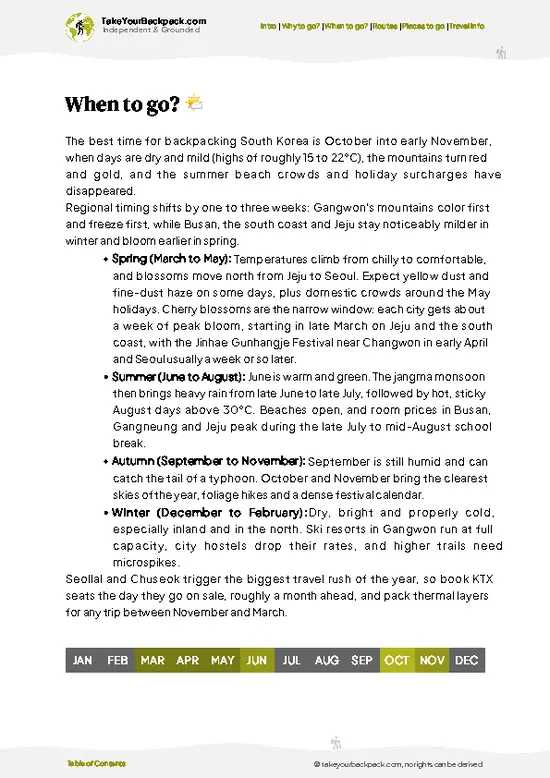
  • Weather: Spring (April to June) and autumn (September to November) bring the best weather—mild and dry. Temperatures hover between 10-22°C (50-72°F), perfect for wandering without sweating buckets or freezing your toes off.

  • Temperature: Summer (July to August) is brutally hot and humid, often pushing 25-30°C (77-86°F), which can make exploring the narrow alleys uncomfortable. Winter (December to February) drops below freezing, around -5 to 5°C (23-41°F), and the cold seeps into those old wooden houses.

  • Daylight Hours: Longer days in late spring and early summer mean more time to soak in the village’s charm. In winter, daylight shrinks to about 9 hours, cutting your exploration window short.

  • Crowds: Peak tourist season hits in May and October, turning the village into a selfie hotspot.
read more 👉

  • Weather: Spring (April to June) and autumn (September to November) bring the best weather—mild and dry. Temperatures hover between 10-22°C (50-72°F), perfect for wandering without sweating buckets or freezing your toes off.

  • Temperature: Summer (July to August) is brutally hot and humid, often pushing 25-30°C (77-86°F), which can make exploring the narrow alleys uncomfortable. Winter (December to February) drops below freezing, around -5 to 5°C (23-41°F), and the cold seeps into those old wooden houses.

  • Daylight Hours: Longer days in late spring and early summer mean more time to soak in the village’s charm. In winter, daylight shrinks to about 9 hours, cutting your exploration window short.

  • Crowds: Peak tourist season hits in May and October, turning the village into a selfie hotspot. Early mornings or weekdays in shoulder seasons offer a quieter, more authentic vibe.

  • Seasonal Activities: Spring brings cherry blossoms nearby, adding a soft pink frame to your photos. Autumn’s foliage paints the village in fiery reds and oranges, a real treat for nature lovers.

  • Price Fluctuations: Accommodation and tours spike during peak seasons (spring and autumn). Visiting in late November or early March can save you some cash without sacrificing too much on experience.


Pro-tip: Aim for early spring or late autumn weekdays to dodge crowds, enjoy crisp weather, and catch the village’s true character without the tourist circus.


source: climatestotravel.comJANJanuary: fair for travelingFEBFebruary: fair for travelingMARMarch: good for travelingAPRApril: excellent for travelingMAYMay: highly recommended for travelingJUNJune: excellent for travelingJULJuly: fair for travelingAUGAugust: fair for travelingSEPSeptember: excellent for travelingOCTOctober: highly recommended for travelingNOVNovember: highly recommended for travelingDECDecember: fair for traveling
when-to-go

✈️ The backpacker research shortcutSouth Korea Travel Guide

An offline-friendly backpacking guide with optimized travel routes, ranked highlights, transport advice, and the best areas to stay.
example page 0 from our offline Travel Guide for South Korea
example page 1 from our offline Travel Guide for South Korea
example page 2 from our offline Travel Guide for South Korea
example page 3 from our offline Travel Guide for South Korea
example page 4 from our offline Travel Guide for South Korea
example page 5 from our offline Travel Guide for South Korea
example page 6 from our offline Travel Guide for South Korea
example page 7 from our offline Travel Guide for South Korea
The digital guide (407 pages) contains:
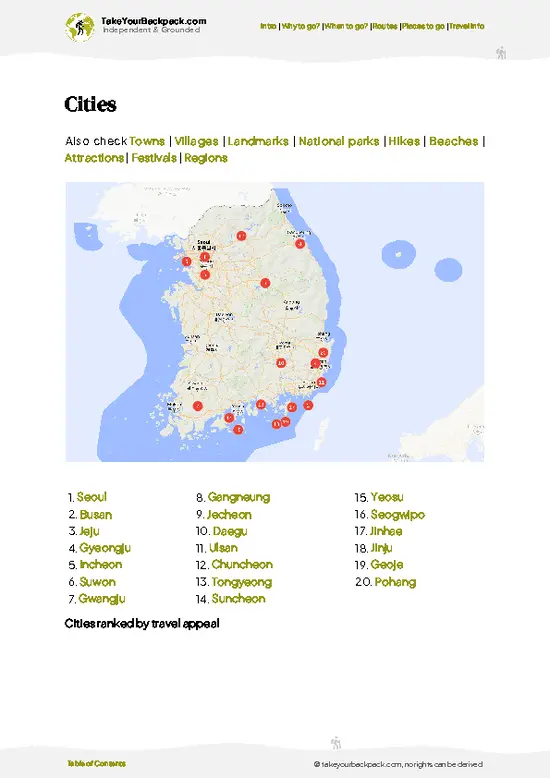
115 highlights, ranked by travel appeal
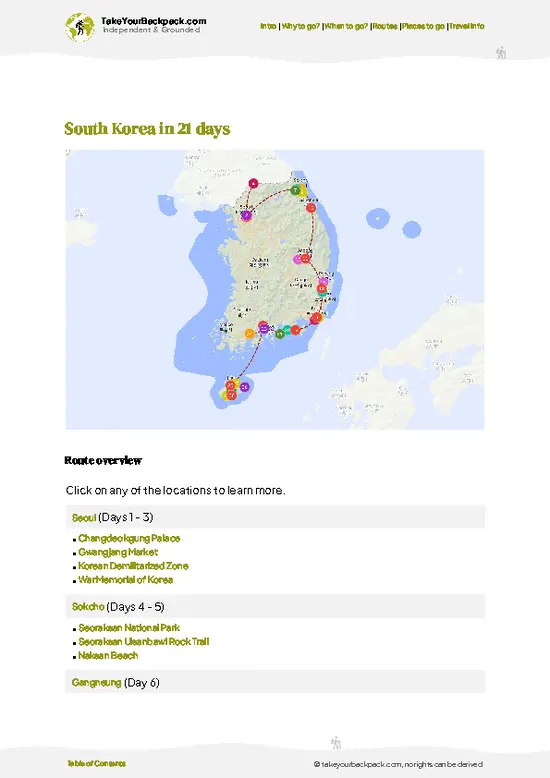
Optimized 7, 14 & 21-day travel routes
Cities, national parks, landmarks, beaches
How to get around
Offline-friendly for travel without Wi-Fi
👉 Click to see all 30+ guide features

📅 Plan smarter in minutes, not weeks
Month by month travel advice
Festivals & national holidays
Budget expectations

🗺️ Go to the right places, skip the overrated ones
Honest pros & cons of destinations
Top hikes, parks & viewpoints
Lesser-known places most travelers miss
Clear “worth it vs skip it” guidance

🛏️ Travel smoothly without rookie mistakes
Best areas to stay
Transport systems explained simply
Common scams & safety advice
SIM cards, money & practical tips

🌍 Understand the country, not just visit it
Culture & traditions
52 Essential phrases & customs
Festivals worth planning around
Traveler-friendly historical context
Insights that make places more meaningful

📱 Built for real travel conditions
Fully downloadable PDF
Works completely offline
Optimized for phone use
Useful in remote areas & buses
Everything in one place
Save weeks of stressful planning
Get instant access to your full guide. 30‑day money-back guarantee.


By proceeding you agree to our terms.
Sent to your inbox immediately after payment • 100% Secure Checkout
Best Backpacking Travel Advisor 2025 tourism awardBest Backpacking
Travel Advisor
2025
What others say about Take Your Backpack Guides:
⭐⭐⭐⭐⭐
Fantastic, amazing amount of information!
⭐⭐⭐⭐⭐
My goodness this is amazing, it's what I've been looking for hats off too you!
⭐⭐⭐⭐⭐
I think this is absolutely BRILLIANT
⭐⭐⭐⭐
Very complete and informative. It's still missing places, but I gotta to commend you
⭐⭐⭐⭐⭐
This is truly amazing, thank you, can't wait to explore it with my kids!
⭐⭐⭐⭐⭐
Awesome resource, thank you!
⭐⭐⭐⭐⭐
This is amazing! Can't wait to explore the ones I haven't seen
⭐⭐⭐⭐
I love this! Well done, great idea.
⭐⭐⭐⭐⭐
Thanks for taking the time to make this gem!
⭐⭐⭐⭐⭐
This might be the best website I've ever seen.
⭐⭐⭐⭐⭐
Congratulations, and thank you so much for your work; it's incredibly valuable.
⭐⭐⭐⭐
In all seriousness I think you did a great job pointing out the important spots
⭐⭐⭐⭐⭐
10/10 very good
⭐⭐⭐⭐⭐
As someone who's only just starting to visit regularly this is awesome, thank you.
⭐⭐⭐⭐
Thank you very much! I'm going to visit my dad, it's going to be very useful!
⭐⭐⭐⭐⭐
This is really cool! We'll be travelling for the first time and this definitely come in handy.
⭐⭐⭐⭐⭐
You are now our minister of culture, congratulations 👨‍💼
⭐⭐⭐⭐⭐
Just wanted to tell you that this is a pearl! Going to follow your recommendations.
⭐⭐⭐⭐⭐
This is so cool. I'll definitely be using the resource for my travels soon.
⭐⭐⭐⭐⭐
This is very impressive! Good work.
⭐⭐⭐⭐⭐
This is an amazing and informative site. Very well done!

🛏️ Where to stay?Best areas to stay in South Korea

Bukchon Hanok Village is often sold as this serene, timeless slice of Seoul, but let’s cut through the Instagram gloss: it’s a magnet for tourists, especially midday. The narrow alleys fill up fast, and the traditional hanoks—while beautiful—can feel like a backdrop for a selfie marathon rather than a quiet stroll. That said, the real magic isn’t just in the village itself but in where you base yourself to soak up the vibe without getting swallowed by the crowds.

For backpackers, the best areas to crash are Jongno and Anguk. Jongno is a solid choice—safe, buzzing with local life, and packed with … read more 👉
Bukchon Hanok Village is often sold as this serene, timeless slice of Seoul, but let’s cut through the Instagram gloss: it’s a magnet for tourists, especially midday. The narrow alleys fill up fast, and the traditional hanoks—while beautiful—can feel like a backdrop for a selfie marathon rather than a quiet stroll. That said, the real magic isn’t just in the village itself but in where you base yourself to soak up the vibe without getting swallowed by the crowds.

For backpackers, the best areas to crash are Jongno and Anguk. Jongno is a solid choice—safe, buzzing with local life, and packed with affordable guesthouses and hostels that attract solo travelers and budget adventurers. It’s a place where you can mingle with other backpackers over cheap street food or late-night soju without feeling like you’re in a tourist bubble. Plus, it’s a short walk or a quick bus ride to Bukchon.

Anguk, just a stone’s throw from Bukchon, offers a quieter, more traditional feel. It’s where you’ll find hanok guesthouses that let you sleep in a real Korean-style house without breaking the bank. The streets here are less chaotic, giving you a better chance to experience the culture beyond the crowds. Both neighborhoods are safe, well-connected, and have that authentic Seoul energy that’s worth waking up for.

👛 Costs (as of 4 March 2026)How expensive it really is

Entry to Bukchon Hanok Village is free. However, certain attractions within the village may charge fees:

- Bukchon Traditional Culture Center: Offers workshops such as tea ceremonies and handicrafts, with fees ranging from 10,000 KRW to 20,000 KRW (approximately €7 to €14). ([thesoulofseoul.net](https://thesoulofseoul.net/bukchon-hanok-village-see/?utm_source=openai))

- Hanbok Rental: Renting traditional Korean attire (hanbok) for photoshoots or cultural experiences typically costs around 15,000 KRW for a four-hour rental (approximately €10). ([tripsavvy.com](https://www.tripsavvy.com/bukchon-hanok-village-complete-guide-5073284?utm_source=openai))

- Additional Attractions: Some museums and cultural centers within the village may charge separate admission fees, generally ranging from 3, … read more 👉
Entry to Bukchon Hanok Village is free. However, certain attractions within the village may charge fees:

- Bukchon Traditional Culture Center: Offers workshops such as tea ceremonies and handicrafts, with fees ranging from 10,000 KRW to 20,000 KRW (approximately €7 to €14). ([thesoulofseoul.net](https://thesoulofseoul.net/bukchon-hanok-village-see/?utm_source=openai))

- Hanbok Rental: Renting traditional Korean attire (hanbok) for photoshoots or cultural experiences typically costs around 15,000 KRW for a four-hour rental (approximately €10). ([tripsavvy.com](https://www.tripsavvy.com/bukchon-hanok-village-complete-guide-5073284?utm_source=openai))

- Additional Attractions: Some museums and cultural centers within the village may charge separate admission fees, generally ranging from 3,000 KRW to 5,000 KRW (approximately €2 to €3). ([solosophie.com](https://www.solosophie.com/bukchon-hanok-village-seoul/?utm_source=openai))

Please note that these prices are approximate and may vary. It's advisable to check the official Bukchon Hanok Village website for the most current information.
⚠️ Prices can change and everyone travels differently, so take this as a rough guide. Hope it helps you plan your adventure!

Other South Korean attractions near Bukchon Hanok Village Cultural Street

Explore more nearby:


💡 Not sure where to go next?
Create a personalized itinerary for South Korea including Bukchon Hanok Village Cultural Street and the places that fit your trip.

Generate my itinerary

👉 Discover all attractions

Or checkout all South Korea has to offer (think cities, towns, villages, national parks, hikes, beaches, festivals)
Country photo of South Korea

We 💚 feedbackIs it worth it?

Bukchon Hanok Village is not the quiet, untouched relic you might hope for—it’s a hotspot, packed with tourists snapping the same angles. But here’s the kicker: if you wander beyond the main streets, past the souvenir shops, you’ll find narrow alleys where locals live and breathe history every day. That’s where the real magic is—authentic wooden doors, the smell of wood smoke, and the subtle creak of centuries-old floors underfoot. Just go early or late to dodge the crowds and soak it in properly.

✍️ Help improve this page!
The information on this page is based on in-depth research, insights shared by experienced travelers, and feedback from the local travel community in South Korea. While every effort is made to keep the information accurate and current, conditions can change — so if you spot anything incorrect or outdated, please get in touch.


🙋‍♂️ Give feedback

👋 Meet the founderWho’s Behind Take Your Backpack?

Johan, backpacker and founder of TakeYourBackpackHi, I’m Johan (Netherlands 🇳🇱), the creator of TakeYourBackpack. Over the past decade, I’ve backpacked through 80+ countries across six continents, gaining extensive experience with independent travel, long-term trips, and overland routes.

This site is built on a combination of firsthand travel experience and carefully curated insights from other backpackers. Many guides are based on places I’ve personally visited, while others bring together tips, observations, and practical advice shared by trusted travelers I’ve met along the way.

The goal is to provide realistic, experience-driven guidance — not generic itineraries — so you can explore destinations with better context, clearer expectations, and more confidence.

Get full country guide •
Instant download • 115 highlights • Full Offline guide