×

South Korea🇰🇷 | citiesGeojeIsland coastline, shipyards, wind-swept cliffs | things to do and best time to go

Explore JinhaeExplore Gwangyang

Backpacking in Geoje
By Johan Kruseman 🇳🇱 | Updated June 4, 2026

Your boots crunch on shipyard gravel as welding sparks pop in the dark, salt-heavy air, and the smell of grilled clams drifts from a tent bar where dockworkers shout over trot rock. Geoje sits off Korea’s southeast coast near Busan, a shipbuilding island that feels more working-class than polished. It’s safe, cheap for seafood, and quieter than Busan, with beaches, wind-scoured cliffs, and POW camp history instead of big-city nightlife, plus fewer backpackers, so meeting people takes more effort but feels more genuine.

Discover everything you want to know in the 📖 South Korea Travel Guide.
Loading the map 🌍
CLICK TO FILTER
cities
towns
villages
landmarks
national parks
hikes
beaches
attractions
festivals
regions
SHOW COUNTRY’S BESTSHOW ALL

✨ Why go?
Ranked #99 city in South Korea
What makes this city worth visiting

Geoje is a strategic basecamp for backpackers navigating South Korea. Its affordable hostels offer a cozy place to recharge, while the walkable layout makes it easy to explore local eateries and vibrant nightlife without breaking the bank. You’ll find a mix of cultural highlights and outdoor activities, perfect for those who crave both adventure and relaxation. Plus, its proximity to ferry services means easy onward travel to nearby islands or the mainland. Whether you’re looking to dive into the local scene or use Geoje as a launchpad for day trips, this city balances comfort and value, making it a smart stop on your journey.
Want to include Geoje in your South Korea route?
Create a personalized South Korea itinerary that includes Geoje and the places that fit your trip — based on your travel style, budget, and available time. Get your route in seconds.

Generate my trip

💡 HighlightsEssential experiences to have while visiting Geoje

  • Oedo Botania — A planted, European-style island garden that feels impossibly curated: terraces, sculptures, and ocean views. You arrive by short ferry from Geoje and can spend a few peaceful hours wandering immaculate paths and taking skyline shots of the archipelago.
  • Haegeumgang (해금강) — The dramatic sea-rock formations and small islets off Geoje’s southern coast; best experienced by boat cruise. The rocky spires and coastal cliffs are striking up close and the guided boats add context about local geology and folklore.
  • Windy Hill (바람의언덕) — That grassy slope with a white windmill you’ve seen in photos. It’s small but atmospheric: excellent for a quick hike, sunset watching, and a taste of the island’s breezy, slow pace right before or after an Oedo trip.
  • Geoje POW Camp (거제포로수용소유적공원)
read more 👉
  • Oedo Botania — A planted, European-style island garden that feels impossibly curated: terraces, sculptures, and ocean views. You arrive by short ferry from Geoje and can spend a few peaceful hours wandering immaculate paths and taking skyline shots of the archipelago.
  • Haegeumgang (해금강) — The dramatic sea-rock formations and small islets off Geoje’s southern coast; best experienced by boat cruise. The rocky spires and coastal cliffs are striking up close and the guided boats add context about local geology and folklore.
  • Windy Hill (바람의언덕) — That grassy slope with a white windmill you’ve seen in photos. It’s small but atmospheric: excellent for a quick hike, sunset watching, and a taste of the island’s breezy, slow pace right before or after an Oedo trip.
  • Geoje POW Camp (거제포로수용소유적공원) — A sober, well-preserved museum and historic site documenting the Korean War POW camp that once held thousands. It’s one of the best places on the island to learn about Geoje’s modern history and see preserved barracks, photographs, and personal accounts.
  • Hakdong Mongdol Beach (학동 몽돌해변) — A long pebble beach lined with pines where the surf makes a constant, meditative clatter. Great for walking, photographing rounded stones, and escaping the typical crowded sandy-beach scene.
  • Gujora Beach (구조라해수욕장) — A wide, sandy stretch with clean water, nearby seafood stalls, and easy facilities—one of Geoje’s friendliest family beaches. It’s also a good base for renting gear or grabbing a fresh fish dinner after a beach day.
  • Jangseungpo Old Port & Waterfront — Geoje’s historic harbor district where fishing, ferries, and shipbuilding histories meet; you’ll find waterfront promenades, seafood eateries, and local life. Walkable, photogenic, and a good place to board regional boats or just watch working boats come and go.
  • Geoje Shipbuilding & Marine Cultural Center — A museum and exhibition space that explains the island’s dominant industry: shipbuilding. If you want to understand why Geoje looks the way it does today—giant shipyards, foreign workers, boomtown neighborhoods—this place lays it out in plain terms.
  • Geoje City Museum (거제시립박물관) — Local archaeology, folk artifacts, and rotating exhibits about island life and culture. It’s compact but useful for context before you go exploring historical villages and coastal sites.
  • Gohyeon / Central Market (거제 중앙시장) — A lively local market where you can sample fresh seafood, tangle with street-food stalls, and see everyday Geoje commerce in action. Perfect for cheap meals, local snacks, and people-watching away from tourist traps.
A few great day-trip options nearby: Tongyeong (Hallyeosudo coastal scenery and cable car), Namhae (German Village and coastal roads), and Busan (Jagalchi Fish Market and seaside neighborhoods) are all easily reachable from Geoje.
Spotted a mistake or missing something? Contact us.

Things to do near Geoje

Ratings based on Tripadvisor reviews. When you book through this link, you support our work at no extra cost to you.

🏘️ NeighborhoodsWhere things are and how it's laid out

Geoje is a captivating blend of coastal beauty and local culture, perfect for backpackers seeking both adventure and relaxation. Here’s a breakdown of key neighborhoods:

Okpo: This is the bustling heart of Geoje. It’s walkable, with plenty of eateries and shops. Expect a mix of locals and travelers. Nightlife is decent but not overwhelming, making it suitable for short stays. Transport links are solid, with buses connecting you to other parts of the island.

Gohyeon: A quieter area, Gohyeon offers a more laid-back vibe. It’s ideal for longer stays, especially if you want to immerse yourself in local life. The cost of living is lower here, and while nightlife is minimal, you’ll find cozy cafes and parks. Public transport is accessible, but you might need to walk a bit more.

Hakdong: Known … read more 👉
Geoje is a captivating blend of coastal beauty and local culture, perfect for backpackers seeking both adventure and relaxation. Here’s a breakdown of key neighborhoods:

Okpo: This is the bustling heart of Geoje. It’s walkable, with plenty of eateries and shops. Expect a mix of locals and travelers. Nightlife is decent but not overwhelming, making it suitable for short stays. Transport links are solid, with buses connecting you to other parts of the island.

Gohyeon: A quieter area, Gohyeon offers a more laid-back vibe. It’s ideal for longer stays, especially if you want to immerse yourself in local life. The cost of living is lower here, and while nightlife is minimal, you’ll find cozy cafes and parks. Public transport is accessible, but you might need to walk a bit more.

Hakdong: Known for its stunning beaches, Hakdong is perfect for sun-seekers. It’s a bit pricier, but the views are worth it. The area is less walkable, so consider renting a bike. Nightlife is relaxed, focusing on beach bars. Great for short getaways.

⌛️ 1 dayWhat you can realistically do in a day

Geoje, South Korea, is a coastal paradise known for its stunning landscapes and rich maritime history. Start your day in the charming neighborhood of Hakdong, where you can stroll along the picturesque Hakdong Pebble Beach. The smooth stones and gentle waves create a serene atmosphere, perfect for a morning walk. Grab a coffee at a local café, soaking in the fresh sea breeze.

As the sun climbs, head to the Geoje Shipbuilding Museum. This spot isn’t on every tourist’s radar, but it offers a fascinating glimpse into the shipbuilding industry that shapes the region. The exhibits are engaging, and you’ll leave with a deeper appreciation for Geoje’s maritime legacy.

In the afternoon, make your way to the scenic Windy Hill. The hike is manageable and rewards you with panoramic views of the ocean … read more 👉
Geoje, South Korea, is a coastal paradise known for its stunning landscapes and rich maritime history. Start your day in the charming neighborhood of Hakdong, where you can stroll along the picturesque Hakdong Pebble Beach. The smooth stones and gentle waves create a serene atmosphere, perfect for a morning walk. Grab a coffee at a local café, soaking in the fresh sea breeze.

As the sun climbs, head to the Geoje Shipbuilding Museum. This spot isn’t on every tourist’s radar, but it offers a fascinating glimpse into the shipbuilding industry that shapes the region. The exhibits are engaging, and you’ll leave with a deeper appreciation for Geoje’s maritime legacy.

In the afternoon, make your way to the scenic Windy Hill. The hike is manageable and rewards you with panoramic views of the ocean and surrounding islands. Pack a light lunch to enjoy at the top, where the wind carries the scent of salt and adventure.

As evening approaches, explore the lively downtown area. Treat yourself to a seafood dinner at a local restaurant, where the catch of the day is always fresh. Wrap up your day with a leisurely stroll along the waterfront, watching the sunset paint the sky in hues of orange and pink. This blend of nature, culture, and cuisine makes for a day well spent in Geoje.
Turn your Geoje visit into an South Korea adventure
Build a complete South Korea route with Geoje, hidden gems, must-see destinations, and realistic travel times included.

Generate my trip

🌤️ When to go?When to go for the best experience


  • Weather: Geoje’s best weather hits in late spring and early autumn. Expect mild, dry days perfect for hiking and beach time. Summers get hot and humid, often above 30°C (86°F), with a heavy monsoon season in July and August.

  • Temperature: Spring and fall hover around 15-22°C (59-72°F), ideal for active days without sweating buckets or freezing nights. Winters dip to 0-5°C (32-41°F), too chilly for comfort unless you’re packing serious layers.

  • Daylight Hours: Longer days from April to September give you more daylight for exploring—up to 14 hours in summer. Winter days shrink to about 9-10 hours, limiting your window for outdoor adventures.

  • Crowds: Peak tourist season aligns with summer holidays and the monsoon lull. Spring and fall see fewer visitors, meaning quieter trails and better
read more 👉

  • Weather: Geoje’s best weather hits in late spring and early autumn. Expect mild, dry days perfect for hiking and beach time. Summers get hot and humid, often above 30°C (86°F), with a heavy monsoon season in July and August.

  • Temperature: Spring and fall hover around 15-22°C (59-72°F), ideal for active days without sweating buckets or freezing nights. Winters dip to 0-5°C (32-41°F), too chilly for comfort unless you’re packing serious layers.

  • Daylight Hours: Longer days from April to September give you more daylight for exploring—up to 14 hours in summer. Winter days shrink to about 9-10 hours, limiting your window for outdoor adventures.

  • Crowds: Peak tourist season aligns with summer holidays and the monsoon lull. Spring and fall see fewer visitors, meaning quieter trails and better deals on accommodations.

  • Seasonal Activities: Spring brings cherry blossoms and festivals; autumn offers vibrant foliage and seafood harvests. Summer’s beach scene is lively but crowded, while winter is mostly quiet, suited for off-season solitude.

  • Price Fluctuations: Accommodation and transport costs spike in summer and during local festivals. Shoulder seasons (spring and fall) offer the best value with lower prices and still-great weather.


Pro-tip: Aim for late April to early June or September to October to maximize comfort, daylight, and value—turning your Geoje trip into a strategic win.


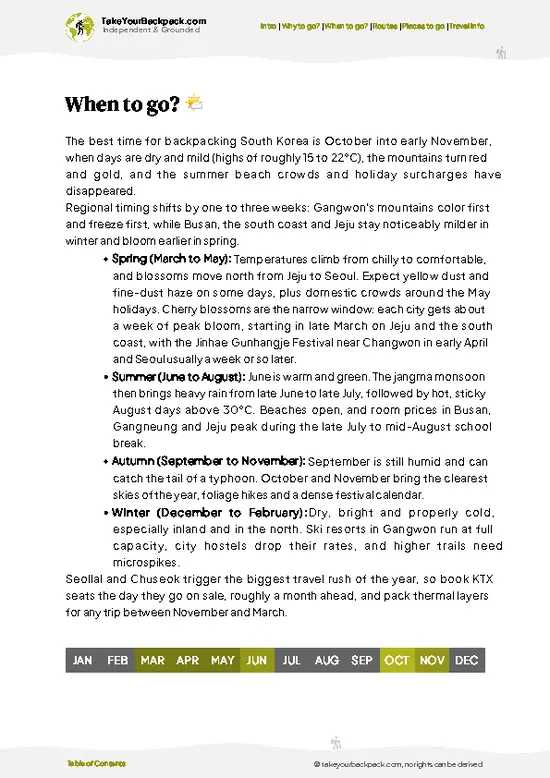
source: climatestotravel.comJANJanuary: fair for travelingFEBFebruary: fair for travelingMARMarch: good for travelingAPRApril: highly recommended for travelingMAYMay: excellent for travelingJUNJune: highly recommended for travelingJULJuly: fair for travelingAUGAugust: fair for travelingSEPSeptember: excellent for travelingOCTOctober: excellent for travelingNOVNovember: good for travelingDECDecember: fair for traveling
when-to-go

✈️ The backpacker research shortcutSouth Korea Travel Guide

An offline-friendly backpacking guide with optimized travel routes, ranked highlights, transport advice, and the best areas to stay.
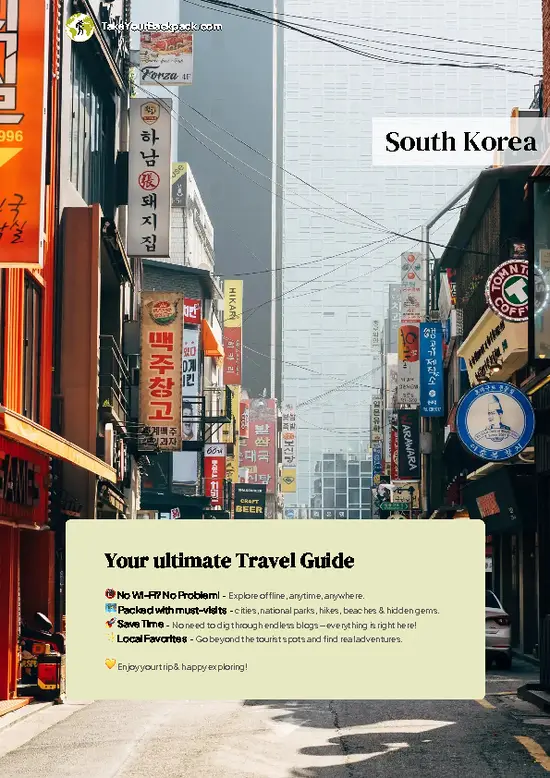
example page 0 from our offline Travel Guide for South Korea
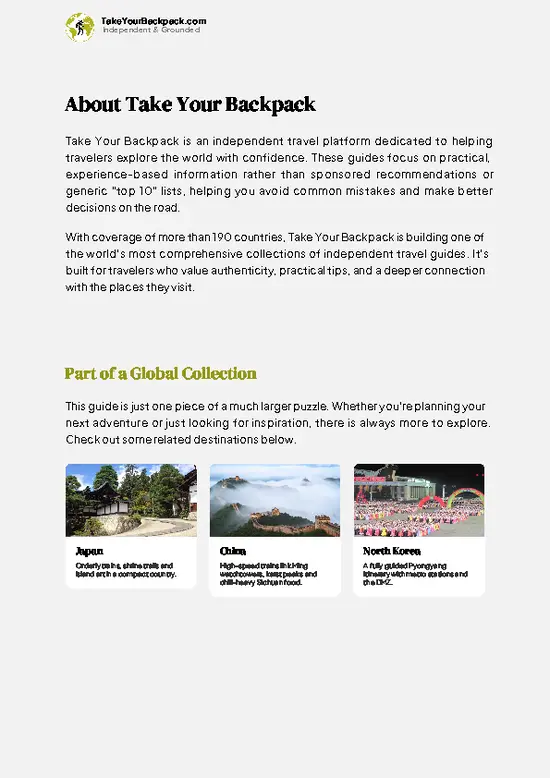
example page 1 from our offline Travel Guide for South Korea
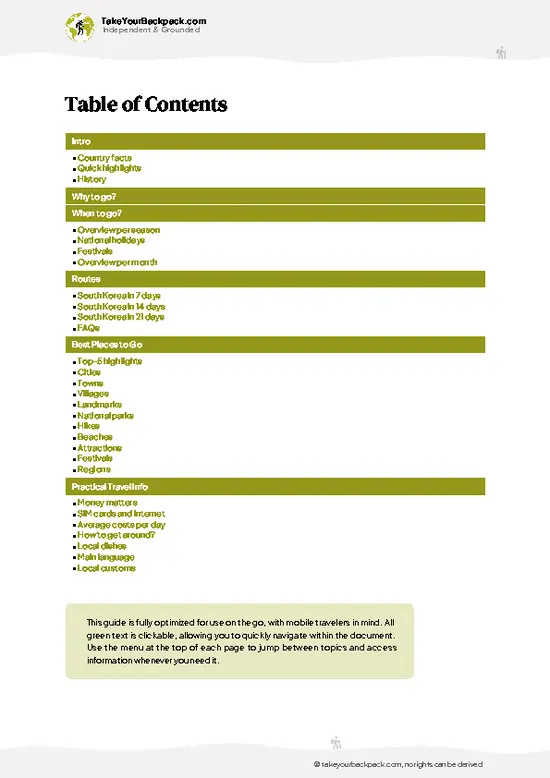
example page 2 from our offline Travel Guide for South Korea
example page 3 from our offline Travel Guide for South Korea
example page 4 from our offline Travel Guide for South Korea
example page 5 from our offline Travel Guide for South Korea
example page 6 from our offline Travel Guide for South Korea
example page 7 from our offline Travel Guide for South Korea
The digital guide (408 pages) contains:
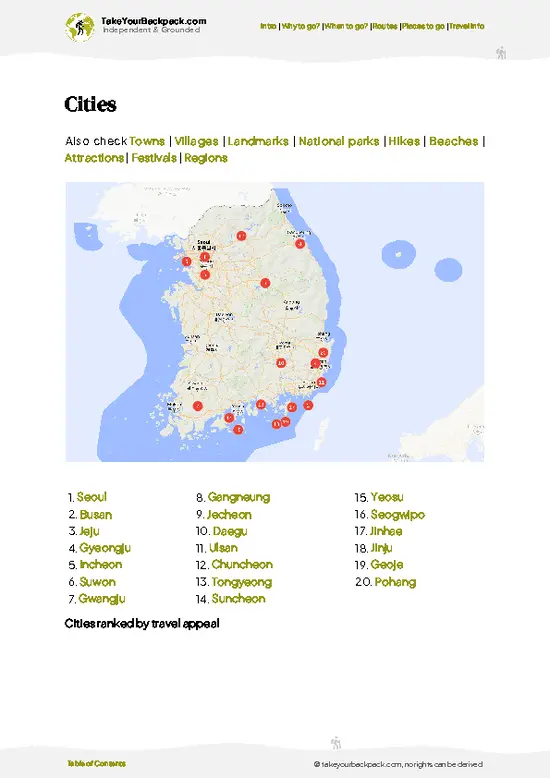
115 highlights, ranked by travel appeal
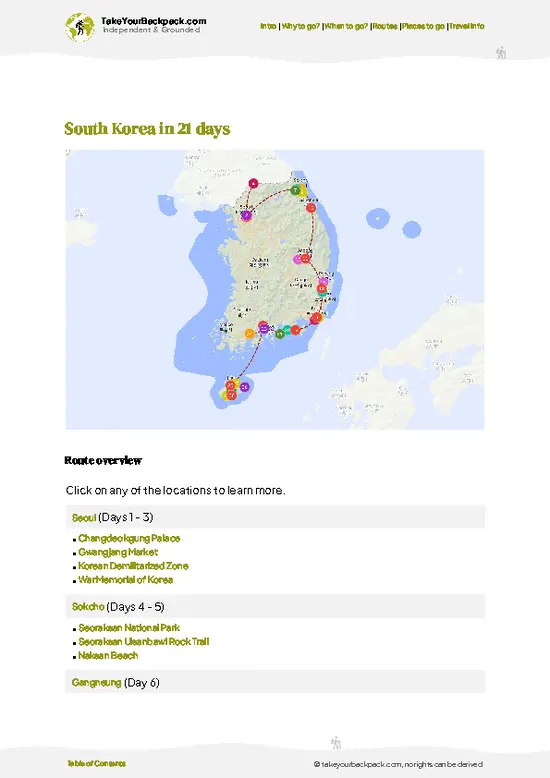
Optimized 7, 14 & 21-day travel routes
Cities, national parks, landmarks, beaches
How to get around
Offline-friendly for travel without Wi-Fi
👉 Click to see all 30+ guide features

📅 Plan smarter in minutes, not weeks
Month by month travel advice
Festivals & national holidays
Budget expectations

🗺️ Go to the right places, skip the overrated ones
Honest pros & cons of destinations
Top hikes, parks & viewpoints
Lesser-known places most travelers miss
Clear “worth it vs skip it” guidance

🛏️ Travel smoothly without rookie mistakes
Best areas to stay
Transport systems explained simply
Common scams & safety advice
SIM cards, money & practical tips

🌍 Understand the country, not just visit it
Culture & traditions
52 Essential phrases & customs
Festivals worth planning around
Traveler-friendly historical context
Insights that make places more meaningful

📱 Built for real travel conditions
Fully downloadable PDF
Works completely offline
Optimized for phone use
Useful in remote areas & buses
Everything in one place
Save weeks of stressful planning
Get instant access to your full guide. 30‑day money-back guarantee.


By proceeding you agree to our terms.
Sent to your inbox immediately after payment • 100% Secure Checkout
Best Backpacking Travel Advisor 2025 tourism awardBest Backpacking
Travel Advisor
2025
What others say about Take Your Backpack Guides:
⭐⭐⭐⭐⭐
Fantastic, amazing amount of information!
⭐⭐⭐⭐⭐
My goodness this is amazing, it's what I've been looking for hats off too you!
⭐⭐⭐⭐⭐
I think this is absolutely BRILLIANT
⭐⭐⭐⭐
Very complete and informative. It's still missing places, but I gotta to commend you
⭐⭐⭐⭐⭐
This is truly amazing, thank you, can't wait to explore it with my kids!
⭐⭐⭐⭐⭐
Awesome resource, thank you!
⭐⭐⭐⭐⭐
This is amazing! Can't wait to explore the ones I haven't seen
⭐⭐⭐⭐
I love this! Well done, great idea.
⭐⭐⭐⭐⭐
Thanks for taking the time to make this gem!
⭐⭐⭐⭐⭐
This might be the best website I've ever seen.
⭐⭐⭐⭐⭐
Congratulations, and thank you so much for your work; it's incredibly valuable.
⭐⭐⭐⭐
In all seriousness I think you did a great job pointing out the important spots
⭐⭐⭐⭐⭐
10/10 very good
⭐⭐⭐⭐⭐
As someone who's only just starting to visit regularly this is awesome, thank you.
⭐⭐⭐⭐
Thank you very much! I'm going to visit my dad, it's going to be very useful!
⭐⭐⭐⭐⭐
This is really cool! We'll be travelling for the first time and this definitely come in handy.
⭐⭐⭐⭐⭐
You are now our minister of culture, congratulations 👨‍💼
⭐⭐⭐⭐⭐
Just wanted to tell you that this is a pearl! Going to follow your recommendations.
⭐⭐⭐⭐⭐
This is so cool. I'll definitely be using the resource for my travels soon.
⭐⭐⭐⭐⭐
This is very impressive! Good work.
⭐⭐⭐⭐⭐
This is an amazing and informative site. Very well done!

🛏️ Where to stay?Choosing the right base

Geoje’s best backpacker base is the Jangpyeong-dong area. It’s where budget travelers cluster, drawn by affordable hostels and a lively, social atmosphere. You’ll find a safe, walkable neighborhood with easy access to local eateries and bars that encourage mingling without the tourist overload. Compared to quieter, more residential zones, Jangpyeong-dong offers a practical balance: you sacrifice some polished comfort for genuine local interaction and wallet-friendly options. The trade-off here is clear—less luxury, more connection and convenience. Other parts of Geoje lean toward either isolated … read more 👉
Geoje’s best backpacker base is the Jangpyeong-dong area. It’s where budget travelers cluster, drawn by affordable hostels and a lively, social atmosphere. You’ll find a safe, walkable neighborhood with easy access to local eateries and bars that encourage mingling without the tourist overload. Compared to quieter, more residential zones, Jangpyeong-dong offers a practical balance: you sacrifice some polished comfort for genuine local interaction and wallet-friendly options. The trade-off here is clear—less luxury, more connection and convenience. Other parts of Geoje lean toward either isolated resorts or business districts, which don’t serve the solo backpacker vibe as well.

🚌 Getting aroundHow to get around Geoje

Geoje moves at its own pace — a blend of methodical ferry timetables and the relaxed rhythm of island life. It’s not a city where you’ll find subway rush hours or frantic taxi hails. Instead, the flow here is about syncing with the boats, buses, and the occasional bike ride, where timing is important but not oppressive. You’ll find yourself balancing patience with precision, knowing when to sprint and when to soak in the slower moments. This is a place where your choices between time, money, and comfort become a strategic game, and understanding the trade-offs means you get to control the tempo of your adventure.


  • Walking: Geoje’s compact town centers and scenic coastal paths make walking the most cost-effective and immersive option—zero cost, total freedom, but expect slower travel and
read more 👉
Geoje moves at its own pace — a blend of methodical ferry timetables and the relaxed rhythm of island life. It’s not a city where you’ll find subway rush hours or frantic taxi hails. Instead, the flow here is about syncing with the boats, buses, and the occasional bike ride, where timing is important but not oppressive. You’ll find yourself balancing patience with precision, knowing when to sprint and when to soak in the slower moments. This is a place where your choices between time, money, and comfort become a strategic game, and understanding the trade-offs means you get to control the tempo of your adventure.


  • Walking: Geoje’s compact town centers and scenic coastal paths make walking the most cost-effective and immersive option—zero cost, total freedom, but expect slower travel and some hilly stretches.

  • Local Bus: Runs roughly from 5:30 AM to 11 PM, fares around 1,200 KRW; slower than taxis but reliable and cheap, with decent coverage of the island’s main spots.

  • Intercity Bus: Connects Geoje to Busan and other cities; departures start early morning, tickets about 7,000 KRW; faster and more comfortable than local buses, but less frequent.

  • Taxi: Available 24/7, base fare around 3,800 KRW; fastest and most comfortable, especially if you’re carrying gear or traveling off-peak, but costs add up quickly.

  • Ferry: Essential for island hopping, schedules vary seasonally; fares depend on destination but generally affordable; a scenic, slower option that’s part transit, part experience.

👛 Costs (as of 5 April 2026)How expensive it really is

Backpacking in Geoje, South Korea, offers a clear trade-off between cost and convenience, with prices reflecting its mix of urban access and island charm.
  • Dorm Accommodation (High Season): Expect to pay around $20 to $30 per night during peak travel months. These dorms are basic but clean, often with shared bathrooms and limited amenities, perfect for those prioritizing budget over privacy.
  • Dorm Accommodation (Off-Season): Prices drop to about $12 to $20 per night when the tourist flow slows. This is the sweet spot for travelers who want to save without sacrificing the social hostel vibe.
  • Meals: Street food and local eateries will run you roughly $5 to $10 per meal. Geoje’s seafood is fresh and affordable, so you can enjoy hearty portions without breaking the bank. Cooking your own meals
read more 👉
Backpacking in Geoje, South Korea, offers a clear trade-off between cost and convenience, with prices reflecting its mix of urban access and island charm.
  • Dorm Accommodation (High Season): Expect to pay around $20 to $30 per night during peak travel months. These dorms are basic but clean, often with shared bathrooms and limited amenities, perfect for those prioritizing budget over privacy.
  • Dorm Accommodation (Off-Season): Prices drop to about $12 to $20 per night when the tourist flow slows. This is the sweet spot for travelers who want to save without sacrificing the social hostel vibe.
  • Meals: Street food and local eateries will run you roughly $5 to $10 per meal. Geoje’s seafood is fresh and affordable, so you can enjoy hearty portions without breaking the bank. Cooking your own meals can reduce this further if your accommodation allows.
  • Local Transport: Single bus rides typically cost around $1 to $2. Geoje’s bus network is reliable but not extensive, so plan your routes carefully to avoid wasting time and money on multiple transfers.
  • City Transport Pass: A daily transport pass, if available, can cost about $4 to $6, offering unlimited bus rides. This is a smart buy if you plan to move around frequently within the city.
  • Basic Activities/Entry Fees: Most local attractions, like parks and small museums, charge between $2 and $5. Outdoor activities such as hiking are free, making them a high-value choice for budget travelers.
  • Miscellaneous Expenses: Budget around $3 to $7 for essentials like bottled water, snacks, or occasional convenience store purchases. These small costs add up but remain manageable with some planning.

In total, a backpacker in Geoje can expect to spend between $25 and $50 per day, depending on season and lifestyle choices. This range balances the essentials without skimping on comfort or experience, letting you control where to save and where to splurge.


source: english.visitkorea.or.kr
⚠️ Prices can change and everyone travels differently, so take this as a rough guide. Hope it helps you plan your adventure!

🚌 Day tripsWhere to go beyond the main area

Geoje, South Korea, is a strategic launchpad for unforgettable day trips that blend culture, nature, and adventure. Here’s how to maximize your experience without breaking the bank.

**Haegeumgang Island**
A short ferry ride from Geoje, Haegeumgang Island offers breathtaking coastal views and unique rock formations. Spend the day hiking the trails that wind around the cliffs, where you can snap photos of the iconic “Twin Rocks.” The round-trip ferry costs about 10,000 KRW, and the hike is free. Spring and fall are ideal for mild weather and fewer crowds. A common mistake? Underestimating the time needed for the hike; plan for at least three hours.


**Oedo Botania**
This botanical garden on Oedo Island is a feast for the senses. The ferry ride takes about 30 minutes and costs around … read more 👉
Geoje, South Korea, is a strategic launchpad for unforgettable day trips that blend culture, nature, and adventure. Here’s how to maximize your experience without breaking the bank.

**Haegeumgang Island**
A short ferry ride from Geoje, Haegeumgang Island offers breathtaking coastal views and unique rock formations. Spend the day hiking the trails that wind around the cliffs, where you can snap photos of the iconic “Twin Rocks.” The round-trip ferry costs about 10,000 KRW, and the hike is free. Spring and fall are ideal for mild weather and fewer crowds. A common mistake? Underestimating the time needed for the hike; plan for at least three hours.


**Oedo Botania**
This botanical garden on Oedo Island is a feast for the senses. The ferry ride takes about 30 minutes and costs around 15,000 KRW. Once there, stroll through meticulously curated gardens that showcase exotic plants and stunning ocean views. The best time to visit is during the blooming season in late spring. Many first-timers rush through; take your time to enjoy the tranquility.
👉 Explore Oedo Botania

**Gujora Beach**
Just a 30-minute bus ride from Geoje, Gujora Beach is perfect for a relaxing day by the sea. With soft sand and clear waters, it’s a great spot for swimming or simply lounging. Budget around 5,000 KRW for bus fare and pack a picnic to save on food costs. Summer is peak season, but early mornings in spring offer a quieter experience. Don’t forget sunscreen; the sun can be fierce!


**Windy Hill**
This scenic spot is a must-visit for its picturesque windmills and panoramic views. A 40-minute bus ride will get you there, costing about 3,000 KRW. The best time to go is during sunset for a magical experience. Many visitors overlook the walking paths leading to hidden viewpoints; take the time to explore.
Want to know what more South Korea offers?
The South Korea Travel Guide describes 115 highlights, from cities to national parks, from beaches to hikes

Get the Travel Guide -

🍲 FoodEating & Drinking in Geoje

In **Geoje**, the culinary scene is a delightful mix of **fresh seafood** and hearty Korean staples. Don’t miss out on **hoe**, a raw fish dish that’s as fresh as it gets, often served with a spicy dipping sauce. Street vendors line the bustling markets, offering **tteokbokki** (spicy rice cakes) and **odeng** (fish cake skewers) that fill the air with mouthwatering aromas.

Casual eateries are the heartbeat of local dining. Grab a seat at a **jjimjilbang** (Korean sauna) for a unique experience, where you can enjoy **banchan** (side dishes) while soaking in the atmosphere.

When it comes to drinks, **makgeolli** (rice wine) is a must-try, often enjoyed in a communal setting. Remember, it’s customary to pour for others, fostering a sense of connection. Embrace the local vibe, and you’ll savor every bite and sip.

🛡️ SafetyStaying Safe: What Travelers Should Know

Geoje is generally safe for backpackers, but a few situational awareness tips can enhance your experience. Stick to well-lit areas at night, especially around the waterfront and busier districts. Solo travelers should feel comfortable, but it’s wise to avoid quiet streets after dark.

While scams are rare, be cautious of overly friendly locals offering unsolicited help; they might expect something in return. Everyday annoyances can include language barriers, so learning a few basic Korean phrases can go a long way. Carry yourself confidently, and you’ll navigate Geoje like a pro.

Other South Korean cities near Geoje

Explore more nearby:

  • Tongyeong—Island hopping, mural village, seafood harbors| 17 km away
  • Jinhae—Cherry blossom festival, naval base, mountain backdrop| 29 km away
  • Gimhae—Royal tombs, archaeological sites, Gimhae airport| 45 km away

💡 Not sure where to go next?
Create a personalized itinerary for South Korea including Geoje and the places that fit your trip.

Generate my itinerary

👉 Discover all cities

Or checkout all South Korea has to offer (think cities, towns, villages, national parks, hikes, beaches, festivals)
Country photo of South Korea

We 💚 feedbackWhat to keep in mind

Geoje has a chill vibe that feels worlds away from the hustle of Busan. The best surprise? The local seafood markets—fresh and lively, they’re a feast for the senses. Just a heads-up: weekends can get crowded, so aim for a weekday visit to soak in the tranquility. Enjoy every moment!

✍️ Help improve this page!
The information on this page is based on in-depth research, insights shared by experienced travelers, and feedback from the local travel community in South Korea. While every effort is made to keep the information accurate and current, conditions can change — so if you spot anything incorrect or outdated, please get in touch.


🙋‍♂️ Give feedback

👋 Meet the founderWho’s Behind Take Your Backpack?

Johan, backpacker and founder of TakeYourBackpackHi, I’m Johan (Netherlands 🇳🇱), the creator of TakeYourBackpack. Over the past decade, I’ve backpacked through 80+ countries across six continents, gaining extensive experience with independent travel, long-term trips, and overland routes.

This site is built on a combination of firsthand travel experience and carefully curated insights from other backpackers. Many guides are based on places I’ve personally visited, while others bring together tips, observations, and practical advice shared by trusted travelers I’ve met along the way.

The goal is to provide realistic, experience-driven guidance — not generic itineraries — so you can explore destinations with better context, clearer expectations, and more confidence.

Get full country guide •
Instant download • 115 highlights • Full Offline guide