×

South Korea🇰🇷 | attractionsGwangjang Market Food Alleystreet food stalls, textile vendors, bustling aisles | things to do and best time to go

Explore Jeonju Hanok Village Cultural AreaExplore Demilitarized Zone Tour Facilities

Backpacking in Gwangjang Market Food Alley
👍 Recommendedattraction ranked #11
By Johan Kruseman 🇳🇱 | Updated May 20, 2026

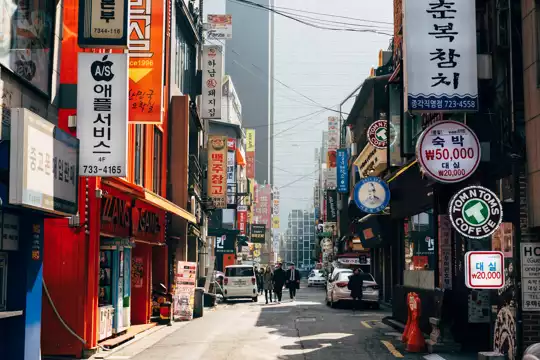
You won’t see this on your feed: Gwangjang Market Food Alley is where Seoul’s grandmothers outnumber influencers, and the best seats are plastic stools wedged between locals slurping noodles. Smack in the heart of Seoul, this isn’t some sanitized street food Disneyland—it’s a living, breathing chaos of sizzling pans, shouted orders, and the occasional elbow in your ribs. Yes, it’s crowded, especially after dark, and prices have crept up with fame, but you’re still paying less than you would for a single cocktail in Gangnam. The real magic? Watching generations of vendors serve recipes older than the subway system, all under one raucous roof. It’s messy, loud, and absolutely worth it.

Discover everything you want to know in the 📖 South Korea Travel Guide.
Loading the map 🌍
CLICK TO FILTER
cities
towns
villages
landmarks
national parks
hikes
beaches
attractions
festivals
regions
SHOW COUNTRY’S BESTSHOW ALL

✨ Why go?
Ranked #11 attraction in South Korea
Reasons people choose to visit here

Gwangjang Market Food Alley is not just another stop on the Seoul itinerary—it’s a full-throttle dive into South Korea’s culinary soul. Sure, it’s crowded, noisy, and can feel like a sensory overload, but that’s exactly the point. This place is iconic for a reason: it’s where tradition meets the everyday hustle, serving up dishes like bindaetteok (mung bean pancakes) and mayak gimbap that have been perfected over generations. The market’s history stretches back nearly a century, making it a living museum of Korean street food culture. For backpackers, it’s a milestone—an adrenaline rush of flavors and textures that rewards the effort of navigating its packed aisles. Forget sanitized food courts; here, you’re eating with locals, sharing tables, and tasting stories. It’s messy, intense, and … read more 👉
Gwangjang Market Food Alley is not just another stop on the Seoul itinerary—it’s a full-throttle dive into South Korea’s culinary soul. Sure, it’s crowded, noisy, and can feel like a sensory overload, but that’s exactly the point. This place is iconic for a reason: it’s where tradition meets the everyday hustle, serving up dishes like bindaetteok (mung bean pancakes) and mayak gimbap that have been perfected over generations. The market’s history stretches back nearly a century, making it a living museum of Korean street food culture. For backpackers, it’s a milestone—an adrenaline rush of flavors and textures that rewards the effort of navigating its packed aisles. Forget sanitized food courts; here, you’re eating with locals, sharing tables, and tasting stories. It’s messy, intense, and utterly authentic—exactly why it’s worth every won and every elbow in the ribs.
Want to include Gwangjang Market Food Alley in your South Korea route?
Create a personalized South Korea itinerary that includes Gwangjang Market Food Alley and the places that fit your trip — based on your travel style, budget, and available time. Get your route in seconds.

Generate my trip

💡 HighlightsTop highlights of Gwangjang Market Food Alley

Bindaetteok (Mung Bean Pancakes) at the Sizzling Griddles
Forget the Instagram-perfect stacks—here, you get a pancake that’s all crunch and attitude. Watch the vendors grind mung beans right in front of you, then slap the batter onto a greasy griddle. The result: a golden, crispy disk that’s more savory than any Western pancake you’ve met. The sound alone—spatulas scraping, oil popping—feels like a street food drumline. Grab a seat on a rickety stool and eat it hot, elbow-to-elbow with locals who know this is the real deal.


Mayak Gimbap (“Narcotic” Rice Rolls)
These bite-sized seaweed rolls are the market’s worst-kept secret. They’re not laced with anything illegal, but the nickname is dead-on: you’ll want more before you’ve even finished your first plate. The magic is in the balance—slightly … read more 👉
Bindaetteok (Mung Bean Pancakes) at the Sizzling Griddles
Forget the Instagram-perfect stacks—here, you get a pancake that’s all crunch and attitude. Watch the vendors grind mung beans right in front of you, then slap the batter onto a greasy griddle. The result: a golden, crispy disk that’s more savory than any Western pancake you’ve met. The sound alone—spatulas scraping, oil popping—feels like a street food drumline. Grab a seat on a rickety stool and eat it hot, elbow-to-elbow with locals who know this is the real deal.


Mayak Gimbap (“Narcotic” Rice Rolls)
These bite-sized seaweed rolls are the market’s worst-kept secret. They’re not laced with anything illegal, but the nickname is dead-on: you’ll want more before you’ve even finished your first plate. The magic is in the balance—slightly sweet rice, pickled veggies, a dab of mustard-soy sauce. They’re cheap, addictive, and the perfect snack to fuel your market crawl.


Live Octopus (Sannakji) for the Brave
This is the dare that separates the tourists from the travelers. Order sannakji and you’ll get wriggling tentacles, freshly chopped and still squirming. It’s not for the squeamish, but if you want a story that’ll outlast any filtered photo, this is it. Chew thoroughly—seriously, this is not a drill.


Handmade Knife-Cut Noodles (Kalguksu Alley)
Tucked into a side corridor, this is where you’ll find grandmothers wielding cleavers like samurai, slicing dough into ribbons for steaming bowls of kalguksu. The broth is rich, the noodles chewy, and the whole operation feels like a living museum—except you get to eat the exhibits.


People-Watching: The Real Show
You’ll see everything here—ajummas hustling with baskets, students on snack breaks, and the occasional chef on a reconnaissance mission. The market is chaos, but it’s honest chaos. No one’s pretending for your camera. If you want to understand Seoul’s pulse, skip the selfie and just watch. This is where the city drops its mask.
Spotted a mistake or missing something? Contact us.

Things to do around Gwangjang Market Food Alley

Ratings based on Tripadvisor reviews. When you book through this link, you support our work at no extra cost to you.

🌤️ When to go?Seasonal considerations and timing


  • Weather & Temperature: From May to September, Seoul heats up with highs around 25-30°C (77-86°F), making the market’s sizzling street food even more tempting. Winters, especially December to February, plunge to -6 to 3°C (21-37°F), which can make wandering the alleys less comfortable unless you’re bundled up tight.

  • Daylight Hours: Longer days from April through August mean more time to explore and snack without rushing. In winter, daylight shrinks, so plan your visit earlier to avoid the market closing before you’ve had your fill.

  • Crowds: Expect heavy foot traffic on weekends and evenings year-round. Spring (April-May) and autumn (September-October) bring a slightly calmer vibe, perfect for those who want to dodge the crush but still enjoy lively energy.

  • Seasonal Activities: Autumn
read more 👉

  • Weather & Temperature: From May to September, Seoul heats up with highs around 25-30°C (77-86°F), making the market’s sizzling street food even more tempting. Winters, especially December to February, plunge to -6 to 3°C (21-37°F), which can make wandering the alleys less comfortable unless you’re bundled up tight.

  • Daylight Hours: Longer days from April through August mean more time to explore and snack without rushing. In winter, daylight shrinks, so plan your visit earlier to avoid the market closing before you’ve had your fill.

  • Crowds: Expect heavy foot traffic on weekends and evenings year-round. Spring (April-May) and autumn (September-October) bring a slightly calmer vibe, perfect for those who want to dodge the crush but still enjoy lively energy.

  • Seasonal Activities: Autumn harvest festivals and spring flower events nearby add local color but also spike visitor numbers. Winter markets offer warming treats but fewer fresh options.

  • Price Fluctuations: Prices stay fairly stable, but peak tourist seasons (summer and autumn) can push up costs slightly. Off-peak winter visits might score you better deals on food and souvenirs.


Pro-tip: Hit Gwangjang Market on a weekday evening in late spring or early autumn for the best balance of weather, crowd size, and authentic street food action without the tourist stampede.


source: climatestotravel.comJANJanuary: fair for travelingFEBFebruary: fair for travelingMARMarch: good for travelingAPRApril: highly recommended for travelingMAYMay: excellent for travelingJUNJune: highly recommended for travelingJULJuly: highly recommended for travelingAUGAugust: highly recommended for travelingSEPSeptember: excellent for travelingOCTOctober: highly recommended for travelingNOVNovember: good for travelingDECDecember: fair for traveling
when-to-go

✈️ The backpacker research shortcutSouth Korea Travel Guide

An offline-friendly backpacking guide with optimized travel routes, ranked highlights, transport advice, and the best areas to stay.
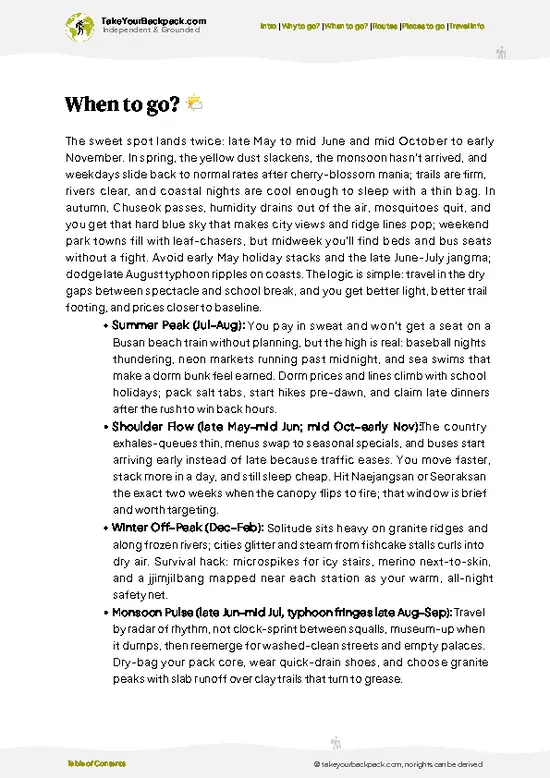
example page 0 from our offline Travel Guide for South Korea
example page 1 from our offline Travel Guide for South Korea
example page 2 from our offline Travel Guide for South Korea
example page 3 from our offline Travel Guide for South Korea
example page 4 from our offline Travel Guide for South Korea
example page 5 from our offline Travel Guide for South Korea
example page 6 from our offline Travel Guide for South Korea
example page 7 from our offline Travel Guide for South Korea
The digital guide (408 pages) contains:
115 highlights, ranked by travel appeal
Optimized 7, 14 & 21-day travel routes
Cities, national parks, landmarks, beaches
How to get around
Offline-friendly for travel without Wi-Fi
👉 Click to see all 30+ guide features

📅 Plan smarter in minutes, not weeks
Month by month travel advice
Festivals & national holidays
Budget expectations

🗺️ Go to the right places, skip the overrated ones
Honest pros & cons of destinations
Top hikes, parks & viewpoints
Lesser-known places most travelers miss
Clear “worth it vs skip it” guidance

🛏️ Travel smoothly without rookie mistakes
Best areas to stay
Transport systems explained simply
Common scams & safety advice
SIM cards, money & practical tips

🌍 Understand the country, not just visit it
Culture & traditions
52 Essential phrases & customs
Festivals worth planning around
Traveler-friendly historical context
Insights that make places more meaningful

📱 Built for real travel conditions
Fully downloadable PDF
Works completely offline
Optimized for phone use
Useful in remote areas & buses
Everything in one place
Save weeks of stressful planning
Get instant access to your full guide. 30‑day money-back guarantee.


By proceeding you agree to our terms.
Sent to your inbox immediately after payment • 100% Secure Checkout
Best Backpacking Travel Advisor 2025 tourism awardBest Backpacking
Travel Advisor
2025
What others say about Take Your Backpack Guides:
⭐⭐⭐⭐⭐
Fantastic, amazing amount of information!
⭐⭐⭐⭐⭐
My goodness this is amazing, it's what I've been looking for hats off too you!
⭐⭐⭐⭐⭐
I think this is absolutely BRILLIANT
⭐⭐⭐⭐
Very complete and informative. It's still missing places, but I gotta to commend you
⭐⭐⭐⭐⭐
This is truly amazing, thank you, can't wait to explore it with my kids!
⭐⭐⭐⭐⭐
Awesome resource, thank you!
⭐⭐⭐⭐⭐
This is amazing! Can't wait to explore the ones I haven't seen
⭐⭐⭐⭐
I love this! Well done, great idea.
⭐⭐⭐⭐⭐
Thanks for taking the time to make this gem!
⭐⭐⭐⭐⭐
This might be the best website I've ever seen.
⭐⭐⭐⭐⭐
Congratulations, and thank you so much for your work; it's incredibly valuable.
⭐⭐⭐⭐
In all seriousness I think you did a great job pointing out the important spots
⭐⭐⭐⭐⭐
10/10 very good
⭐⭐⭐⭐⭐
As someone who's only just starting to visit regularly this is awesome, thank you.
⭐⭐⭐⭐
Thank you very much! I'm going to visit my dad, it's going to be very useful!
⭐⭐⭐⭐⭐
This is really cool! We'll be travelling for the first time and this definitely come in handy.
⭐⭐⭐⭐⭐
You are now our minister of culture, congratulations 👨‍💼
⭐⭐⭐⭐⭐
Just wanted to tell you that this is a pearl! Going to follow your recommendations.
⭐⭐⭐⭐⭐
This is so cool. I'll definitely be using the resource for my travels soon.
⭐⭐⭐⭐⭐
This is very impressive! Good work.
⭐⭐⭐⭐⭐
This is an amazing and informative site. Very well done!

🛏️ Where to stay?Where staying makes the most sense

Gwangjang Market Food Alley is a sensory overload—crowded, noisy, and packed with locals and tourists alike. Don’t expect a quiet stroll; it’s a full-throttle dive into Seoul’s street food culture. The crowds can be intense, especially on weekends, and prices here are fair but not dirt-cheap. It’s not a secret spot, so brace yourself for elbow-to-elbow dining.

For backpackers, the best places to stay are the neighborhoods of Jongno and Dongdaemun. Jongno is a solid pick—safe, buzzing with energy, and loaded with affordable guesthouses and hostels that attract solo travelers. It’s a social hub … read more 👉
Gwangjang Market Food Alley is a sensory overload—crowded, noisy, and packed with locals and tourists alike. Don’t expect a quiet stroll; it’s a full-throttle dive into Seoul’s street food culture. The crowds can be intense, especially on weekends, and prices here are fair but not dirt-cheap. It’s not a secret spot, so brace yourself for elbow-to-elbow dining.

For backpackers, the best places to stay are the neighborhoods of Jongno and Dongdaemun. Jongno is a solid pick—safe, buzzing with energy, and loaded with affordable guesthouses and hostels that attract solo travelers. It’s a social hub where you can swap stories over soju after a long day of eating. Dongdaemun, just a short walk away, offers a similar vibe but with a bit more of a youthful, fashion-forward crowd and 24-hour shopping madness. Both areas are well connected by subway, making it easy to escape the market chaos when you need a breather. These neighborhoods give you the authentic Seoul experience without the tourist trap feel.

👛 Costs (as of 14 March 2026)How expensive it really is

At Gwangjang Market Food Alley, you can expect to spend approximately €10 to €20 per person for a satisfying meal. This budget allows you to sample a variety of traditional Korean street foods, such as bindaetteok (mung bean pancakes), mayak gimbap (mini seaweed rice rolls), and kalguksu (knife-cut noodle soup). Individual dish prices typically range from €2 to €5, with more substantial meals like kalguksu priced around €7. Keep in mind that many vendors prefer cash payments, so it's advisable to carry some Korean won in small denominations. ([visit.seoul.kr](https://visit.seoul.kr/en/articles/gwangjang-market-ultimate-food-guide-2025?utm_source=openai))

source: kwangjangmarket.co.kr
⚠️ Prices can change and everyone travels differently, so take this as a rough guide. Hope it helps you plan your adventure!

Other South Korean attractions near Gwangjang Market Food Alley

Explore more nearby:


💡 Not sure where to go next?
Create a personalized itinerary for South Korea including Gwangjang Market Food Alley and the places that fit your trip.

Generate my itinerary

👉 Discover all attractions

Or checkout all South Korea has to offer (think cities, towns, villages, national parks, hikes, beaches, festivals)
Country photo of South Korea

We 💚 feedbackKey takeaways before you go

Gwangjang Market Food Alley isn’t a quiet stroll; it’s a full-on sensory blitz with crowds elbowing for the best bindaetteok and mayak kimbap. Don’t come expecting Instagram-perfect calm—it’s chaos with charm. The real magic? Watching vendors work their craft like it’s a sacred ritual, and tasting dishes that hit deeper than any polished food hall ever could.

✍️ Help improve this page!
The information on this page is based on in-depth research, insights shared by experienced travelers, and feedback from the local travel community in South Korea. While every effort is made to keep the information accurate and current, conditions can change — so if you spot anything incorrect or outdated, please get in touch.


🙋‍♂️ Give feedback

👋 Meet the founderWho’s Behind Take Your Backpack?

Johan, backpacker and founder of TakeYourBackpackHi, I’m Johan (Netherlands 🇳🇱), the creator of TakeYourBackpack. Over the past decade, I’ve backpacked through 80+ countries across six continents, gaining extensive experience with independent travel, long-term trips, and overland routes.

This site is built on a combination of firsthand travel experience and carefully curated insights from other backpackers. Many guides are based on places I’ve personally visited, while others bring together tips, observations, and practical advice shared by trusted travelers I’ve met along the way.

The goal is to provide realistic, experience-driven guidance — not generic itineraries — so you can explore destinations with better context, clearer expectations, and more confidence.

Get full country guide •
Instant download • 115 highlights • Full Offline guide